

This post may contain affiliate links. If you buy through links on this page, we may earn a commission at no extra cost to you.
As an Amazon Associate I earn from qualifying purchases.
Some seeds need light to sprout. Some sprout best in the dark. Most fall in between and will sprout either way, as long as they stay moist. The packet often tells you which group a seed belongs to, but many gardeners miss that line and bury every seed at the same depth. Lettuce seed buried under soil may never sprout at all, while pepper seed left on the surface dries out before it can start.
This guide sorts 10 common seeds into the three groups, gives the sowing depth for each, and shows how one tray can hold two groups at once. The groups below follow University of New Hampshire Extension and University of Missouri Extension guidance, and the packet remains the final word for any variety you grow.
Seeds that need light
Light-requiring seeds sprout only when light reaches them. Bury them and they sit in the dark with no signal to start growth. Sow them on the surface of damp mix, press them in lightly so they touch the soil, and leave them uncovered. A fine mist from a spray bottle settles them into the mix without washing them away.
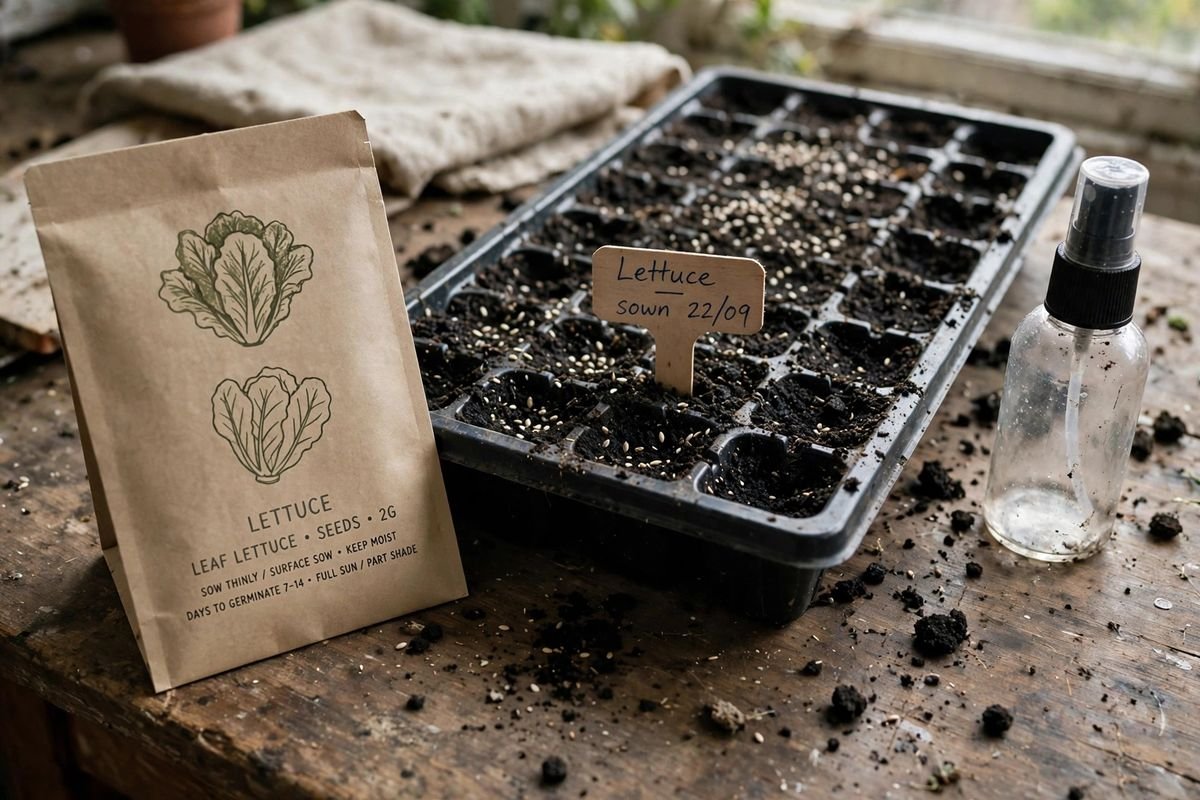
Lettuce is the best-known example. Lettuce seed needs light to germinate, and a covering of soil can cut sprouting to almost nothing. Celery, dill, petunia, and snapdragon follow the same rule. The seed is tiny, so it carries little stored food, and light tells it that it sits near the surface where a young sprout can reach the sun.
Surface-sown seed dries out fast, so keep the top of the mix damp until the sprouts show. A clear dome or a sheet of plastic wrap over the tray holds moisture in, but lift it as soon as the first green shows, or the seedlings can damp off in the still, wet air. Give these seeds light from the day you sow them. The University of New Hampshire Extension advises suspending fluorescent lights 6 to 12 inches above light-requiring seeds for 18 hours per day.
If you want a spray bottle for misting surface-sown seed, you can browse plant mister spray bottles on Amazon. Use a fine mist setting, since a hard stream moves tiny seeds across the tray.
Seeds that need darkness
A smaller group sprouts best in the dark. Calendula, verbena, and vinca are the common examples in the University of New Hampshire Extension fact sheet on starting plants from seed. Cover these seeds with mix and keep the tray out of direct light until they sprout. A sheet of newspaper over the tray, or a tray kept on a lower shelf away from the light, does the job.
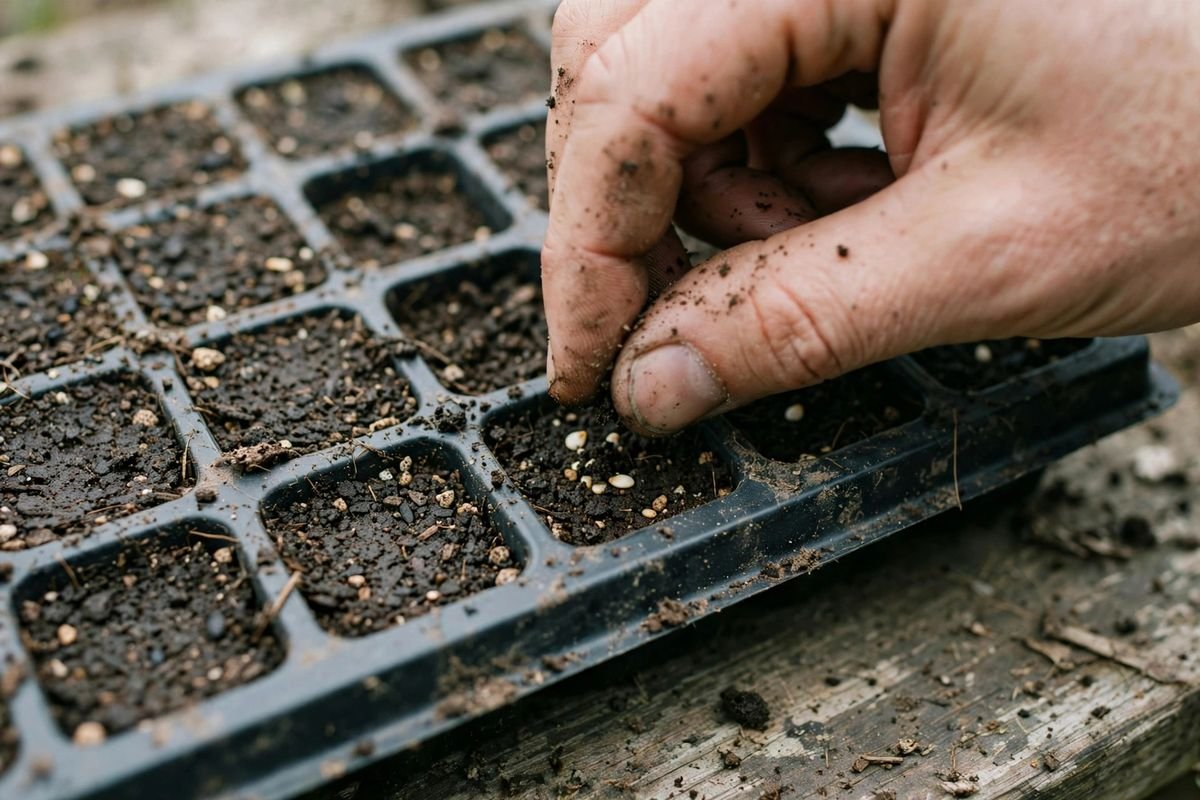
Most vegetable seeds sit in the third group, and they sprout in light or in darkness. Tomato, pepper, cucumber, and squash all belong here. They do not need light to sprout, but they do need a covering of soil. Left on the surface, they dry out before they can take up enough water to start. Cover them at about twice their own diameter, which is the rule the University of Missouri Extension gives for seeds other than the very fine ones.
That rule gives a plain depth for each seed. A pepper seed is about an eighth of an inch across, so a quarter inch of mix covers it. A cucumber seed is bigger, so half an inch of mix suits it. The table below lists the depth for each of the 10 seeds in this guide, so you can sow a mixed tray without guessing.
Covered seeds still need warmth and moisture. Most vegetable seeds sprout best when the mix sits between 65 and 75 degrees Fahrenheit. A tray on a cool windowsill in February may sit ten degrees below that, and the seeds will sprout slowly or not at all. Move the tray to a warmer spot, or set it on a heat mat, and the same seeds will come up in days.
The 10-seed table
| Seed | Light need | Sowing depth |
|---|---|---|
| Lettuce | Needs light | Surface, press in, no cover |
| Celery | Needs light | Surface, press in, no cover |
| Dill | Needs light | Surface, press in, no cover |
| Petunia | Needs light | Surface, press in, no cover |
| Snapdragon | Needs light | Surface, press in, no cover |
| Calendula | Sprouts best in darkness | Quarter inch of mix |
| Verbena | Sprouts best in darkness | Eighth to quarter inch of mix |
| Tomato | Either way | Quarter inch of mix |
| Pepper | Either way | Quarter inch of mix |
| Cucumber | Either way | Half inch of mix |
Read the table as a starting point, then check the packet. A variety bred for a short season may want a shallower sowing than the standard depth, and a packet that says “surface sow” beats the table every time. When the packet and the table disagree, follow the packet.
Two mistakes cause most germination failures. The first is sowing light-requiring seed too deep. A lettuce seed under a quarter inch of mix may never see light, and it will sit there until it rots. The second is sowing covered seed too shallow. A pepper seed on the surface dries out between waterings, and it never takes up the water it needs to start. Match the depth to the group, and both problems go away.
One tray, two rules
Here is a worked example that puts both rules in one tray. Take a standard 72-cell tray, which holds 72 cells in 6 rows of 12. Split it down the middle: the left 36 cells hold lettuce, and the right 36 cells hold peppers. Both crops start indoors at the same time, and both move outside after the last frost, but they follow different rules from the first day.

Fill all 72 cells with damp seed starting mix and firm the surface flat. On the lettuce half, scatter 2 seeds per cell on the surface and press them in with a fingertip. Do not cover them. On the pepper half, press 2 seeds per cell a quarter inch deep and pinch mix over them. Label each half with a wooden stick, since the two halves will look the same until the sprouts show.
Water the whole tray the same way, from below if your tray has a bottom-watering reservoir, or with a fine mist from above. The lettuce half needs light from day one, so set the tray under the grow light at once, with the light 6 to 12 inches above the cells. The pepper half gets the same light, and the quarter inch of mix over the seeds is enough to keep them in the dark while they sprout.
The two halves will sprout on different clocks. Lettuce comes up in 2 to 4 days in warm mix. Peppers take 7 to 14 days, since they want warmer soil, around 65 to 75 degrees. Do not give up on the pepper half when the lettuce is already up. Keep watering, keep the light on, and the peppers will follow.
Once both halves have sprouted, thin each cell to one seedling. Snip the weaker sprout at the soil line with small scissors, and leave the stronger one to grow. Pulling the extra sprout can disturb the roots of the one you want to keep. From here on, both halves follow the same routine: 12 to 16 hours of light a day, water when the top of the mix feels dry, and a move to bigger pots when the roots fill the cells. For the full list of supplies to have ready before you sow, see our seed starting checklist.
Timing your indoor sowing
Count your sowing date back from the day you plan to move the plants outside. Peppers need 6 to 8 weeks indoors before transplanting, and lettuce needs about 4 weeks, so with a last frost of April 15, peppers start indoors around February 20 and lettuce around March 18. Those dates shift with your own last frost, so move them by the same number of days as your frost date moves. Use your local frost dates and regional planting guidance — not your USDA hardiness zone alone — to choose planting dates.
Sowing too early causes more trouble than sowing late. Seedlings started too soon grow tall and weak under poor light while they wait for the weather, and they transplant badly. The University of New Hampshire Extension warns that this is one of the most common mistakes in seed starting. Start on the date the packet gives, not the date your impatience gives.
If a tray of seedlings falls over after germination, the cause is usually damping off, a fungal problem that strikes at the soil line, or stems that grew too weak from too little light. Our guide on why seedlings fall over after germination walks through the causes and the fixes. For the mix itself, see our comparison of seed starting mix versus potting soil.
Troubleshooting
Nothing sprouted after two weeks
Check the depth first. Dig up a few seeds with a toothpick. If light-requiring seeds sit under soil, move the tray into the light and sow a fresh batch on the surface. If covered seeds sit on the surface, they likely dried out, so sow again at the right depth. Old seed is the second suspect: seed kept in a warm room for two years may have lost most of its vigor, so test a few seeds on a damp paper towel before you sow the rest.
Seeds sprouted, then the stems went thin and fell over
Thin, falling stems point to too little light after sprouting, or to damping off. Move the tray closer to the light, give it moving air from a small fan, and water from below so the surface stays drier. Seedlings that fall over at the soil line rarely stand back up, so sow a fresh batch and fix the light and air for the new tray.
Some cells sprouted and some did not
Uneven sprouting often means uneven moisture. The cells at the edge of a tray dry out faster than the cells in the middle, and a tray that tilts can leave one side wetter than the other. Water from below so every cell takes up the same amount, and turn the tray a quarter turn each day so no side stays in the shade.
The surface grew green algae
Algae on the mix surface means the tray stays too wet and too still. Let the top of the mix dry between waterings, give the tray moving air, and sprinkle a thin layer of fine vermiculite over the surface. The vermiculite dries fast and keeps the light off the wet mix below.
Frequently asked questions
Do seeds need light to germinate?
Some do, some do not, and most do not care. Lettuce, celery, dill, petunia, and snapdragon need light, so sow them on the surface. Calendula, verbena, and vinca sprout best in the dark, so cover them. Tomato, pepper, and cucumber sprout in light or dark, but cover them at about twice their diameter so they stay moist.
How deep should I sow seeds?
Cover most seeds at about twice their own diameter, which is the rule the University of Missouri Extension gives. Fine seeds that need light go on the surface with no cover at all. When in doubt, check the packet, since it gives the depth for that exact variety.
Can I sow light-needing and dark-needing seeds in one tray?
Yes. Split the tray in half, surface-sow one side and cover the other side, and label each half. Both sides get the same water and the same light, and the covering on the dark side is enough to keep those seeds shaded while they sprout.
Do seeds need light right after they sprout?
Yes, all of them. Once the first green leaves show, every seedling needs bright light, 12 to 16 hours a day, or the stems will stretch and weaken. Move the tray under the light the day the first sprouts appear, and do not wait for the whole tray to come up.
Sources and further reading
- University of New Hampshire Extension, Starting Plants From Seed
- University of Missouri Extension, Starting Plants Indoors From Seeds
- Iowa State University Extension, Getting a Head Start: How to Successfully Start Seeds Indoors
Related reading: Seed Starting Checklist: Everything You Need Before Sowing, Why Do Seedlings Fall Over After Germination?, Seed Starting Mix vs Potting Soil