
This post may contain affiliate links. If you buy through links on this page, we may earn a commission at no extra cost to you.
As an Amazon Associate I earn from qualifying purchases.
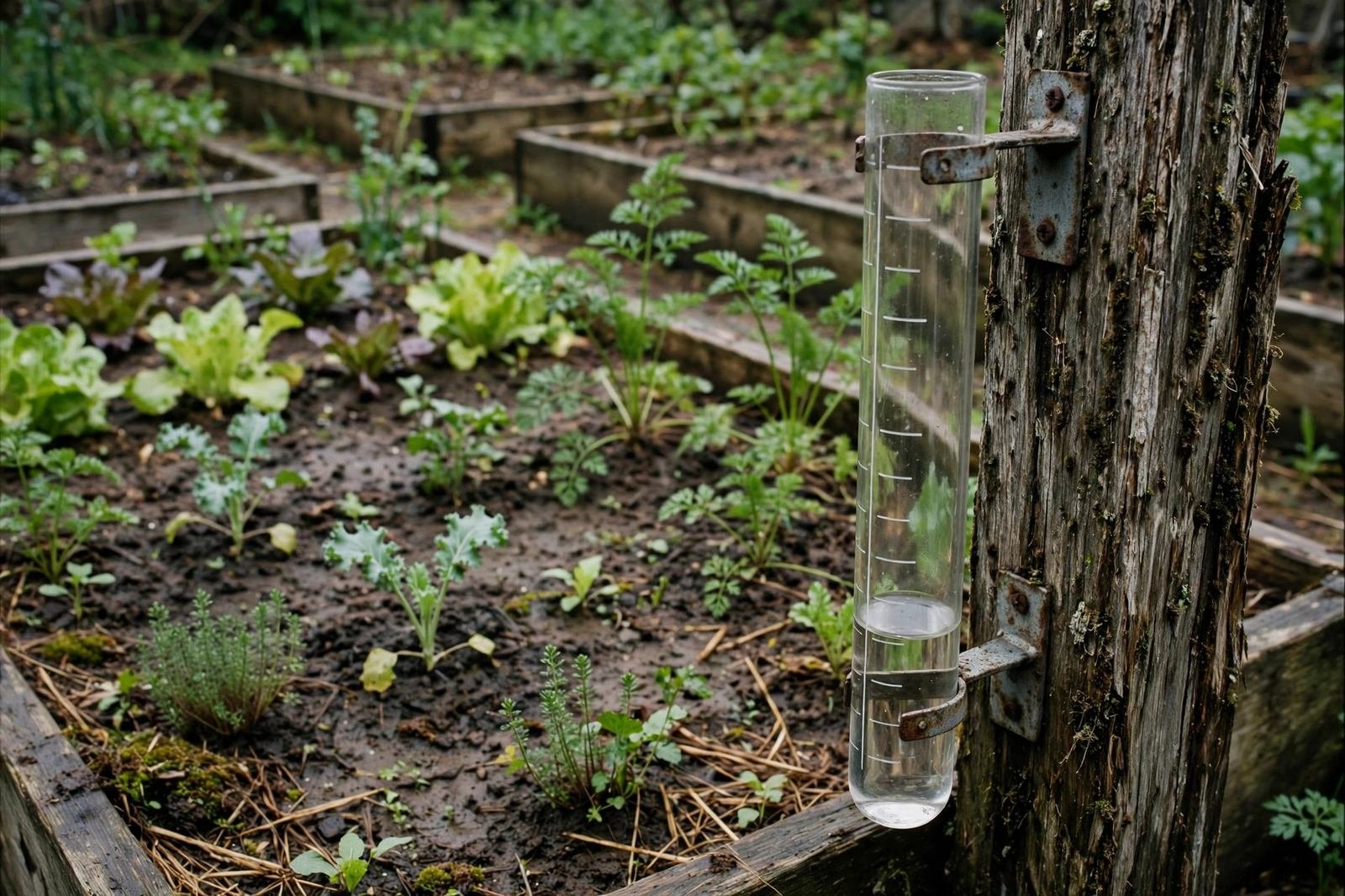
A rain gauge turns a guess into a number. After a storm, most of us look at wet soil and wonder whether the beds got a light sprinkle or a real soaking. A gauge answers that question in inches.
Rain also falls unevenly: one side of a yard can catch a solid shower while the other stays nearly dry. A gauge in your garden measures what actually landed where your plants grow.
This guide compares five common gauge types, works through what an inch of rain means for a raised bed, and covers placement and winter care. Most cost less than a bag of potting mix.
Five types at a glance
Every gauge below measures rainfall depth in inches, but they differ in readability, mounting, and trustworthiness.
| Type | Accuracy | Mounting | Readability | Best for |
|---|---|---|---|---|
| Classic glass tube | Good, to about 0.1 inch | Bracket on a post or fence | Clear markings, easy at arm’s length | A simple, honest reading |
| Plastic tube with mounting bracket | Good, to about 0.1 inch | Bracket on a post, fence, or deck rail | Large numbers, easy from a few steps away | Everyday use in a busy garden |
| Digital wireless gauge | Good when calibrated, can drift over time | Sensor outdoors, display indoors | Read from the kitchen, with totals and history | Records and indoor reading |
| Wedge or cone gauge | Rough, often off by 0.1 to 0.2 inch | Stake pushed into soil or a pot | Wide top, narrow bottom, harder to read small amounts | A quick check in a container |
| Decorative copper gauge | Fair, varies by design | Stake or hanging bracket | Pretty at a distance, markings can be small | A gauge that looks like garden art |
Classic glass tube
The classic glass tube is the oldest design on this list and still one of the most trusted. A straight glass cylinder with printed inch markings sits in a bracket, and rain falls straight in. What you see is what fell, with no funnel, no sensor, and nothing to calibrate.
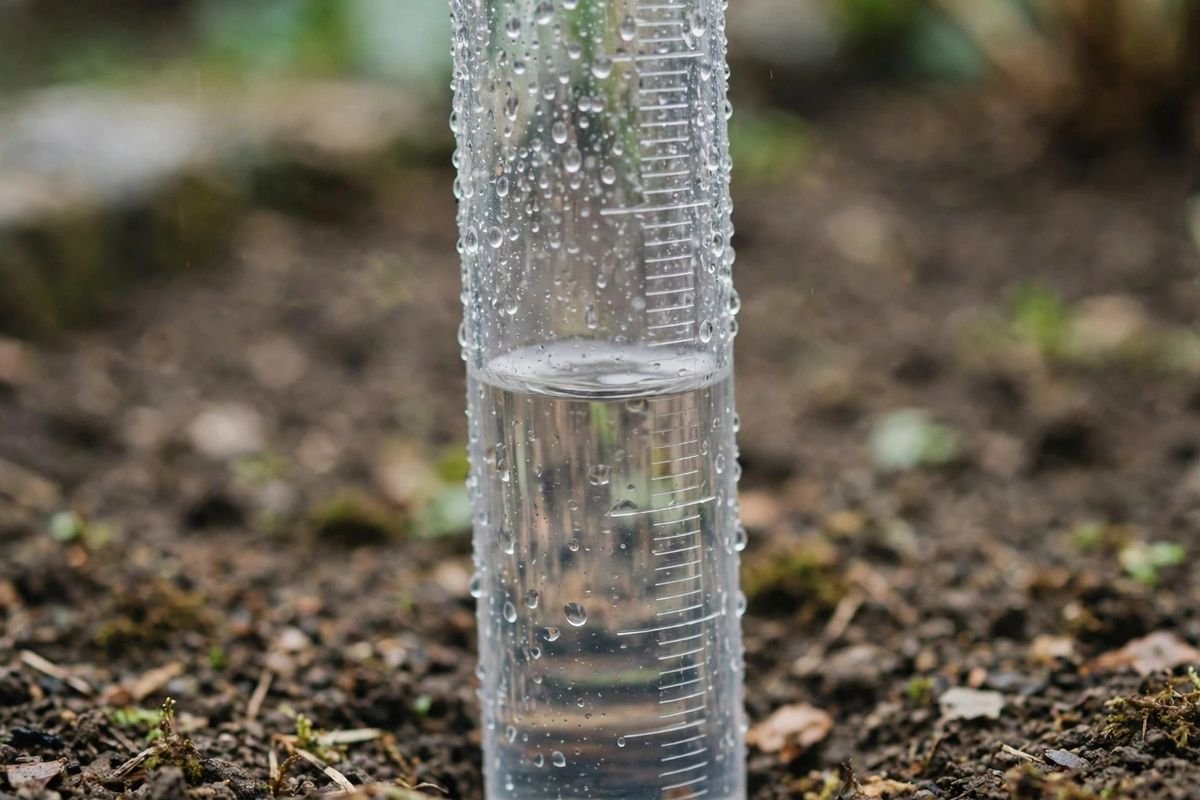
Glass has two plain strengths: it does not cloud the way cheap plastic can, so markings stay readable season after season, and its straight sides make the water line flat and simple to read.
The tradeoffs are also plain. Glass breaks if it falls or freezes full of water, so it needs a firm bracket and emptying before a hard freeze. Tubes hold only a few inches, so a big storm can overflow them, and you will need to empty and restart the count during a long rain.
Plastic tube with mounting bracket
The plastic tube gauge is the workhorse of home gardens. It follows the same straight-tube idea as the glass version, but the tube is molded plastic, the numbers are large, and the bracket usually comes in the box with screws.
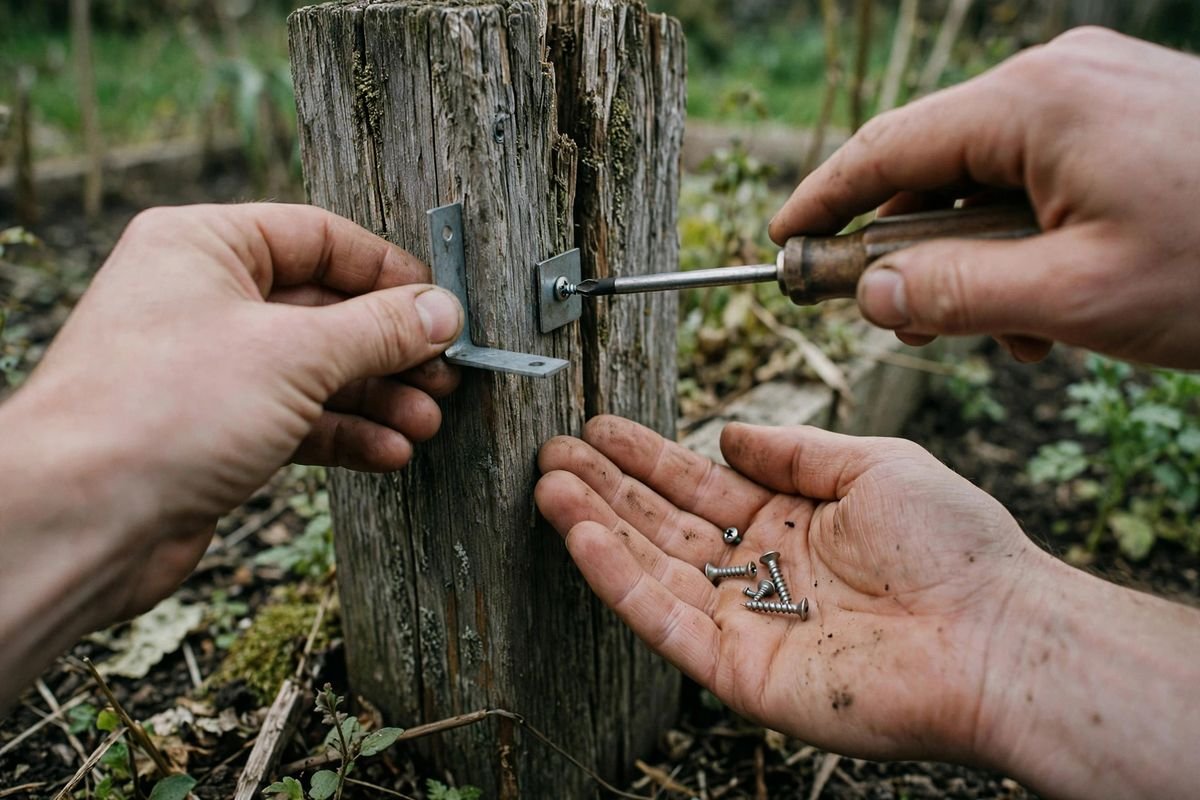
Plastic wins on everyday handling. It survives a knock off the fence that would shatter glass, it costs little, and the wide numbers are easy to read without bending close. Many models add a funnel top that keeps out leaves, plus an overflow chamber for heavy storms.
The weak point is the plastic itself. Sunlight slowly hazes cheap tubes, and after a few seasons the numbers can fade or the tube can turn milky. Buy a tube with molded or etched markings rather than a printed sticker, keep it out of the sprinkler’s path, and expect to replace it every few years.
Digital wireless gauge
A digital wireless gauge puts a small sensor outside and a display inside. Rain falls into a tipping bucket in the sensor, and the display shows the total for the day, the week, or the month, often alongside temperature and humidity. You can check the rainfall from the kitchen, and some models log history for month-to-month comparison.
The catch is that a digital gauge has moving parts, and moving parts need care. The tipping bucket can stick if leaves, spider webs, or grit get inside, and the reading can drift if the sensor sits out of level. Batteries die, usually in cold weather, and a dead battery means a missed storm.
A digital gauge earns its place if you check it against a manual tube now and then and clean the sensor each season. If you want one number you can trust without upkeep, a plain tube is the safer pick. If you like indoor reading and rain history, and you do not mind a little maintenance, the wireless type is a solid choice. Shop digital wireless rain gauges on Amazon.
Wedge or cone gauge
The wedge gauge is the small plastic cone you push into soil or a pot. It is cheap, light, and easy to move, and for a quick look at whether a container got rain, it does the job.
That tapered shape is also its limit. The markings crowd together near the bottom, so small amounts are hard to read, and the gauge can read high or low by a tenth or two depending on how level it sits. Wind catches the wide top, and in soft soil the stake can lean after a storm, which tilts every reading that follows.
Use a wedge gauge as a rough check, not as your main record. It suits a patio pot where a ballpark number is enough. For beds you water by schedule, a straight tube gives a steadier number for the same money. If you garden mostly in containers, see our guide to keeping container soil from drying out too fast.
Decorative copper gauge
A copper gauge is bought as much for looks as for measurement. The warm metal suits a cottage garden or a front bed, and many designs hang from a bracket or stand on a slim stake. As a measuring tool, it depends on the design.
Good copper gauges use a straight inner tube with clear markings, and those read much like a glass tube. Others use a shaped vessel with the numbers printed on a curve, and those are harder to read. Copper also darkens with age, and the patina can make small markings harder to see.
Buy a decorative gauge for the look, and check the markings first. If the numbers are etched or stamped and the tube is straight, you get both beauty and a usable reading. If the markings are faint or the shape is curved, treat it as garden art and keep a plain tube nearby for the real numbers.
What one inch of rain really means for a raised bed
An inch of rain sounds small until you turn it into gallons. Here is the math for a standard 4-by-8-foot bed, with our own numbers and stated assumptions.
A 4-by-8-foot bed covers 32 square feet. One inch of rain is 1/12 of a foot deep, so the volume of water on that bed is 32 square feet times 1/12 foot, which is 2.67 cubic feet. One cubic foot holds 7.48 gallons, so 2.67 cubic feet times 7.48 gallons per cubic foot comes to about 20 gallons. In short: one inch of rain drops roughly 20 gallons on a single 4-by-8 bed.
That number changes how you water. After a measured inch, the top several inches of soil are wet, and most vegetables need no extra water that day. After a quarter inch, the bed got only about 5 gallons, which wets the surface but may leave deeper roots dry. After two inches, the bed got about 40 gallons, and watering on top of that risks soggy soil.
The same math scales to the rest of the garden: a 4-by-4 bed gets about 10 gallons per inch, and a row 2 feet wide by 10 feet long gets about 12.5 gallons. Keep a small notebook by the back door, jot down the reading each morning, and within weeks you will know how your beds respond to a quarter inch, a half inch, and a full inch. If you collect roof water too, see our roundup of the best rain barrels for small gardens.
Where to put your gauge, and how to care for it in winter
Placement decides whether the number means anything. A gauge under a tree catches drips from leaves and reads high, while one tucked against the house sits in a rain shadow and reads low. The guidance from volunteer weather networks is simple: open sky above, twice as far from a tree or building as that object is tall, and away from sprinklers.
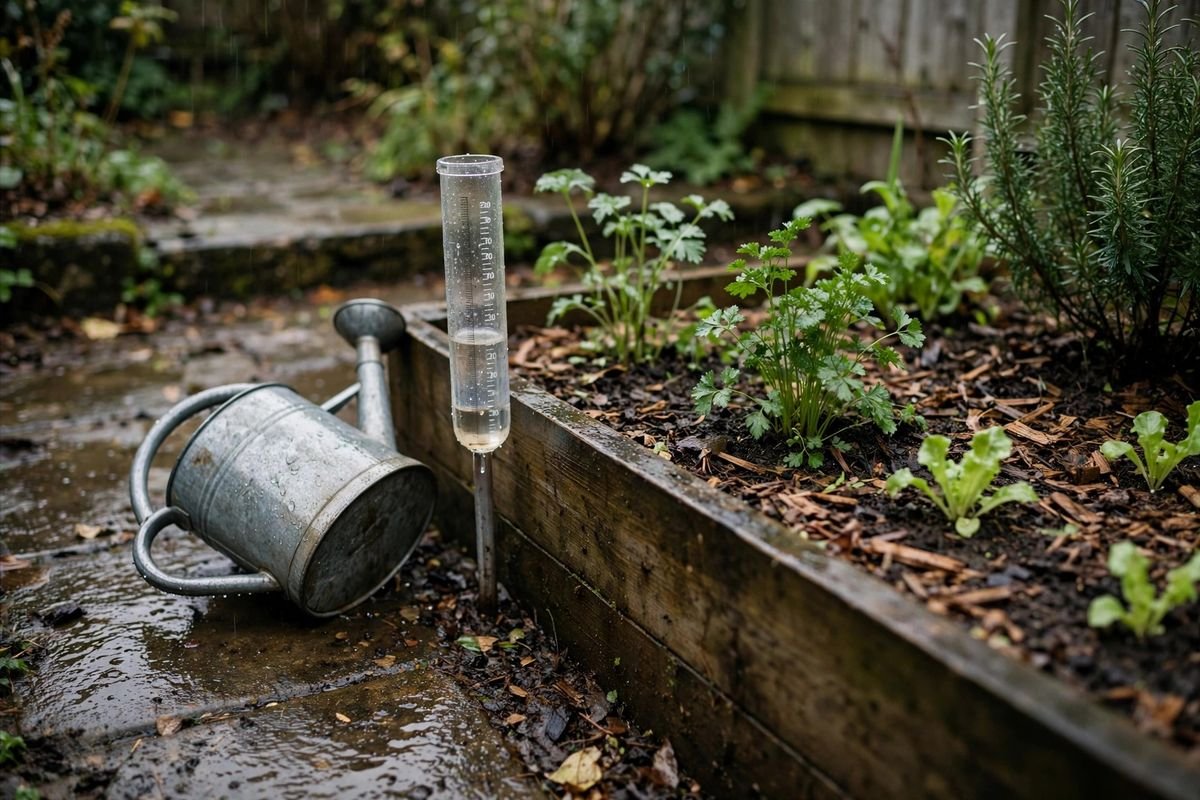
Mount the gauge 2 to 5 feet above the ground on a post, with the top level and the opening clear of the fence line. A post with a slanted or rounded top cuts down on splash from below. Put it where you can read it without stepping into a bed, and where you will walk past it each morning.
Read the gauge at eye level, and read the bottom of the curved water surface, the meniscus, for the truest number. Empty the gauge after each reading so the next storm starts from zero.
Winter care is mostly about ice. Water expands as it freezes, and a full tube left out in a hard freeze can crack glass or split plastic. Empty the gauge before a hard freeze is forecast, and in a cold climate, bring a glass tube indoors for the coldest months. If snow is expected, remove the funnel and inner tube so snow can collect in the outer chamber, then melt it indoors and measure the water.
Frequently asked questions
How much rain did we get overnight?
Read the gauge in the morning at eye level, note the water line in inches, and empty it so the next storm starts from zero. If the tube overflowed, measure the overflow in the tube and add it to the first reading.
Does it matter where I mount the gauge?
Yes. Open sky, level mounting, and distance from trees, roofs, and sprinklers all change the reading. A gauge under a tree measures that sheltered spot, not your garden as a whole.
How accurate are cheap rain gauges?
A straight tube gauge, glass or plastic, reads to about a tenth of an inch when level and in the open, close enough for garden watering. Wedge gauges and decorative shapes are rougher, often off by a tenth or two. Digital gauges are good when clean, level, and fitted with fresh batteries.
Do I still need to water after rain?
It depends on how much fell. A measured inch on a raised bed is about 20 gallons, and most vegetables need no extra water that day. A quarter inch is only about 5 gallons, so check the soil a few inches down before you decide. If you are starting your first beds, our guide to starting a vegetable garden covers watering, soil, and spacing.
Sources and further reading
- CoCoRaHS, Community Collaborative Rain, Hail and Snow Network, a volunteer network for measuring and reporting rainfall.
- Blue Hill Observatory observer guide, rain and melted precipitation standards from Blue Hill Observatory, CoCoRaHS, and the National Weather Service.
- National Weather Service, Cooperative Weather Observer Program siting requirements, on gauge exposure and placement.
Related reading: How to Keep Container Soil from Drying Out Too Fast, How to Start a Vegetable Garden, Best Rain Barrels for Small Gardens.
A rain gauge is a small tool that gives you a number each morning: water, wait, or let the sky do the work. Pick a straight tube if you want the plainest honest reading, add a wireless display if you like indoor totals, and mount it in open sky where you will see it every day. If you are shopping for one, browse rain gauges for gardens on Amazon and match the type to your garden.
By the Pot and Plot Team