
This post may contain affiliate links. If you buy through links on this page, we may earn a commission at no extra cost to you.
As an Amazon Associate I earn from qualifying purchases.
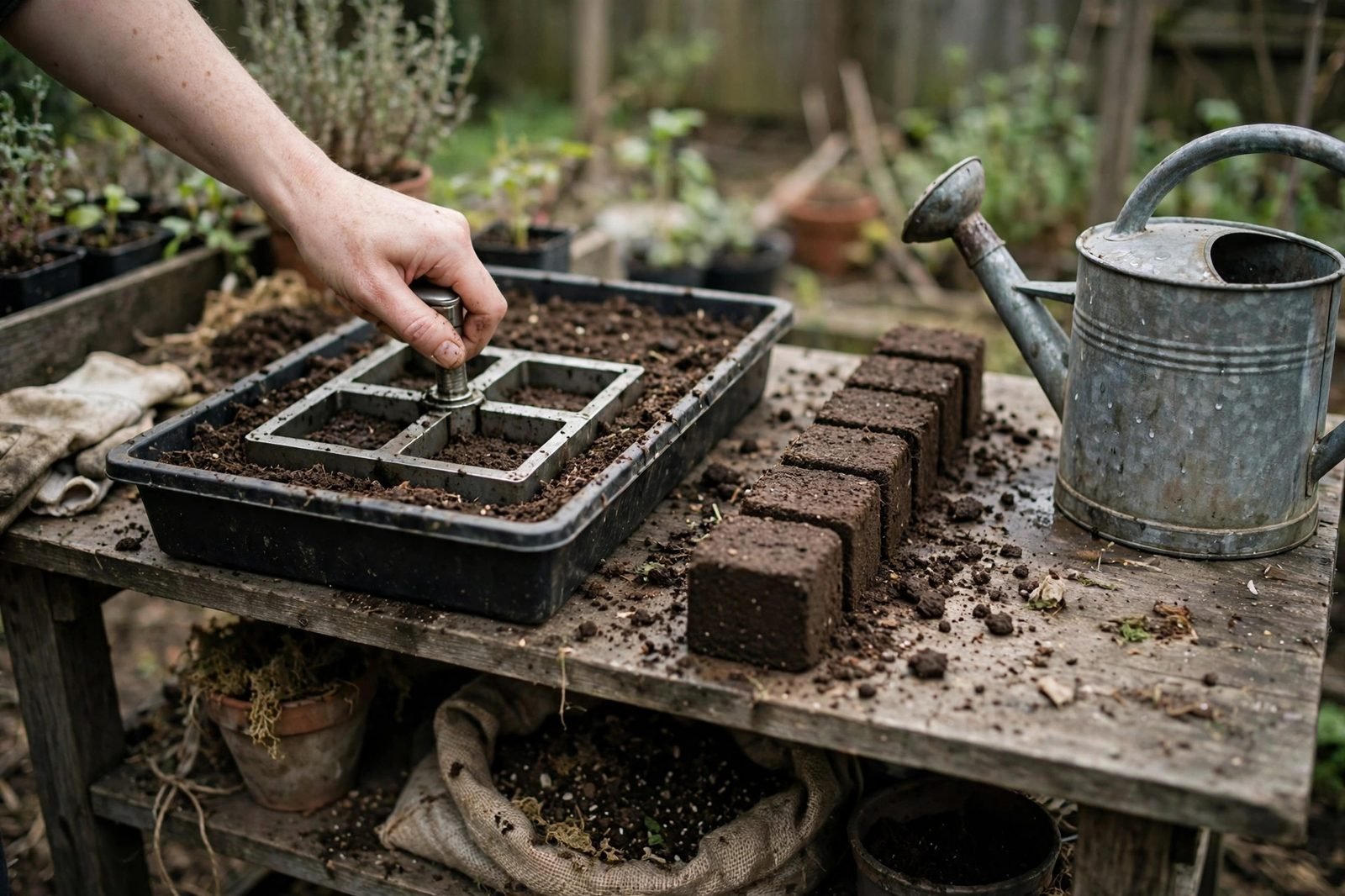
A soil block is a pressed cube of damp seed starting mix that holds its shape without a plastic cell around it. A metal tool called a soil block maker packs the mix into a mold, then pops the cube out onto a tray. Seeds go into a small dimple on top, and the block itself acts as the pot.
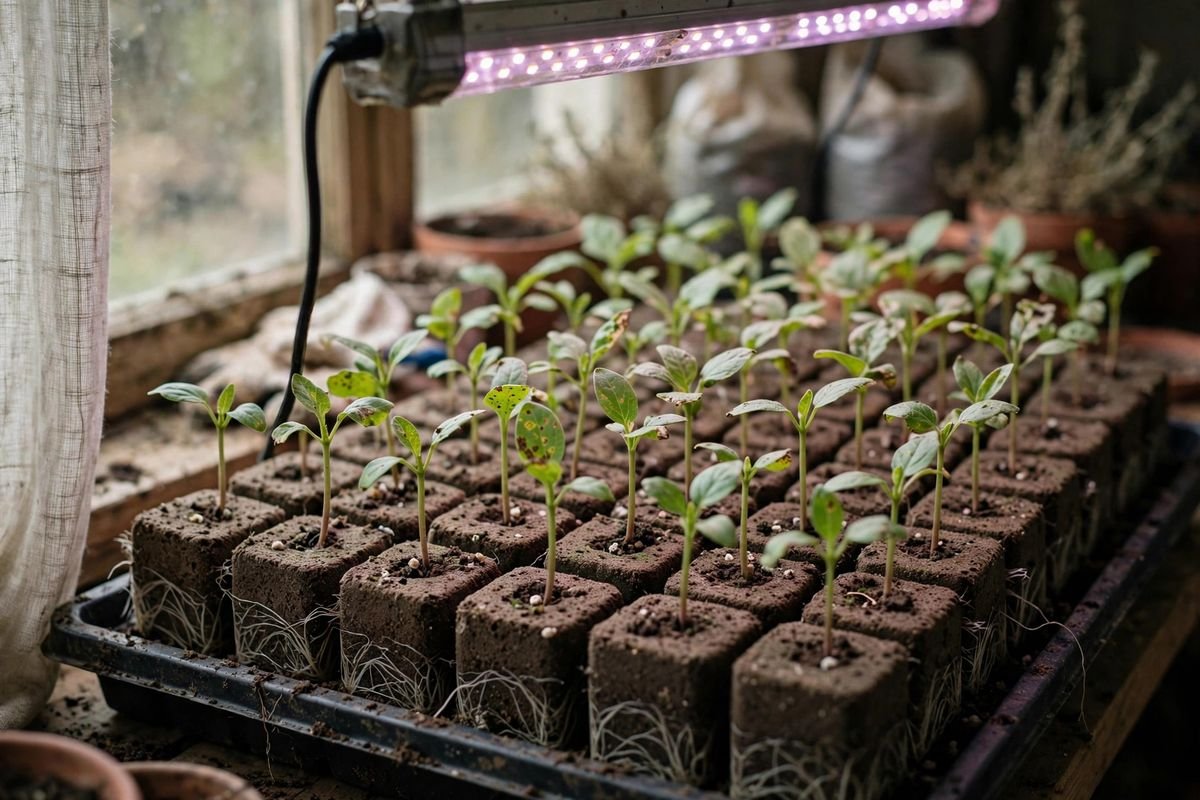
The appeal is plain: no plastic cells to wash and store, and roots that reach the edge of a block meet air and stop, instead of circling the inside of a pot. That air pruning gives seedlings a compact root mass that moves into the garden with little disturbance. The tradeoff is that blocks dry out faster than cells, and the mix has to be wet enough and fibrous enough to hold together.
We have not run hands-on trials on the makers named here, and prices and listings change often. This roundup is research-based: we compared block sizes, press counts, and maker designs described by seed companies and university extension guides. Check the listing for dimensions and materials before ordering.
Soil block makers at a glance
The five types below cover most home seed starting. Block size drives everything else: small blocks suit seeds that germinate fast and move up soon, while large blocks suit crops that stay indoors for weeks.
| Type | Block size | Blocks per press | Best for | Watch out for |
|---|---|---|---|---|
| 3/4-inch mini blocker | 3/4 inch | 20 | Tiny seeds, lettuce, herbs | Dries fast; pot up soon |
| 2-inch standard blocker | 2 inches | 4 | Most vegetables, flowers, and herbs | Needs wet, fibrous mix |
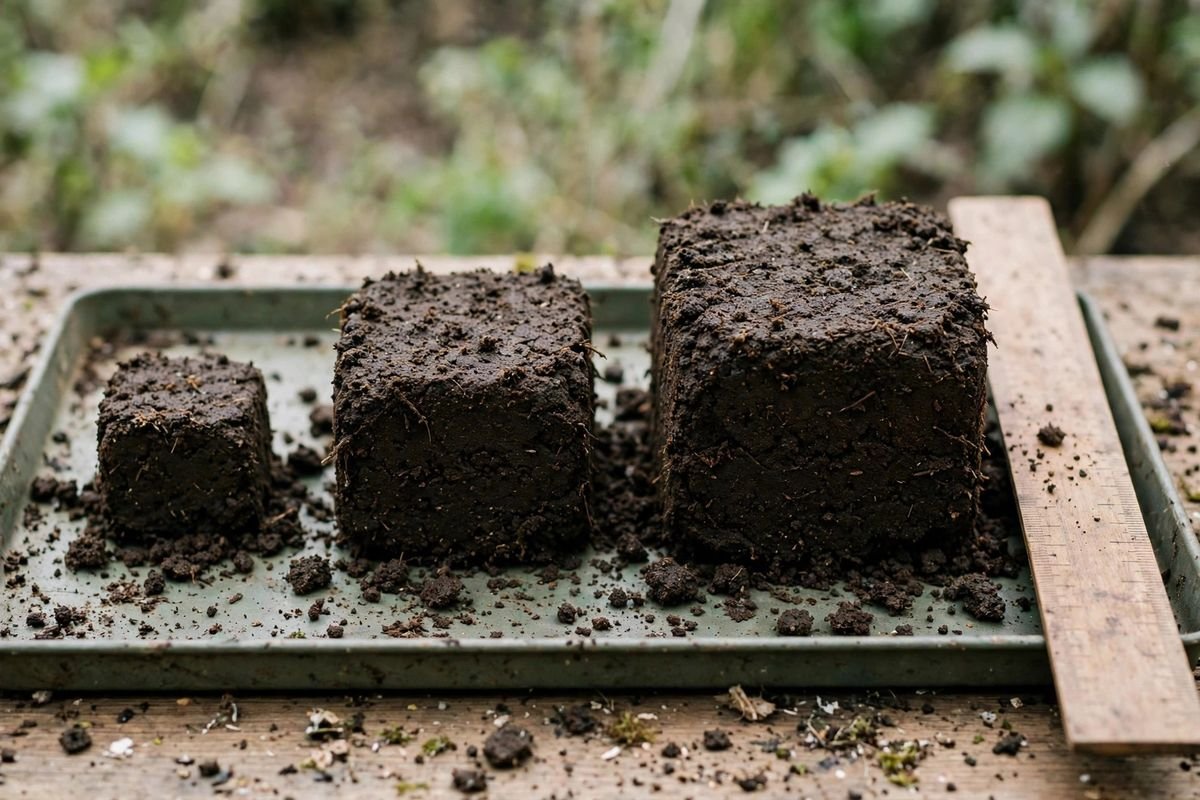
| 4-inch large blocker | 4 inches | 1 | Large seeds, squash, sunflowers, potting up | Heavy; uses a lot of mix per block |
| Multi-block hand press | 1 1/2 by 2 inches | 12 | Big batches of peppers and tomatoes | Heavy; costs more |
| Stand-up long-handle blocker | 2 inches | 6 to 35, by model | Large batches, less bending | Needs floor space; higher price |
3/4-inch mini blocker
The mini blocker presses twenty 3/4-inch cubes in one go, which starts a lot of small seeds fast. Lettuce, celery, parsley, and many herbs germinate well in these small cubes, and a heat mat warms the small cubes fast, which can speed germination for heat-loving seeds. The limits show up just as fast. A 3/4-inch cube dries out in a day under grow lights, so we check moisture daily and water from below. Seedlings outgrow the cube within a couple of weeks, so we move each one into a 2-inch block as soon as it has true leaves. For gardeners who sow dozens of varieties in small numbers, no other tool starts that many seeds with one press. Browse mini soil block makers on Amazon and check that the listing states a 3/4-inch block size, since some sellers label larger tools as mini.
2-inch standard blocker
The 2-inch blocker is the workhorse of the set, and for most home gardeners it is the only one they will ever need. It presses four 2-inch cubes per press, and suits most vegetables, flowers, and herbs from sowing through transplant. Johnny’s Selected Seeds calls its 2-inch blocker the classic size, with rounded dibbles for sowing seed directly and square dibbles for potting a 3/4-inch cube into the larger block. Iowa State University Extension calls the 1 1/2- to 2-inch range the most flexible size for home seed starting.
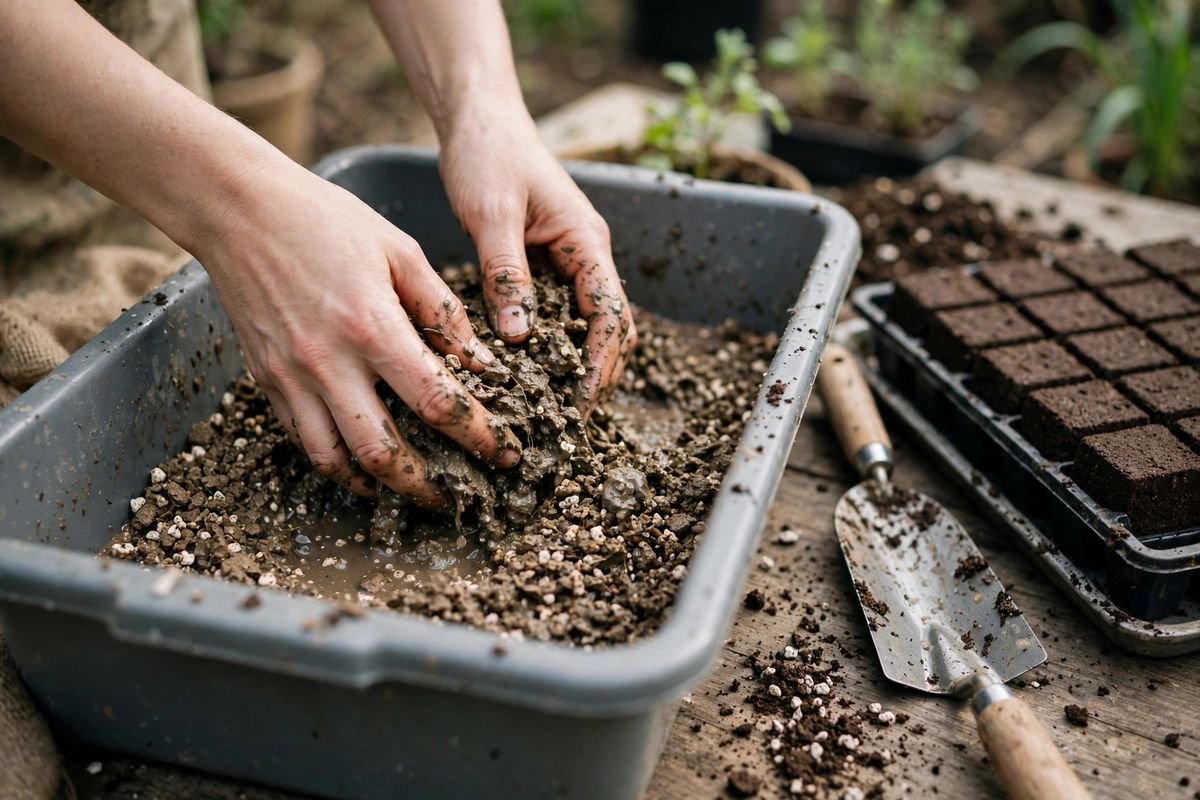
Two points decide whether this tool works well. First, the mix must be wet enough to hold together when squeezed, about the feel of brownie batter, or the cubes crumble when they leave the mold. Our guide to how to make seed starting mix from scratch covers a mix that binds well for blocking. Second, leave space between blocks on the tray so air can reach the edges and prune the roots; packed tight, roots grow into the next block. Compared with plastic cells, the 2-inch block gives roots more air and less circling, as we lay out in soil blocks vs. plastic cells for seed starting. Check current listings for soil block makers on Amazon, looking for a spring-loaded handle.
4-inch large blocker
The 4-inch blocker presses a single large cube, built for seeds that are big or crops that stay indoors for a long time. Sunflowers, winter squash, pumpkins, and gourds all fit this size, and it is the landing spot when a 2-inch block needs potting up. A seedling can spend weeks in a 4-inch block and still move into the garden with its root mass intact.
The tradeoff is volume. One 4-inch cube holds 64 cubic inches of mix, eight times a 2-inch cube, so a tray of them eats through a bag of mix fast and each block is heavy to carry. Pressing one block at a time is slow if we need dozens. Buy this size when we grow large-seeded crops every year; skip it if most of our crops are small vegetables and herbs, since the 2-inch blocker already covers them.
Multi-block hand press
A multi-block hand press is still held in the hand, but it presses a full row of blocks at once. The common 12-cell version makes twelve blocks of about 1 1/2 by 1 1/2 by 2 inches in a single press, and 72 fit a standard 1020 tray in neat rows.
A 12-cell press loaded with wet mix is noticeably heavier than a 4-cell blocker, and our hands feel it after a few trays. It also costs more than a single-size blocker, so it pays for itself only when we use it at volume. A flat-bottomed tub helps: press the tool into the mix several times, twist slightly, and scrape the bottom clean before releasing the blocks, or half-filled cells leave ragged cubes. For a first soil block maker, the standard 2-inch tool is the safer buy; the multi-block press is the upgrade for gardeners who fill tray after tray.
Stand-up long-handle blocker
The stand-up blocker is built for gardeners who make blocks by the hundred and would rather not kneel or bend over a tub. A long handle and a foot press drive the mold into the mix, and models press 6, 20, or even 35 blocks at once.
The price and the footprint are the honest downsides. Stand-up blockers cost several times what a hand blocker costs, and they need a clear patch of floor and a large, flat tub of mix. They also suit growers who already know their mix recipe well, since a bad batch wastes a lot of mix in one press. If we do step up, compare stand-up soil block makers on Amazon and confirm the block count per press and block size in the listing, since models with similar names press very different numbers.
How much mix do you need? Our block-count math
Before ordering mix, we worked out how many blocks a bag actually makes, using our own arithmetic and plain assumptions. The figures use loose, dry mix measured before pressing, and allow for mix that compresses in the mold, sticks to the tool, and spills on the bench.
Assumptions. One cubic foot of mix equals 1,728 cubic inches. A 2-inch cube holds 2 x 2 x 2 = 8 cubic inches. In theory, one cubic foot makes 1,728 / 8 = 216 two-inch blocks. In practice, pressing compresses the mix and some mix is lost to handling, so we plan on about 10 to 15 percent loss.
The math. At 10 percent loss, 216 x 0.90 = about 194 blocks. At 15 percent loss, 216 x 0.85 = about 184 blocks. Our planning figure is 180 to 200 two-inch blocks per cubic foot of mix. The same arithmetic scales: a 3/4-inch cube holds about 0.42 cubic inches, so one cubic foot makes about 4,100 in theory and about 3,500 after losses; a 4-inch cube holds 64 cubic inches, so one cubic foot makes 27 in theory and about 22 to 24 after losses.
How we use the result. A gardener starting 100 tomato and pepper seedlings in 2-inch blocks needs about half a cubic foot of mix. Filling three 1020 trays with 72 two-inch blocks each, 216 blocks in all, needs a full cubic foot, plus a little extra for practice. Buy the mix by volume and check the bag size on the listing.
When to start seeds for soil blocks
Soil blocks change the container, not the calendar. Each crop still needs its usual weeks indoors before moving out: leafy greens about 2 to 4 weeks, cabbage and broccoli about 4 to 6 weeks, tomatoes about 5 to 6 weeks, and peppers, eggplant, and onions about 8 to 10 weeks, following University of Maryland Extension timing for indoor seed starting. Count back from the move-out date, then add a few days for germination.
Use your local frost dates and regional planting guidance — not your USDA hardiness zone alone — to choose planting dates. That timing sets both the sowing date and the move-out date. It matters more for soil blocks than for cells, since a seedling that outgrows its block has nowhere to go but a larger block or the garden. If the last frost slips later, pot blocks up a size rather than holding seedlings in a size they have outgrown.
Frequently asked questions
Do soil blocks really hold together without a pot?
Yes, when the mix and moisture are right. The mix needs fibrous material such as peat or coir to bind it, plus compost and perlite or sand for body, and it should hold together when squeezed without dripping. Press the mix firmly into the mold, scrape the bottom clean, and release the blocks onto a flat tray. Blocks made from dry mix or ordinary potting soil with large chunks tend to fall apart, so screen out sticks and bark first.
Can we use regular potting soil for soil blocks?
Ordinary potting soil is a poor fit: usually too coarse and too low in the fibrous material that binds a block, and it often holds the wrong amount of water for pressing. A mix made for soil blocks, or a home mix of peat or coir, screened compost, and perlite, holds its shape far better. Penn State Extension warns that traditional potting soil is not the right consistency for blocking, and its Master Gardener guide gives a full mix recipe for growers who blend their own.
How do we water soil blocks?
Water from below. Set the tray of blocks in a shallow tray of water and let the mix wick moisture up, then pour off the extra so the blocks never sit in water for long. Water poured from above can break the blocks apart, and a coarse stream erodes the edges. Our walkthrough in how to bottom water seedlings covers fill depth and timing. Under grow lights, check the blocks daily, since the exposed sides dry faster than a plastic cell.
Do seedlings need potting up from mini blocks?
Most do. A seedling started in a 3/4-inch cube should move into a 2-inch block once it has a few true leaves, and a seedling in a 2-inch block moves into a 4-inch block if the garden is still weeks away. The square dibble on many 2-inch blockers makes a pocket that fits the mini cube neatly, so the move takes seconds.
Sources and further reading
- Iowa State University Extension, Yard and Garden: Starting Seeds in Soil Blocks: https://yardandgarden.extension.iastate.edu/how-to/starting-seeds-soil-blocks
- Johnny’s Selected Seeds: Making Soil Blocks With Niki Jabbour: https://www.johnnyseeds.com/growers-library/methods-tools-supplies/seed-starting-transplanting/video-v344.html
- Penn State Extension: Making Soil Blocks: https://extension.psu.edu/programs/master-gardener/counties/susquehanna/penn-state-master-gardener-articles/making-soil-blocks
Related reading: how to make seed starting mix from scratch, best seed starting trays, how to bottom water seedlings, soil blocks vs. plastic cells for seed starting.
By the Pot and Plot Team