

This post may contain affiliate links. If you buy through links on this page, we may earn a commission at no extra cost to you.
As an Amazon Associate I earn from qualifying purchases.
Cold hands end a winter garden session fast. Bare fingers lose grip on a trowel, a wet glove chills faster than a bare hand, and a thick ski glove cannot tie a plant or pick up a seed. Winter garden gloves have to solve two problems at once: keep hands warm and dry, and keep enough feeling in the fingers to do real work. No single pair does both perfectly, and the right pick depends on the job.
This roundup compares the main types of winter gardening gloves by warmth, water resistance, grip, and dexterity, with a verdict for each common use case and a cost-per-season worked example. We have not tested the products linked here, and we give no current store prices. Check each listing for current sizes, materials, and prices before you buy. For the tools those gloves will hold, see our guide on best pruning shears for home gardeners.
Why winter gloves are different
A summer garden glove is a skin guard: thin, breathable, and built to stop blisters and thorns. A winter glove is a weather guard: it has to block wind, shed water, and hold warmth while the hands still work. Insulation takes up space, and that space is the whole tradeoff. Every layer of fleece or foam that warms the hand also thickens the fingers, and thick fingers fumble small jobs. A glove that is warm enough for hauling mulch in January is often too clumsy for pruning roses in the same month.
Water makes the tradeoff sharper. A glove that soaks through in wet soil chills the hand faster than no glove at all, because wet fabric pulls heat away from the skin. That is why the palm coating matters as much as the lining: a nitrile or latex coating on the palm and fingers keeps water out of the grip surface, while the back of the hand can stay breathable. A fully waterproof glove keeps water out everywhere, but it also traps sweat, and sweaty hands chill once the work stops.
The main glove types, compared
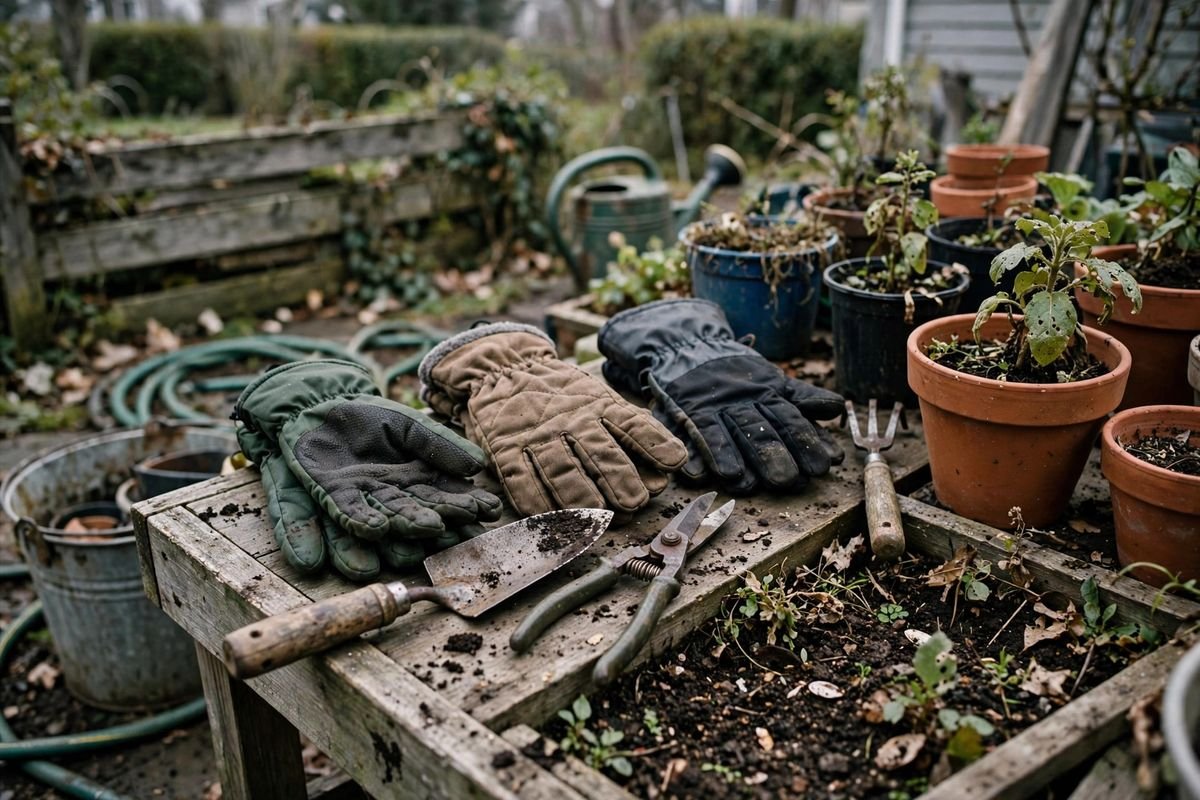
The table below compares the five glove types most gardeners actually buy for winter work. The ratings are general guidance for the type, not for any single brand, because the same type can run warm or cold depending on its lining and fit.
| Glove type | Warmth | Water resistance | Dexterity | Best for |
|---|---|---|---|---|
| Insulated leather work gloves | High | Moderate, leather resists light wet | Low | Hauling, digging, moving pots |
| Waterproof nitrile-coated gloves | Medium | High on palm and fingers | Medium | Wet soil, washing pots, damp beds |
| Fleece-lined knit gloves | Medium | Low, soaks through fast | High | Dry days, seed sowing, light pruning |
| Gauntlet gloves with long cuffs | Medium to high | Moderate | Low to medium | Thorny roses, brambles, brush clearing |
| Thin dexterity gloves with a warm liner | Low to medium | Low to medium | High | Tying, seeding, tool work in mild cold |
Pros and cons of each type
Insulated leather work gloves are the warmest choice for heavy work. The leather palm grips tools and resists punctures, the insulation holds heat on cold mornings, and a good pair lasts for years. The downsides are bulk and slow drying: once leather soaks through, it stays wet and stiff, and the thick fingers make small jobs awkward. Choose leather when the job is hauling, digging, and moving, and the fingers do not need to be precise.
Waterproof nitrile-coated gloves are the best all-round pick for wet winter soil. The coated palm keeps water out of the grip, the fit is usually snug, and the price is low enough to keep a spare pair. They run cooler than insulated leather, so they suit active work in mild cold rather than standing still in a hard freeze. The coating can crack after a season of heavy use, and the thin lining gives little warmth on its own.
Fleece-lined knit gloves are the most comfortable for light work on dry days. They fit close, they keep fingers nimble for seeds and ties, and they are easy to wash. They fail in wet soil: the knit soaks through in minutes, and a wet knit glove chills the hand. Keep a pair for dry days, and switch to a coated glove the moment the soil is wet.
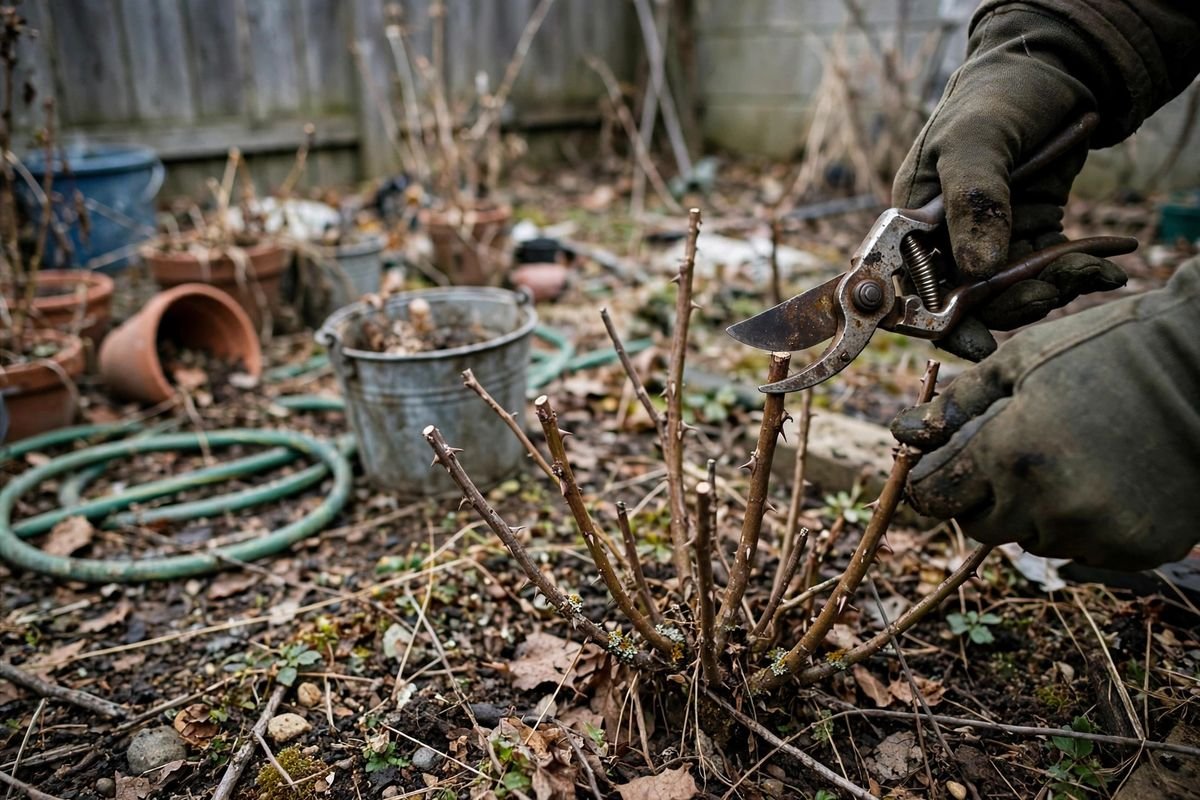
Gauntlet gloves earn their place on thorny work. The long cuff guards the forearm from rose thorns and bramble scratches, and the padded palm handles canes and brush. They are too bulky for fine work, and the long cuff can catch on branches. Choose gauntlets for roses and brambles, and leave them in the shed for everything else.
Thin dexterity gloves with a warm liner are the precision pick. A snug nitrile glove over a thin thermal liner gives good grip and decent warmth for tying, seeding, and tool work in mild cold. The pair is cheap and easy to replace, but the warmth is limited, and the liner alone is no use in wet soil without the coated outer glove.
Dexterity or warmth: pick by the job
Start from the job, not the glove. Hauling mulch, digging, and moving pots call for warmth and a tough palm, so insulated leather wins. Working wet soil calls for a coated palm, so nitrile-coated gloves win. Sowing seeds, tying plants, and light pruning call for feeling in the fingers, so fleece-lined knit or a thin dexterity pair wins, as long as the day is dry.
Most winter gardeners end up with two pairs: one warm pair for heavy work and one coated pair for wet work. That split costs little and covers nearly every winter job, and it beats one expensive pair that does neither job well. Keep the second pair dry in a shed or garage so a dry pair is always ready when the first pair soaks through.
Fit matters more in winter than in summer. A glove that is too tight cuts off circulation and makes hands colder, while a glove that is too loose lets cold air in at the cuff and kills grip. Try gloves on with the liner you will actually wear, make a fist, and pick up a coin: if you cannot pick it up, the glove is too thick for fine work, whatever the label promises.
What to look for when you buy
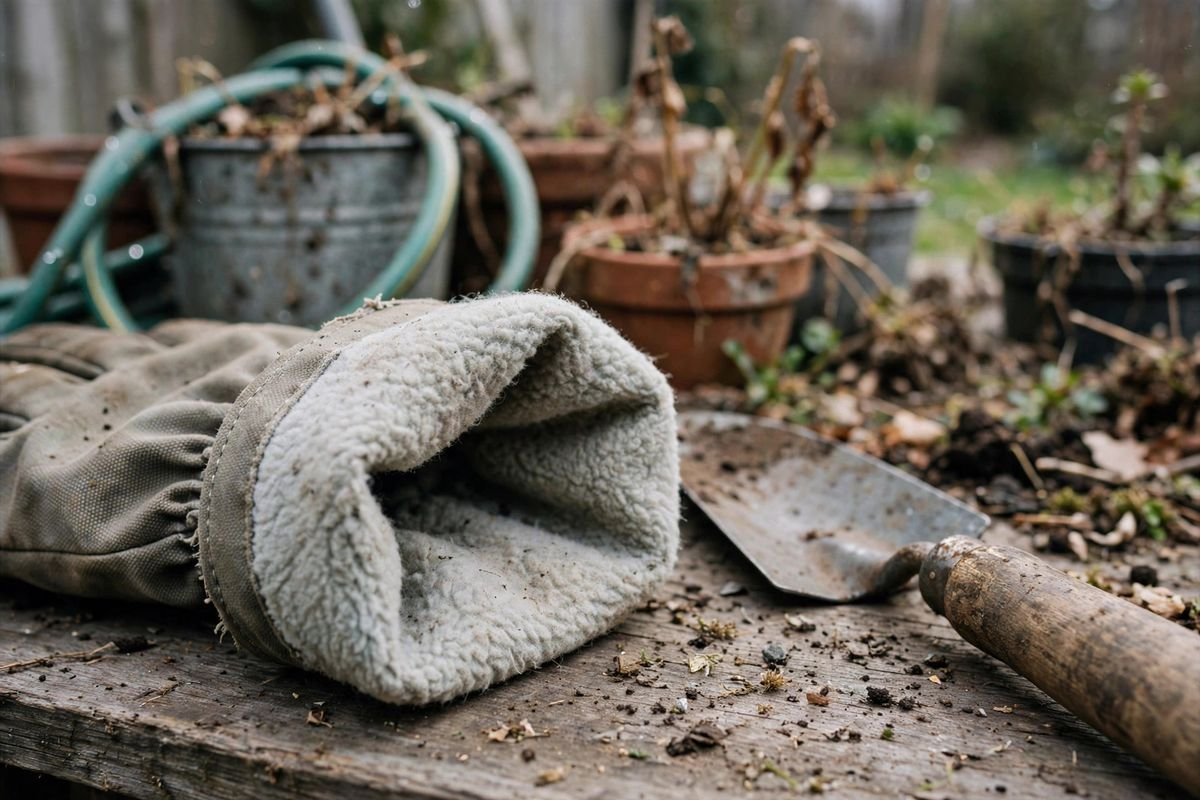
Check the lining first. Fleece and brushed polyester linings hold warmth and dry faster than cotton, and a removable liner lets you wash and dry the glove properly. Check the cuff next: a snug knit cuff or an adjustable strap keeps cold air and soil out, while a loose cuff lets both in. Check the palm coating for full coverage on the fingers as well as the palm, because wet soil touches the fingertips first.
Check the sizing chart on each listing before you buy, because sizes run differently between brands, and a winter glove with a thick lining fits a full size larger than a summer glove. If you need a pair for wet work, you can browse waterproof insulated gardening gloves on Amazon. We have not tested the products linked here, and we give no current store prices. Check each listing for current sizes, materials, and prices before you buy.
Look after the gloves you buy and they will last longer. Rinse mud off after each session, air dry them away from direct heat, and never dry leather gloves on a radiator, which cracks the leather. A pair of leather gloves treated with a leather balm once a season stays supple and water resistant far longer than a pair left caked in mud. For the full end-of-season routine, see our guide on how to clean and disinfect garden tools and how to sharpen pruning shears.
Our worked example: cost per season
A cheap pair that lasts one season can cost more per year than a dearer pair that lasts five. The table below runs our own computed numbers for three example pairs, with the assumptions stated here so you can rerun the math for any glove you are considering. Assumptions: the prices are example figures used for the math only, not store prices, and each pair is used for a full winter season of regular garden work. Cost per season equals the example price divided by the seasons the pair lasts.
| Example pair | Example price | Seasons it lasts | Cost per season |
|---|---|---|---|
| Budget coated gloves | $12 | 1 | $12.00 |
| Mid-range insulated gloves | $28 | 3 | $9.33 |
| Heavy leather work gloves | $45 | 5 | $9.00 |
The math shows the pattern clearly: the $45 pair costs the least per season at $9.00, while the $12 pair costs the most at $12.00, because it must be replaced every year. The $28 pair sits in the middle at $9.33 per season, and it is the best value for a gardener who wants warmth without paying for heavy leather. Durability is the hidden factor in glove value, and a pair that survives three winters is a better buy than a pair that dies in one, even at twice the price.
A short winter-timing note
Winter garden work runs on frost dates more than on the calendar. Use your local frost dates and regional planting guidance — not your USDA hardiness zone alone — to choose planting dates. The same dates mark the end of the pruning and planting season, and the start of the weeks when gloves matter most. Buy winter gloves before the first hard frost, not after it, so the pair is broken in and ready on the first cold morning you need it.
Troubleshooting
My gloves soak through in minutes
Soaking through means the palm coating has worn out or the glove was never meant for wet work. Switch to a nitrile-coated pair for wet soil, and keep fleece-lined knit gloves for dry days only. A coating that cracks or peels cannot be repaired, and the glove should move to dry-day duty or be replaced.
My hands get cold even in insulated gloves
Cold hands in insulated gloves usually point to fit or sweat. A glove that is too tight cuts circulation, and a sweaty hand chills once the work stops. Try a size up, wear a thin liner that wicks sweat, and take the gloves off for a few minutes between jobs so the lining can dry. If your hands still chill fast, add hand warmers inside the gloves on the coldest days.
I cannot grip tools with my winter gloves on
Lost grip means the glove is too thick for the job. Switch to a thinner coated pair for tool work, and save the thick insulated pair for hauling and digging. A palm with a textured nitrile coating grips far better than smooth leather when the tool handle is wet.
My leather gloves went stiff after getting wet
Leather stiffens when it dries too fast or too hot. Let wet leather dry slowly at room temperature, away from radiators and direct sun, then work a leather balm into the palm and fingers while the leather is still slightly damp. Stiff gloves usually soften again after one treatment and a day of wear.
Frequently asked questions
What are the warmest gardening gloves for winter?
Insulated leather work gloves are usually the warmest, because the leather blocks wind and the thick lining holds heat. They suit heavy work in hard cold. For wet soil, a waterproof insulated glove with a nitrile-coated palm is warmer in practice, because it stays dry, and a dry glove always beats a wet one.
Can I use regular work gloves for gardening in winter?
Yes, for heavy work such as hauling and digging, where a tough palm matters more than a snug fit. For planting, pruning, and seed work, garden gloves fit closer and grip better, so a work glove will feel clumsy. Match the glove to the job, and keep a garden pair for the fine work.
How do I keep winter gloves from smelling?
Rinse mud off after each session, turn the gloves inside out if the lining allows it, and air dry them fully before the next use. A pair that stays damp in a closed shed will smell within days. Washing knit and coated gloves in mild soap and air drying them once a month keeps them fresh.
Should I buy one pair or two?
Two pairs cover winter better than one. A warm insulated pair handles heavy work and cold mornings, and a coated pair handles wet soil. The pair costs little extra, and a dry spare is always ready when the first pair soaks through. One pair only works if your winter work is all one kind, which is rare.
Sources and further reading
- Colorado State University Extension, Fall and Winter Watering
- North Carolina State University Extension, Extension Gardener Handbook
- University of Florida IFAS Extension, Planting and Care
Related reading: Best Pruning Shears for Home Gardeners, How to Clean and Disinfect Garden Tools, How to Sharpen Pruning Shears, How to Protect Raised Beds From Frost
By the Pot and Plot Team