
This post may contain affiliate links. If you buy through links on this page, we may earn a commission at no extra cost to you.
As an Amazon Associate I earn from qualifying purchases.
Soil pH decides how well plants can take up nutrients that are already in the ground. When pH sits far outside the range a plant prefers, feeding does not fix the problem, because the nutrients stay locked in forms roots cannot reach.
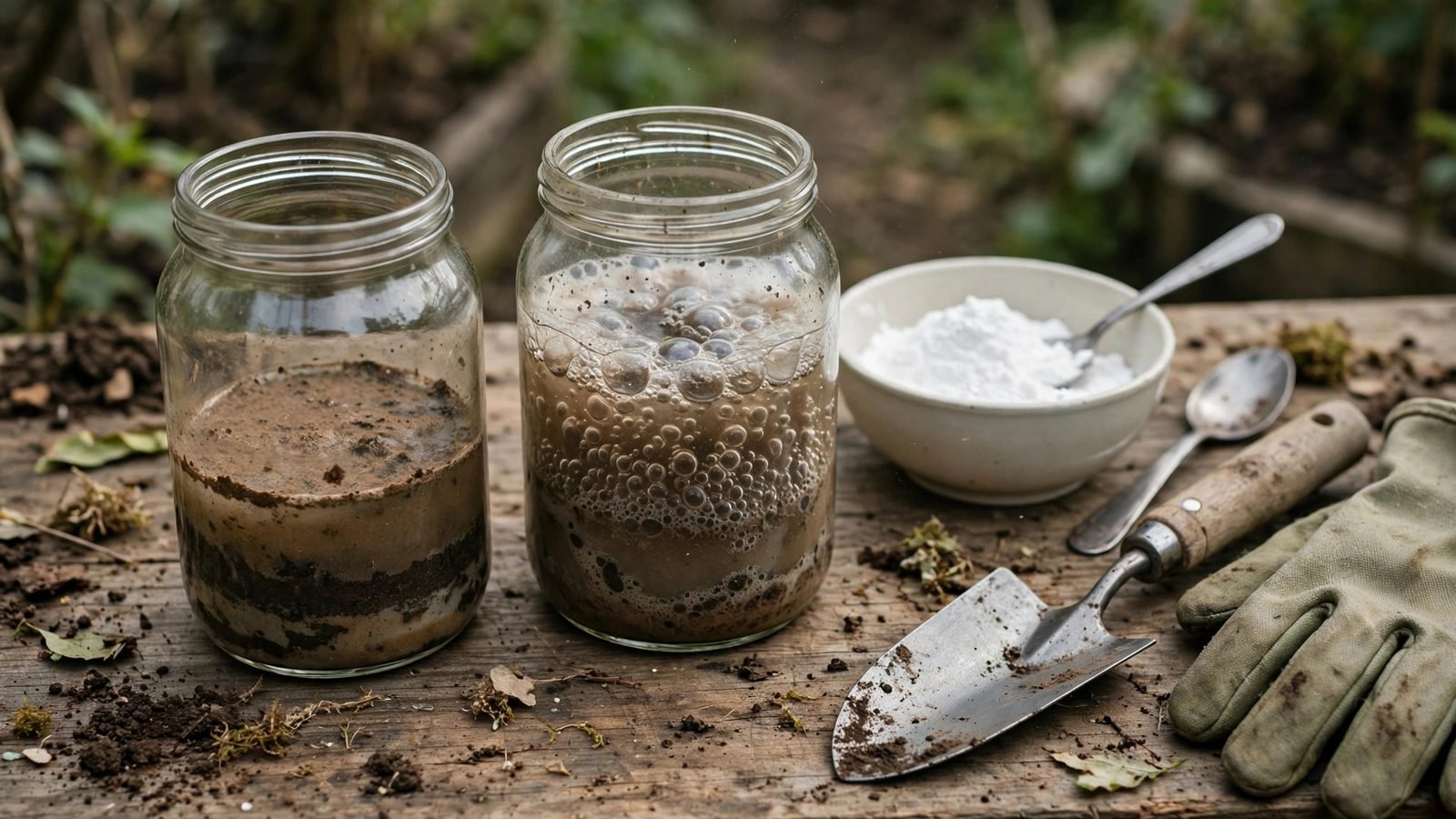
A lab test gives you a number. The vinegar and baking soda jar tests do not. They show direction only: acid, alkaline, or somewhere near neutral. That direction is still useful: it tells you whether a lab test is worth ordering, and which way a bed leans before you plant crops that care about pH.
Both tests use things already in most kitchens, and each one takes about five minutes once the sample is ready. This guide gives the exact amounts, explains how to read the fizz, and sets out the limits you should keep in mind before acting on a result.
What soil pH is
Soil pH measures how acid or alkaline soil is, on a scale from 0 to 14. A reading of 7.0 is neutral. Below 7.0, soil is acid. Above 7.0, it is alkaline. Most garden plants grow best in soil that is slightly acid, roughly pH 6.0 to 7.0, and the Royal Horticultural Society puts pH 6.5 forward as the best general-purpose figure for gardens.
The scale is logarithmic, so each whole-number step is ten times more acid or alkaline than the last. Soil at pH 6.0 is ten times more acid than soil at pH 7.0, and soil at pH 5.0 is a hundred times more acid. Small moves on the scale mean large changes in the soil, so a jar test that gives direction only should never set an amendment rate.
Plants that need acid soil sit outside the general range. Blueberries, azaleas, and rhododendrons prefer pH 4.5 to 5.5. Most vegetables prefer pH 6.0 to 7.0. When a plant sits in soil far from its preferred range, leaves can yellow and growth can stall even when the soil holds plenty of nutrients, because pH governs whether roots can take those nutrients up.
What the jar tests can and cannot tell you
The vinegar test and the baking soda test are screening tools, not measuring tools. A fizz tells you which side of neutral the soil sits on. It does not tell you pH 6.2 or pH 7.8, and a strong fizz does not mean a more extreme pH than a weak fizz. Fizz strength varies with the sample and the vinegar, so it cannot be read as a scale.
Cornell Cooperative Extension puts it plainly: vinegar and baking soda give a general sense of soil pH. The Royal Horticultural Society uses the vinegar test in a narrower way, as a check for free calcium carbonate in the soil. If vinegar fizzes on a sample, free chalk or lime is present, and that soil will resist attempts to make it more acid.
What the tests cannot do matters more. They cannot tell you how much lime or sulfur to add, they cannot separate pH 6.5 from pH 6.9, and they cannot stand in for a lab report when you plan to change pH on purpose. Treat a jar-test result as a reason to test further, not as a prescription.
What you need
You need no special kit for either test. Gather these items before you start, so both tests run the same way for every bed:
- Two clean glass jars or cups, one for each test
- White vinegar, plain distilled white vinegar
- Baking soda (sodium bicarbonate)
- Distilled water
- A tablespoon measure and a half-cup measure
- A clean trowel and a bucket for mixing samples
- Labels and a pen, plus a notebook for the record
Clear glass jars work best because you can see bubbles forming at the soil surface. If you need jars, look for wide-mouth glass mason jars with lids, which are easy to swirl and label. Distilled water matters more than it seems: tap water carries its own minerals and can shift a reading, so keep a jug of distilled water on hand for test day.
Step 1: collect a sample worth testing
A test can only be as good as the sample, and one scoop from the surface will not stand for a whole bed. Take soil from 6 to 8 inches down, where roots grow, and take small slices from five or six spots across the bed. Mix them in a clean bucket, pick out stones and roots, and let the mix air dry if it is wet enough to clump.
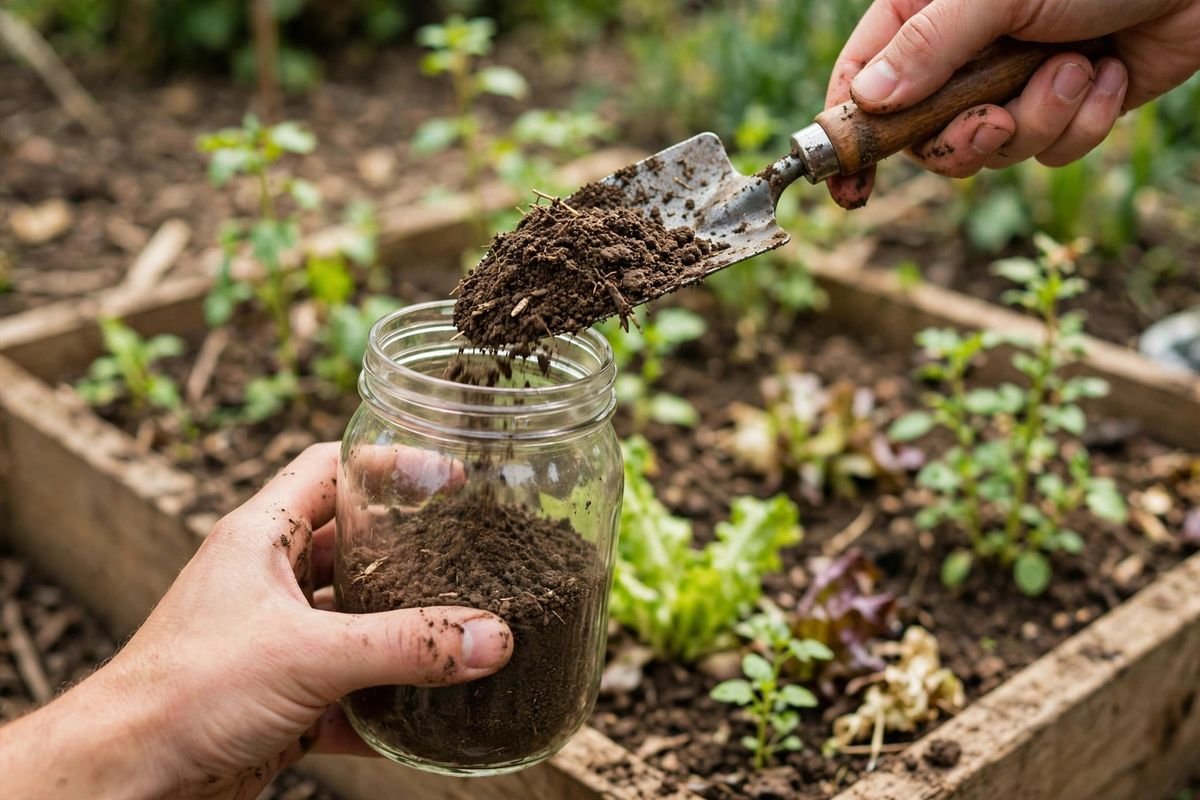
Test each bed on its own. A vegetable bed, a blueberry bed, and a new raised bed can sit at very different pH levels even a few steps apart, so a mixed sample from all three tells you nothing useful about any of them. Label each sample with the bed name and the date before you start.
Timing counts too. The RHS warns that a test can mislead if it is carried out within three months of adding lime, fertilizer, or organic matter. If you top-dressed a bed recently, wait, or test a different bed and come back to this one later.
Step 2: the vinegar test for alkaline soil
Put 2 tablespoons of dry soil from one bed into a clean glass jar. Pour in 1/2 cup of white vinegar, swirl the jar once, and watch the surface for 30 to 60 seconds. If bubbles or fizz appear, the soil is alkaline, above pH 7.0, and free calcium carbonate is likely present.
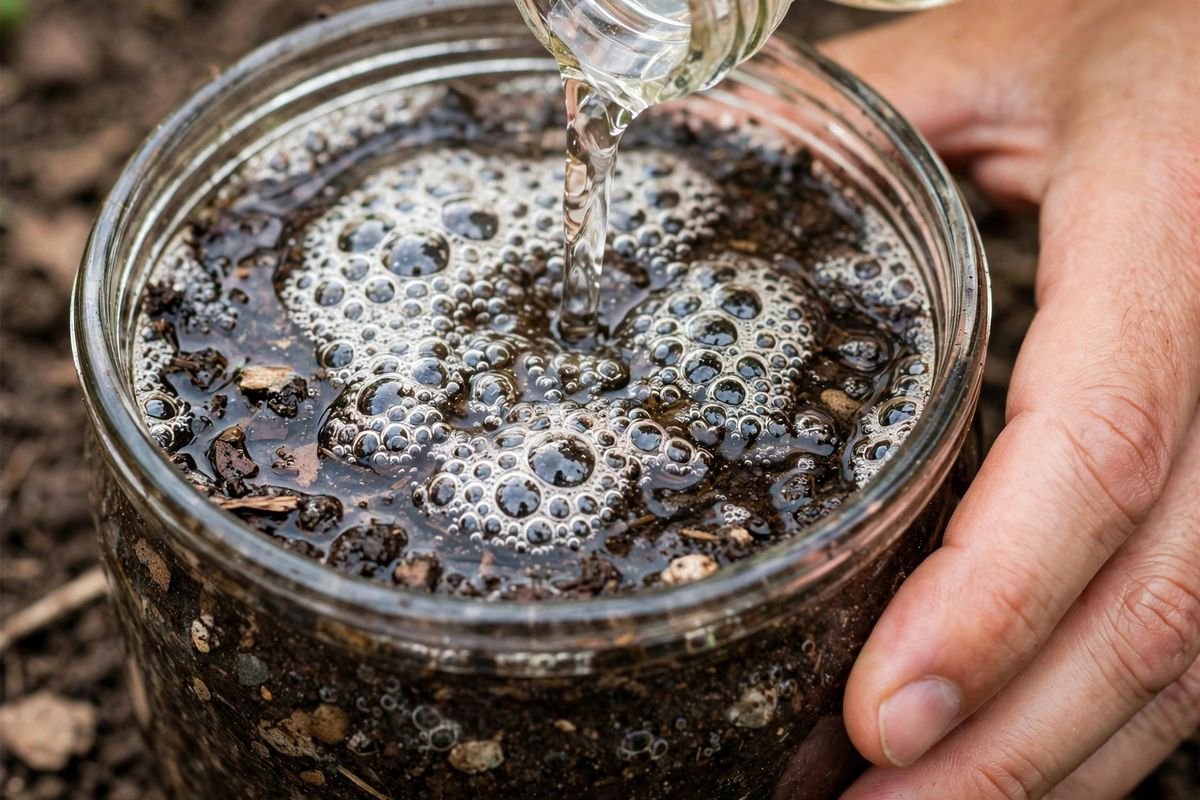
If nothing happens, the soil is not alkaline. That does not mean it is acid. It means the vinegar test has done its job and the baking soda test is the one that will tell you more. Pour the sample out, rinse the jar, and move on with a fresh sample.
Use a fresh sample and a clean jar for each test. Leftover vinegar in a jar reacts with baking soda on its own, and that fizz would say nothing about your soil.
Step 3: the baking soda test for acid soil
Put 2 tablespoons of fresh, dry soil into a second clean jar. Add distilled water a spoonful at a time, about 3 tablespoons in total, and stir until the soil forms a thick mud. Then add 1/2 cup of baking soda and watch for 30 to 60 seconds.
If the mix fizzes or bubbles, the soil is acid, below pH 7.0. If nothing happens, and the vinegar test also gave no reaction, the soil sits near neutral, around pH 7.0. Record the outcome for both tests before you move on to the next bed, while the result is still in front of you.
How to read your results
| Vinegar test | Baking soda test | What it means |
|---|---|---|
| Fizz | No fizz | Alkaline soil, above pH 7.0 |
| No fizz | Fizz | Acid soil, below pH 7.0 |
| No fizz | No fizz | Near neutral, around pH 7.0 |
| Fizz | Fizz | Repeat with fresh samples and distilled water; if it happens again, get a lab test |
A result that fizzes in both jars usually points to a problem with the method rather than the soil: a jar that was not rinsed, tap water instead of distilled water, or a sample still wet with fertilizer. Run both tests again from the start with fresh samples. If both still fizz, stop guessing and send a sample to a lab.
A worked example: testing three beds and keeping a record
The amounts stay the same for every bed, so a morning of testing is easy to plan. For one bed you need 4 tablespoons of dry soil in total, 2 for each jar, plus 1/2 cup of white vinegar, about 3 tablespoons of distilled water, and 1/2 cup of baking soda. For three beds, that comes to 12 tablespoons of soil, 1 1/2 cups of vinegar, about 9 tablespoons of distilled water, and 1 1/2 cups of baking soda. One box of baking soda and one bottle of vinegar cover a whole garden.
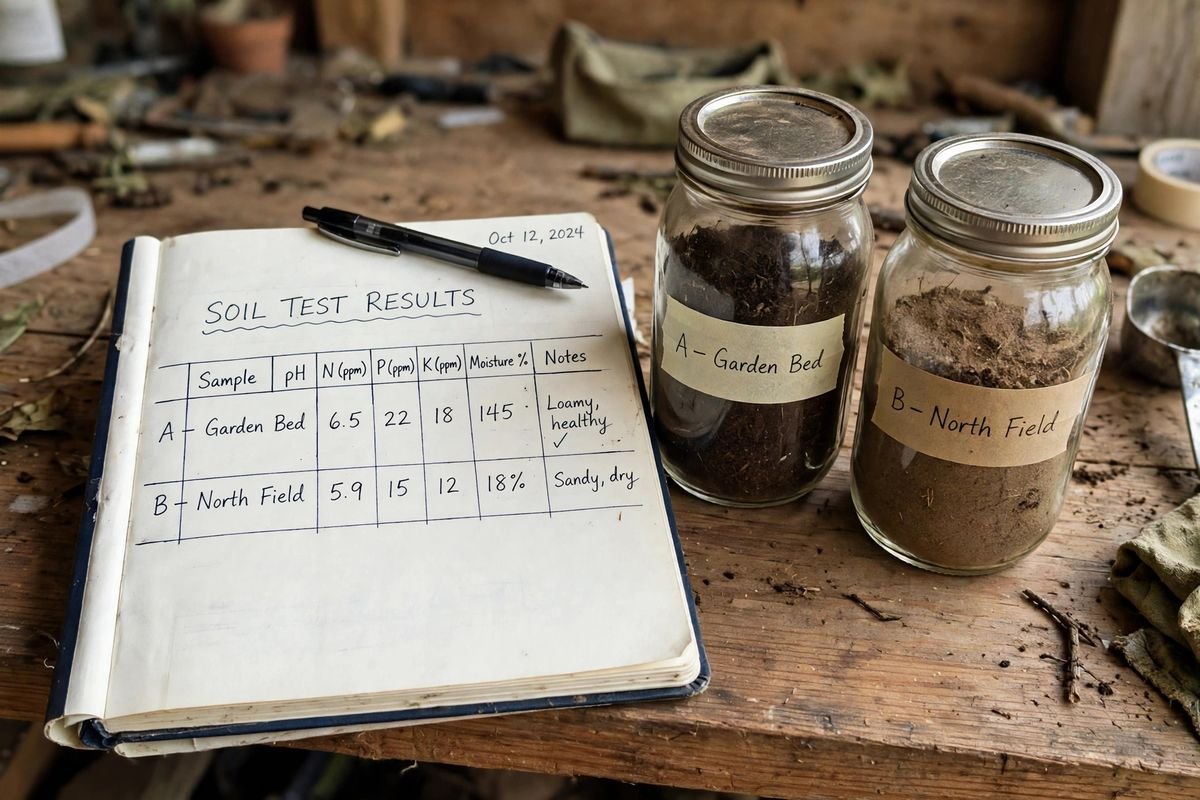
Write the results down as you go. Memory fades fast when three jars look alike, and a written record is what turns a one-off test into a habit you can compare year to year.
| Bed | Date | Vinegar test | Baking soda test | Reading | Next step |
|---|---|---|---|---|---|
| Vegetable bed | |||||
| Blueberry bed | |||||
| New raised bed |
Fill in each row right after the test. Under Reading, write one of three words: alkaline, acid, or near neutral. Under Next step, write what the reading calls for: a lab test before any liming, a lab test before planting acid-lovers, or no action and a retest next year. The table holds the facts; it does not hold a number, because the jar tests never produce one.
Mistakes that spoil the result
- Testing potting mix as if it were garden soil. Bagged mixes are often peat-based and read acid by design, so a jar test on them says little about the beds outside. Test garden soil from the beds, and read our guide to potting soil vs garden soil before testing anything from a bag.
- Using tap water instead of distilled water. Minerals in tap water can shift a reading, and hard water can even fizz with baking soda on its own.
- Testing within three months of liming, fertilizing, or adding compost. Fresh amendments change the chemistry at the surface, and the reading will not stand for the bed as a whole.
- Scooping only from the surface. The top inch dries out, collects mulch, and holds recent feed. Dig down to where the roots grow.
- Reusing one jar for both tests. Vinegar left in a jar reacts with baking soda, and the fizz that follows belongs to the jar, not the soil.
- Judging pH from how hard the mix fizzes. Fizz strength is not a scale. A loud fizz and a quiet fizz can both mean the same thing: the soil sits on one side of neutral.
- Testing soil that is still wet with fertilizer or fresh compost tea. Wet samples dilute the vinegar and the baking soda, and the result will be weaker than it should be.
When to get a real soil test
Order a lab test before you add lime or sulfur, before you plant a bed of blueberries or other acid-lovers, and whenever plants yellow or stall even though you feed and water them. A lab report gives a pH number plus nutrient levels and amendment rates matched to what you grow, which no jar test can do.
Your local cooperative extension office can point you to a lab and explain how to bag and label a sample. Home test kits sit between the jar tests and a lab: they give a number, but university research has found them less accurate than lab results, usually within about one unit of the lab figure. That is close enough to tell acid from alkaline, and not close enough to set a lime rate. If you want a number before the lab report arrives, look for a soil pH test kit with a clear color chart, and treat its reading as a rough guide.
Retest once a year, at the same time of year, since readings shift with the seasons. A yearly record shows whether a bed is drifting acid or alkaline, and that trend is more useful than any single reading.
What to do after your result
An acid reading is not an order to add lime. Lime rates depend on the soil type, the current pH number, and the plants you grow, and only a lab test supplies all three. The same goes for sulfur on alkaline soil: it works slowly, through soil bacteria, and heavy-handed doses can harm plants. Get the number first, then follow the lab rate.
A near-neutral reading needs no action. Plant as normal, keep feeding the soil with compost, and retest next year. Compost will not move pH much on its own, but it feeds the soil life that keeps nutrients moving. See how to make compost at home for a simple pile method.
If the vinegar test fizzed, note that the bed holds free chalk or lime. That soil will resist acidifying, and acid-loving plants will struggle there. Grow them in containers with an acid mix instead, or pick plants that suit the soil you have.
Frequently asked questions
Can I use tap water for the jar tests?
Use distilled water. Tap water carries dissolved minerals that can shift a reading, and hard water can react on its own. Distilled water is cheap, and it keeps the test honest.
How accurate are the vinegar and baking soda tests?
They are screening tests, not measuring tools. They show which side of neutral the soil sits on, and nothing more. They cannot give a pH number, they cannot separate pH 6.5 from pH 6.9, and they cannot tell you how much lime or sulfur to add. For a number, use a home kit as a rough guide or send a sample to a lab.
Can I test potting soil the same way?
You can run the jars the same way, but the reading means less. Bagged potting mixes are often peat-based and read acid by design, so a fizz in the baking soda jar tells you about the mix recipe, not about your garden. Test garden soil from the beds for decisions about the beds, and treat container mixes on their own terms.
How often should I test my soil?
Once a year is enough for most gardens, at the same time of year each time. Test again before you plant a bed of acid-lovers, and before you add lime or sulfur for any reason.
My soil fizzed in both tests. What does that mean?
It usually means the method went wrong, not the soil. A jar that was not rinsed, tap water instead of distilled water, or a sample wet with fertilizer can all cause a false fizz. Run both tests again with fresh samples, clean jars, and distilled water. If both still fizz, send a sample to a lab.
Do the jar tests work on clay soil?
Yes. The chemistry is the same in clay, sand, and loam. Heavy clay may need more stirring to mix the vinegar or baking soda through, and the fizz may be slower to show, so wait the full 60 seconds before you call it no reaction.
Sources and further reading
- Cornell Cooperative Extension: How to Test Soil pH
- Royal Horticultural Society: Soil: Understanding pH and Testing
- Purdue Extension: Collecting Soil Samples for Testing (HO-71-W)
Related reading: How to Make Compost at Home, Raised Bed Soil Mix, Can You Reuse Potting Soil?, and Potting Soil vs Garden Soil.
By the Pot and Plot Team