
This post may contain affiliate links. If you buy through links on this page, we may earn a commission at no extra cost to you.
As an Amazon Associate I earn from qualifying purchases.
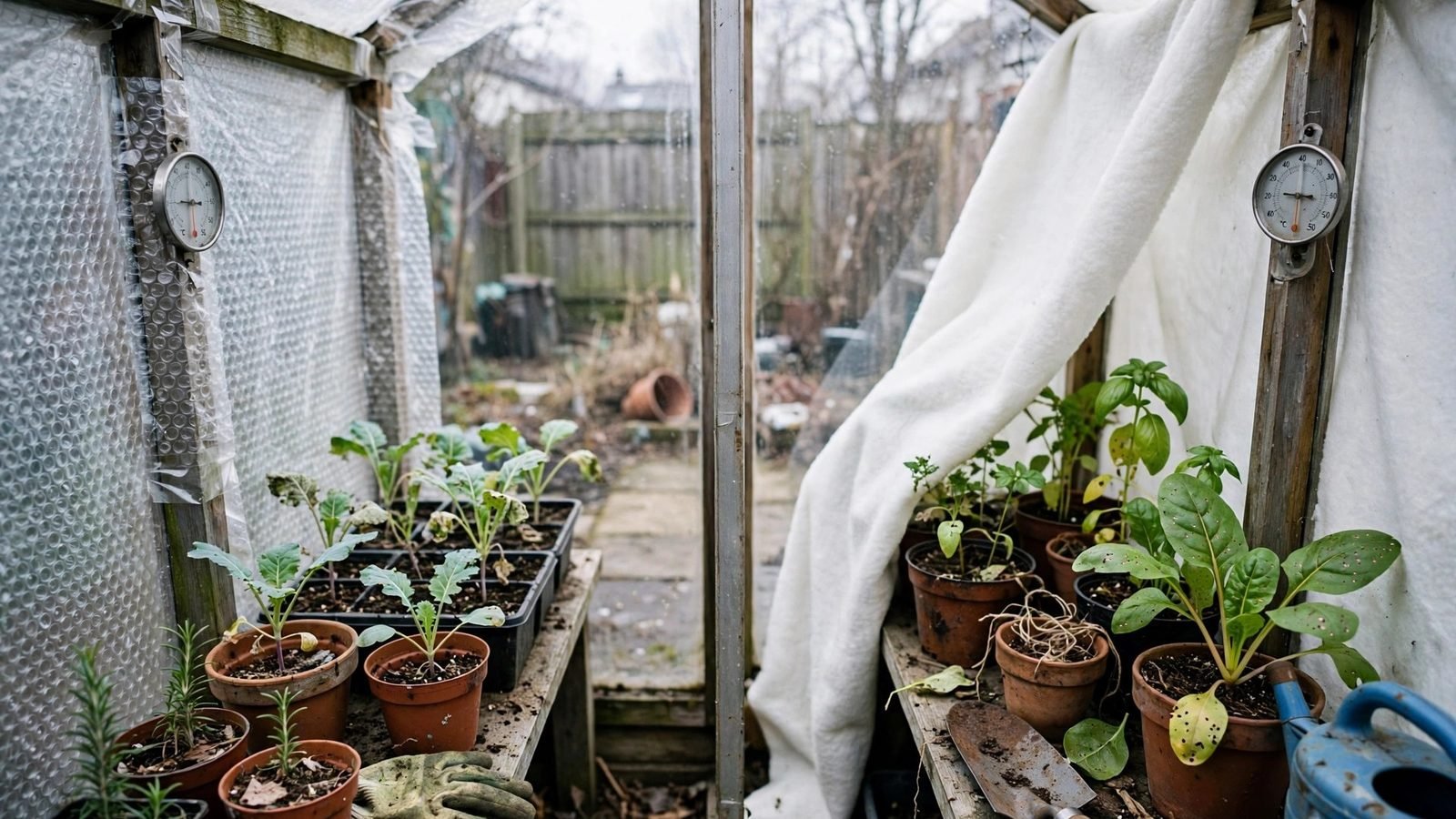
A small greenhouse loses heat fast on a cold night. The glass or plastic panels that let the sun in during the day let the warmth straight back out after dark, and a tender plant inside can freeze while the air outside is only a few degrees below freezing. Two cheap materials fix most of that loss: bubble wrap stuck to the glazing, and horticultural fleece draped over the plants. They cost about the same per season, they install in an afternoon, and they work in different ways. The question is which one fits your greenhouse, your plants, and your winter.
This guide compares the two side by side: how much warmth each one holds, what each one costs for a typical small greenhouse, how long each one lasts, and where each one fails. It ends with a clear verdict for each common situation, and a worked cost example for a 6-by-8-foot greenhouse. For heating a greenhouse beyond insulation, see our guide on best greenhouse heaters for small greenhouses.
Bubble wrap vs horticultural fleece at a glance
| Bubble wrap | Horticultural fleece | |
|---|---|---|
| What it is | Large-bubble plastic sheeting, fixed to the glazing | Light spun-bonded fabric, draped over plants |
| How it works | Traps still air in the bubbles against the panels | Traps a layer of still air around the plants |
| Warmth held on a cold night | About 4 to 7 degrees above outside | About 2 to 4 degrees above the air around the plant |
| Light loss | About 10 to 20 percent less light | Very little when draped loosely; more when doubled |
| Cost for a 6-by-8-foot greenhouse | About 90 dollars | About 45 dollars |
| How long it lasts | Two seasons if stored dry | One season; tears and degrades in sun |
| Cost per season | About 45 dollars | About 45 dollars |
| Install time | About 2 hours for a small greenhouse | About 20 minutes |
The warmth figures are the ranges growers and extension guides commonly report, and they vary with wind, sun, and how tight the seal is. A greenhouse with gaps around the door loses more heat than either material can save. The cost figures come from the worked example below, with the assumptions stated.
How bubble wrap insulates a greenhouse
Bubble wrap works by trapping still air. Each bubble is a small pocket of air, and still air is a poor conductor of heat, so a layer of bubbles on the inside of the glazing slows the heat escaping through the panels. Large-bubble wrap, with bubbles about an inch across, insulates better than small-bubble packing wrap, and horticultural grade wrap has a UV stabilizer that keeps it from going brittle in the sun. Ordinary packing wrap works for one season but clouds and cracks faster.
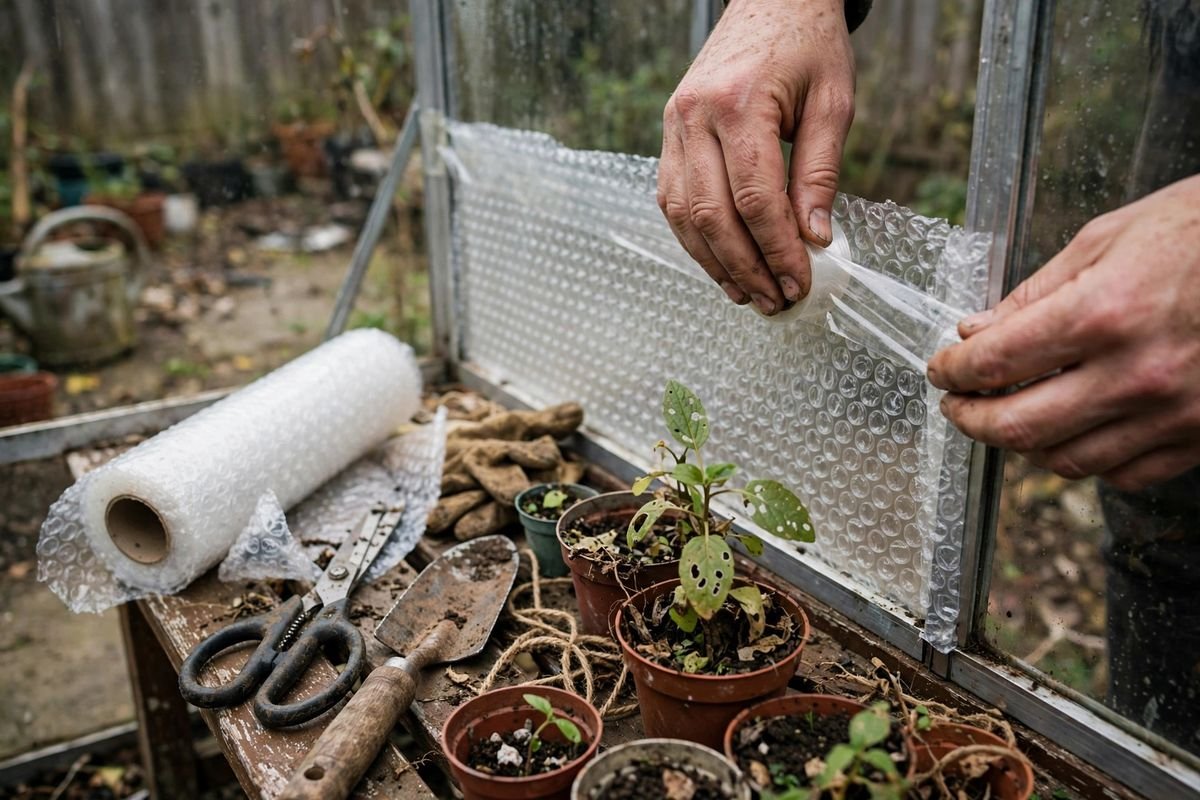
Install it on the inside of the glazing, bubble side facing the glass, and tape the sheets together so there are no gaps. A gap is a hole in the insulation: cold air pours through it and the wrap next to it does nothing. Overlap the sheets by an inch and tape every seam with clear packing tape. Leave the roof vents and the door clear, or cut the wrap around them so the greenhouse can still breathe on a sunny day. A greenhouse sealed tight with bubble wrap and left shut on a sunny winter afternoon can overheat to 80 degrees while the air outside is 40, and that swing shocks plants more than a cold night does.
The cost of bubble wrap is the light it takes. A single layer cuts about 10 to 20 percent of the light, which matters in December when the days are already short. Plants that need strong light grow slower under wrap, and seedlings stretch toward the brightest panel. For that reason, many growers put the wrap up in late fall and take it down in early spring, rather than leaving it all winter.
How horticultural fleece protects plants
Horticultural fleece is a light, white, spun fabric that drapes over plants like a blanket. It works by trapping a layer of still air around the plant and by blocking the frost from settling on the leaves. It does not insulate the greenhouse itself: the air inside the greenhouse is still cold, but the air around each covered plant stays a few degrees warmer. That makes fleece a plant-level fix rather than a building-level fix, and it is the right tool when only a few plants need protection.
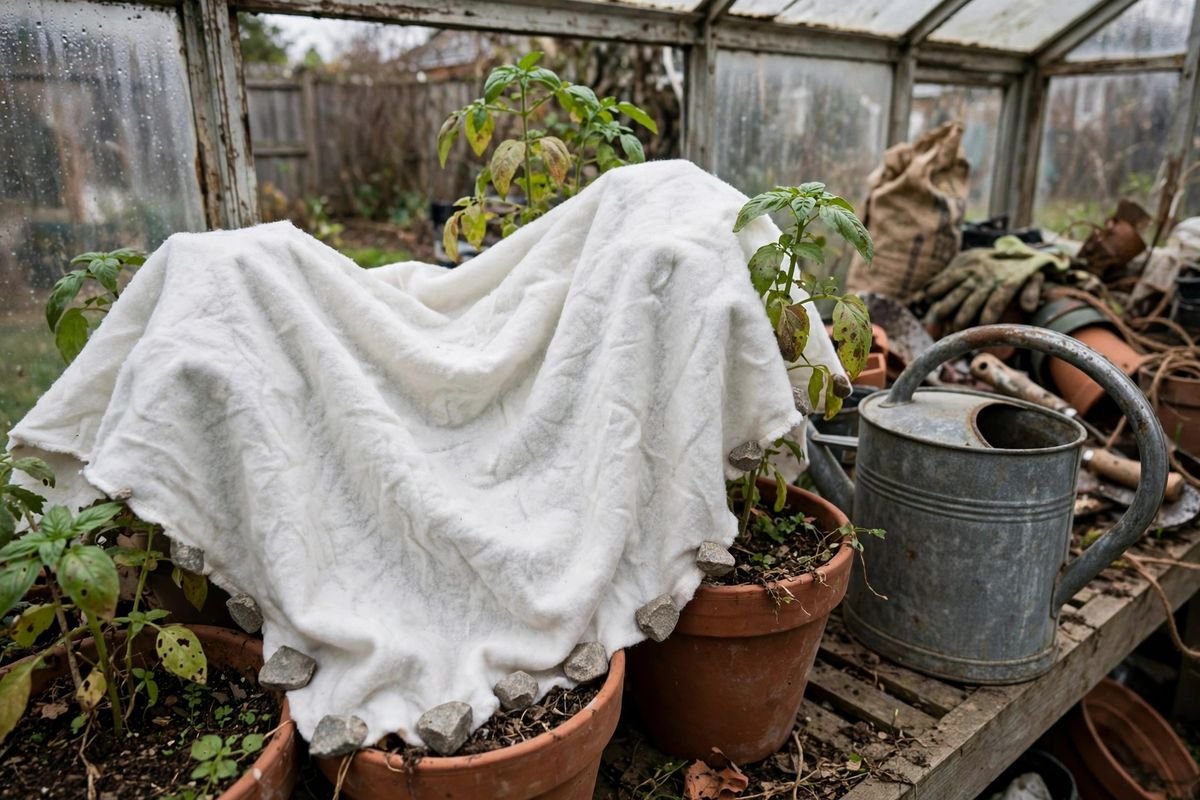
Drape the fleece loosely over the plants and anchor the edges with stones, bricks, or soil so the wind cannot lift it. A fleece pulled tight against the leaves gives no air layer and can freeze to the leaves on a hard night, which damages them when you pull it off. A loose drape with a pocket of air underneath is what holds the warmth. Take the fleece off on mild days so the plants get light and air, and put it back on before dark. Fleece left on for a week in damp weather grows mold on the leaves underneath.
Fleece is cheap and fast. A roll costs about 15 to 25 dollars and covers a small greenhouse twice over, and draping it takes twenty minutes. The weakness is durability: it tears on a sharp stem, it degrades in sun, and a roll used hard for one season is usually ragged by spring. It is a consumable, not an investment.
Pros and cons
Bubble wrap: pros
- Holds more warmth than fleece, about 4 to 7 degrees on a cold night
- Insulates the whole greenhouse, plants included
- Lasts two seasons if stored dry and out of the sun
- Stays in place once installed; no daily putting up and taking down
Bubble wrap: cons
- Cuts 10 to 20 percent of the light, which slows growth in midwinter
- Takes about 2 hours to install on a small greenhouse
- Costs about twice as much up front as fleece
- Needs the vents and door kept clear, or the greenhouse overheats on sunny days
Horticultural fleece: pros
- Cheap, about 15 to 25 dollars a roll, and fast to put up
- Barely cuts the light when draped loosely
- Protects individual plants, so you can cover only what needs it
- Easy to remove on mild days and put back at night
Horticultural fleece: cons
- Holds less warmth, about 2 to 4 degrees around the plant
- Tears easily and usually lasts one season
- Needs daily attention: on in the evening, off in the morning
- Traps damp air against leaves if left on for days, which invites mold
Our worked example: insulating a 6-by-8-foot greenhouse
Here is the cost math for a typical small greenhouse: 6 feet wide, 8 feet long, 6 feet tall at the eaves. These are our own computed numbers, with the assumptions stated so you can run the same figures for your own greenhouse.
| Item | Assumption | Number |
|---|---|---|
| Glazing area to cover | Two long walls, two end walls, two roof slopes | About 225 square feet |
| Bubble wrap needed | 225 square feet plus 10 percent for overlaps | About 250 square feet |
| Bubble wrap cost | Large-bubble horticultural grade at about 36 cents a square foot | About 90 dollars |
| Bubble wrap life | Two seasons with dry storage | About 45 dollars a season |
| Fleece needed | One layer over the plants, about 150 square feet | About 150 square feet |
| Fleece cost | About 30 cents a square foot, one roll | About 45 dollars |
| Fleece life | One season | About 45 dollars a season |
The surprise is that the two materials cost the same per season: about 45 dollars each. Bubble wrap costs twice as much up front but lasts twice as long, while fleece costs half as much and lasts one season. The difference is not the money but the work and the warmth. Bubble wrap takes 2 hours to install once and then needs no daily attention; fleece takes 20 minutes to put up but needs putting on and taking off every day. Bubble wrap holds 4 to 7 degrees; fleece holds 2 to 4.
For a larger greenhouse, the math tilts toward bubble wrap, because the glazing area grows faster than the plant area: a 8-by-12-foot greenhouse has about 450 square feet of glazing and needs about 180 dollars of wrap, or 90 dollars a season, while the fleece for the same plants still costs about 45 dollars a season but covers less of the building. For a cold frame or a mini greenhouse, the math tilts toward fleece, because the area is small and the daily routine is quick. For the small-greenhouse case in the table, the costs are a tie and the decision comes down to the verdicts below.
The verdict: choose bubble wrap if…
Choose bubble wrap if you heat the greenhouse, even a little. A heater wastes its warmth through bare glazing, and bubble wrap is what keeps the heat inside long enough to matter. Choose it if you keep tender plants in the greenhouse all winter and you cannot visit every day to put fleece on and take it off. Choose it if your greenhouse faces cold wind and the whole building needs the help, beyond what covering a few plants can do.
Choose fleece if you only need to protect a few plants on the coldest nights, and the rest of the greenhouse holds hardy plants that can take a frost. Choose it if your budget is tight this month and you can spend 20 dollars now rather than 90. Choose it if your greenhouse gets little winter sun and you cannot afford to lose 10 to 20 percent of the light to wrap. Choose it if you are protecting plants in a cold frame or a mini greenhouse, where the area is small and the daily routine takes minutes.
Use both if the winter is hard. Wrap the glazing with bubble wrap in late fall, then drape fleece over the tender plants on the coldest nights. The two layers stack: the wrap holds the greenhouse 4 to 7 degrees above outside, and the fleece holds the plants another 2 to 4 degrees above the greenhouse air. Together they carry a tender plant through a night that would kill it under either one alone. That combination is what most growers with a small heated greenhouse actually do.
Installing and storing each material
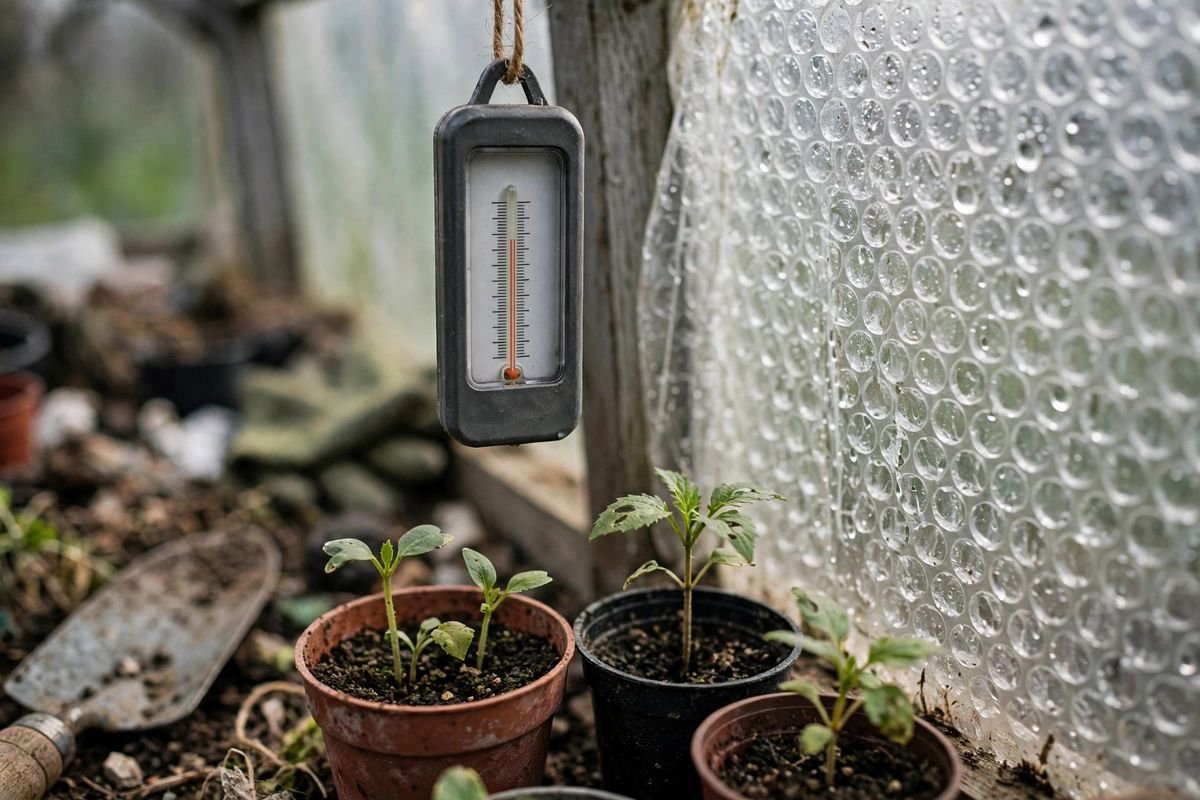
Put bubble wrap up in late fall, when the overnight lows start dropping below 40 degrees, and take it down in early spring when the days warm up. Store it dry and out of the sun: roll it loosely, tie it with twine, and hang it in the garage. Wrap stored damp grows mold, and wrap stored in sunlight goes brittle.
Buy fleece in a roll wide enough to drape without piecing: a 6-foot-wide roll covers most greenhouse benches in one piece. Cut it with scissors, not by tearing, so the edge stays clean and does not unravel. Wash it at the end of the season if it is dirty, dry it fully, and fold it into a bag. A fleece that goes into storage damp comes out smelling of mildew and is fit only for the compost.
You can search horticultural bubble wrap on Amazon and horticultural fleece rolls on Amazon. We have not tested the products linked here, and we give no current store prices. Check each listing for current sizes and whether the wrap is UV-stabilized.
Frequently asked questions
Can I use ordinary packing bubble wrap in a greenhouse?
Yes, for one season. Small-bubble packing wrap insulates less than large-bubble horticultural wrap and goes brittle faster in the sun, but it still holds a few degrees. If you use it, replace it every year and take it down in spring before the sun destroys it.
Does fleece protect plants from a hard freeze?
Only a little. Fleece holds about 2 to 4 degrees around the plant, so it carries a plant through a light frost at 30 degrees but not a hard freeze at 20. On a night forecast below 25 degrees, a plant under fleece alone is at risk, and it needs a heated space or a wrapped greenhouse as well.
Should I leave bubble wrap on all winter?
Yes, in most zones, but watch the light and the temperature. Take it down on warm spring days so the greenhouse does not overheat, and remove it for good when the overnight lows stay above 40 degrees. Plants that spent the winter under wrap need a week of gradually increasing light before they go outside.
Can I layer fleece over bubble wrap?
Yes, and it is the best combination for a hard winter. The wrap insulates the building and the fleece insulates the plants, and the two layers together hold more warmth than either one alone. Remove the fleece on mild days so the plants get light and air.
Sources and further reading
- University of Minnesota Extension, Protecting Trees and Shrubs in Winter
- University of Minnesota Extension, Extending the Growing Season: Start Early, End Later
Related reading: Best Greenhouse Heaters for Small Greenhouses, Best Mini Greenhouses for Patios, Cold Frame vs Row Cover, Best Frost Cloths for Garden Beds, How to Winter-Sow Seeds Outdoors
By the Pot and Plot Team