
This post may contain affiliate links. If you buy through links on this page, we may earn a commission at no extra cost to you.
As an Amazon Associate I earn from qualifying purchases.
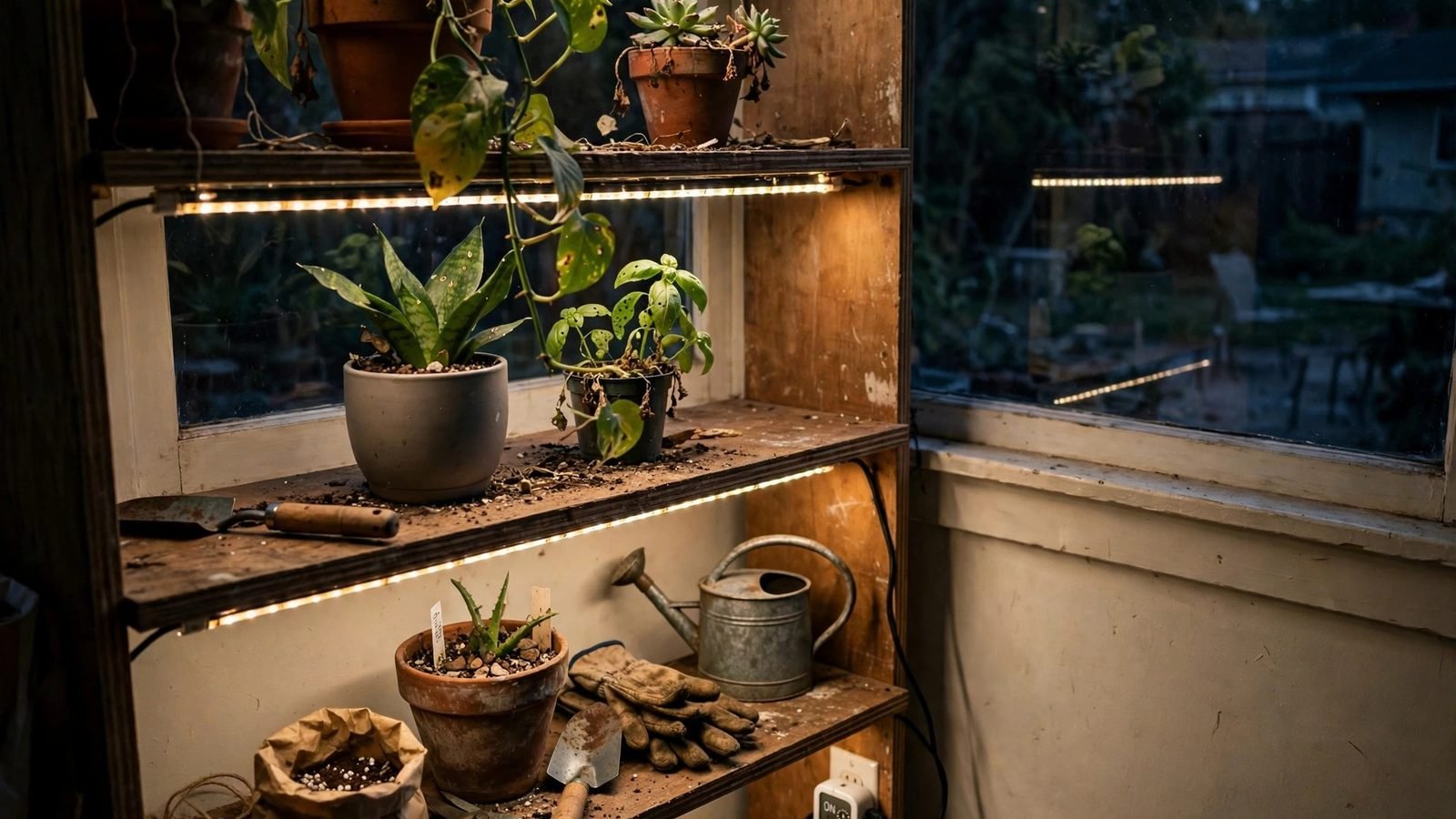
LED strip lights are the cheapest way to add light to an indoor shelf. They are thin, flexible ribbons of small LEDs that stick to the underside of a shelf and shine down on the plants below. A strip costs a fraction of a grow light bar, plugs into a USB port or a wall outlet, and fits shelves where a bulky lamp cannot. For herbs on a kitchen shelf, seedlings on a bookcase, or a few houseplants in a dark corner, a strip is often all the extra light the plants need.
The trade is that strips are weaker than dedicated grow lights. They suit leafy herbs, seedlings, and low-light houseplants, and they struggle with fruiting plants or anything that needs strong light to flower. This guide compares the types of LED strips by brightness, color, length, power, and price, and it works out the electricity cost and the coverage for a typical shelf, so you can tell before buying whether a strip will do the job. It is a research-based guide: we compared published specifications and features, and we did not test these products ourselves. For how high to hang any grow light, see our guide on how high grow lights should be above seedlings.
What to look for in an LED strip light for plants
Brightness comes first, and it is the hardest number to compare because sellers report it in different units. Some list lumens, which measure brightness to the human eye; some list watts, which measure power use; a few list PPFD, which measures the light plants actually use. For a shelf strip, lumens are the practical guide: a 2-foot strip that puts out 800 to 1,200 lumens gives useful light for leafy plants at 6 to 12 inches. Below 500 lumens, a strip is decoration, not a grow light.
Color temperature matters next. A strip labeled full spectrum or daylight, around 5000 to 6500 Kelvin, gives a white light that suits leafy growth and looks natural in a room. A strip with red and blue LEDs only, the pink-purple kind, grows plants well but tints the whole shelf pink and makes it hard to judge leaf color. White full-spectrum strips are the better pick for a living room or a kitchen.
Length, power, and control finish the list. Measure the shelf and buy a strip that covers most of it: a strip that covers half the shelf leaves half the plants in the dark. A plug-in strip usually runs brighter than a USB-powered one, which is limited by the 5-volt supply. A timer, built in or added as a plug-in timer, matters more than it looks: plants need 12 to 16 hours of light and 8 hours of dark, and a timer gives them that schedule without you remembering. For timers, see our guide on best timers for grow lights.
The types compared at a glance
| Type | Typical length | Power | Best for | Price range |
|---|---|---|---|---|
| USB-powered strip, 1 to 2 feet | 1 to 2 feet | About 5 to 10 watts | One small shelf, herbs | About 10 to 20 dollars |
| Plug-in full-spectrum strip, 2 feet | 2 feet | About 10 to 20 watts | Seedlings, leafy plants | About 15 to 30 dollars |
| Plug-in strip, 4 feet | 4 feet | About 20 to 40 watts | Wide shelves, two rows of plants | About 25 to 45 dollars |
| Waterproof strip for humid spots | 2 to 4 feet | About 10 to 30 watts | Bathrooms, propagators | About 20 to 40 dollars |
Prices are the ranges these types usually sell in, and they move with sales and seasons. Check each listing for the current price before buying. Wattage and lumen figures vary by brand: treat the table as a guide to the class, and check the listing for the exact numbers on the strip you buy.
USB-powered strips for a single small shelf
A USB-powered strip is the simplest option: it plugs into a phone charger or a laptop, sticks to the shelf with adhesive backing, and costs about 10 to 20 dollars. It suits a single shelf of herbs or a few small pots, and it is easy to move when you rearrange the plants. The limit is brightness. A USB port supplies 5 volts, so the strip runs at 5 to 10 watts and puts out modest light. It keeps herbs alive and helps seedlings through their first weeks, but it will not push a plant to flower or fruit.
Look for a strip with a full-spectrum white light rather than a red-blue mix, and check that the adhesive is the foam-tape kind rather than a thin glue strip: foam tape holds better on a wooden shelf and survives a humid room. You can search full-spectrum LED strip lights for indoor plants on Amazon. We have not tested the products linked here, and we give no current store prices. Check each listing for current brightness and length.
Plug-in full-spectrum strips for seedlings
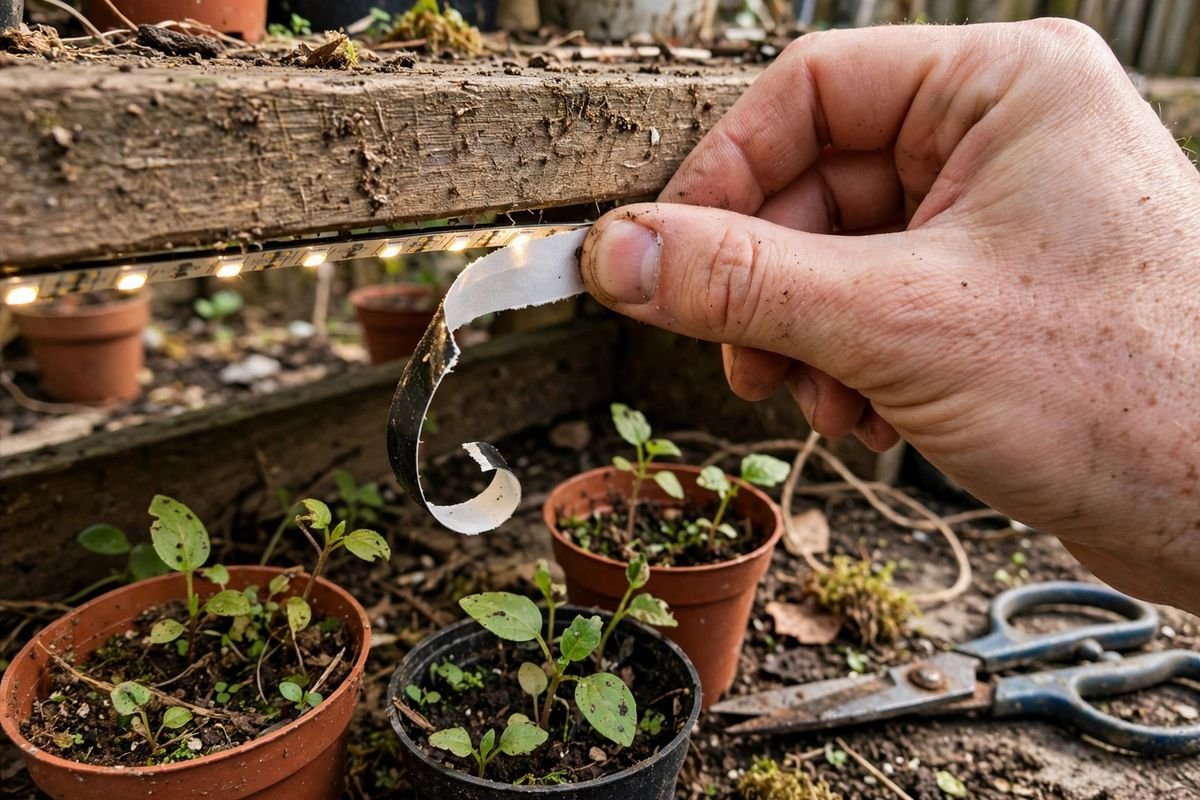
A plug-in strip running on wall power is the workhorse of this guide. At 10 to 20 watts for a 2-foot length, it puts out enough light for seedlings and leafy plants at 6 to 12 inches, and it runs a full 14-hour day without the voltage limits of USB. Most plug-in strips come with a power adapter, a dimmer or a three-mode switch, and adhesive backing plus mounting clips. The clips matter: adhesive alone can peel off in a warm, humid room, and a strip that falls onto the plants is a fire risk and a dead strip.
Hang the strip 6 to 12 inches above the plants. Closer than 6 inches can scorch tender leaves, and farther than 12 inches spreads the light too thin to matter. For the burn question in detail, see our guide on can grow lights burn seedlings. A 2-foot strip covers about 2 square feet of shelf, which is one row of six small pots or one tray of seedlings.
Four-foot strips for wide shelves
A 4-foot strip suits a wide shelf or a shelving unit with two rows of plants. At 20 to 40 watts it covers about 4 square feet, which is a full shelf of mixed pots or two seed trays side by side. The cost per foot is lower than buying two short strips, and one power adapter runs the whole length. The catch is the same as with any long strip: the light is brightest in the middle and weaker at the ends, so rotate the plants every week or two to keep the growth even.
Some 4-foot strips link together in a chain, so two strips can run from one outlet and one timer. Linkable strips suit a shelving unit with three or four shelves, where one timer can run the whole unit. Check the listing for the maximum number of linked strips: most allow two to four, and linking more overloads the adapter.
Waterproof strips for humid spots
A waterproof strip, usually rated IP65, suits a bathroom shelf, a propagation box, or any spot where misting and watering splash. The LEDs sit under a silicone coating that keeps water out, and the strip survives the humidity that kills a bare strip in a season. The coating dims the light slightly, so a waterproof strip needs a little more wattage for the same brightness, and it costs a few dollars more than the same length uncoated.
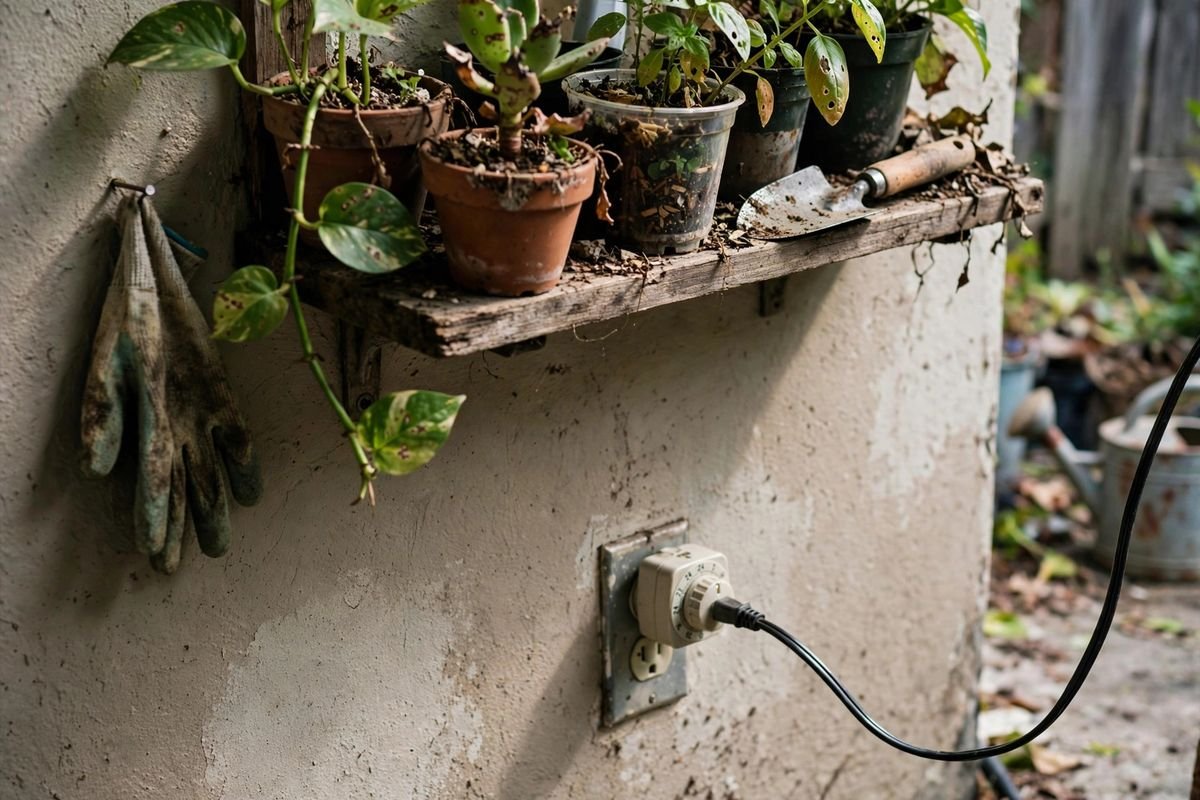
Waterproofing does not make a strip safe to submerge, and it does not make a cheap adapter safe in a wet spot. Keep the power adapter and the timer out of the splash zone, and run the cord so water drips away from the outlet, not toward it.
Our worked example: light and electricity for one shelf
Here is the math for a common case: a 2-foot shelf of herbs and seedlings lit by one 2-foot plug-in strip, running 14 hours a day through the winter. These are our own computed numbers, with the assumptions stated so you can adjust them for your shelf and your electricity rate.
| Item | Assumption | Number |
|---|---|---|
| Strip power | 2-foot plug-in strip, full spectrum | 20 watts |
| Daily run time | Timer set for 14 hours on, 10 hours off | 14 hours |
| Daily energy use | 20 watts times 14 hours | 0.28 kilowatt-hours |
| Monthly energy use | 30 days | 8.4 kilowatt-hours |
| Monthly cost | Electricity at 15 cents per kilowatt-hour | About 1.26 dollars |
| Shelf coverage | Strip 6 to 12 inches above the plants | About 2 square feet |
| Winter total, 4 months | November through February | About 5 dollars |
The cost is the surprise: about 1.26 dollars a month, or about 5 dollars for a whole winter. A 10-watt USB strip costs about half that, and a 40-watt 4-foot strip costs about twice. Electricity is not the reason to skip a strip; the reason to skip one is buying a strip too weak for the plants it has to light.
Coverage is the number to check before buying. One 2-foot strip covers about 2 square feet, which is one seed tray or six small pots in a row. A 4-foot shelf needs two 2-foot strips or one 4-foot strip. Measure the shelf, count the pots, and buy the length that covers the plants you actually have, not the length that happens to be on sale.
Setting up a strip so it lasts
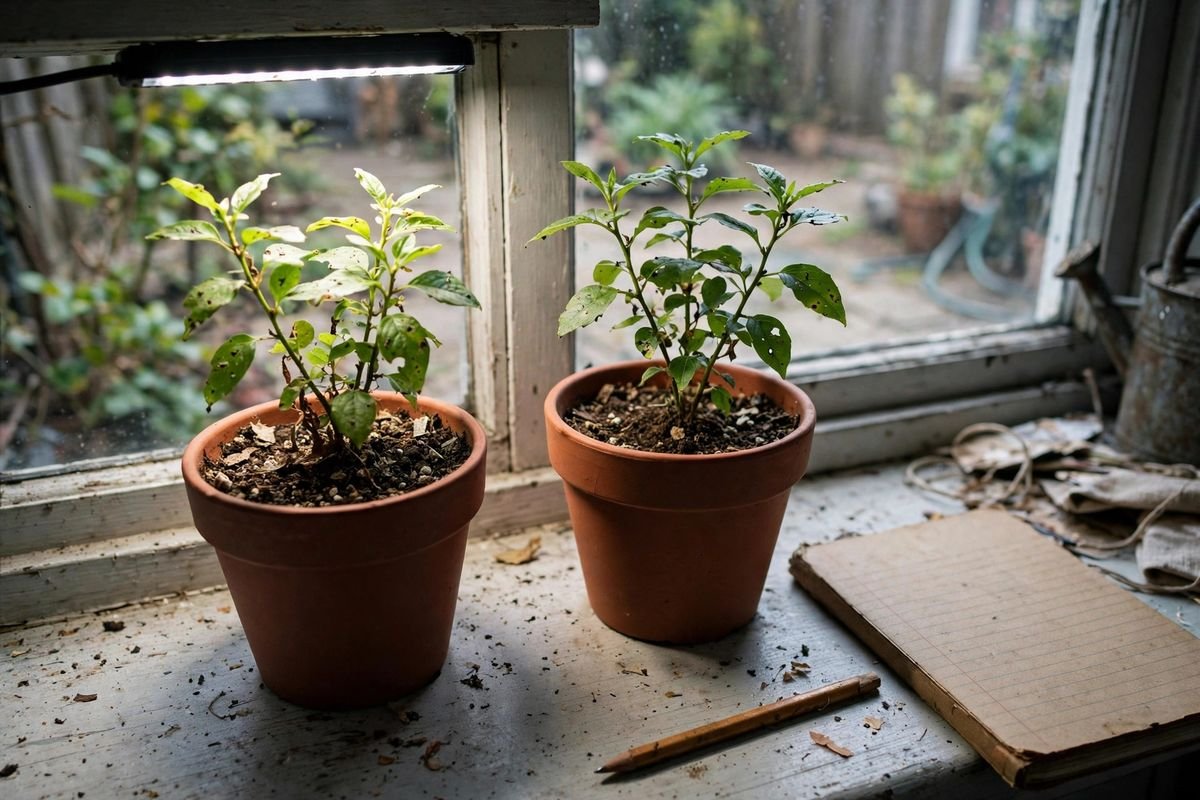
Clean the shelf before you stick the strip down. Wipe the underside with a damp cloth, let it dry, and press the strip firmly along its length. Add the mounting clips that come in the box, spaced every foot, so the strip does not peel off when the shelf warms up. Run the cord down the back of the shelf, not across the front, and keep the adapter where you can reach it without moving the plants.
Set the timer for 14 hours of light and 10 hours of dark, and put the light period in the daytime so the plants get their dark hours at night. A plant that gets light around the clock grows weak, leggy stems and never rests. Check the strip once a month for dead LEDs: a dark patch in the middle of the strip means that section has failed, and the plants under it will stretch toward the working sections.
Frequently asked questions
Are LED strip lights enough for indoor plants?
For leafy herbs, seedlings, and low-light houseplants at 6 to 12 inches, yes. For fruiting plants, flowering plants, or anything that needs strong light, a strip is usually too weak on its own, and a dedicated grow light bar or panel is the better pick.
How far above the plants should a strip light sit?
About 6 to 12 inches for most strips. Closer than 6 inches can scorch leaves, and farther than 12 inches spreads the light too thin. Raise the strip as the plants grow, and lower it again when you start a new batch of seedlings.
How many hours a day should a strip light run?
About 12 to 16 hours, with 14 hours a good middle setting for herbs and seedlings. Plants need a dark period every day, so do not leave the strip on around the clock. A plug-in timer handles the schedule without you remembering.
Do LED strip lights use much electricity?
Very little. A 20-watt strip running 14 hours a day uses about 8.4 kilowatt-hours a month, which costs about 1.26 dollars at 15 cents per kilowatt-hour. Even a 40-watt strip costs about 2.50 dollars a month.
Sources and further reading
- University of Minnesota Extension, Lighting for Indoor Plants
- Michigan State University Extension, Grow Lights for Indoor Plants and Seedlings
Related reading: Best Grow Lights for Seedlings, How High Should Grow Lights Be Above Seedlings, Can Grow Lights Burn Seedlings, Best Timers for Grow Lights, Best Light Meters for Indoor Gardeners
By the Pot and Plot Team