

This post may contain affiliate links. If you buy through links on this page, we may earn a commission at no extra cost to you.
As an Amazon Associate I earn from qualifying purchases.
Garlic grows well in a pot. It needs depth for roots, a cold stretch to form bulbs, and soil that drains freely, and a container gives you control over all three. This guide covers the setup that works: the right pot, the right spacing, and the timing that matches your frost dates.
Container garlic is a different job from planting garlic in the ground, which we cover in our guide to planting garlic in fall. In the ground, the soil buffers cold and moisture. In a pot, you manage both. The payoff is garlic on a patio, a balcony, or a driveway, with no garden bed at all.
Garlic in containers at a glance
| Detail | What to do |
|---|---|
| Pot depth | At least 12 inches, so roots and bulbs have room |
| Pot width | At least 14 inches across for 5 cloves |
| Clove spacing | 6 inches apart, pointy end up, 2 inches deep |
| Soil | Loose potting mix that drains freely |
| Planting time | 2 to 4 weeks before your first fall frost |
| Harvest | Early to midsummer, when lower leaves turn brown |
Planting dates matter more in a pot than in the ground, because a pot freezes faster and thaws faster. Use your local frost dates and regional planting guidance, not your USDA hardiness zone alone, to choose planting dates. A local extension planting calendar gives the window for your area.
Choosing a pot
Depth is the first rule. Garlic roots run deep, and the bulb forms in the top few inches of soil. A pot 12 inches deep gives both room to work. A shallow pot grows small bulbs, and no amount of feeding fixes that.
Width sets how many cloves fit. A 14-inch-wide pot holds 5 cloves at 6-inch spacing: one in the center and four around it, each about 3 inches from the rim. That layout keeps every clove far enough from its neighbor to size up, and far enough from the rim to stay insulated.
Any sturdy pot works: terracotta, plastic, wood, or fabric. Terracotta dries fast, so it needs more frequent watering. Plastic holds moisture longer and weighs less, which helps on a balcony. Fabric pots drain well and air-prune roots, but they dry fast in wind. You can browse large pots for vegetables on Amazon to compare materials and sizes. Whatever you pick, check that it has drainage holes, and drill more if it does not. Garlic bulbs rot in standing water.
The soil math for one pot
A 14-inch-wide pot that is 12 inches deep holds about 0.6 cubic feet of potting mix, which is about 4.5 gallons. That figure assumes the pot is filled to about an inch below the rim, which leaves room for mulch. Buy a bag a little larger than the math says, since potting mix settles after the first watering.
Use a loose potting mix, not garden soil. Garden soil packs down in a pot and holds too much water in winter. A mix made for vegetables, with compost and perlite or bark, drains freely and stays loose through the cold months. Our roundup of potting mixes for container vegetables compares mixes that suit garlic.
Mix a slow-release organic fertilizer into the potting mix before planting. Use the rate on the bag. Garlic feeds heavily in spring, and a pot has no soil reserves to draw on. A second light feeding in early spring, when shoots are growing fast, covers the rest of the season.
How to plant garlic in a container
Buy seed garlic from a garden supplier, not the grocery store. Grocery garlic is often treated to stop sprouting, and it may carry varieties that do not suit your climate. You can browse seed garlic on Amazon to compare hardneck and softneck varieties. Hardneck types suit cold winters and give scapes in spring. Softneck types suit mild winters and store longer after harvest.
Break the bulb into cloves the day you plant, and keep the papery skin on each clove. Plant each clove pointy end up, 2 inches deep, and press the mix gently around it. Water the pot until water runs from the drainage holes, then add a 2-inch layer of straw or shredded leaves as mulch. Mulch matters more in a pot than in the ground, because it slows the freeze-thaw cycles that can heave cloves out of the soil.

Set the pot where it gets at least six hours of sun a day. A south-facing patio or balcony wall works well. In a cold climate, move the pot against the house wall for winter, where it catches a little warmth, or wrap it in burlap on the coldest nights. Do not bring it indoors: garlic needs the cold stretch to form bulbs, and a warm room breaks that cycle.
The 3-pot setup
One pot gives a taste of homegrown garlic. Three pots give a supply. Three 14-inch pots, each holding 5 cloves, yield roughly 15 heads at harvest. That is enough for a household that cooks with garlic most weeks, with a few heads left over to plant again next fall.
The worked example runs like this: 3 pots times 5 cloves is 15 cloves planted. With normal losses of one or two cloves to rot or poor sprouting, the harvest lands near 13 to 15 heads. Each head holds 4 to 8 cloves, so the season ends with more garlic than it started with, and the best heads become next fall’s seed.
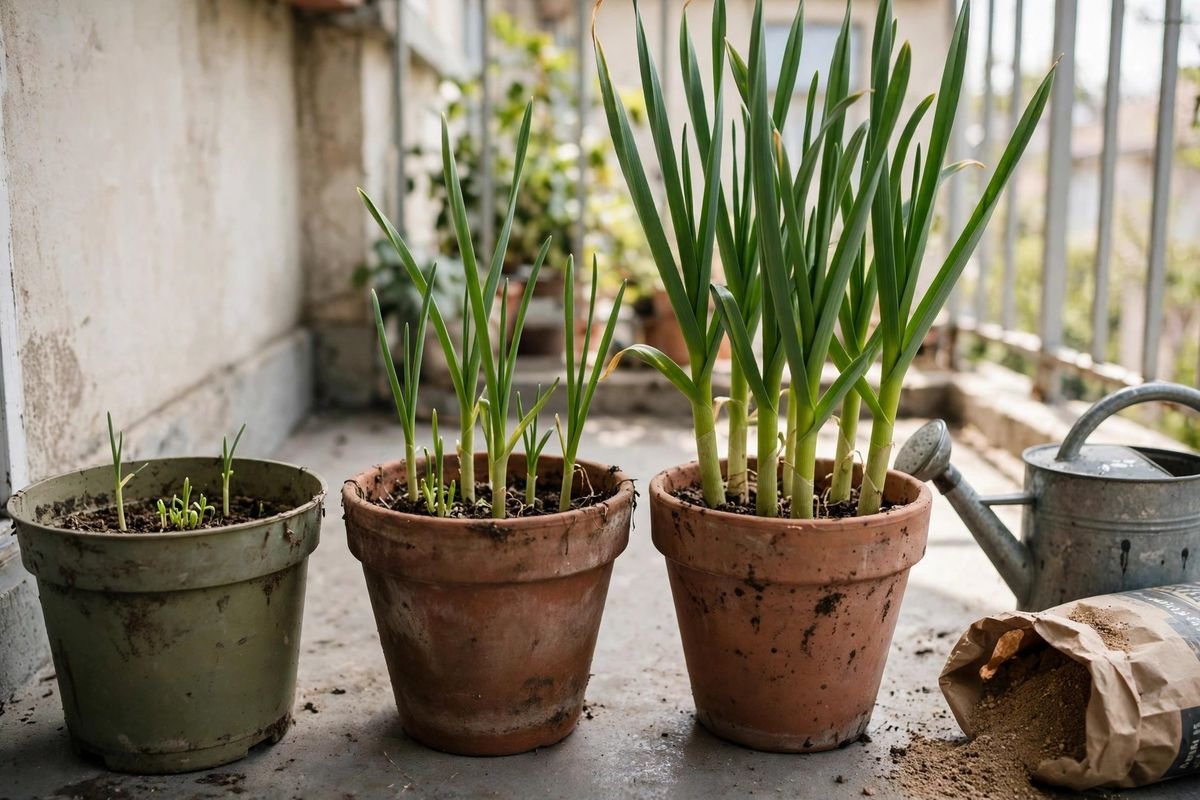
Space the pots a few inches apart so air moves between them, and rotate them a quarter turn every couple of weeks so all sides get sun. Label each pot with the variety and the planting date, since garlic looks the same for months and the labels are the only record.
Care through winter and spring
Water sparingly in winter. The soil should stay damp, not wet, and a pot in cold weather dries slowly. Check the soil with a finger every week or two, and water only when the top 2 inches feel dry. Overwatering in winter is the fastest way to lose cloves to rot.
Growth is slow until spring, then it speeds up. When shoots reach 6 inches tall in spring, give the pot a light feeding and keep the soil evenly moist. Hardneck garlic sends up a curly flower stalk, called a scape, in late spring. Snap scapes off when they curl once, and the plant puts its energy into the bulb instead of the flower.
Watch for yellowing leaves in spring. A few yellow tips are normal as the plant grows, but whole leaves turning yellow early can mean the pot is too wet or the plant is hungry. Check drainage first, then feed.
Harvest and curing
Harvest when the lower leaves turn brown and the top leaves are still green, usually early to midsummer. Dig, do not pull: slide a hand fork under the bulbs and lift them out, since pulling snaps stems and bruises bulbs.

Cure the bulbs in a dry, shaded spot with good air flow for two to three weeks. A covered porch or a garage shelf works. Once the skins feel papery and the necks are dry, trim the roots, cut the stems to about an inch, and store the heads in a mesh bag in a cool, dry place. Softneck garlic stores for six months or more under those conditions.
Save your best heads for replanting. A head that grew well in your pot and your climate is a better bet for next fall than a new order, and it costs nothing.
Troubleshooting
Cloves sprout in fall, then the shoots die back
A little fall sprouting is normal, and a few inches of green top growth before winter is fine. If shoots die back hard, the pot likely froze through or the mulch was too thin. Add mulch and move the pot closer to the house wall next winter.
Bulbs are small at harvest
The usual causes are a shallow pot, crowded cloves, or a dry spring. Check that the pot is at least 12 inches deep, keep spacing at 6 inches, and water steadily from the time shoots reach 6 inches tall until harvest.
Cloves rot before spring
The pot stayed too wet through winter. Check that drainage holes are open, lift the pot onto pot feet so water can escape, and water less often in cold weather. A mix that drains freely helps more than any other fix.
Frequently asked questions
Can I grow garlic in a pot on a balcony?
Yes. A 14-inch pot on a sunny balcony grows 5 cloves, and three pots give about 15 heads. Pick a spot with at least six hours of sun, and shield the pots from strong wind, which dries the mix fast.
When should I plant garlic in containers?
Plant 2 to 4 weeks before your first fall frost, the same window as in-ground garlic. Use your local frost dates and regional planting guidance to set the date, since the window shifts by several weeks between regions.
Does container garlic need to be watered in winter?
Very little. Check the soil every week or two and water only when the top 2 inches are dry. Pots in cold weather dry slowly, and overwatering in winter is the main cause of rotted cloves.
Sources and further reading
- University of Minnesota Extension, Growing garlic in home gardens
- University of Maryland Extension, Growing Garlic in a Home Garden
- Washington State University Extension, Garlic
Related reading: How to Plant Garlic in Fall, Container Gardening for Beginners, Best Potting Mixes for Container Vegetables