
This post may contain affiliate links. If you buy through links on this page, we may earn a commission at no extra cost to you.
As an Amazon Associate I earn from qualifying purchases.
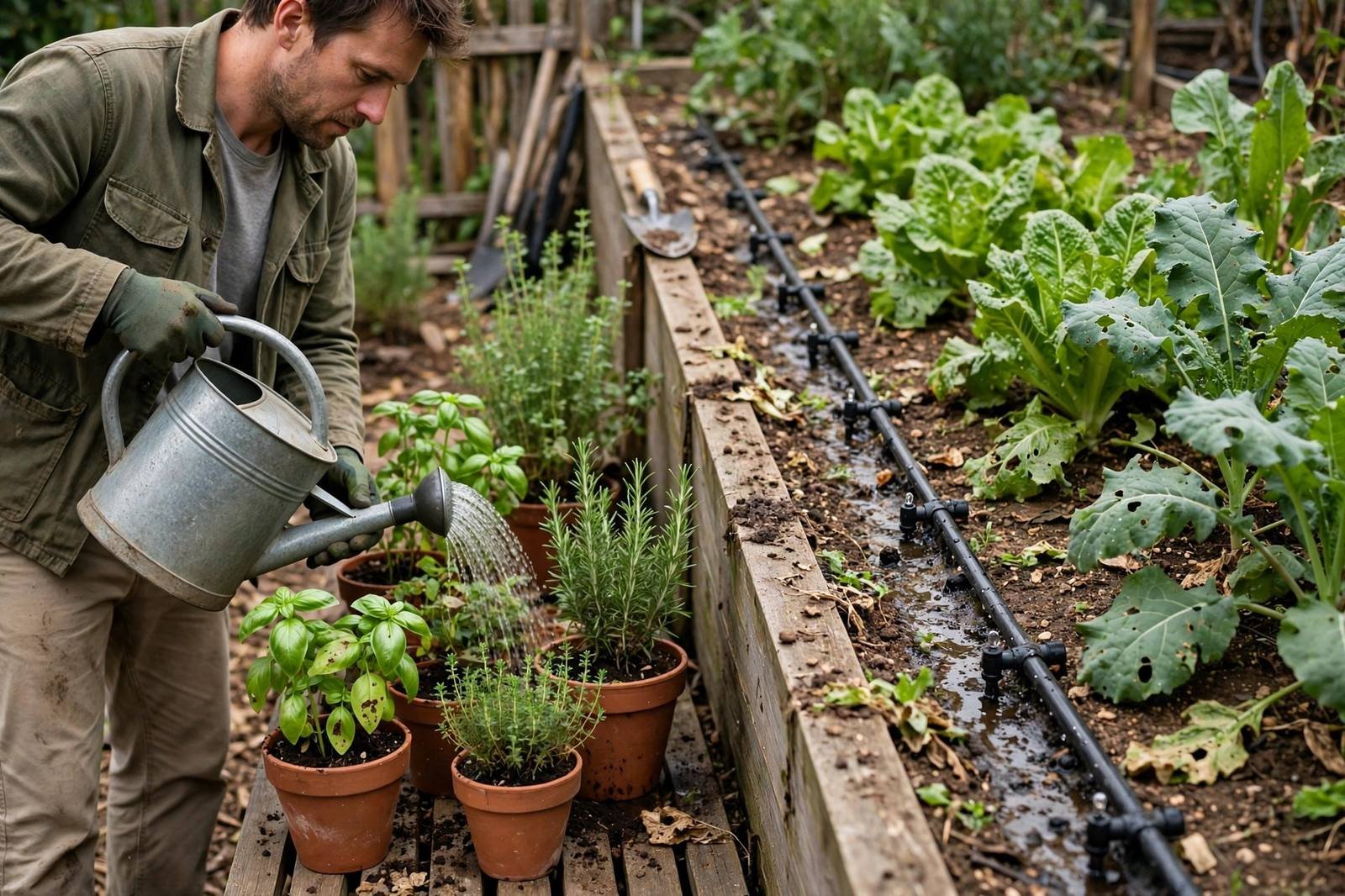
Manual watering gives you control and a close look at every plant, and automatic irrigation gives you steady timing when you are busy or away. If you grow a few pots and enjoy the daily round, hand watering is hard to beat. If you grow rows of beds, work long days, or travel in summer, a timer and drip lines keep plants watered on days you cannot be there. This head-to-head compares time, plant health, cost over seasons, and what goes wrong with each method, so you can pick the one that fits your garden and your week.
We have not tested the products linked here, and we give no current store prices. The links below go to search pages for timers, kits, and watering gear, so you can compare current options, sizes, and prices at the time you shop. For the buying side of automatic watering, see best drip irrigation kits for raised beds and best garden hose timers.
Manual vs automatic at a glance
| Manual watering | Automatic irrigation | |
|---|---|---|
| Weekly time (12 pots) | About 72 minutes in warm weather | About 5 minutes of checks, plus setup |
| Timing | Whenever you remember, and only when you are home | Set times, even when you are away |
| Control per plant | Full: each pot gets what it needs that day | Set by zone: plants in one zone get the same run |
| Early problem spotting | High: you see pests, wilt, and dry soil daily | Low unless you still walk the beds |
| Setup effort | None beyond a can or hose | An afternoon to lay lines and set a timer |
| What breaks | Your routine: a busy week means dry plants | Emitters clog, batteries die, lines kink |
| Best for | Small gardens, pots, hands-on growers | Large beds, travel, hot climates, busy weeks |
The table shows the real trade: manual watering costs time and attention, and automatic watering costs setup and upkeep. The worked example below puts weekly minutes on both sides.
A worked example: 12 pots, twice a week
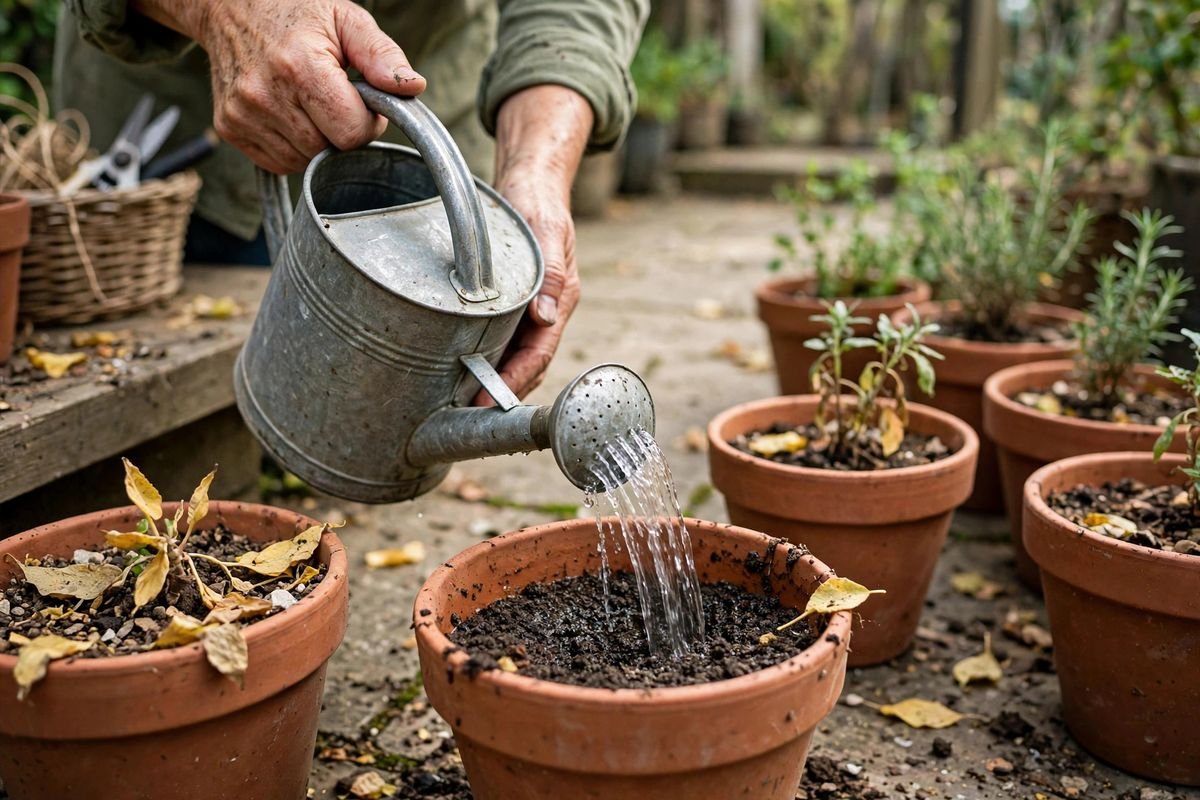
Take 12 outdoor pots in warm weather. Hand watering takes about 3 minutes per pot when you water slowly enough for the soil to absorb it: fill, pour, wait, pour again. That is 36 minutes per round, and two rounds a week come to about 72 minutes a week. Over a 20-week warm season, that is about 24 hours of watering, which is a real chunk of evenings, and it assumes you never miss a round.
An automatic setup changes where the time goes. Laying drip lines for 12 pots and setting a timer takes an afternoon the first time, roughly 3 to 4 hours including a trip for fittings. After that, the weekly job is a 5-minute check: walk the pots, confirm each emitter drips, and glance at the timer. Over the same 20 weeks, that is about 1 hour and 40 minutes of checks plus the setup afternoon, or roughly 5 to 6 hours total against about 24 hours of hand watering. The saving is real, and it depends on the system staying in working order, which brings us to what breaks the math.
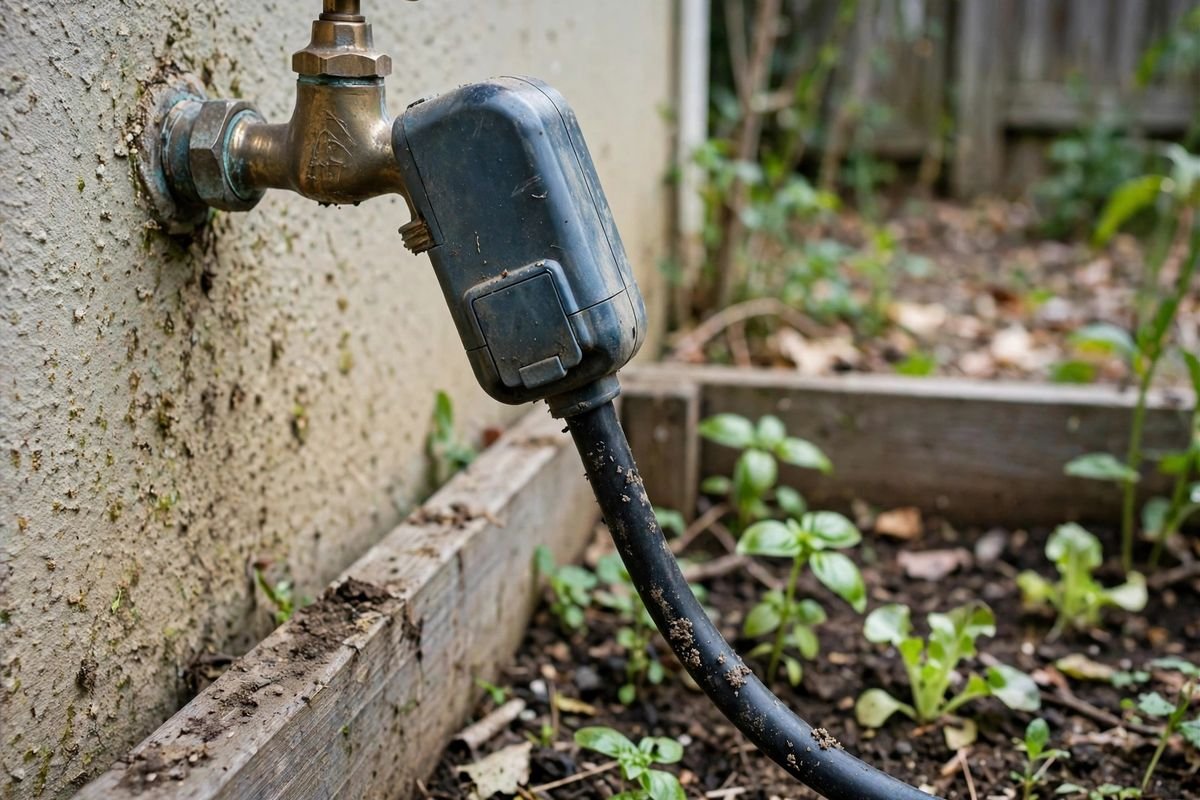
Three failures eat the saving. First, a clogged emitter leaves one pot dry while the rest get water, and you only catch it on the weekly walk. Second, a dead timer battery stops the whole system, sometimes for days, until you notice wilt. Third, a kinked line or a chewed tube cuts water to a whole zone. A filter on the line, fresh batteries at the start of the season, and that weekly 5-minute walk keep all three from turning into dead plants. If you go away, read how to water plants while you are on vacation before you leave, and test the system for a full week while you are still home.

Plant health: control against steadiness
Hand watering lets you adjust plant by plant. A pot in full sun gets a second pour, a pot that rained on yesterday gets skipped, and a seedling gets a gentle sprinkle instead of a blast. That daily judgment is hard for a fixed timer to match, and it is why experienced growers often hand water their most prized plants even when the rest of the garden runs on drip.
Automatic watering wins on steadiness. Plants get water at the same time each day, early in the morning, before the heat builds. Steady moisture suits tomatoes and peppers, which split or drop blossoms when watering swings between soaked and dry. Drip lines also put water at the soil line, which keeps leaves dry and cuts down on fungal problems compared with overhead spraying. The weakness is sameness: one zone setting cannot give a thirsty squash and a frugal herb the same treatment, so group plants with similar water needs on the same line.
A mixed routine covers both strengths. Run drip for the beds, and hand water the pots and new plantings that need daily judgment. For raised-bed setup details, see how to set up drip irrigation for a raised bed. If you pair drip with a rain barrel, see best rain barrels for small gardens for storage options that fit a small yard.
Cost and effort over seasons
Manual watering costs almost nothing in gear: a watering can or a hose you already own, plus your time. Its cost is the missed round. One dry week in a heat wave can set tomatoes back for the rest of the season, and that loss is the hidden price of a manual-only routine when life gets busy.
Automatic watering costs gear up front: a timer, tubing, emitters, and fittings, plus replacement parts over time. Spread over several seasons, that gear cost is modest against the hours it saves, and it pays back fastest in hot climates where watering is a daily job. It does not pay back if the system sits unused, so a small garden with six pots and a gardener who enjoys the daily round gains little from automating.
Water use also differs. Drip lines waste less water than a hose or sprinkler, since water goes to the soil at each plant rather than onto paths and leaves. A careful hand waterer can match drip efficiency pot by pot, but most of us rush at least sometimes, and a rushed pour runs out the drainage holes. For pots that dry fast between waterings, best self-watering spikes for outdoor pots offers a middle step: slow, steady water for individual pots without a full system.
The verdict
Choose manual watering if you grow a small number of pots or beds, you enjoy the daily round, you want to spot pests and wilt early, or your plants have very different water needs that one timer setting cannot serve.
Choose automatic irrigation if you grow many beds, you travel or work long days in summer, your climate needs daily watering, or you have lost plants before to a missed week. Choose automatic irrigation if steady morning watering matters more to your crops than daily judgment per plant.
Choose both if your garden mixes beds and prized pots: run drip on a timer for the beds, and hand water the pots and new plantings each day. That split gives you the steady base of automation plus the daily look that catches problems early, and it is the routine many steady growers settle into after trying each method alone.
To compare current options, search for garden hose timers and drip irrigation kits. Compare timer types first (battery timers are simple and portable, while wired controllers suit larger systems), then check emitter flow rates against your plants’ needs.
Questions
Can automatic watering replace checking plants? No. A timer waters on schedule, but it cannot see a clogged emitter, a chewed line, or a plant that needs less water than its neighbors. Keep a weekly walk even with a full system.
Is hand watering better for seedlings? Yes, in most cases. Seedlings need gentle, frequent water and daily judgment, and a hand can gives both. Move them to drip once they are established and their roots run deeper.
What if the power or battery fails? A battery timer stops the whole system until the battery is replaced, so keep spare batteries by the tap and check the timer display on your weekly walk. A second battery change at mid-season prevents most failures.
Sources & Further Reading
- University of California Agriculture and Natural Resources, home garden irrigation guidance
- Clemson Cooperative Extension, drip irrigation guidance
- University of Georgia Extension, watering garden plants guidance