
This post may contain affiliate links. If you buy through links on this page, we may earn a commission at no extra cost to you.
As an Amazon Associate I earn from qualifying purchases.
Rabbits eat raised beds from the edges inward: young lettuce, bean shoots, and carrot tops disappear overnight, and the culprit leaves small round droppings and clean 45-degree cuts on stems. A single rabbit can clear a bed of seedlings in a week. The fix that lasts is a physical barrier, sized to the animal. Sprays and scents help for a few days, but a fence built to rabbit size keeps working all season without reapplying anything.
We have not tested the products linked here, and we give no current store prices. The links below go to search pages for bed types, so you can compare current options, sizes, and prices at the time you shop.
Build the fence to rabbit size
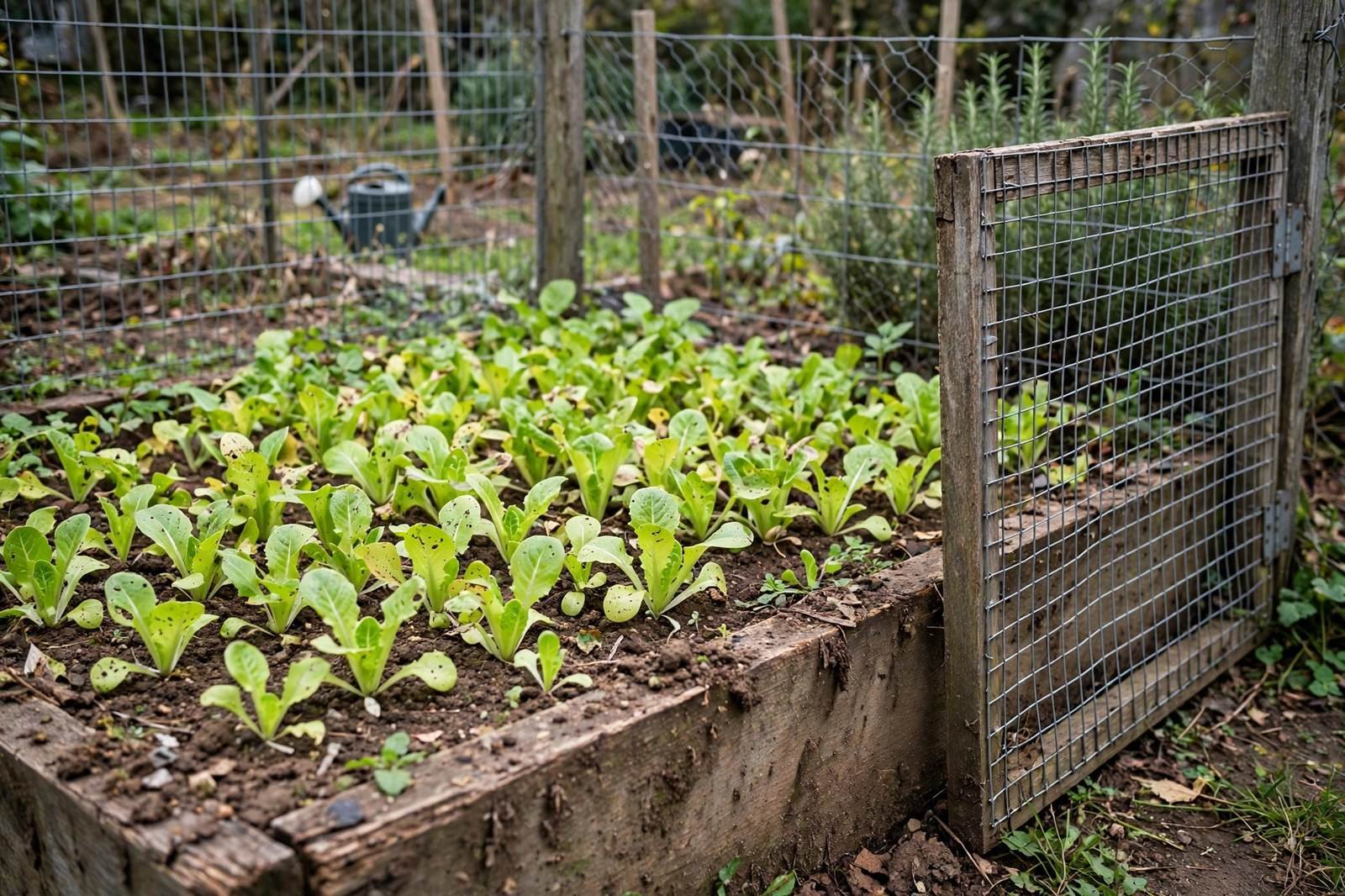
Rabbits squeeze through gaps as small as 2 inches, and young rabbits fit through smaller ones. Use wire mesh with openings of 1 inch or less, such as hardware cloth, for the bottom 2 feet of the fence. Chicken wire with 1-inch hexagonal openings also works, though rabbits can chew through thin chicken wire over time, so hardware cloth lasts longer where rabbits visit every night.
Height matters less than depth. A fence 2 feet tall stops most rabbits, since they prefer to run under or around a barrier rather than jump it when food is nearby. But rabbits dig: bury the bottom edge 6 inches deep, or bend the bottom 6 inches outward at a right angle and pin it flat to the ground with landscape staples. A fence that stops at the soil line is a fence rabbits walk under by morning.

A worked example: fencing one 4 by 8 foot bed
Take a bed 4 feet wide and 8 feet long. The perimeter is 2 times 4 plus 2 times 8, or 24 feet. Add 2 feet for a gate overlap and cutting waste, and buy 26 feet of mesh. At 2 feet tall plus 6 inches buried, the mesh needs to be 30 inches wide, or 36 inches if you bend the bottom outward instead of burying it.
Posts go at the corners and every 6 feet along the long sides, which is 6 posts for this bed: 4 corners plus 1 mid-post per long side. Drive posts 8 inches into the ground, or 12 inches if the soil is soft, and stretch the mesh tight so rabbits cannot push it inward at the middle of a span. A loose fence is almost as bad as no fence, since a rabbit can nose under a sagging bottom edge.
For fencing types by pest and gate details, see best garden fencing for raised beds and how to protect raised beds from frost, which covers covers that double as light pest barriers in cold months.

What else helps, and what does not
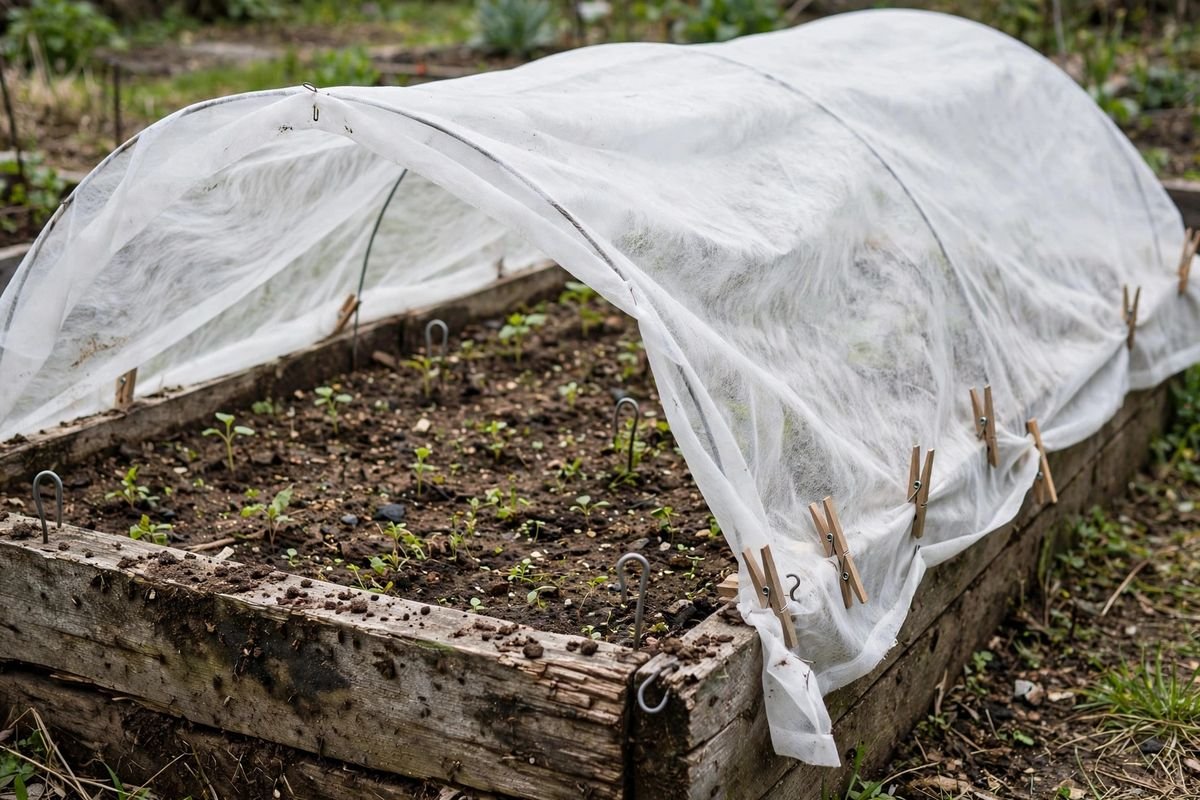
Row cover over hoops protects seedlings in the first weeks, when plants are small enough for a rabbit to finish in one visit. Use a light insect netting or floating row cover, held off the plants by hoops, and pin the edges to the frame so rabbits cannot slip under. Remove the cover once plants are 8 to 10 inches tall and woody enough that rabbits move on to softer food, or keep it on through the season for lettuce and greens.
Raised height alone does not stop rabbits. A bed 24 inches tall slows them for a week, until they learn to stand on their hind legs and reach over, or until a nearby pot or board gives them a step up. A tall bed plus a fence works; a tall bed alone is a delay, not a defense.
Repellent sprays, soap, and predator scent granules fade with rain and need reapplying every few days. They are worth using as a second layer while a fence goes up, or on beds you cannot fence, but they fail as the only defense in a garden rabbits visit nightly. Plant choices help a little: rabbits usually pass over onions, garlic, and strong herbs, so planting those at bed edges can steer them toward easier food, but hungry rabbits in late winter eat almost anything green.
What to check before you build
Check where rabbits enter the garden. Look for gaps under gates, holes in existing fences, and runs through hedges. Fencing one bed while rabbits pour through a gap in the garden fence means they will test your new fence every night. Fix the garden entry first, then fence the beds that still get visited.
To compare current options, search for hardware cloth 1-inch mesh rolls and metal garden fence posts. Compare mesh opening first, since 1 inch or less is what keeps young rabbits out, then wire thickness, since thicker wire resists chewing longer.

Questions
Will a fence keep out deer too? No. Deer step over a 2-foot fence without noticing it. A fence that stops both needs to be 7 to 8 feet tall, which is a different project. The rabbit fence in this article protects beds from rabbits and similar small animals only.
How do you know rabbits are the culprit? Clean diagonal cuts on stems, small round droppings near the bed, and damage at night all point to rabbits. Ragged torn leaves point to slugs or insects instead, and dug-up soil points to squirrels or birds.