
This post may contain affiliate links. If you buy through links on this page, we may earn a commission at no extra cost to you.
As an Amazon Associate I earn from qualifying purchases.
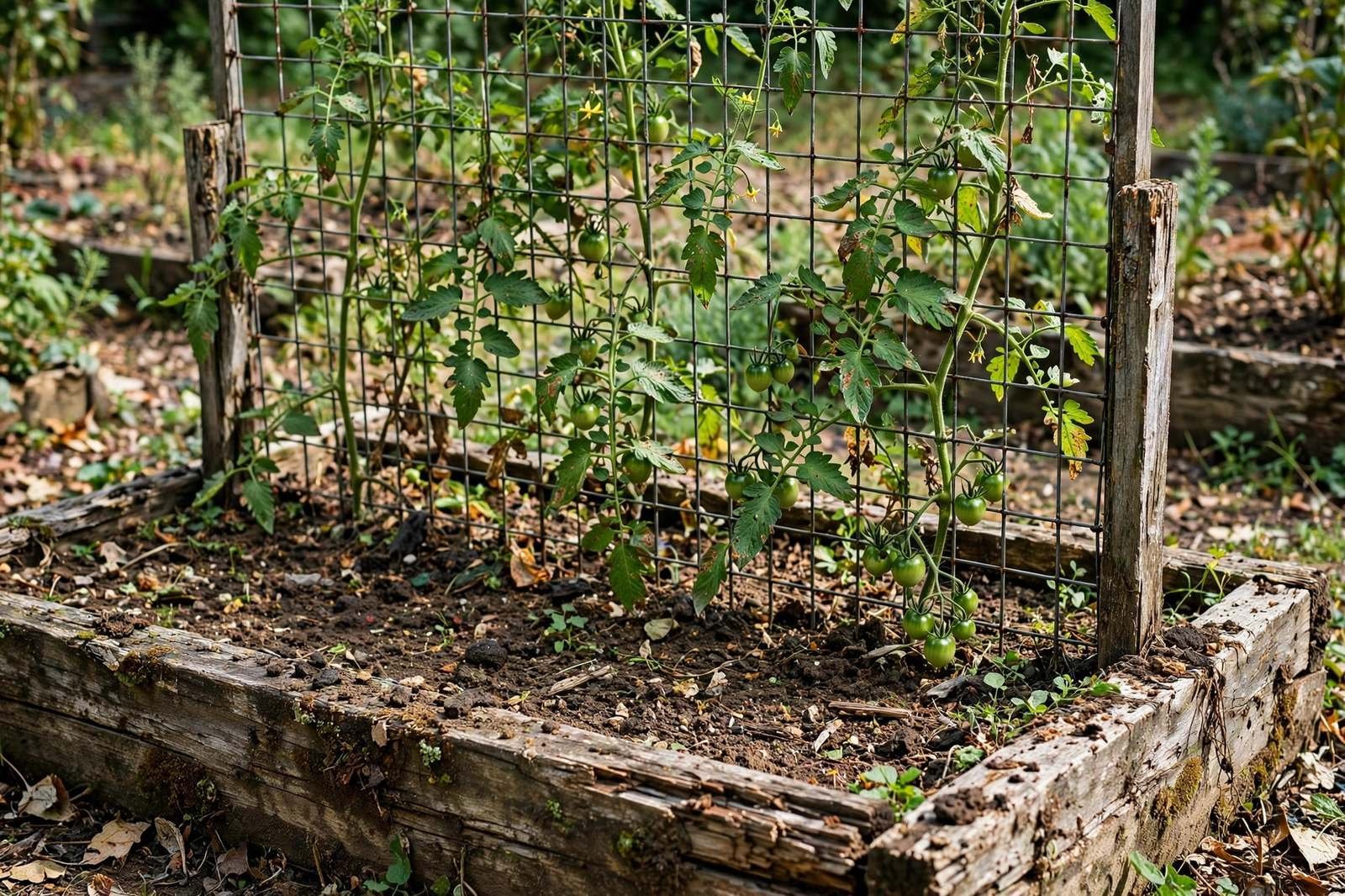
Adding a trellis to a raised bed is a mounting job first and a plant job second. A trellis that is only pushed into loose soil falls over the first time a loaded vine catches wind. The fix is to anchor the trellis to the bed frame or to posts driven into firm ground, before any plant touches it. Once the trellis stands on its own, training plants onto it takes a few minutes a week.
We have not tested the products linked here, and we give no current store prices. The links below go to search pages for bed types, so you can compare current options, sizes, and prices at the time you shop.
Three ways to mount a trellis on a bed
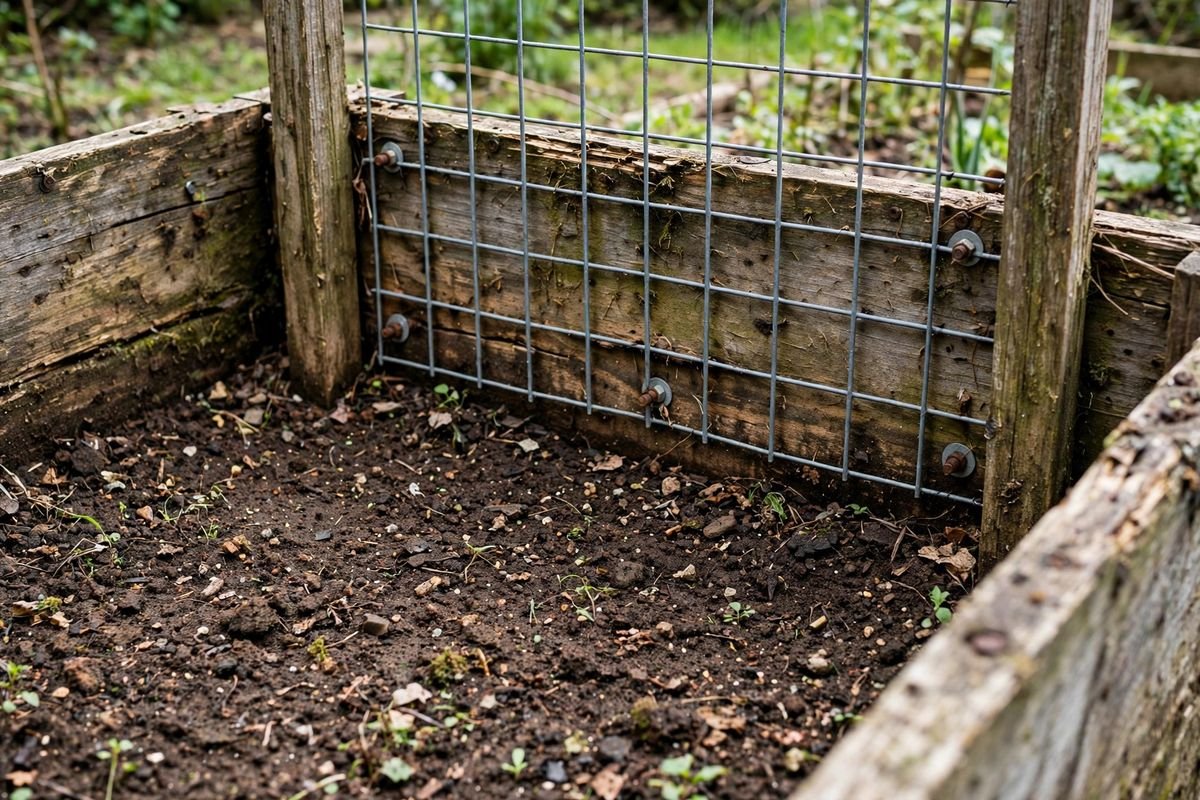
The frame-mount method bolts or screws a flat panel to the inside of the bed frame, usually at the north end so it does not shade the rest of the bed. It is the simplest mount, and it works for panels up to 6 feet tall on a sturdy wood or metal frame. The frame carries the load, so a frame with thin boards or weak corners needs bracing first, or the panel will pull the frame out of shape as vines load it.
The post method drives two posts into the ground at the ends of the bed, outside the frame, and fixes the panel to the posts. Posts 2 feet in the ground hold a 6-foot panel against wind that a frame mount cannot. This method suits heavy crops such as indeterminate tomatoes and large squash, and it lets you replace the bed frame later without removing the trellis.
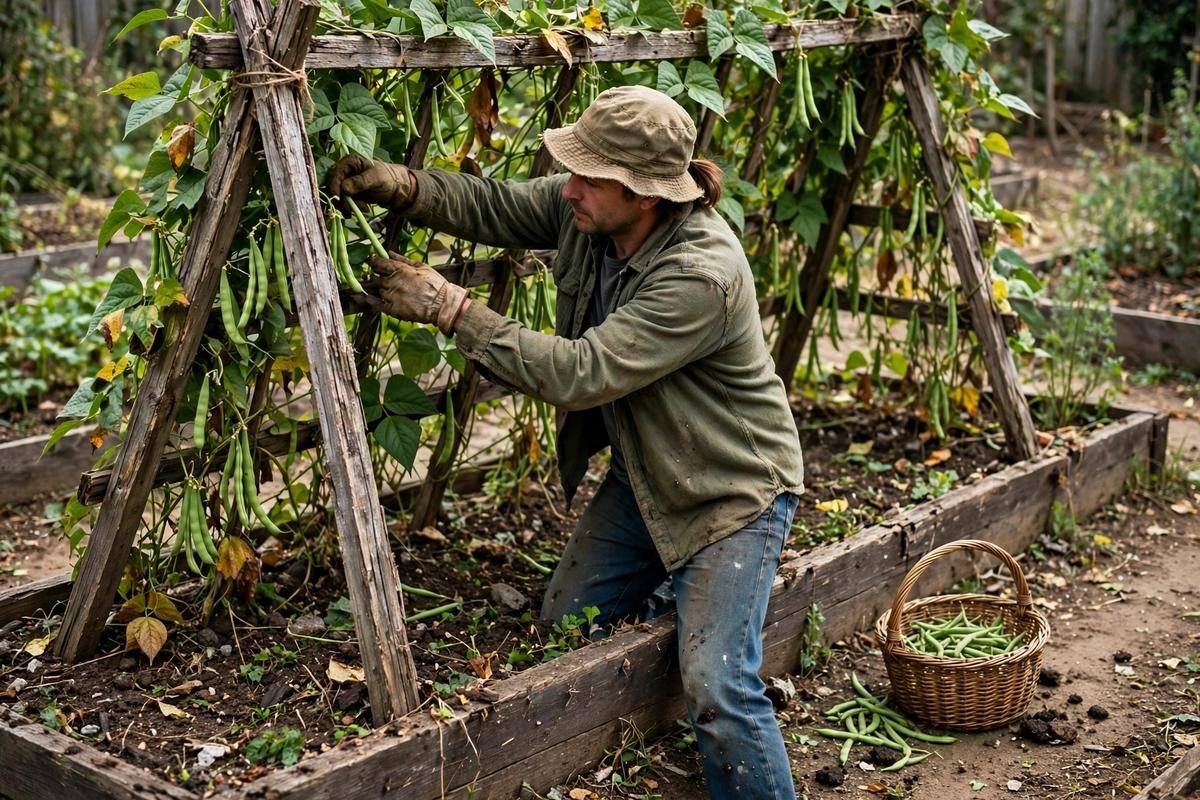
The A-frame method leans two panels together over the bed, tied at the top, so plants climb both sides and the middle stays open. It suits cucumbers and beans in a bed 4 feet wide, and it needs no posts, since the frame shape holds itself up. It does shade the middle of the bed, so plant shade-tolerant greens underneath rather than sun lovers.
A worked example: mounting a 6-foot panel on a 4 by 8 bed
Take a flat panel 6 feet tall and 4 feet wide, mounted at one short end of a 4 by 8 foot bed. For the post method, drive two posts 2 feet into the ground, one at each corner of that end, leaving 6 feet above ground. The panel then spans 4 feet between posts, which matches the bed width, and the posts sit outside the frame so they do not eat growing space.
Now the load math. Eight tomato plants on that panel, each carrying about 16 pounds of fruit and foliage at peak, put about 128 pounds on the panel, plus wind load when leaves catch a breeze. Two posts set 2 feet deep, with the panel screwed to each post at three heights, spread that load into firm ground. A panel pushed 6 inches into bed soil, by contrast, levers out of the soil at the first strong gust, since loose mix has little grip.
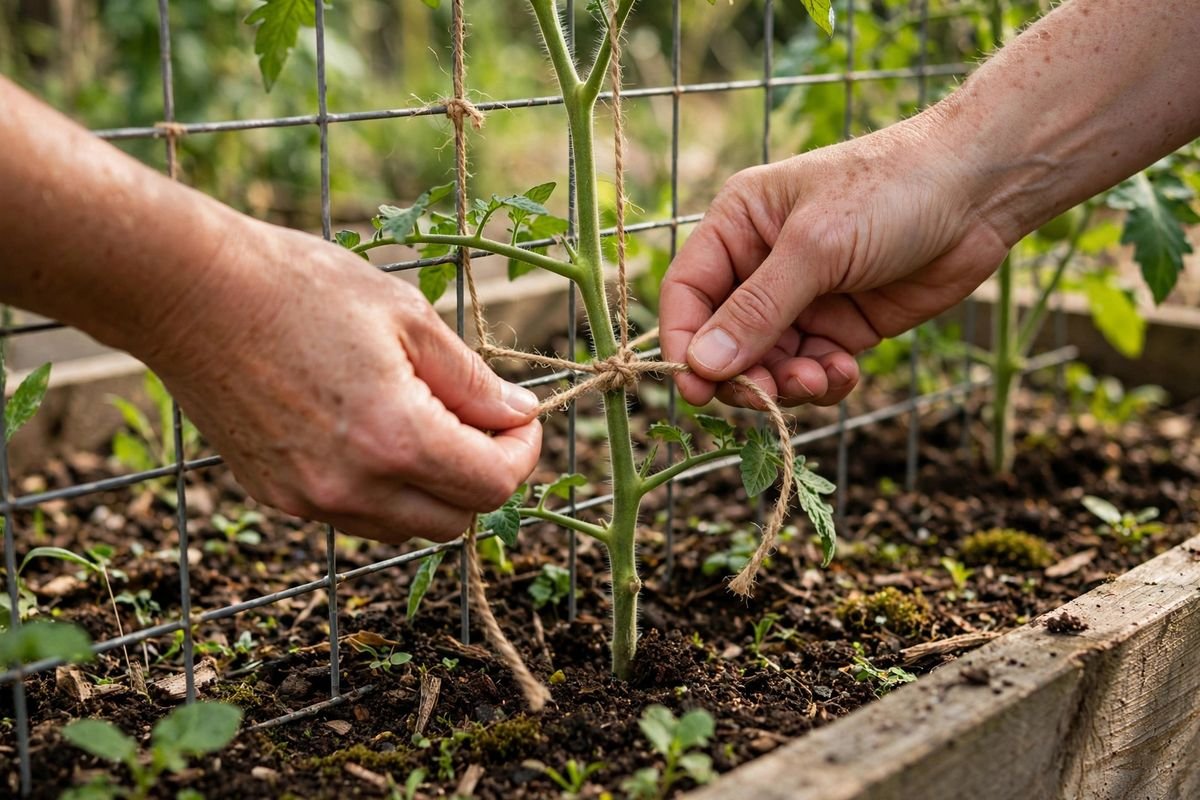
Tie plants to the panel with soft twine or plant clips, one tie every 12 inches of stem, and retie weekly as stems grow. Ties too tight cut into stems as they thicken, so leave a finger-width of slack. For trellis types matched to each crop, see best tomato trellises for raised beds and best cucumber trellises for small gardens.
Placement, shade, and wind
Place a tall trellis at the north end of the bed in the northern hemisphere, so its shadow falls outside the bed for most of the day. A trellis at the south end shades the whole bed by mid-afternoon, and plants behind it grow leggy reaching for light. If the bed runs east to west, place the trellis at the west end instead, where the evening shadow falls off the bed.
Wind hits a trellis like a sail once leaves cover it. A panel 4 feet wide and 6 feet tall presents 24 square feet of leaf surface to the wind. Angle braces from the top of the panel back to the bed frame, one per side, turn that sail into a braced frame that holds in gusts. Without braces, a post-mounted panel can lean a few inches over a season, and a leaning panel pulls plants with it.
Leave a path behind the trellis. Picking from one side only means the back of the panel goes unpicked, and fruit rots there and draws pests. A 2-foot path behind the bed, or a panel you can walk around, keeps every fruit within reach. For bed width and path planning, see how wide should a raised garden bed be.

What to check before you build
Check the frame strength before you mount anything to it. Grab the top board and push: if it flexes more than a little, brace the corners or switch to the post method. Check for buried lines before driving posts, since garden beds often sit near irrigation lines and cables.
To compare current options, search for wire trellis panels for raised beds and soft plant ties for tomatoes. Compare panel height first, since a panel shorter than the mature plant height fails in August, then mesh size, since small mesh suits peas and beans while large mesh suits tomatoes.
Questions
When should you install the trellis? Before planting, or at transplant time at the latest. Installing after vines sprawl means lifting plants onto the panel, which breaks stems and roots. A trellis in place at planting day gets plants trained from the start.
Can one trellis serve two beds? Yes, if the beds share a path and the panel sits between them, with plants from each bed climbing one side. Keep the panel accessible from both beds, and do not let one side shade the other bed all day. Use your local frost dates and regional planting guidance, not your USDA hardiness zone alone, to time trellis crops after the last frost.