
This post may contain affiliate links. If you buy through links on this page, we may earn a commission at no extra cost to you.
As an Amazon Associate I earn from qualifying purchases.
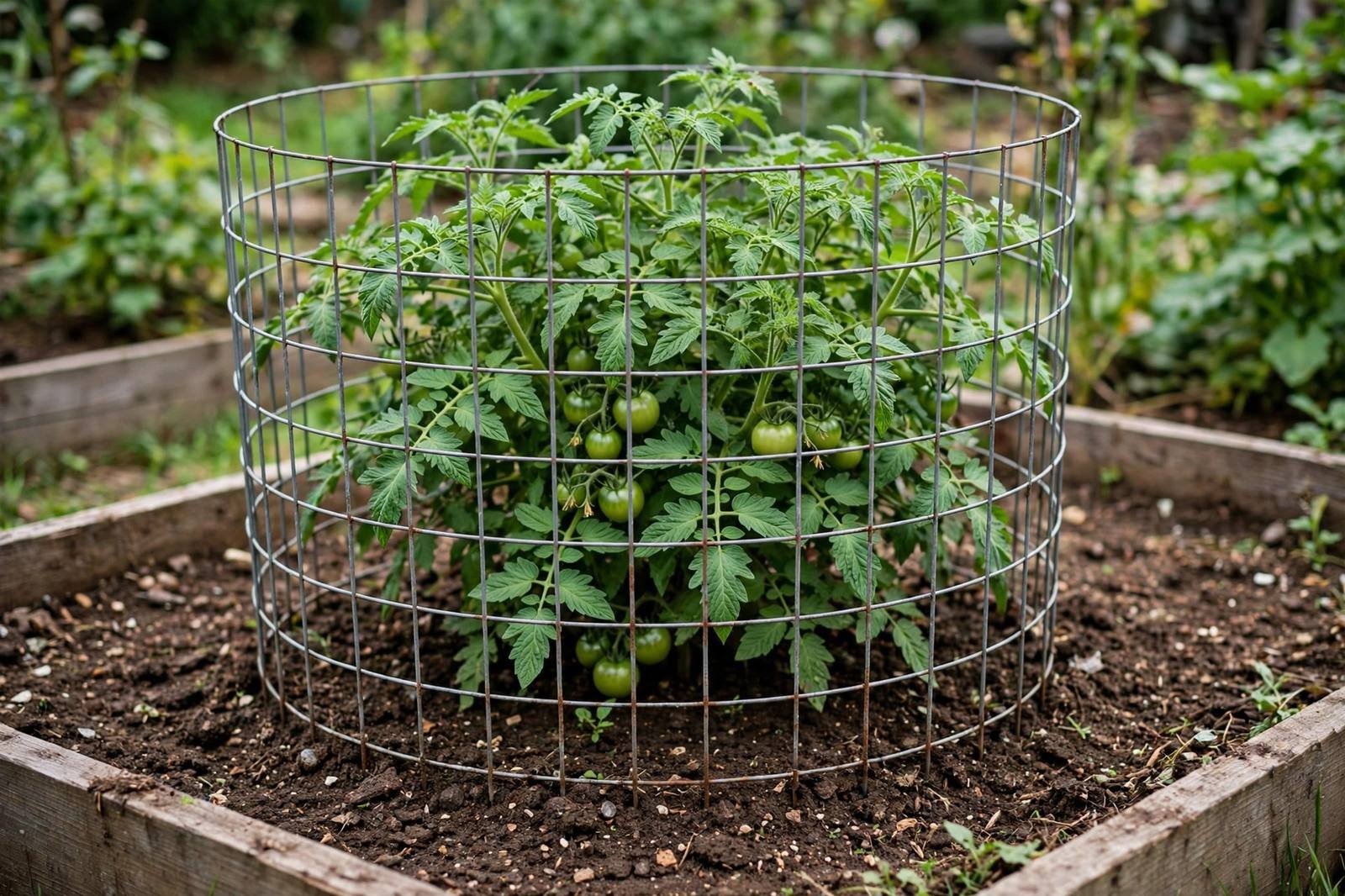
Tomatoes need support, and the two common options work in different ways. A cage stands around one plant and holds it from all sides. A trellis gives the plant a flat face to climb, with tying and pruning along the way. A cage asks less of you during the season. A trellis gives more control, more airflow, and easier picking. The best pick depends on how many plants you grow and how much time you want to spend tying and pruning.
We have not tested the products linked here, and we give no current store prices. The links below go to search pages for support types, so you can compare current options, sizes, and prices at the time you shop.
Cage and trellis at a glance
| Feature | Tomato cage | Tomato trellis |
|---|---|---|
| Support style | Surrounds one plant | Flat face, plants tied on |
| Season work | Little tying or pruning | Regular tying and pruning |
| Airflow | Dense center, slower drying | Open face, faster drying |
| Picking | Fruit inside can be hard to reach | Fruit on one face, easy to see |
| Best for | One or two plants, low effort | Rows of plants, tall varieties |
Tomato cages: pros and cons
- Pros: setup is fast, since the cage just stands over the plant and needs little tying at the start.
- Pros: the cage holds branches from all sides, so a bushy determinate plant stays contained.
- Pros: cages stack or fold for storage, and they suit a single plant in a pot or a small bed.
- Cons: a light wire cage bends under a loaded indeterminate plant and can tip in wind.
- Cons: fruit inside a dense cage is hard to reach, and leaves in the center dry slowly after rain.
- Cons: a tall indeterminate plant grows out the top of most cages and flops over the side.
Tomato trellises: pros and cons
- Pros: a trellis holds tall indeterminate plants to 6 or 7 feet without flopping.
- Pros: the open face dries fast after rain, which helps with leaf disease.
- Pros: fruit hangs where you can see and pick it, and pruning is easy from one side.
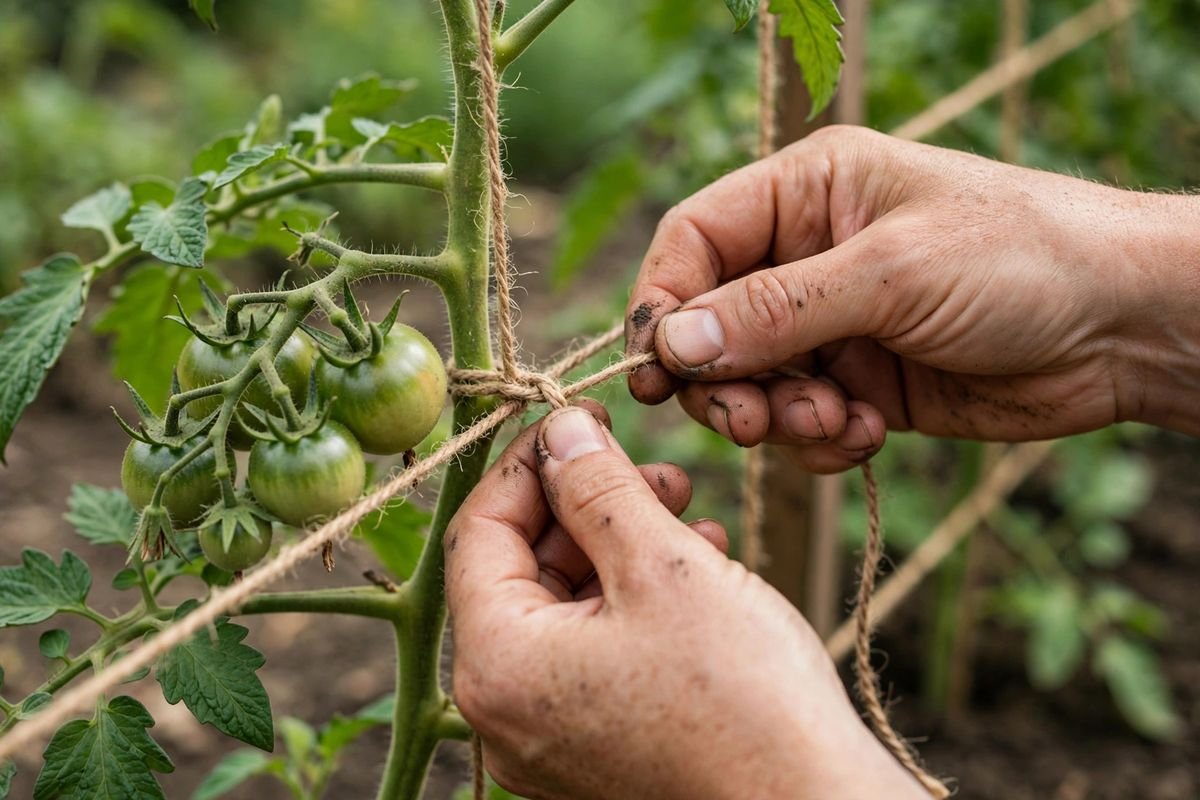
- Cons: a trellis needs regular tying, usually every 8 to 10 inches of growth.
- Cons: a trellis needs solid posts or a top bar, since the full row weight hangs on one structure.
- Cons: pruning to one or two stems takes time and confidence, especially for new growers.
A worked example: four plants, two systems
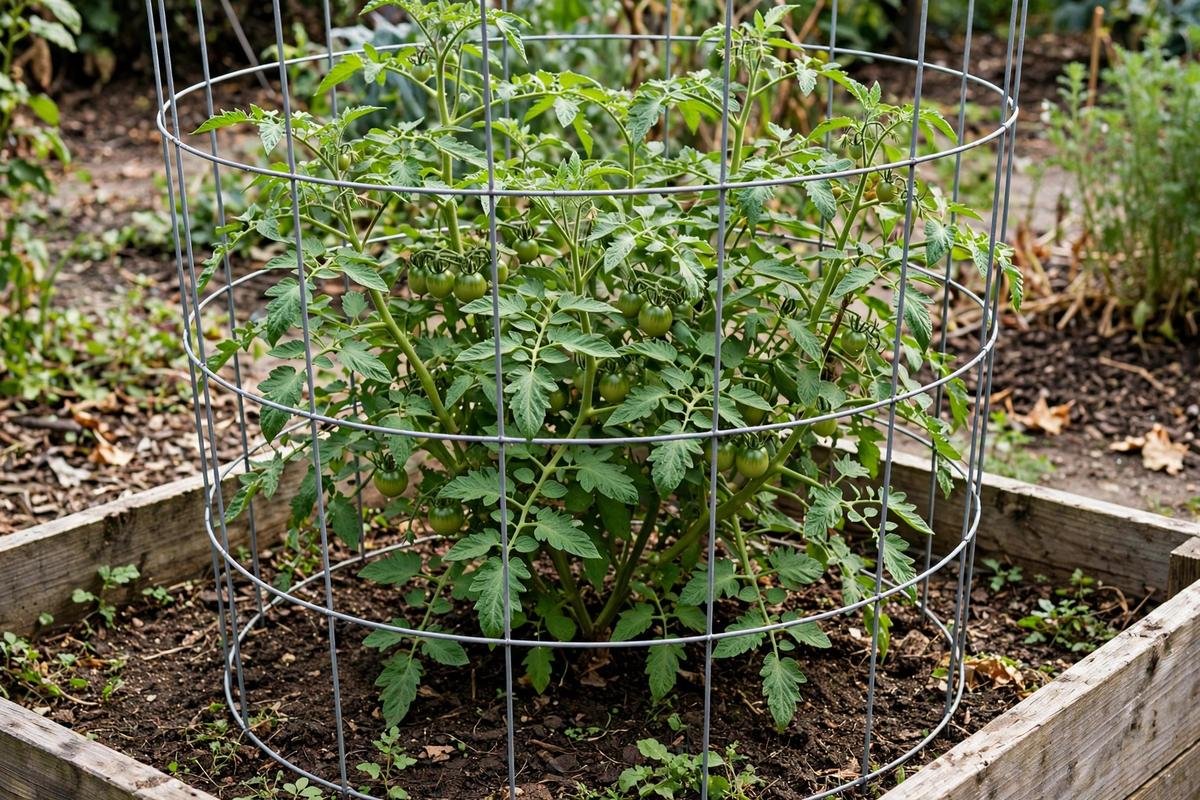
Take four indeterminate tomato plants in a row. In cages, each plant needs a cage about 18 inches across, so four cages take about 6 feet of row, plus space between cages for picking. Suppose each plant yields 15 pounds of fruit. That is 60 pounds across four cages, each cage holding its own 15 pounds. A light cage rated for flowers will bend under that load, so cages need heavy wire and a stake to anchor them.
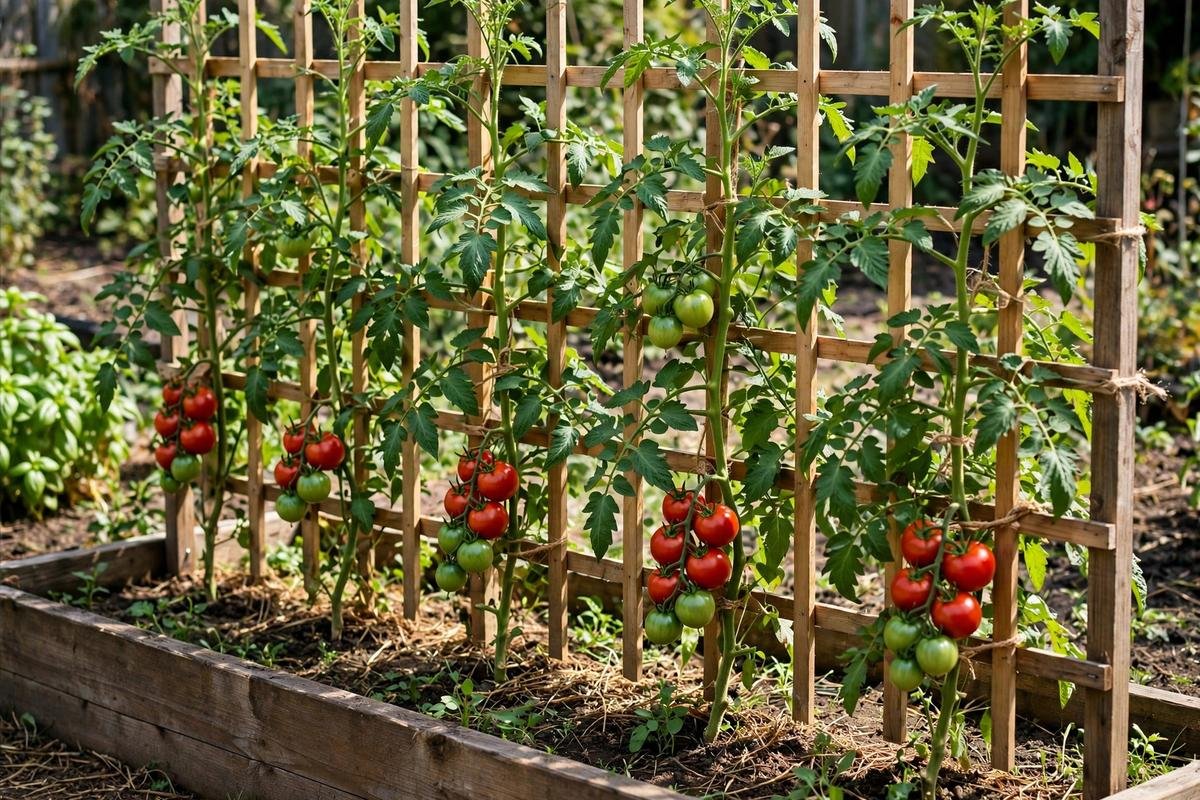
On a trellis, the same four plants tie to one flat panel 8 feet long and 6 feet tall, with plants 2 feet apart. The panel holds the same 60 pounds, but on one structure with two end posts, which is easier to anchor well. The trade is labor: the trellis plants need tying every week or two through the season, while the cage plants need little attention until harvest. For plant habits and pruning basics, see how to grow tomatoes and what size pot a tomato plant needs for container plants.
How to choose for your garden
Choose a cage if you grow one or two plants, if you grow determinate varieties that stop at a set height, or if you want the lowest-effort support. Buy a heavy cage, not a light one: thick wire, rings at least 18 inches across, and a stake to anchor it. A cage that tips in August is worse than no cage at all, since it drags the plant down with it.
Choose a trellis if you grow a row of indeterminate plants, if leaf disease has been a problem in past seasons, or if you want the easiest picking. A string trellis or a cattle panel suits a row, while a single flat panel suits a short row in a small bed. Plan the tying routine at planting time, so it becomes a weekly habit rather than a rescue job in July.
Verdict
Choose a tomato cage if you grow one or two determinate plants, want the simplest setup, or prefer to spend little time tying and pruning through the season.
Choose a tomato trellis if you grow a row of indeterminate plants, want better airflow and easier picking, or need support taller than a cage can give.
To compare current options, search for heavy duty tomato cages and 6-foot tomato trellis panels. Compare wire thickness and height first, then whether the cage anchors with a stake and whether the trellis includes posts. Our post on raised bed gardening for beginners covers bed layout for rows and cages.

Questions
Can you use both in one garden? Yes, and many growers do. Cages suit a couple of determinate plants near the house, while a trellis suits the main row of indeterminate plants. Match the support to each variety, not to a single rule for the whole garden.
When does a cage fail? Most often in late summer, when a loaded plant plus wet leaves plus wind exceeds what light wire can hold. Anchor every cage with a stake driven into firm ground, and check it after storms.