
This post may contain affiliate links. If you buy through links on this page, we may earn a commission at no extra cost to you.
As an Amazon Associate I earn from qualifying purchases.
Planting lettuce in August sounds like a mistake. Lettuce bolts in heat, turns bitter under stress, and flat-out refuses to sprout when the soil is baking — so sowing it on purpose while summer is still hanging around feels like setting yourself up for a crunchy, bitter disappointment.
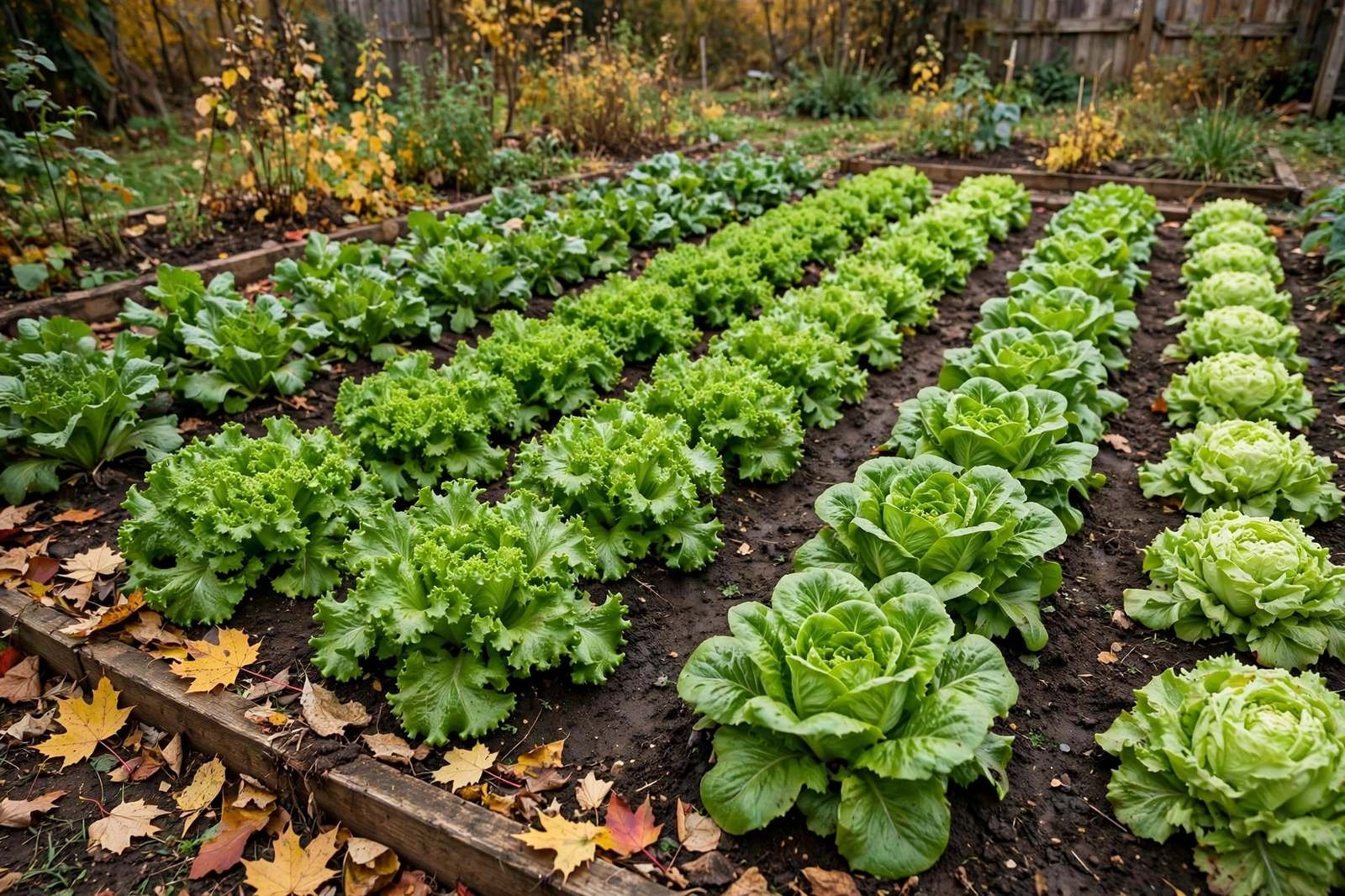
Here’s the twist: fall lettuce often tastes better than spring lettuce. Cool nights and mild days let heads form slowly and densely, which is why a crisp October romaine can outshine anything pulled from a hot June bed. Pest pressure drops off, watering slows down, and you get the sweetest, most relaxed stretch of the gardening year to enjoy it all.
University extension services list lettuce among the most reliable fall crops in the country, and for good reason — it’s one of the few vegetables that genuinely prefers the shoulder season over summer. The catch is timing: sow too early and the heat wins, sow too late and the frost wins.
In this guide, you’ll learn how to hit that window — when to sow by frost date, the every-10-days succession rhythm that keeps salads coming for months, how to protect seedlings from late-summer heat waves so they don’t bolt, the varieties bred for fall conditions, and how to harvest for the longest season.
Quick Care Overview: Fall Lettuce at a Glance
Pin this table to your fridge. Everything below it is just the details.
| Care factor | What fall lettuce wants |
|---|---|
| Light | Full sun preferred; tolerates partial shade (4–6 hours) in warm zones |
| Soil | Loose, well-drained, rich in compost, pH 6.0–7.0 |
| Sow depth | 1/4 inch — lettuce seed needs light to germinate |
| Spacing | 8–12 inches apart for full heads; 2–4 inches apart in bands for baby leaf |
| Germination soil temp | 60–70°F is ideal; germination stalls above 75–80°F |
| Days to maturity | 45–60 days for full heads; 25–35 days for baby leaf |
| Water | About 1 inch per week, kept steady — drought stress turns leaves bitter |
| Cold tolerance | Handles light frosts; hardy varieties survive into the low 20s °F under row cover |
| Fertilizer | Light feeder — compost at planting, one side-dress of nitrogen mid-season |
Why Fall Is Lettuce’s Best Season
Summer is lettuce’s enemy. Once daytime temperatures climb past the mid-70s °F, most varieties rush to flower — bolting — and the leaves turn bitter almost overnight. Fall flips the script. Daytime highs in the 60s and nighttime lows in the 40s and 50s are squarely in lettuce’s comfort zone, so plants grow steadily instead of panicking.
That steady growth is what makes fall lettuce taste better. Fast, cool growth builds sugar and crunch; heat-stressed growth builds bitter compounds. The difference is noticeable enough that many gardeners say their October salads are the best of the year.
Fall brings practical bonuses, too. Cabbage worms and aphids fade as the season cools. Weeds slow to a crawl. And because the sun is weaker, you spend less time watering — evaporation drops dramatically compared to August.
There’s one thing fall doesn’t give you: forgiveness on timing. In spring, a late planting just matures a little later. In fall, a late planting runs into hard frost. That’s why this guide leads with dates, not vibes.
When to Plant Lettuce in Fall
Start with your average first fall frost date — your county extension office lists it, and it’s the anchor for all fall planning. Seed packets list “days to maturity,” but that number assumes long, warm June days. In fall, everything grows a little slower, so the standard correction is to add about 14 days (sometimes called the fall factor) to the packet number, then count backward from your frost date.
Example: ‘Winter Density’ matures in about 45 days. Add 14 for the fall factor and you need 59 days. If your first frost lands around October 25, count back 59 days and your sow-by date is roughly August 27. That math is why the best fall lettuce often gets planted in late summer, while the tomatoes are still producing.
That works out roughly like this: where first frosts arrive in early October, sow hardy varieties in mid-to-late August for baby-leaf harvests (plan on row cover for full heads); where frosts arrive in late October, sow late August through early September; where first frosts land in November or December, sow September through October; and where freezes are rare, fall is your prime lettuce season — keep sowing every few weeks straight through winter.
If you’re planting several fall crops and need help picking the lineup, our October planting guide sorts out which vegetables pair well with a lettuce succession.
How to Plant: Succession Sowing in Six Steps
The single technique that separates a two-week lettuce flush from a three-month salad supply is succession sowing: planting small batches every 10 to 14 days instead of everything at once. Each sowing takes about five minutes, and it keeps you harvesting continuously instead of drowning in heads all at once.
Step 1: Prep the bed with compost
Lettuce is a light feeder, but it wants loose, fertile soil to form crisp heads. Spread 1 to 2 inches of finished compost over the bed and rake it level. If your summer crops just came out, that’s perfect — pull the old plants, top up the compost, and replant the same bed. Our compost guide covers making your own if the pile is ready.
Step 2: Check the soil temperature
Lettuce seed germinates best in 60–70°F soil and sulks above 75–80°F. In late August, beds can still be warm enough to stall germination — press a soil thermometer two inches down in the late afternoon and you’ll know in seconds whether it’s sowing time or shade-cloth time (more on that below).
Step 3: Sow shallow — 1/4 inch
Lettuce seed needs light to germinate, so it barely wants covering. Scratch a shallow furrow about 1/4 inch deep, sprinkle seeds roughly an inch apart along the row, and pat the soil gently over them. For baby-leaf production, you can sow in wide bands — scatter seed over a 4- to 6-inch-wide strip instead of a single line.
Step 4: Water in gently
Mist or shower the row with a gentle spray so you don’t wash the seed away. Keep the top inch of soil consistently moist for the next 7 to 10 days — germination stalls fast in dry soil. A light daily misting in the morning works well in warm weather.
Step 5: Thin once seedlings are up
When seedlings show their first true leaves, thin ruthlessly: 8 to 12 inches apart for full heads, 2 to 4 inches apart for baby-leaf bands. Yes, it feels wasteful. The thinnings make excellent microgreens — rinse and eat them instead of composting.
Step 6: Mark the calendar and sow again
Set a reminder for 10 to 14 days later and sow another short row. Keep the rhythm going until about 4 weeks before your first frost (for baby leaf) or 8 weeks (for full heads). Each successive sowing grows a bit slower as days shorten — that’s normal, not a problem.
Related Post: How to Grow Arugula in Fall — arugula pairs perfectly with a lettuce succession and is ready to cut even sooner.
Spacing: The Mistake That Ruins Fall Lettuce
The number one beginner mistake with lettuce is crowding. Seedlings look so small and innocent at two inches tall that it’s tempting to leave them packed — then the bed turns into a stunted, bitter mat and nobody wants to eat it.
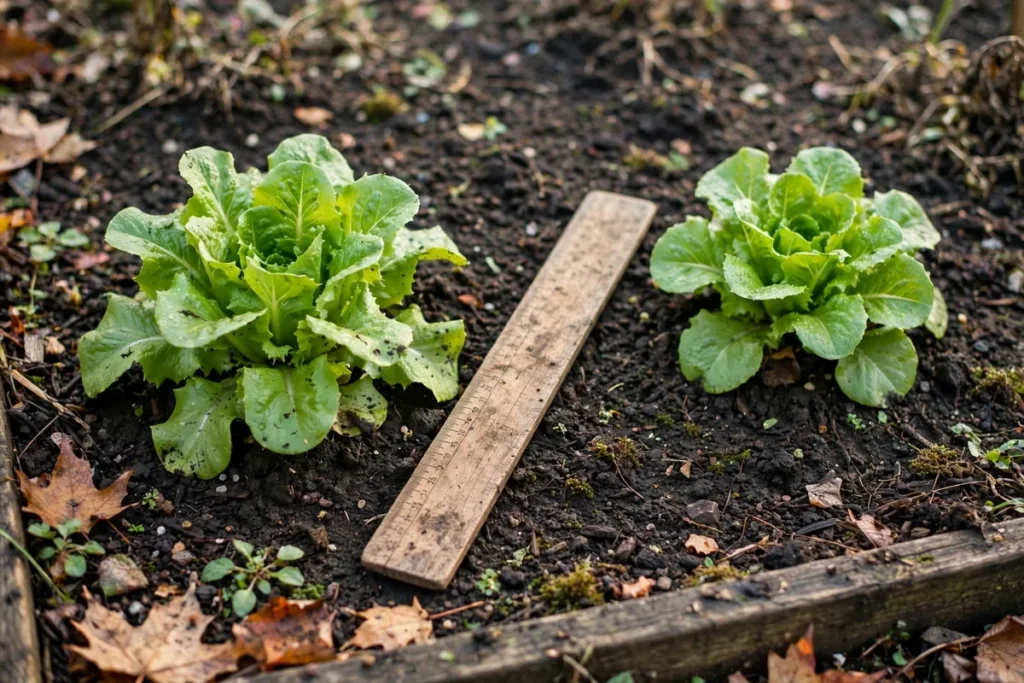
The rule is simple: full heads need 8 to 12 inches of elbow room (romaine types toward the wider end, butterheads toward the narrower). Baby-leaf bands can stay tighter at 2 to 4 inches, because you’re cutting them young before competition kicks in.
If you’re growing in pots, one head per 6- to 8-inch pot works well, or a 12-inch container fits a dense patch of baby leaf. Containers are easy to move under cover on frosty nights, which makes them a genuine season-extension tool, not just a space-saver.
Beat the Heat: Preventing Bolting in Warm Spells
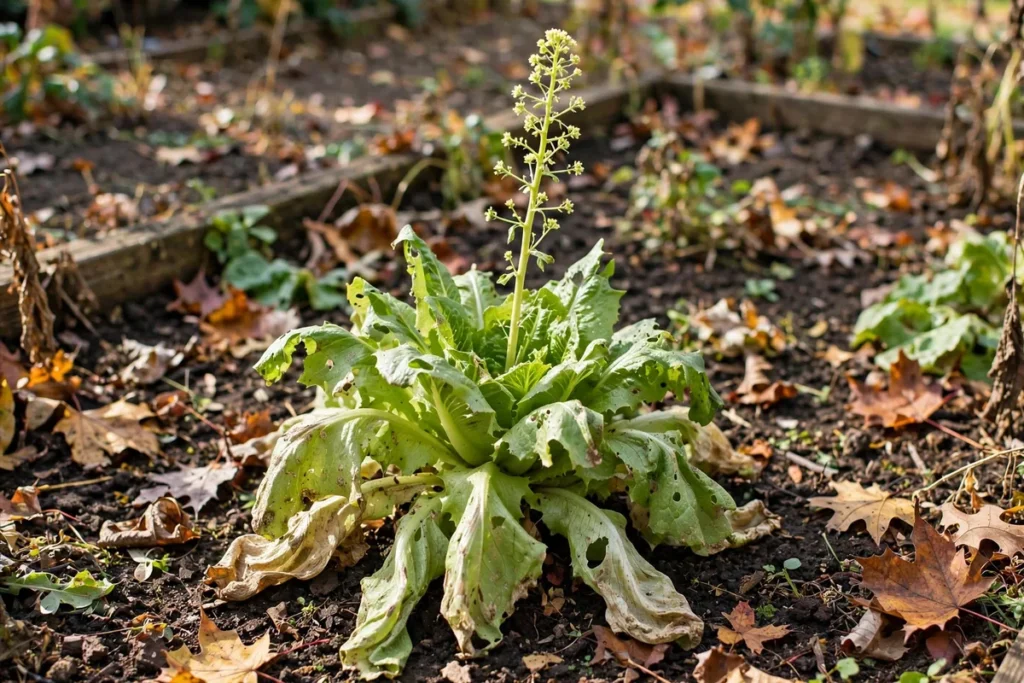
The trickiest part of fall lettuce is the start. Late August and early September can still throw 85°F days at you, and heat is the trigger that tells lettuce to bolt — send up a flower stalk and turn bitter. Since fall succession starts in that warm window, bolting protection is mostly a first-sowing problem; later sowings land in cooler weather and behave themselves.
The most effective tool is a 30 to 50 percent shade cloth draped over the bed during hot spells. It lowers both air and soil temperature around the seedlings, and you can pull it off once daytime highs settle into the 60s. Row cover fabric doubles as light shade in a pinch and then converts to frost protection later in the season — two jobs, one purchase.
A few more heat-beating tactics, in order of impact:
- Water in the morning. A deep morning soak cools the root zone for the day. Afternoon watering on hot days evaporates before it helps.
- Mulch between rows. A couple of inches of straw keeps soil cooler and holds moisture through the warm weeks.
- Pick bolt-resistant varieties for your first sowing (see the variety list below) and save the delicate heirlooms for the cooler second and third sowings.
- Sow in afternoon shade. A spot that catches morning sun but is shaded from 2 p.m. on is ideal for early-fall sowings.
Some gardeners pre-chill lettuce seed in the refrigerator for two to three days before sowing in warm soil — extension publications mention it as a legitimate trick for heat-stalled germination, and it costs nothing to try.
Fall Care: Water, Mulch, and Fertilizer
Once seedlings are up, fall lettuce care is pleasantly low-key. The main job is steady moisture — lettuce has shallow roots, and letting the bed dry out between waterings stresses plants and builds the bitter compounds you’re trying to avoid. About an inch of water a week is the target; in cool, cloudy October weather you’ll often get that from rain alone.
Mulch with 2 to 3 inches of straw once seedlings are a few inches tall. It holds moisture, keeps soil from splashing onto the leaves during fall rains, and later acts as insulation when frosts arrive. Pull it back a few inches from very young stems so slugs don’t set up camp against the plants.
Lettuce is a light feeder, so compost at planting usually carries it most of the way. If growth stalls mid-season — pale leaves, slow sizing — a side-dress of a nitrogen source like blood meal or fish emulsion, watered in well, gives it a nudge. Skip heavy feeding late in the season; soft, over-fertilized growth is more frost-tender.
The Best Lettuce Varieties for Fall
Not all lettuce handles fall equally. For early sowings in warm soil, bolt resistance matters most. For late sowings, cold tolerance wins. These are standard, widely grown varieties — pick traits that match your sowing date.
Bolt-resistant for early-fall sowings
‘Salvius’ — A crisp romaine-type bred for heat tolerance; holds its sweetness weeks longer than standard romaines when warm spells linger.
‘Nevada’ and ‘Magenta’ — Summer crisp (Batavian) types with thick, crunchy leaves that resist both bolting and tip burn. Reliable first-sowing choices in zones 5 through 8.
‘Adriana’ — A large butterhead with notable heat tolerance; forms dense, sweet heads even when the season starts warm.
‘Slobolt’ — The name says it all: an heirloom leaf lettuce selected for slow bolting. Old, proven, and forgiving.
Cold-hardy for late-season sowings
‘Winter Density’ — A compact romaine that shrugs off frosts into the mid-20s °F. The standard recommendation for fall heading lettuce, maturing in about 45 days.
‘Arctic King’ — A butterhead bred for cold; tolerates hard frosts under cover and is a favorite for winter frames in zones 6 and up.
‘North Pole’ — Another cold-bred butterhead that keeps growing slowly through chilly weather when other varieties stall.
Baby-leaf machines (cut-and-come-again)
‘Salad Bowl’ (red and green) — Oakleaf types that regrow fast after cutting. Sow thickly, cut at 4 to 6 inches, and harvest again in two to three weeks.
‘Black Seeded Simpson’ — An old looseleaf standby: fast, productive, and tolerant of a wide range of conditions. A fine first variety if you’re new to this.
Seed for all of these is easy to find — search lettuce seeds for fall planting and match the variety name to your sowing window.
How to Harvest for the Longest Season
You have two harvest styles, and they work best together. Baby-leaf cutting keeps you in salads within a month of sowing; a few plants left to head up give you the big payoff later.
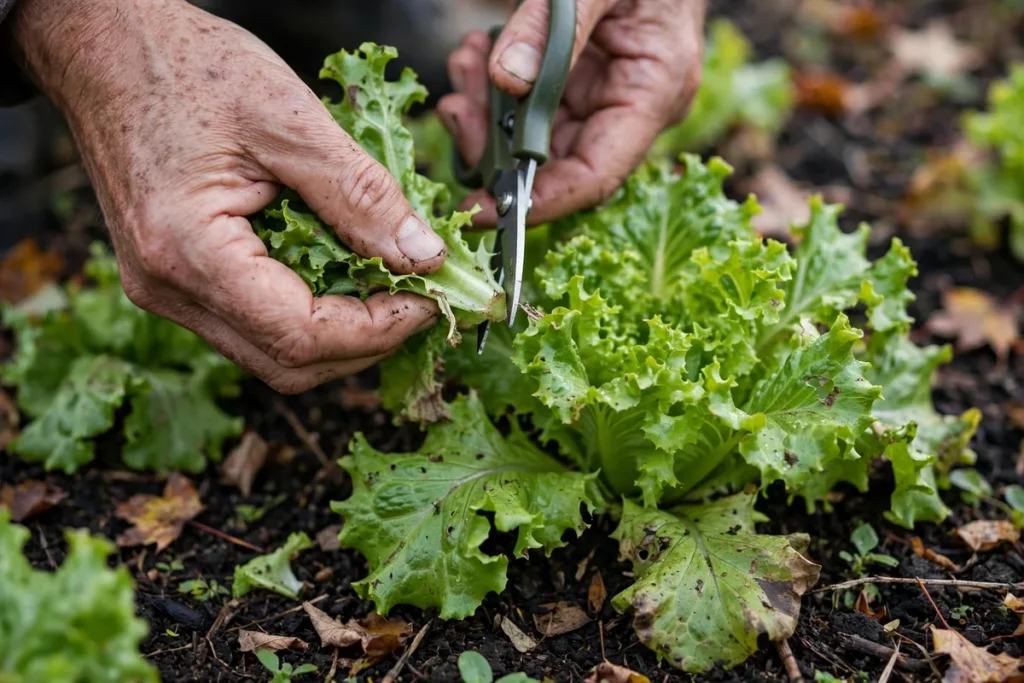
For baby leaf, cut when leaves reach 4 to 6 inches tall, snipping about an inch above the crown so the growing point survives. Morning harvests are crisper than afternoon ones — leaves lose water and firmness through the day. Wash, spin or pat dry, and refrigerate in a loosely closed bag; properly dried leaves stay crisp for a week or more.
For full heads, use the squeeze test: a mature romaine or butterhead feels firm and dense when you press the heart gently. Cut the whole head at soil level with a sharp knife. Don’t wait too long — an over-mature head loosens up and its flavor starts heading bitter.
After a light frost, don’t panic. Frost-kissed lettuce often tastes sweeter — the cold converts starches to sugars. Wait until the leaves thaw and dry before handling them, since frozen tissue bruises easily.
Troubleshooting: Common Fall Lettuce Problems
Seedlings bolted — tall stalk, bitter leaves
Heat triggered flowering. Pull the bolted plants (the bitterness won’t reverse), and resow with a bolt-resistant variety under shade cloth. Later sowings in cooler weather rarely have this problem.
Nothing sprouted
Most likely the soil was too warm (above 80°F) or the seed was buried too deep. Lettuce seed needs light — re-sow at 1/4 inch, keep the bed consistently moist, and try pre-chilling the seed packet in the fridge for a few days first.
Leaves taste bitter
Bitterness comes from stress: heat, drought, or over-maturity. Harvest younger, water steadily, and shift later sowings to cooler weeks. Butterhead types tend to stay sweeter than crispheads under stress.
Slugs are shredding the seedlings
Fall’s damp beds are slug heaven. Pull mulch back from young stems, water in the morning so the surface dries by evening, and pick offenders off after dark. Row cover over the bed doubles as a slug barrier.
Bottom leaves are rotting
Usually soil splash plus poor air circulation in crowded plantings. Thin to proper spacing, mulch to stop splash, and water at the base rather than overhead once plants are established.
FAQs About Growing Lettuce in Fall
Can lettuce survive frost?
Yes — lettuce handles light frosts down to about 28°F without complaint, and cold-hardy varieties like ‘Winter Density’ take dips into the low 20s °F, especially under a floating row cover. A hard freeze in the teens will finish most plantings, though.
How late can I sow lettuce in the fall?
For full heads, sow about 8 weeks before your first hard frost (roughly 60 days to maturity plus the 14-day fall factor). For baby leaf, you can push it to about 4 weeks before hard cold — and under row cover, even later in zones 6 and up.
Why is my fall lettuce bitter when the weather is cool?
Usually it’s over-maturity or drought stress, not heat. Lettuce harvested past its prime turns bitter regardless of temperature. Cut heads when they’re firm but young, keep water steady, and don’t let plants sit in the bed hoping they’ll get bigger.
Can I grow lettuce in containers in fall?
Absolutely — lettuce is one of the best container crops. A 12-inch pot holds a generous patch of baby leaf, and pots are easy to drag under cover on the coldest nights. Just keep them watered; containers dry out faster than beds.
How do I keep harvesting after the first frost?
Drape floating row cover over the bed before the first hard freeze and leave it on — it buys roughly 4 to 6 degrees of protection. In zones 6 and warmer, that often stretches harvests into December. Cold frames or a low tunnel push it further.
Have a question I didn’t cover? Drop it in the comments — I’ll do my best to point you in the right direction.
More Fall Vegetable Growing Posts to Explore
- What to Plant in October: 15 Vegetables for a Fall Garden
- How to Grow Arugula in Fall
- How to Make Compost at Home: A Beginner’s Guide
- Fall Garden Cleanup: 12 Things to Do Before Winter
Fall Lettuce Is Worth the Timing Math
A few short rows of lettuce, sown every couple of weeks from late summer into fall, will out-produce and out-taste anything the summer bed gave you — with less water, fewer pests, and barely any work. Get the first sowing in before the soil cools too much, keep the rhythm going, and you’ll be cutting crisp salads long after the tomatoes are a memory.
So — are you trying a succession sowing this fall? Tell me in the comments which variety you’re starting with.
Sources & Further Reading
- Lettuce — Clemson University Cooperative Extension. Withstands light frosts, germination soil temp 60–80°F, sow 1/4 in deep, thin seedlings at 1–2 in tall, multiple succession plantings per season, heat/moisture stress causes bitterness and bolting, pH 6.0–6.5, row cover gives frost protection, leaf lettuce ready ~75 days and head lettuce ~55 days.
- Home Garden Lettuce (Circular 1018) — University of Georgia Cooperative Extension. Soil pH 6.0–6.5, seed 1/8–1/4 in deep, space plants 10–12 in apart, tolerates light frost, lack of moisture causes bitter leaves, harvest outer leaves as they size up.
- Sustainable Gardening for School and Home Gardens: Lettuce — LSU AgCenter. Seed-to-first-harvest 30–60 days, sow 1/8 in shallow, germination soil temp 40–85°F with 75°F optimum, succession sowing every 2–3 weeks, bolt-resistant varieties (e.g., Adriana, Winter Density, Slobolt) for warm climates.