
This post may contain affiliate links. If you buy through links on this page, we may earn a commission at no extra cost to you.
As an Amazon Associate I earn from qualifying purchases.
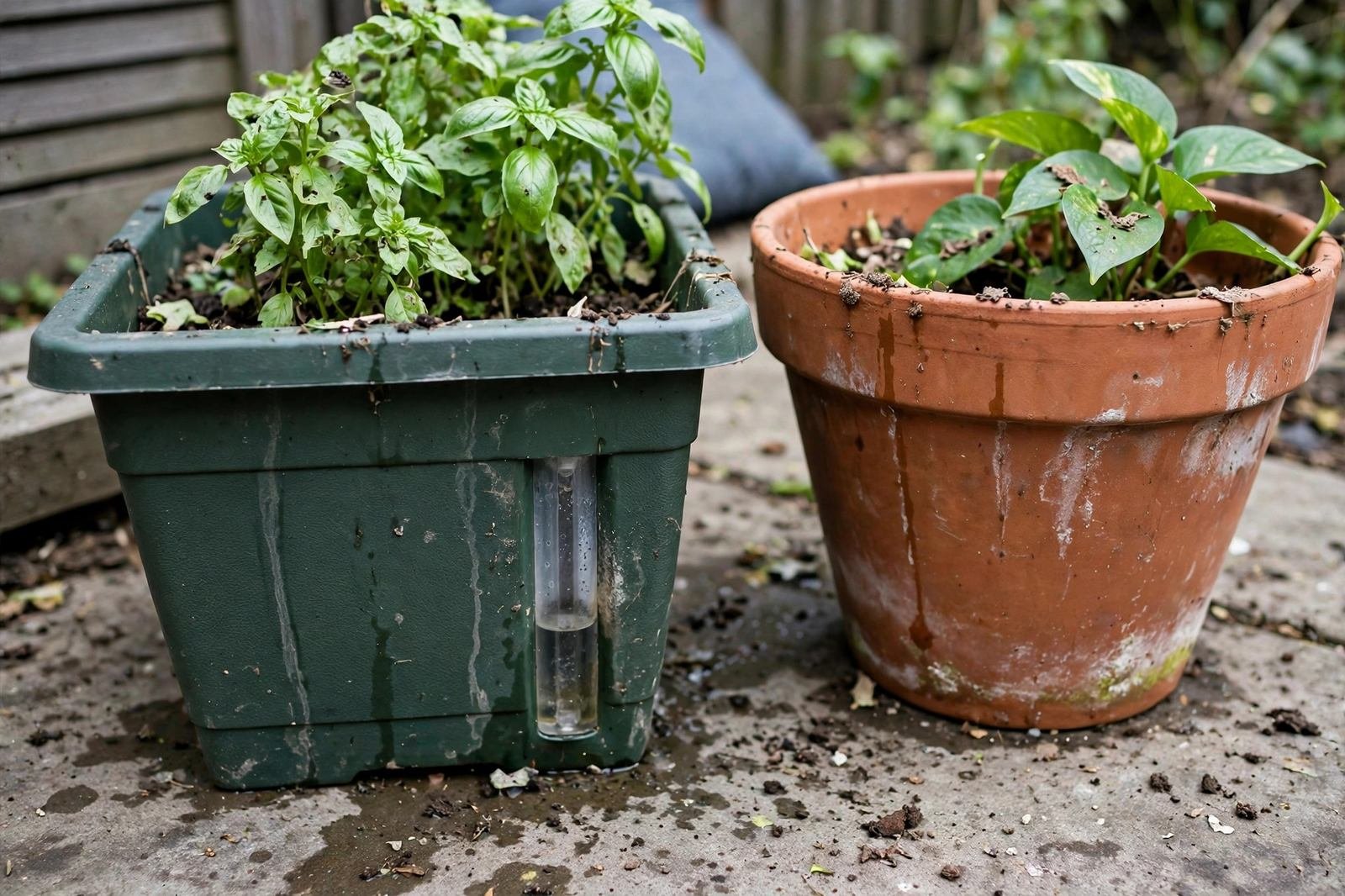
Self-watering pots and regular pots water plants in different ways. A regular pot takes water from the top and drains from the bottom. A self-watering pot holds a water reservoir under the soil and feeds water upward through wicks or a soil column. That difference changes how often you water, how roots grow, and which plants do well. This guide compares the two systems head to head, with reservoir math and honest limits for each side.
We have not tested the products linked here, and we give no current store prices. The links below go to search pages for pot types, so you can compare current options, sizes, and prices at the time you shop.
Self-watering pots vs regular pots at a glance
| Feature | Self-watering pot | Regular pot |
|---|---|---|
| Water source | Reservoir under the soil, filled through a tube | Top watering, drains from bottom holes |
| Watering frequency | Every 1 to 3 weeks for many plants | Every 1 to 3 days in summer heat |
| Root zone moisture | Steady, moist at the bottom | Wet after watering, dries between waterings |
| Best for | Thirsty plants, busy gardeners, vacations | Plants that like dry soil, herbs, succulents |
| Main risk | Roots stay too wet, salt buildup | Soil dries out, missed watering harms plants |
| Upkeep | Clean reservoir, check wicks, flush salts | Simple, but needs frequent checks |
How a reservoir changes watering
A reservoir turns watering from a daily task into a weekly task for many plants. Take a 5-gallon self-watering planter with a 1-gallon reservoir. A medium tomato plant in summer drinks about 0.5 gallons per day in heat. Divide 1 gallon by 0.5 gallons per day and the reservoir lasts about 2 days for that plant, not two weeks. For a leafy herb plant that drinks about 0.1 gallons per day, the same reservoir lasts about 10 days. Reservoir claims only make sense with a plant size attached, so run this math for your own plant before you trust a day count.
Water moves up from the reservoir by capillary action through soil or wicks. That upward flow keeps the lower soil moist at all times. Plants that like steady moisture, such as tomatoes, peppers, and leafy greens, use that moisture well. Plants that like a dry period between waterings, such as rosemary, lavender, and succulents, suffer in the same pot, since the soil never dries.

Pros and cons of self-watering pots
Pros: watering frequency drops sharply for thirsty plants. Soil moisture stays steadier than top watering gives. A full reservoir covers a long weekend away without a plant sitter. Water waste drops, since excess water stays in the reservoir instead of running out the bottom.
Cons: roots can stay too wet for plants that need dry soil. Salt from fertilizer builds up in the reservoir and in the lower soil, since water moves up and leaves salts behind. Reservoirs and wicks need cleaning, or algae and mineral deposits clog the system. A self-watering pot costs more than a regular pot of the same size, and a large one weighs more when full.
Pros and cons of regular pots
Pros: soil dries between waterings, which suits herbs, succulents, and Mediterranean plants. Flushing is simple, since top watering washes salts out the bottom. Regular pots cost less, come in every material, and need no special parts. A problem shows fast, since dry soil and wilting tell you the plant needs water.
Cons: watering frequency is high in summer heat, often daily for large plants. A missed watering during a heat spell can damage a plant in one day. Water waste is higher, since top watering runs out the bottom before dry mix absorbs it. Regular pots need a saucer indoors, and saucers that stay full cause the same wet-root problem as a reservoir.
Reservoir math for your plant
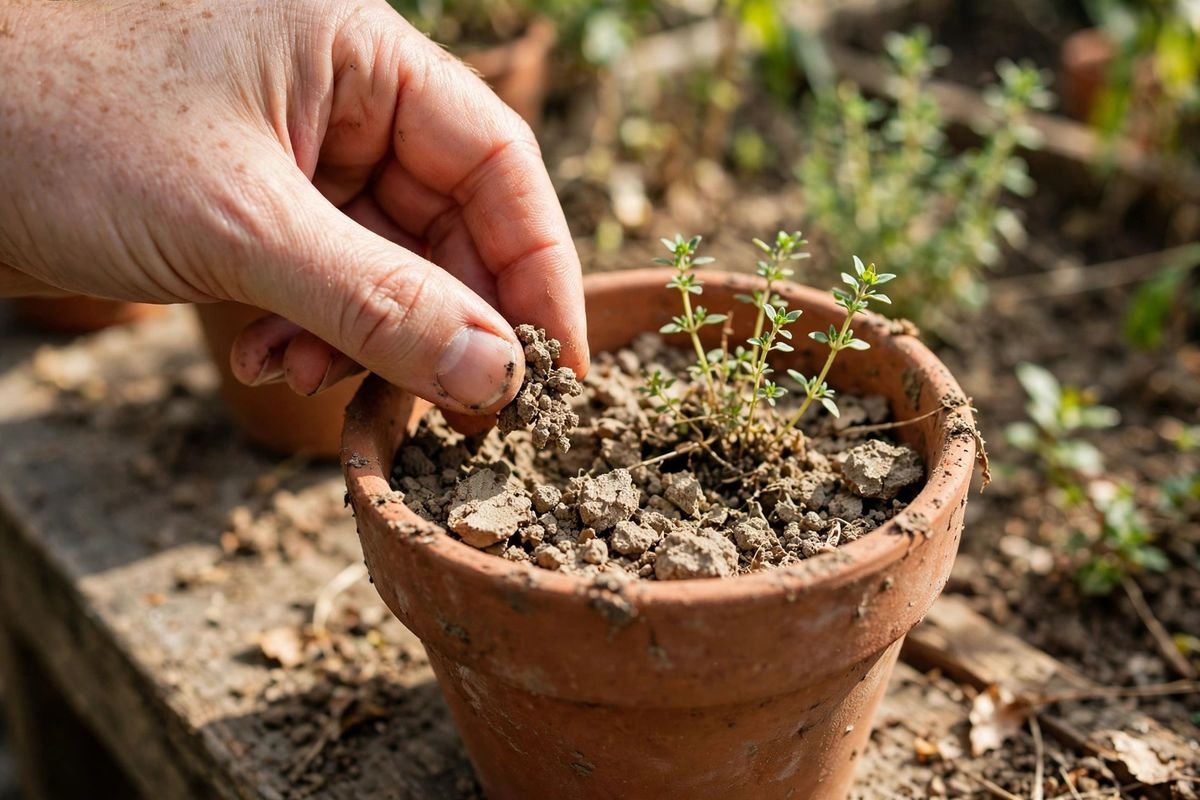
Run three numbers before you buy. First, reservoir volume in gallons, from the product details or by measuring the fill. Second, daily water use, which you can estimate by measuring how much water your plant takes in a day during warm weather. Third, divide reservoir volume by daily use to get days between fills. For example, a 2-gallon reservoir with a plant that uses 0.25 gallons per day lasts 8 days. The same reservoir with a plant that uses 1 gallon per day lasts 2 days.
Soil volume also shrinks in a self-watering pot. A 5-gallon self-watering planter may hold only 3.5 gallons of soil, since the reservoir takes the rest. That smaller soil volume means less room for roots and nutrients. Compare soil volume, not total pot volume, when you match a self-watering pot to a plant size. For a tomato, that rule pushes you toward a larger self-watering planter than the regular pot you would pick.
Care and cleaning
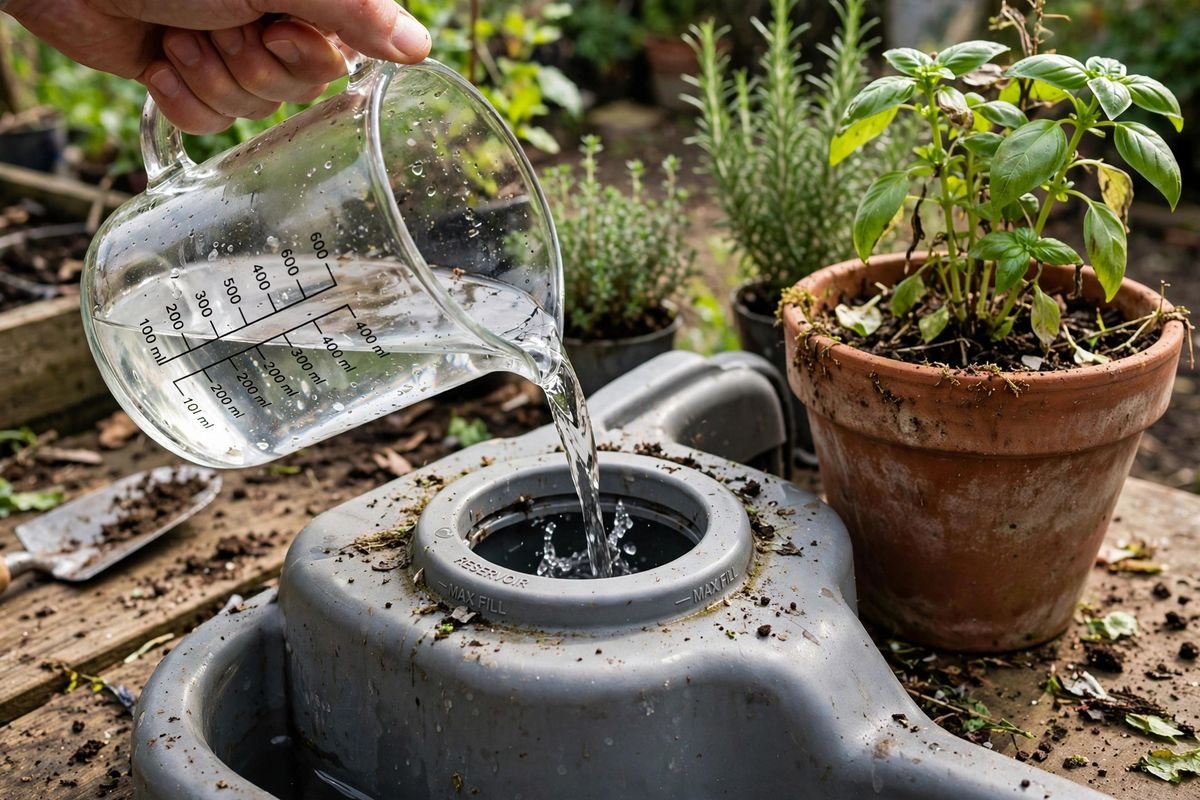
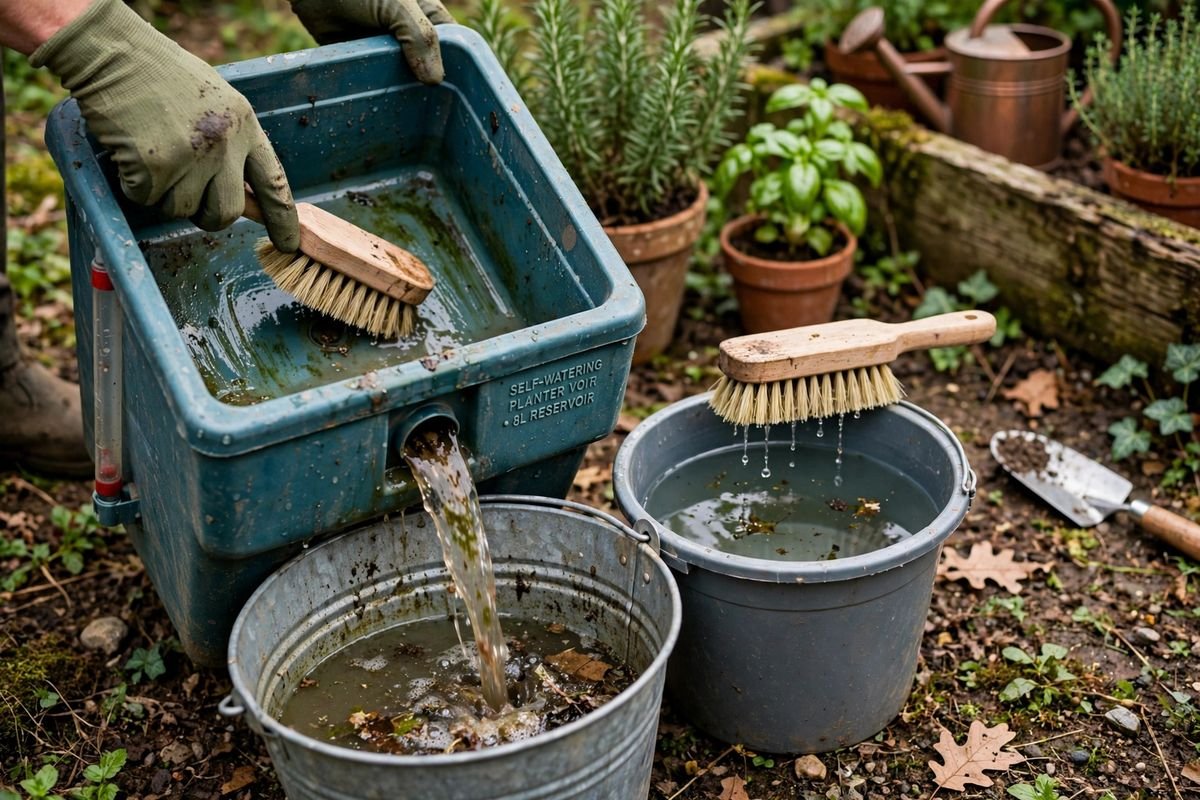
Flush a self-watering pot once a month during the growing season. Empty the reservoir, rinse it, and water from the top until water runs out the overflow drain. That flush washes salts down and out instead of letting them build up. Scrub the fill tube and gauge when you see mineral deposits, since a clogged gauge reads wrong and a dry reservoir can hide behind a stuck float.
For regular pots, the main upkeep is a soil check. Push a finger 2 inches into the mix each morning in summer. Water slowly until water appears at the drain holes, then empty the saucer. That routine takes a minute per pot and prevents both drying and waterlogging.
Verdict: choose self-watering if, choose regular if
Choose self-watering pots if you grow thirsty vegetables or leafy greens, water less than every other day, or leave plants alone for long weekends. Choose self-watering pots if your pots sit in full sun and dry out daily in a regular pot.
Choose regular pots if you grow herbs, succulents, or Mediterranean plants that need dry soil between waterings. Choose regular pots if you like a low-cost, simple setup with no parts to clean, or if you water daily anyway and enjoy the routine.
For a mixed garden, use both systems. Put tomatoes, peppers, and greens in self-watering planters, and put rosemary, thyme, and succulents in regular pots. That split matches each plant to the watering system it prefers, instead of forcing one system on every plant.
To compare current options, search for self-watering planters and terracotta pots with drainage holes. Compare reservoir volume and soil volume separately for self-watering models, since the two numbers differ.
Questions
For a related self-watering roundup, see best self-watering planters for patio gardens. For material differences, terracotta vs plastic pots covers drying speed by material. For drying problems in any pot type, how to keep container soil from drying out too fast gives watering methods, and container gardening for beginners covers soil mixes and drainage.