
This post may contain affiliate links. If you buy through links on this page, we may earn a commission at no extra cost to you.
As an Amazon Associate I earn from qualifying purchases.
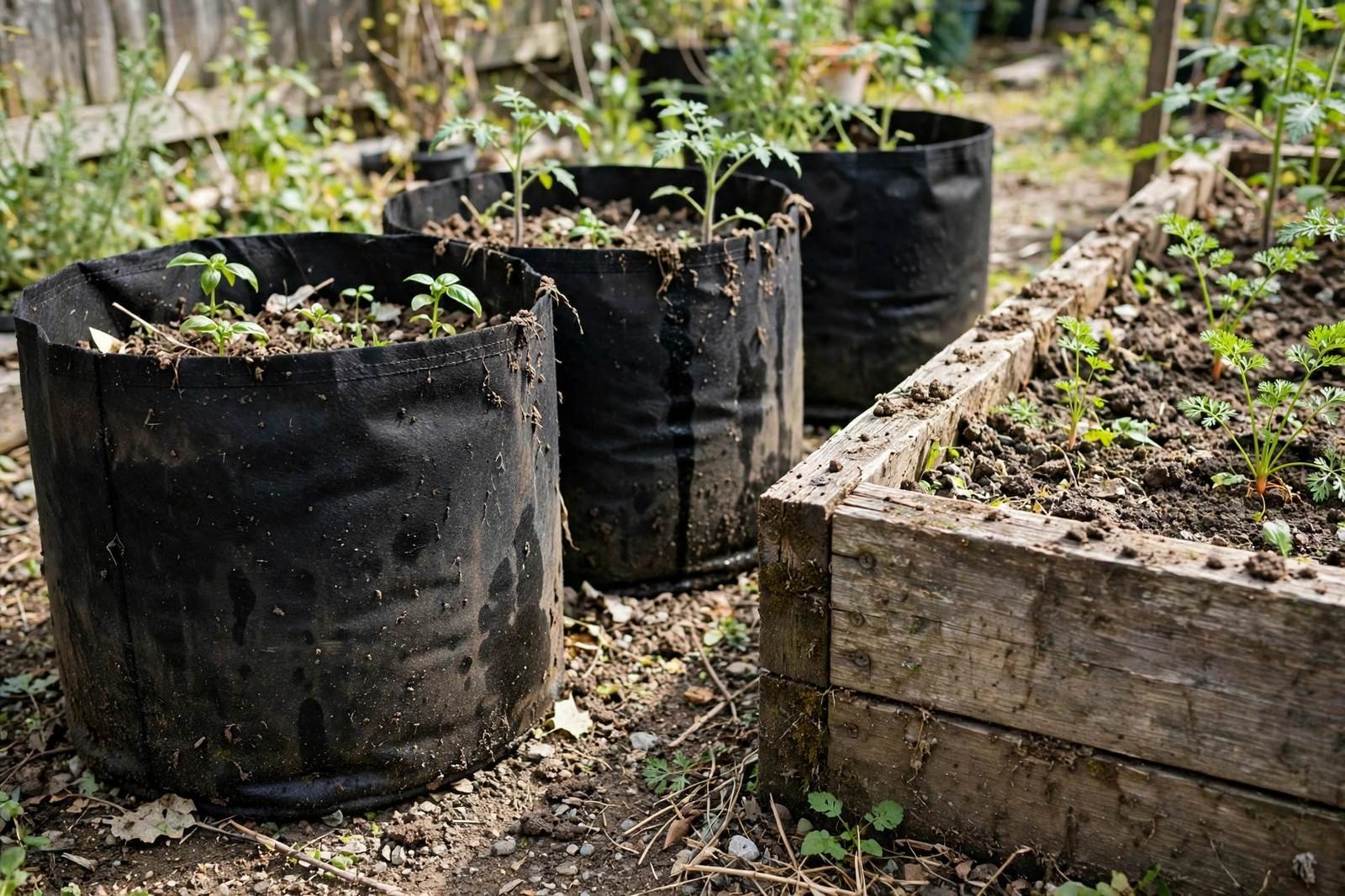
Grow bags and raised beds both give plants room outside a garden bed, but they work in different ways. A grow bag is a soft fabric pot that sits on any flat surface. A raised bed is a fixed frame filled with soil, open to the ground below. That structural difference changes watering, soil cost, lifespan, and how much work each option takes. This guide compares the two systems head to head, with soil volumes and cost-per-season math, so you can pick the system that fits your space and your habits.
We have not tested the products linked here, and we give no current store prices. The links below go to search pages for both systems, so you can compare current options, sizes, and prices at the time you shop.
Grow bags vs raised beds at a glance
| Feature | Grow bags | Raised beds |
|---|---|---|
| Structure | Fabric pot, closed bottom, portable | Wood or metal frame, open bottom, fixed |
| Soil per plant | 5 to 20 gallons per bag | Shared soil across the whole bed |
| Watering | Dries fast, needs frequent water | Holds moisture longer, deeper soil |
| Lifespan | 3 to 5 seasons for fabric bags | 5 to 15 years for wood or metal frames |
| Moving | Move any time, store flat in winter | Fixed once built and filled |
| Best for | Renters, patios, seasonal crops | Long-term gardens, large harvests |
Soil volume and cost per season
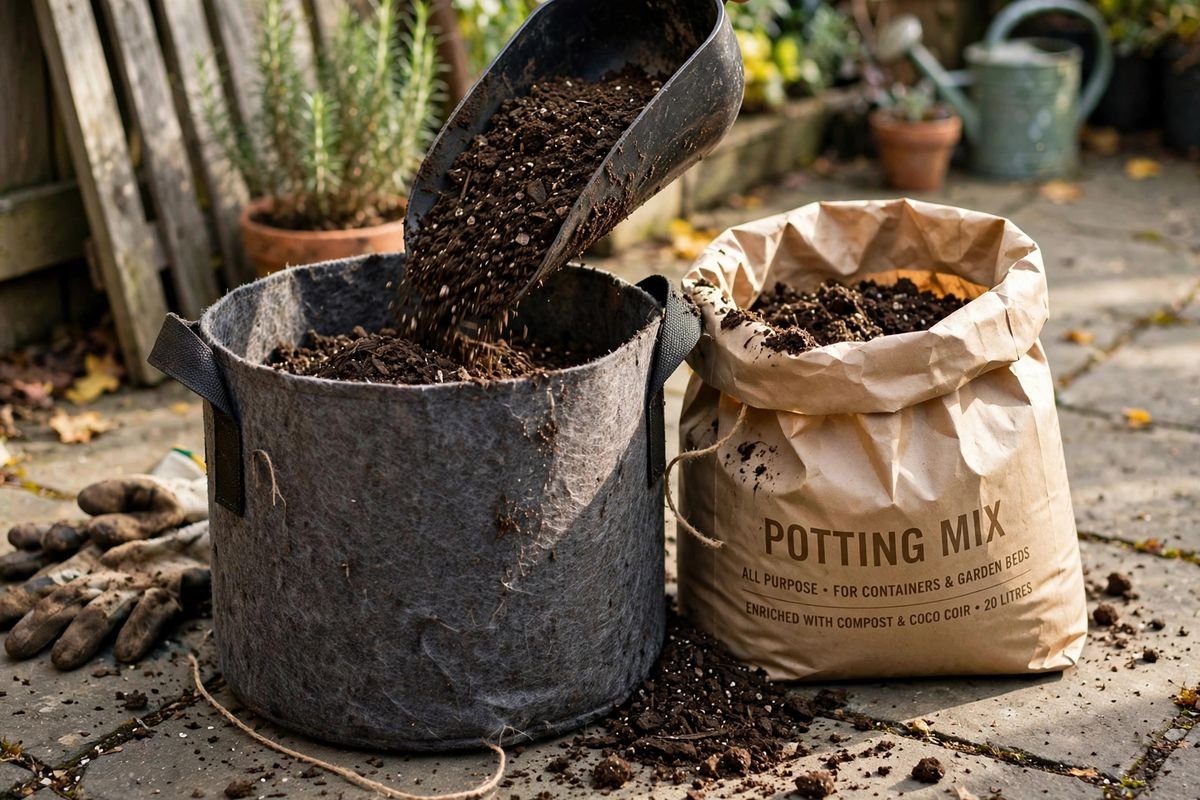
Soil cost separates the two systems fast. A 10-gallon grow bag holds about 1.34 cubic feet of mix. A standard 4-by-8-foot raised bed at 12 inches deep holds 32 cubic feet of mix, which is about 24 times the soil in one 10-gallon bag. Filling a raised bed costs far more up front, but the soil stays in place for years with yearly top-ups of 2 to 3 inches.
For cost per season, use a simple example. Assume bagged potting mix costs 10 dollars per cubic foot for this math, and state that assumption plainly since prices vary by store and region. One 10-gallon grow bag costs about 13.40 dollars to fill. If the bag lasts 4 seasons, the soil cost per season is about 3.35 dollars, plus the bag itself. A 4-by-8 raised bed costs about 320 dollars to fill at the same rate, but the frame and soil last 10 seasons with top-ups, so the yearly soil cost falls to about 32 dollars plus top-up mix. The raised bed costs more per year in absolute terms, but it grows far more plants, so cost per plant favors the bed for a large garden.
Grow bags also need full soil replacement more often. Fabric bags lose mix through the sides over time, and the soil compacts after a few seasons. Raised beds keep their soil structure better, since worms and roots move through the open bottom and the deeper soil stays alive.
Watering differences
Grow bags dry from all sides. Fabric breathes, so water leaves through the walls as well as the top. In summer heat, a 10-gallon grow bag with a tomato plant may need water daily, and sometimes twice a day. A raised bed of the same plant count holds moisture longer, since the deeper soil volume buffers drying and the bed walls shade the soil edges.
That drying difference cuts both ways. Grow bags rarely waterlog, since excess water leaves fast. Raised beds can stay wet after heavy rain, especially on clay soil, since the open bottom drains into ground that is already saturated. If your ground drains poorly, raise the bed higher or add coarse material at the base to improve drainage.
Mulch helps both systems. A 2-inch mulch layer on a grow bag slows surface drying noticeably. On a raised bed, mulch also cuts weeds across the whole bed surface. Keep mulch away from plant stems in both cases.

Pros and cons of grow bags
Pros: grow bags are portable, light when empty, and cheap per unit. They suit renters, patios, and balconies with no ground to build on. They drain well, which protects roots from rot. They store flat in winter, so a seasonal gardener can clear a patio fully.
Cons: grow bags dry fast and need frequent watering. They last only a few seasons before fabric weakens and handles tear. They look plain beside a neat patio, and they offer less insulation for roots in cold weather. Large grow bags are heavy when full, so moving a full bag is hard despite the light empty weight.
Pros and cons of raised beds
Pros: raised beds hold deep, living soil that improves over years. They suit large plantings and succession crops across a season. They warm earlier in spring than ground soil, and they give a neat, permanent garden structure. They need less frequent watering than grow bags for the same plants.
Cons: raised beds cost more up front and take real work to build and fill. They are fixed, so a wrong spot means rebuilding. They need a ground location with sun and access, which rules out balconies and paved patios. Wood frames rot over time, and metal frames heat up in strong sun.

Which lasts longer
A wood raised bed lasts 5 to 10 years, depending on wood type and soil contact. A metal raised bed lasts 10 to 15 years or more, since metal resists rot. A fabric grow bag lasts 3 to 5 seasons with regular use, less if it stays outside through winter. For a gardener who plans to stay in one home for a decade, the raised bed wins on lifespan. For a gardener who moves every year or two, the grow bag wins on portability despite the shorter life.
Replacement work also differs. Replacing a grow bag means emptying soil, folding the old bag, and filling a new one, which takes under an hour. Replacing a raised bed frame means emptying 32 cubic feet of soil, rebuilding the frame, and refilling, which takes a full weekend. Factor that labor into the choice along with the purchase price.

Verdict: choose grow bags if, choose raised beds if
Choose grow bags if you rent, garden on a patio or balcony, or want to try vegetables for one or two seasons before committing to a permanent bed. Choose grow bags if you need to move plants for sun, or if you clear the garden fully each winter.
Choose raised beds if you own your home, have ground space with good sun, and plan to garden in the same spot for years. Choose raised beds if you grow large amounts of food, want deep soil that improves over time, or prefer less frequent watering.
Many gardeners use both. Grow bags hold trial crops and extra plants, while raised beds hold the main garden. That mix gives you the flexibility of bags and the depth of beds, without forcing one system to do every job.
To compare current options, search for fabric grow bags for vegetables and metal raised garden bed kits. Compare soil volume and frame material before you compare price alone.
Questions
For grow-bag specifics, see best grow bags for vegetables and fabric grow bags vs plastic pots. For raised-bed setup, raised bed gardening for beginners and best metal raised garden beds cover size, soil, and layout. For the in-ground alternative, container gardening for beginners covers pot soil and drainage basics.