
This post may contain affiliate links. If you buy through links on this page, we may earn a commission at no extra cost to you.
As an Amazon Associate I earn from qualifying purchases.
Most houseplants and seedlings on a windowsill get uneven light. One side of the sill sits bright near the glass, the other side sits dim near the room, and plants lean toward the glass and stretch. A screw-in grow bulb fixes that gap without a long fixture. It screws into a socket we already own, or into a clip lamp, and it puts light straight down over one pot or a small cluster.
This guide compares three bulb options: a standard screw-in grow bulb, a high-output screw-in grow bulb, and a clip-lamp set that pairs a bulb with a shade and a clamp. We have not tested the products linked here, and we do not present any price as a current store price. Where we give numbers, we state the assumptions in plain text so readers can redo the math with their own pot count and electricity rate.
Three bulb options at a glance
| Option | Coverage | Socket fit | Heat approach | Limits |
|---|---|---|---|---|
| Standard screw-in bulb | One pot or two small pots close together | Fits a standard household screw socket; confirm socket size in the listing | Lower wattage gives off less heat in most setups; still watch leaf distance | One light cone; pots at the edge sit dimmer than the pot in the center |
| High-output screw-in bulb | A small cluster of pots under one large shade | Fits the same screw socket; the shade and socket must be rated for the wattage | Gives off more heat than a standard bulb, so the gap above plants needs closer care | Needs a rated shade; glare matters more when we sit near the plants |
| Clip-lamp bulb-and-shade set | One pot or a small cluster under one shade | Bulb and shade sold as a set; confirm whether the bulb is included | Shade directs light down and heat up away from plants; still check leaf distance | One light cone; the clamp needs a shelf or table edge with enough grip |
Socket size and shade rating vary by listing, so we do not give one socket size or wattage rating that would apply to every product in a form. Measure the lamp socket, check the shade rating, and compare those numbers with the listing before ordering.
Standard screw-in bulbs
A standard screw-in grow bulb is the plainest way to add light to one pot. It screws into a desk lamp, a pendant cord, or a spare socket, and it lights the pot straight below it. That narrow cone suits a single houseplant on a table, or two small pots pulled close together under one shade. It does not suit a full tray, since pots at the edge of the cone sit dimmer than the pot in the center.
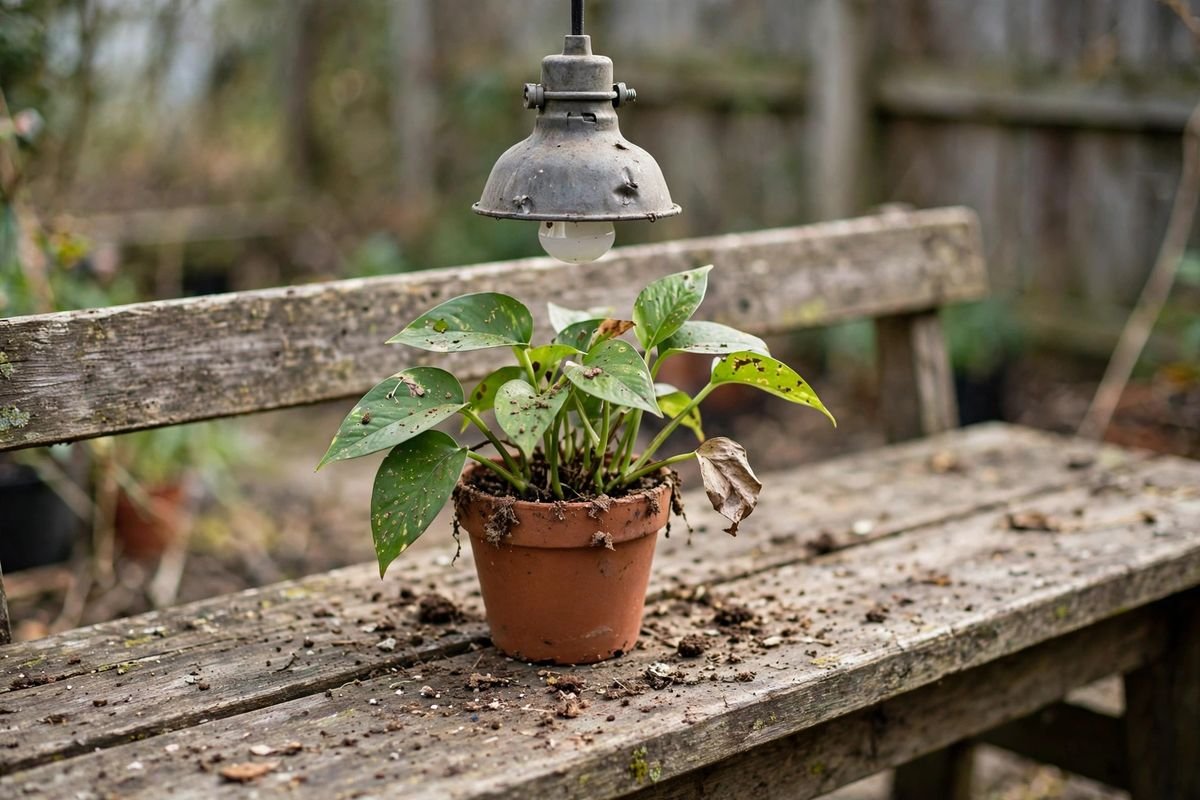
Start with the socket. Most household lamps in the United States use a standard screw socket, but a listing will state the socket type, and a quick check avoids a bulb that does not fit. Check the shade too. A wide shade spreads light over a small cluster, while a narrow shade keeps light tight over one pot. Our guide to best grow lights for seedlings puts screw-in bulbs beside longer fixtures for a first indoor setup. Search listings for a standard grow light bulb and confirm socket type, wattage, and whether a shade is included.
High-output screw-in bulbs
A high-output screw-in bulb uses more watts in the same screw socket, and it lights a small cluster better than a standard bulb. It suits a gardener with three or four pots grouped under one large shade, or a houseplant with a wide canopy that a standard bulb leaves dim at the edges. The tradeoff is heat and glare. A bulb that draws more power gives off more heat, so the gap between bulb and leaves needs a closer watch, and a shade matters more for shielding our eyes when we sit near the plants.
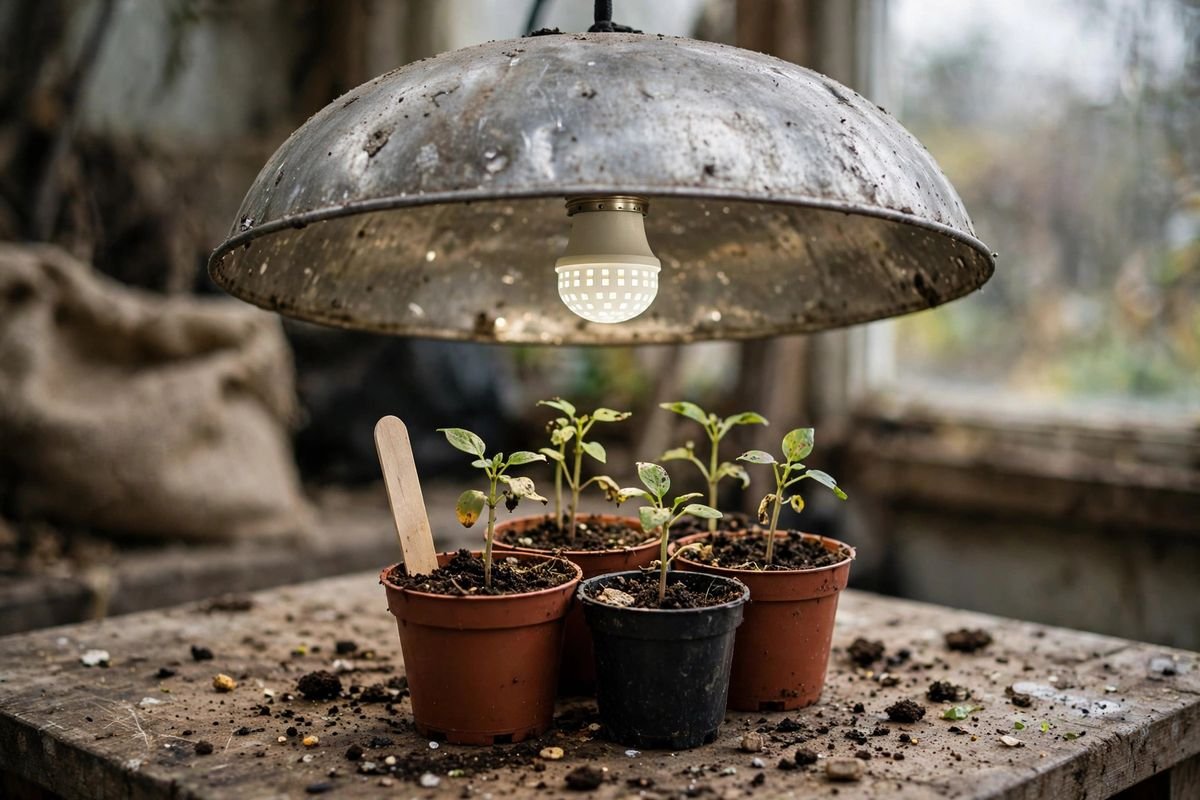
Do not pair a high-output bulb with a shade or socket that is not rated for its wattage. Read the rating on the shade and in the listing before ordering, and run the bulb for a day while checking leaf distance. If leaves look stressed, raise the shade or move the pot farther from the bulb. Our guide to how high grow lights should be above seedlings covers starting gaps and how to adjust them as plants grow. Search listings for a high-output grow light bulb and confirm wattage, socket type, and shade rating.
Clip-lamp bulb-and-shade sets
A clip-lamp set pairs a bulb with a shade and a clamp in one box, and it suits a shelf edge or a table edge where no lamp stands. We clamp the shade to the edge, aim it down at the pots, and move it by re-clamping when the setup changes. That pattern suits a windowsill with a shelf board above it, or a small table that holds two or three pots.

The tradeoff is the same single-cone limit as other bulb forms. One clip lamp lights one pot or a small cluster, and pots at the edge of the cone get less light than pots in the center. Rotate pots through the week so each pot spends time under the center of the light. Our guide to best clip-on grow lights for small spaces compares clamp forms for tight spots. Search listings for a clip lamp grow light bulb set and confirm clamp thickness range, cord length, and whether the bulb is included.
Worked example: three pots on a windowsill
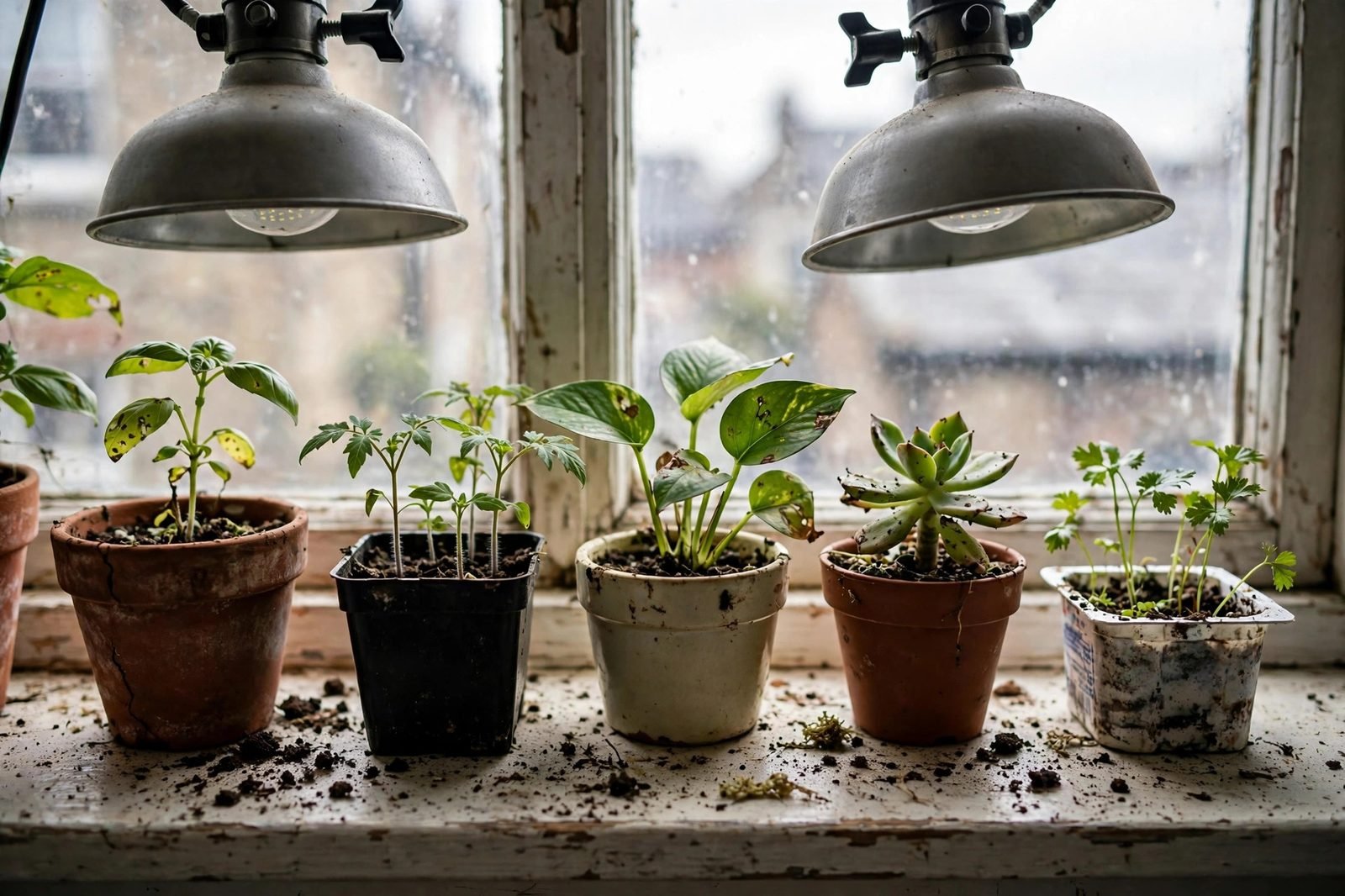
Take a windowsill with three pots in a row: two small herb pots and one houseplant. One plan uses three standard 15-watt bulbs, one bulb over each pot, each in its own shade. A second plan uses one high-output bulb over the middle pot, but the end pots sit at the edge of the cone and get less light, so the three-bulb plan wins for even light across the row.

Electricity math for the three-bulb plan uses stated assumptions. Three bulbs at 15 watts each draw 45 watts in total. Divide 45 by 1,000 to get 0.045 kilowatts. Run the bulbs 14 hours a day for 90 days. Multiply 0.045 by 14 hours and 90 days to get 56.7 kilowatt-hours for the season. At $0.17 per kilowatt-hour, the season costs $9.64 in electricity, before any bulb or shade price. One bulb alone costs $3.21 under the same hours and rate. Readers can redo the math with their own bulb count, hours, and rate. Our guide to how long grow lights should stay on for seedlings covers daily run times for young plants.
How to choose
Choose a standard bulb if we grow one pot or two small pots, want the lowest entry cost, and already own a lamp or a spare socket. Choose a standard bulb if we can pull pots close together under one shade.
Choose a high-output bulb if we grow a small cluster under one large shade, or a houseplant with a wide canopy that a standard bulb leaves dim at the edges. Choose a high-output bulb if we can give it a rated shade and watch the gap above the leaves.
Choose a clip-lamp set if we have no lamp to spare, and a shelf edge or table edge gives the clamp a grip. Choose a clip-lamp set if we want to move the light by re-clamping as pots change through the season.
Count bulbs by pots, not by the room. One bulb per pot, or one bulb per tight cluster, gives a plain rule for a windowsill setup. Add a bulb when a new pot joins the row, rather than stretching one cone across pots that sit far apart. Our guide to grow light bars vs bulbs compares bulbs with bar fixtures for a longer shelf.
Sources & Further Reading
University of Minnesota Extension, Starting seeds indoors: https://extension.umn.edu/planting-and-growing-guides/starting-seeds-indoors
North Carolina State Extension, Extension Gardener Handbook Chapter 13 Propagation: https://content.ces.ncsu.edu/extension-gardener-handbook/13-propagation