
This post may contain affiliate links. If you buy through links on this page, we may earn a commission at no extra cost to you.
As an Amazon Associate I earn from qualifying purchases.
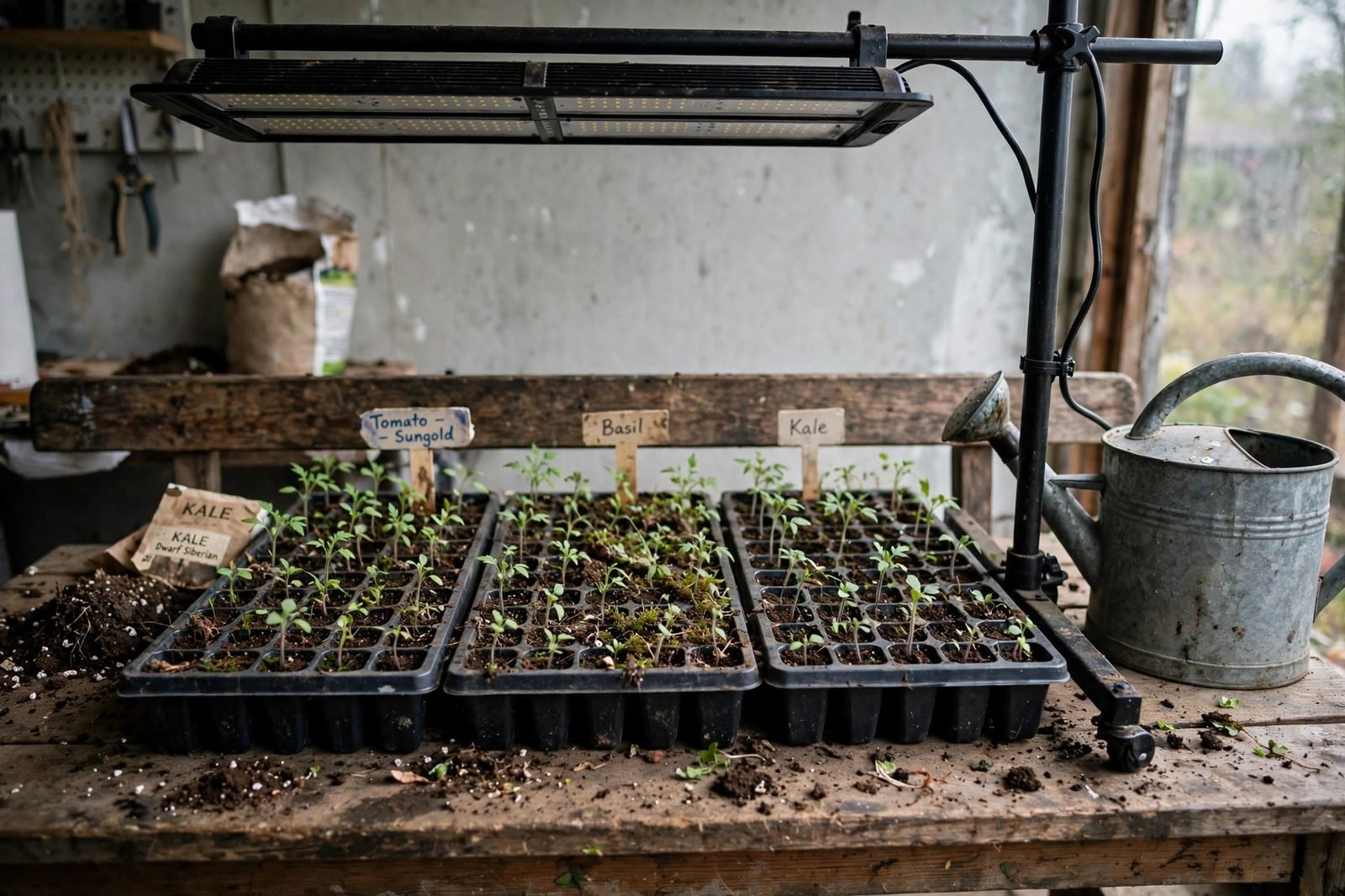
A grow light only helps seedlings when it sits at the right height, stays steady, and covers the trays below it. A stand solves all three: it holds the light over the trays, lets us raise the light as plants grow, and keeps cords and fixtures off the soil. Without a stand, lights end up balanced on books, hung from a hook that is too high, or clamped to a shelf edge that cannot hold them.
This guide compares three stand forms: a freestanding frame stand, clamp or hook hangers on a shelf frame, and an adjustable-height stand with a tray base. We have not tested the products linked here, and we do not present any price below as a current store price. Where we give numbers, we state the assumptions in plain text so readers can redo the math with their own shelf size and tray size.
Three stand forms at a glance
| Form | Best fit | Height control | Stability | Limits |
|---|---|---|---|---|
| Freestanding frame stand | Two or three trays on one or two shelves | Light bar slides up the frame or hangs from chains | Strong when the feet sit flat and the frame is level | Takes floor space; a tall frame can crowd a small room |
| Clamp or hook hangers on a shelf frame | One tray on an existing wire or wood shelf | Chains or cords shorten and lengthen by hand | Good on a sturdy shelf; poor on a thin or wobbly shelf | Needs a shelf frame that is already in place; hangs one light per set of hooks |
| Adjustable-height stand with tray base | One tray on a table or counter | Posts or a crank raise the light bar in small steps | Strong for one tray; top-heavy when raised high with a wide light bar | One tray only; a tall seedling can outgrow the top setting |
Fit comes first. A stand that covers one tray well beats a larger stand that leaves half its trays in dim light.
Freestanding frame stand
A freestanding frame stand is a set of upright posts with one or two shelves and a light bar over each shelf. It suits a gardener who starts two or three trays at once and wants one piece of gear to hold the whole setup. The frame stands on the floor, so it needs no wall, table, or existing shelf.
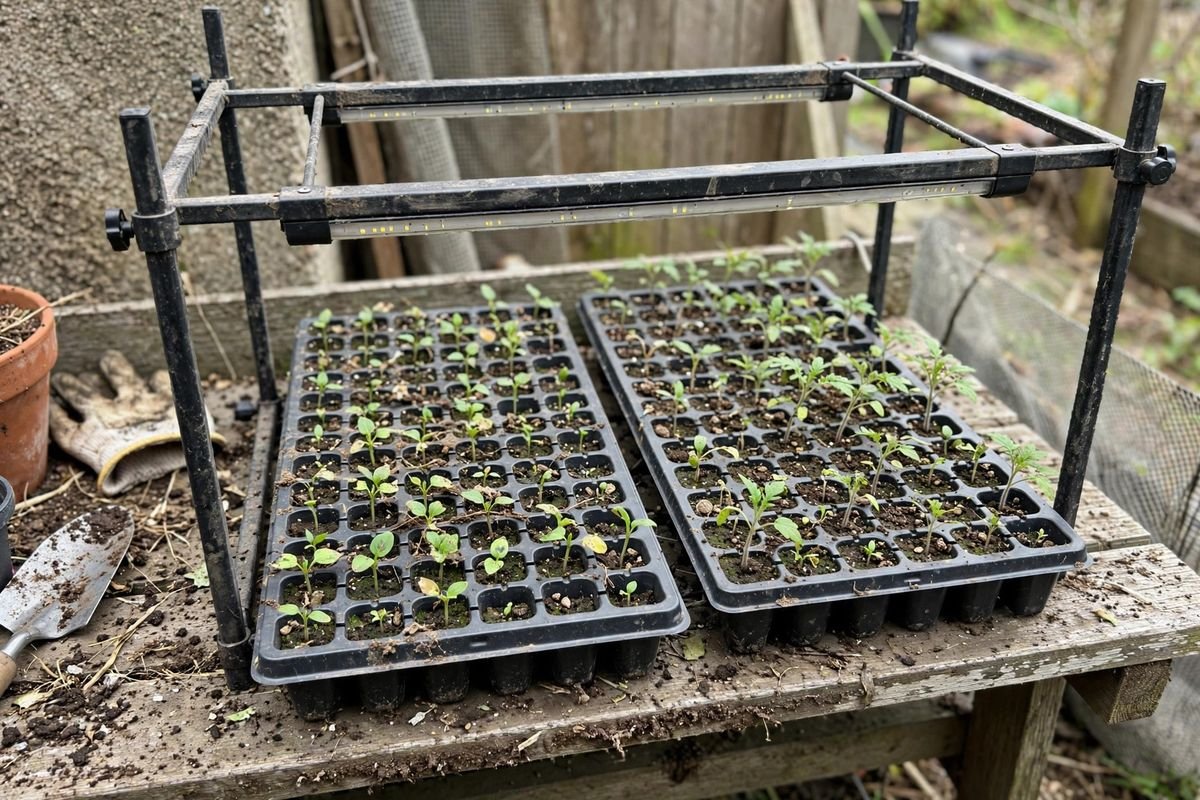
The strengths of a frame stand are coverage and order: one light bar covers one shelf of trays, cords run down the posts, and trays sit at a height that is easy to water. The limits are floor space and height. A frame that holds two shelves needs room to stand, and the top shelf can sit high enough to need a step stool for watering. Check the feet and post joints before loading trays. Search listings for a freestanding grow light stand and confirm shelf size, light bar length, and whether lights are included.
Clamp or hook hangers on a shelf frame
Clamp or hook hangers turn a shelf we already own into a grow light stand. Hooks grip a wire shelf, clamps grip a wood shelf edge, and chains or cords hang the light bar from them. This form suits a gardener who owns a sturdy shelving unit and wants to add lights without buying a new frame, or to move lights between shelves as the season changes.
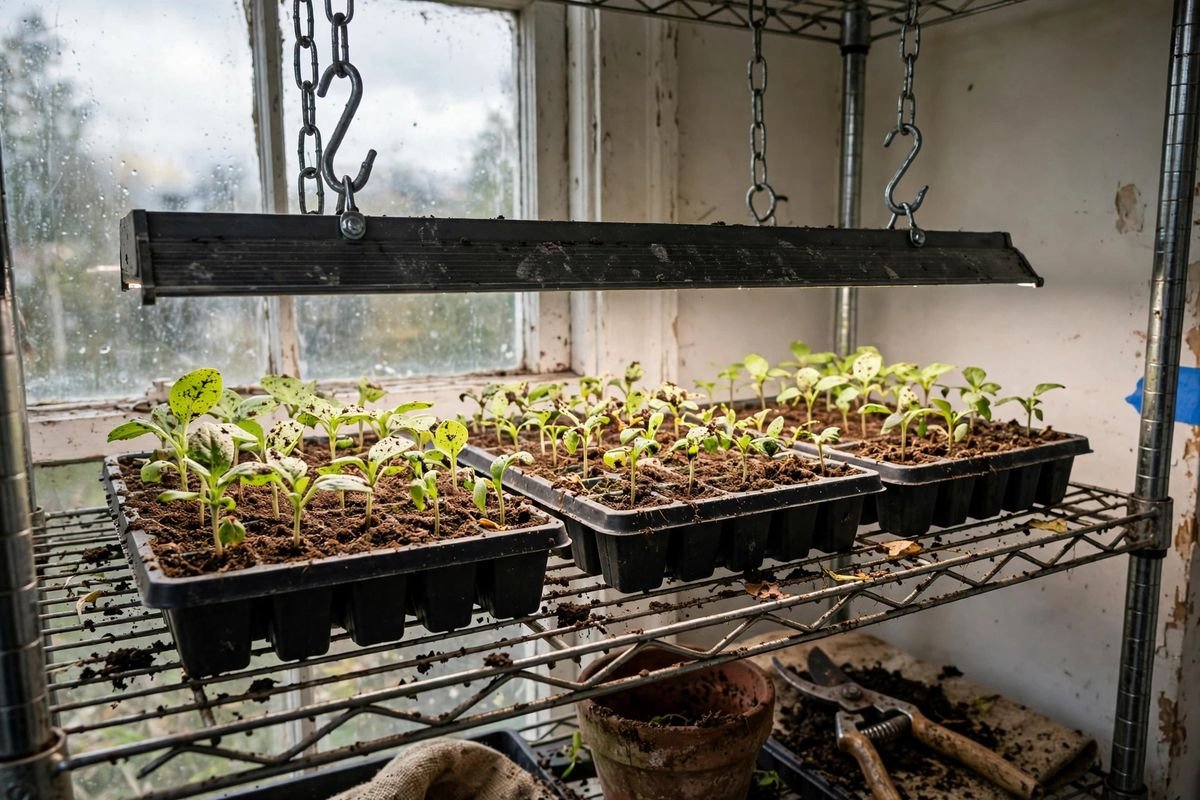
The strengths of hangers are low cost and a good fit for existing shelves: we buy hooks and chains, hang the light, and start seeds on a shelf that already sits in the room. The limits are shelf strength and one light per set of hooks. A thin wire shelf can bow under a heavy light bar, and a wood shelf with a shallow edge may not give a clamp enough grip, so a shelf with three trays needs three sets. Our guide to how to set up grow lights on a shelving unit covers cord routing and hanger spacing for a shelf with more than one light. Search listings for a grow light hangers for shelf and confirm hook size, chain length, and weight rating.
Adjustable-height stand with tray base
An adjustable-height stand with a tray base is a compact unit: a base that holds one tray, two posts, and a light bar that slides up the posts. It suits a gardener who starts one tray on a table or counter and wants a tidy unit in one spot. The posts raise the light in small steps as seedlings grow, so we need no chains or separate hanger.
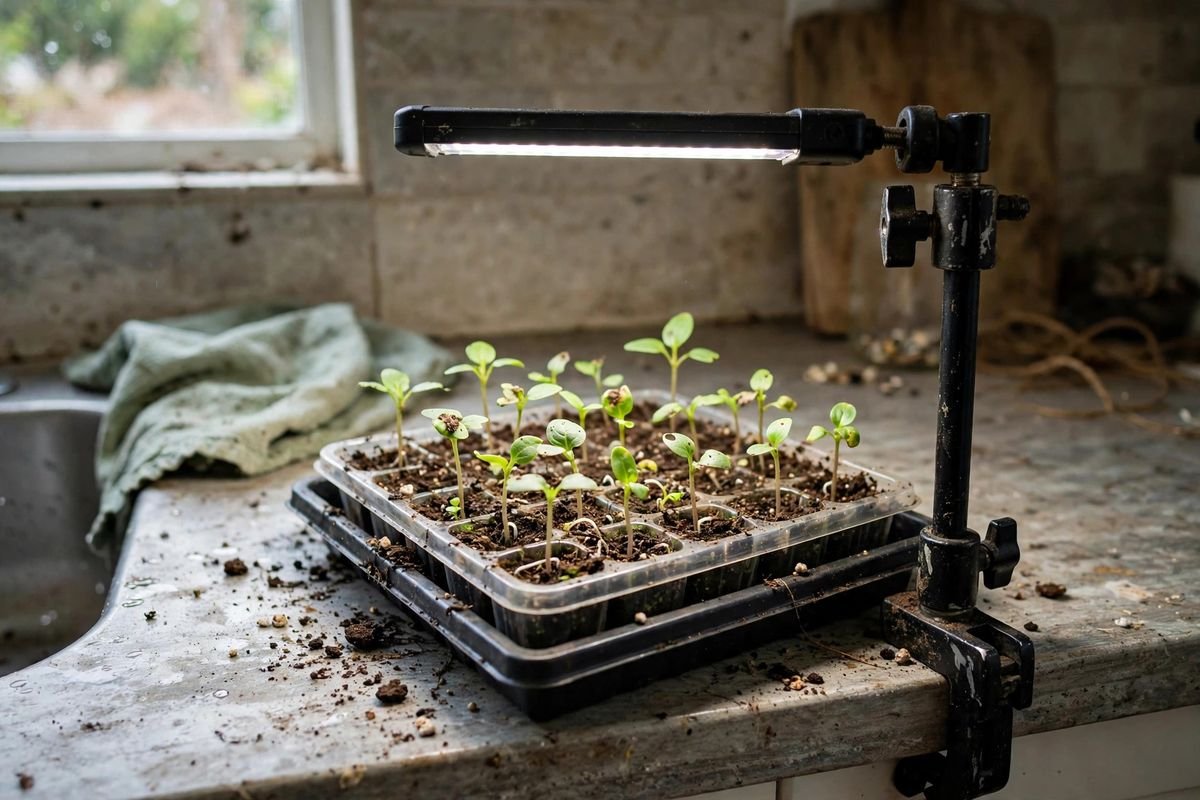
The strengths of a tray-base stand are simplicity and a small footprint: it sits on a table and holds one tray. The limits are tray count and top height. One unit holds one tray, so three trays need three units, and a tall seedling can reach the top post setting before it is ready to move outside, so check the top height in the listing against the tallest plant we plan to grow. Our guide to how high grow lights should be above seedlings covers starting gaps and how to adjust them as plants grow. Search listings for a adjustable grow light stand with tray and confirm base size, post height, and whether the tray is included.
Shelf-fit worked example
Take a freestanding stand with a shelf 2 feet by 4 feet, or 24 inches by 48 inches. A common seed tray measures 10 inches by 20 inches. Two trays side by side take 20 inches of width and 40 inches of length, so both fit on one shelf with 4 inches of width and 8 inches of length to spare. A third tray needs a second shelf level, since three trays need 60 inches of length and the shelf gives only 48 inches.
Height math uses the same plain steps. Suppose a seedling grows to 12 inches tall, and we keep a 6-inch gap between the top leaves and the light. The light must sit 18 inches above the tray surface. Add about 2 inches for the tray rim and soil surface, and each shelf level needs about 20 inches of clear height from shelf surface to light bar. A two-level stand therefore needs about 40 inches of frame height for the growing space alone, plus the base and top frame. If the frame gives less than 20 inches per level, tall seedlings will hit the light before they are ready to move outside.
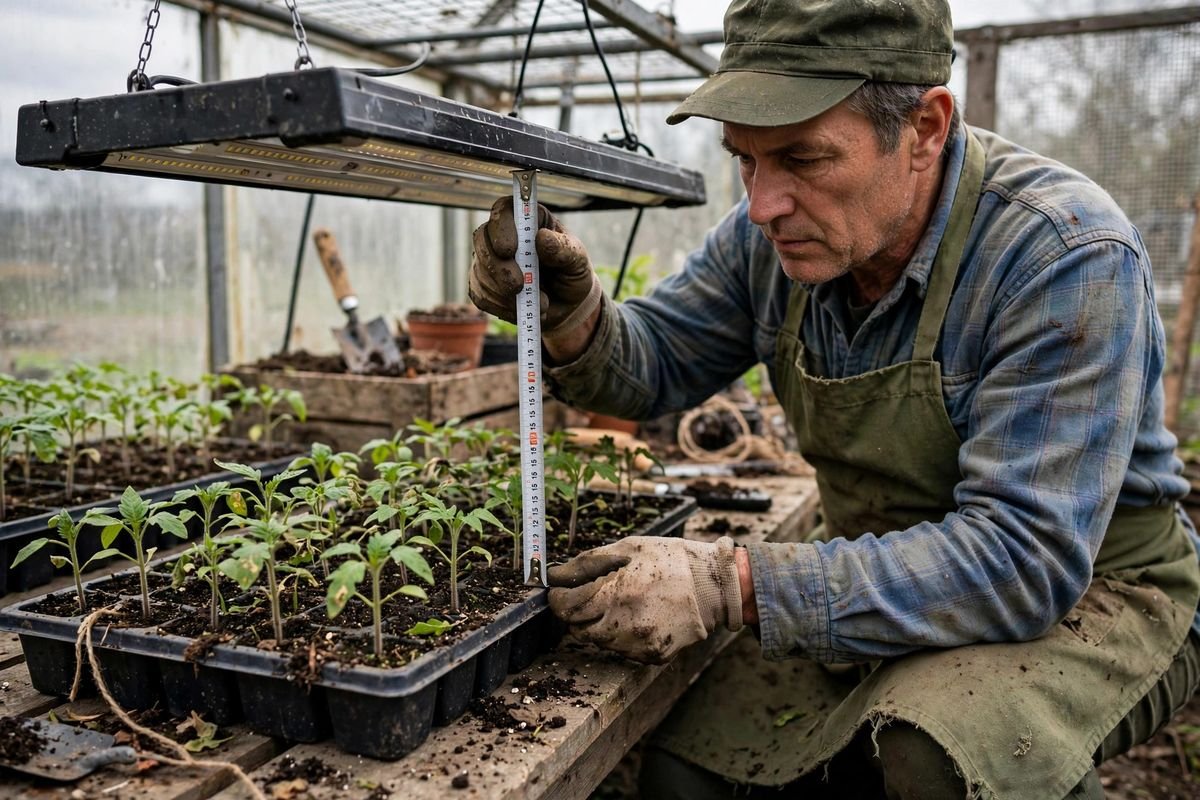
Run the same math for a tray-base stand. A base that holds one 10-inch by 20-inch tray needs a table at least that large, and posts that reach at least 20 inches above the tray surface for a 12-inch seedling with a 6-inch gap. If the posts top out at 16 inches, that stand suits shorter seedlings or an earlier move outside, not a full-size tomato seedling. Our guide to best grow lights for seedlings places stand lights beside longer fixtures for a first indoor setup.
What to measure before ordering
Measure tray size first, then shelf or table size, then room height. Write down tray size, shelf size, and height from the floor or table to the ceiling or the next shelf. Compare each number with the listing: shelf size against tray size, post height against seedling height plus gap, and frame footprint against floor space. Check weight rating against trays, soil, and water: a tray of wet soil weighs far more than a tray of dry soil. Match light bar length to shelf length, and count outlets for each bar.
How to choose
Choose a freestanding frame stand if we grow two or three trays at once, have floor space for a frame, and want one unit that holds trays, lights, and cords together. Choose a freestanding frame stand if we start seeds in a garage or spare room where no shelf frame exists yet.
Choose clamp or hook hangers if we already own a sturdy shelf frame, grow one tray per shelf, and want to add lights without buying a new frame. Choose clamp or hook hangers if we want to move lights between shelves during the season.
Choose an adjustable-height stand with a tray base if we grow one tray on a table or counter, want a tidy unit in one spot, and grow seedlings that stay within the post height. Choose a tray-base stand if we start a small batch each year and value a small footprint over tray count. Start with the shelf-fit math, then pick the form that fits our trays, our room, and our daily watering pattern.
Sources & Further Reading
University of Minnesota Extension, Starting seeds indoors: https://extension.umn.edu/planting-and-growing-guides/starting-seeds-indoors
North Carolina State Extension, Extension Gardener Handbook Chapter 13 Propagation: https://content.ces.ncsu.edu/extension-gardener-handbook/13-propagation