
This post may contain affiliate links. If you buy through links on this page, we may earn a commission at no extra cost to you.
As an Amazon Associate I earn from qualifying purchases.
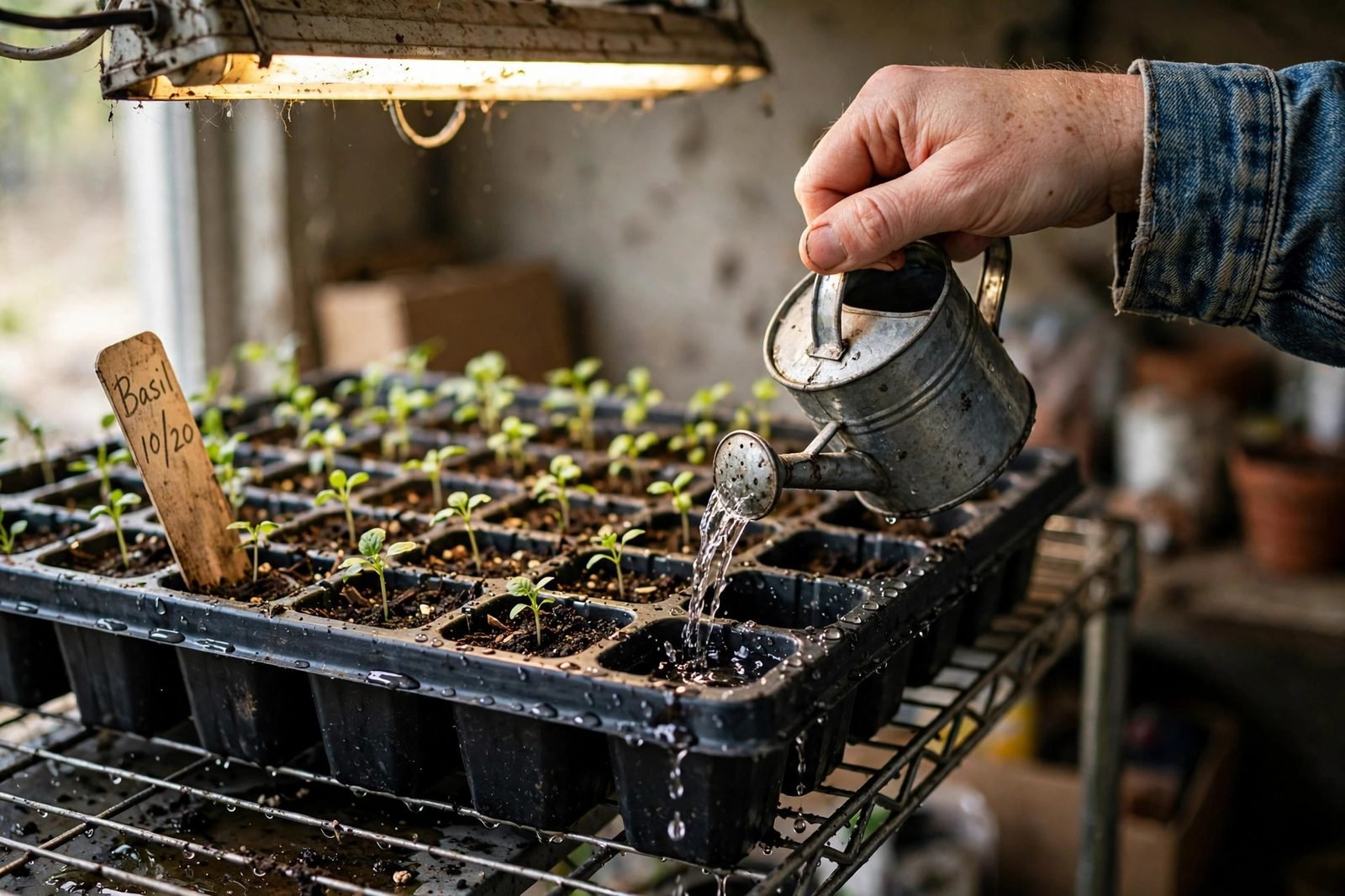
Watering seedlings is a rhythm, not a date on the fridge. Too little and cells dry out between checks; too much and stems stay soft, roots sit in soggy mix, and fungus gnats move in. The right rhythm changes as seedlings grow: a just-sown tray under a dome wants steady surface dampness, while a tray of sturdy transplants-in-training wants a wet-dry cycle that builds strong roots.
This guide gives a watering rhythm for each growth stage, the two tests that tell us when to water, and the water math for a standard 72-cell tray so we can plan instead of guess. Our numbers come with assumptions stated, and room conditions shift them; the tests below are the final word.
| Stage | How often | Method | What to watch |
|---|---|---|---|
| Sowing to germination | Light misting daily, or as needed | Mist or gentle top water under a dome | Surface stays evenly damp, never pooled |
| Sprout to first true leaves | Every 2 to 3 days | Bottom water, then drain | Surface dries slightly between waterings |
| True leaves to transplant size | Every 1 to 2 days in warmth | Bottom water, then drain | Tray feels light; mix pulls slightly from cell walls |
| Hardening off | Less often, as the weather allows | Water in the morning | Seedlings wilt slightly, then recover |
Those frequencies assume a typical indoor setup: room temperature near 70°F, lights on 14 to 16 hours, and a small fan moving air. Warmer rooms and strong air flow dry trays faster; cool rooms slow everything down.
The two tests that beat any schedule
Schedules drift because rooms differ. Two physical tests do not. The finger test: press a fingertip into the mix to the first knuckle. Damp and cool means wait; dry and crumbly means water. The lift test: lift the tray right after watering and remember the weight, then lift it daily. A tray that feels much lighter is ready for water. We use both, because the surface can look dry while the root zone is still damp.
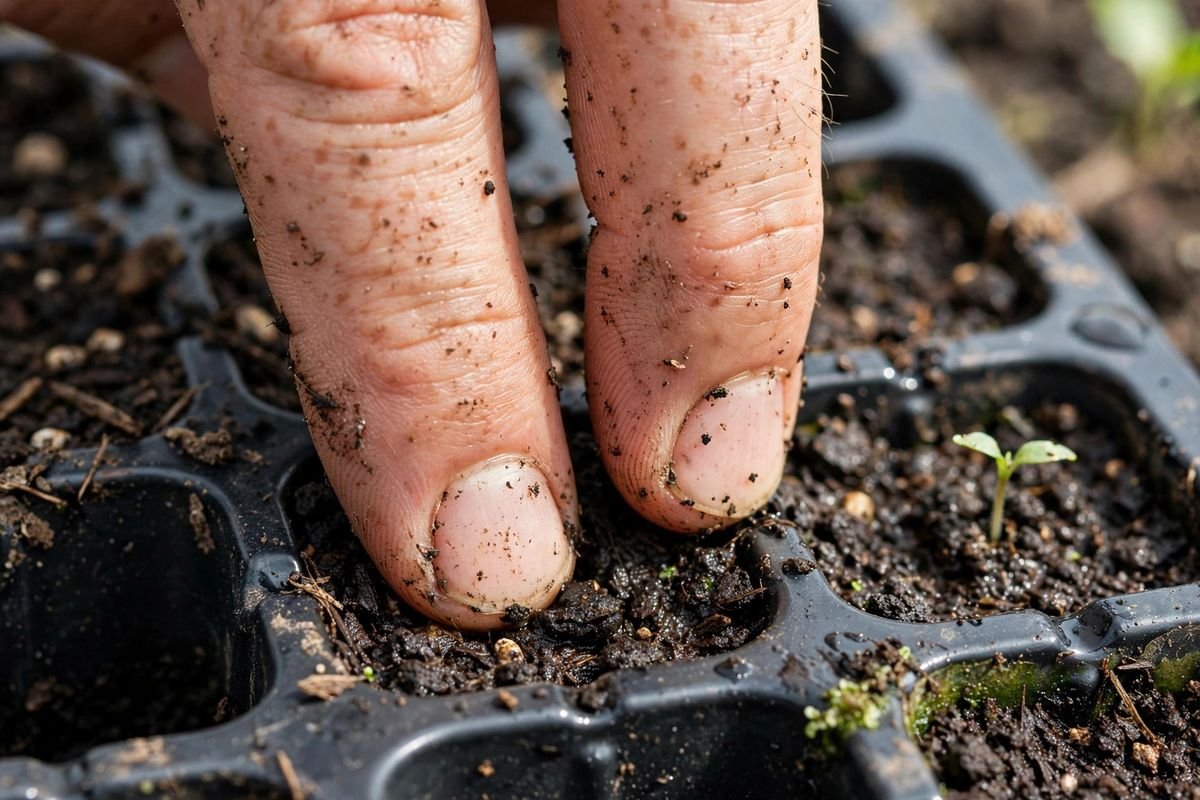
New growers tend to trust their eyes and overwater. The mix surface dries first and lies about the rest of the cell. Until the lift test becomes habit, water less often than instinct suggests, then check with a finger.
Our water budget: a 72-cell tray, stage by stage
Assumptions. A standard 1020 tray has an inside footprint near 10 by 20 inches. Each cell of a 72-cell insert holds about 2.5 cubic inches of mix, so the tray holds about 180 cubic inches, near 0.8 gallon of mix. A bottom-water fill to half an inch deep is 100 cubic inches, about 0.43 gallon or 7 cups, which works out near three-quarters of a fluid ounce per cell per fill. One gallon equals 231 cubic inches.
The math by stage. Sowing to germination: with a dome on, evaporation is low, so a tray needs roughly 1 to 2 cups a day in misting to keep the surface damp. Sprout to first true leaves: a half-inch bottom fill, about 7 cups, every 2 to 3 days, drained after each soak. True leaves to transplant size: the same 7-cup fill every 1 to 2 days as leaves multiply and drink more. Hardening off: watering drops as seedlings spend days outdoors in cooler air.
How we use the result. Over a six-week run, a 72-cell tray takes roughly 15 bottom fills at 7 cups, about 6 to 7 gallons total, plus misting in week one. That figure plans our watering-can trips. Treat it as a planning number: a warm room with a fan pushes it higher, a cool basement pulls it lower. The lift test still rules.
A sample weekly rhythm
For a 72-cell tray of tomatoes in a 70°F room under lights, the week might look like this: Monday, bottom-water fill to half an inch, drain after 30 minutes. Tuesday, lift test; usually still heavy, so we wait. Wednesday, surface dry and tray light, so we fill again. Thursday, check only. Friday, fill. Weekend, one fill if the room runs warm, none if it runs cool. Use your local frost dates and regional planting guidance — not your USDA hardiness zone alone — to choose planting dates, since the sowing date anchors this whole rhythm.

Seedlings tell us when the rhythm is off. Tall, pale, floppy stems with wet mix mean too much water and too little light, a combination our guide to why seedlings get leggy under grow lights untangles. Wilting in damp mix means roots are drowning; wilting in dry mix means we waited too long. Both look the same from across the room, so we check the mix before we reach for the can.
Bottom watering vs misting
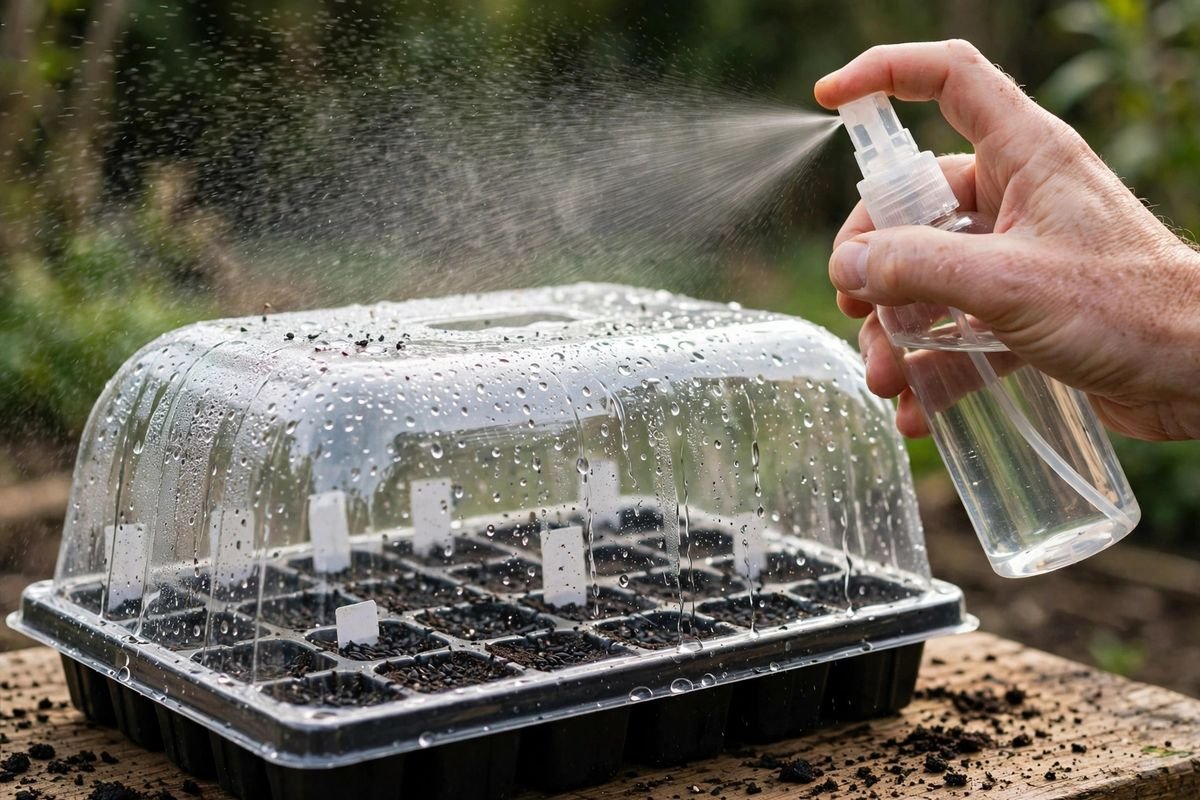
Misting suits the germination stage, when seeds sit near the surface and a pour would wash them around. Once seedlings stand up, bottom watering takes over: set the tray in a solid outer tray, add water to half an inch, wait 20 to 30 minutes, then drain. The surface stays drier, which discourages fungus gnats, and roots grow downward toward the moisture. Our full method is in how to bottom water seedlings, and the tray math for planning refills is in best bottom watering trays for seedlings. A fine-mist spray bottle on Amazon covers the germination stage; check that the listing says mist, not stream.
Heat, light, and air change the math
A heat mat under the tray speeds germination and dries the mix faster, so trays on mats need checking a day sooner. Our notes on whether seedlings need a heat mat cover when the tradeoff is worth it. Strong light drinks more water through bigger leaves, and a fan on low dries the surface while building sturdier stems. If we change any of the three, we re-learn the tray’s rhythm with the lift test for a few days instead of trusting the old schedule.
Common problems and plain fixes
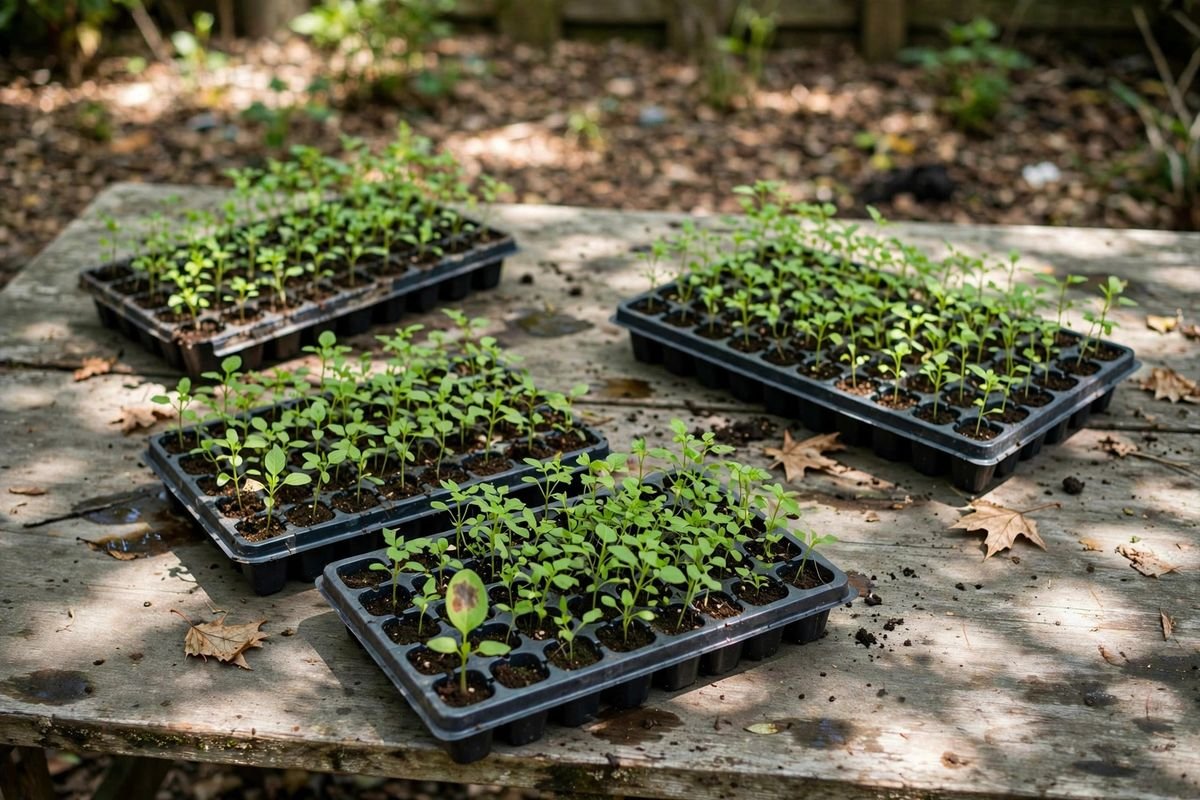
Surface algae or green film. We are watering too often or misting too much; we drain fully after each soak and let the surface dry. Fungus gnats hover over the tray. The surface stays wet, so we switch to bottom watering and let the top dry between fills. Seedlings wilt even though the mix is damp. Roots may be rotting from constant saturation; we drain, improve air flow, and water less. Seedlings wilt and the mix is dry and pulling from the cell walls. We waited too long; we bottom-water immediately and check daily until the rhythm steadies. White crust on the mix surface. Salt buildup from fertilizer or hard water; we flush from the top with plain water and ease off feeding.
FAQ
Should I water seedlings every day?
Usually not. Most indoor seedlings do best with a wet-dry cycle: water deeply, drain, then wait until the surface dries slightly and the tray feels light. Daily watering suits only very warm rooms or tiny cells that dry fast.
Is it better to water seedlings in the morning?
Yes. Morning watering lets leaves dry during the day under lights, which discourages disease. Evening watering leaves foliage damp overnight.
Can I water seedlings with fertilizer every time?
No. Feed at the dilute strength the product label directs, and only after true leaves appear. Plain water between feedings prevents salt buildup.
How do I water seedlings when I am away for a weekend?
Bottom-water deeply before leaving, drain well, and move the tray slightly away from direct light and fan air flow. Most established seedlings handle two to three days. Newly sown trays under a dome hold moisture longest.
Sources & Further Reading
- University of Minnesota Extension, starting seeds indoors: https://extension.umn.edu/planting-and-growing-guides/starting-seeds-indoors
- Colorado State University Extension, growing plants from seed: https://extension.colostate.edu/topic-areas/yard-garden/growing-plants-from-seed-7-409/
- University of California Agriculture and Natural Resources, seed starting: https://ucanr.edu/site/uc-master-gardeners/seed-starting
Keep growing with these guides
A tray that gets water when it is light and rest when it is heavy grows stocky seedlings with roots that fill the cell. Set the rhythm by stage, check with finger and lift, and adjust for the room we have. Our seed starting station setup puts lights, trays, and watering gear in one workable layout.