
This post may contain affiliate links. If you buy through links on this page, we may earn a commission at no extra cost to you.
As an Amazon Associate I earn from qualifying purchases.
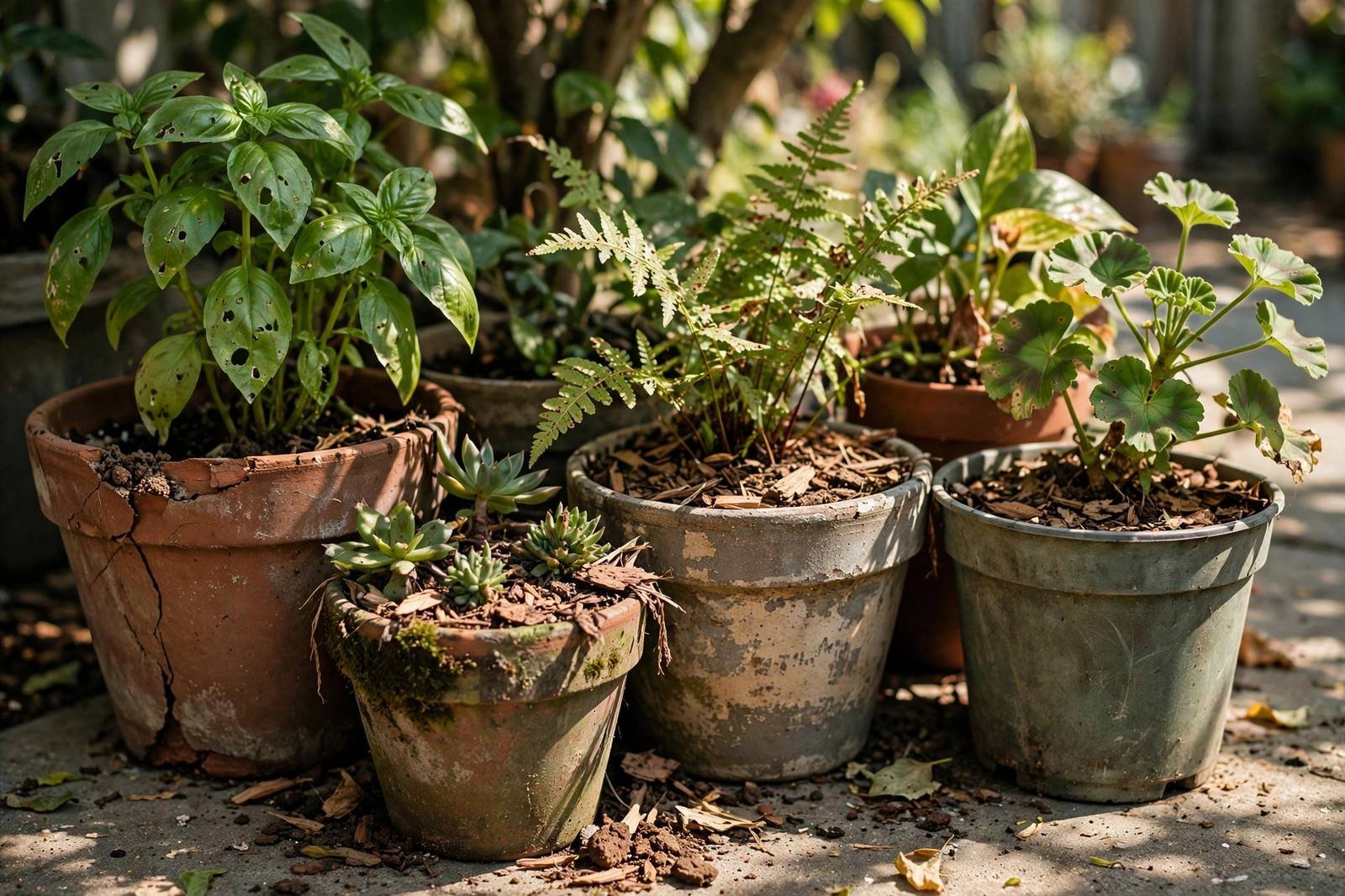
Container plants feel a heat wave first. Roots sit in a small box of soil that heats up, dries out, and holds little reserve. Leaves may still look fine at noon and sag by late afternoon. The fix is plain and works fast: water deeply early in the morning, shade the roots and the pot walls, cover the soil, and move pots close together so they protect each other. Do those four things and most containers pull through days that would leave scattered, bare pots limp.
Our short answer: soak each pot until water runs from the drainage holes, before 9 a.m. when you can. Add 1 to 2 inches of mulch, give afternoon shade to the pot, and group pots so outer plants spare inner ones. Check soil each evening and water again only when the top inch feels dry.
Water the Roots, Shade the Pot
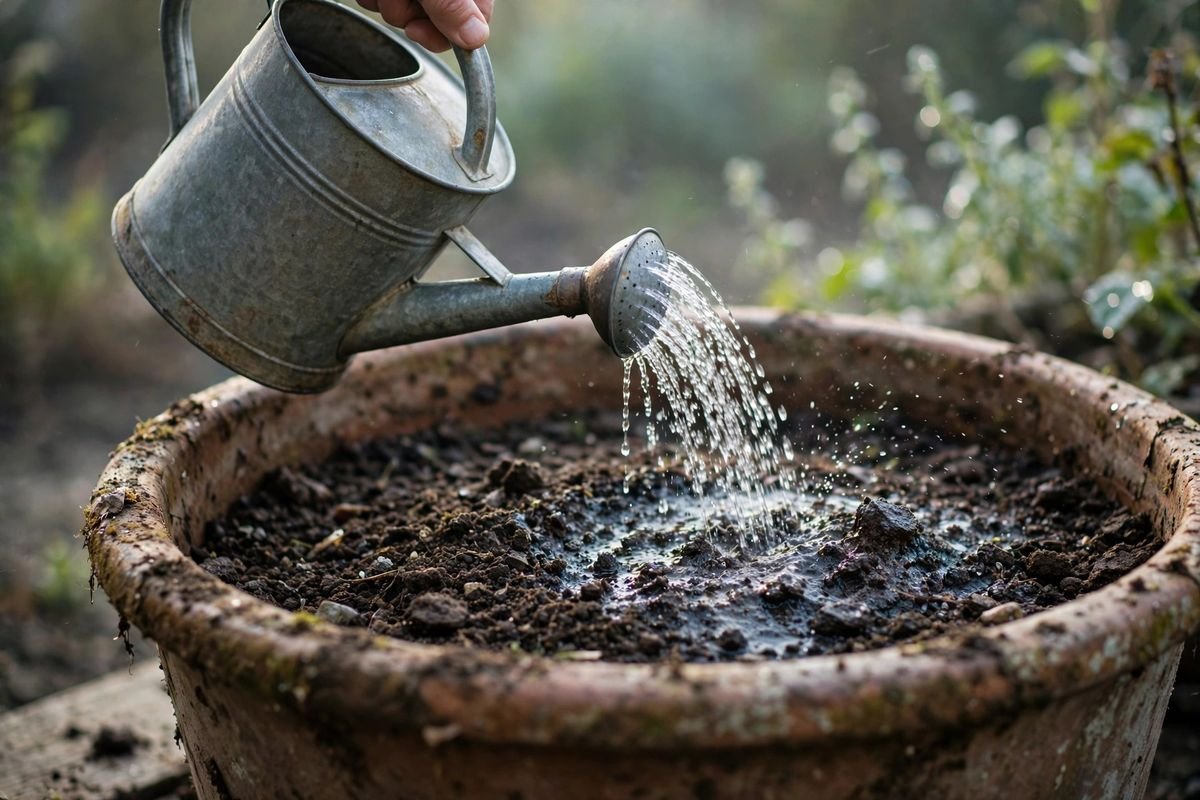
Timing matters more than volume alone. Water in the early morning so the whole root ball starts the day wet. Soil can take up water, leaves dry off in the rising light, and less water is lost straight to hot air. Evening watering is our second choice. Midday watering is the weakest option: much of it evaporates, droplets sit on hot leaves, and a shallow sprinkle wets only the top.
Depth counts. A sprinkle leaves the lower half dry, where roots cluster. Water slowly until a trickle runs from the drainage holes, wait a minute, then water again. For very dry mix, set the pot in a shallow tray for 20 to 30 minutes, then drain fully. Our guide on how to keep container soil from drying out too fast covers mix tweaks that slow dry-down.
Shade the pot itself. A dark pot in full afternoon sun can push soil near the wall well past air temperature, and fine roots there suffer first. Move the pot so a bench, wall, or taller plants shade the container from noon onward while the top gets morning light. A light cloth over the pot wall, with air space, helps when moving is not possible.
A watering can with a rose head spreads water gently. Browse watering cans with a rose head for containers on Amazon if your can digs holes in the mix.
Mulch and Double-Potting Buy Time
Bare soil loses water fast. Sun hits the surface, wind pulls moisture off, and the top inch bakes into a crust that sheds the next watering. A 1- to 2-inch layer of straw, shredded bark, or chopped leaves breaks that cycle. Mulch shades the soil, slows evaporation, and keeps the surface open so water sinks in. Keep mulch an inch away from stems to cut rot risk, and top it up when it thins.
Pot color matters too. Dark pots absorb heat; light pots reflect some of it. Terracotta cools through evaporation but dries mix faster. Plastic holds water longer, yet thin black plastic heats up fast. Shade the wall and mulch the top, and the material matters less.
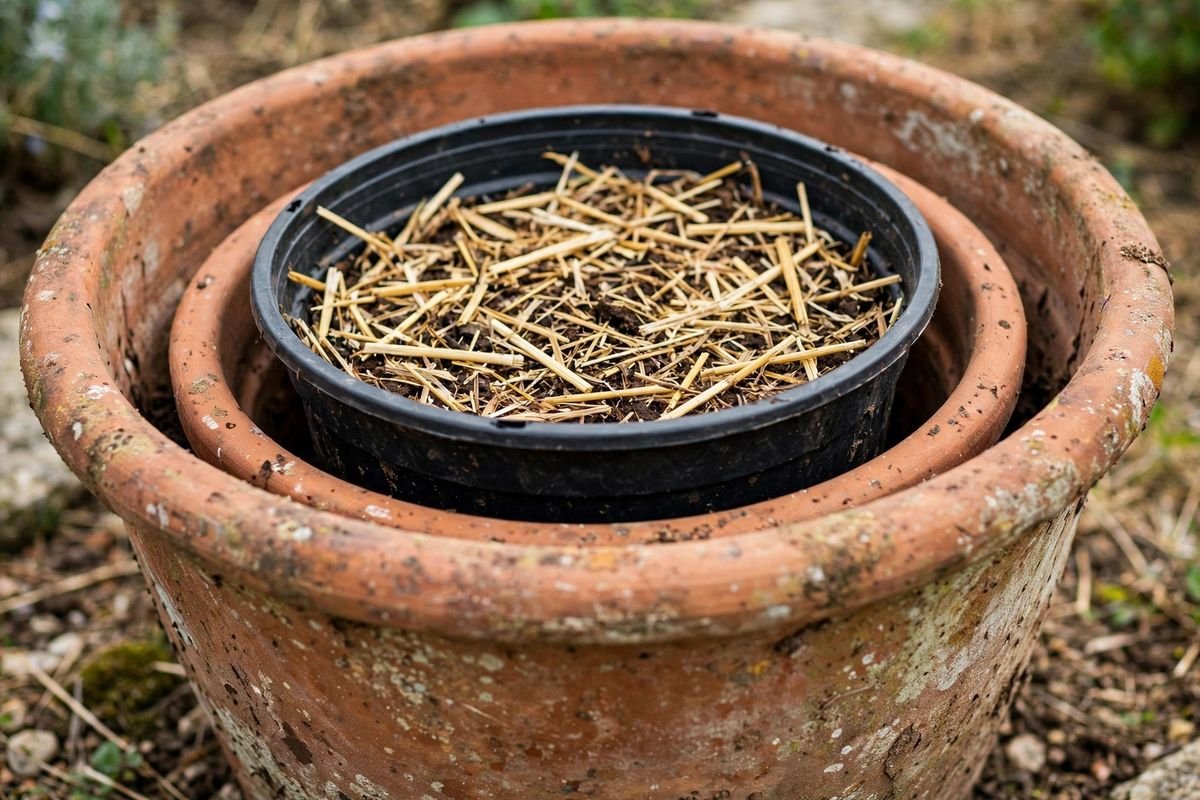
Double-potting is our favorite cheap trick. Slip the planted pot inside a larger empty pot with an inch of air gap. The outer pot takes the sun hit and inner soil stays cooler through the afternoon. This works well for herbs, peppers, and young tomatoes on a hot patio.
Self-watering pots buy time in a different way, with a reservoir below the soil. Our review of best self-watering planters for patio gardens explains reservoir sizes and which crops use them well. During a heat wave, check reservoirs daily; a dry reservoir is just a pot with extra plastic.
Move Pots Together and Chase Light Shade
A lone pot on hot concrete has no allies. Sun hits every side, wind strips moisture, and heat radiates up from the paving. Grouping changes the math. Set pots close, tallest at the back or on the west side, so outer pots shade inner ones during the harshest hours. Leaves overlap a bit and create a small humid pocket near the soil. Pots on the edge still need a check, but the center of a group often needs water a full day later than a pot standing alone.
Move what you can. Shift small and medium pots to a spot that gets morning sun and light afternoon shade: east of a fence, under a high tree canopy, or beside a wall that blocks the late sun. Full shade all day is too much for fruiting crops; they will stretch and drop blossoms if the heat spell lasts. Aim for bright shade or dappled light from noon to about 4 p.m., then open sky again. For pots too heavy to move, a shade cloth panel on stakes on the west side gives the same break without lifting anything.
Raise pots off hot surfaces. Wooden slats, pot feet, or a pallet lift the base into moving air and let drainage run clear. Even half an inch of gap lowers heat soak after sunset.
Our container gardening for beginners guide matches pot sizes to crops. Bigger soil volume heats slower and holds more water between soakings.
Shade cloth is cheap insurance for a fixed patio. Look for 30 to 50 percent shade for vegetables, knitted rather than woven if you want it to last outdoors. Compare 40 percent shade cloth for gardens on Amazon and cut it larger than the group so edges can hang past the outer pots.
A Worked Example: Five Hot Days in Gallons
Heat wave watering sounds vague until you put gallons to it. Here is our worked example with stated assumptions. These figures are planning estimates from pot size and typical hot-day use, not measurements from a test bench, and your mix, wind, and pot color will shift them.
Assumptions. Daytime highs sit near 95 degrees for five days, nights stay warm, and there is no rain. Plant A is a tomato in a 10-gallon pot, mulched, with the pot wall shaded after noon. We assume it uses about 1 gallon per day. Plant B is a basil in a 1-gallon pot, also mulched and grouped. We assume it uses about 0.25 gallon per day, roughly 1 quart. Both start with a full morning soak on day 1.
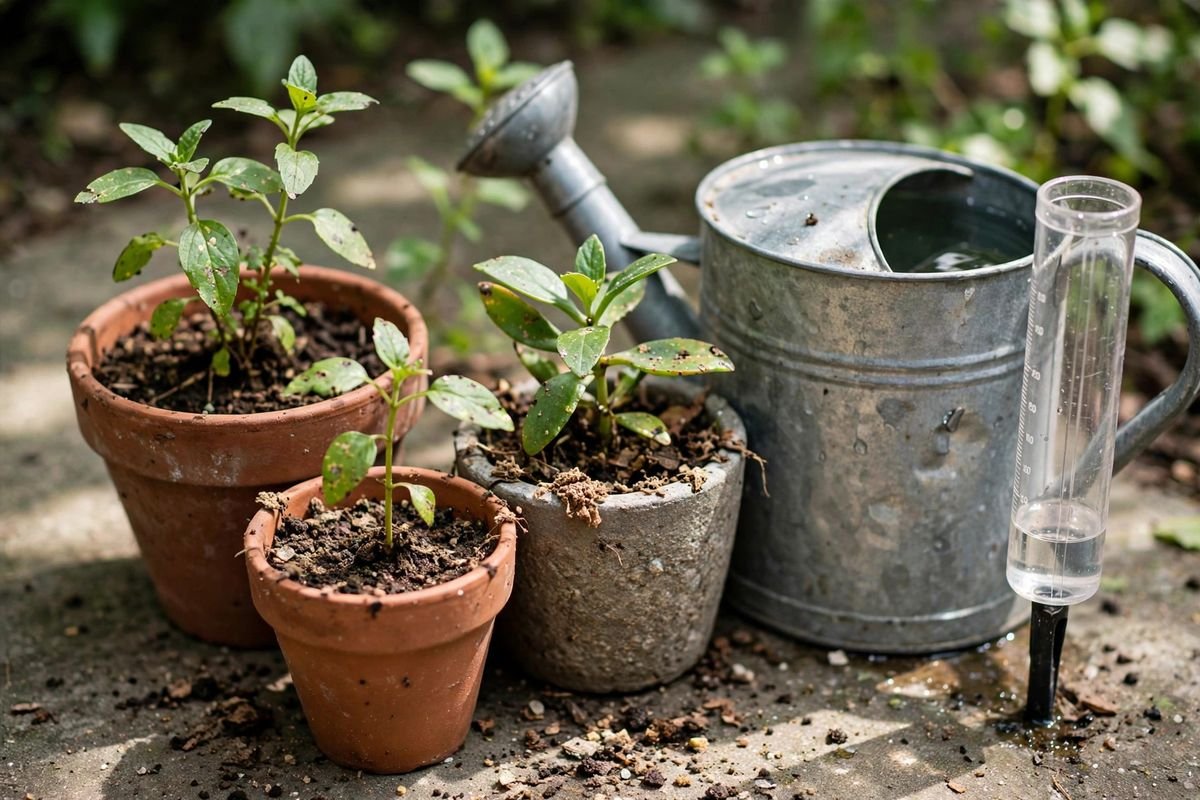
Daily check, five-day totals. Tomato: 1 gallon per day times 5 days equals 5 gallons. Basil: 0.25 gallon per day times 5 days equals 1.25 gallons. Together, the pair needs about 6.25 gallons across the stretch, plus a little extra on day 1 to rewet dry mix from below. A standard 2-gallon watering can covers the pair for a day in about one and a half trips: one full can for the tomato across two slow passes, and a half can shared among small herbs.
What grouping and mulch save. Set the same tomato alone on hot paving with bare soil and daily need can climb past 1.25 gallons. Over five days that is 6.25 gallons or more for the tomato alone. Mulch, wall shade, and grouping keep our tomato near 1 gallon a day and the basil to one morning drink.
How to use this at home. Treat your largest pot as the tomato and your smallest herb as the basil. Write down can counts each morning for three days. By day 3 you have your own patio rate. Adjust for wind: a windy 90-degree day can dry a pot faster than a still 95-degree day.
What Not to Do When Pots Are Stressed
Skip fertilizer at midday and skip it while plants wilt from heat. Salts in a dry root ball concentrate and can burn fine roots. If feeding is due, water deeply first, then feed in the morning at the label rate or weaker once plants stand upright again. A heat wave is a survival week, not a growth push.
Go easy on pruning. Removing some badly scorched leaves is fine, but hard pruning during extreme heat strips shade from the soil and from lower stems, and it asks the plant to heal while it is short on water. Wait until the spell breaks, then trim dead tissue with clean cuts. Leaves that wilt at 3 p.m. and recover by morning are asking for shade and water, not for the shears.
Avoid shallow daily sprinkles as your only plan. They train roots to the top inch, waste water to evaporation, and leave the lower root ball dry. One deep soak that reaches the drainage holes, followed by a finger check, grows a deeper, tougher root system. Also avoid moving a sun-grown plant straight into deep shade for days; the sudden light drop plus wet soil invites weak, leggy growth. Light afternoon shade is the target.
Recovery After the Heat Breaks
Cooler air does not reset pots at once. Soil that baked for days may have pulled away from the pot walls, so the first normal watering can run straight down the gap and out the holes while the center stays dry. Water slowly, wait ten minutes, and water again. If the mix still resists, bottom-soak for half an hour, drain, and feel the weight. A wet pot is heavy; a dry-center pot feels oddly light for its size.
Crisp leaf edges and dropped blossoms are common after a hard stretch. New growth at the tips shows roots survived. Resume feeding at half strength once plants hold leaves through a full day, replace thinned mulch, and move pots back to full sun over two or three days.
Use the break to fix the setup. Note which pots dried first; those get the shadiest spot, thickest mulch, or a double-pot sleeve next time.
Frequently Asked Questions
Should we water container plants twice a day in a heat wave?
Sometimes, yes, for small pots in full sun with fast-draining mix. Start with one deep morning soak and an evening finger check. If the top inch is dry and the pot feels light, water again. Large, mulched, grouped pots often hold a full day; tiny unmulched pots may not.
Is shade cloth better than moving pots?
Both work. Moving is free and suits small pots. Shade cloth suits heavy pots and fixed patios, and it shades the pot walls as well as the leaves. Light shade of 30 to 50 percent keeps fruiting crops growing while cutting the worst afternoon heat.
Can we use ice or cold water on hot pots?
Plain water at air temperature is fine. Very cold water is not needed and can shock warm roots in a small pot. Spend the effort on depth, timing, mulch, and shade instead, which lower soil temperature for hours rather than minutes.
Sources & Further Reading
- University extension guidance on container watering, mulching, and heat stress for vegetables and herbs.
- Regional extension notes on shade cloth percentages and summer container care.
- USDA and land-grant resources on soil moisture checks and irrigation timing during extreme heat.