
This post may contain affiliate links. If you buy through links on this page, we may earn a commission at no extra cost to you.
As an Amazon Associate I earn from qualifying purchases.
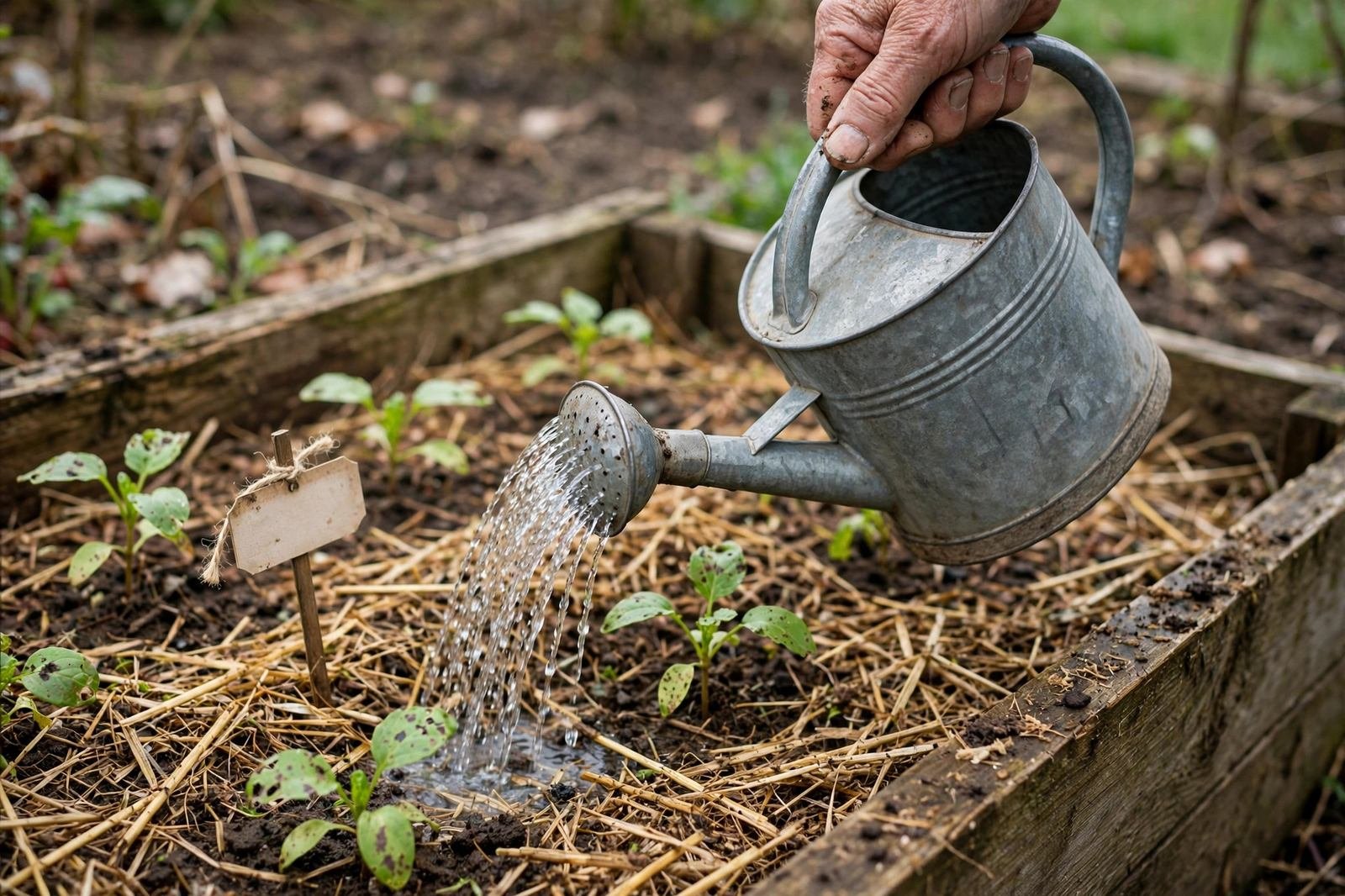
Here is the short answer we give every new raised bed gardener: water deeply when the soil is dry two inches down, and let the surface dry out a little between sessions. In mild weather that works out to every three or four days for most beds. In a hot, windy stretch it can mean every day. The calendar is a rough guide. The soil gets the final say.
Raised beds drain faster than ground-level soil because the mix sits above grade, gets wind on all sides, and usually holds a looser blend of compost and aerating material. That drainage is a gift for root health, but our beds also dry from the top down quicker than a garden dug into clay. New growers setting up a first bed will find the layout basics in our guide to raised bed gardening for beginners.
The Gallons-Per-Inch Math We Use
Extension guidance for vegetables usually calls for about an inch of water per week, more in heat. One inch of water spread over one square foot equals about 0.623 gallons. That fixed conversion lets us compute exactly what a watering session should deliver to any bed we own.
Our worked example. Take the most common bed we see, 4 by 8 feet. The surface area is 32 square feet. Multiply 32 by 0.623 and the answer is 19.9, so we round to about 20 gallons for one full inch across that bed. That inch might go down in one deep session or split into two half-inch sessions of about 10 gallons each. The assumptions stay plain: the bed is filled level, water lands evenly, and none of it runs off the surface. Sandy mixes pull water down fast, so we apply in two passes and let the first soak in.
| Bed size | Surface area | Gallons per inch | Gallons per half inch |
|---|---|---|---|
| 4 x 4 ft | 16 sq ft | About 10 | About 5 |
| 4 x 8 ft | 32 sq ft | About 20 | About 10 |
| 2 x 8 ft | 16 sq ft | About 10 | About 5 |
The 2 x 8 surprises people. A narrow bed holds the same surface area as a 4 x 4, so it drinks the same gallons per inch. Gardeners watering by can can use the table in reverse: ten gallons on a 4 x 8 is a half-inch session, or five trips with a two-gallon can.
Quick Care Table: Soil, Mulch, and Weather
Frequency comes from three levers: how fast our soil drains, how much mulch covers it, and what the weather asks plants to spend. The table below is the rhythm we start with before checking the soil, written for established vegetables with roots six inches deep or more. Seedlings break every row of it, since shallow roots need the top inch kept steadily moist for the first week or two.
| Soil and mulch | Mild weather, 60s-70s | Hot or windy, 85 and up | Cool and cloudy, 50s-60s |
|---|---|---|---|
| Sandy or very light mix, bare soil | Every 2 days | Daily | Every 3 days |
| Loamy mix, bare soil | Every 3 days | Every 1-2 days | Every 4 days |
| Loamy mix, 2-3 inches of mulch | Every 3-4 days | Every 2 days | Every 4-5 days |
| Clay-heavy mix, 2-3 inches of mulch | Every 4 days | Every 2-3 days | Every 5 days |
Read the table as a first guess, then let the moisture check below overrule it. Rain counts toward the weekly inch: a quarter inch buys roughly a day, and a full inch covers a mild week. Crops differ too. Our notes on how to grow tomatoes explain why fruiting tomatoes want steady moisture, while established herbs prefer the leaner side of every row here.
The Finger Test We Trust
Push a finger straight down into the bed, past the mulch, up to the second knuckle — about two inches deep. If soil clings in dark crumbs and the fingertip feels cool and damp, the bed still holds water and the session can wait. If the soil comes out pale, dusty, and dry at that depth, water now. Check in two spots, because edges dry faster than centers.
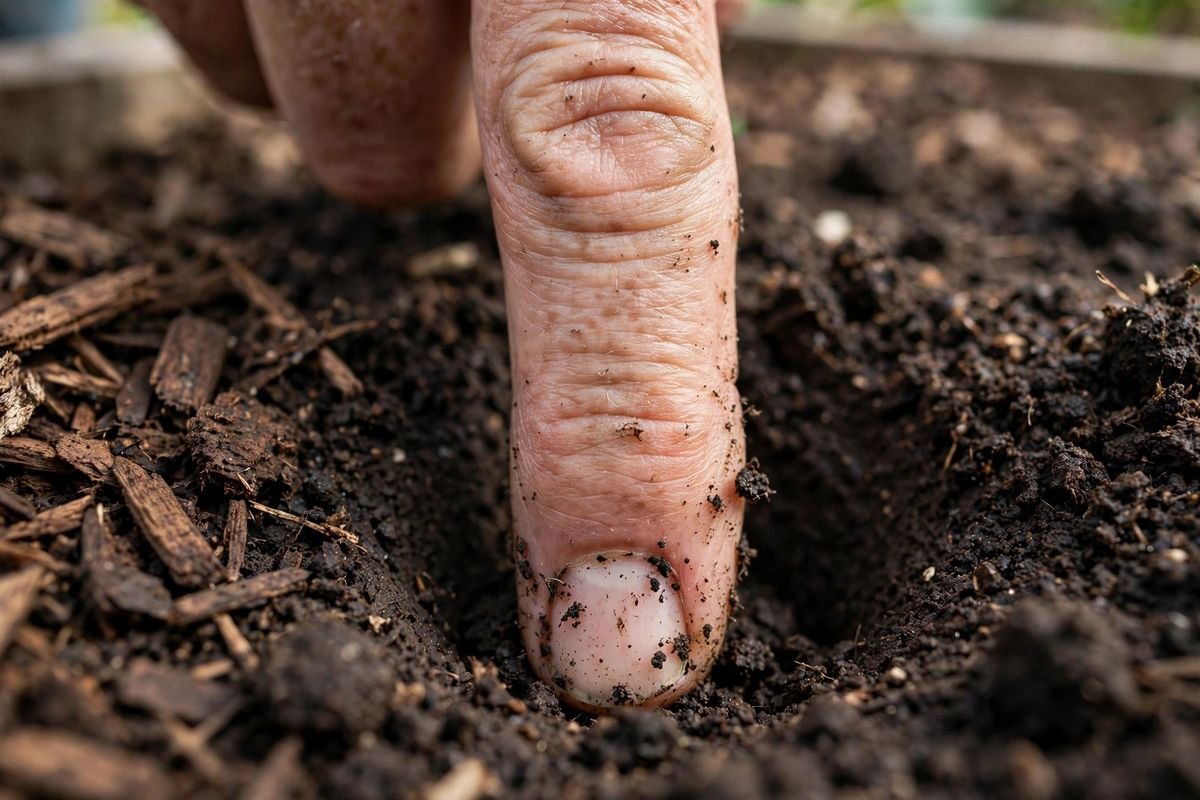
The knuckle depth matters. The top half inch dries within hours on a sunny afternoon, even over moist soil, and watering off that dry crust alone leads to shallow sessions and shallow roots. Roots chase moisture downward, so our goal is a bed that stays damp at four to six inches while the surface cycles between damp and just dry. Once a week, slide a trowel down after watering and confirm the wet front reached the root zone.
How Mulch Depth Changes the Schedule
Mulch works on the evaporation half of the water budget. Bare soil under sun and wind loses surface moisture all day. A cover of shredded bark, straw, or chopped leaves shades that surface, slows the wind at soil level, and keeps the top inch from baking into a crust that sheds water.
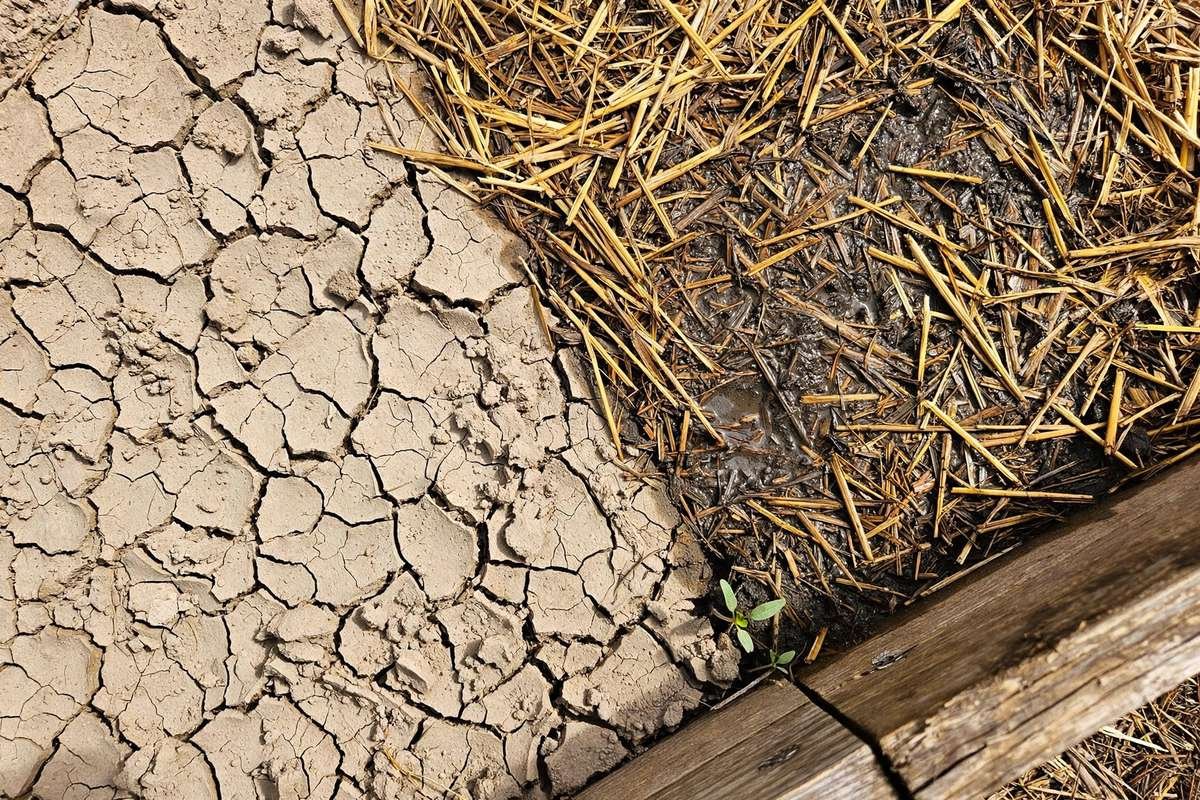
Our planning rule, stated with its assumptions: with two to three inches of mulch on a loamy mix, we add about a day between waterings compared with the same bed left bare, and in hot wind the gap can stretch to two days. The gallons per session stay the same — mulch stretches the interval, not the dose. Keep mulch two inches back from stems so crowns stay dry. When cold weather arrives, that same layer turns into insulation, and our guide to how to winterize a raised garden bed covers how deep to run it over winter.
Signs of Too Little and Too Much Water
Underwatering signs
Plants wilt in the afternoon and recover by morning, soil pulls away from the bed boards in a visible gap, and the surface turns pale and cracks. Growth slows, lower leaves crisp at the edges, and fruiting crops drop blossoms.
Overwatering signs
Plants wilt while the soil stays wet, lower leaves yellow from the bottom up, and stems feel soft at the base. The surface grows algae, fungus gnats hover, and soil at knuckle depth squeezes out water like a sponge. Raised beds forgive overwatering faster than clay ground, but daily soaking on a clay-heavy mix will still suffocate roots.
Troubleshooting Common Watering Problems
The bed dries out by noon every day
Check the mix first. A peat-heavy blend that has dried completely can repel water, so sessions run through without wetting the root zone. Water slowly in two passes, work a handful of compost into the top layer, and raise mulch to a full three inches. Beds in reflected heat beside a wall or fence may honestly need daily water in a heat wave.
One end of the bed is always dry
Beds on a slope, even a slight one, shed water toward the low end. Level the soil surface, water the dry end first and longest, and check that a soaker line has not kinked uphill of the dry patch. Our comparison of drip irrigation vs soaker hose covers why long soaker runs fade at the far end.
Seedlings keep collapsing
Seedlings live in the top inch, and that inch dries between sessions that suit established plants. Keep the seedbed surface evenly moist with light daily misting until true leaves open, then ease toward the table rhythm as roots deepen.
Tools That Take the Guesswork Out
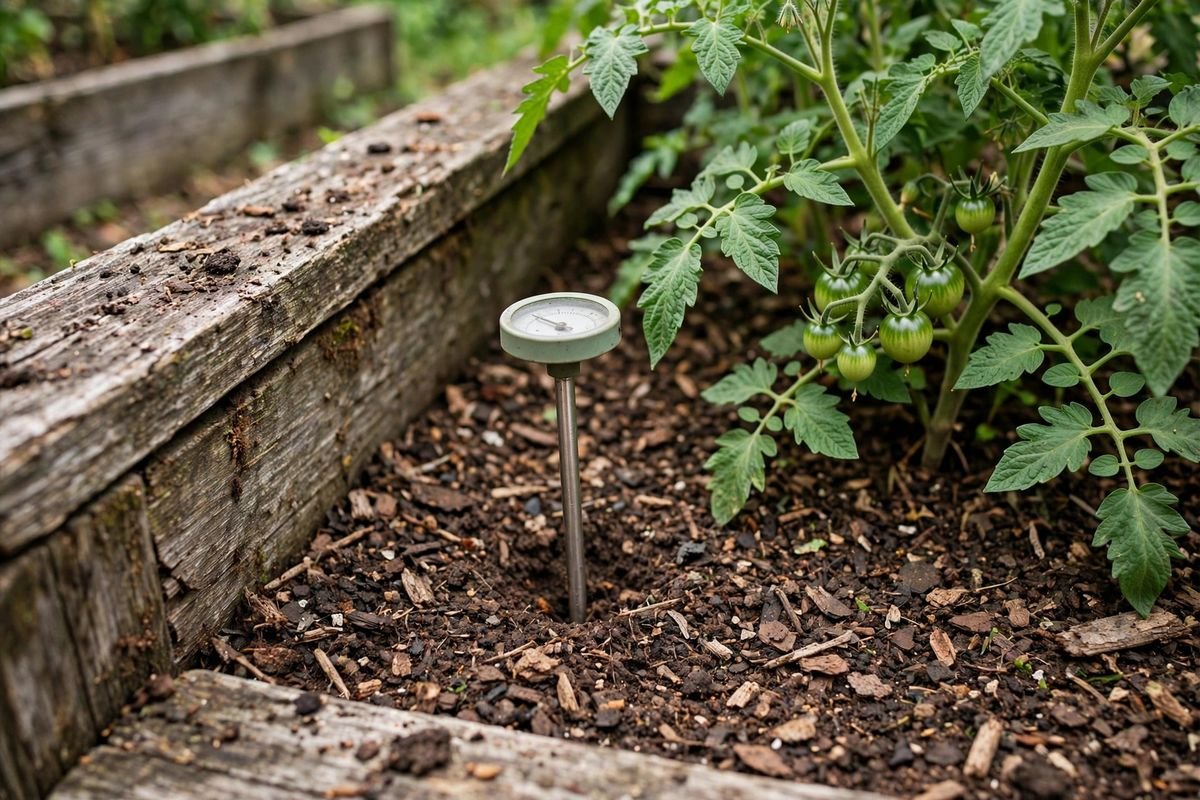
A probe meter turns the finger test into a number. Push the probe to root depth and read the dial; most vegetable beds do well kept in the moist middle range. Meters drift as probes corrode, so we cross-check ours against the finger test once in a while. Browse soil moisture meters on Amazon and look for a probe that reaches six inches, since short probes only read the crust.
For beds that need water while nobody is home, delivery beats measurement. Our roundup of the best drip irrigation kits for raised beds compares kit layouts by bed size, and our picks for the best garden hose timers favor simple dial models that survive weather and battery swaps. Even on a timer, keep the finger test in the weekly routine, because a schedule set in June will overwater by September. Container growers face a tighter version of this puzzle, and our guide to container gardening for beginners explains why pots can need daily water when beds do not.
Seasonal Shifts Worth Planning For
Spring beds hold moisture longer under cool nights, and small plants drink less. Summer raises demand exactly when rain gets unreliable. Fall crops start thirsty as transplants and taper as nights cool. Use your local frost dates and regional planting guidance — not your USDA hardiness zone alone — to choose planting dates. The watering calendar follows the planting calendar in every season.
FAQ
Should we water a raised bed every day?
Only in narrow cases: seedlings with shallow roots, very sandy mixes, containers, and heat waves over bare soil. Established vegetables in mulched loamy beds do better with deep sessions spaced days apart, which trains roots downward.
How long should a watering session run?
Long enough to deliver the gallons the table calls for and wet the soil six inches down. On our 4 x 8 worked example, a half-inch session is about 10 gallons. After the first session, dig a small check hole to see how deep the wet front reached, then adjust the next run.
Morning or evening watering?
Morning wins. Water lands before the heat, leaves dry fast, and roots start the day charged. Evening watering beats midday, but foliage that stays wet overnight invites more leaf disease.
Does rain cancel a scheduled watering?
A quarter inch of rain on a mulched bed usually buys a day, and an inch covers a mild week. Push a finger down after the rain stops. Storms that run off hard, dry soil may deliver less to the root zone than the gauge suggests.
Sources & Further Reading
- University of Minnesota Extension — watering vegetable gardens: https://extension.umn.edu/watering/watering-vegetable-gardens
- Colorado State University Extension — drip irrigation for home gardens: https://extension.colostate.edu/topic-areas/yard-garden/drip-irrigation-home-gardens-4-702/
- University of California Agriculture and Natural Resources — drip irrigation basics: https://ucanr.edu/site/uc-master-gardeners/drip-irrigation