
This post may contain affiliate links. If you buy through links on this page, we may earn a commission at no extra cost to you.
As an Amazon Associate I earn from qualifying purchases.
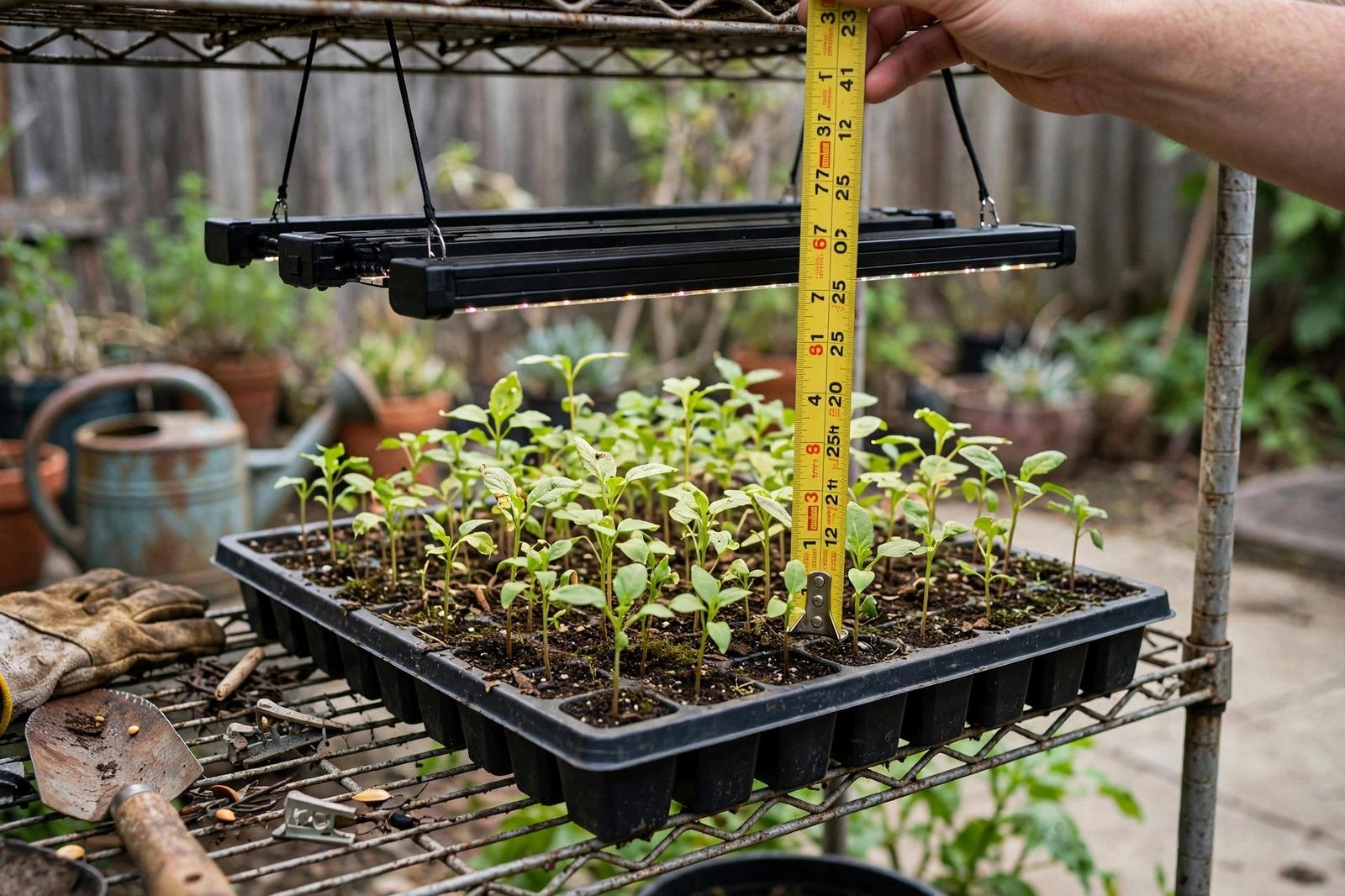
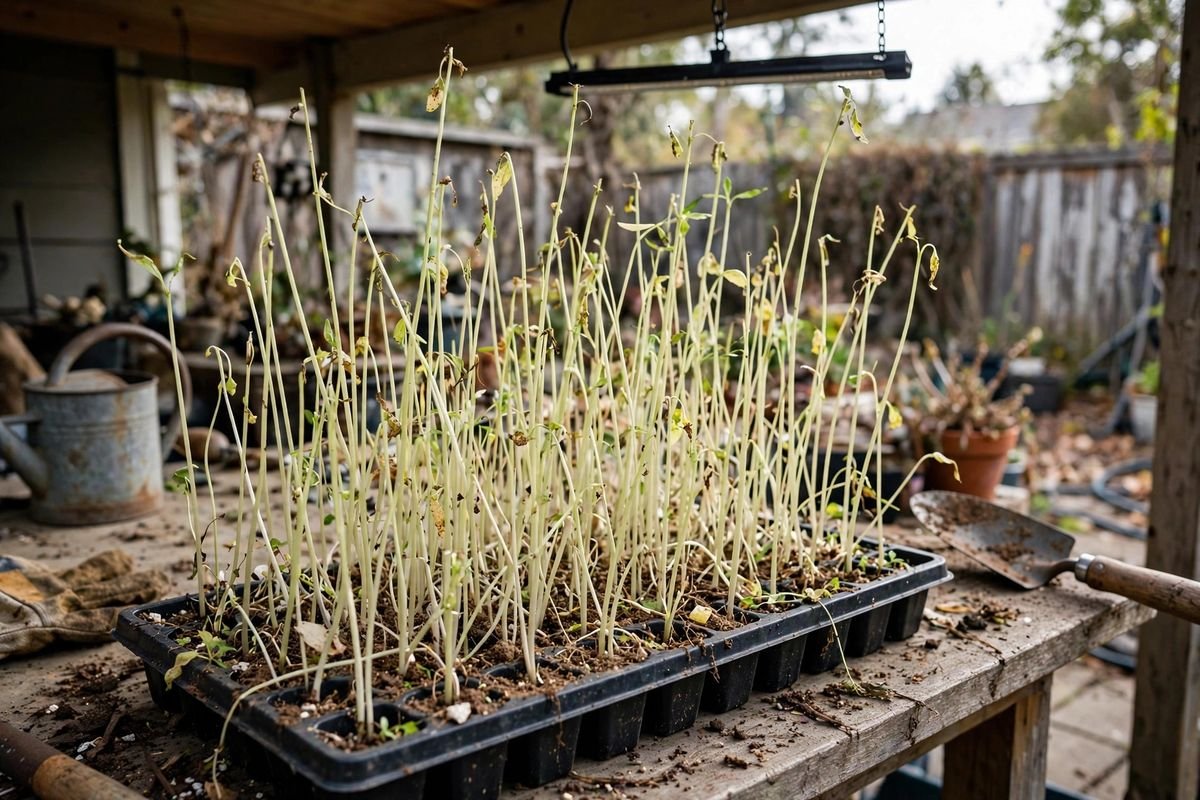
For most seedlings, start with the light 2 to 4 inches above the tops of the plants for LED bars, and 4 to 6 inches for fluorescent tubes, then raise it as the plants grow. Those numbers are starting points, not fixed rules. Plant response tells us when to adjust: short, sturdy stems mean the distance is working, while tall, pale stems mean the light is too far away. We keep the light close enough to prevent stretching but far enough to avoid heat stress and bleached leaves.
Distance matters more than most beginners expect because light intensity drops fast with each extra inch. This guide gives stage-by-stage starting distances, shows the simple math behind that drop, and lays out a weekly raising routine for a standard 10×20 tray. Gardeners setting up a full shelf will also want our walkthrough of how to set up a seed starting station, which covers tray layout alongside light placement.
| Stage | LED Bar Lights | Fluorescent Tubes | What to Watch |
|---|---|---|---|
| Just germinated (seed leaves open) | 2–4 inches above canopy | 4–6 inches above canopy | Stems should stay short; lower the light if seedlings lean hard toward it |
| First true leaves | 3–6 inches above canopy | 5–8 inches above canopy | Raise in small steps as height increases; keep tops even under the bar |
| Hardening / pre-transplant (taller, bushier plants) | 4–8 inches above canopy | 6–10 inches above canopy | Watch leaf color; back the light off if edges pale or curl |
Use the table to set the light on day one, then let the plants guide the next move. If seedlings stretch within two or three days, close the gap by an inch or two. If leaf edges lighten or the growing tips look stressed, add an inch and check again the next morning. Our roundup of the best grow lights for seedlings helps match bar length and output to a single tray or a full shelf before distance even becomes a question.
Why a Few Inches Change Everything: The Inverse-Square Math
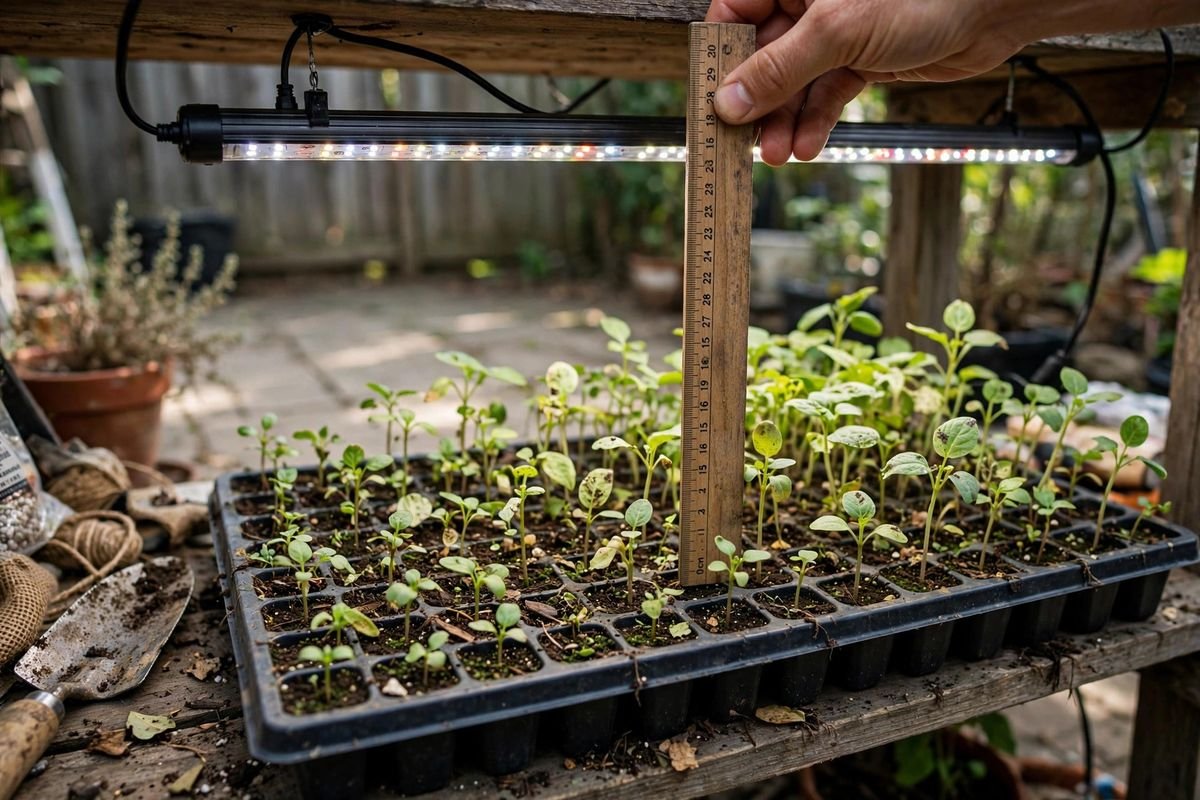
Light spreads out as it travels, so intensity falls with the square of the distance. The rule is simple: double the distance, and the plants receive about one quarter of the light. We use this as a planning tool, not as a lab measurement, because bar design, reflectors, and room light all shift the real result. The direction of the change, though, holds every time.
Worked example with stated assumptions: Assume a single LED bar centered over a 10×20 tray, no reflector, and we compare intensity at the canopy directly under the bar. At 6 inches, call the intensity 100 units for reference. Move that same bar to 12 inches — twice the distance — and the intensity drops to about 100 ÷ 4, or roughly 25 units. Move it to 3 inches — half the original distance — and it climbs to about 100 × 4, or roughly 400 units. This is why a light left at the top of a shelving unit produces stretched seedlings even when it stays on for plenty of hours: the plants are living on a quarter, or less, of what the same fixture could deliver up close.
The practical takeaway is to make adjustments in small steps. A 1- to 2-inch move near the plants changes intensity far more than the same move when the light already hangs a foot away. We change the height, wait a day, and read the stems again. Seedlings answer faster than any meter.
How We Measure and Set the Height
We measure from the bottom of the fixture to the top of the plant canopy, not to the soil surface. Seedlings gain height daily, so a gap that looked right on Monday can shrink by the weekend. A ruler or tape held beside the tray takes ten seconds and removes the guesswork. Edge plants receive less light than center plants under a single bar, so we rotate the tray a quarter turn every couple of days for even growth.
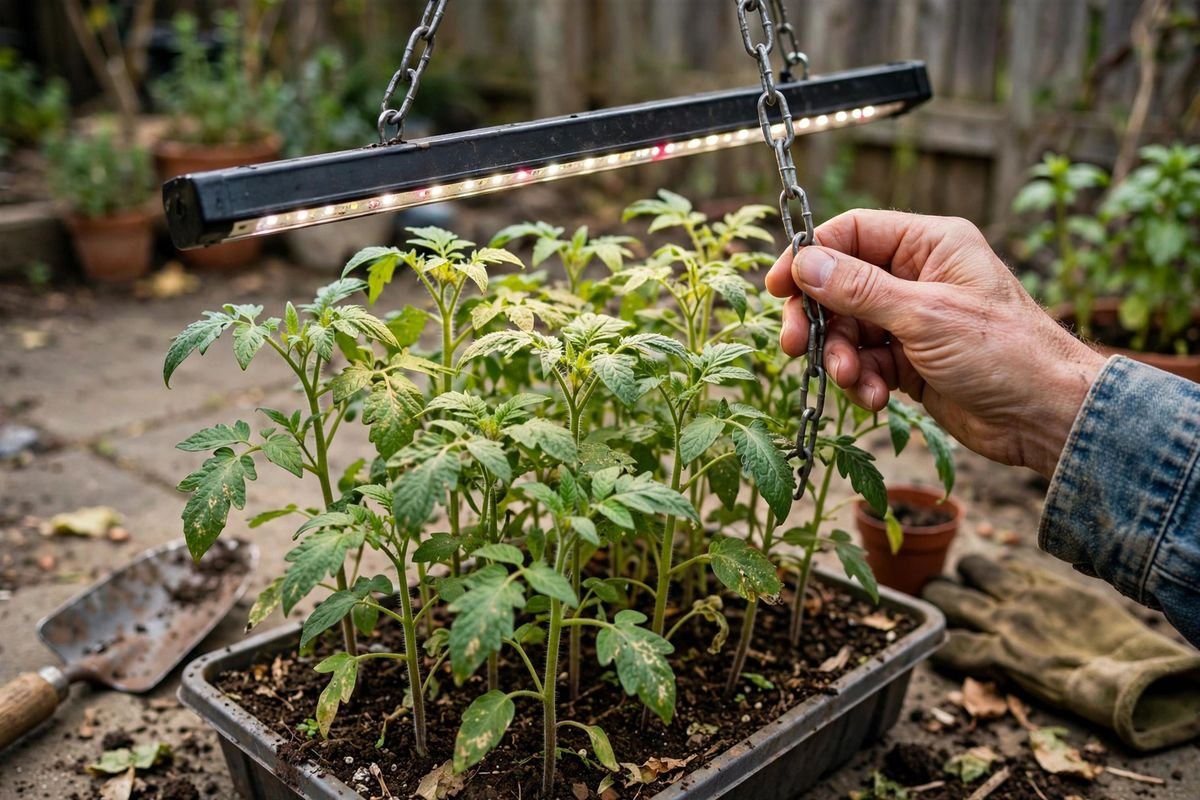
Hanging hardware makes those small moves easy. Chains, adjustable hangers, or shelf brackets that slide up a notch at a time all work. Gardeners who need a simple option can browse adjustable grow light hanging kits on Amazon and pick a style that matches their shelf. The goal is a setup we can raise one link at a time without unplugging and rebuilding the whole station. When we weigh a shelf setup against a bright window, our comparison of LED grow light versus sunny window shows why consistent distance beats a windowsill that changes with the weather.
A Weekly Raising Routine for a 10×20 Tray
A 10×20 tray is the standard flat most home gardeners use, so we built this routine around it. Assumptions: one LED bar centered lengthwise over the tray, seedlings of mixed vegetables started at the same time, and lights on for a consistent daily period. Faster crops such as tomatoes will need attention sooner than slow herbs.
Week 1 (germination to seed leaves): Set the LED bar 3 inches above the soil surface, measured to the bottom of the fixture. Once sprouts emerge, measure to the canopy instead and keep the gap near 2 to 3 inches. Check daily; this is the week when stretching starts.
Week 2 (first true leaves): Seedlings typically add 1 to 2 inches. Raise the light to hold a 3- to 4-inch gap above the tallest plants. If the tray holds both fast and slow growers, split them into two trays rather than splitting the difference on height.
Week 3 (steady growth): Most vegetable seedlings add another 1 to 2 inches. Raise again to keep a 4- to 5-inch gap. Stems should look stocky, and leaves should hold a healthy green. If plants lean toward the center of the bar, rotate the tray.
Week 4 and beyond (hardening stage): Taller plants may need a 5- to 8-inch gap, especially as foliage thickens and traps heat near the fixture. Raise in 1-inch steps and watch leaf edges. Plants headed outdoors soon care less about perfect indoor spacing and more about a gradual move to real sun.
The schedule is a rhythm, not a deadline. The real rule is to keep the gap steady as the canopy rises, which means raising the light about as fast as the plants grow. Gardeners who see stretching despite a close light will find the full diagnosis in our guide on why seedlings get leggy under grow lights, which covers duration and temperature alongside distance.
LED Bars Versus Fluorescent Tubes: Why the Starting Distance Differs
LED bars run cooler at the fixture and focus more of their output downward, so we can set them closer without cooking the leaves. Fluorescent tubes spread light over a wider area and give off more heat at close range, so they start a bit farther back. Both types grow sturdy seedlings when the distance matches the plant stage in the table above. Fixture wattage and lens design vary by model, so we always start at the table distance, then adjust by plant response over the next two days rather than trusting a single number on a box.
Troubleshooting: Reading What the Seedlings Tell Us
Leggy, stretched seedlings
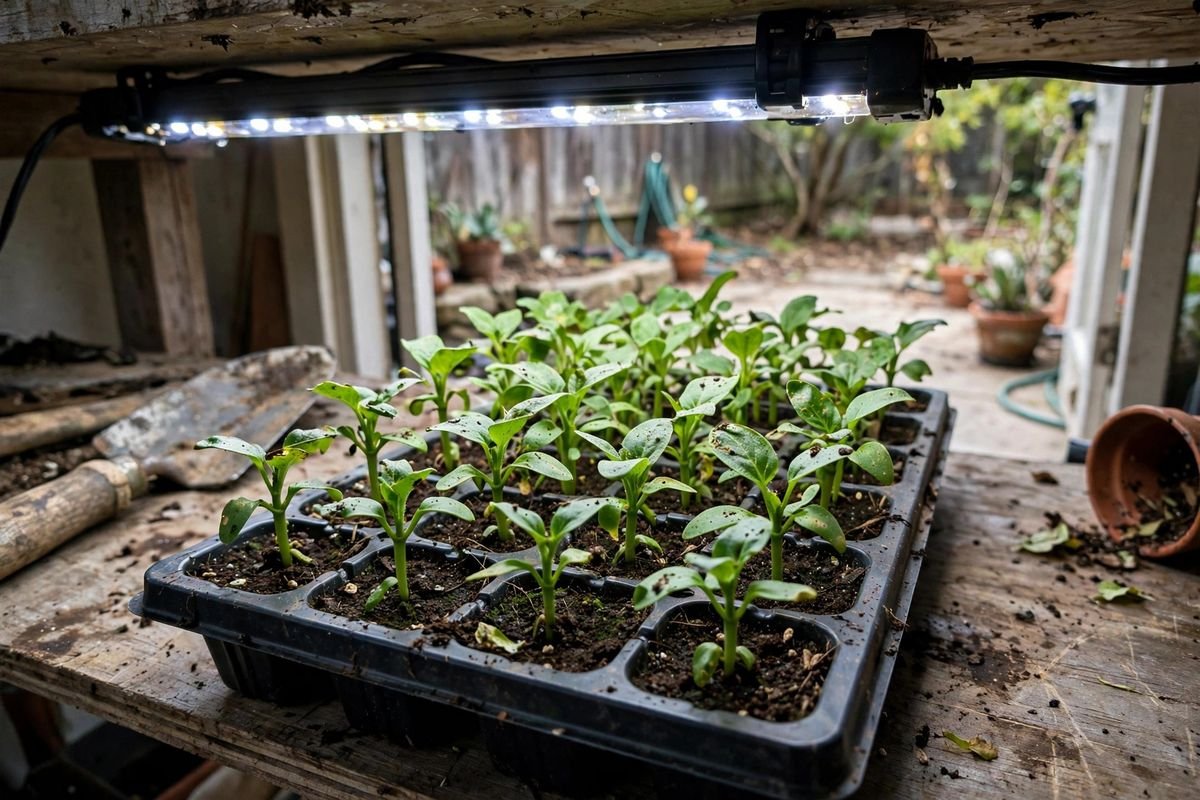
Long, thin stems with wide gaps between leaf sets mean the plants are reaching for more light. The fix is to lower the fixture in 1- to 2-inch steps until new growth comes in compact, and to check that the light stays centered over the tray. Seedlings that have already stretched rarely thicken up again, so gardeners often restart fast crops such as lettuce while correcting the height for the next sowing.
Bleached or pale leaf edges
White or pale patches on the leaves closest to the fixture usually mean the light sits too close or the plants grew up into it between checks. Raise the bar by 1 to 2 inches, confirm the gap with a ruler, and give the plants a day to recover. New growth should come in green. If paling spreads across the whole tray at a normal distance, the issue is more likely nutrition or watering than light height.
Heat stress and curling leaves
Leaves that curl upward, feel dry at the edges, or wilt despite moist soil point to heat building up under the fixture. Fluorescent setups and enclosed shelves trap warmth fastest. Raise the light slightly, add a small fan for air movement across the canopy, and check that vents or shelf covers are not holding hot air in. A fan also firms up stems, which helps seedlings handle transplant day.
Frequently Asked Questions
Can grow lights be too close to seedlings?
Yes. A light set closer than about 2 inches for most LED bars can bleach leaves and stress the growing tips. Watch the top leaves after any change: healthy green and flat leaves mean the distance is fine, while pale edges mean we should raise the fixture an inch.
Should we lower the light at night or turn it off?
We keep the height the same and let the timer handle the dark period. Seedlings need a consistent day-night rhythm, and moving the fixture daily adds handling without benefit. Adjust height only when the canopy grows or the plants show signs of stretching or stress.
What if one tray holds seedlings of different heights?
Set the distance for the tallest plants so they do not grow into the fixture, then lift the shorter tray on a book, board, or inverted tray to bring its canopy closer to the light. Grouping seedlings by growth speed into separate trays works even better and keeps the gap right for both.
Do we measure distance from the soil or the leaves?
Always from the top of the plant canopy. Soil-level measurements ignore the inches the seedlings have already gained, which is exactly the growth that closes the gap and causes bleaching or heat stress between checks.
Sources & Further Reading
- University of Minnesota Extension — starting seeds indoors, lighting, and seedling care (extension.umn.edu)
- University of Maryland Extension — indoor seed starting and light requirements for transplants (extension.umd.edu)
- Colorado State University Extension — growing plants indoors under lights (extension.colostate.edu)
- University of Wisconsin-Madison Extension — seed starting and fluorescent versus LED lighting guidance (hort.extension.wisc.edu)
Keep growing: Pair the distances in this guide with the fixtures in our roundup of the best grow lights for seedlings, the full shelf layout in how to set up a seed starting station, and the stretch diagnosis in why seedlings get leggy under grow lights. How close is the light to the seedlings on our shelf right now — close enough to measure with one hand, or up near the shelf above?