This post may contain affiliate links. If you buy through links on this page, we may earn a commission at no extra cost to you.
As an Amazon Associate I earn from qualifying purchases.
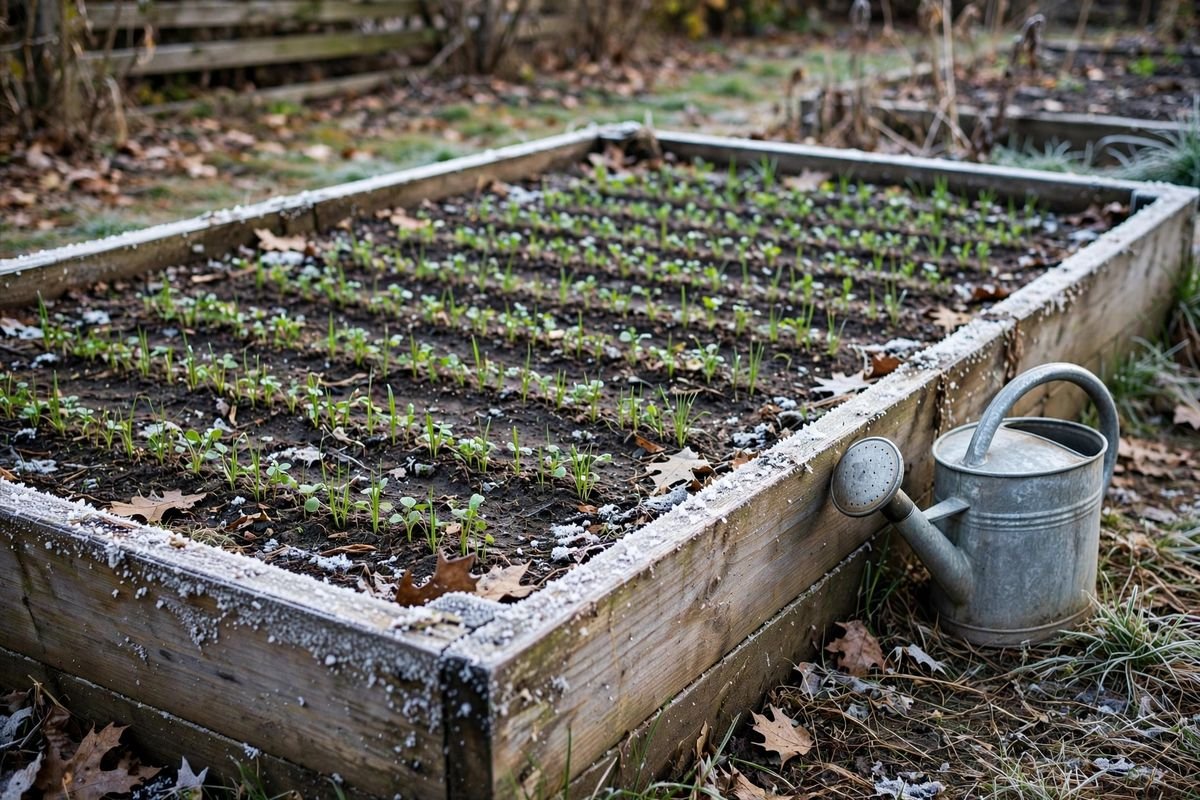
A raised bed left bare all winter loses more than warmth. Rain compacts the surface, wind lifts fine soil, and freeze-thaw cycles break down the crumb structure roots and microbes need. Winterizing is simple work: clear spent plants, cover the soil at the right depth, and check the frame before hard cold arrives.
This guide covers the full routine for wood, metal, and composite beds, with a worked mulch calculation so we buy the right number of bags the first time. Most beds take an hour or two, and the payoff shows in spring as looser soil, fewer weeds, and beds ready to plant sooner.
| Step | What to Do |
|---|---|
| Timing | After the first light frost, before the ground freezes hard |
| Cleanup | Cut healthy annuals at soil level; remove diseased foliage to the trash |
| Soil cover | 3 inches of mulch or a cover crop; never leave soil bare |
| Mulch math | A 4×8 ft bed at 3 inches deep needs 8 cubic feet (worked example below) |
| Frame | Tighten corners, check for rot or bowing, clear drainage at the base |
| Water | Moisten dry beds before a hard freeze; check under covers in dry spells |
Why Winterizing Matters for Raised Beds
Raised beds drain fast and warm up fast in spring, and that exposure cuts both ways. Soil sits above ground level, so cold reaches it from the top and sides at once. Bare soil freezes and thaws more often than in-ground soil, heaving small plants and cracking the surface. A mulch layer or living cover-crop roots cushion those swings, slow erosion, and feed soil life as they break down.
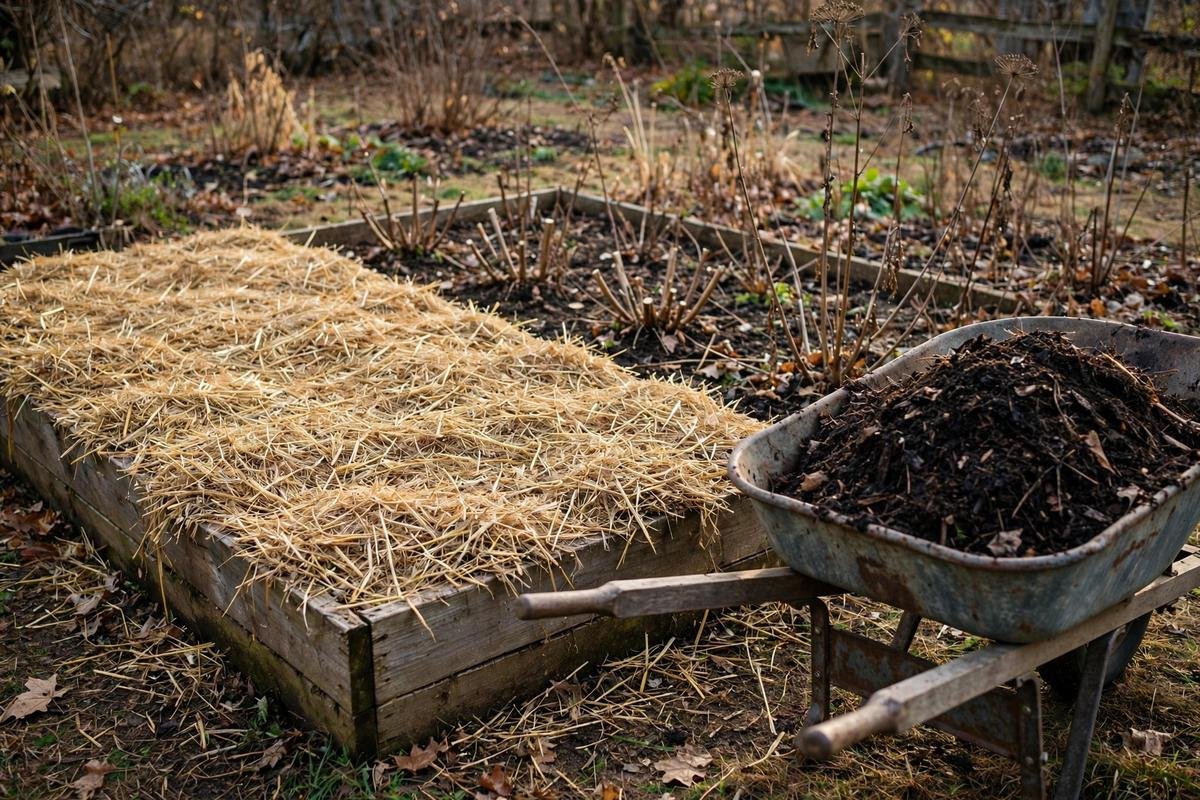
Cover also shuts out the late-winter weed flush that colonizes bare beds. New to raised beds? Our guide to raised bed gardening for beginners covers depth and soil choices that simplify winter care.
When to Winterize
We aim for the window after the first light frost and before the soil freezes solid, when tender annuals have finished and the ground is still workable with a fork. Use your local frost dates and regional planting guidance — not your USDA hardiness zone alone — to choose planting dates. Northern gardeners often start in late October, while mild-winter regions may wait until late November, when growth truly slows. Healthy roots can stay a week or two to keep microbes fed; diseased tomato or squash foliage comes out right away.
What We Need
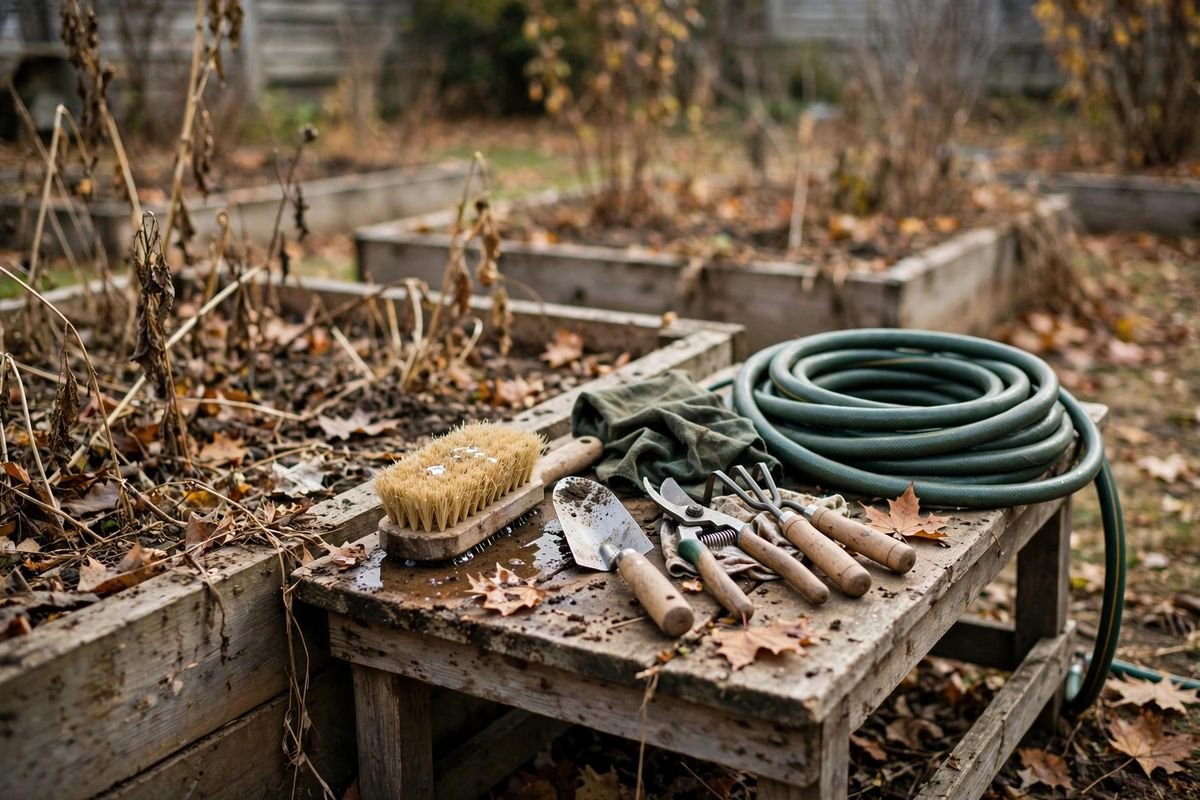
The tool list stays short: pruners, a garden fork, a wheelbarrow or tarp, and a ruler for mulch depth. Mulch can be shredded leaves, straw, or shredded bark. Where we buy bagged straw, we check that it is straw rather than hay, since hay carries far more weed seed, and we note the bag volume for the math below. For beds holding fall crops a few weeks longer, floating row cover adds protection on cold nights; browsing floating row cover for frost protection on Amazon shows the common weights, and our roundup of the best frost covers for raised beds and containers explains when each weight earns its place.
How to Winterize a Raised Bed, Step by Step
- Harvest and clear spent plants. Pick any remaining produce, then cut annuals at soil level. Leaving healthy roots in place preserves soil structure and feeds microbes over winter. Foliage with disease spots or heavy pest damage goes to the trash or municipal green waste, never the home compost.
- Weed once, thoroughly. Pull perennial weeds by the root while the soil is soft; they are far harder to remove from frozen ground. Our fall garden cleanup checklist covers the yard-wide version of this same pass.
- Top-dress with compost. Without a recent soil test, half an inch of finished compost is a safe general step for vegetable beds, and fall moisture works it in. Our method for how to make compost at home covers building that supply.
- Loosen the surface lightly. Push a fork in and rock it gently to open cracks without inverting soil layers. Deep turning brings weed seeds up and disrupts fungal networks, and raised-bed soil rarely needs it. Rake the surface level so mulch spreads evenly.
- Sow a cover crop or go straight to mulch. Winter rye, crimson clover, or a rye-and-vetch mix protects empty beds and adds living roots; sow at the packet rate and water once if rain is not coming. Past the local germination window, mulch is the surer cover.
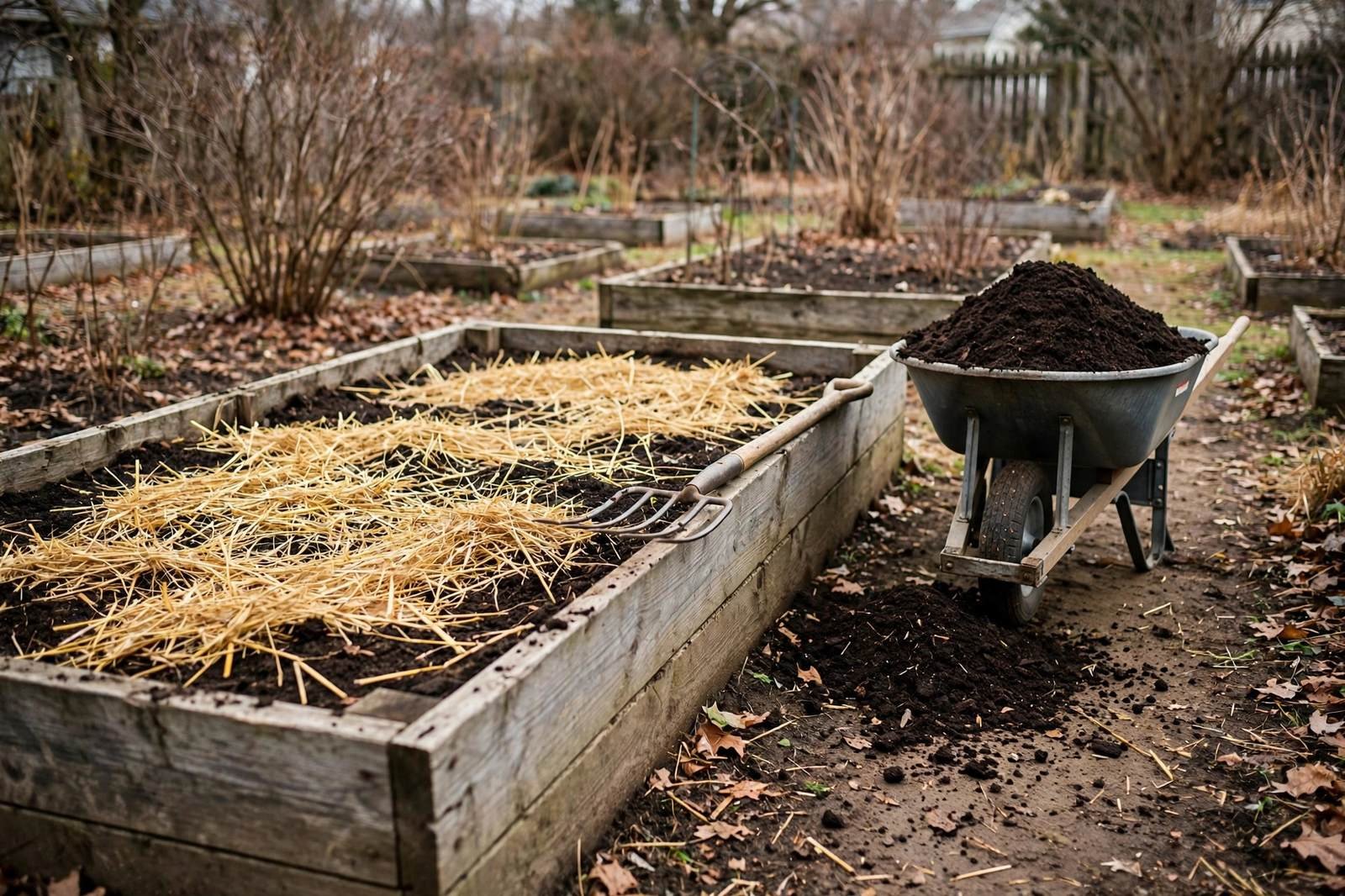
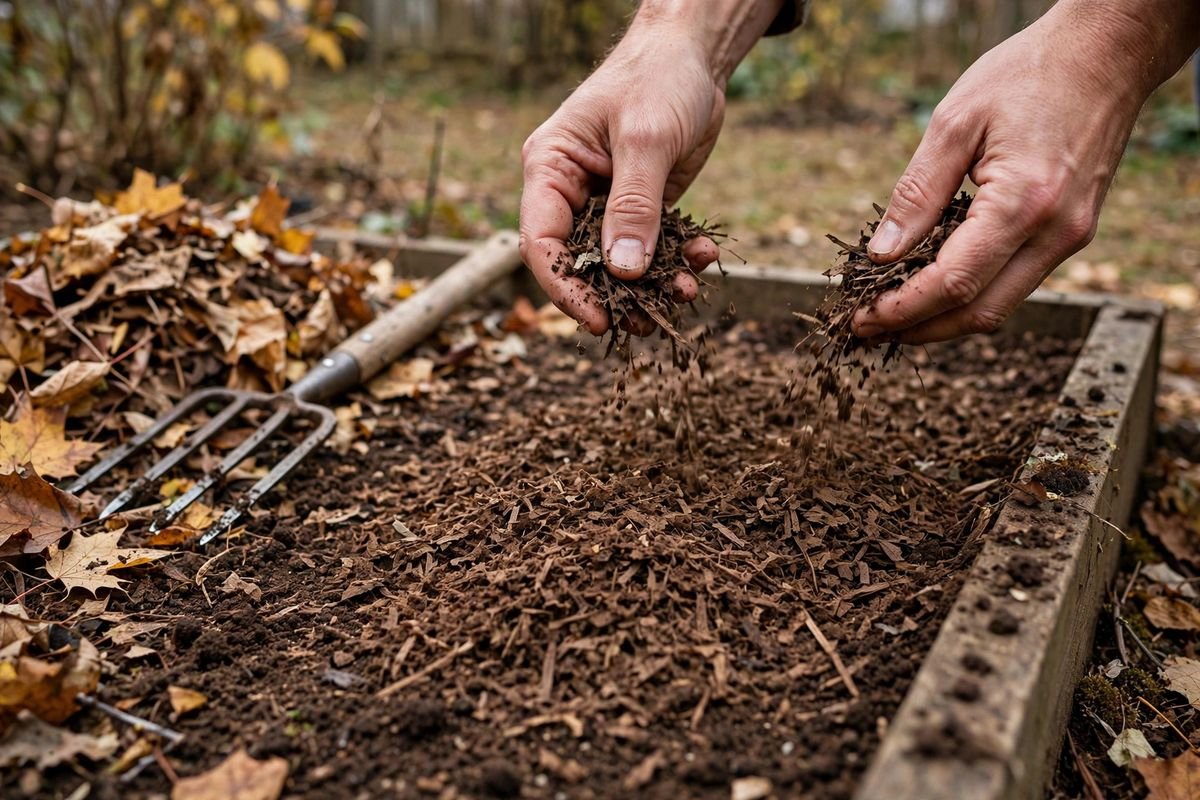
- Apply mulch at a measured depth. Aim for 3 inches of shredded leaves or straw, settled, or 2 inches of denser shredded bark. Check depth with a ruler in three spots rather than guessing.
- Water dry beds before a hard freeze. Evenly moist soil holds and releases heat more gently than dry soil, and overwintering roots suffer less. Water in the morning so the surface drains before night.
- Check the frame and hardware. Tighten corner screws, look for soft wood at soil level or lifted edges on metal beds, and clear leaves away from the outside base so water drains away from the frame.
- Protect beds still in production. Fall greens, garlic, and overwintering herbs benefit from row cover on frosty nights, held off the leaves by low hoops. Our guide to how to protect raised beds from frost covers hoop spacing and venting on sunny winter days.
Worked Example: Mulch Volume for a 4×8 Bed
Guessing at the garden center leads to extra trips or a patchy layer. Here is the math we use, with every input stated so it adjusts to other bed sizes.
Inputs and assumptions: bed interior 4 feet by 8 feet; target settled mulch depth 3 inches; bagged mulch sold in 2-cubic-foot bags; we add 10 percent for settling and uneven spots.
Area: 4 ft × 8 ft = 32 square feet. Depth in feet: 3 inches ÷ 12 = 0.25 ft. Volume: 32 × 0.25 = 8 cubic feet of settled mulch. With the settling allowance: 8 × 1.10 = 8.8 cubic feet. Bags: 8.8 ÷ 2 = 4.4, so we buy 5 bags, or gather about 9 cubic feet of loose shredded leaves, knowing they compress to roughly two-thirds of that once wet. The same formula scales: at 6 inches deep for a newly filled bed, the need doubles to about 16 cubic feet before the allowance. When we shop instead of shredding, browsing bagged straw mulch for garden beds on Amazon lets us compare printed bag volumes before doing the division.
Choosing a Winter Cover: Mulch or Cover Crop
Shredded leaves are free for many of us, break down by spring, and suit almost any vegetable bed; shredding matters, since whole leaves mat into a slick layer that sheds water. Straw stays lofty, pulls aside easily for early planting, and works well over garlic. Shredded bark lasts longer and suits perennial beds we will not dig in spring, but we keep it out of annual beds planted early, since it ties up a little surface nitrogen as it decomposes.
Cover crops add living roots, which helps beds that felt compacted. Winter rye handles cold and late sowing best, and crimson clover adds nitrogen in milder winters. Cover crops need a few weeks of growth before hard cold, so where timing is tight, mulch is the surer choice. Either cover beats bare soil by a wide margin.
Insulating the Sides and Top
Shallow beds under 8 inches deep, and beds in cold or windy sites, benefit from side insulation. Banking compost against the outside adds mass, and burlap or old row cover staked around the exterior slows wind-driven cold. For beds holding crops, a cold frame lid or hoops with row cover trap daytime warmth; we vent on sunny days above about 45°F so plants do not overheat. Gardeners who want a sturdier lid can browse cold frames for raised beds on Amazon for sizes matched to standard beds.
Common Mistakes We Avoid
Leaving soil bare: even 1 inch helps, but 3 inches gives real buffering. Burying perennial crowns: garlic likes cover, while woody herb crowns rot under deep, wet mulch, so we keep dense material an inch or two away from crowns. Composting diseased foliage: home piles rarely heat evenly enough to neutralize common tomato and squash diseases. Sealing a bed under solid plastic: it traps condensation and can suffocate soil life, so breathable covers stay our default. Skipping the frame check: a board that bows under wet spring soil was usually loose in November.
FAQ
Should we remove all roots when clearing a bed?
No. Where plants were healthy, leaving roots to decay preserves structure. We pull roots only when plants were diseased, heavily infested, or thick enough to block spring planting.
Is it too late to winterize after the first snow?
Rarely. We brush snow aside and mulch once the surface thaws enough to level. Cover crops will not establish under snow, so late work leans on mulch, and the frame check still matters at any point in winter.
Can we winterize a bed with garlic or fall greens still growing?
Yes. We mulch around plants rather than over them, keep crowns clear, and use row cover on cold nights. Garlic typically gets its straw layer after the ground cools, while greens stay under breathable cover lifted on mild days.
Do metal beds need different winter care than wood?
The soil care is identical. Metal beds benefit from a seam check and side insulation in very cold areas, since metal transfers cold quickly. Wood beds benefit most from the rot check at soil level.
Sources & Further Reading
- University of Minnesota Extension — putting the garden to bed, mulch depths, and cover-crop timing for cold climates (extension.umn.edu).
- Penn State Extension — fall cleanup, disease management, and soil cover for vegetable beds (extension.psu.edu).
- Iowa State University Extension and Outreach — winter mulch functions and freeze-thaw protection (extension.iastate.edu).
- University of Vermont Extension — cover crops for home gardens, seeding rates, and spring termination (uvm.edu/extension).
- USDA Natural Resources Conservation Service — soil health principles on keeping soil covered (nrcs.usda.gov).
Keep Growing With These Guides
Once beds are tucked in, the same hoops and covers carry fall crops through cold snaps, and our frost-protection guide above shows the venting rhythm that keeps greens from cooking on bright afternoons. Which cover do we reach for first — shredded leaves from the yard, a few bags of straw, or a stand of winter rye — and how many bags does the math say our beds need this year?