
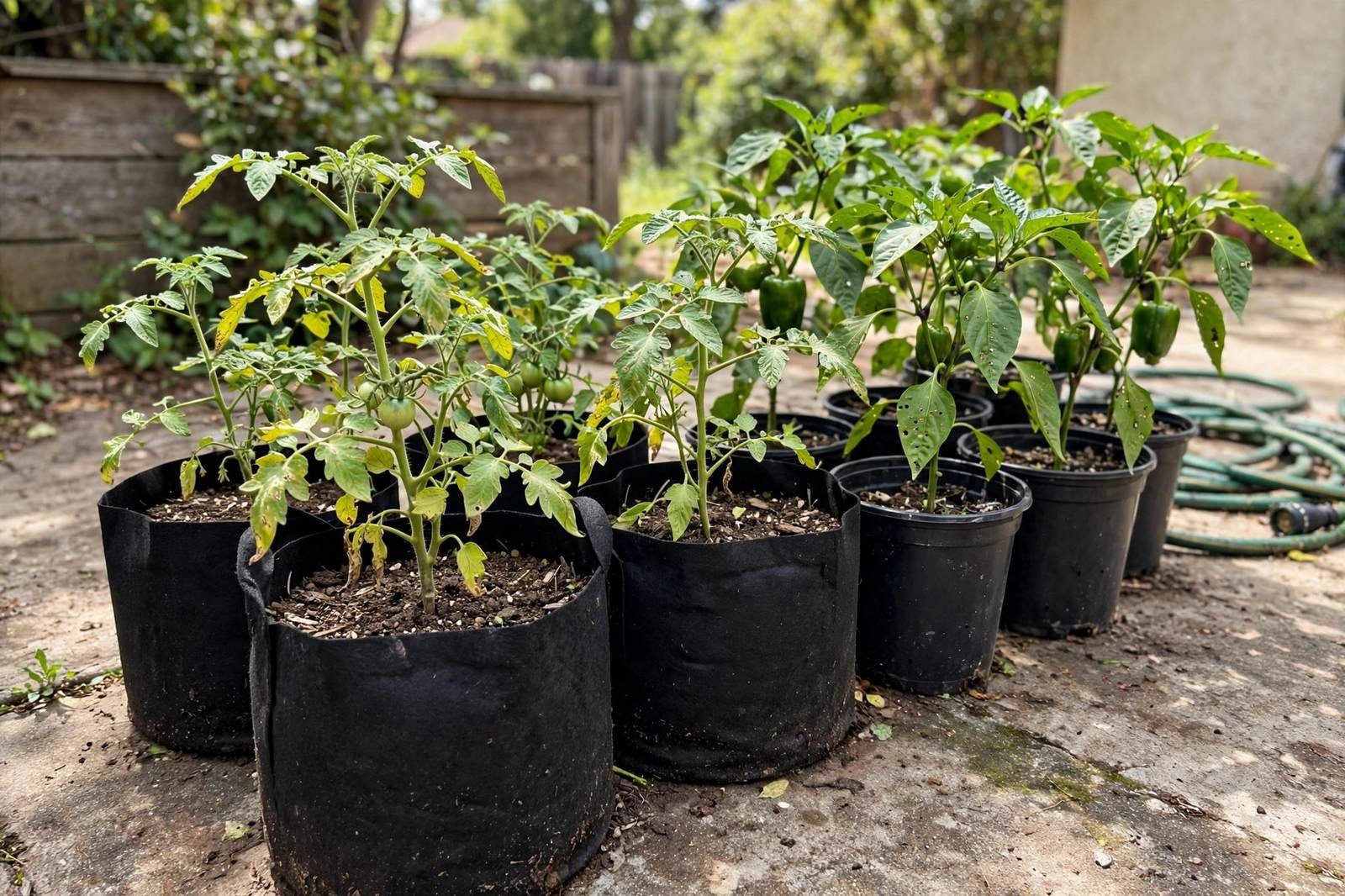
Sooner or later, every container gardener ends up holding one of each: a floppy black fabric grow bag in one hand and a rigid plastic nursery pot in the other, wondering which one the plant would pick. Search results split into camps. Fabric fans talk about air pruning and healthier roots. Plastic loyalists point out that their pots are still going after a decade.
Both camps are half right. The honest answer is that these two containers grow plants in genuinely different ways, and the better choice depends on what you are growing, how hot your summers get, and how faithfully you water.
The short answer: pick fabric grow bags for root health, drainage, and anything you might need to move or store. Pick plastic pots if you tend to miss waterings, want a pot that holds its shape for years, or grow perennials that stay put. The details below explain why, crop by crop.
This post may contain affiliate links. If you buy through links on this page, we may earn a commission at no extra cost to you.
As an Amazon Associate I earn from qualifying purchases.
Fabric Grow Bags vs Plastic Pots at a Glance
| Factor | Fabric grow bags | Plastic pots |
|---|---|---|
| Root behavior | Root tips get air-pruned at the wall, so roots branch instead of circling | Roots hit the wall and circle, which can leave a plant root-bound over time |
| Drainage | Excess water escapes through the whole wall; hard to overwater | Drainage only through bottom holes; a soggy base is possible |
| Watering | Dries out fast, especially in heat and wind | Holds moisture noticeably longer |
| Lifespan | Manufacturers commonly rate them at about 3 to 5 seasons | Often many seasons if stored out of the sun; turns brittle with age and UV |
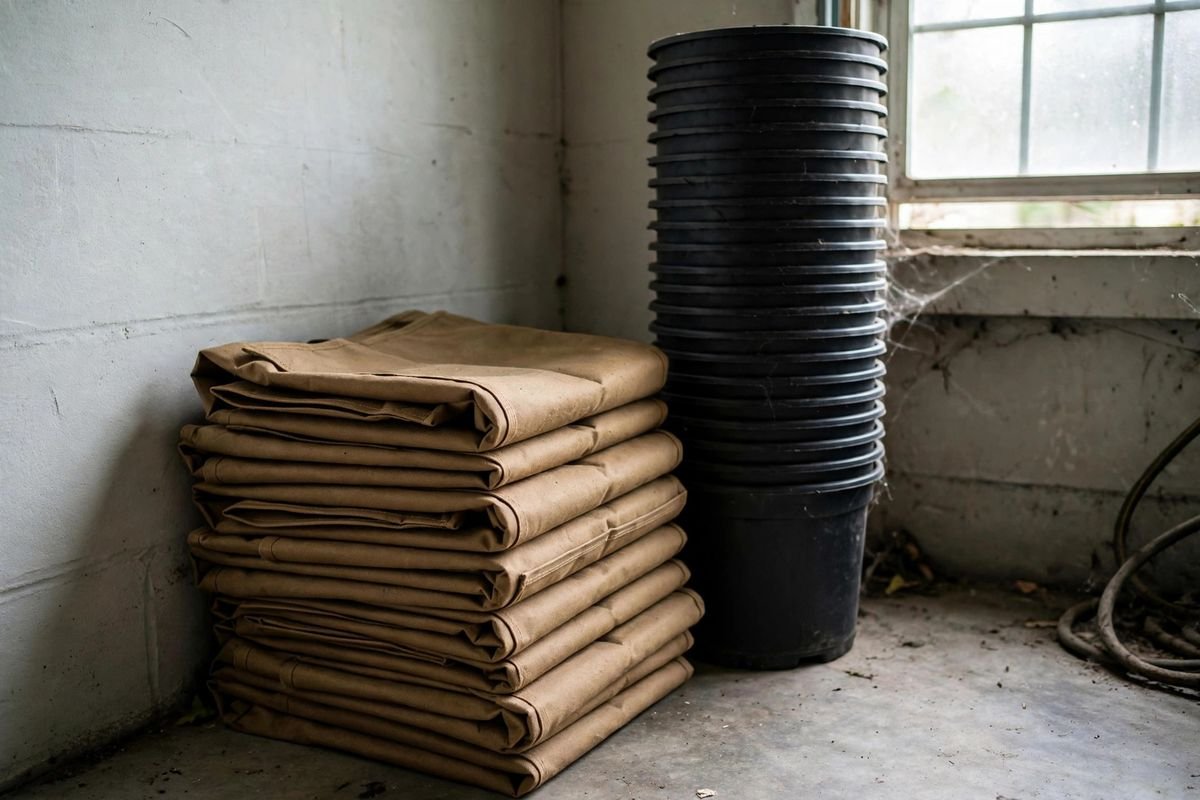
| Storage | Folds flat, a whole stack fits in a drawer | Stacks, but the stack is bulky and tall |
| Moving | Light, with stitched handles; flexes under load | Rigid and predictable; heavy once filled and watered |
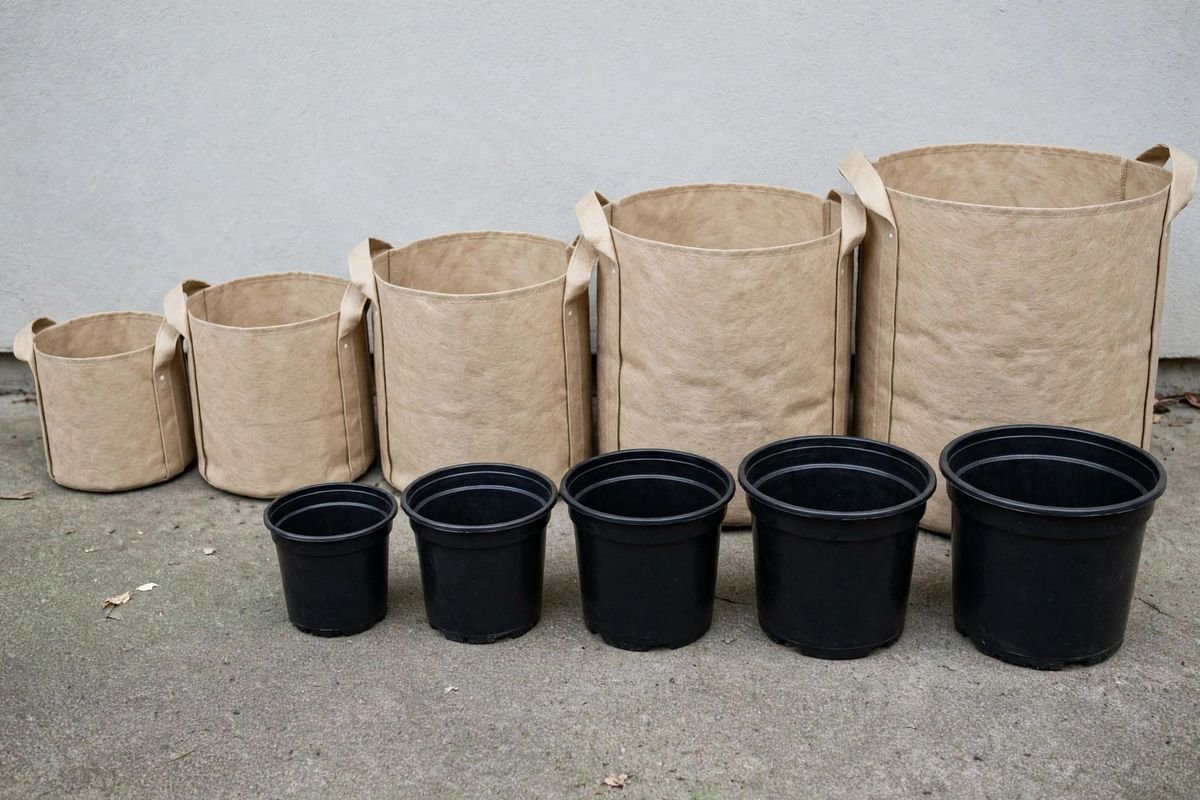
| Typical sizes | 1 to 100 gallons, with 5, 7, 10 and 15 gallon sizes most common | Quart and gallon nursery sizes up to large tree tubs |
Sizes are where fabric quietly wins for vegetables. A 10 or 15 gallon bag gives a tomato a wide root run at a low price per gallon, and bags come in sizes that plastic growers rarely stock at home. Our size guide for how big a pot a tomato plant needs walks through the minimums crop by crop.
What Actually Happens to Roots in Each Pot
A root in a plastic pot grows outward until it hits the wall, then turns and runs along it. Left long enough, roots circle the inside of the pot in a tight spiral. That spiral is why a long-neglected nursery plant sometimes struggles after transplanting: the root system keeps growing in the shape of the pot.
Fabric changes that geometry. When a root tip reaches the breathable wall, it meets air and light, and the tip stops extending. Gardeners call this air pruning. The plant responds by branching behind the pruned tip, which builds a denser, more fibrous root ball with many fine feeder roots. A fibrous root ball takes up water and fertilizer more evenly than a few thick circling roots, and it rarely needs teasing apart at transplant time.
Plastic has one quiet advantage here: nothing dries the root zone from the sides. The outer inch of soil in a fabric bag is the driest part of the pot, and very fine roots avoid it. In a plastic pot the whole volume stays usable, which is part of why plastic holds moisture longer.
Fabric Grow Bags: Strengths and Weak Spots
Where fabric wins
- Roots that branch instead of circle. Air pruning at the wall produces a fibrous root ball, which supports steady growth and easier transplants.
- Drainage is hard to get wrong. Water leaves through the entire wall, so a heavy-handed watering drains instead of drowning roots.
- Cheap volume. Bags are sold up to 100 gallons, and the cost per gallon of soil volume is low compared with rigid pots of the same size.
- Light and storable. An empty bag weighs almost nothing, the stitched handles make a filled 10 gallon bag a two-hand carry instead of a dead lift, and off-season storage is a folded stack in a corner.
Where fabric struggles
- It dries out fast. Evaporation through the walls can mean daily watering in hot, windy weather, especially in 5 gallon sizes and smaller.
- Shorter working life. Manufacturers commonly rate fabric pots at about three to five seasons. Seams and handles usually fail first, and constant sun speeds that up.
- No rigid shape. A filled bag slumps a little, looks soft at the edges, and can weep moisture onto decks and balconies. A saucer underneath solves the staining problem.
- Salt crust. Fertilizer salts can accumulate as a pale crust on the outside of the fabric. It rinses off, and it does not hurt the plant, but it is not decorative.
Plastic Pots: Strengths and Weak Spots
Where plastic wins
- Forgiving watering. With evaporation only at the surface, a plastic pot can hold useful moisture for two to three days in weather that empties a fabric bag daily. Exact timing depends on mix, plant size, and wind.
- Shape and structure. Rigid walls keep a tidy profile, support tall plants without slumping, and come in every decorative finish from nursery black to glazed ceramic-look.
- Long service. A decent plastic pot stored out of the sun between seasons can serve for many years. Nursery pots are also cheap enough to treat as semi-disposable for seedling sales and plant swaps.
- Easy potting up. A root ball slides out of a tapered plastic pot with a squeeze and a tap, which matters when you are moving dozens of seedlings up a size.
Where plastic struggles
- Root circling. Smooth walls guide roots into spirals. For annual vegetables this is rarely fatal, but a plant left a season too long can become root-bound and slow to establish.
- Heat in the root zone. Black plastic in full afternoon sun can heat the soil against the wall noticeably. Light-colored pots, or shading the pot while the plant gets sun, reduce the effect.
- Bottom-only drainage. All the water exits through a few holes at the base. A pot sitting flat on a sealed surface can hold a perched layer of soggy mix at the bottom.
- Storage bulk. Empty pots stack, but a stack of 10 gallon pots is still a tall, tippy tower in the garage.
Watering Is Where You Will Feel the Difference
Most comparison charts bury this point, but watering rhythm is the difference you will notice every single week. A fabric bag breathes through its whole surface. In July heat, a thirsty tomato in a 5 gallon bag can need water every day, sometimes morning and evening in a heat wave. The same plant in a plastic pot of the same size often goes two or three days between drinks.
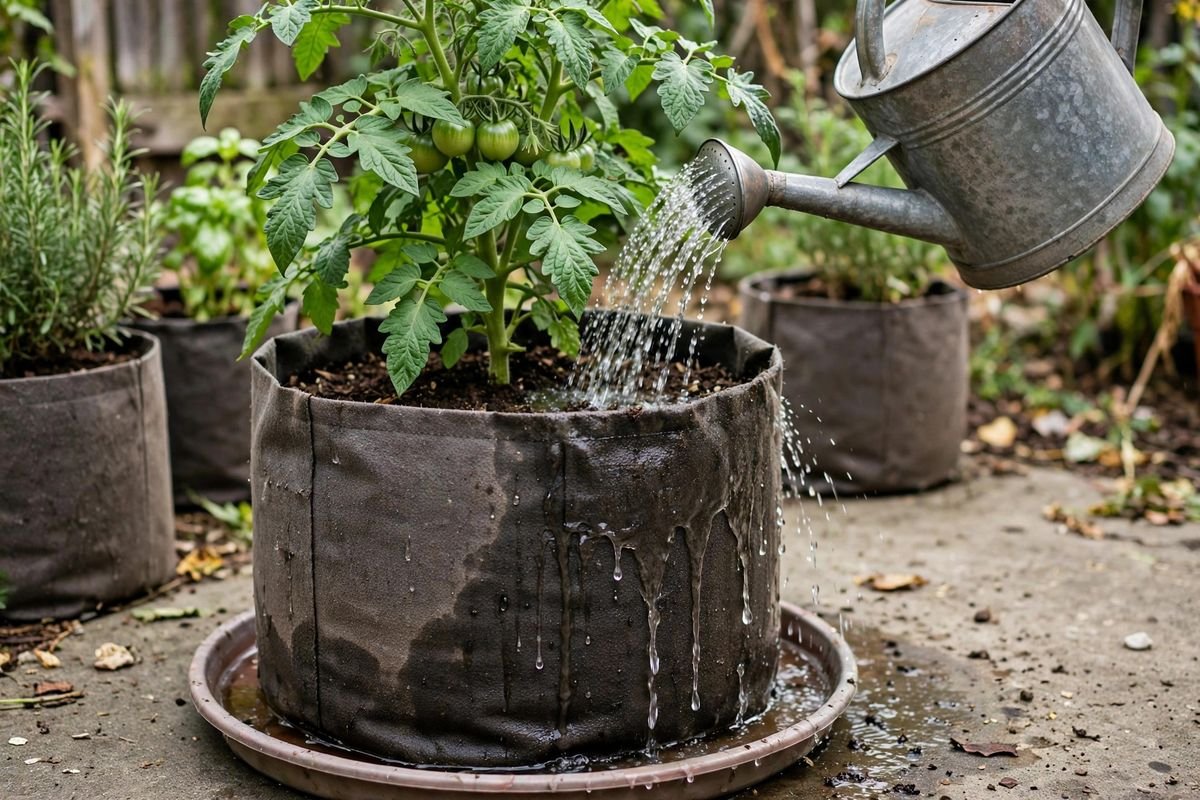
Three habits close most of that gap. Mulch the surface with 2 inches of straw or shredded leaves to shade the top. Set bags on a wide saucer so runoff gets reabsorbed instead of lost. And size up: a 15 gallon bag holds its moisture far longer than a 5 gallon one. If you are planning a whole container layout, the free Container Garden Builder helps match pot sizes to crops before you buy anything.
The flip side is real, too. If your watering style is enthusiastic and your drainage is poor, plastic punishes you with a swampy base and fungus gnats. Fabric forgives heavy watering almost every time.
Durability, Storage, and What Each Pot Really Costs
Per pot, the two are closer than marketing suggests. Fabric bags in multipacks commonly land at a few dollars each in the popular 5 to 10 gallon sizes, and you can browse current options among the fabric grow bags on Amazon. Basic plastic nursery pots are similarly cheap in bundles; the price jumps when you want rigid, thick-walled, or decorative plastic.
The fairer math is cost per season. Divide the price by the seasons of service you can reasonably expect. A fabric bag rated at three to five seasons that costs a few dollars works out to about a dollar a season, and at the end it folds into a drawer. A rigid plastic pot costs more up front but can run for many seasons if it winters out of the sun. Both are inexpensive ways to garden; neither should be the reason a harvest fails.
Our roundup of the best grow bags for vegetables covers the sizes and fabrics worth buying if you go the fabric route, and the guide to container gardening for beginners covers soil, feeding, and placement for either container type.
The Verdict: Which One for Which Job
- Tomatoes and peppers in a hot, sunny spot: fabric, sized up. Go 10 to 15 gallons per tomato, mulch the surface, and use a saucer. The air-pruned roots support the heavy top growth these crops build. Sizing details are in our guide to what size pot a tomato plant needs.
- Small balcony herbs: either, and your watering style decides. Heavy waterers get drainage insurance from fabric. Forgetful waterers get a moisture buffer from plastic. A full six-pot balcony plan is laid out in our 6-pot balcony vegetable garden blueprint.
- Seedlings and potting up: plastic. Cheap, stackable, and a root ball releases with a squeeze. Save the fabric budget for final-size containers.
- Perennials, shrubs, and small trees that stay for years: rigid plastic, or the ground. Fabric degrades on a three-to-five-season clock that a permanent planting will outlive.
- Renters and seasonal growers: fabric. Light to carry up stairs, gentle on rented floors with a saucer, and the whole garden stores flat in winter.
- Anyone fighting fungus gnats and soggy soil: fabric. A root zone that dries from all sides is a poor home for both problems.
FAQ
Are grow bags better than plastic pots for tomatoes?
For most home growers, yes, with one condition: water faithfully. Air-pruned roots fill the bag evenly and support fruiting well, but a tomato in fabric drinks more than the same plant in plastic. Mulch, a saucer, and a 10 to 15 gallon size keep the routine manageable.
How long do fabric grow bags last?
Manufacturers commonly rate them at about three to five seasons of outdoor use. UV exposure and seam stress shorten that; storing them clean, dry, and out of the sun between seasons gets you the full rating. When a handle tears or the wall goes soft and thin, retire the bag to soil-storage duty.
Do fabric grow bags need a saucer?
On soil or gravel, no. On a deck, balcony, or patio you care about, yes. Water leaves through the walls and the base, and a saucer catches the runoff, protects the surface, and lets the plant reabsorb some of it on hot days.
Can fabric grow bags sit directly on concrete?
They can, and many do. Two small upgrades help: a saucer or low riser keeps the base from sitting in its own runoff, and on very hot concrete a light-colored board underneath reduces heat wicking into the root zone on the worst afternoons.
Can you reuse fabric grow bags?
Yes. Shake out the old mix, rinse the bag, let it dry fully, and store it folded out of the sun. Gardeners who rotate crops often refresh the mix rather than reusing it as-is, since potting soil breaks down and loses structure over a season or two.
Bottom line: fabric grow bags grow the better root system and forgive heavy watering, at the price of a shorter life and a stricter watering schedule. Plastic pots hold moisture, hold their shape, and hold up for years, at the price of circling roots and hotter walls in the sun. Match the pot to the crop and to your own watering habits, and either one will grow you a harvest.