
This post may contain affiliate links. If you buy through links on this page, we may earn a commission at no extra cost to you.
As an Amazon Associate I earn from qualifying purchases.
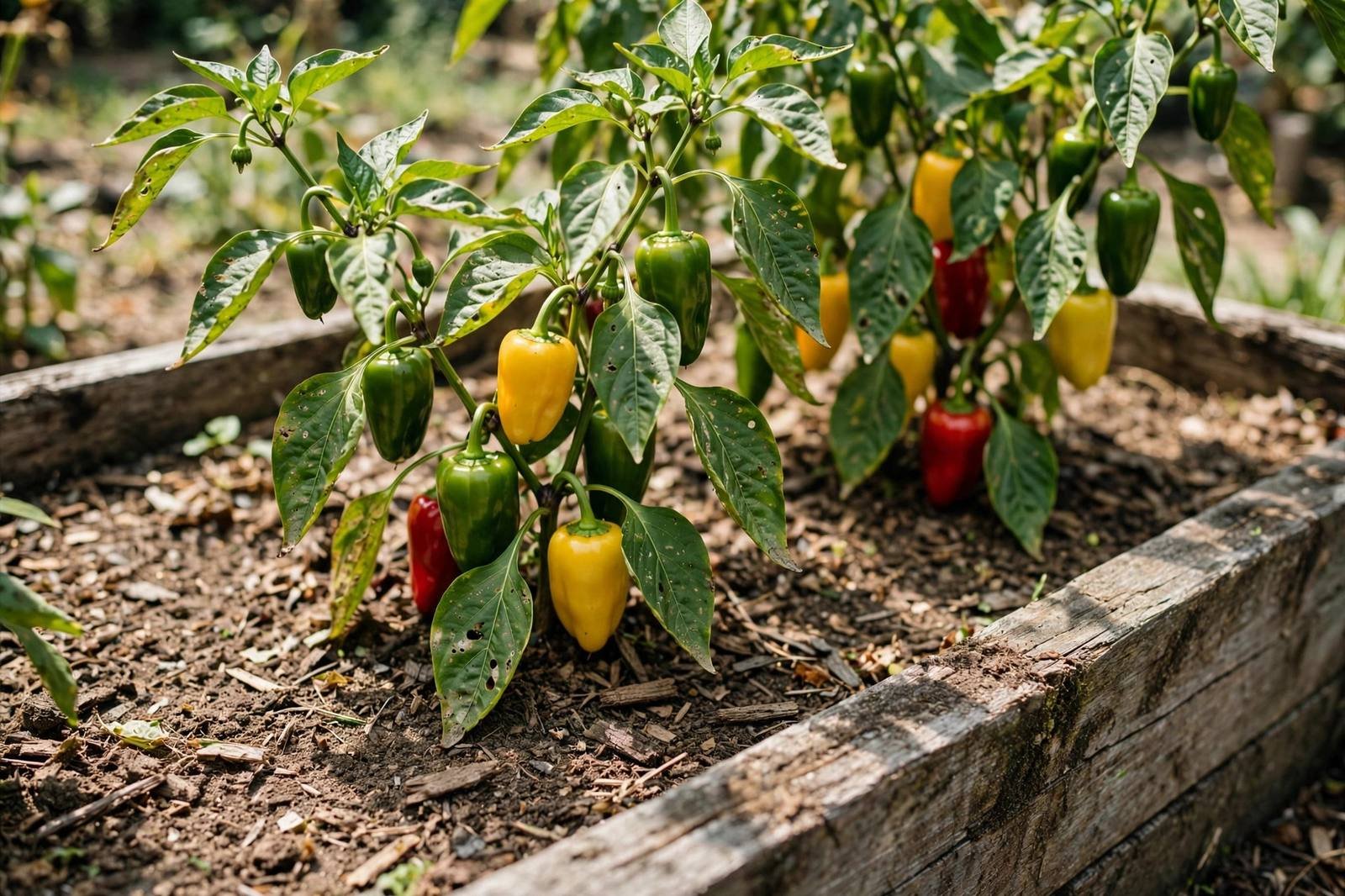
Peppers ask for patience at the start and then reward steady care for months. A single healthy plant can carry sweet bells for salads, thick-walled fruit for cooking, and hot types for sauces, all from a sunny bed or a large pot on a patio. The crop loves warmth more than most vegetables, so timing matters as much as soil or fertilizer. When nights stay mild and roots settle into warm ground, plants grow quickly, flower freely, and set fruit without much fuss.
Our guide walks through the full season in plain steps. We cover seed starting indoors, the right moment to move plants outside, spacing that keeps air moving, watering that supports fruit without stress, and harvest timing for green and fully ripe color. We also sort common troubles such as blossom drop, sunscald, and small fruit, with fixes based on observation first. Whether the goal is a few pots or a full row, the same habits apply: warm soil, steady moisture, good light, and regular picking.
| Light | Full sun, 6 to 8 or more hours of direct light each day |
|---|---|
| Soil | Loose, well-drained soil or potting mix, rich in compost, pH near 6.0 to 6.8 |
| Water | Deep and steady, about 1 to 1.5 inches per week, more in hot windy weather |
| Start seeds | Indoors 8 to 10 weeks before the last spring frost date |
| Transplant | After last frost, when nights stay above 50°F and soil feels warm |
| Spacing | 18 to 24 inches between plants, 24 to 36 inches between rows |
| Days to harvest | About 60 to 80 days after transplant for many types, longer for full color |
| Common problems | Blossom drop in heat or cold, sunscald, aphids, slow growth in cool soil |
Why Grow Peppers at Home
Peppers give a long harvest from a small footprint. One plant keeps producing new flowers and fruit while earlier fruit ripens, so picking can continue from midsummer until frost in many gardens. That steady pattern suits home cooking, because fruit arrives in usable amounts rather than all on a single day. A mix of two or three plants can cover fresh eating, roasting, freezing, and drying without taking over a bed.
Flavor and choice are the other big reasons. Grocery stores carry a narrow range, while seed catalogs list hundreds of sweet, mild, and hot types with different wall thickness, size, and heat. Growing at home lets us match fruit to the kitchen: thick bells for stuffing, long sweet types for frying, compact hot plants for pots, and high-yield types for sauce. Peppers also fit containers well. A dark pot warms faster in spring, and a plant on a sunny patio often grows ahead of one in cool soil.
When to Plant Peppers
Peppers come from warm climates and dislike cold roots and cold nights. Seeds germinate best in warm mix, and transplants stall when soil stays below about 60°F. Planting too early rarely gains time. A plant set out into cold ground sits still, loses momentum, and often gets overtaken by a younger plant set out two weeks later into warm soil. Waiting for stable warmth is the simplest yield booster we know for this crop.
Start with the local calendar rather than a fixed date on a seed packet. Use your local frost dates and regional planting guidance — not your USDA hardiness zone alone — to choose planting dates. Count back 8 to 10 weeks from the average last spring frost to sow seed indoors. Then plan transplanting for one to two weeks after that last frost date, once nighttime temperatures stay reliably above 50°F. Regional extension calendars give the local window and note when to delay during a cold spring.
In short-season areas, indoor starting is essential, and earlier varieties help fruit ripen before fall cold. In long-season areas, a second sowing in late spring can extend harvest, but one well-timed planting usually carries the season. Plants set out too late may grow well yet run out of warm days for full color, leaving mostly green fruit at frost.
How to Plant Peppers
Starting Seeds Indoors
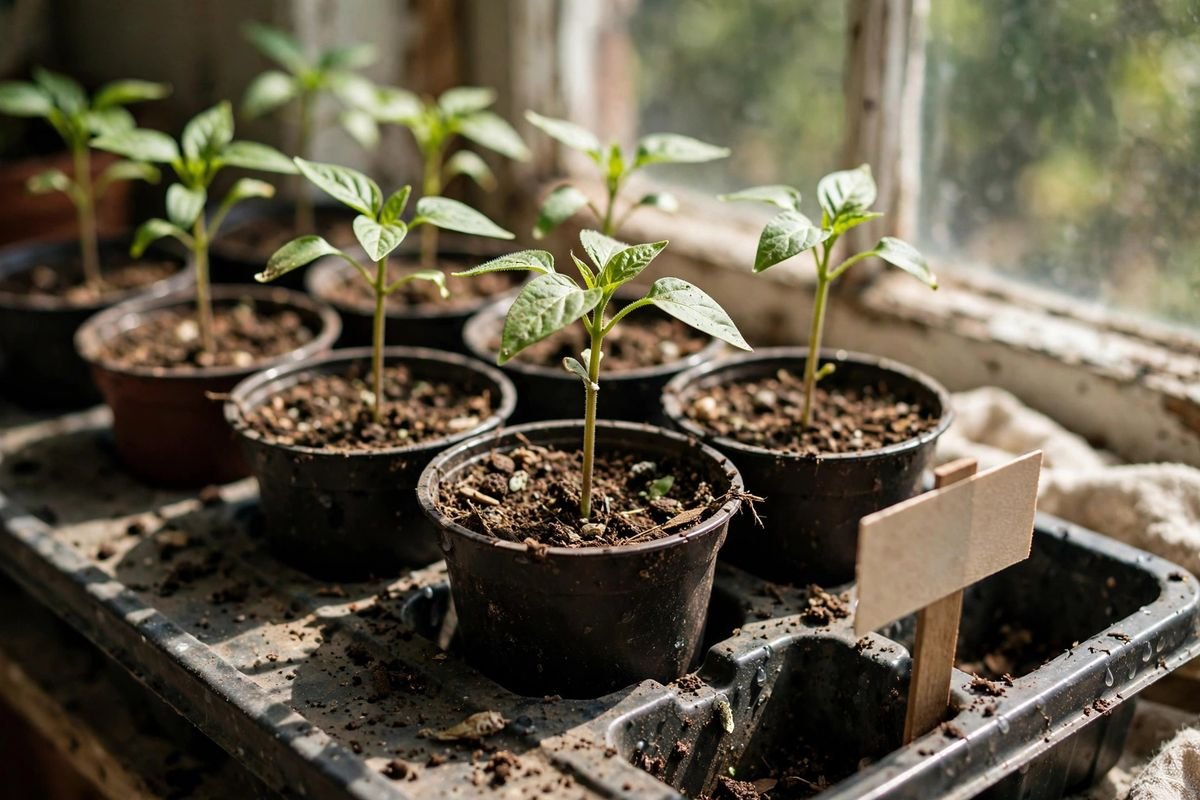
Sow seeds about a quarter inch deep in fine, moist seed-starting mix, two seeds per cell if space allows. Warmth drives germination. A room near 75 to 85°F gives steady sprouting, while cool rooms slow the process over weeks. Many gardeners ask about bottom heat for slow seeds, and our notes on whether seedlings need a heat mat explain when warmth helps and when plain room heat is enough. Keep the mix moist but not soggy, with light air movement once sprouts appear.
Light needs to arrive as soon as green shows. A bright window can work in late spring, yet a simple LED bar placed a few inches above seedlings keeps stems short and sturdy. Raise the light as plants grow, and run lights about 14 to 16 hours per day. Thin to the strongest seedling per cell once true leaves form. Feed lightly with a diluted balanced fertilizer after the first true leaves expand. Our method for bottom watering seedlings keeps moisture even while the surface stays drier and cleaner.
Label each variety at sowing, because pepper seedlings look alike and heat level matters later in the kitchen. A sturdy tray, cell inserts, and a clear dome for the first days help hold humidity, and a seed starting tray with a dome is one common option gardeners use for this stage.
Transplanting Outdoors
Harden off plants before the move outside. Set pots outdoors in shade for a few hours on the first day, then add sun and time over seven to ten days. This step prevents sunburn on indoor-grown leaves and helps stems adjust to wind. Choose a calm, cloudy day or late afternoon for transplanting when possible, so roots settle before strong sun returns.
Dig a hole slightly wider than the pot, set the plant at the same depth as in the pot, and firm soil gently around the stem. Peppers do not need deep planting the way some other warm-season crops do. Water deeply right after planting to remove air pockets. A layer of mulch two to three inches thick, kept a few inches from the stem, holds moisture and keeps soil from splashing onto lower leaves.
Spacing and Support for Pepper Plants
Airflow keeps foliage healthy and helps flowers set fruit. Space most sweet and hot peppers 18 to 24 inches apart in rows 24 to 36 inches apart. Large bell types and plants in rich soil lean toward the wider end. In a 4-foot-wide raised bed, two rows with plants staggered usually fit well. Crowded plants shade each other, hold moisture on leaves longer after rain, and make harvest harder to spot.
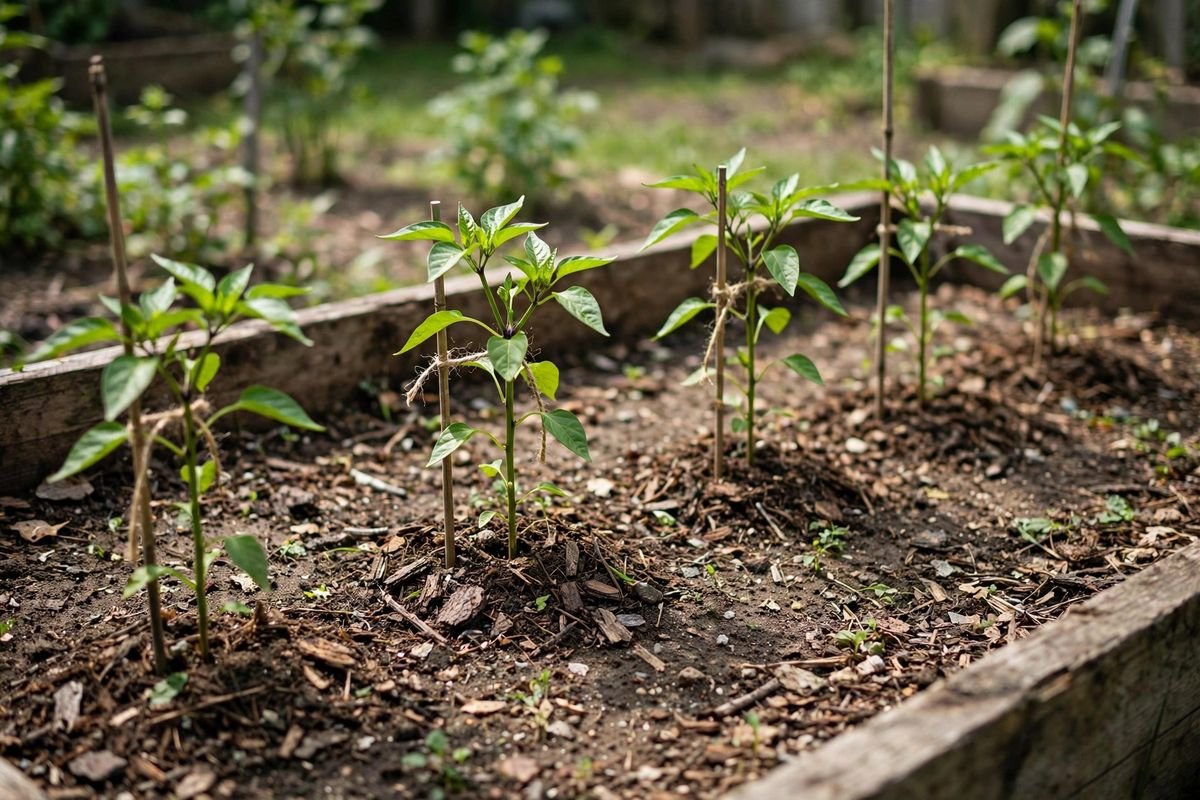
Support needs vary. Compact hot peppers often stand on their own, while tall bells loaded with heavy fruit lean or snap branches in wind. A short stake, a small cage, or a loop of twine around a sturdy stem gives insurance without much work. Install supports at transplant time to avoid root damage later. In containers, one plant per large pot, at least five gallons for full-size types, gives roots room and reduces daily watering stress.
How to Care for Peppers
Watering for Steady Growth
Peppers like even moisture, especially once fruit begins to size up. Dry swings followed by heavy watering can crack fruit and stress roots, while constant soggy soil limits oxygen and slows growth. Aim for deep watering that wets the root zone, then allow the top inch to dry before the next soak. In hot weather, that may mean watering two or three times per week in sandy soil and less often in clay amended with compost. Mulch makes the rhythm easier by slowing evaporation. Water at the base in the morning when possible, so leaves stay dry and less water is lost before roots can use the moisture.
Feeding Without Pushing Leaves
Peppers feed moderately. Soil built with compost often carries plants through early growth. Once flowering begins, a balanced fertilizer or a tomato and vegetable formula applied per label directions supports fruit set. Too much nitrogen pushes lush leaves at the cost of flowers, a common reason a dark green plant carries little fruit. Slow, balanced feeding beats heavy single doses.
A balanced vegetable fertilizer gives one straightforward option for beds and pots when growth suggests a need. Yellow lower leaves, pale growth, and slow gain can point to low nutrition, yet cool soil and water stress show similar signs, so check moisture and temperature first. Side-dressing with compost midseason adds gentle nutrition and improves soil structure at the same time.
Best Pepper Varieties to Try
Start with purpose. For sweet bells, look for types bred for thick walls and reliable ripening to red, orange, or yellow. Compact and earlier bell varieties suit short seasons and containers, while larger blocky types shine where summers run long. Sweet non-bell options, including long frying peppers and lunchbox-size snack peppers, often yield heavily and ripen faster than big bells, which makes them a smart choice for new growers.
Hot peppers range from mild warmth to intense heat, so match the kitchen before sowing. Jalapeño types give familiar medium heat and heavy yields. Cayenne types dry well for flakes. Habanero and related types need a long warm season and bring strong heat plus fruity flavor in small amounts. Specialty hot types can be slow to germinate and slower to ripen, so start those seeds at the early end of the indoor window.
When and How to Harvest Peppers
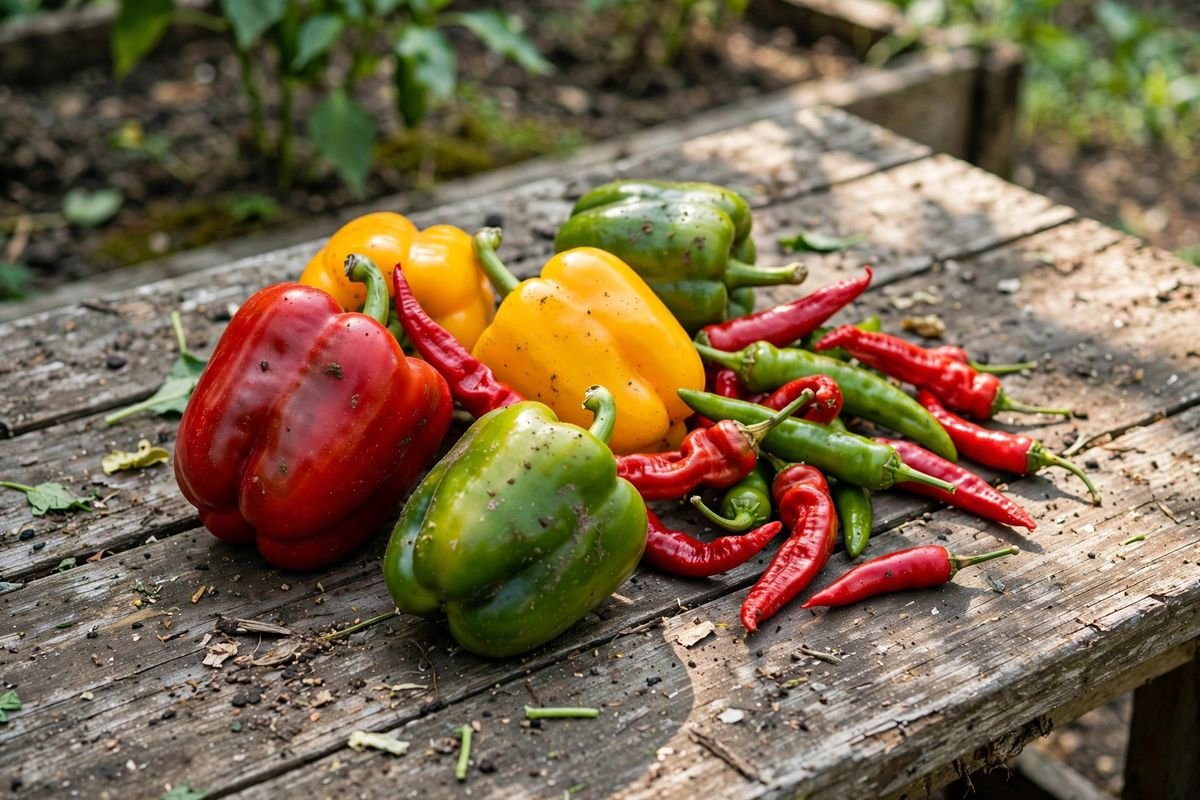
Peppers can be picked at the green stage or at full mature color, depending on type and taste. Green bells are fully usable before color change, with a sharper flavor. Fruit left on the plant turns red, yellow, orange, or purple as sugars rise and flavor sweetens. Full color takes extra weeks, and plants slow new fruit set while ripe fruit stays attached, so frequent picking keeps production moving.
Use scissors or pruners to cut fruit with a short stem attached. Pulling by hand can tear branches, especially on loaded plants. Harvest in the morning when fruit feels firm and crisp. Glossy skin, thick walls, and full shape for the type are better signs than size alone.
Troubleshooting Common Pepper Problems
Why are flowers dropping without fruit?
Blossom drop follows temperature stress. Nights below about 55°F, days above 90°F, dry soil, and low humidity can all cause flowers to fall. The plant usually resumes setting when weather eases. Steady watering, mulch, and patience are often the main fixes.
Why does fruit have pale or papery patches?
Sunscald appears when fruit suddenly faces strong sun after heavy pruning, leaf loss, or a plant leaning over. The patch starts white or tan and can turn papery. Keep foliage cover over developing fruit, support plants upright, and avoid removing many leaves at once during hot weather.
Why is growth slow even though plants look healthy?
Cool soil is the usual reason early in the season. Peppers wait for warmth. Dark mulch and a later transplant date next year help less than simply letting soil warm. Check drainage as well, since roots in heavy wet soil grow slowly even in warm air.
What causes dark sunken spots at the end of fruit?
Blossom end rot links to uneven water reaching developing fruit, often during rapid growth. Keep soil moisture steady, mulch well, and avoid root damage from deep cultivation near plants. Remove affected fruit so the plant directs energy to healthy fruit.
How do we handle aphids on peppers?
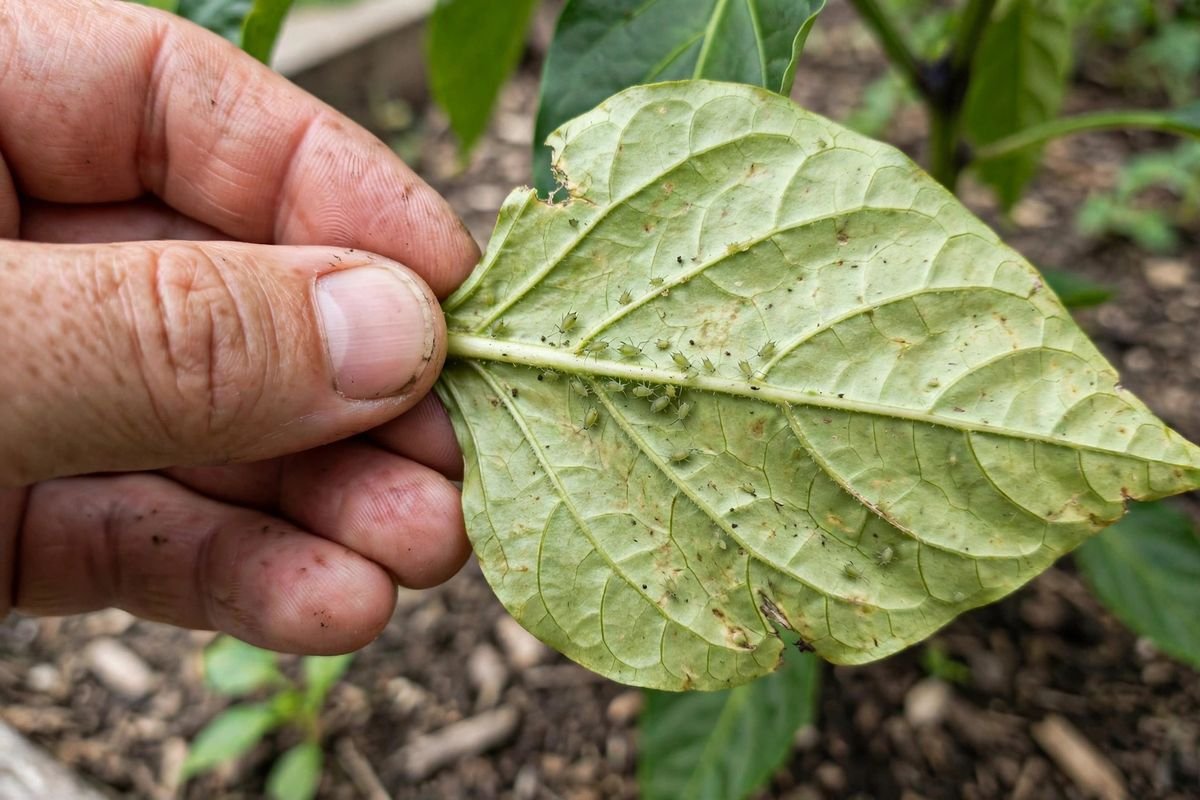
Aphids gather on tender tips and under leaves, especially on plants pushed with excess nitrogen. A firm spray of water knocks many off. Checking leaf undersides twice a week catches clusters early, and healthy plants tolerate light numbers while beneficial insects arrive.
Frequently Asked Questions About Growing Peppers
How long do peppers take to grow?
Most types need about 60 to 80 days after transplant to reach green harvest, with extra weeks for full color. Seed starting adds 8 to 10 weeks indoors. Hot specialty types often sit at the long end of that range, while small sweet types arrive earlier.
Can peppers grow in pots?
Yes, and pots suit patios and small yards well. Choose a container with drainage, at least five gallons for full-size plants, quality potting mix, and a spot with strong sun. Pots need more frequent watering than beds, and a liquid feed during fruiting helps keep growth steady.
Do peppers need full sun?
Full sun gives the best yield and ripening. Plants survive with less light yet grow thinner, flower less, and ripen slowly. Six hours is a workable minimum, and eight or more hours supports the heaviest harvest in most home gardens.
Why are peppers staying green for so long?
Color change takes warmth and time, and cool nights slow the process. Fruit may be full size and usable while still green. Leaving fruit on the plant, keeping water steady, and waiting through warm weather brings color. Each variety also has a distinct pace, so compare with packet timing from transplant date.
Sources & Further Reading
- University of Minnesota Extension — Growing peppers in home gardens, planting depth, spacing, and harvest guidance (extension.umn.edu)
- Utah State University Extension — Peppers in the garden, variety selection, soil temperature, and frost sensitivity (extension.usu.edu)
- Colorado State University Extension — Peppers, warm-season planting, blossom drop, and sunscald notes (extension.colostate.edu)
- Clemson Cooperative Extension — Pepper fact sheet, soil pH, fertility, and common disorders (hgic.clemson.edu)
Keep growing:
- How to Grow Tomatoes for a warm-season companion crop with similar transplant timing.
- Container Gardening for Beginners for pot size, drainage, and watering basics.
Start seeds early, wait for warm nights, and keep water steady once fruit forms. Peppers repay that calm routine with color and heat for the kitchen all season long. Which type will fill our beds first — a thick sweet bell, a fast snack pepper, or a hot plant for homemade sauce?