
This post may contain affiliate links. If you buy through links on this page, we may earn a commission at no extra cost to you.
As an Amazon Associate I earn from qualifying purchases.
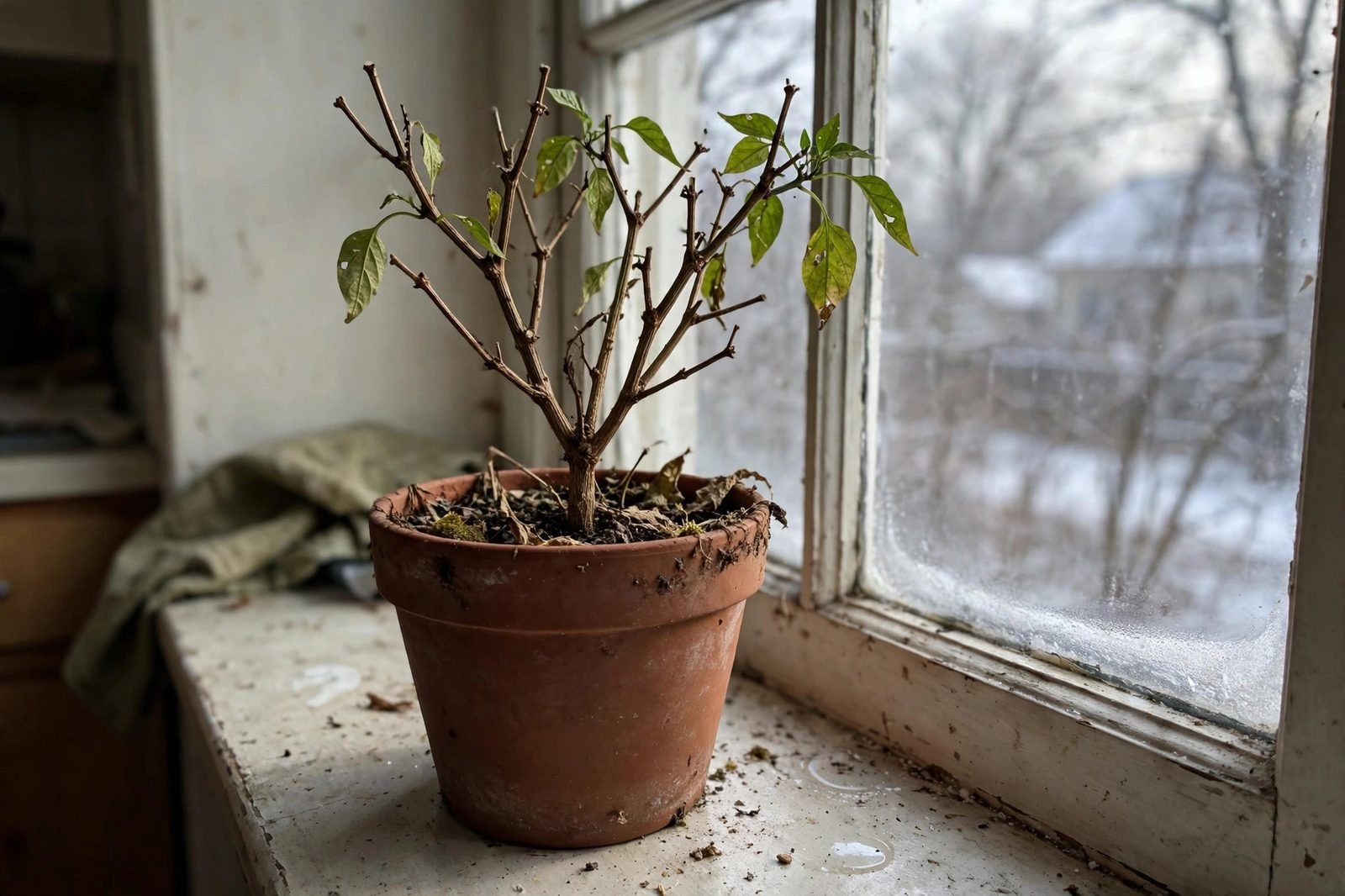
Pepper plants keep growing long after the first cold nights try to shut the garden down, and that habit makes them worth saving. A pepper is a perennial where winters stay warm. In most of our gardens, one hard frost ends the plant for the year. When we bring a favorite pepper indoors before that frost, we keep the mature root system and thick stem that took all summer to build. The reward shows up next spring, when an overwintered plant leafs out, flowers early, and often sets fruit weeks ahead of a spring seedling.
Not every pepper needs saving, and not every saved plant thrives. The method below covers how we choose which plants to keep, how we cut them back and clean them so pests stay outside, and how we hold them through winter with just enough light and water to stay alive without pushing weak growth. We also cover the wake-up steps that move a sleepy plant back into growth when days lengthen.
| Best candidates | Healthy, productive plants with no disease signs; hot peppers and compact varieties often do best |
|---|---|
| Timing | Bring plants in before the first frost, while nights still stay above 50°F when possible |
| Light | Bright window for active holding, or a cool bright spot for a slower, near-dormant rest |
| Water | Sparse in winter; water only when the top 2 inches of mix feel dry |
| Temperature | 55 to 65°F suits a resting plant; avoid hot, dry rooms near heating vents |
| Common problems | Aphids after moving indoors, leaf drop from sudden change, leggy growth in low light |
Why Overwinter Peppers Instead of Starting Over
Starting peppers from seed each spring works well, but it asks for an early start indoors and patience while small plants build size. An overwintered plant skips that slow first chapter. The stem is already thick, the root ball established, and stored energy fuels rapid branching once warmth and light return. For slow or rare varieties, keeping the same plant also keeps the same genetics for another season.
Space is the honest trade-off. A resting pepper still needs a pot, a bright corner, and a weekly check, so a crowded indoor setup may mean saving just two or three standouts. Plants already in pots make the easiest candidates, and the pot-size guidance in our guide to container gardening for beginners helps when a garden plant needs a smaller winter home.
Choosing Which Plants to Save
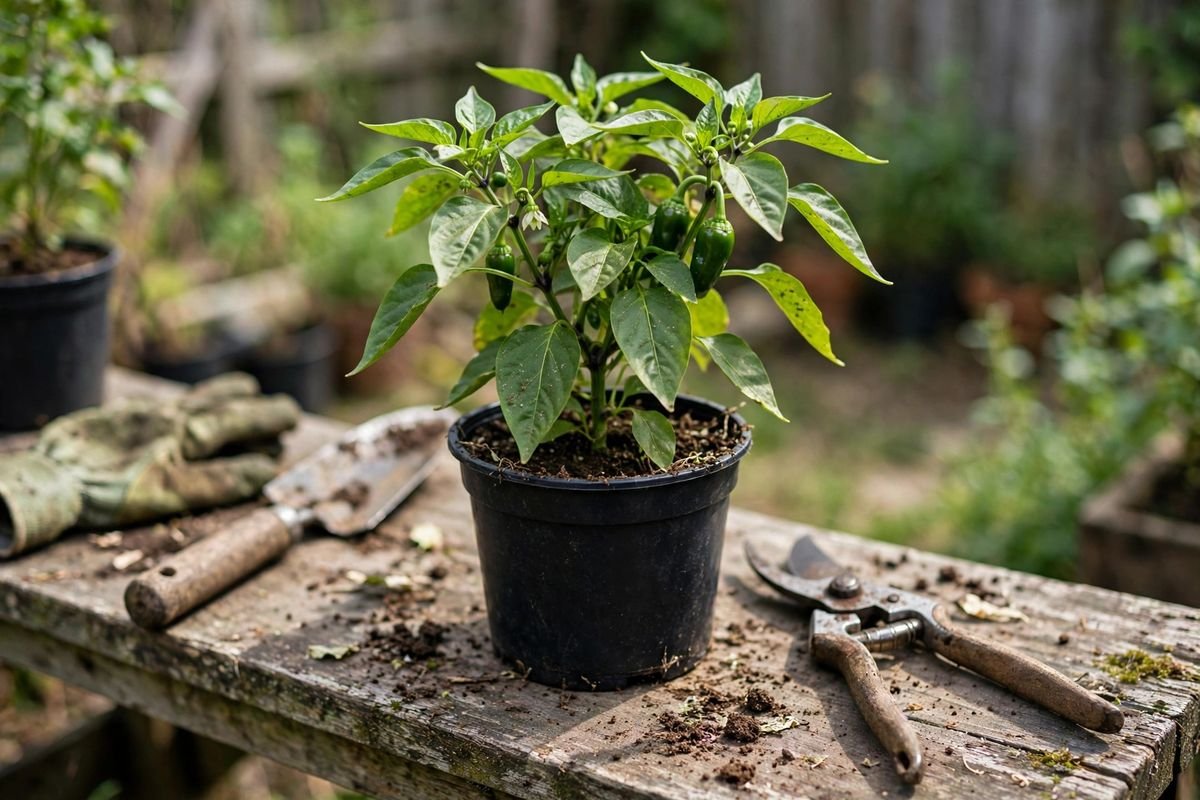
Health matters more than size. We look for plants with clean foliage, no blackened stems, no sticky residue under the leaves, and steady production during the season. A plant that struggled with disease all summer rarely turns into a good houseplant, and bringing a sick plant indoors risks spreading problems to other indoor plants. Peppers with mosaic-patterned leaves, distorted new growth, or sunken dark spots on stems are better composted than saved.
Varieties that respond well
Most pepper types can overwinter, but compact plants adapt to pots with the least fuss. Hot peppers such as habanero, jalapeño, cayenne, and Thai types are strong candidates because they branch well after pruning and tolerate the hard cutback the method requires. Sweet bells can succeed too, though larger plants need a bigger pot and sturdier support. One plant per pot keeps air moving and makes pest checks simple.
Plants to leave in the garden
We leave behind any plant with heavy pest pressure that we cannot clean, any plant with soft or hollow stem sections, and any plant that barely produced. Late in the season, our compost pile benefits from those tired plants, and the method in our guide to how to make compost at home turns clean garden waste into next year’s soil food. Saving only strong plants keeps winter care simple and success rates high.
When to Bring Peppers Indoors
Timing protects the plant from shock. Peppers slow down as nights cool, and a plant moved indoors while nights still hover near or above 50°F adjusts far better than a plant rescued after a frost has already burned the leaves. We watch the local forecast as fall progresses and aim to finish the move one to two weeks before the average first frost date for our area. Use your local frost dates and regional planting guidance — not your USDA hardiness zone alone — to choose planting dates. That same frost-date thinking guides the move indoors, because a zone number alone never tells us when the first cold night actually arrives in a given year.
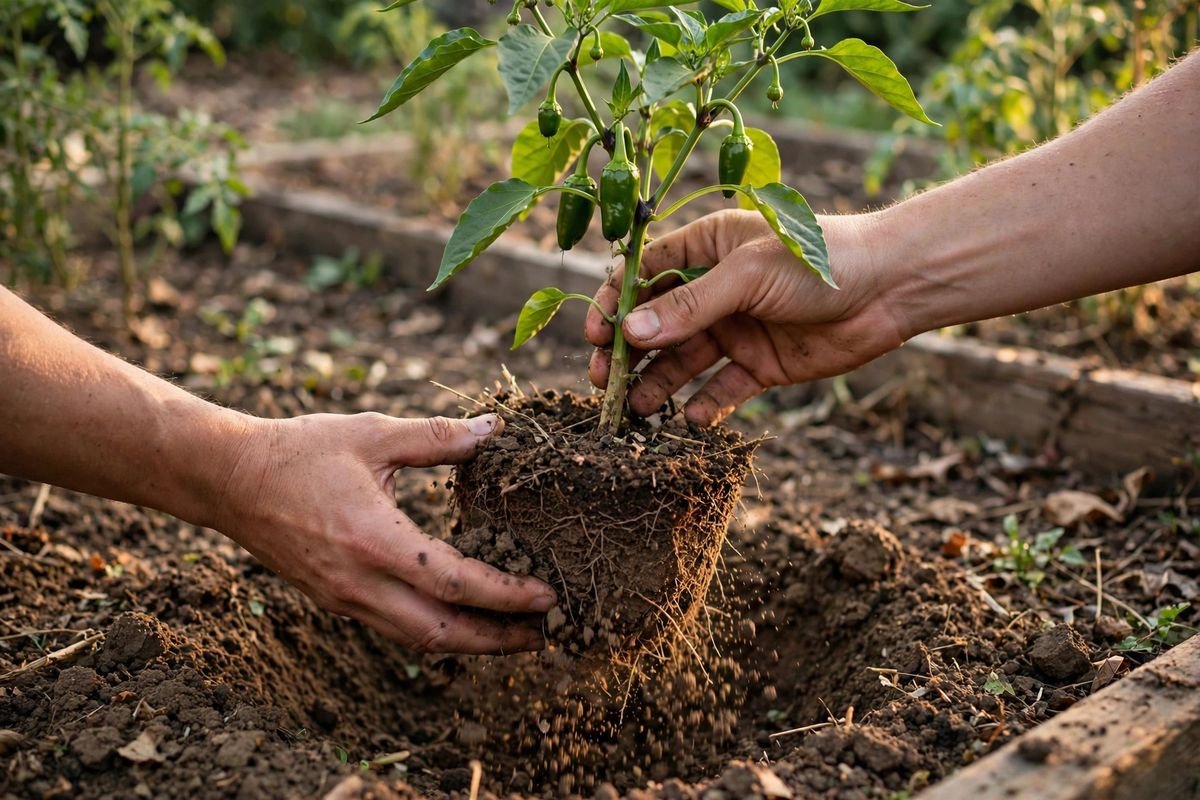
Gardeners in mild areas with only light, brief frosts sometimes overwinter peppers outdoors in a sheltered spot with heavy mulch and a frost cover, but the safer and more reliable method for most of us is a pot indoors. Raised beds and in-ground plants that we want to save need digging, which works best before the soil turns cold and wet. Digging on a mild, dry afternoon gives roots the gentlest transition.
How to Overwinter Peppers Step by Step
The steps below move a pepper from garden mode to resting mode. Rushing cleanup is the most common reason overwintering fails, because aphids and whiteflies hitchhike indoors on leaves and in soil.
Step 1: Prune the plant back hard
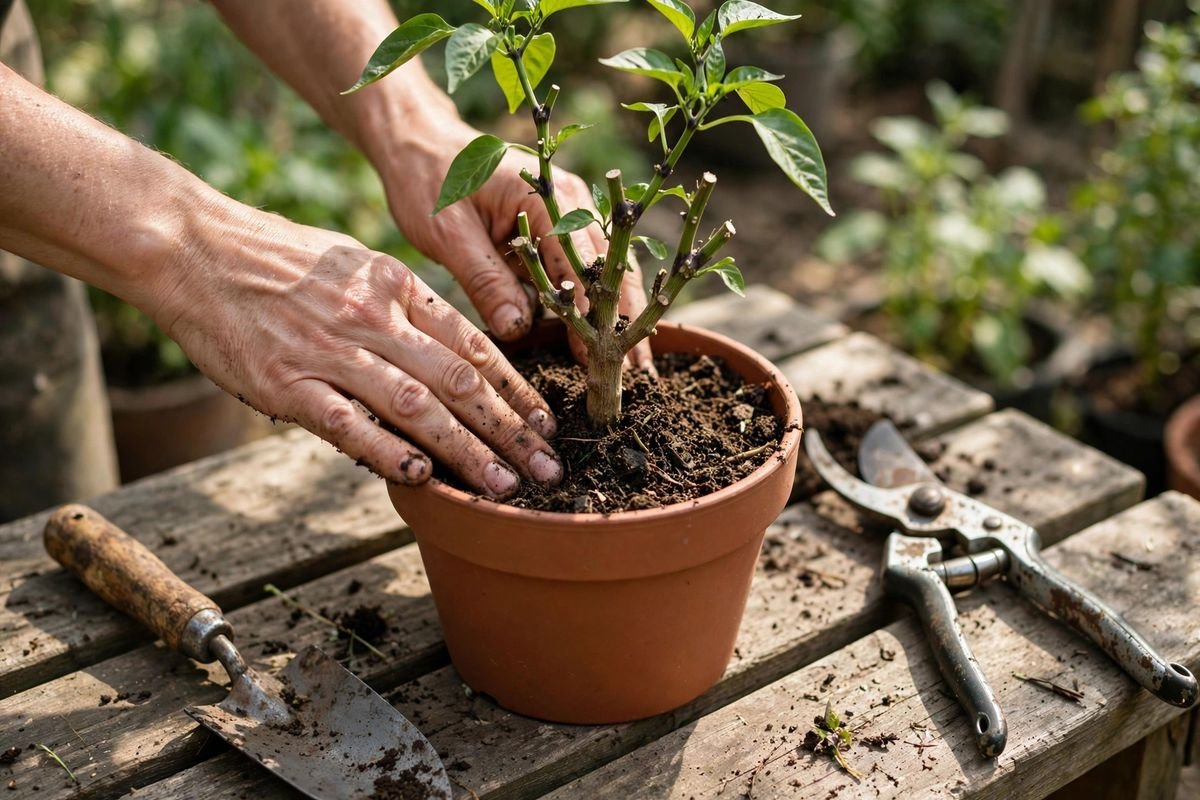
Before the plant comes inside, we cut it back more than feels comfortable the first time. We remove all fruit, ripe and unripe, since a resting plant cannot support ripening peppers and the fruit invites rot indoors. Then we trim the branches back to the main framework, leaving the thick stem and a few short branch stubs with visible nodes, often totaling 6 to 10 inches of structure above the soil. We cut just above a node, where new buds can form. Every cut gets made with clean, sharp pruners, and we wipe the blades with rubbing alcohol between plants. A sturdy pair of bypass hand pruners makes clean cuts that heal quickly on thick pepper stems.
Step 2: Clean the plant top to bottom
With the plant cut back, inspection gets easy. We check every remaining leaf and stem for aphids, mites, and whiteflies, especially leaf undersides and branch joints. A strong spray of water from a hose or shower head knocks off most stowaways. For plants with visible pests, we follow the rinse with insecticidal soap on all surfaces, then rinse again after the label-directed wait. Removing most leaves now is fine and often helpful, since leaves carry most pests and a pruned plant needs few leaves to rest.
Step 3: Repot into fresh mix
Garden soil belongs outdoors. It compacts in pots, drains poorly, and carries eggs and spores we do not want in the house. For dug plants, we shake and rinse most soil from the roots, trim black or mushy roots, and settle the plant into fresh all-purpose potting mix. A pot just large enough for the root ball works best; oversized pots hold excess moisture around resting roots. We firm the mix gently, water once to settle it, and let the surface dry before the plant takes its winter spot. A bag of all-purpose potting mix sized for a few plants covers repotting day without waste.
Step 4: Choose the winter holding style
Two holding styles work. In the active style, the plant keeps some leaves in the brightest window available, ideally with a few hours of direct sun, at normal room temperatures, and growth stays slow but steady. In the dormant style, the plant rests in a cool, bright spot — an unheated sunroom, a garage window, or a cool basement near a window — where temperatures sit between 50 and 60°F. A gentle fingernail scratch reveals green tissue on a living plant. The dormant style needs the least water and suits gardeners whose sunny windows already hold other plants.
Winter Care for Overwintered Peppers
Winter care rewards restraint. A resting pepper wants less of everything: less water, no fertilizer, and no encouragement to grow fast in weak light. Plants pushed with feed and warmth in December stretch into pale, leggy growth that pests love. Our goal is simple survival with steady roots and firm stems.
Watering on a light schedule
We water only when the top 2 inches of mix feel dry, then water lightly, just enough to moisten the root zone without soaking the pot. A dormant plant with few leaves may need water only every two to three weeks in a cool room, while a plant holding leaves in a warm window needs drinks more often. Pots always drain freely, and saucers get emptied so roots never stand in water.
Light without forcing growth
Resting plants near a window often manage with natural daylight alone. When a plant keeps leaves and starts to stretch toward the glass, we rotate the pot a quarter turn each week for even shape. Supplemental light is optional; if we run a light, we keep the day length modest, around 10 to 12 hours, so the plant rests rather than ramping up months too early.
Skipping fertilizer until spring
Feeding waits until new growth appears in late winter or early spring. Salts build up in a pot that drinks slowly, and resting roots take up very little. Clear water is enough until buds swell, then a diluted balanced feed every two weeks supports the spring push.
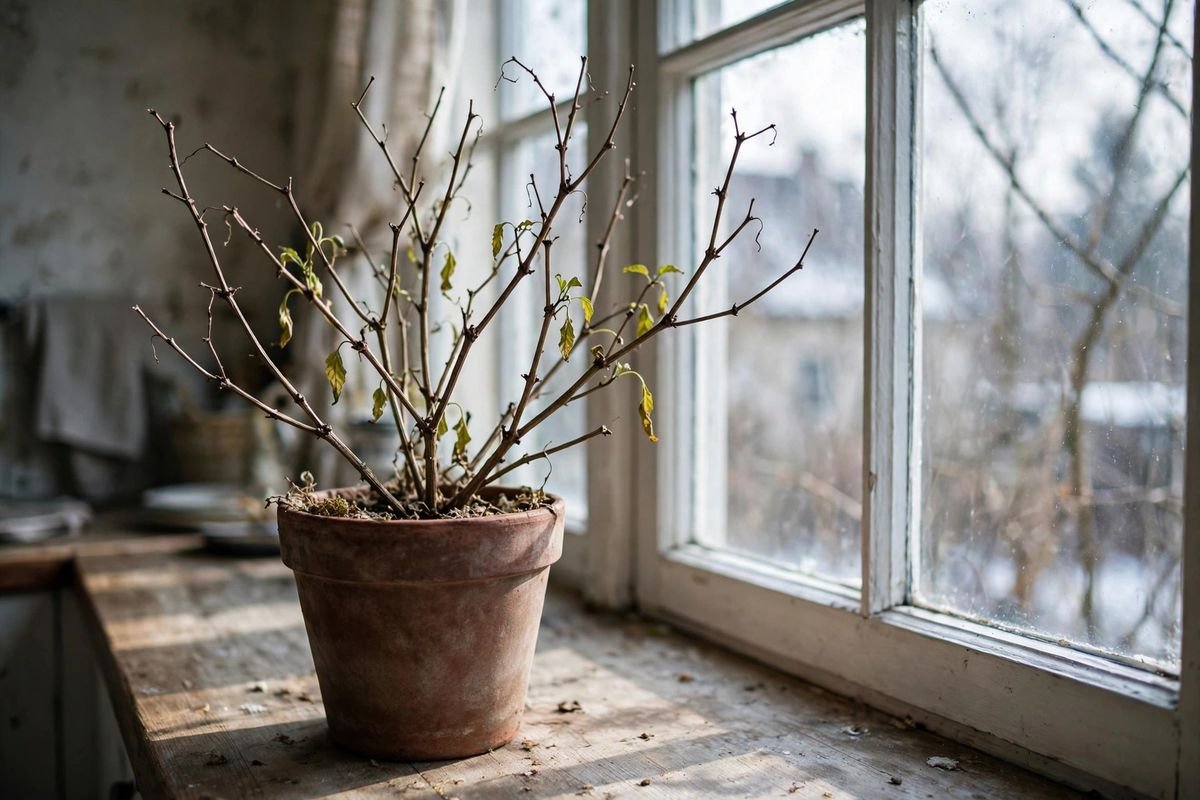
Waking Peppers Up in Spring
As days lengthen, overwintered peppers tell us they are ready: buds at the nodes plump up and tiny leaves appear along the stems. That moment, often four to six weeks before the last frost date, is when we shift to growing care. We move the pot to the brightest spot available or under lights for 14 to 16 hours a day, resume regular watering, and start diluted feeding. If roots circle the drainage holes, we step the plant up one pot size with fresh mix.
Hardening off still matters. A pepper that lived indoors for months burns and wilts in full sun and wind. We set plants out for an hour or two of morning sun at first, adding time and brighter exposure across seven to ten days, and bring them back in if nights threaten frost. Only after the last frost date passes and nights stay reliably above 50°F do overwintered peppers return to the garden or a large outdoor container.
Troubleshooting Overwintered Peppers
Why did all the leaves drop?
Leaf drop after the move indoors is common and usually not fatal. The sudden change in light, temperature, and humidity tells the plant to shed leaves it cannot support, and a heavily pruned plant needs few leaves anyway. As long as stems stay firm and green beneath the bark, the plant is resting, not dead. We reduce water, keep the pot in bright light, and wait for buds at the nodes.
Why are aphids covering the new growth?
Aphids adore the soft growth a warm window encourages in midwinter. We carry the plant to a sink or shower, rinse every surface with a firm spray of water, and repeat every few days for two weeks. Sticky leaves get wiped with a damp cloth. Keeping the plant slightly cooler and avoiding fertilizer during winter reduces the lush growth aphids prefer.
Why is growth pale and stretched?
Pale, stretched stems mean light is too weak for the warmth the plant receives. We move the plant to the brightest window, set it closer to a supplemental light, or shift it to a cooler spot so growth slows to match the light. Leggy winter growth can be pruned back when spring arrives; strong light then produces compact, sturdy branches.
Why is the stem soft or black at the base?
A soft, blackened base signals rot, almost always from a pot that stayed wet in cool conditions. A plant rotted through the main stem rarely recovers. We save any firm upper cuttings only if the variety matters to us and the tissue looks clean, and we compost the rest. For remaining plants, we let the mix dry deeper between waterings and confirm the pot drains fully.
Frequently Asked Questions
Can every pepper plant be overwintered?
Nearly every healthy pepper can overwinter with the prune, clean, and repot method. Success runs highest with vigorous plants, no disease history, and compact growth. Weak or diseased plants rarely reward the effort, and starting fresh seed of those varieties the following spring gives better results.
How long can a pepper plant live this way?
With yearly pruning, fresh mix, and a step up in pot size when roots demand it, a pepper can produce well for several seasons. Yields may taper as wood ages, so many gardeners keep a plant for two or three winters and then start a successor from seed or a cutting.
Do overwintered peppers need a cold period?
No true cold period is required. The cool, bright rest simply matches low winter light with slow growth, which keeps the plant sturdy. Peppers held warm and bright all winter also survive, as long as light stays strong and watering stays careful.
Sources & Further Reading
- Overwintering peppers indoors — extension guidance on pruning, potting, and winter light (extension.umn.edu)
- Bringing peppers and other tender plants indoors for winter — pest inspection and cleaning steps (extension.psu.edu)
- Container vegetable care through the cool season — watering and temperature notes for potted plants (extension.colostate.edu)
- Site and season planning with local frost dates — regional planting calendars and frost-date tools (extension.org)
Related reads for this season:
- How to Grow Tomatoes — season timing and frost habits that pair with pepper care
- How to Protect Balcony Plants From Strong Wind — sturdy growth and shelter ideas for pots
Pepper plants that come through winter with firm stems and swelling buds give the garden a head start no seed packet can match. Saving two or three favorites costs one fall afternoon and a bright corner through winter, and the first early harvest next summer makes the small effort feel worthwhile.
Which pepper from this season earned a spot by your sunniest window this winter — a fiery favorite, a sweet bell that never quit, or a new variety you want to see again next spring?