
This post may contain affiliate links. If you buy through links on this page, we may earn a commission at no extra cost to you.
As an Amazon Associate I earn from qualifying purchases.
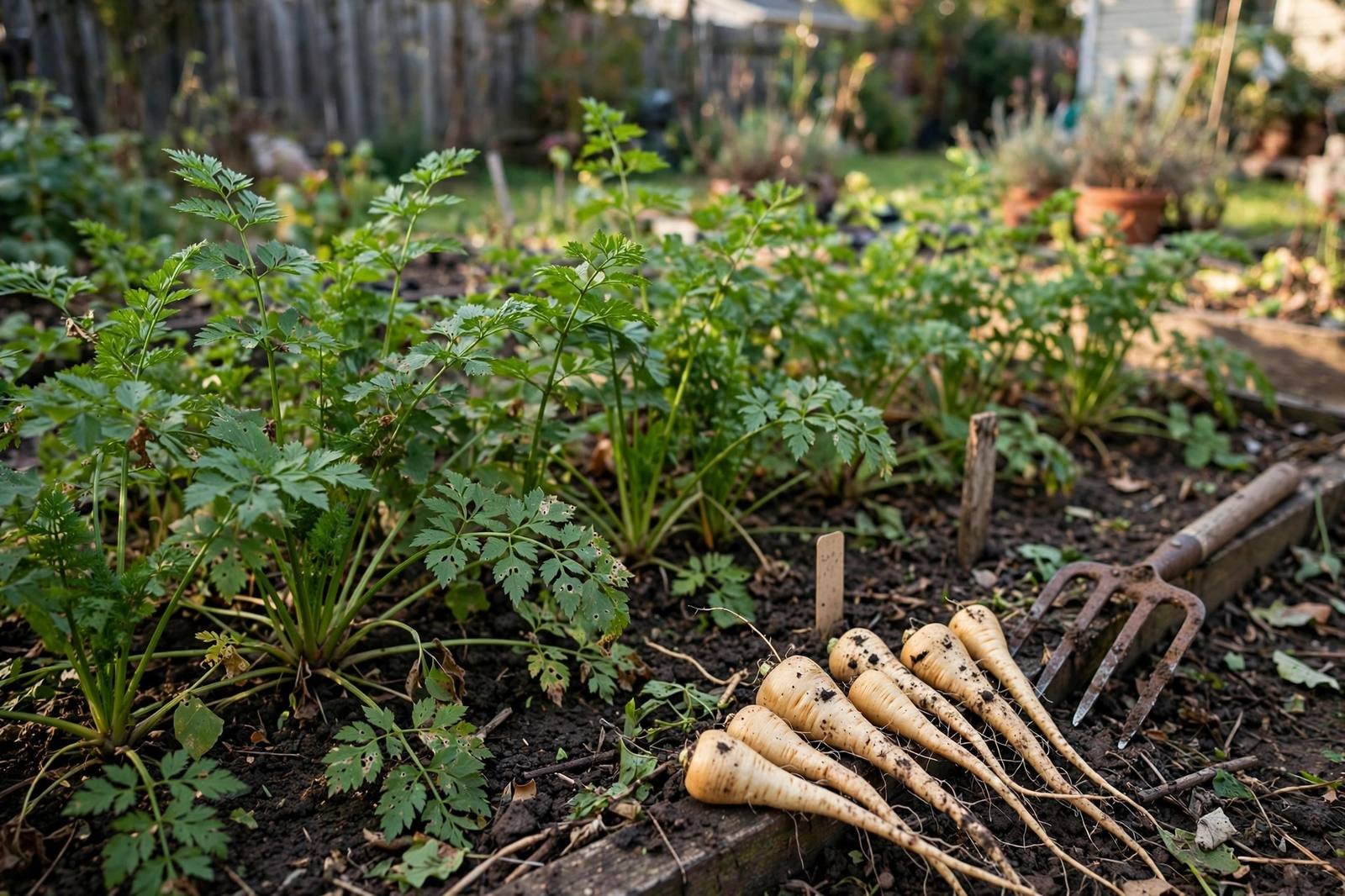
Parsnips ask for patience and repay that patience with sweet, earthy roots that soups and roasts love. The crop grows slowly from seed, holds a bed for most of the season, and then improves after cold nights arrive. For gardeners who want a root vegetable that can wait in the ground until a winter meal calls for it, parsnips are a strong choice once the basic habits are in place.
This guide covers starting with fresh seed, preparing deep and loose soil, sowing at the right depth, thinning without delay, watering through dry spells, and harvesting after frost has done its sweetening work.
| Sun | Full sun, 6 or more hours; light shade tolerated in warm regions |
|---|---|
| Soil | Deep, loose, well-drained loam, pH 6.0 to 7.0, stones removed |
| Sowing depth | 1/2 inch deep, firm soil gently over seed |
| Spacing | Thin to 3 to 4 inches apart, rows 12 to 18 inches apart |
| Water | About 1 inch per week, keep seedbed moist until sprouts appear |
| Days to harvest | 100 to 120 days, roots 1 to 2 inches across at the shoulder |
| Frost tolerance | Very hardy; flavor improves after several light frosts |
Slow Germination and the Fresh Seed Rule
Parsnip seed germinates slowly and unevenly compared with most vegetables, and that slow start shapes the whole season. Extension guides often list 14 to 28 days for sprouts to appear, longer in cool soil, and parsnip seed loses strength faster than carrot or beet seed. A packet held over from a prior year often gives thin, patchy rows even when sowing looks correct, so starting with fresh seed is the simplest way to protect the stand.
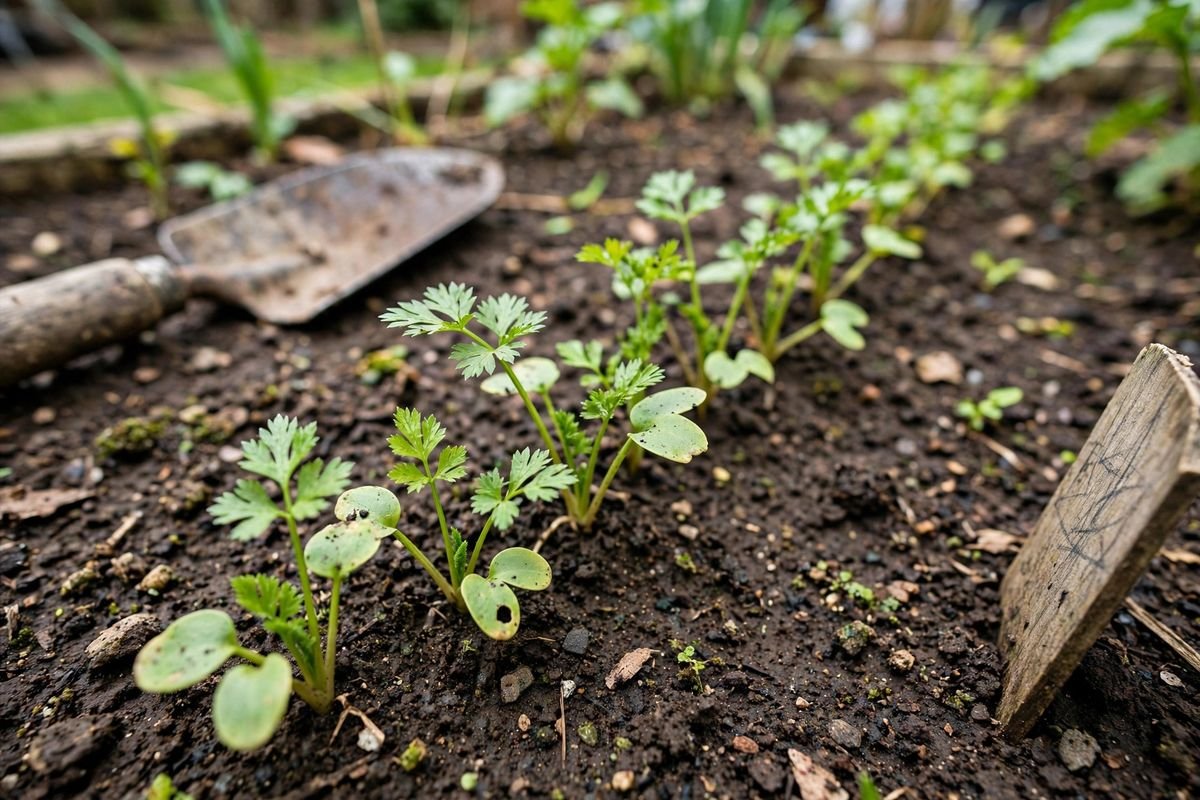
The seedbed should stay damp, not soaked, from sowing day until green shoots show. A board or a light fabric cover laid over the row can hold surface moisture in windy weather, and we lift that cover as soon as seedlings appear so light reaches the young plants. Seedlings look a bit like tiny parsley, so marking row ends with stakes helps us weed between rows without pulling the crop by mistake.
A current-season packet of fresh parsnip seed is worth ordering each spring rather than testing luck with a leftover packet. Catalogs list 100 to 120 days to maturity from sowing, so counting forward from a local sowing date shows whether roots will size up before autumn frosts arrive.
Preparing Deep, Loose Soil
Parsnips need soil that a long root can push through without meeting a stone or a hard layer a few inches down. We loosen the bed 12 inches deep where possible, pull out rocks and old root chunks, and rake the surface smooth so small seeds sit at an even depth. Heavy clay that stays wet can still grow parsnips, but shorter, thicker-shouldered varieties handle that soil better than very long types bred for deep, light soil.
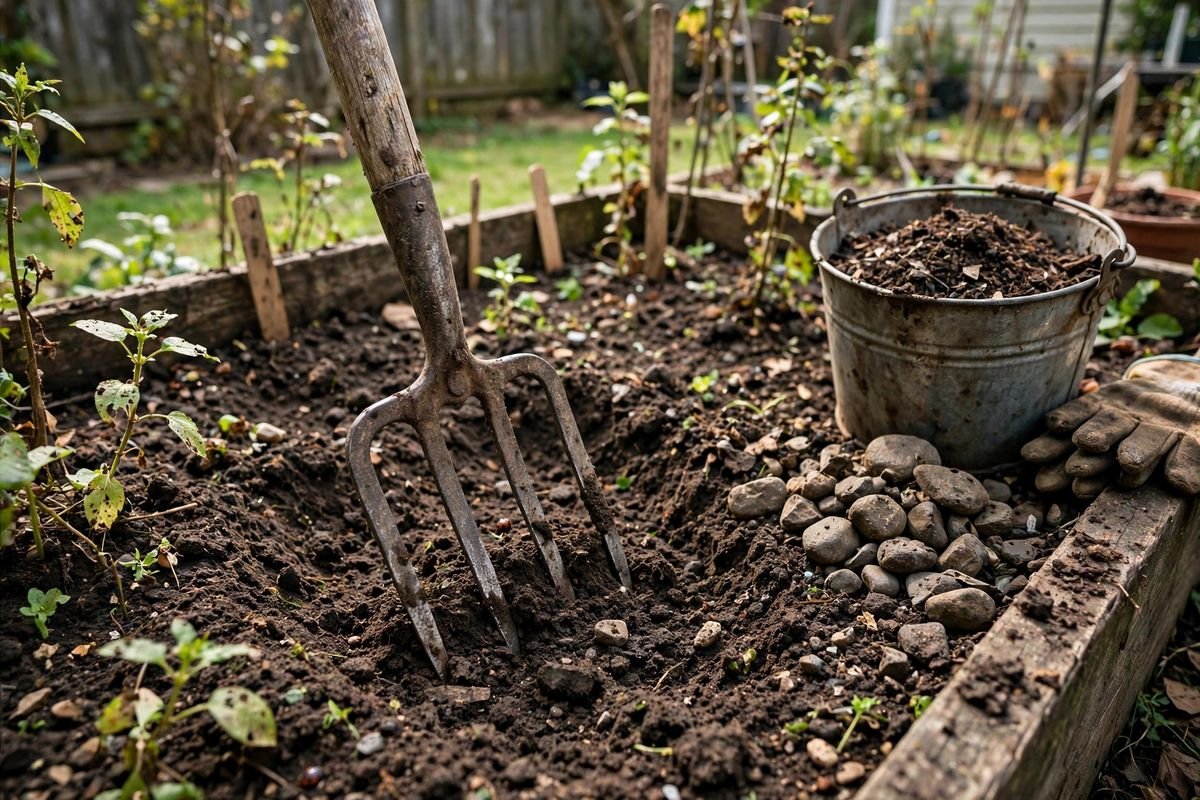
We work 1 to 2 inches of finished compost into the top layer before sowing. Fresh manure right before planting can lead to forked roots and excess leaf growth, so finished compost is the safer choice here. Our guide to how to make compost at home covers building a steady supply for spring beds. Soil pH near 6.0 to 7.0 suits parsnips well, and a basic soil test every few years helps us adjust pH without guessing.
Raised beds can be a good fit when native soil is shallow or rocky, as long as the bed offers at least 10 to 12 inches of loose mix. In ground beds, we work from the edges or from a board laid across the surface so feet do not compact the soil we just loosened.
When and How to Sow Parsnips
We sow parsnips directly in the garden because transplanting almost always damages the young taproot and leads to forked roots. The usual window is early to mid-spring, as soon as soil can be worked and has begun to warm. Soil near 50 to 55 degrees F gives steadier germination than cold, wet soil in late winter, and a later sowing can work where autumn stays cool for a long stretch.
Use your local frost dates and regional planting guidance — not your USDA hardiness zone alone — to choose planting dates. A hardiness zone reports average winter lows, while a planting choice needs the last spring frost date and the expected first fall frost date. County extension calendars give those local dates, and counting 100 to 120 days forward shows whether roots will mature before hard freezes lock the soil.
To sow, we open furrows 1/2 inch deep with rows 12 to 18 inches apart, drop seed about 1 inch apart, and cover with fine soil or sifted compost. Firming the row gently improves seed contact. We water with a soft spray so seed stays in place, and keep the surface moist until sprouts appear.
A lightweight row cover over the seeded row can hold moisture and keep birds from scratching the bed. We remove it once seedlings grow, or leave a loose cover a bit longer where carrot rust fly is a known local problem, since adult flies lay eggs near the crowns of carrot-family crops. Sowing a few radish seeds in the row as markers also helps, because radishes sprout fast, show the row line, and are pulled before parsnip roots need the space.
Thinning for Straight, Full-Size Roots
Thinning decides root size more than any feeding program. Parsnips left crowded stay thin and yield a row of pale pencils instead of full roots. When seedlings reach 2 to 3 inches tall, we thin to about 1 inch apart, then thin again a few weeks later to the final spacing of 3 to 4 inches between plants. Snipping extra seedlings with scissors at the soil line avoids tugging roots of the plants that stay.
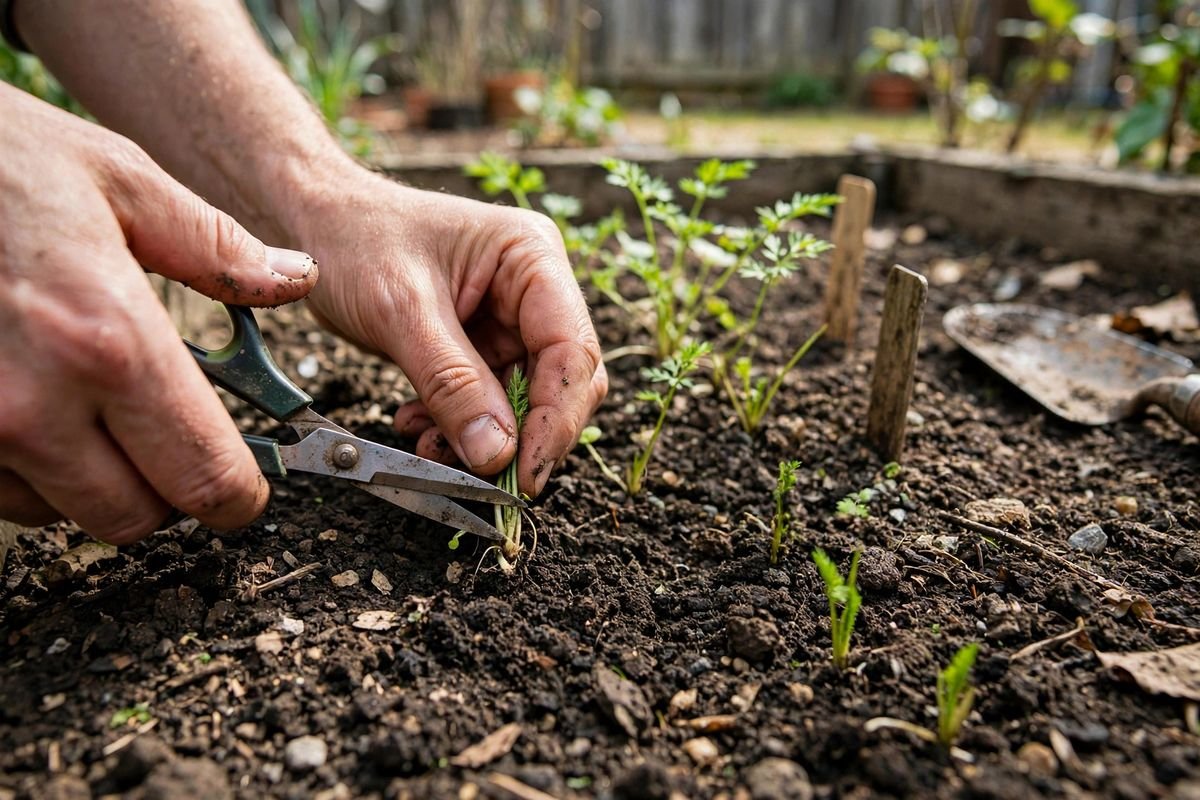
Thinning in two passes protects the stand. The first pass relieves crowding while roots are small, and the second pass sets final spacing once the strongest seedlings show. We thin on a calm, cloudy day or late in the afternoon when possible, then water lightly to settle soil around the roots that remain.
Gloves and long sleeves are a smart habit when handling parsnip foliage on sunny days. Parsnip leaves and stems contain compounds that can irritate skin when sap meets sunlight, a reaction well documented for wild parsnip and worth respecting with the garden crop as well. Washing exposed skin after thinning or weeding is a simple precaution.
Watering and Mulching Through the Season
After germination, parsnips need steady moisture so roots grow long and smooth rather than splitting after a dry spell and then heavy rain. We aim for about 1 inch of water per week from rain or irrigation, more during hot, windy stretches in sandy soil. Deep, less frequent watering encourages roots to grow downward, while daily light sprinkles can leave deeper soil dry.
Mulch helps once plants are a few inches tall and thinning is done. A 2 to 3 inch layer of clean straw, shredded leaves, or untreated grass clippings holds moisture and keeps soil temperature steadier. We keep mulch a small distance from crowns so air moves around stems. Weeding matters most in the first month, when young parsnips grow slowly and weeds can shade them out. Shallow cultivation between rows keeps the bed clean without nicking root shoulders near the surface, and once the leafy canopy expands, parsnips shade their own row.
Parsnips are moderate feeders. Compost at planting often carries the crop, and heavy nitrogen feeding can push leafy tops at the expense of roots. If growth looks pale by midsummer and a soil test points to low fertility, a balanced organic fertilizer applied per label directions can help, watered in so nutrients reach the root zone.
How Frost Makes Parsnips Sweeter
Cold improves parsnip flavor in a way few vegetables match. As temperatures drop in autumn, plants convert some stored starch in the root to sugars, which acts as a natural antifreeze and gives harvested roots a sweeter, milder taste. Extension sources often note that roots dug after several frosts taste better than roots dug in early fall, and many gardeners leave at least part of the crop in the ground until after the first hard frosts.
That hardiness lets parsnips wait in the garden well into winter where soil does not freeze solid for months. A thick straw mulch over the row after the ground cools keeps the surface from locking after each freeze, so roots can still be lifted during mild thaws. We mark row ends before snow or heavy leaf fall hides the bed.
The balance is simple: dig too early and roots can taste starchy; wait for cold and flavor improves, but dig before spring growth resumes. Roots left until plants push fresh leaves in spring turn woody and lose quality quickly. For gardeners comparing root crops, the frost effect is similar to what happens with fall carrots, though parsnips show the change even more clearly. Our notes on how to grow carrots in fall cover that shared cool-season timing.
Harvest and Storage
Parsnips are ready when roots reach 1 to 2 inches across at the shoulder and the crop has had 100 to 120 days of growth, often with better flavor after frost. We loosen soil along the row with a fork set a few inches from the crowns, then lift roots by hand so long tips do not snap off in the ground. Pulling straight up without loosening first breaks roots in heavy soil, so the fork work is worth the extra minute.
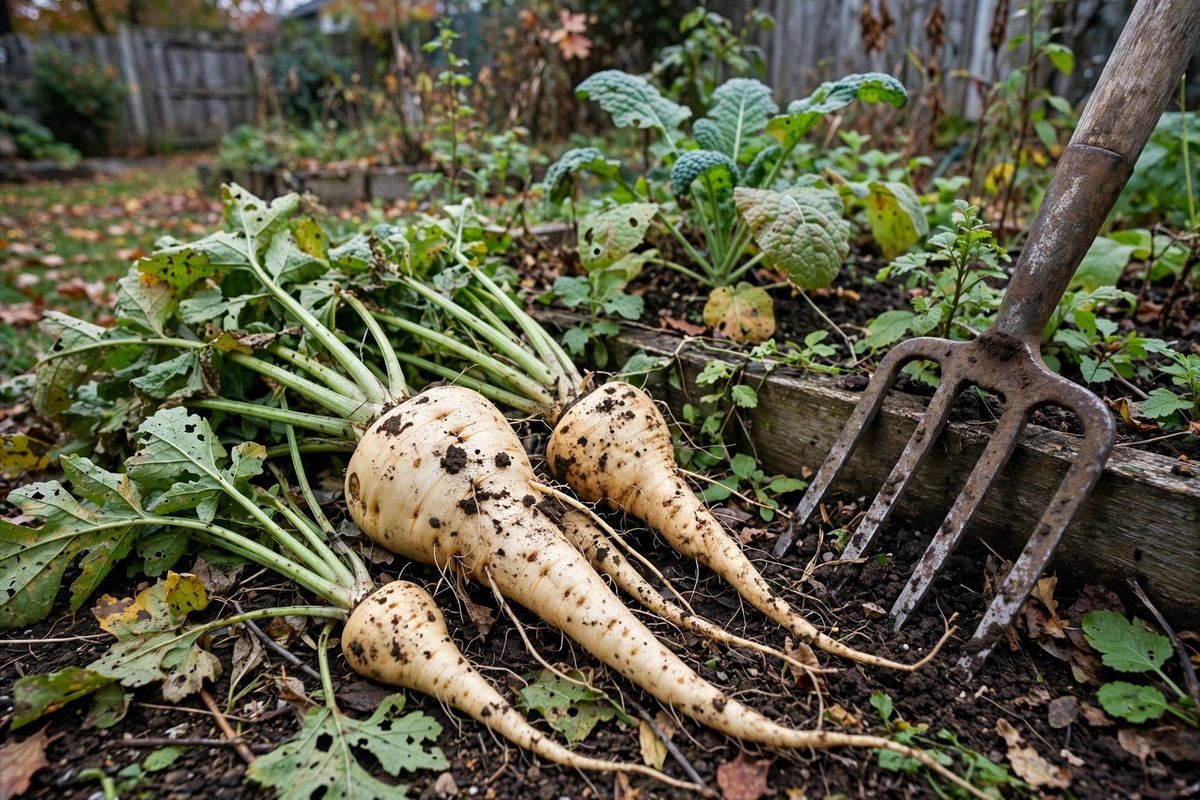
A sturdy garden fork for harvesting root vegetables makes lifting long roots easier and reduces damage. We brush off loose soil, trim tops to about an inch, and avoid washing roots that will go into storage, since extra moisture shortens storage life. Damaged or forked roots are used first in the kitchen, while smooth roots store longest.
For storage, parsnips keep well in a refrigerator crisper in a perforated bag, or in a cool space packed in slightly damp sand or sawdust. University storage guides group parsnips with carrots and beets: cold, humid conditions near 32 to 40 degrees F keep roots firm for weeks to a few months, depending on the setup. Roots left in mulched ground can also be dug as needed where winters allow, which is often the simplest storage of all.
Pests and Problems to Watch
Parsnips have fewer pest troubles than many vegetables, but a few problems show up often enough to plan for. Carrot rust fly larvae can tunnel near the crown and into roots, especially where carrot-family crops grow in the same bed year after year. Row cover from sowing until plants are established, plus rotation away from carrots, parsley, and celery beds, lowers that risk without sprays.
Parsnip canker causes dark, cracked patches near the shoulder of the root, worse in wet soil and in roots nicked during weeding or thinning. Choosing varieties listed for canker resistance, improving drainage, and handling roots gently all reduce losses. Roots with soft, spreading rot should go to the trash rather than the compost pile.
Aphids sometimes gather on leaf stems in dry weather, and leaf spots can appear late in the season. Healthy plants usually outgrow light pressure, and a firm spray of water knocks aphids off for a few days at a time. Forked and stunted roots point back to soil conditions rather than pests: stones, clumps of fresh manure, compacted layers, or transplant shock are the usual causes, and the fix sits in bed prep the next season.
Troubleshooting Parsnips
Why did so few parsnip seeds sprout?
Old seed and a dry seedbed are the most common causes. Start with a fresh packet, sow 1/2 inch deep, and keep the row moist for the full 2 to 4 week germination window. A light cover over the row helps hold moisture in windy weather.
Why are the roots forked?
Forking follows obstacles and fresh organic matter in the root path. Stones, soil clods, a hard layer a few inches down, and fresh manure all split the young taproot. Loosen soil deeply, remove rocks, and use finished compost rather than fresh manure in the parsnip bed.
Why are roots thin like pencils?
Crowding is the usual reason. Thin seedlings twice, ending at 3 to 4 inches between plants, so each root has room to thicken. Dry soil and low fertility can also keep roots small, so steady watering matters through midsummer.
Why do parsnips taste bland or starchy?
Roots dug before cold weather often taste that way. Leave roots in the ground through several frosts so starch converts to sugar, then harvest. Mulch rows so digging stays possible after frost has done the sweetening.
What are the dark patches on root shoulders?
That pattern fits parsnip canker, which favors wet soil and damaged roots. Improve drainage, avoid nicking roots while weeding, and choose varieties listed for canker resistance when the problem repeats.
FAQ
Can parsnips grow in containers?
Yes, in containers at least 12 inches deep filled with loose mix. Shorter varieties suit pots best. Container roots rarely match in-ground size, but the crop can work where ground space is limited as long as watering stays consistent.
How long do parsnips stay good in the ground?
Roots can wait in mulched ground through much of winter where soil stays diggable. Finish harvesting before spring growth resumes, because roots turn woody once leaves push again. In very cold regions, lift roots in late fall and store them cold and humid.
Do parsnips need full sun?
Full sun gives the strongest growth and sweetest roots. Light shade is tolerated, especially in warm climates, but deep shade slows the crop and yields smaller roots. Aim for 6 or more hours of direct light.
Can seed be saved from garden parsnips?
Parsnips are biennial, so plants flower and set seed in the second year. Seed saving takes planning and isolation from wild parsnip. Most home gardeners find fresh purchased seed simpler and more reliable each spring.
Sources & Further Reading
- University of Arkansas System Division of Agriculture — Parsnip, Home Gardening Series FSA6092, fresh seed and spacing guidance (uaex.uada.edu)
- University of Maryland Extension — Parsnips production notes, seeding depth, thinning, and storage grouping with carrots and beets (extension.umd.edu)
- Washington State University Extension — Growing Parsnips in Western Washington, FS314E, long-season culture and canker notes (pubs.wsu.edu)
- Utah State University Extension — Parsnips in the Garden fact sheet, varieties, harvest, and storage (digitalcommons.usu.edu)
- Colorado State University Extension — Vegetable Planting Guide, germination temperatures and days to harvest (extension.colostate.edu)
More root crops and fall planning to explore:
Parsnips reward the gardener who sows fresh seed, thins on time, and lets frost finish the flavor work. Are parsnips already part of the fall root bed at home, or will next spring be the first sowing?