
This post may contain affiliate links. If you buy through links on this page, we may earn a commission at no extra cost to you.
As an Amazon Associate I earn from qualifying purchases.
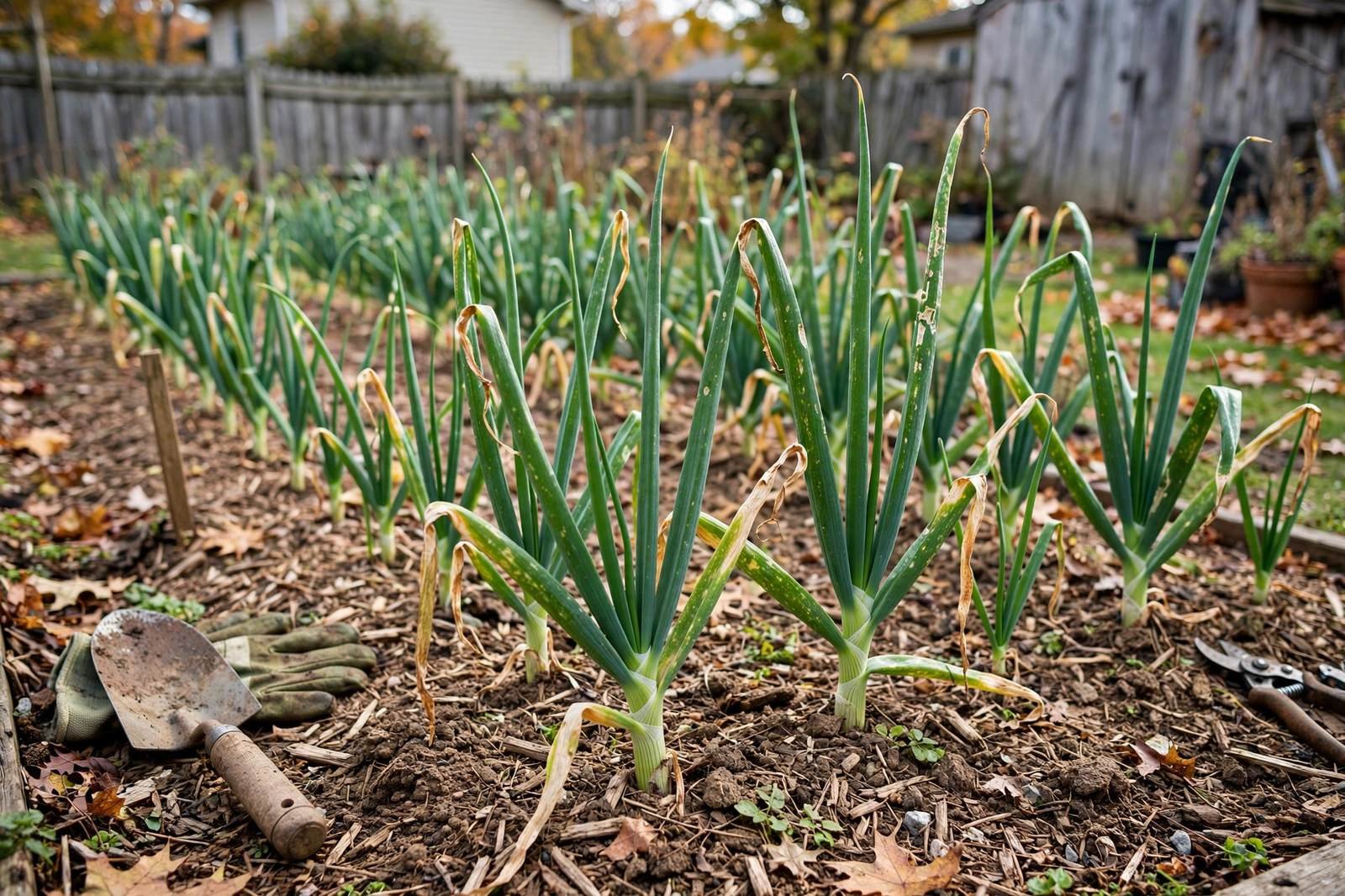
Planting onions in fall feels like a quiet head start. While most beds wind down, small green shoots settle in, build roots through the cool months, and then surge ahead when spring days lengthen. Done well, fall planting gives earlier green onions, earlier bulbs, and a bed that is already working when spring planting season gets busy. Done in the wrong region or with the wrong type, the same planting can sit, rot, or bolt, so honest regional expectations matter more with this crop than with almost any other fall vegetable.
This guide walks through fall timing by region, the real tradeoffs among sets, transplants, and seed, bed prep, planting depth and spacing, watering and feeding, winter mulch, pests, spring bolting, and harvest and curing. Fall onions reward loose, well-drained soil and a clear plan for winter, and they pair naturally with other fall alliums and roots already in the ground.
| Sun | Full sun, 6 or more hours; more light means stronger spring bulbs |
|---|---|
| Soil | Loose, well-drained, pH 6.0 to 7.0, compost enriched, never soggy |
| Planting depth | Sets about 1 inch deep; transplants 1 to 2 inches deep; seed 1/4 inch deep |
| Spacing | 4 to 6 inches between plants, rows 12 to 18 inches apart |
| Water | About 1 inch per week while growing; moist but never waterlogged |
| Days to harvest | Green onions in 60 to 90 days; bulbs the following late spring to early summer |
| Frost tolerance | Hardy with mulch in many regions; survival depends on winter lows and drainage |
Fall Timing and Regional Reality
Onions are day-length sensitive, and fall planting works with that biology instead of against it. Short fall days keep top growth modest while roots establish. Winter cold pauses the plant, and then lengthening spring days trigger bulb formation on a root system that is already in place. That early rooting is the whole advantage. Plants that enter spring established can size bulbs sooner than spring-planted sets that must root and leaf out at the same time.
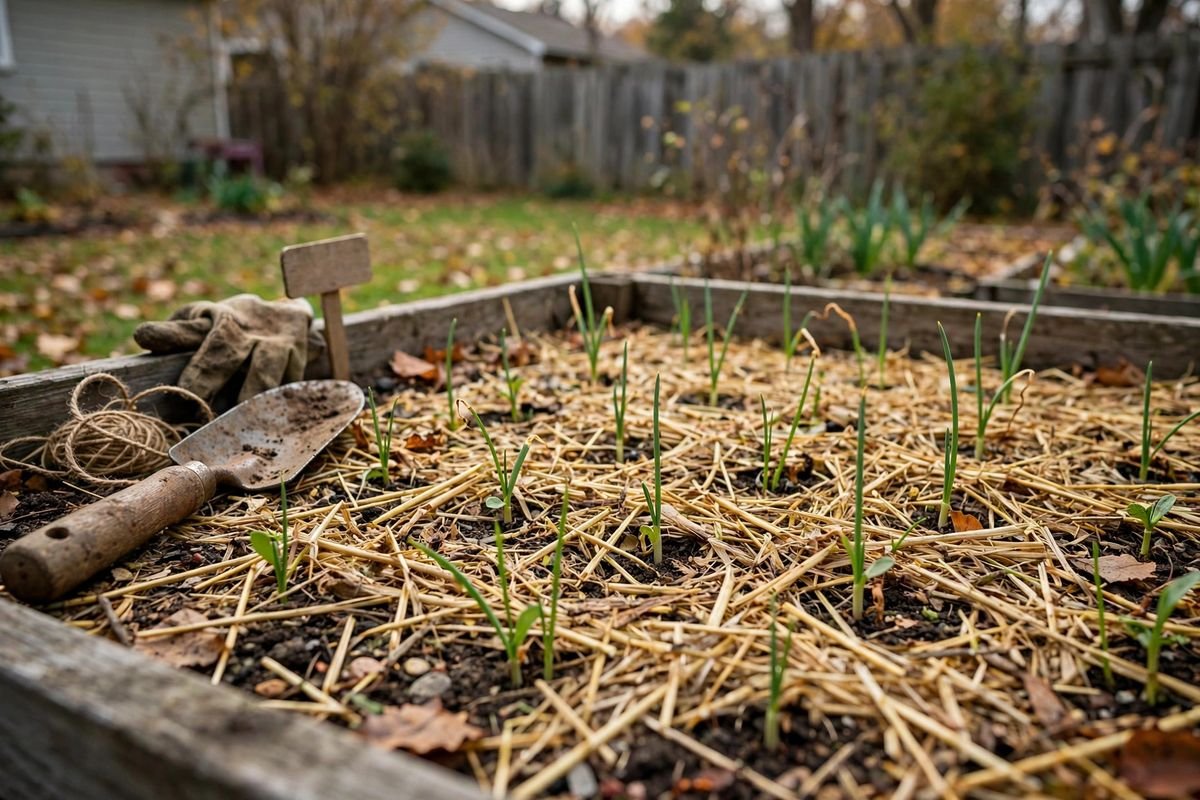
Use your local frost dates and regional planting guidance — not your USDA hardiness zone alone — to choose planting dates. For most fall plantings, we aim to set plants or sets about four to six weeks before the first hard freeze, giving roots time to anchor before the soil stays cold. In mild-winter regions of the South and Southwest, fall-planted bulb onions and green onions are a standard practice and can grow slowly through winter. In the mid-South and lower Midwest, fall planting often succeeds with mulch and well-drained soil. In colder northern gardens, overwintering bulb onions is less reliable; many gardeners there plant in very early spring instead, or overwinter only hardy bunching types and leeks under heavy mulch or cover. Regional extension planting calendars are the best guide to that line, since winter soil drainage and freeze-thaw cycles matter as much as the coldest night. Gardeners already planting garlic in fall will find the timing logic familiar, even though onions need a slightly earlier start to root well.
Variety choice follows day length. Short-day varieties suit southern fall planting because they bulb as days lengthen modestly in late winter and spring. Intermediate-day varieties fit transition regions. Long-day varieties are bred for northern summers and are a poor match for southern fall sowing. Seed catalogs and regional extension lists flag day-length type clearly, and matching that label to latitude matters more than chasing a familiar name from a different region.
Sets, Transplants, or Seed? Choosing How to Start
Sets are small dormant bulbs grown the previous season, and they are the easiest fall start. They plant quickly, establish fast, and forgive minor timing slips. Their weakness is bolting: larger sets that experience winter cold can send up a flower stalk in spring instead of forming a clean bulb, since the plant reads the cold as a completed winter and shifts to seed production. Choosing smaller sets, roughly pea to marble size, lowers that risk, and any bulb that does bolt should be used first because it will not store well.
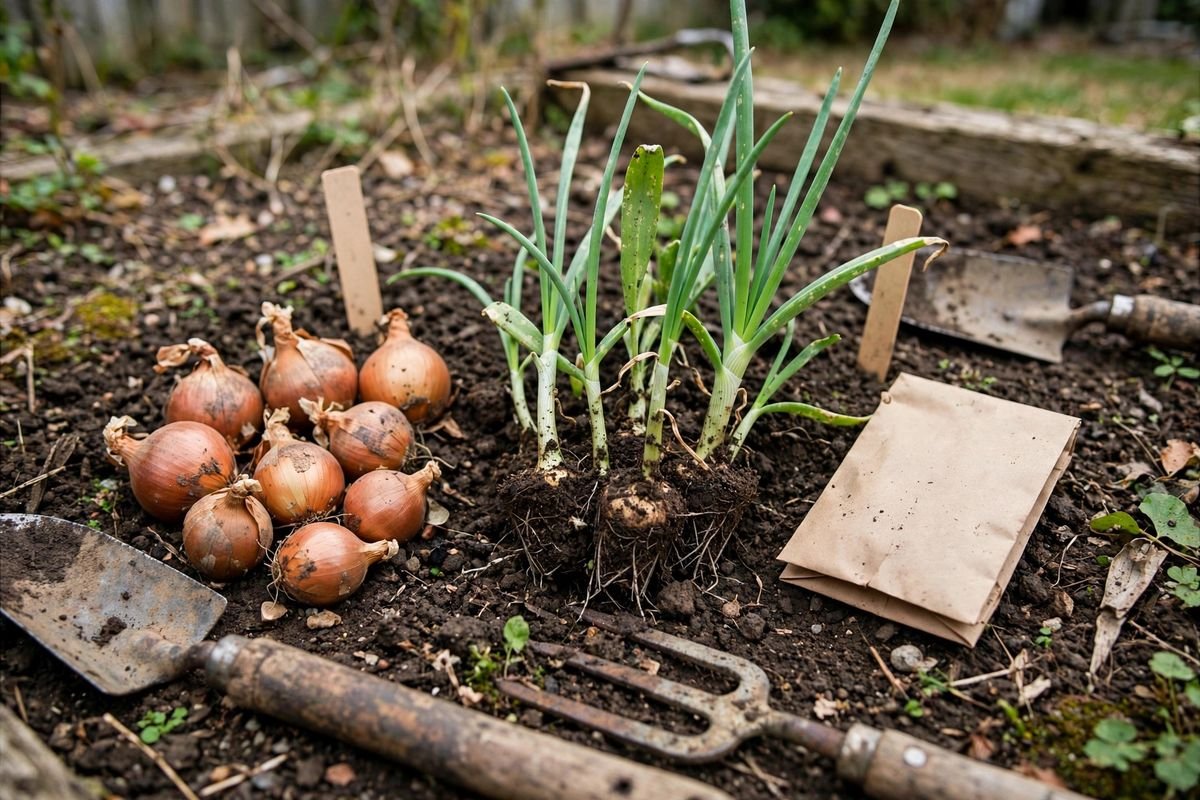
Transplants, sold as bundles of slender green plants or started at home from seed sown in late summer, give strong results with less bolting than large sets. They need careful watering for the first two weeks while roots regrow, and they cost a bit more effort to plant one by one. For home gardens that want reliable overwintered bulbs in suitable regions, transplants are often the steadiest choice. Seed sown directly in fall is the slowest path and fits best in mild-winter areas or for bunching onions, where the goal is green harvests rather than large storage bulbs. Direct seed also needs a clean, weed-free seedbed, because onion seedlings are thin and poor competitors. A basic bag of onion sets for fall planting or a bundle of transplants sized for the region takes the guesswork out of that first choice, and reading the day-length label on the listing matters more than the photo of mature bulbs.
Overwintering expectations should stay honest by region. Where winters are mild, fall onions may never fully stop growing and can give green tops for cutting within two months. Where winters bring real freezes, tops often die back partly, crowns sit dormant under mulch, and growth resumes in late winter; some plant loss is normal, so we plant slightly thicker than the final spacing target. Where the ground freezes deeply for months and drainage is poor, fall bulb onions can heave out of the soil or rot, and spring planting remains the dependable plan. None of that makes fall planting a gamble worth skipping in suitable climates; it means the method has a home range, and working inside that range produces the early harvests gardeners talk about.
Preparing the Bed for Fall Onions
Onions need loose, well-drained soil more than they need rich soil. Shallow roots struggle in compacted ground, bulbs swell poorly where the soil stays tight, and winter wet in heavy clay can rot crowns before spring ever arrives. We clear the bed, loosen it to about 8 to 10 inches, and rake out stones and clods. Raised beds and slightly mounded rows help winter rain move through, which is one reason fall onions often perform better in raised beds than in low, flat ground that puddles.
Soil pH between 6.0 and 7.0 suits onions well. We spread 1 to 2 inches of finished compost and rake it in, which improves structure in both sand and clay and supplies gentle nutrition. A soil test every few years keeps lime and fertilizer decisions grounded, especially in beds that grow alliums and brassicas in rotation. Heavy fresh manure right before planting is best avoided; well-finished compost is the safer fall amendment. Gardeners planting carrots in fall in the next row will recognize the same loose-soil requirement, since both crops resent compaction and stones.
Weed control starts before planting. Fall weeds grow slowly but steadily in mild weather, and onions compete poorly once weeds shade their thin leaves. A clean bed, a stale seedbed pass where time allows, and mulch after planting keep the bed manageable through winter without constant cultivation near shallow crowns.
How to Plant Onions in Fall Step by Step
Planting day is simple and quick. We mark rows 12 to 18 inches apart, open a shallow furrow or dibble individual holes, and set each plant 4 to 6 inches apart for bulb onions, or 2 to 3 inches apart for green bunching onions that will be pulled young. Sets go pointed end up, about 1 inch deep, so the tip sits just below the surface and the base makes firm contact with moist soil. Transplants go 1 to 2 inches deep, deep enough to stand upright after watering. Seed for bunching types is sown about 1/4 inch deep and kept evenly moist until it sprouts.
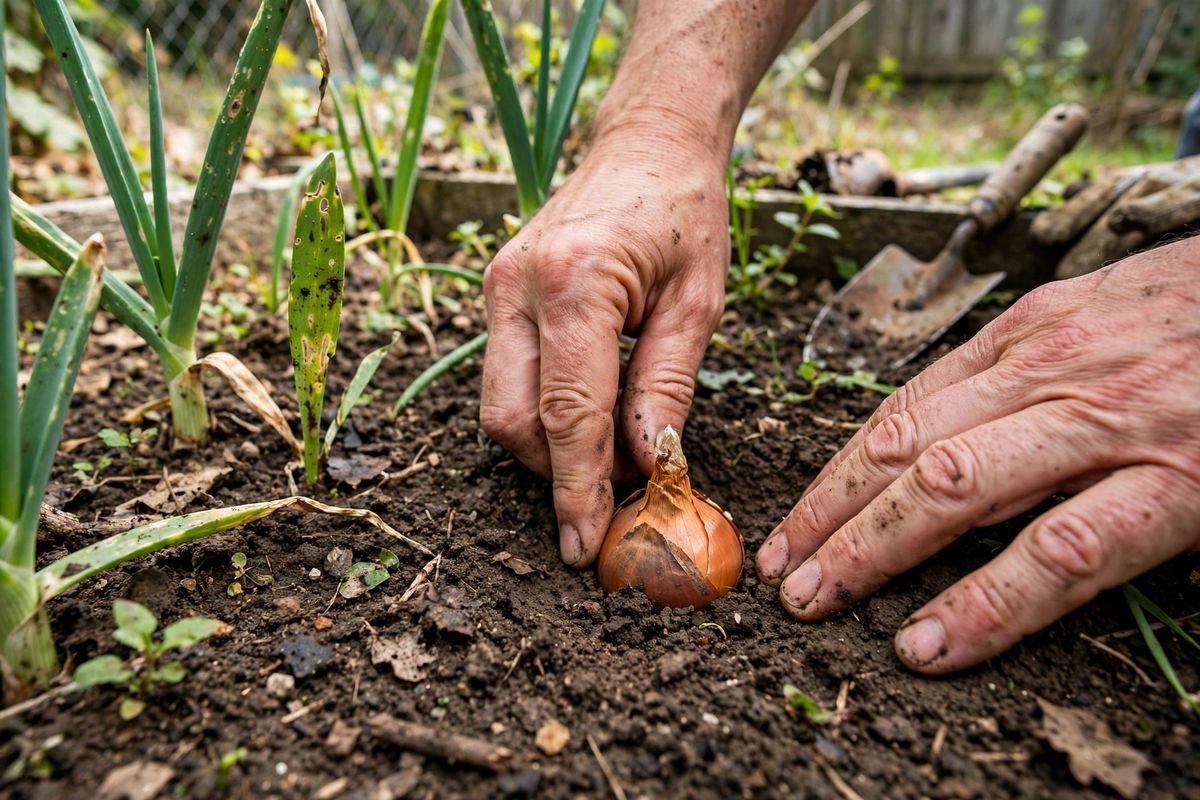
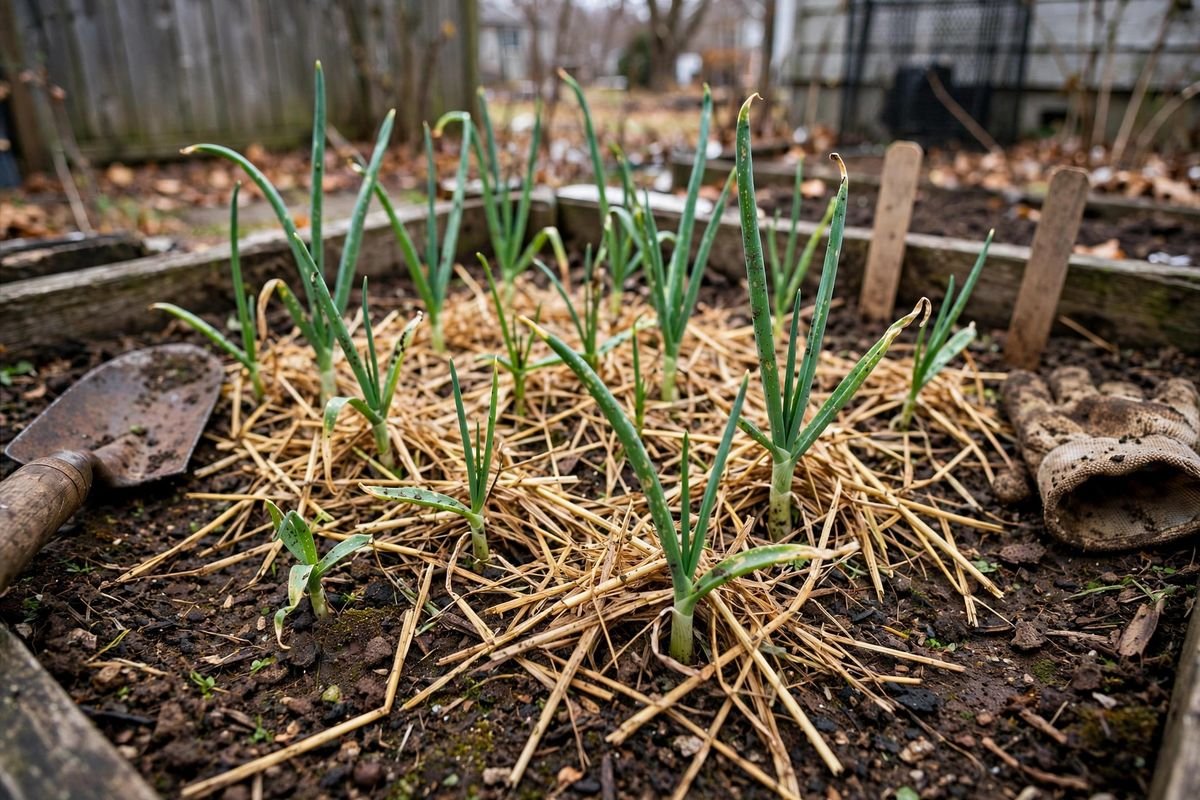
After setting, we water the row thoroughly to settle soil around roots and bases, then check that no sets are left perched on the surface. Fall-planted onions root best in soil that stays lightly moist for the first few weeks, so a dry fall may need one or two extra waterings before winter rains take over. A garden straw mulch for vegetables applied right after planting holds that moisture and begins winter protection at the same time. Planting slightly deeper than spring sets, within the ranges above, also helps resist freeze-thaw heaving in colder fall gardens.
Watering, Feeding, and Winter Mulch
While tops are growing in fall and again in spring, onions use about an inch of water per week. Shallow roots dry quickly in wind and sun, yet crowns rot in standing water, so steady light moisture in well-drained soil is the target. In many regions, fall and winter rain covers much of this need once plants are established. During dry spells, we water at the base in the morning and let the surface dry slightly between drinks. Spring growth is the thirstiest stage, when leaves are expanding and bulbs begin to swell; letting the bed dry out hard during bulbing can cut final size.
Feeding stays moderate. Compost at planting plus a light side-dressing of balanced organic fertilizer in early spring, as growth resumes, covers most home garden beds. Onions respond to steady nitrogen early in the season for leaf growth, since more healthy leaves support a larger bulb later. Once bulbs begin to swell visibly and necks start to soften, heavy feeding is no longer useful and watering should taper as harvest nears. Container onions need closer attention: a wide pot with fresh mix, regular watering, and a diluted liquid feed every few weeks through active growth, since pots dry and deplete faster than beds.
Mulch is close to nonnegotiable for overwintered onions in cold regions. After planting and initial watering, we tuck 2 to 3 inches of clean straw or shredded leaves around the rows, keeping a small gap at each neck so growth is not smothered. Mulch insulates crowns, softens freeze-thaw cycles that can push sets out of the ground, and keeps winter weeds down. In mild regions, a lighter layer still helps with moisture and weeds. In late winter, as days lengthen, we pull mulch slightly back from the rows so soil can warm and crowns stay drier, while leaving mulch between rows for weed control. A lightweight row cover over hoops during the sharpest cold snaps adds protection in borderline regions, echoing the fall planning in what to plant in October guides for other overwintered crops.
Pests, Diseases, and Spring Bolting
Fall onions face fewer insect pressures than spring plantings in many gardens, but a few problems deserve attention. Onion maggots can tunnel in bulbs in cool, wet soil; rotation away from recent allium beds and prompt removal of damaged plants help. Thrips hide in leaf folds during dry spring weather and leave silvery streaks; steady watering and a firm spray of water reduce light infestations. Slugs chew young tops in damp fall beds, and handpicking plus tidy mulch edges keeps numbers low.
Diseases follow wet conditions. White rot and basal rot show up as yellowing leaves and soft, decaying bases, often in poorly drained spots. Improving drainage, rotating alliums to a fresh bed for several years, and removing affected plants with the surrounding soil limit spread. Downy mildew can streak leaves in cool, damp spring weather; wider airflow, morning watering, and removing heavily spotted leaves slow it down. Botrytis leaf blight appears in humid spells as small pale spots. None of these problems require panic in a home bed, but they reward the loose, drained soil and rotation habits built into the earlier sections.
Bolting deserves its own note because it confuses many first-time fall growers. A bolted onion sends up a thick flower stalk from the center, and the bulb forms layers around a tough core. Large sets, sudden cold snaps after warm fall growth, and varieties mismatched to the region raise the odds. Cutting the stalk early does not restore storage quality, so we mark bolted plants for first use in the kitchen. Choosing small sets, region-matched transplants, and steady fall growth rather than lush late growth all lower the risk next season.
Harvesting and Curing Fall Onions
Green onions from fall plantings can be pulled whenever the tops reach a useful size, often within 60 to 90 days in mild weather or in early spring after overwintering. We harvest every other plant in a bunching row so the rest keep room to grow. Bulb onions take longer: fall-planted bulbs typically mature the following late spring to early summer, when about half the tops have yellowed and fallen over naturally. That flop signals the bulb has finished growing and the neck is beginning to dry.
We loosen bulbs with a fork on a dry morning, lift them gently, and avoid bruising, since bruises shorten storage life. Bulbs then cure in a warm, dry, shaded spot with good airflow for one to three weeks, until necks are fully dry and outer skins rustle. After curing, we trim roots and cut tops to about an inch above the bulb, then store bulbs in a cool, dry, dark place with air circulation. Fall-planted bulbs often store a shorter time than spring-planted storage types, so we use them earlier in the season and check stored bulbs regularly. Sweet short-day types in particular are best enjoyed within a few months, while firmer intermediate types hold longer. A sturdy mesh produce storage bag for onions keeps cured bulbs ventilated far better than a sealed bin, which traps the moisture curing worked to remove.
Troubleshooting Fall-Planted Onions
Why did the sets push out of the ground in winter?
Freeze-thaw cycles heave shallow sets upward. Planting about an inch deep, firming the soil at planting, and mulching 2 to 3 inches deep all reduce heaving. Any set found sitting on the surface in late winter can be pressed back into moist soil promptly.
Why did the onions bolt in spring instead of bulbing?
Large sets and cold stress are the common triggers, since the plant reads winter cold as a signal to flower. Use smaller sets or transplants, match day-length type to the region, and avoid lush late-fall growth. Bolted bulbs should be used first and will not store well.
Why did crowns rot over winter?
Soggy soil is the usual cause. Onions need drainage more than insulation alone. Raised beds, looser soil, and mulch that protects without sealing in standing water prevent most winter rot. Beds that puddle after rain need drainage work before the next fall planting.
Why are spring bulbs smaller than expected?
Small bulbs usually trace back to crowding, weed competition, dry soil during bulbing, or a day-length mismatch. Thin to final spacing, keep the bed weeded, water steadily in spring, and confirm the variety type fits the region before the next planting.
FAQ
Can onions be planted in fall in cold northern gardens?
Sometimes, but results vary. Hardy bunching onions and leeks overwinter more reliably than bulb onions in cold regions. Many northern gardeners mulch heavily and accept some loss, or plant bulbs in very early spring instead. Regional extension calendars give the clearest local answer.
Are sets or transplants better for fall planting?
Transplants bolt less and size reliably in suitable regions. Small sets are faster to plant and work well where winters are mild. Large sets carry the highest spring bolting risk and are best avoided for overwintering.
How deep should fall onion sets be planted?
About 1 inch deep with the pointed tip up, so the tip sits just below the surface. That depth anchors the set against heaving while keeping the neck close to light and air as growth resumes.
When are fall-planted onions ready to harvest?
Green onions are ready in about 60 to 90 days of active growth. Bulbs mature the following late spring to early summer, when roughly half the tops have yellowed and fallen over, followed by one to three weeks of curing.
Sources & Further Reading
- West Virginia University Extension — Growing Traditional Winter Potato Onions, fall planting and overwintering guidance (extension.wvu.edu)
- University of Georgia Cooperative Extension — Fall cool-season crop guidance, fall allium planting windows (caes.uga.edu)
- University of Delaware Cooperative Extension — Fall and Winter Crops for High Tunnels, allium overwintering notes (udel.edu)
- Utah State University Extension — onion production and planting guidance for home gardens (extension.usu.edu)
More fall plantings to explore:
Fall onions ask for loose soil, the right start type for the region, and a honest read on winter ahead, then repay that planning with some of the earliest harvests of spring. Which start will go in first this fall, small sets for speed or transplants for size?