
This post may contain affiliate links. If you buy through links on this page, we may earn a commission at no extra cost to you.
As an Amazon Associate I earn from qualifying purchases.
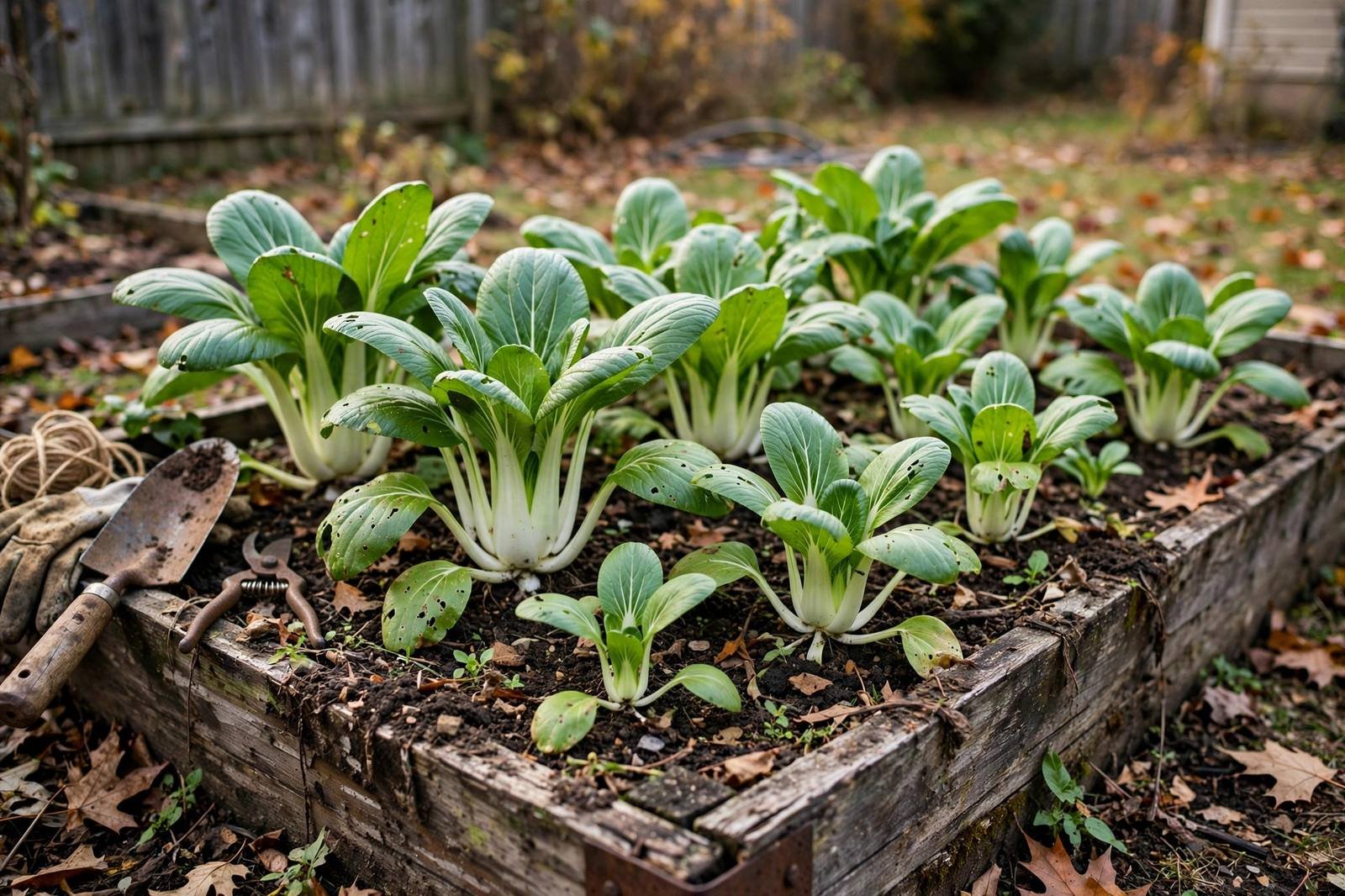
Bok choy might be the most rewarding fast crop in the fall garden. It grows quickly, asks for little beyond steady water and decent soil, and comes to the table with crisp white stalks and glossy green leaves that taste mild, sweet, and clean. Sown as summer fades, it fills the gap left by finished beans and tired cucumbers, and it keeps producing right up to the first true freeze.
This guide walks through fall timing, variety choices, bed prep, sowing, thinning, watering, feeding, flea beetle defense, and harvest. Bok choy works in raised beds, in-ground rows, and wide containers, and it pairs naturally with the other cool-season greens we rely on each autumn.
| Sun | Full sun, 6 or more hours; tolerates light afternoon shade |
|---|---|
| Soil | Fertile, well-drained, pH 6.0 to 7.0, compost enriched |
| Sowing depth | 1/4 to 1/2 inch deep |
| Spacing | 6 inches for baby heads, 10 to 12 inches for full-size heads |
| Water | About 1 inch per week, keep soil evenly moist |
| Days to harvest | 30 days for baby heads, 45 to 55 days for full-size heads |
| Frost tolerance | Handles light frost; protect below about 25 degrees F |
Why Fall Is the Best Season for Bok Choy
Bok choy is a cool-weather crop through and through. Warm soil and long days push it to bolt, and once a flower stalk rises from the center, leaf quality drops fast. Fall flips every one of those pressures: nights cool down, days shorten, and plants settle into steady leaf growth instead of racing to seed. Leaves harvested after a few chilly nights taste noticeably sweeter than anything a spring sowing manages before the heat arrives.
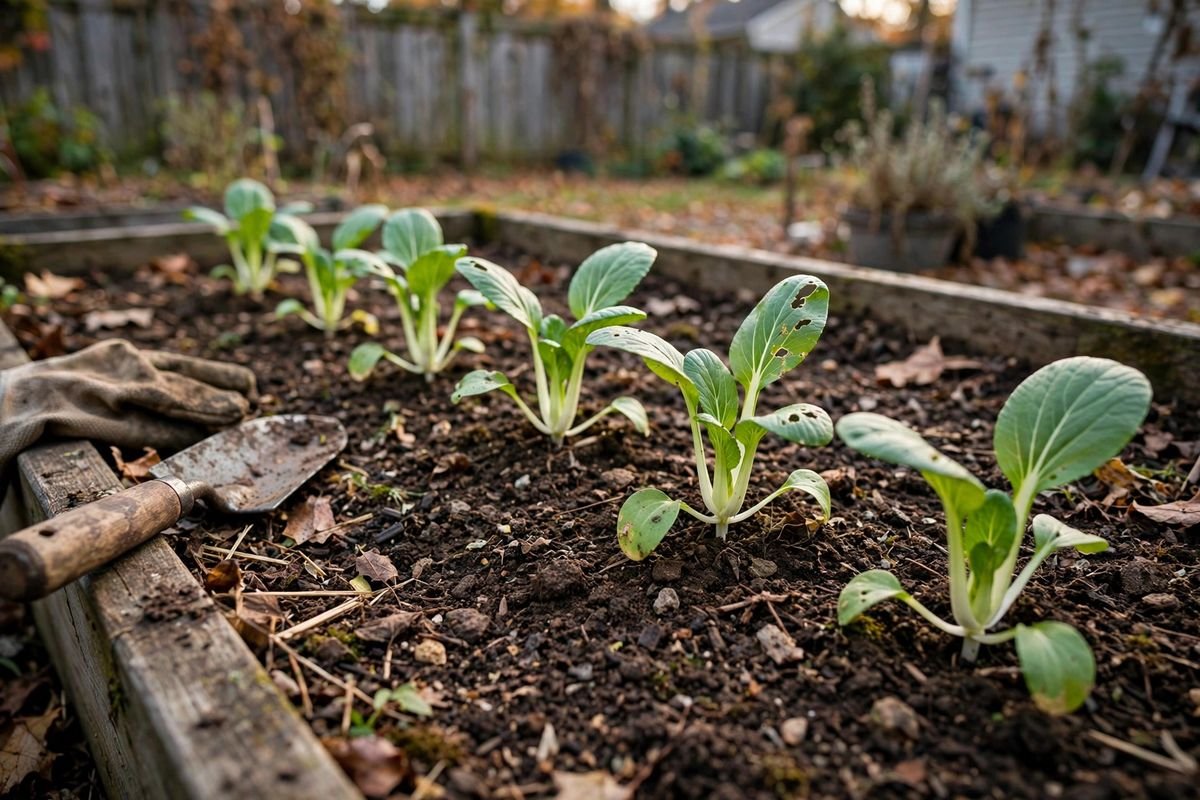
Timing matters more than any other decision with this crop. Use your local frost dates and regional planting guidance — not your USDA hardiness zone alone — to choose planting dates. For baby heads, we count back about 35 to 40 days from the first expected hard freeze. For full-size heads, we count back 55 to 65 days. Gardeners in mild-winter areas can keep sowing into early autumn and harvest through much of winter under light cover.
Bok choy also plays well with its neighbors. A bed shared with kale for fall and winter lets the fast bok choy come out just as the slower kale needs the room, and both crops want the same cool, moist conditions.
Choosing Bok Choy Varieties for Fall
Varieties fall into two camps. Full-size types such as Joi Choi and Black Summer form upright heads of thick white or pale green stalks and need the longest window. Baby and dwarf types, often sold as baby bok choy or Shanghai types with green stalks, finish in as little as 30 days and forgive a late start. Green-stalked types tend to handle cold a touch better, and several catalogs flag slow-bolt selections bred for shoulder-season sowing.
For a first fall planting, a mix works well: one row of a full-size type sown early in the window, and baby types for later succession sowings. A single packet of bok choy seeds holds plenty of seed for several rows, and the seed keeps for a few years stored cool and dry, so there is room to experiment across seasons.
Preparing the Bed
Bok choy grows fast and feeds steadily, so the bed should hold moisture and offer nutrition from day one. We rake 1 to 2 inches of finished compost into the top 6 inches of soil and pick out stones and clods so the small seeds sit at an even depth. A fine, level surface matters here; seeds sown in a chunky bed emerge in patches.
Soil pH between 6.0 and 7.0 suits bok choy well. If a recent test shows strongly acidic soil, garden lime applied at the rate the test recommends brings it into range, and brassicas generally appreciate the added calcium. Our guide to how to make compost at home covers the pile-to-bed routine that keeps these beds supplied season after season.
Drainage deserves a quick check too. Bok choy wants moist soil, not a swamp. If water stands on the bed an hour after a hard rain, raised rows or a raised bed will serve the crop better than an in-ground flat.
How to Sow Bok Choy in Fall
Direct Sowing Step by Step
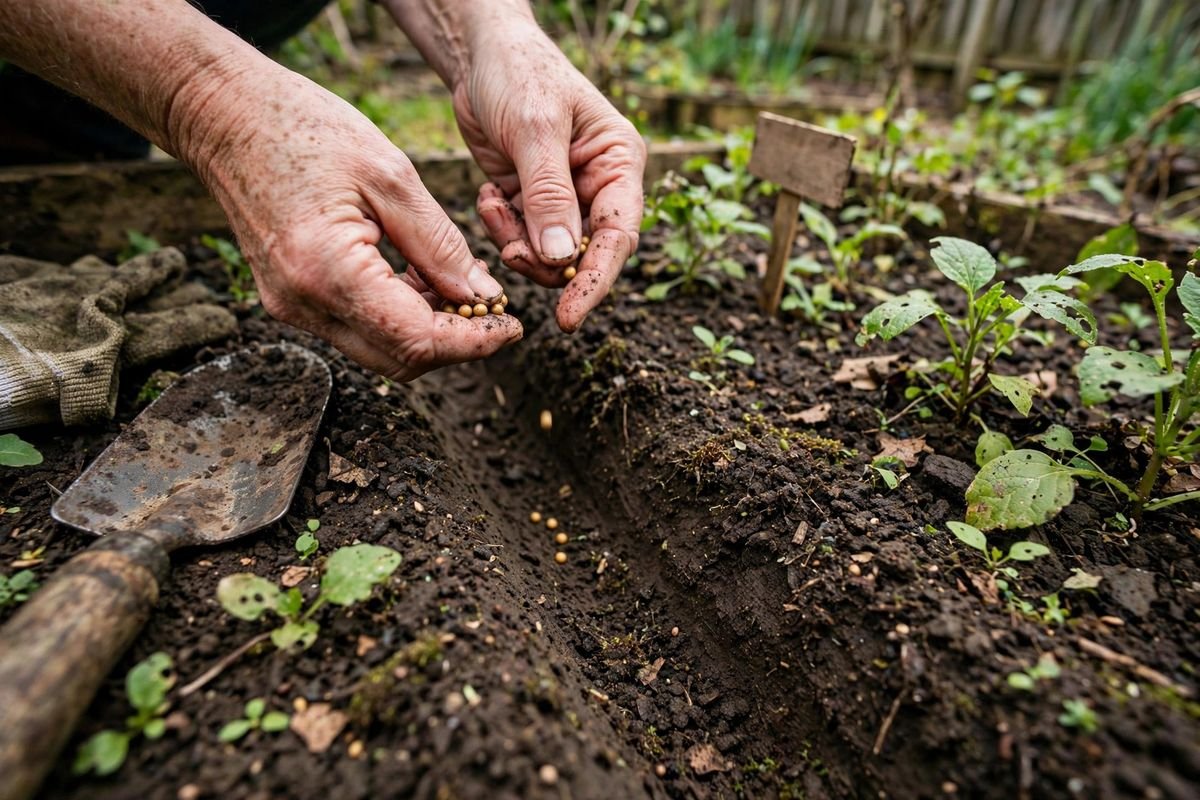
Direct sowing is the reliable route for fall bok choy. We mark rows 12 to 18 inches apart, sow seed 1/4 to 1/2 inch deep, and drop two or three seeds every 6 inches for baby heads or every 10 to 12 inches for full-size heads. The soil gets firmed lightly, then watered with a fine spray so seeds stay put. In mild soil, sprouts show in 4 to 7 days.
Laying a sheet of garden row cover for frost protection over the bed right after sowing holds surface moisture, keeps birds from scratching up the row, and blocks flea beetles during the most vulnerable week. Edges get pinned or buried so the cover stays put on windy days.
Succession Sowing
One big sowing gives one big harvest, then the bed sits empty. Short sowings every 10 to 14 days through the fall window spread the harvest out and always keep tender young heads coming. Each small planting is also quicker to thin and water than a whole bed maturing at once.
Starting Indoors as a Backup
Where late summer still runs hot, starting seed in cell trays indoors or in shade, then transplanting at 3 to 4 weeks old, dodges both scorching soil and the worst flea beetle pressure. Transplants go out in the cool of the evening, get watered in well, and wear row cover for the first week.
Spacing and Thinning
Crowded bok choy never sizes up. Plants left shoulder to shoulder stay spindly, yellow at the base, and invite rot where air cannot move. When seedlings reach about 2 inches tall, we thin baby plantings to one plant every 6 inches and full-size plantings to one every 10 to 12 inches, snipping extras at soil level rather than pulling, which disturbs the roots we want to keep.
The thinnings are not waste. Small pulled plants go straight into salads and stir-fries, so we thin with a harvest basket nearby. Roomy spacing also pays off at harvest, when big heads lift cleanly out of the bed instead of tearing against their neighbors.
Watering and Feeding
Steady moisture is the difference between crisp stalks and stringy, bitter ones. Bok choy that dries out between waterings slows down, turns sharp, and bolts at the next warm day. We keep the soil evenly moist with about an inch of water a week, more in sandy soil or during a warm fall spell, and water at the base in the morning so leaves dry quickly.
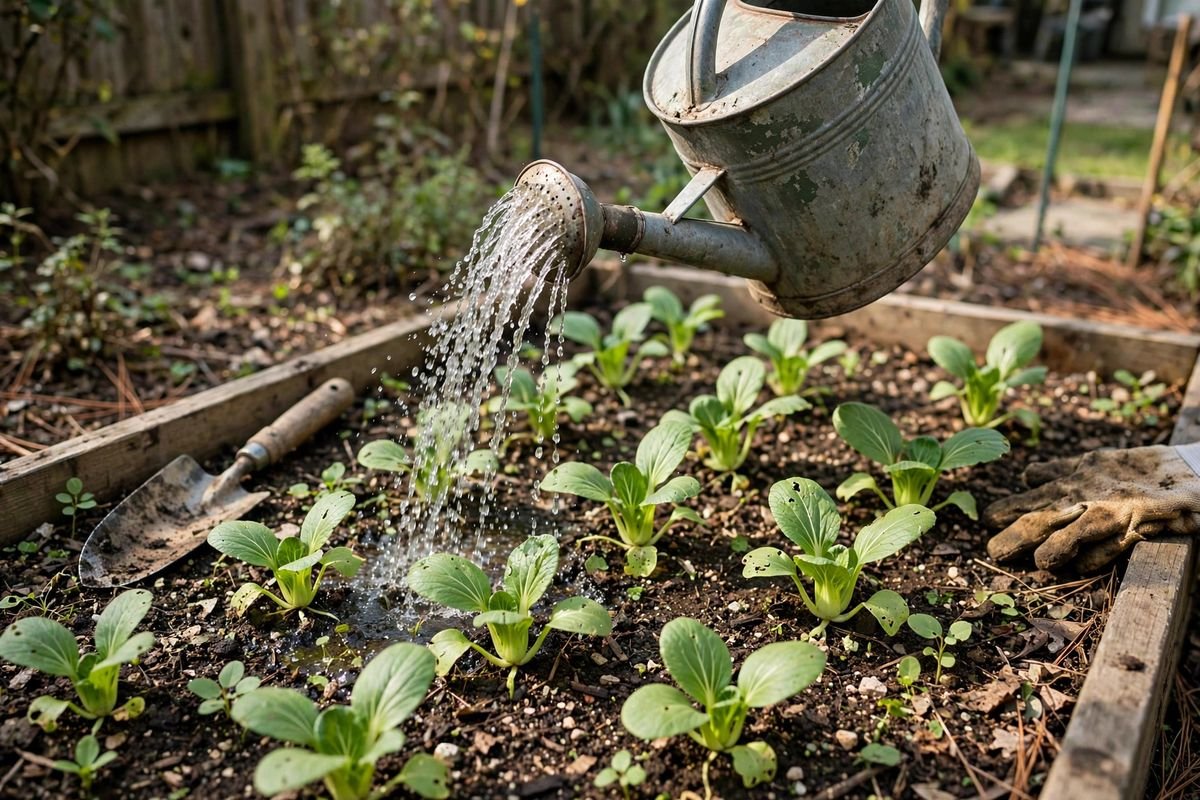
A light mulch of shredded leaves or clean straw between rows, laid once plants are a few inches tall, holds moisture and keeps mud from splashing onto the low leaves. Bok choy is a moderate feeder: compost at planting carries baby heads, while full-size heads benefit from one side-dressing of a balanced organic vegetable fertilizer halfway to harvest. Soft, overfed growth attracts aphids, so we keep nitrogen modest.
Growing Bok Choy in Containers
Bok choy adapts happily to pots. A container at least 12 inches wide and 8 inches deep holds several baby heads or one or two full-size plants. Fresh potting mix blended with compost gives the drainage and feed the crop wants, and the standard guidance in container gardening for beginners covers pot choice and watering rhythm. Containers dry faster than beds, so we check them daily while days stay warm, and we move pots against a sheltered wall when a hard freeze threatens.
Keeping Flea Beetles and Other Pests Away
Flea beetles are the pest most likely to find fall bok choy. These tiny black beetles chew pinholes in the leaves, and seedlings can stall under heavy feeding. Row cover from sowing day is the simplest answer, since beetles cannot reach the plants at all. Vigorous, well-watered plants also outgrow light damage quickly, and pinholes on outer leaves matter little once heads are rinsed for cooking.
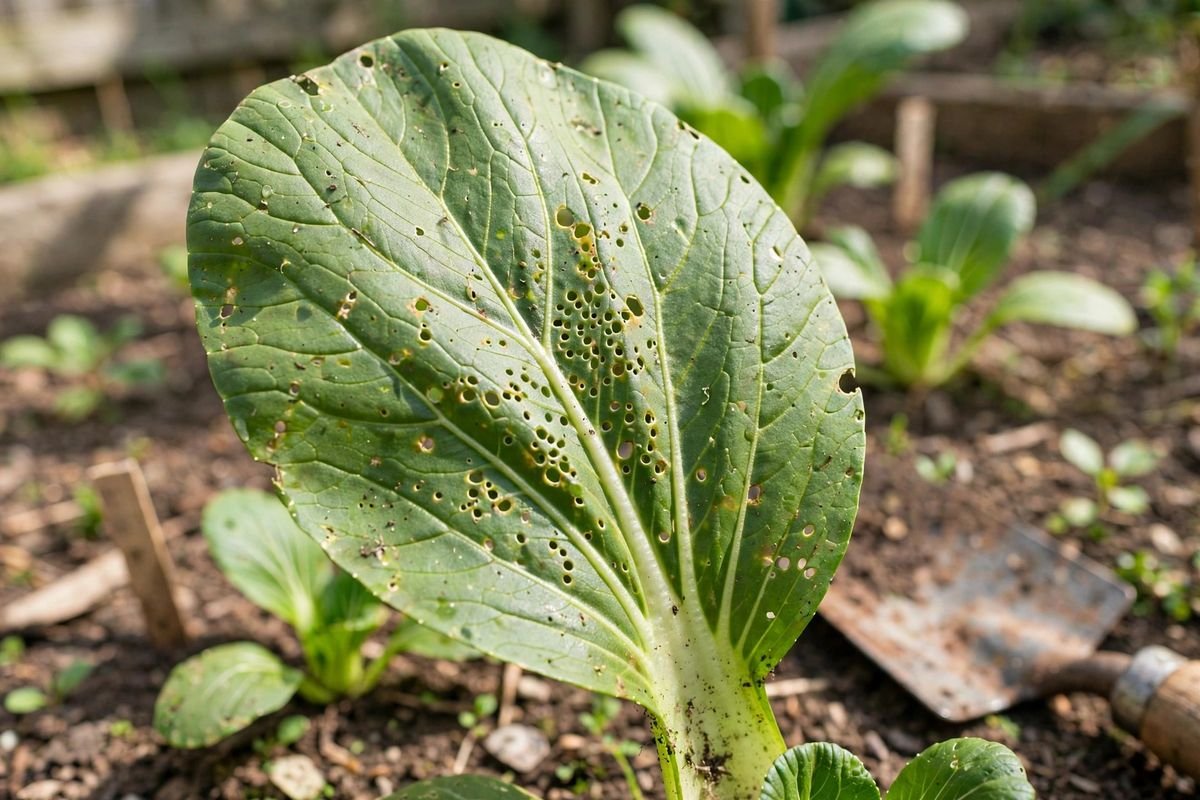
Cabbage worms turn up from time to time. We check leaf undersides during watering rounds and handpick the green caterpillars we find. Aphids cluster on stressed plants in dry spells; a firm spray of water repeated over several mornings usually knocks a colony back. Rotation rounds out the defense: we avoid following bok choy right behind other brassicas in a bed where disease showed up the season before.
Harvesting Bok Choy
Baby heads are ready about 30 days after sowing, when stalks are thumb-thick and leaves stand 4 to 6 inches tall. Full-size heads finish in 45 to 55 days. We cut whole heads at the base with a sharp knife, just above the roots, on a cool morning when stalks are fully crisp. Outer leaves can also be picked one at a time from larger plants, though whole-head harvest gives the cleanest result.
Harvest promptly as heads mature. Bok choy left standing in a warm spell bolts, and bolted plants turn bitter from the center out. Rinse heads well, since soil hides at the stalk bases, then spin or pat dry and refrigerate in a loose bag. Bok choy keeps about 4 to 5 days at its best; surplus heads chop and freeze well for soups after a quick blanch.
Troubleshooting Bok Choy
Why did my bok choy bolt before making a head?
Heat, drought stress, and root disturbance are the usual triggers. A late-summer sowing that lands in a hot week can flower instead of heading. Sowing a little later, keeping soil moist, and choosing slow-bolt varieties all lower the risk. A bolted plant is still edible if caught early, though the stalks toughen fast.
Why are the stalks stringy and the leaves bitter?
Almost always water. Uneven moisture and hot afternoons toughen the stalks and sharpen the flavor. Harvest younger, water more steadily, and lean on fall’s cool nights, which sweeten this crop noticeably.
Why are my leaves full of tiny holes?
That lacy pinhole pattern is flea beetle work. It looks worse than it is. Cover the next sowing with row cover from the first day and keep seedlings growing fast so they pass the vulnerable stage quickly.
Why are the outer leaves yellowing?
Yellowing at the base usually points to crowding, hungry soil, or soggy roots. Thin on time, side-dress lightly if growth stalls, and check that water drains away after rain instead of standing around the crowns.
Why did growth stop even though no freeze hit?
Bok choy slows sharply when days stay in the 40s. Plants often hold in place and resume during a warm spell. Floating row cover adds a few degrees and stretches the harvest window deeper into the season.
FAQ
How long does bok choy take to grow in fall?
Baby heads finish in about 30 days and full-size heads in 45 to 55 days, depending on variety and temperature. Cool weather stretches the calendar slightly but improves flavor and texture.
Can bok choy survive frost?
Light frost, yes, and a touch of cold even sweetens the leaves. Hard freezes in the low 20s can damage unprotected heads, so we cover plants or harvest ahead of severe cold.
Should we cut bok choy or pull it?
Cutting at the base with a knife keeps the bed clean and the head intact. Pulling works too, but it drags soil through the planting and disturbs neighbors we want to leave growing.
Can we sow bok choy more than once in fall?
Yes. Sowings every 10 to 14 days through the early fall window keep tender heads coming in sequence. Gardeners in mild-winter areas can continue later under row cover.
Sources & Further Reading
- University of Minnesota Extension — growing Chinese cabbage and bok choy in home gardens, sowing depth, spacing, and fall timing (extension.umn.edu)
- University of Maryland Extension — Asian greens and bok choy guidance on bolting, spacing, and steady moisture (extension.umd.edu)
- Cornell University College of Agriculture and Life Sciences — bok choy variety and spacing recommendations for home gardens (cals.cornell.edu)
- University of California Agriculture and Natural Resources — flea beetle identification and row cover management on leafy brassicas (ucanr.edu)
- Clemson University Cooperative Extension — leafy greens fact sheets covering soil pH, fertility, and harvest handling (hgic.clemson.edu)
More fall greens to explore:
Sow a short row this week, keep the water steady, and let the cool nights do the flavor work. Are your fall sowings going into raised beds, containers, or open rows this year?