
This post may contain affiliate links. If you buy through links on this page, we may earn a commission at no extra cost to you.
As an Amazon Associate I earn from qualifying purchases.
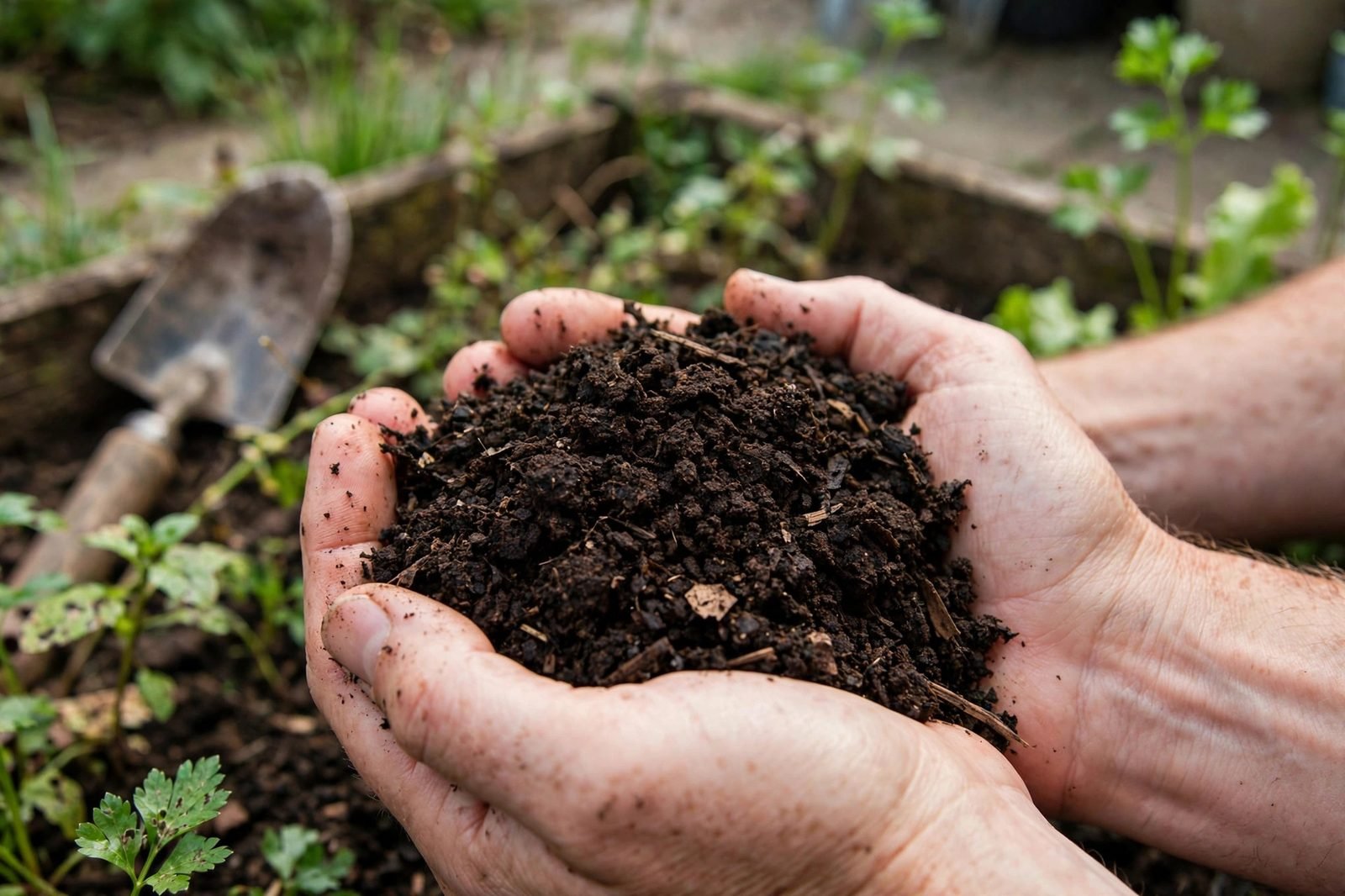
After months of feeding, turning, and waiting, the big question arrives: is it done? Spread compost too early and unfinished material can rob nitrogen from your plants as it keeps decomposing. Wait forever and you’re just… waiting. Fortunately, finished compost announces itself clearly once you know what to look for.
Here are the five reliable signs your compost is ready — plus what to do with the bits that aren’t quite there yet, and how to use the finished black gold.
| Look | Dark brown/black, crumbly, no recognizable scraps |
|---|---|
| Feel | Soft, moist, earthy — like forest soil |
| Smell | Rich and earthy, never sour or like ammonia |
| Temperature | Cool — same as ambient air, no heat in the core |
| Timeline | 2–4 months active management; 6–12 months hands-off |
Sign 1: You Can’t Recognize the Ingredients
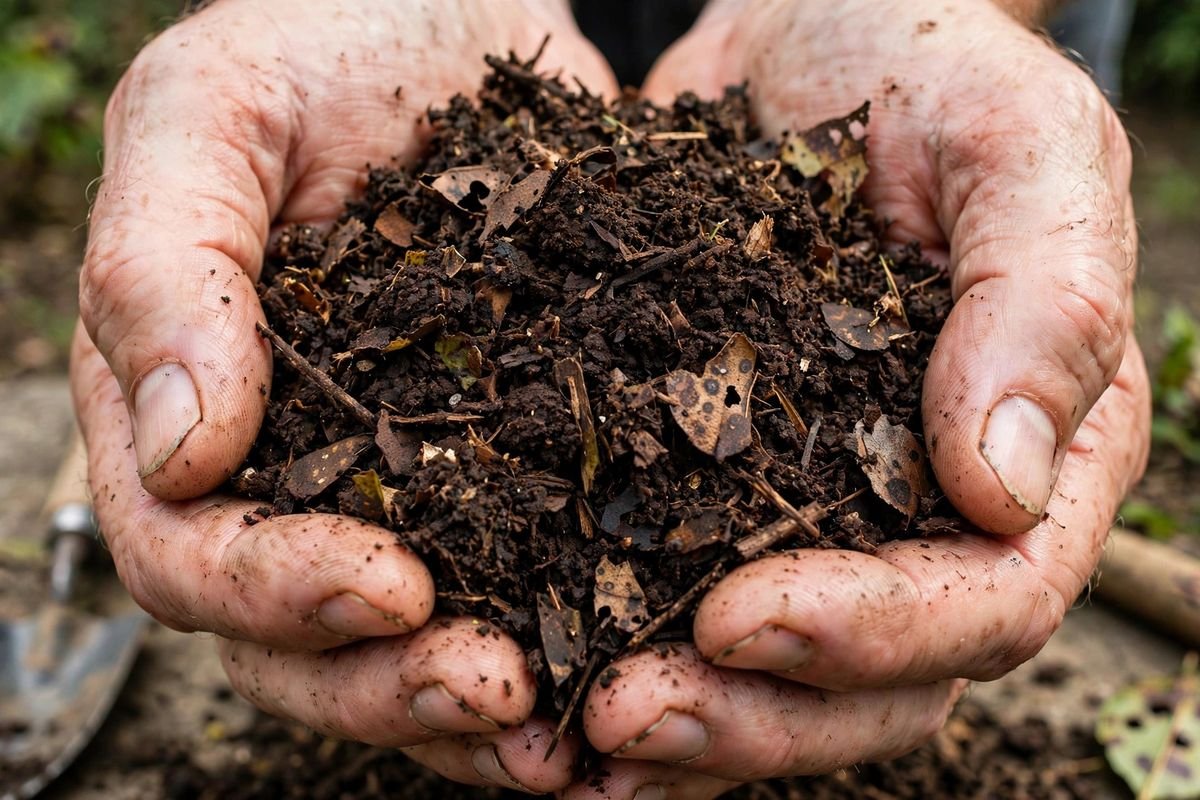
The most obvious sign: the original materials have disappeared. No identifiable leaves, no vegetable scraps, no newspaper headlines. Finished compost is uniform — dark, crumbly, and homogeneous. A few stubborn woody bits or eggshell fragments are normal; screen them out and toss them back into the next pile. But if you can still tell what went in, it needs more time.
Sign 2: The Color and Texture Are Right
Finished compost is dark brown to nearly black with a soft, crumbly texture — think chocolate cake crumbs. It should feel moist but not wet, and break apart easily in your hand. The squeeze test: a handful holds together loosely when squeezed, then crumbles when poked. Slimy means too wet and unfinished; dusty and pale means too dry or not broken down yet.
Sign 3: It Smells Like a Forest Floor
Trust your nose — it’s one of the most reliable compost instruments ever made. Finished compost smells rich, earthy, and pleasant, like soil in a forest. Any sour, rotten, or ammonia smell means active decomposition is still underway (or the pile went anaerobic). Earthy = done. Anything else = wait, turn, and check again in a few weeks.
Sign 4: The Pile Has Gone Cold
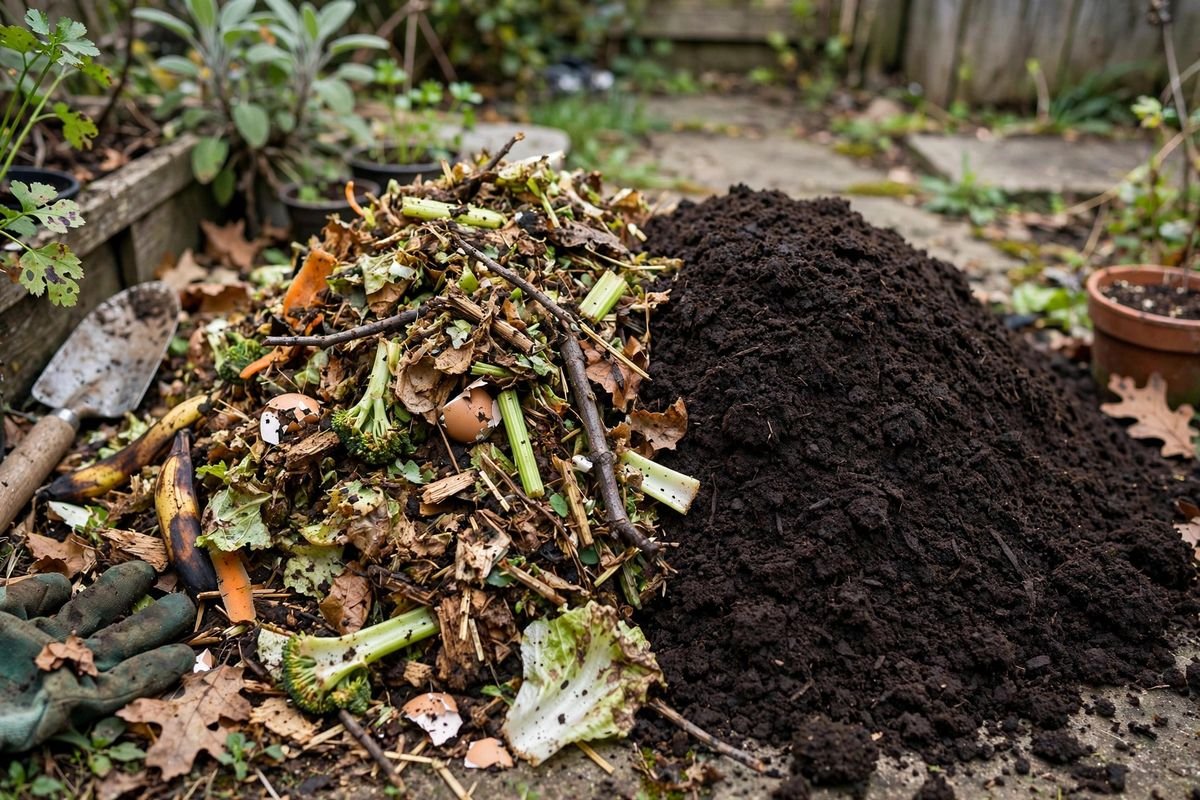
An active pile runs hot — 130–150°F in the core. A finished pile sits at ambient temperature no matter how deep you dig. If your compost thermometer reads the same as the air temperature for a week or more, and the other signs check out, the microbes have eaten everything digestible and moved on. (If the pile went cold early in the process, that’s a different story — see why compost won’t heat up.)
Sign 5: The Bag Test
Still unsure? Try the bag test: seal a handful of moist compost in a plastic bag and leave it at room temperature for 3–4 days. Open it and sniff. Earthy smell = finished and stable. Sour or ammonia smell = still actively decomposing; give it more time. This simple test catches “looks done but isn’t” compost that could cause nitrogen drawdown in your garden.
What to Do With the Unfinished Bits
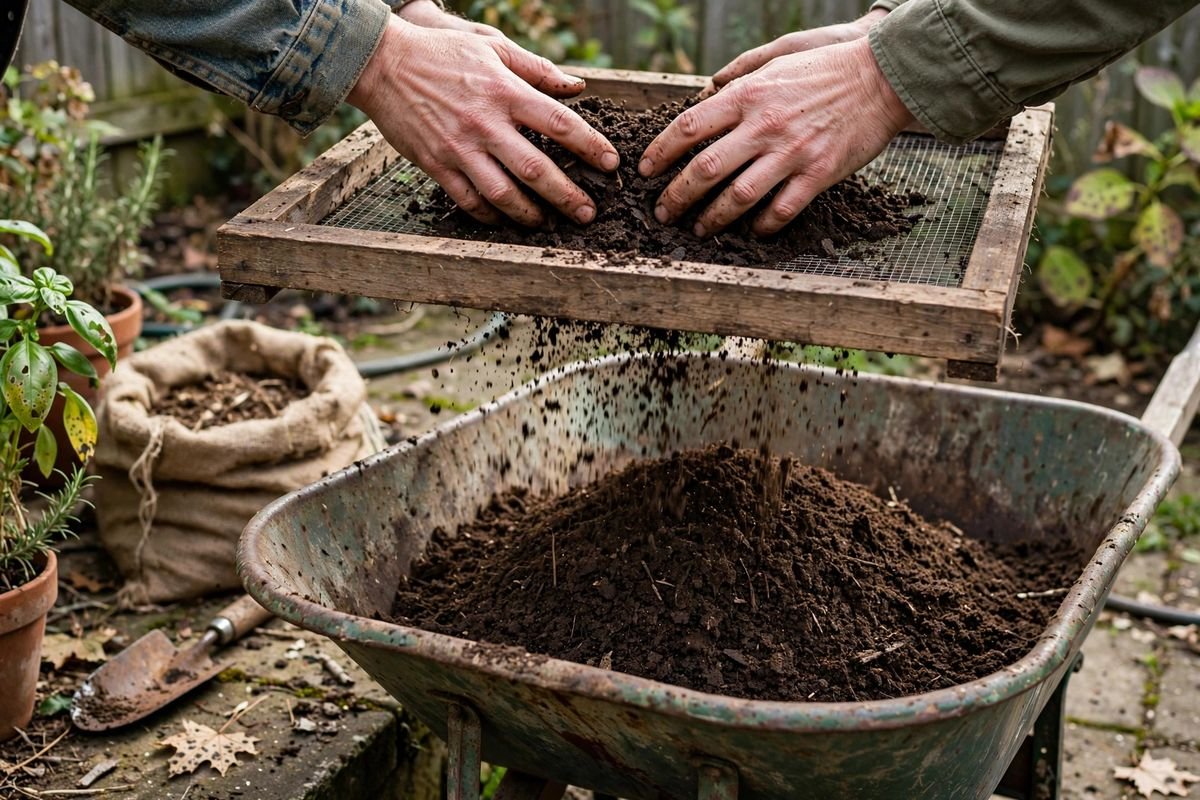
Almost no home pile finishes 100% uniformly. Screen the batch through a compost sifter screen — a simple frame with half-inch hardware mesh works — and you’ll get two products:
- The fines that fall through: finished compost, ready to use.
- The chunky leftovers on top: toss them straight back as the starter base for your next pile. They’re already inoculated with decomposer microbes — free compost starter.
How to Use Finished Compost
Now the payoff. Finished compost is the most versatile soil amendment there is:
- Top-dress garden beds: spread 1–3 inches over beds in fall or spring. Earthworms will work it in.
- Mix into potting soil: about one-third compost refreshes tired container mix beautifully (see how to refresh old potting soil).
- Side-dress growing plants: a ring of compost around the base of hungry plants mid-season.
- Brew compost tea: steep a shovelful in water for a gentle liquid feed (use it the same day).
- Top-dress the lawn: a thin quarter-inch layer feeds grass without synthetic fertilizer.
One caution: compost is wonderful, but it’s not a complete fertilizer. Heavy feeders like tomatoes may still want supplemental feeding through the season. And always use finished compost around plants — unfinished material ties up nitrogen as it continues breaking down, which is exactly what the bag test protects against.
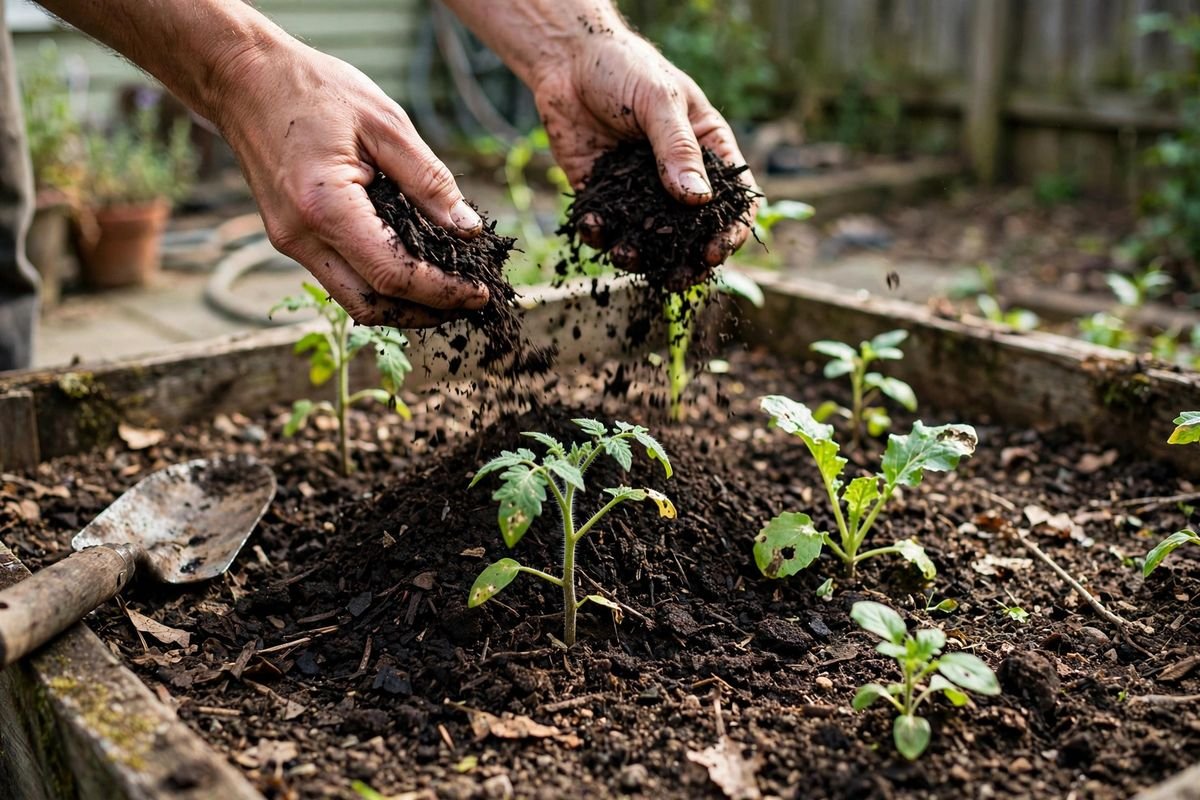
Compost vs. Fertilizer: Know the Difference
Finished compost is often called “black gold,” which tempts gardeners to treat it as a complete fertilizer. It’s better understood as a soil conditioner that happens to contain nutrients. Compost improves structure, water retention, drainage, and microbial life — things no bag of fertilizer does — but its nutrient content is modest and slow-release, typically around 1–2% nitrogen. Heavy feeders like tomatoes, corn, and squash usually still benefit from supplemental feeding during peak growth. Think of it this way: fertilizer feeds the plant, compost feeds the soil, and the healthiest gardens use both. A soil test every few years tells you exactly what your beds need beyond compost.
Storing Finished Compost
Don’t let finished compost sit in an open pile through winter rains — nutrients leach out. Store it covered: in a bin with a lid, in heavy-duty bags, or under a tarp. Kept dry-ish and covered, finished compost holds its quality for a year or more. Make it in fall with a small-backyard setup, store it through winter, and you’ll start spring with amendment ready to go.
FAQ
Can I use compost that isn’t 100% finished?
As a mulch on top of soil, mostly yes — it’ll finish decomposing in place. Mixed into soil around growing plants, unfinished compost can cause nitrogen deficiency. When in doubt, use it as top-dressing only.
Why is my compost still chunky after a year?
Usually woody materials that were added too large, or a pile that never got turned. Screen out the chunks, chop them smaller, and send them through another cycle.
How much compost should I apply?
A 1–3 inch layer on beds once or twice a year is the standard recommendation from extension services. More isn’t always better — excessive compost can push phosphorus levels too high over time.
Sources & Further Reading
- Cornell Waste Management Institute — compost maturity and stability guidance (compost.css.cornell.edu)
- University of Minnesota Extension — using compost in the home garden
- USDA Natural Resources Conservation Service — compost and soil health resources
- Oregon State University Extension — home composting publications
More composting posts to explore:
- How to Make Compost at Home: A Beginner’s Guide
- Why Is My Compost Not Heating Up? 7 Fixes
- How to Start a Vegetable Garden for Beginners
Dark, crumbly, earthy-smelling, cool, and bag-test approved — that’s finished compost. Go check your pile; it might be ready right now.
And if it isn’t quite there yet, that’s fine too — composting rewards patience more than perfection. Keep feeding, keep turning, and let the microbes do what they’ve done for millions of years. Your garden’s best amendment is already in progress.