
This post may contain affiliate links. If you buy through links on this page, we may earn a commission at no extra cost to you.
As an Amazon Associate I earn from qualifying purchases.
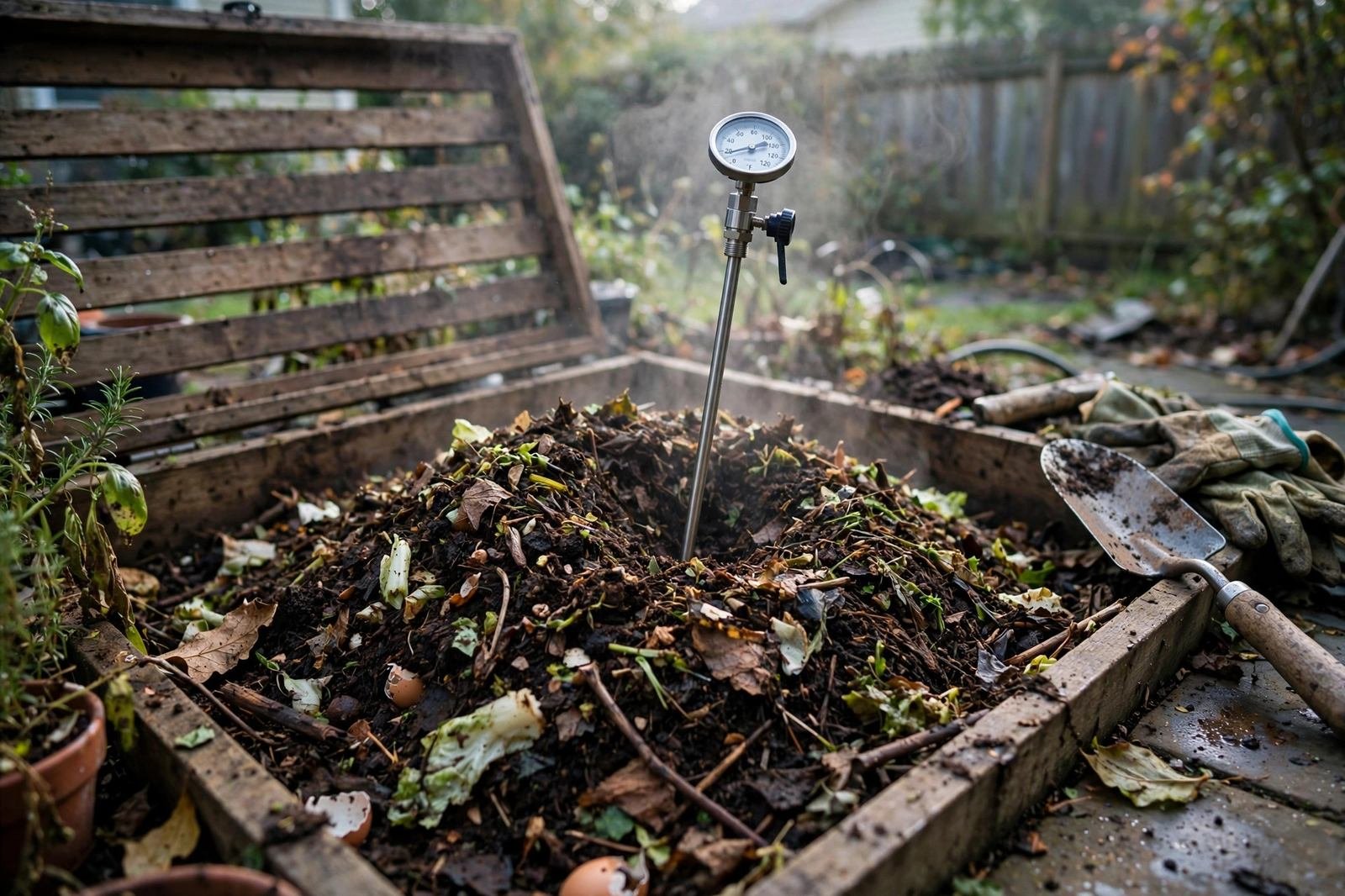
You built the pile, you followed the instructions, and… nothing. No steam on cool mornings, no warmth when you dig in a hand, just a sad lukewarm heap of yard waste sitting there. A cold compost pile is the most common composting frustration there is — and it’s almost always one of seven fixable causes.
Here’s the thing most guides skip: a pile doesn’t have to get hot to make compost. Cold composting works fine — it just takes 6–12 months instead of 2–4. But if you want heat (faster results, weed seeds and pathogens destroyed), run through this diagnostic in order. The culprit is usually in the first three.
| Most common cause | Pile too small to hold heat |
|---|---|
| Second most common | Too dry |
| Third | Too many browns, not enough greens |
| Target temperature | 130–150°F in the core for active composting |
| Reality check | Cold compost still works — just slower |
First: What Should “Hot” Feel Like?
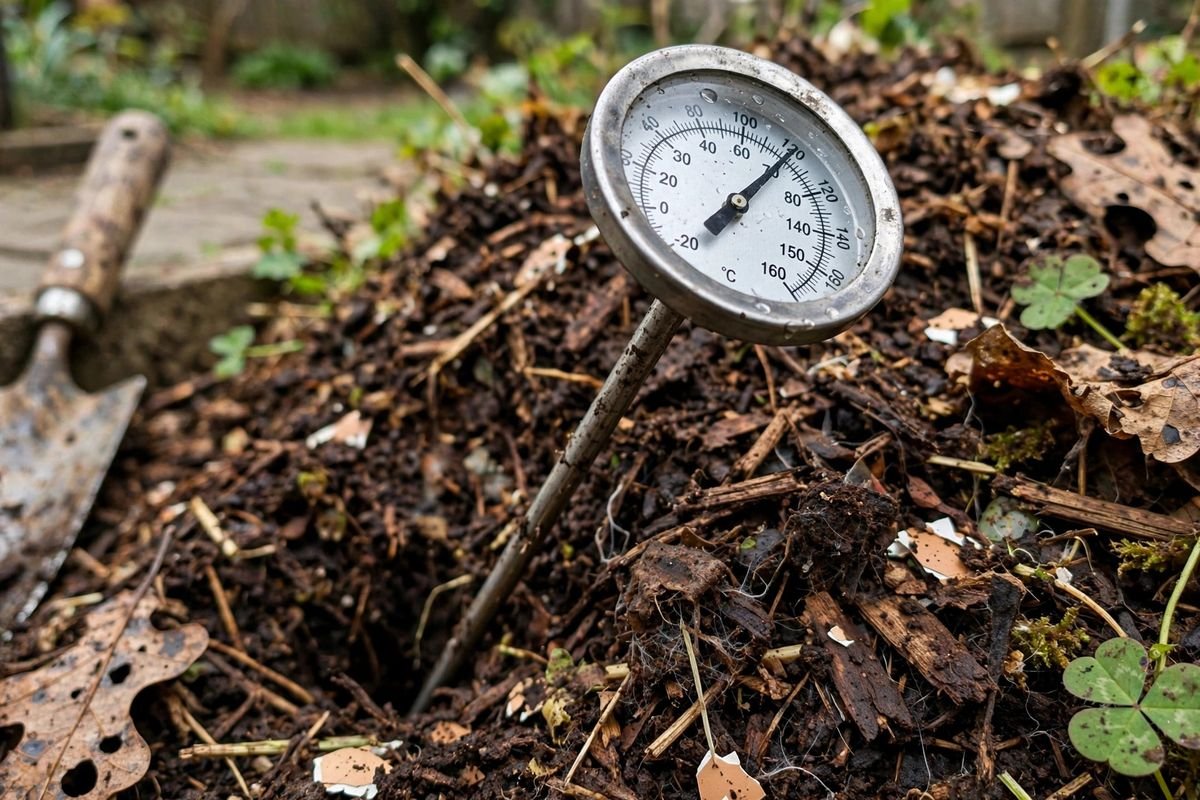
An actively composting pile runs 130–150°F (55–65°C) in its core — hot enough that you pull your hand back after a few seconds. Steam on a cool morning is a great sign. A compost thermometer with a long probe takes the guesswork out; stick it into the center and check every few days. If you’re seeing under 100°F in a fresh, well-built pile, something needs adjusting.
Fix 1: Make the Pile Bigger
This is the number one cause, full stop. A pile smaller than about 3×3×3 feet can’t insulate its own core — heat escapes faster than microbes generate it. A five-gallon bucket of scraps will never get hot no matter how perfect the ratio.
The fix: build up to at least a cubic yard (3×3×3 feet) before expecting heat. Save up materials — bag fall leaves, stockpile shredded cardboard — and build the pile all at once rather than trickling in a handful a day. If space truly limits you (see composting in a small backyard), accept slower cold composting or switch to a tumbler, which insulates better than an open pile at small volumes.
Fix 2: Add Water
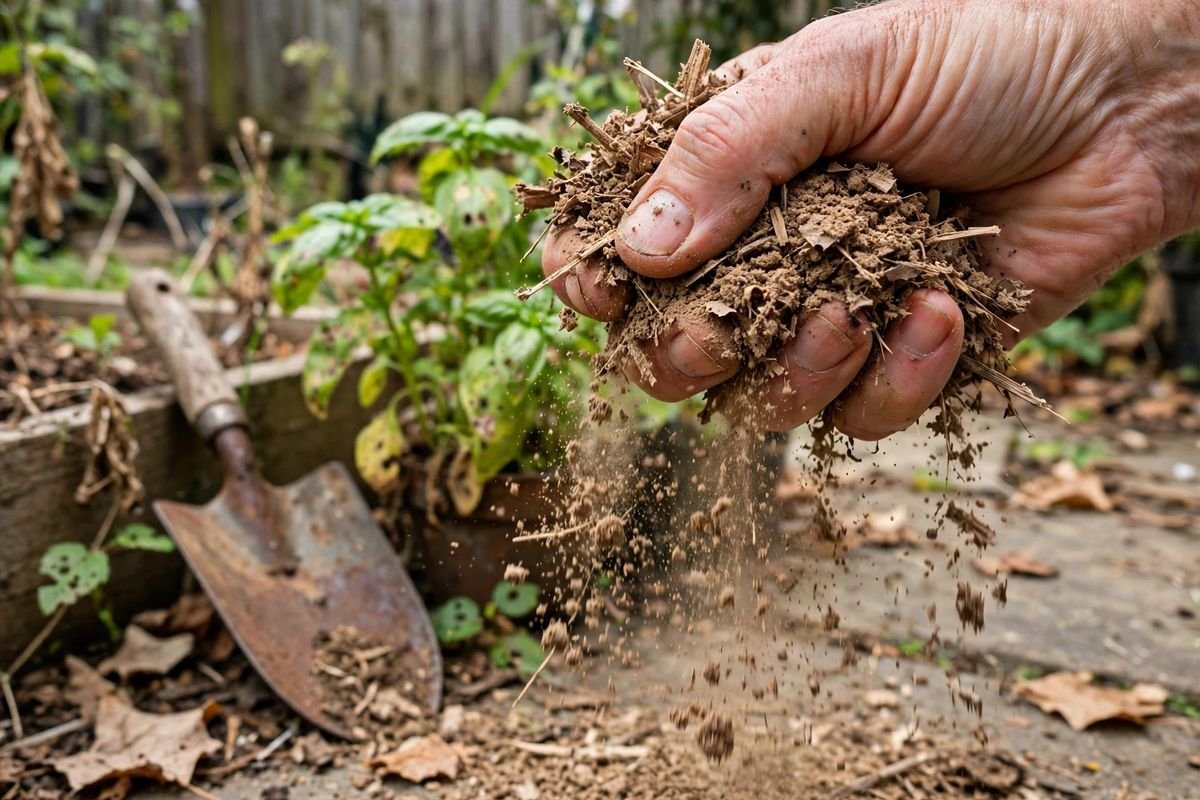
The second most common cause. Microbes need moisture to work — a dry pile is a dormant pile. Grab a handful from the core and squeeze: it should feel like a wrung-out sponge, releasing a drop or two of water. If it’s crumbly and dusty, it’s too dry.
The fix: water the pile thoroughly as you turn it, layer by layer, so moisture reaches the center — surface sprinkling doesn’t cut it. In dry climates or covered bins, check moisture every week or two. Fall piles built mostly of dry leaves are notorious for this; they look full but are secretly parched inside.
Fix 3: Add Nitrogen (More Greens)
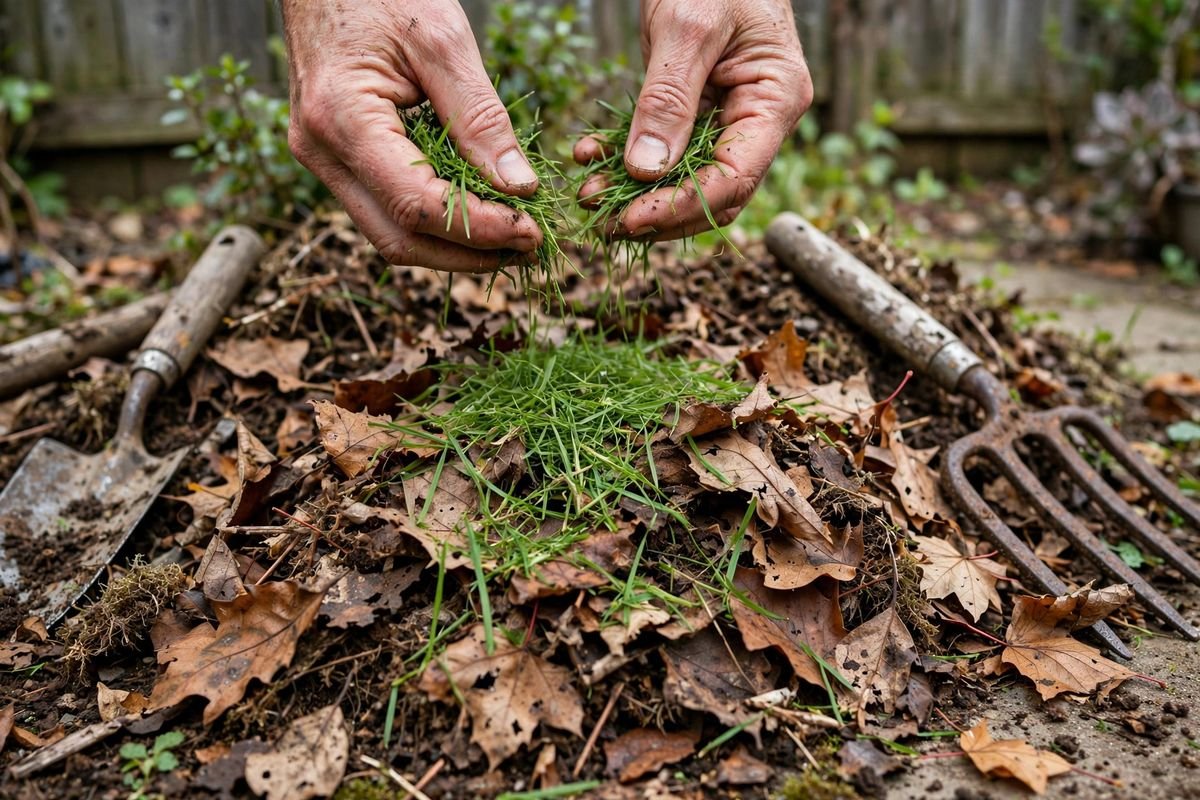
A pile of nothing but dry leaves and cardboard is all carbon, no fuel. Microbes need nitrogen to multiply and generate heat. The classic symptom: a big, damp, well-built pile of browns that just sits there for months.
The fix: add nitrogen-rich greens — fresh grass clippings, kitchen scraps, coffee grounds (coffee shops often give them away free), or even a nitrogen fertilizer sprinkled lightly through the pile in a pinch. Aim for roughly 3 parts browns to 1 part greens by volume, then turn and water. You should see temperatures climb within 2–4 days.
Fix 4: Turn It (Add Oxygen)
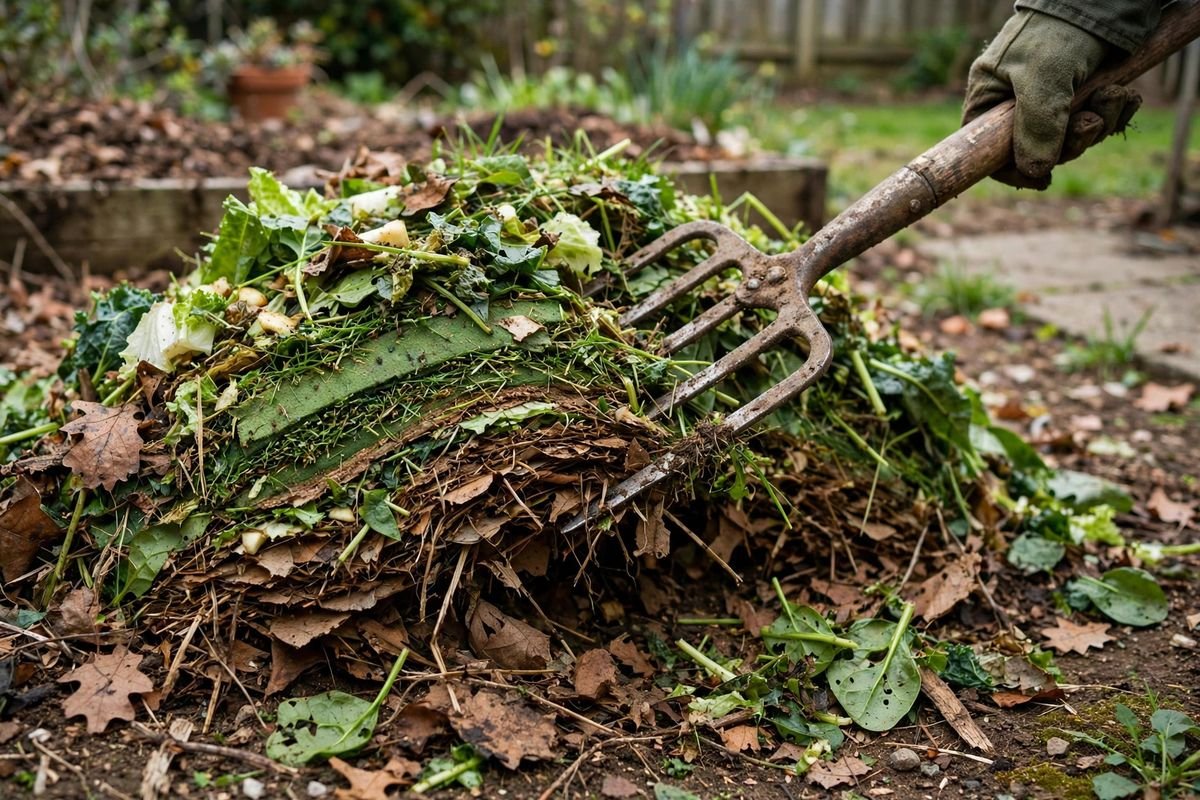
Compacted, matted, airless piles go anaerobic — they may smell sour or like ammonia, and they stay cold (or heat only in weird pockets). Grass clippings matted into a solid slab are the classic offender.
The fix: fork the whole pile over, breaking up mats and clumps. Mix coarse browns (straw, wood chips, shredded cardboard) through it to keep air channels open. Going forward, turn every 1–2 weeks while the pile is active. A compost aerator tool lets you punch air channels into a stationary bin without a full turn.
Fix 5: Chop Materials Smaller
Whole branches, intact cardboard boxes, and unshredded leaves decompose at a glacial pace because microbes can only work on surfaces. A pile of big chunky material has relatively little surface area — and stays cold.
The fix: shred leaves with a mower, tear cardboard into strips, chop thick stems. You don’t need confetti — 1–2 inch pieces are plenty. When rebuilding a cold pile, take the opportunity to break everything down as you turn it.
Fix 6: Check the Weather (It’s Probably Fine)
Piles naturally cool in late fall and winter. Ambient cold plus short days slow microbial activity — a pile that was steaming in September may go quiet in December. This is normal, not a failure.
The fix: mostly, patience. Keep feeding the pile through winter; it’ll reignite in spring. Insulating with a thick leaf blanket or a tarp helps hold what heat there is. Just don’t expect July performance in January.
Fix 7: Rule Out the Unfixable-By-Turning Stuff
A few less common causes worth checking:
- Too many wood chips or sawdust: extremely high-carbon materials can lock up nitrogen. Balance with extra greens.
- Chemical contamination: herbicide-treated grass clippings can suppress microbial activity. Know your inputs.
- It’s actually done: a pile that’s finished decomposing won’t heat up — there’s nothing left to eat. Check how to tell when compost is finished before “fixing” a pile that’s actually complete.
The Rebuild: Putting It All Together
For a truly stubborn cold pile, do a full rebuild in one session: fork everything out, layer it back with corrected ratios (3:1 browns to greens), chop big pieces, water each layer, and finish with a brown cap. Check the temperature in 3 days. Nine times out of ten, the pile takes off — there’s something deeply satisfying about watching that thermometer climb after weeks of nothing.
FAQ
How long before a new pile heats up?
A well-built pile typically shows heat within 24–72 hours. If there’s no warmth after a week, run the diagnostic above.
Can a pile get too hot?
Above about 160°F, beneficial microbes start dying. If your pile is scorching, turn it to release heat and add coarse browns for airflow. This is rare in home piles.
Does a tumbler heat up differently?
Tumblers insulate well and heat readily, but their small volume means they cool faster too. Spin every few days and keep the moisture right — same rules, smaller package.
Sources & Further Reading
- Cornell Waste Management Institute — compost physics and temperature management (compost.css.cornell.edu)
- University of Minnesota Extension — backyard composting troubleshooting
- Oregon State University Extension — home composting guidance
- USDA Natural Resources Conservation Service — composting fundamentals
More composting posts to explore:
- How to Make Compost at Home: A Beginner’s Guide
- How to Tell When Compost Is Finished: 5 Signs
- What Can and Cannot Go in a Compost Bin?
Size, water, nitrogen — check those three first and you’ll solve most cold piles by the weekend. Is your pile steaming yet?