
This post may contain affiliate links. If you buy through links on this page, we may earn a commission at no extra cost to you.
As an Amazon Associate I earn from qualifying purchases.
Onions and garlic are the two crops that pay for a good storage setup all winter long. A harvest of 20 pounds of onions and a few dozen heads of garlic can feed a kitchen from August to March, but only if the bulbs were cured well and stored cold and dry. Storage starts at harvest, when the tops fall over and the necks dry down.
This guide covers curing, the temperature and humidity targets for each crop, and the containers that keep air moving around the bulbs. The worked example below runs the numbers for 20 pounds of onions in a single crate. For the root crops that share the same cold store, see our guide on how to store root vegetables for winter.
Cure first: the step storage depends on
Curing is the drying step that turns a fresh bulb into a storage bulb. For onions, harvest when about half the tops have fallen over and the outer scales feel dry, then lift the bulbs with a fork and leave them in a warm, dry, well-ventilated spot for two to four weeks. University of Minnesota Extension puts the curing range at 75 to 90 degrees with good air flow, until the outer scales are dry and the neck is tight. Lift the bulbs before the ground freezes, and check your local first frost date when you plan the harvest: a USDA zone number alone does not tell you when that frost arrives, only how cold the winter gets.
Garlic cures the same way, in a warm, dry, airy place for three to four weeks, with the tops left on until the necks are dry. Dig garlic when the lower leaves have turned brown and about half of the upper leaves are still green, because bulbs left in the ground too long lose their outer skins and store poorly. Handle both crops gently at every step: a bruised bulb rots first, and one rotting bulb can spread damp and mold to the bulbs touching it.
Do not wash onions or garlic before curing. Brush off loose soil by hand and let the skins dry as they are. Trim the roots short after curing, and cut onion tops to about 1 inch above the bulb once the necks are fully dry.
Temperature and humidity targets for each crop
Onions and garlic want the same storage band: cold and dry. The table below gives the targets for each crop, drawn from university extension guidance, with the storage life you can plan around when the bulbs were cured well and handled gently.
| Crop | Temperature | Relative humidity | Storage life |
|---|---|---|---|
| Onions, dry bulb | 32 to 40 degrees F | 65 to 70 percent | 6 to 7 months |
| Garlic, softneck | 32 to 40 degrees F | 60 to 70 percent | 6 to 12 months |
| Garlic, hardneck | 32 to 40 degrees F | 60 to 70 percent | 3 to 9 months |
| Shallots | 32 to 40 degrees F | 60 to 70 percent | 6 to 8 months |
The temperature band matters more than the exact number inside it. Onions kept above 40 degrees start to sprout, and bulbs kept below freezing are injured and turn soft when they thaw. Humidity matters too: damp air grows mold on the necks, and air drier than 60 percent shrivels the bulbs over a long winter.
Do not store onions and garlic in the refrigerator for the long term. A home refrigerator runs near 40 degrees but at 50 to 60 percent humidity, and the bulbs sit in still air inside a closed drawer. Keep onions and garlic away from potatoes, because the moisture potatoes give off shortens onion storage, and the gases from onions push potatoes to sprout.
Our worked example: 20 pounds of onions in one crate
Here is the storage math for a common harvest: 20 pounds of onions in one slatted wooden crate. These are our own computed numbers with the assumptions stated below, so you can rerun them for your own harvest and your own crate size.
| Figure | Number | Assumption |
|---|---|---|
| Crate inside size | 18 by 12 by 10 inches | A standard slatted produce crate |
| Crate inside volume | 2,160 cubic inches | 18 times 12 times 10 |
| Bulbs in the crate | About 60 bulbs | 3 medium bulbs per pound, 3 inches across |
| Volume of the bulbs | About 850 cubic inches | Each 3-inch bulb is about 14 cubic inches |
| Free air space | About 1,300 cubic inches | Crate volume minus bulb volume |
| Air space per pound | About 65 cubic inches | 1,300 divided by 20 pounds |
| Weight, crate plus onions | About 22 pounds | Crate weighs about 2 pounds |
The number that matters is the free air space: about 65 cubic inches per pound, or about 60 percent of the crate volume left as air once the bulbs are in. That is enough for a slatted crate, because air moves through the gaps in the sides and over the top, and the bulbs dry out rather than sitting in damp still air. The rule that falls out of the math is simple: keep at least half the crate volume as free air, and do not fill above the rim. A crate heaped above the rim blocks the top air flow, and the bulbs in the middle stay damp and rot first.
Garlic packs tighter, so the same crate holds about 15 pounds of garlic heads with less air space per pound, about 45 cubic inches. Garlic heads are smaller than onion bulbs and settle into the gaps between each other, which leaves less free air. If your harvest is bigger than one crate, split it into two crates rather than heaping one crate high, because two half-full crates store better than one overflowing crate.
Check the crate once a month through the winter. Lift out any bulb that feels soft or smells off, and use the bulbs that are starting to sprout first, because a sprouting onion is still good to eat but will not keep much longer.
Braiding, bagging, and boxing
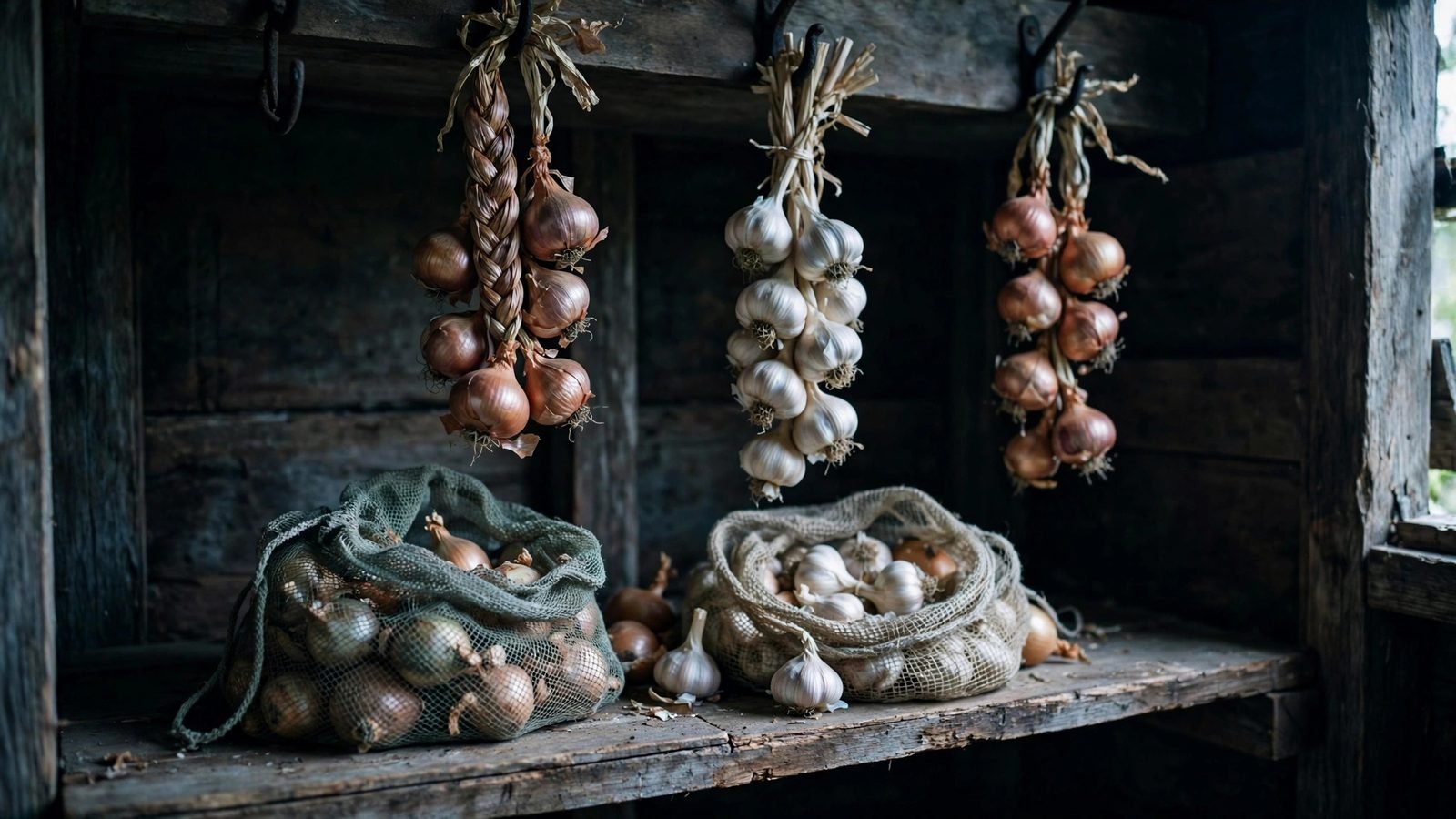
Braiding is the oldest way to store onions and softneck garlic, and it works because it hangs every bulb in moving air. Start with cured bulbs that still have long, dry tops, and braid three bulbs at a time, adding a new bulb with each twist, until the braid is about 18 inches long. Hang the braid from a hook in a cool, dry spot, and cut bulbs off the bottom as you use them, so the braid gets shorter from the bottom up.
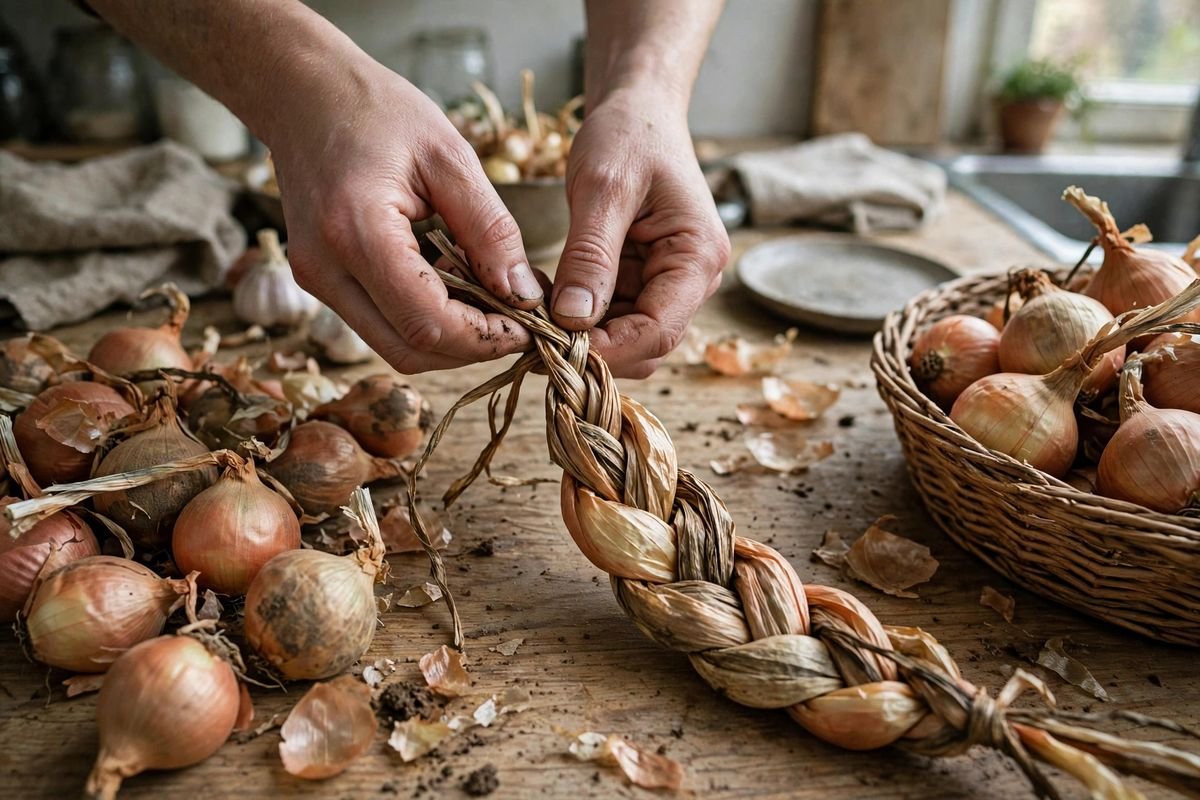
Hardneck garlic does not braid well, because its stem is stiff and snaps when bent. Store hardneck heads in mesh bags or open crates instead, and save the braiding for softneck garlic and onions. A braid holds about 12 to 15 bulbs, which is roughly 4 to 5 pounds of onions.
Mesh bags are the simplest container for both crops. A mesh bag hangs from a hook, lets air through on all sides, and shows the bulbs inside so you can spot a soft one without emptying the bag. If you need mesh bags for the harvest, you can browse mesh produce bags for onion storage on Amazon. We have not tested the products linked here, and we give no current store prices. Check each listing for current bag sizes and pack counts before you buy.
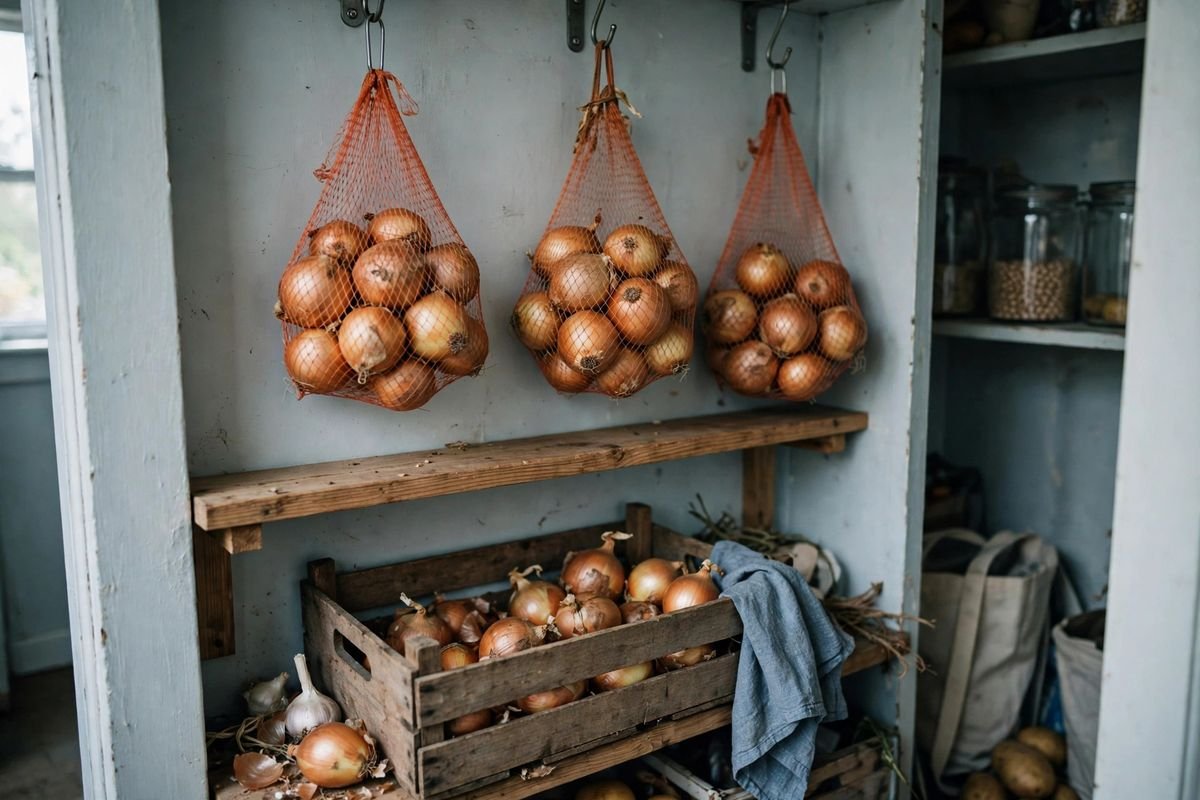
Wooden crates and slatted boxes are the best choice for a large harvest, because they stack, they breathe, and they hold the weight without tearing. Line the crate with a single layer of newspaper if the slats are wide enough for small bulbs to slip through, and leave the top open so air moves over the bulbs. If you need crates for the store, you can browse wooden storage crates for vegetables on Amazon.
Where to store: pantry, cellar, and garage
A cool pantry is the easiest store for most homes. Pick the coolest shelf, away from the stove and the heating vent, and hang the bags or braids from hooks so air moves around them. A pantry that holds 50 to 60 degrees through winter will keep onions for two to three months, which covers the fall, but it will not hold them to spring, because sprouting starts once the room warms up.
A cellar or unheated basement is the better store, because it holds near 40 degrees all winter with steady humidity. Set the crates on a shelf or a pallet, never straight on a concrete floor, because the floor sweats and wets the bottom of the crate.
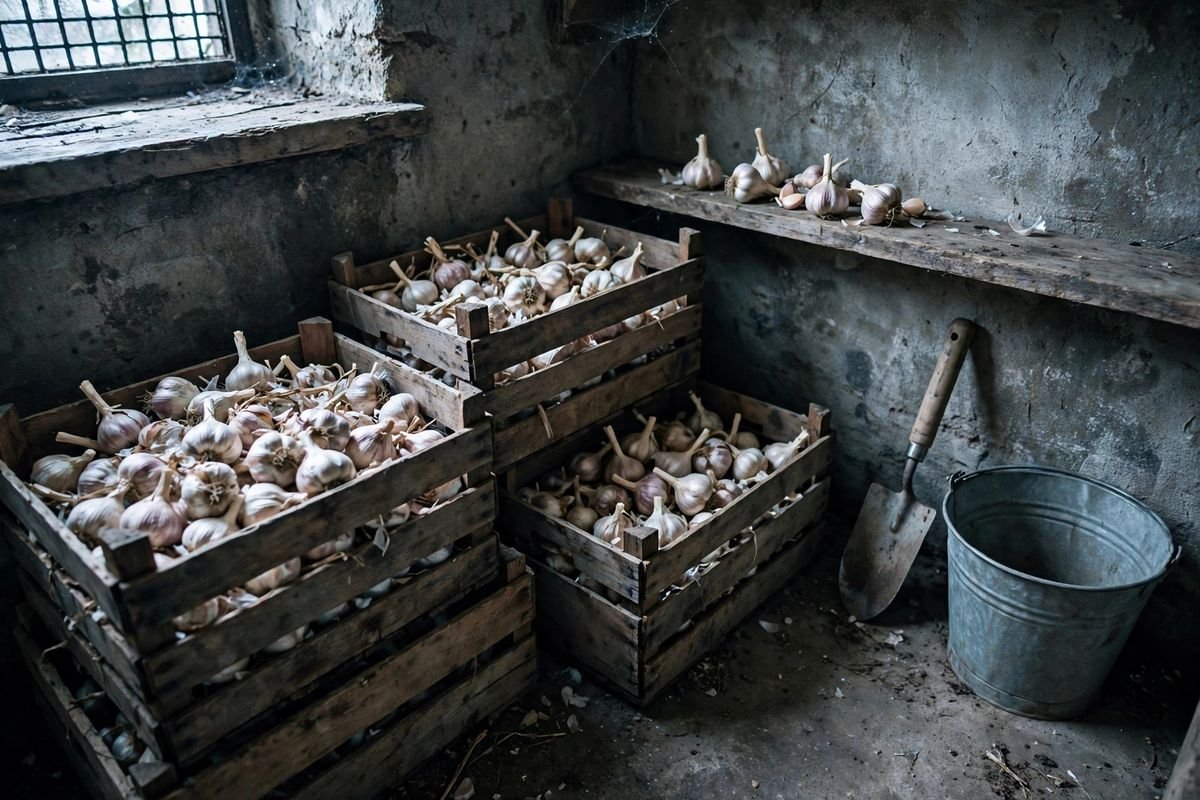
An unheated garage works when the cellar is full, but it needs more watching. Garages swing with the weather, warm on a sunny afternoon and cold on a clear night, and those swings push onions toward sprouting. Keep the crates away from the garage door, where the cold air pours in, and cover them with a cloth on the coldest nights.
Wherever you store them, keep the store dark. Light does not hurt cured onions the way it hurts potatoes, but a dark store stays cooler and steadier than a bright one, and the bulbs keep their skins better out of direct sun.
What spoils first and how to catch it
Soft necks spoil first. A bulb with a thick neck that never dried down holds moisture at the top, and mold starts there and works down into the bulb. Use thick-necked bulbs first at harvest time and never put them in long-term storage, because they will not last the winter no matter how cold the store is. The same goes for any bulb with a cut, a bruise, or a soft spot: eat it this week, do not store it.
Sprouting is the next thing to watch for. Onions sprout when the store warms past 40 degrees, and garlic sprouts when the store warms and the days lengthen in late winter. A sprouted bulb is still safe to eat, so cut off the green shoot and use the bulb. Sort the store once a month and pull the sprouting bulbs for the kitchen.
Mold shows up as a gray or black dust on the neck or between the outer scales, and it spreads fast in damp air. If you find mold on one bulb, pull it out, check its neighbors, and open up the air flow around the crate. Bulbs stored next to a damp wall or on a sweating floor are the ones that mold first.
Troubleshooting
Onions sprout in storage by December
Onions that sprout early were stored too warm, above 40 degrees, or were never cured fully and went into storage damp. Move the rest of the crop to the coldest spot you have, use the sprouting bulbs first, and next year cure for a full two to four weeks in warm, dry air before storing. For the fall planting that sets up next year’s storage crop, see our guide on how to plant onions in fall.
Garlic goes soft and moldy in the crate
Soft, moldy garlic was cured too short, stored damp, or packed in a solid box with no air flow. Cure garlic for three to four weeks in a warm, dry, airy place, and store it in a slatted crate or a mesh bag, never in a sealed plastic bag. For the fall planting that sets up next year’s garlic, see our guide on how to plant garlic in fall.
The store smells musty and damp
A musty store has poor air flow, damp walls, or crates sitting on a concrete floor. Lift the crates onto a pallet or a shelf, leave a gap behind them, and open a vent or a door on dry days to change the air.
Bulbs freeze in the garage
Frozen bulbs turn soft and watery when they thaw, and they will not store afterward. Move the crates to the warmest corner of the garage on cold nights, cover them with a cloth, and bring them indoors if a hard freeze is forecast. A simple thermometer in the store tells you when the temperature is dropping toward freezing.
Frequently asked questions
How long do onions last in storage?
Well-cured storage onions kept at 32 to 40 degrees and 65 to 70 percent humidity last 6 to 7 months. In a pantry near 50 to 60 degrees they last two to three months. Sweet onion types store for a shorter time than storage types, so eat the sweet ones first and save the storage types for late winter.
How long does garlic last in storage?
Softneck garlic kept cold and dry lasts 6 to 12 months, while hardneck garlic lasts 3 to 9 months. Hardneck types sprout sooner in late winter, so use them first and save the softneck heads for spring. Both types need the same curing and the same cold, dry store.
Can I store onions and garlic together?
Yes, if both are cured and kept in separate bags or crates. They want the same temperature and humidity, so they can share a store. Keep them in separate containers so the bulbs do not bruise each other, and keep both away from potatoes, which shorten onion storage and sprout faster near onions.
Should I refrigerate onions and garlic?
Only for short-term eating stock. A refrigerator runs near 40 degrees but with still air and humidity that does not suit long storage, and the bulbs can pick up moisture and sprout. Keep the winter supply in a cool, dry, ventilated store, and keep only a week’s worth in the kitchen.
Sources and further reading
- University of Minnesota Extension, Growing Onions in Home Gardens
- University of Maryland Extension, Growing Onions in a Home Garden
- University of Minnesota Extension, Growing Garlic in Minnesota
Related reading: How to Store Root Vegetables for Winter, How to Plant Onions in Fall, How to Plant Garlic in Fall, How to Grow Leeks in Fall
By the Pot and Plot Team