
This post may contain affiliate links. If you buy through links on this page, we may earn a commission at no extra cost to you.
As an Amazon Associate I earn from qualifying purchases.
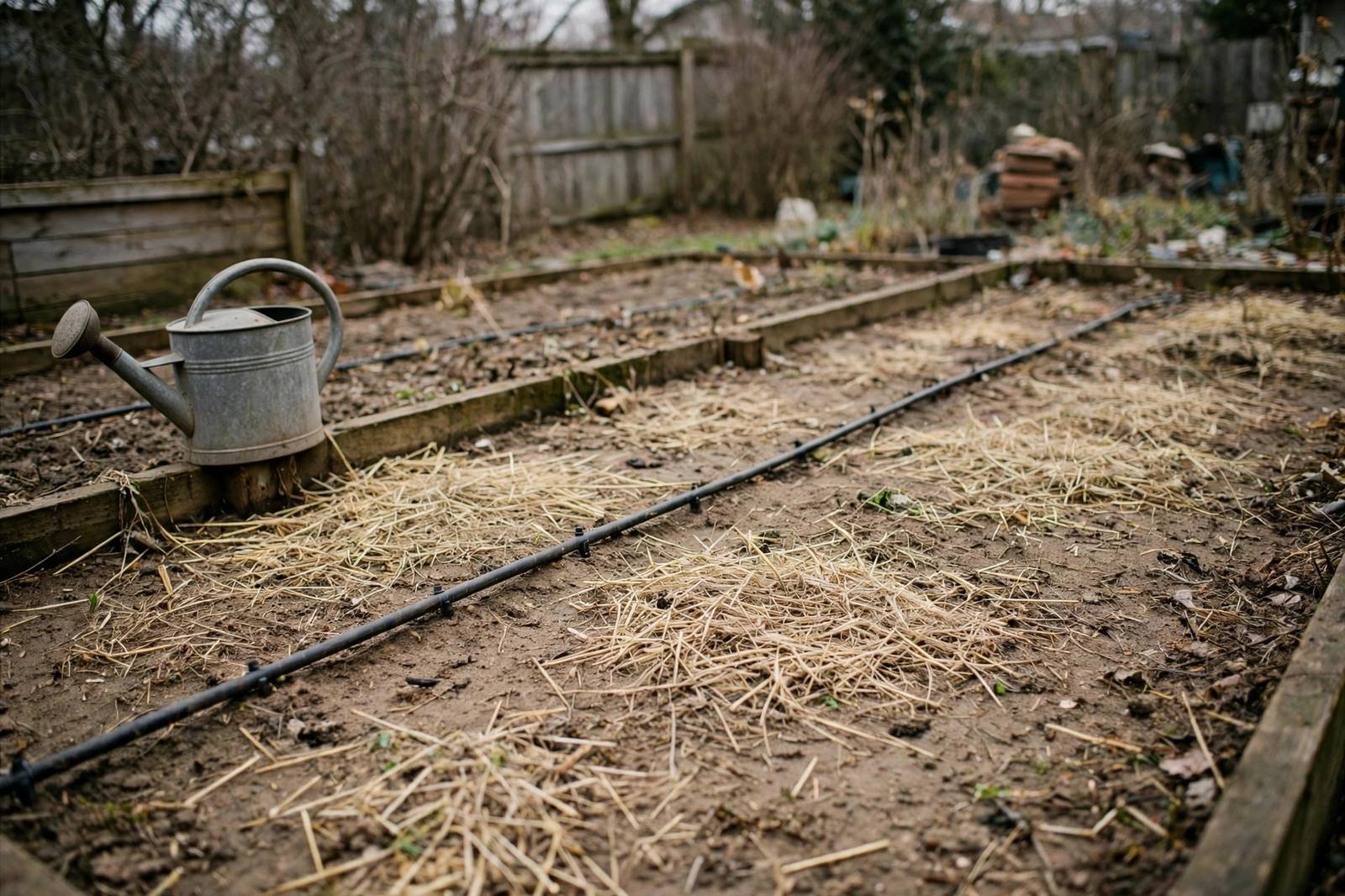
In winter, drip irrigation saves effort but can freeze and burst, while hand watering gives control but means going out in the cold. A drip system puts water right at the roots and can run on a timer while you stay inside, but water left in the lines can freeze and split the tubing or crack a fitting. Hand watering has no lines to freeze, and you decide how much water each plant gets, but every watering means a trip outside with a can or hose.
Neither method wins in every garden. A few raised beds in a mild winter may do fine with a watering can, while a larger garden may still lean on drip lines, as long as the system is drained before hard freezes arrive. This guide compares the two so you can pick the one that fits your garden.
Winter plants need far less water than summer plants. Growth slows and cool soil holds moisture longer. Check the soil before you water: push a finger two inches in and wait if it feels damp. Most winter watering mistakes come from watering on a schedule instead of when the soil is dry.
Drip irrigation vs hand watering at a glance
| Drip irrigation | Hand watering | |
|---|---|---|
| Freeze risk | High if lines hold water; tubing, emitters, and timers can split | Low; no lines to freeze, though a hose can freeze |
| Water use | Low; water goes straight to the root zone | Moderate; fast passes often wet the surface more than the roots |
| Effort | Low once installed; a timer runs it while you stay inside | High; every watering means a trip outside |
| Cost | Higher up front for tubing, emitters, a filter, and a timer | Low; a watering can or hose nozzle is often all you need |
| Plant health | Steady moisture at the roots; leaves stay dry, which helps keep leaf disease down | Good when done slowly at the base; rushed watering leaves roots dry |
| Best for | Larger beds, winter greens, and gardeners who travel | Small gardens and pots |
Drip irrigation in winter
Drip irrigation puts a slow, steady supply of water at the base of each plant. In winter it still does that job well: less water evaporates, and the soil stays moist longer between runs. For rows of kale, leeks, garlic, or overwintering herbs, a drip line on a timer can keep the soil evenly damp.
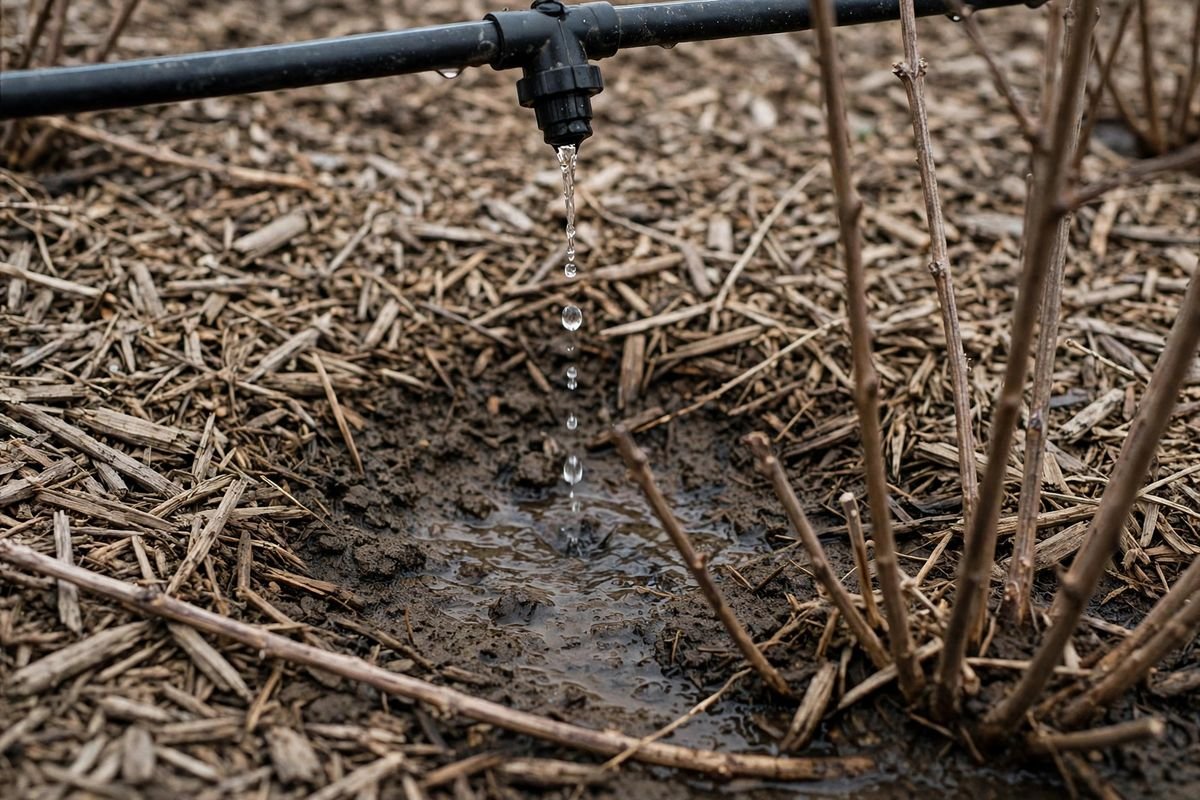
Winter changes the risk. Drip lines sit above ground in most home gardens, so they cool fast when the air temperature drops. Water trapped in the tubing expands as it freezes and looks for the weakest point: an emitter joint, a connector, or a thin spot in the tube. Timers and filters are just as exposed, and a cracked timer often costs more to replace than a length of tubing. A system that runs fine through mild nights can fail on the first hard freeze.
That risk is manageable with a plan. Many gardeners keep drip running while nights stay above freezing, then drain the system and switch to hand watering once hard freezes become regular. Others in mild climates run drip all winter and drain the lines ahead of any night forecast below freezing. Either way, the system needs attention before the cold arrives, not after a line has already split.
Pros of drip irrigation in winter
- Water goes straight to the roots, with very little lost to evaporation or runoff.
- A timer handles watering when the weather keeps you indoors.
- Leaves stay dry, which lowers the chance of leaf disease in damp winter air.
Cons of drip irrigation in winter
- Water left in lines, emitters, timers, and filters can freeze and split them, sometimes in a single night.
- Setup and repair cost more than a watering can.
- A timer can water on a freezing day if no one adjusts it, so the system still needs regular checks.
If you keep a drip system running into winter, look for drip irrigation parts built for cold-season use when you replace worn fittings, and read our guide to protecting raised beds from frost for the cold-protection side of the setup.
Hand watering in winter
Hand watering is the simplest method there is. There are no lines to drain, no timers to remove, and nothing to split when the temperature drops overnight. You carry water to the plant, pour it slowly at the base, and walk back inside. For a small garden, a few pots, or a single raised bed, that is often all a winter garden needs. Colorado State University Extension notes that hand watering lets you aim water at the base of each plant and spot problems while you are out there, though it calls the method laborious.
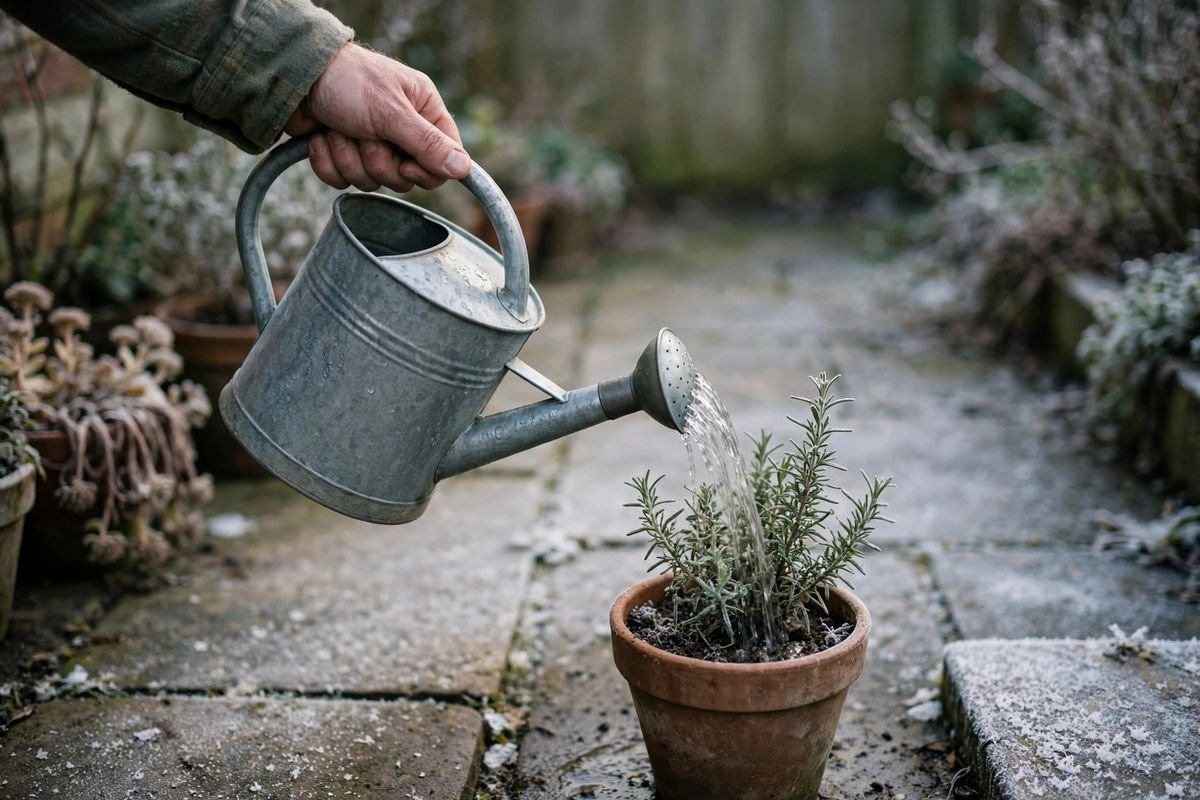
The trade-off is your time and comfort. A can holds only so much water, and a large bed can take several trips. Cold hands and icy paths make the job less pleasant than it sounds in a seed catalog, and many gardeners water less and less often as the season wears on, which leaves plants drier than they should be.
Hand watering also depends on patience. A quick splash wets the top inch of soil and leaves the roots dry. A slow pour, held at the base until the water soaks down, does far more good. Count to ten while you pour at each plant, then move on.
Pros of hand watering in winter
- Nothing is left full of water to freeze, so there is no burst line or cracked timer to repair in spring.
- You control how much water each plant gets, which helps when pots and beds dry out at different rates.
- You see each plant up close while you water, so pests and frost damage get noticed early.
Cons of hand watering in winter
- It takes real time and effort, and cold weather makes every trip outside less appealing.
- Watering is easy to skip on icy days, so plants can go too long between drinks.
- A hose left connected to an outdoor faucet can freeze, so the faucet and hose need care too. See our guide to winterizing an outdoor faucet for the garden before the first hard freeze.
What a freeze can cost: a worked example
A frozen drip line is a quiet problem until it thaws. Ice can hold a split closed while the system is frozen, and the leak only shows up when the water starts flowing again. The numbers below are our own simple calculation, not a lab test.
Assumptions: one emitter rated at 1 gallon per hour splits and runs for 8 hours overnight; a separate split in a supply line lets out 4 gallons per hour for the same 8 hours. Both cases assume the timer runs its normal cycle and nobody notices the leak until morning.
- Single split emitter: 1 gallon per hour x 8 hours = 8 gallons lost in one night.
- Split supply line: 4 gallons per hour x 8 hours = 32 gallons lost in one night.
- One week of the split line leaking at the same rate each night: 32 gallons x 7 nights = 224 gallons lost in a week.
Eight gallons is about what a full watering can holds several times over, and 32 gallons is more water than many winter beds need in a whole week. Draining the lines before hard freezes arrive costs an afternoon. Repairing a split system costs far more.
Shutting the drip system down for winter
When hard freezes become regular in the forecast, the safest move is to shut the drip system down. Turn off the water supply first, then open the end caps and low-point drain valves so water can run out by gravity. Remove the timer and bring it indoors, with the filter, pressure regulator, and any backflow device that can be unhooked. Leave the line ends open until the tubing is empty, then cap them so dirt and insects stay out. University of Georgia Extension advises draining every part of the system before the first freeze, and Oklahoma State University Extension gives the same advice for home systems.
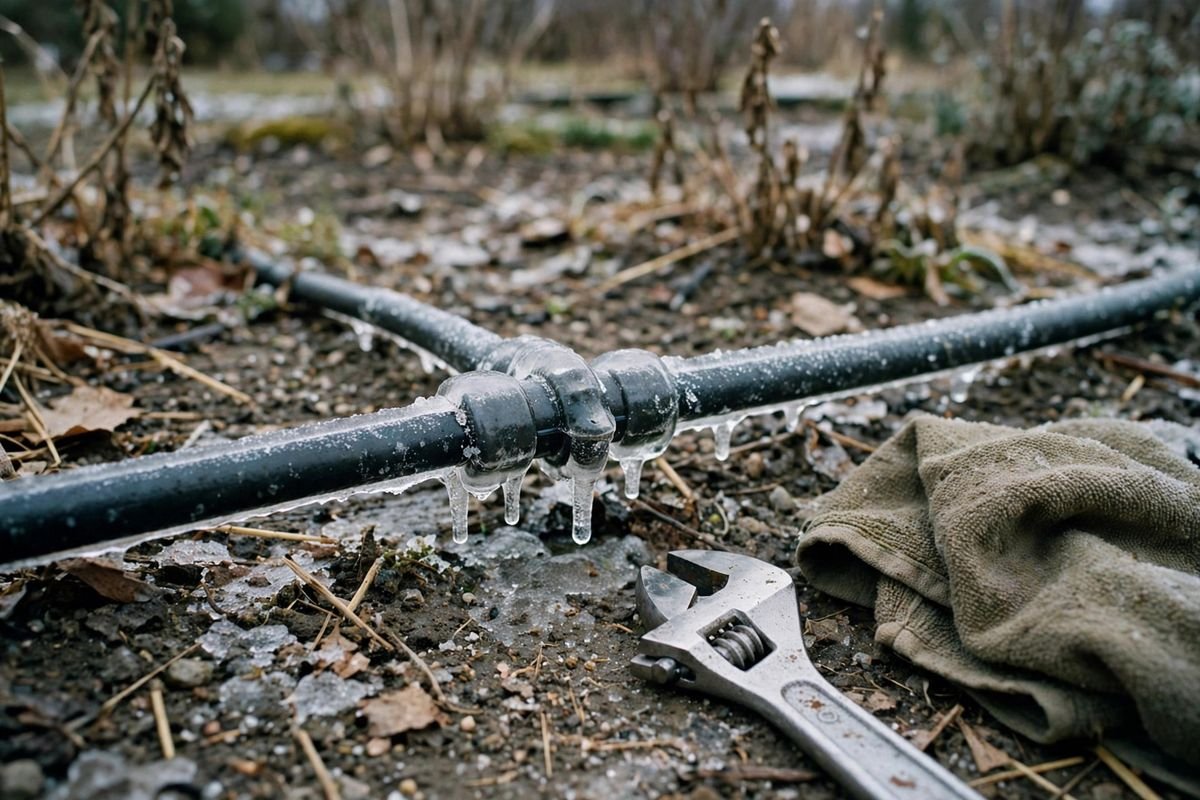
Timing matters more than the calendar date. Check your local frost dates before deciding when to shut the system down, and watch the nightly forecast. A single night below freezing can split a line, so shut the system down before the first hard freeze is forecast, not after it. In mild areas, some gardeners drain the system only ahead of a cold snap, then refill it when the cold passes. That works only if you check the forecast every few days and act on it. For the full steps, see our guide to winterizing a drip irrigation system.
Once the drip system is drained, hand watering takes over for the rest of winter. Water in the late morning, when the air has warmed and the soil can take the water in before nightfall. Water at the base of the plant, slowly, and only when the top two inches of soil feel dry. Store timers, filters, and fittings in a shed or garage where they cannot freeze, with batteries removed from the timer.
Our verdict
For most home gardens, the best winter answer is a mix. Use drip irrigation while the nights stay mild, then drain the system and switch to hand watering once hard freezes arrive. That gives you easy watering through autumn and safety in the coldest weeks.
Choose drip irrigation if you have several beds or long rows to water, you travel during the winter, your nights rarely drop below freezing, and you will drain the system ahead of any hard freeze.
Choose hand watering if your garden is small or mostly containers, your winters bring regular hard freezes, and you would rather spend a few cold minutes outside than repair a split line in spring.
Either method can keep a winter garden alive. The method that fails is the one nobody checks: a drip timer left running through a freeze, or a watering can left hanging by the door while the soil dries out for weeks. Pick the method you will actually keep up with, and check the soil before you water.
Frequently asked questions
Can I leave my drip irrigation running all winter?
You can in a mild climate where hard freezes are rare, but the lines must be drained ahead of any night forecast below freezing. Where hard freezes are regular, draining the system and switching to hand watering is safer.
Does hand watering use more water than drip irrigation?
It often does, because a fast pour wets the surface and runs off. Slow watering at the base closes most of that gap. Drip irrigation is still the more efficient of the two, since it delivers water directly to the roots a little at a time.
How often should I water the garden in winter?
Far less often than in summer. Check the soil first: if the top two inches feel damp, wait. Dormant plants in cool soil may need water once a week or less, and rain may cover their needs for stretches of the season.
What should I do with the drip timer in winter?
Remove it before hard freezes arrive and store it indoors without the batteries. A timer left outside can crack when water inside it freezes, and a cracked timer is often dearer to replace than the tubing it controls.
Sources and further reading
- Drip Irrigation Checklist: Winterization, University of Georgia Extension
- Tips for winterizing a home irrigation system, Oklahoma State University Extension
- Irrigating the Vegetable Garden, Colorado State University Extension, Pueblo County
Related reading: How to Winterize a Drip Irrigation System, How to Winterize an Outdoor Faucet for the Garden, and How to Protect Raised Beds From Frost.
By the Pot and Plot Team