
This post may contain affiliate links. If you buy through links on this page, we may earn a commission at no extra cost to you.
As an Amazon Associate I earn from qualifying purchases.
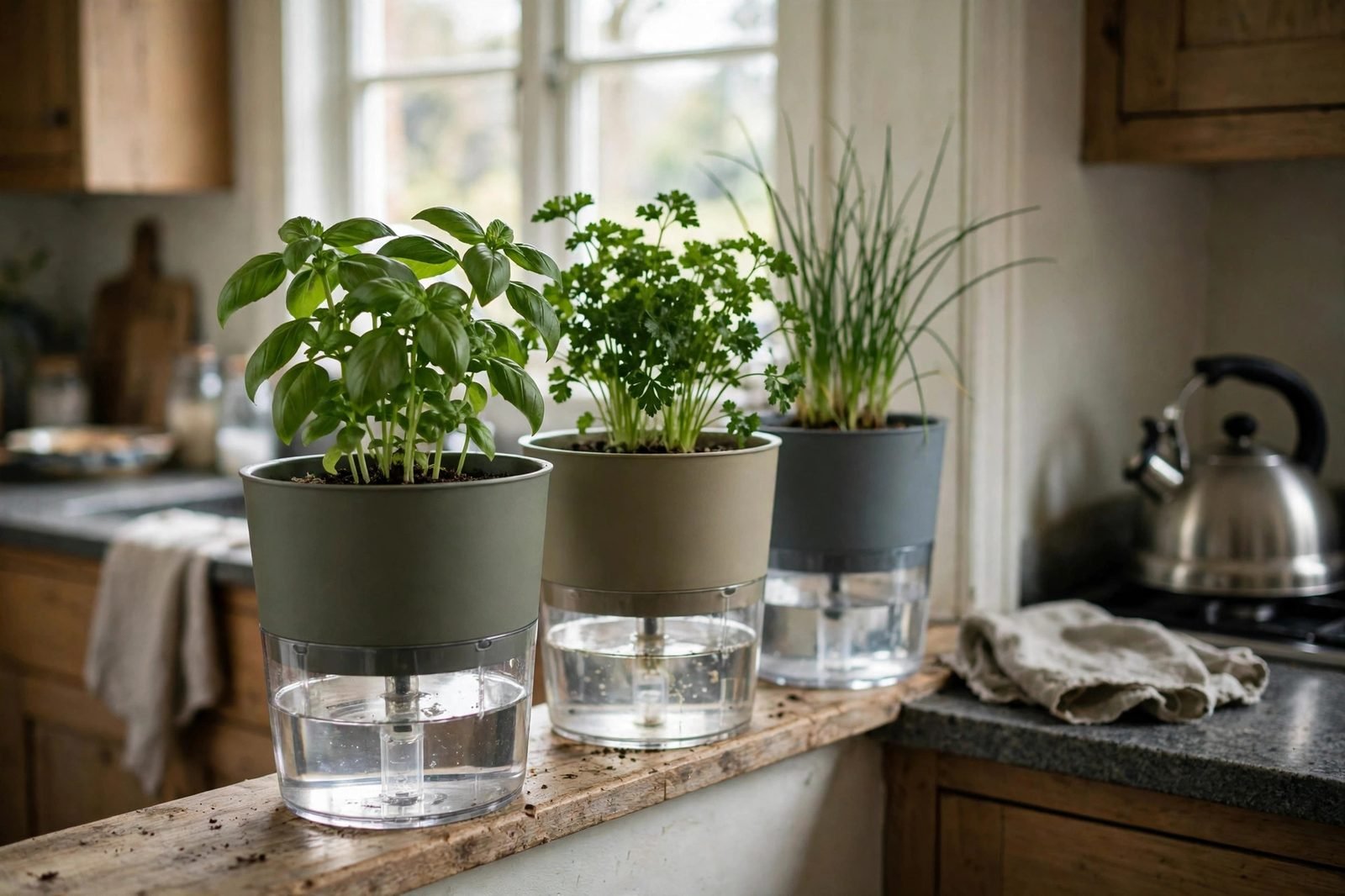
A self-watering pot holds water in a reservoir under the soil and sends it up as the soil dries. A wick or a column of potting mix pulls water upward by capillary action, the same force that draws water up a paper towel dipped in a glass.
This guide stays on small pots for indoor herbs on a windowsill or counter, a different job from the patio self-watering planters we covered in an earlier roundup, which are built for outdoor vegetables and large containers. Here, the pots are 4 to 8 inches across, the reservoirs hold ounces rather than gallons, and the herbs are the ones we cook with most: basil, parsley, chives, mint, oregano, and rosemary.
We have not run hands-on trials on the pots linked here, and listings change often. What follows is a research-based comparison of pot types, plus refill math with stated assumptions. Check the listing for reservoir size, pot diameter, and whether the inner pot lifts out before ordering.
Five small self-watering pot types at a glance
The table below compares the five types we see most often for indoor herbs. Sizes and gaps are typical ranges for small indoor pots, not promises for any single product.
| Type | Reservoir size | Watering gap | Herb fit | Best for |
|---|---|---|---|---|
| Wicking pots | About 4 to 8 ounces | About 4 to 8 days | Basil, parsley, mint | One herb per pot on a sunny sill |
| Reservoir planters with level indicator | About 8 to 16 ounces | About 1 to 2 weeks | Basil, parsley, chives | People who want a clear refill signal |
| Glass self-watering pots | About 4 to 8 ounces | About 4 to 7 days | Basil, mint, parsley | Seeing the water level at a glance |
| Stackable herb garden planters | About 8 to 12 ounces per tier | About 5 to 10 days | Basil, parsley, chives, mint | Several herbs in a small footprint |
| Large multi-herb planters | About 16 to 32 ounces | About 1 to 3 weeks | Mixed herbs, with care for rosemary | A full herb set on one counter |
Wicking pots
A wicking pot is the simplest design in this guide. A cotton or nylon cord runs from the reservoir up into the potting mix and carries water the whole way. Because the parts are few, these pots are usually the cheapest option, and a worn wick can be swapped for a new length of cord.
Basil is the natural match here. It wants steady moisture and sulks quickly when the mix dries out, so a wick that keeps the soil damp suits it. Parsley and mint do well too. Rosemary and oregano are a poor match for a wicking pot that never dries out, since both prefer soil that dries between waterings.
The tradeoff is upkeep. Cotton wicks rot over time, and synthetic cords clog with minerals from tap water, so check the wick about once a year and replace it when water stops climbing. A dry wick also stops working, so the first fill needs a wet wick and damp mix. If you browse self-watering pots for indoor herbs on Amazon, look for sets that include spare wicks.
Reservoir planters with a water level indicator
A reservoir planter with a level indicator adds one useful part to the basic design: a float or a small window that shows how much water is left. You fill through a side spout until the indicator reads full, then refill when it drops to empty.
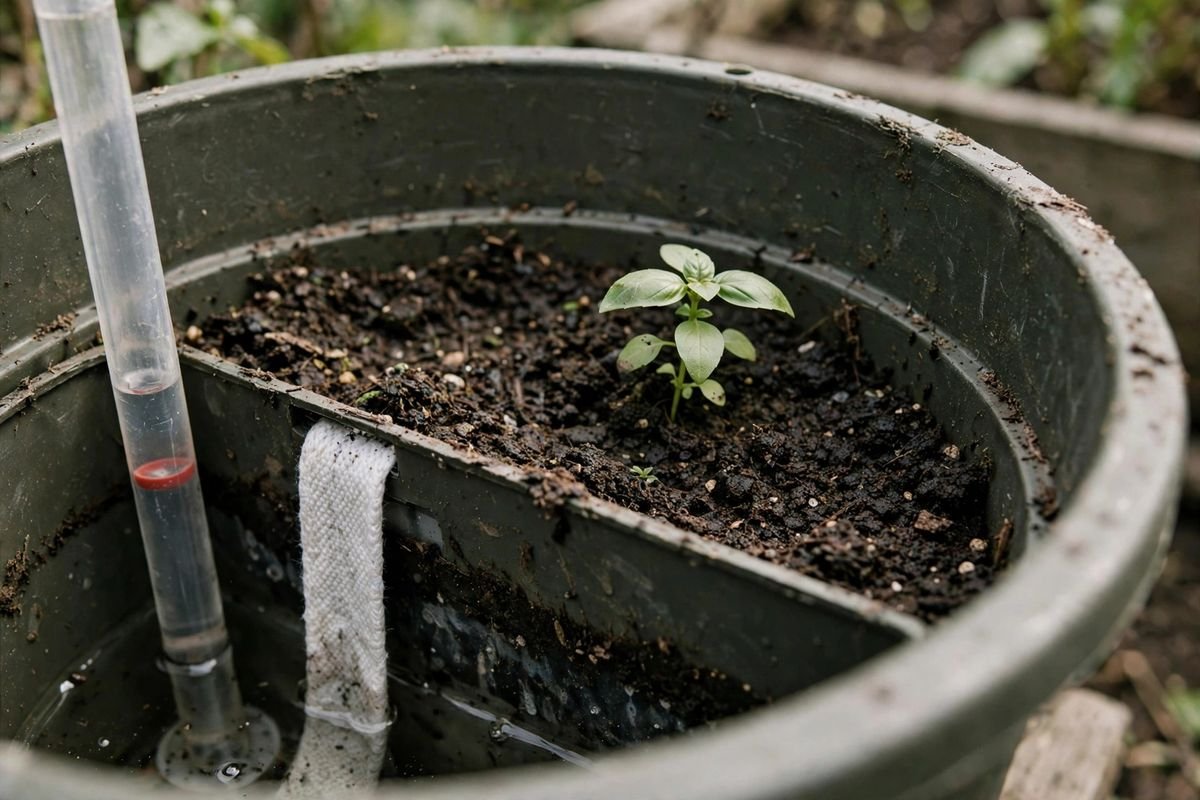
The extra part is worth it if you water on a schedule rather than by feel. Basil, parsley, and chives all do well in these planters, because the reservoir is sized for a week or two and the indicator keeps refills on time. The float can stick if minerals build up, so rinse the reservoir when you flush the mix.
These planters cost more than plain wicking pots, and the indicator is the part most likely to fail first. Pick a model where the inner pot lifts out, so cleaning the reservoir does not mean unpotting the herb. For rosemary, let the reservoir sit empty for several days before refilling.
Glass self-watering pots
A glass self-watering pot is usually a double pot: a small inner pot holds the plant, and a glass outer pot holds the water. Some designs use a wick, others let the mix touch the water through a porous base. The draw is the view: you can see the water level without an indicator.
That view is also the weakness. Light reaching the reservoir grows algae, and green water in a clear pot looks dirty within a few weeks. If you pick glass, keep the pot out of direct sun where you can and scrub the reservoir when you flush the mix. A glass pot is also heavier and easier to knock off a sill, so it suits a wide, stable counter better than a narrow windowsill.
Herb fit is the same as for other small wicking designs: basil, mint, and parsley thrive, while rosemary and oregano need a dry phase that a glass pot makes hard to judge, since the water is always visible and tempting to top up.
Stackable herb garden planters
A stackable planter holds several herbs in tiers, with one pot sitting above the next and water moving down from tier to tier. The footprint is small, often no wider than a single 8-inch pot, so it fits a counter corner that could never hold five separate pots.
The layout decides which herbs go where. Put basil and parsley in the tiers that stay dampest, and put rosemary and oregano in the top tier, which dries first. Mint deserves its own tier, since it spreads fast and crowds its neighbors. The top tier can dry while the lower tiers are still wet, so a stackable planter may need a top watering now and then.
The tradeoff is balance and reach. A full stack is top heavy, so set it on a flat surface and avoid a narrow sill. Watering the top tier means lifting a watering can above the stack, and repotting one herb means unstacking the rest. If you compare stackable herb planters on Amazon, check the diameter of each tier, since some are too shallow for a mature basil plant.
Large multi-herb planters
A large multi-herb planter is a single wide container, often 12 to 18 inches long, with one shared reservoir and room for three to five herbs in a row. It suits a kitchen counter where you cook and snip herbs every day.
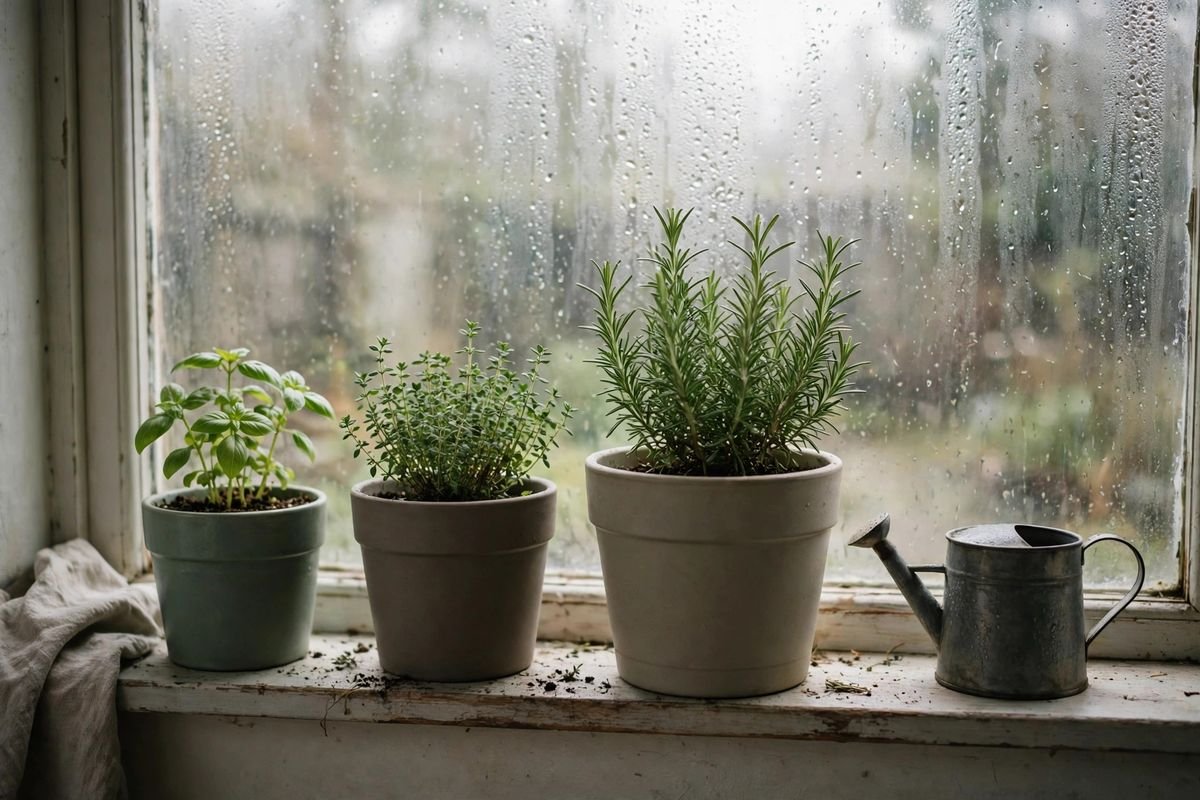
The shared reservoir is both the strength and the risk. One fill waters every herb at once, and the larger tank stretches refills to one to three weeks. But every herb gets the same moisture, so a mixed planting needs care. Basil and parsley sit happily in damp mix, while rosemary in the same planter stays too wet. Either grow only moisture lovers together, or plant rosemary and oregano in their own small pots beside the planter.
A wide planter full of wet mix is heavy, so pick its spot before filling it and do not plan to move it often. It also needs a bright spot, since several plants share one patch of light. Our guide to growing herbs indoors in winter covers light and placement in more depth.
How long does a reservoir last? A worked example
Take a common small pot with an 8-ounce reservoir and a basil plant in a warm room. How many days does that water last? The answer is simple division once we state what we are assuming.
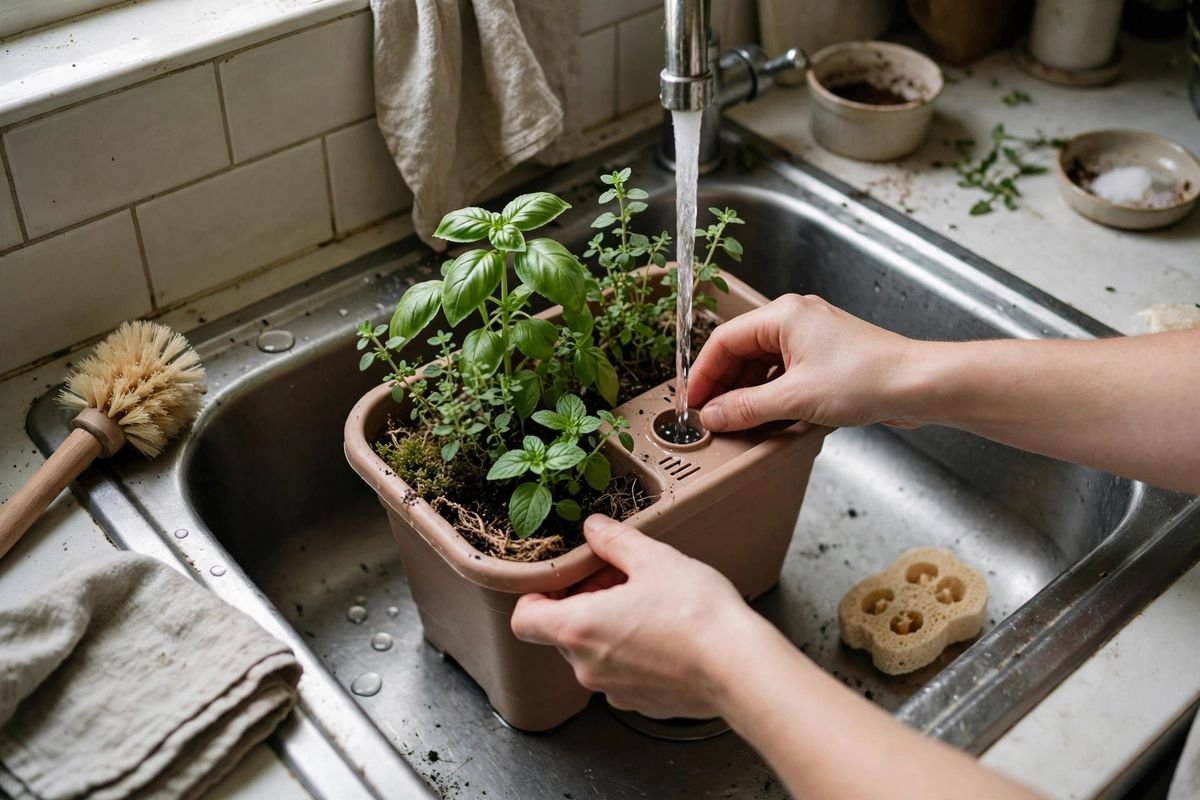
Assumptions: the basil is a healthy plant in a 5- to 6-inch pot, the room is warm (around 70 to 75 degrees Fahrenheit), the pot sits in bright indirect light, and the plant uses about 1 to 2 ounces of water a day, covering both what the plant drinks and what evaporates from the soil surface. We also assume the reservoir starts full and the wick stays wet.
At 1 ounce a day, 8 ounces divided by 1 ounce gives 8 days. At 2 ounces a day, 8 ounces divided by 2 ounces gives 4 days. So the refill gap is about 4 to 8 days, with a small plant in a cool room near the long end and a large plant in a hot, sunny window near the short end. The same math works for other pot sizes: divide the reservoir size in ounces by the daily use in ounces, and the result is the gap in days.
Two notes on this math. First, capillary action lifts water only about 4 inches above the water line, according to University of Kentucky Extension, so a deep pot can have a dry top while the bottom stays wet. Check the mix at root depth; the surface can mislead. Second, these are our computed numbers from stated assumptions, not measured results from a test. The reliable habit is to run one fill, note the date, and see how many days your own pot lasts. Our container gardening guide for beginners covers potting mix and drainage choices that affect how fast a pot dries.
Avoiding soggy roots
A self-watering pot keeps soil damp by design, and damp soil with no air is where roots rot. The fix is a dry phase: let the reservoir run empty before refilling. For basil, parsley, and mint, a day or two of empty reservoir is enough. For rosemary and oregano, leave it empty for several days, and check the mix at root depth before adding more water.
For rosemary, empty the reservoir on purpose. Lift the inner pot out, tip the water away, and let the mix dry until the top inch feels dry. Only then refill, and fill only partway. If the mix still feels soggy two days after the reservoir empties, the herb needs a regular pot with drainage.
Every few weeks, water from the top until water runs out of the overflow or drain, then empty the reservoir and refill with fresh water. Water only moves upward in a self-watering pot, so fertilizer salts collect near the surface and show up as a white crust. That top flush washes them out. Use a light, airy potting mix with perlite mixed in, never garden soil, since heavy soil wicks poorly and stays waterlogged.
Frequently asked questions
Do self-watering pots work for rosemary?
They can, with a long dry phase. Rosemary comes from dry, sunny ground and wants its soil to dry between waterings. Let the reservoir sit empty for several days before each refill, use a very airy mix, and pick a pot with a small reservoir. Many growers find a plain terracotta pot easier for rosemary.
How often should I refill the reservoir?
It depends on the pot size, the herb, and the room. A small wicking pot with basil in a warm room needs a refill about every 4 to 8 days, as our worked example shows. A larger planter with a level indicator can go one to two weeks. Time one fill and note how many days it lasts, then refill on that rhythm.
Can I leave the reservoir full while I travel?
Yes, for a short trip. Fill the reservoir before you leave, and a healthy basil plant should be fine for about a week. For longer trips, move the pots away from direct sun so they use water more slowly. Test the timing at home first, so a trip is not the first time you learn how fast the reservoir empties.
Sources and further reading
- University of Kentucky Cooperative Extension, AEN-157: Wicking Containers: A Self-Watering Garden System, by Steve Higgins. bae.mgcafe.uky.edu/sites/bae.ca.uky.edu/files/AEN157.pdf
- Self-Watering Pots: How They Work and When to Use Them. plantwateringguide.com/watering-tools/self-watering-pots-guide
- How Do Self Watering Pots Work? (And When They Don’t). nestandaura.com/how-do-self-watering-pots-work/
Related reading: How to Grow Herbs Indoors in Winter, Container Gardening for Beginners, and What Size Pot Does a Tomato Plant Need?
By the Pot and Plot Team