
This post may contain affiliate links. If you buy through links on this page, we may earn a commission at no extra cost to you.
As an Amazon Associate I earn from qualifying purchases.
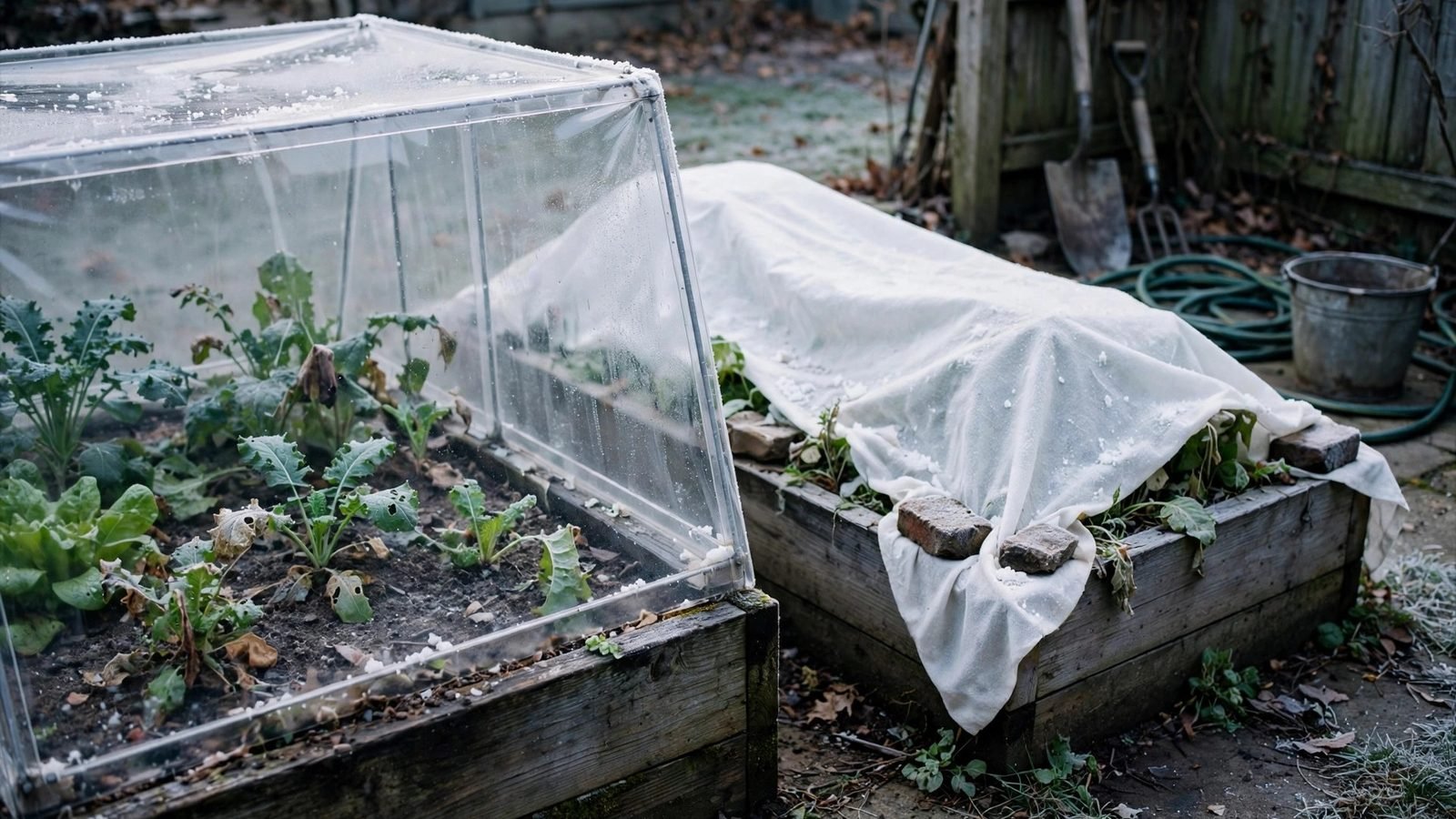
Winter protection for a raised bed comes in two shapes. A rigid raised-bed cover is a hard lid or a hooped frame with solid panels that sits on top of the bed like a low cold frame. A row cover is a sheet of light fabric, spunbond polypropylene or a similar material, laid over hoops or floated right on the plants. Both keep frost off the leaves. They differ on warmth, access, cost, and how they handle snow.
The short answer: a rigid cover holds more heat, sheds snow, and lasts for years, but it costs more and needs a bed it fits. Row cover fabric is cheap, fits any bed, and stores in a bag, but it holds less heat and can sag or tear under wet snow.
We have not run side-by-side temperature trials on our own beds, and this guide does not claim otherwise. It compares the two covers on published guidance and our own cost and temperature math, so you can pick the cover that fits your beds, your crops, and your winter. If you are starting from a bare bed, our guide to how to winterize a raised garden bed covers the full shut-down routine before you add any cover.
The two covers at a glance
| Rigid raised-bed cover | Fabric row cover | |
|---|---|---|
| What it is | Hard panels or a hinged lid on a frame, sized to the bed | Light spunbond fabric over hoops or floated on plants |
| Warmth | More; traps sun heat in the day and holds it longer at night | Less; light fabric slows frost but holds little heat |
| Access | Lift or hinge the lid; easy to reach in and harvest | Pull the fabric back and re-pin it; slower in cold weather |
| Cost per bed | Higher up front; lasts several seasons | Lower up front; fabric is replaced every year or two |
| Durability | Years; panels can crack in a hard freeze or hail | One to two seasons; tears at the edges and thins in sun |
| Snow load | Sheds snow off a sloped lid; heavy snow can still bend a weak frame | Sags and can crush plants under wet snow unless hoops hold it up |
| Best for | One or two beds you harvest from all winter | Many beds, odd sizes, and short frost spells |
Rigid raised-bed covers: a lid that holds heat
A rigid cover turns a raised bed into a low cold frame. The usual forms are a hinged polycarbonate lid, a set of clear panels on a low frame, or a hoop frame skinned with rigid plastic. The lid sits on the bed frame, often hinged at the back so you can lift it with one hand. Sun warms the soil and the air inside during the day, and the panels slow the heat loss at night.
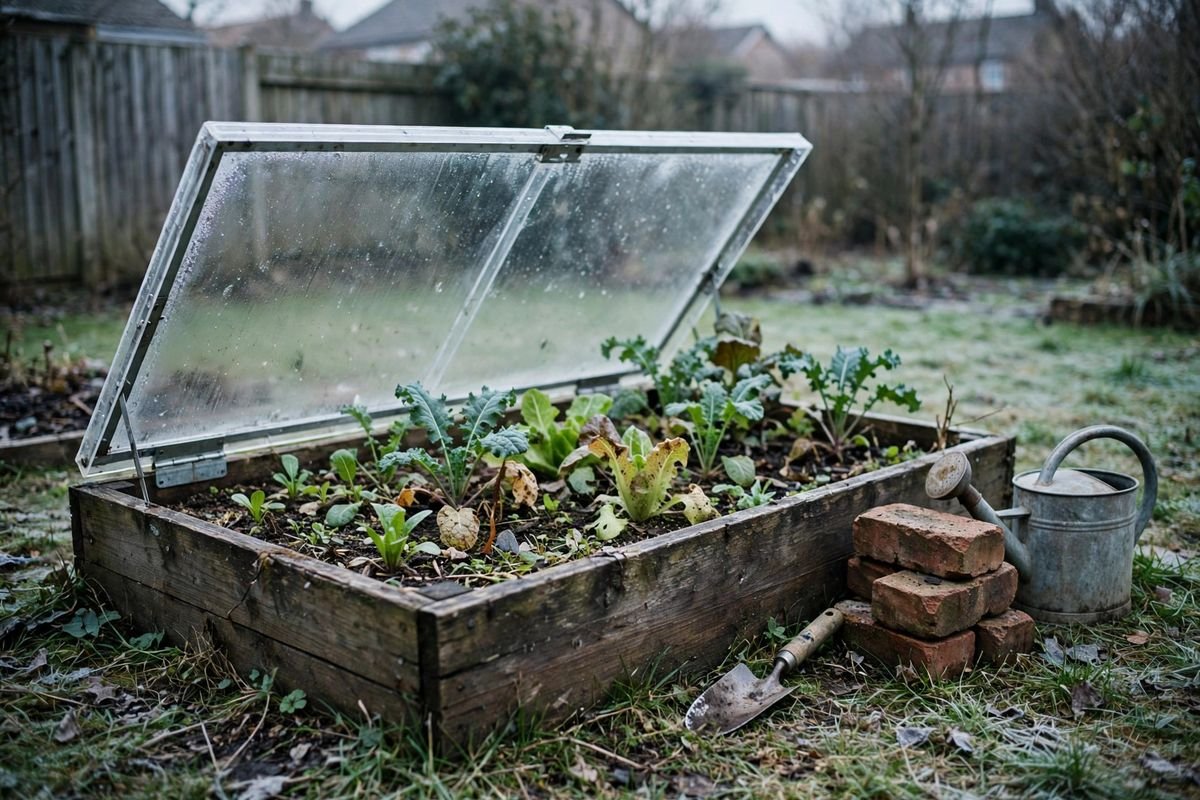
The fit has to match the bed. A lid built for a 4 by 8 foot bed does nothing for a 3 by 6 foot bed, and a lid that overhangs the frame leaves gaps where cold air leaks in. If your beds are all one size, that is no problem. If every bed is a different size, you will need a lid per bed or a custom build. If you are shopping for a ready-made lid, this search for hinged raised bed covers shows the common sizes and lid styles. Measure your bed frame before you order, and check the listing for the inside dimensions, since the outside ones can mislead.
Pros of rigid covers
A rigid cover holds more heat than fabric, so it keeps hardy greens growing longer into winter and brings them back sooner in spring. It sheds rain and snow off a sloped lid instead of letting the weight sit on the plants. Access is fast: lift the lid, cut what you need, close it again, all in a minute. The cover lasts for years with no yearly purchase, and it doubles as hail and pest protection in the growing season.
Cons of rigid covers
The up-front cost is the highest of any winter cover, and a lid only fits the bed size it was made for. A closed lid can overheat on a sunny winter day and cook the plants inside, so you have to prop it open on mild afternoons and close it before night. Panels can crack in a hard freeze or hail, and a heavy wet snow can bend a light frame, so clear the lid after a big storm.
Row covers: cheap fabric that fits any bed
Row cover is a light white fabric, usually spunbond polypropylene, sold by weight: the heavier the fabric, the more frost protection and the less light passes through. You can float it right on the plants, holding the edges down with soil or pins, or drape it over low hoops so it does not touch the leaves. Under the fabric, the air stays a few degrees warmer than outside, and the leaves stay dry, which is what stops frost damage on a mild frost night.
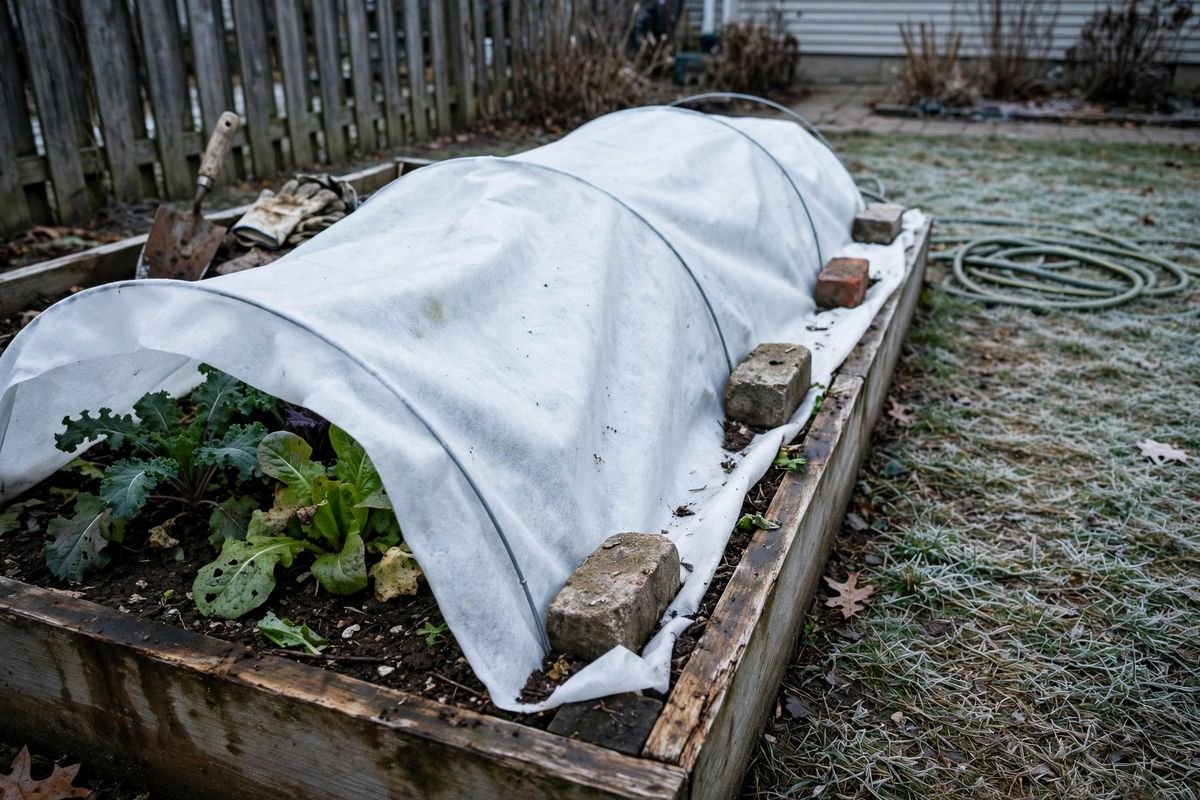
Fabric fits any bed, any shape, and any crop, which is its main strength. One roll covers several beds, and the leftover piece stores in a bag until spring. If you need a roll, this search for frost row cover fabric for raised beds shows the usual widths and weights. Choose a heavier weight, around 1.5 ounces per square yard, for winter frost. For a roundup of covers made for beds and containers, see best frost covers for raised beds and containers, and for a closer look at how row cover compares with a cold frame, see cold frame vs row cover.
Pros of row covers
Row cover is cheap, and one roll can protect several beds, so it scales well across a whole garden. It fits beds of any size and shape with no custom build. It lets rain and most light through, so plants can stay covered for days without drying out or going dark. It also keeps pests off in the shoulder seasons, which a solid lid does only when closed. When the fabric wears out, you replace it for a few dollars rather than buying a whole new cover.
Cons of row covers
Fabric holds far less heat than a rigid lid, so it protects against light frost, not a hard freeze. On a still, clear night the temperature under fabric drops close to the outside air, and the plants under it still freeze. Wet snow sags the fabric onto the plants and can crush them, unless hoops hold the fabric up and you brush the snow off. Access is slow: you have to unpin the edges, pull the fabric back, harvest, and re-pin it, all with cold hands. Fabric tears at the edges and usually lasts only one to two seasons.
Worked example: cost per bed and warmth per dollar
The figures below are our own workings from stated assumptions, not store prices or lab measurements. Prices vary by seller and season, so treat the numbers as a planning guide, then redo the math with the prices on the listings you actually buy from.

The assumptions
One bed measures 4 by 8 feet. A rigid hinged cover for that bed costs $120 in this example and lasts 5 seasons. A roll of row cover fabric for the same bed costs $18 in this example and lasts 2 seasons. A light frost night drops to 30 degrees outside. Published guidance often puts the temperature gain under row cover at about 2 to 4 degrees and under a rigid cover at about 5 to 10 degrees on a sunny day, falling back toward the low end of the range at night.
Cost per bed per season
Divide cost by seasons of use. Rigid cover: $120 divided by 5 seasons gives $24 per season. Row cover: $18 divided by 2 seasons gives $9 per season. The rigid cover costs about two and a half times as much per season as the fabric, for one bed. Across four beds the gap grows: $96 a season for four rigid lids against $36 a season for fabric.
Warmth per dollar
Take the middle of each warmth range: about 3 degrees under row cover, about 7 degrees under a rigid cover. On a 30-degree night, row cover holds the bed near 33 degrees, and a rigid cover holds it near 37 degrees. Hardy greens such as kale and spinach take light frost well below freezing, so 33 degrees is often enough on a mild night. On a 25-degree night, row cover holds the bed near 28 degrees and the rigid cover near 32 degrees.
What the numbers say
Row cover is the cheaper way to buy a few degrees, and it is enough for short frost spells and hardy crops. A rigid cover costs more per season, but it buys the extra degrees that matter on hard-freeze nights, and it keeps paying for years after the fabric would have been replaced twice.
Getting the timing right
Put covers on before the first hard frost, not after it. A cover put on a warm afternoon traps the day’s heat in the soil, and the soil gives that heat back slowly overnight. A cover put on after the soil has already gone cold has little heat to trap. Use your local frost dates and regional planting guidance — not your USDA hardiness zone alone — to choose planting dates. Watch the weather, too: a rigid lid needs venting on any sunny day above about 50 degrees, or the plants inside will cook. Row cover can usually stay on for days, but pull it back on mild, sunny afternoons so the plants get full light and fresh air, and check under it after rain, since wet fabric sits heavy on the leaves.
Snow needs a plan for either cover. Brush snow off a rigid lid before the weight bends the frame, and clear snow off row cover before it sags onto the plants. Hoops help fabric a lot: a low hoop every two feet keeps the fabric off the leaves and gives snow somewhere to slide. For beds with lids already built in, see best raised beds with covers.
The verdict
Choose rigid raised-bed covers if you harvest from one or two beds all winter, your nights drop well below freezing, and you want a cover that lasts for years. They are the better pick for kale, spinach, and other hardy greens you cut through the cold months, and for gardeners who want to lift a lid and harvest in a minute.
Choose row covers if you have several beds of different sizes, your frosts are mostly light, and you want the lowest cost per bed. They are the better pick for short frost spells, for protecting a fall planting, and for gardeners who would rather buy a roll of fabric than a lid per bed.
Many gardeners use both: rigid lids on the one or two beds they harvest from all winter, and fabric over the rest of the garden for frost nights. Put the lid where the harvest is, and the fabric where the frost is.
Frequently asked questions
Can row cover stay on all winter?
Yes, on hardy crops, as long as you lift it on mild days for light and air and brush snow off before it sags. Plants under fabric still need water, so check the soil after a dry spell. On a long run of dark, wet weather, pull the fabric back for a day so the leaves dry out.
Will a cover keep the soil from freezing?
Neither cover stops the soil from freezing in a long cold spell. Both slow the freeze and keep the leaves from frost damage on mild nights. A rigid cover holds more heat and delays the freeze by more days, and a thick mulch layer under either cover helps more than the cover alone.
Do rigid covers need venting in winter?
Yes, on sunny days. A closed lid in full sun can heat the air inside well above the outside temperature, even in January. Prop the lid open a few inches on any sunny afternoon above about 50 degrees, and close it again before night. A lid with an automatic vent opener does this on its own.
Can I use both covers on the same bed?
Yes. Fabric under a rigid lid adds a few degrees on the coldest nights. Take the fabric off on mild days so the plants get full light, and remember that two layers still need venting in sun.
Sources and further reading
- University of New Hampshire Extension, “Using Row Covers in the Garden”
- Utah State University Extension, “Row Covers”
Related reading: How to Winterize a Raised Garden Bed, Cold Frame vs Row Cover, Best Frost Covers for Raised Beds and Containers, Best Raised Beds with Covers
By the Pot and Plot Team