
This post may contain affiliate links. If you buy through links on this page, we may earn a commission at no extra cost to you.
As an Amazon Associate I earn from qualifying purchases.
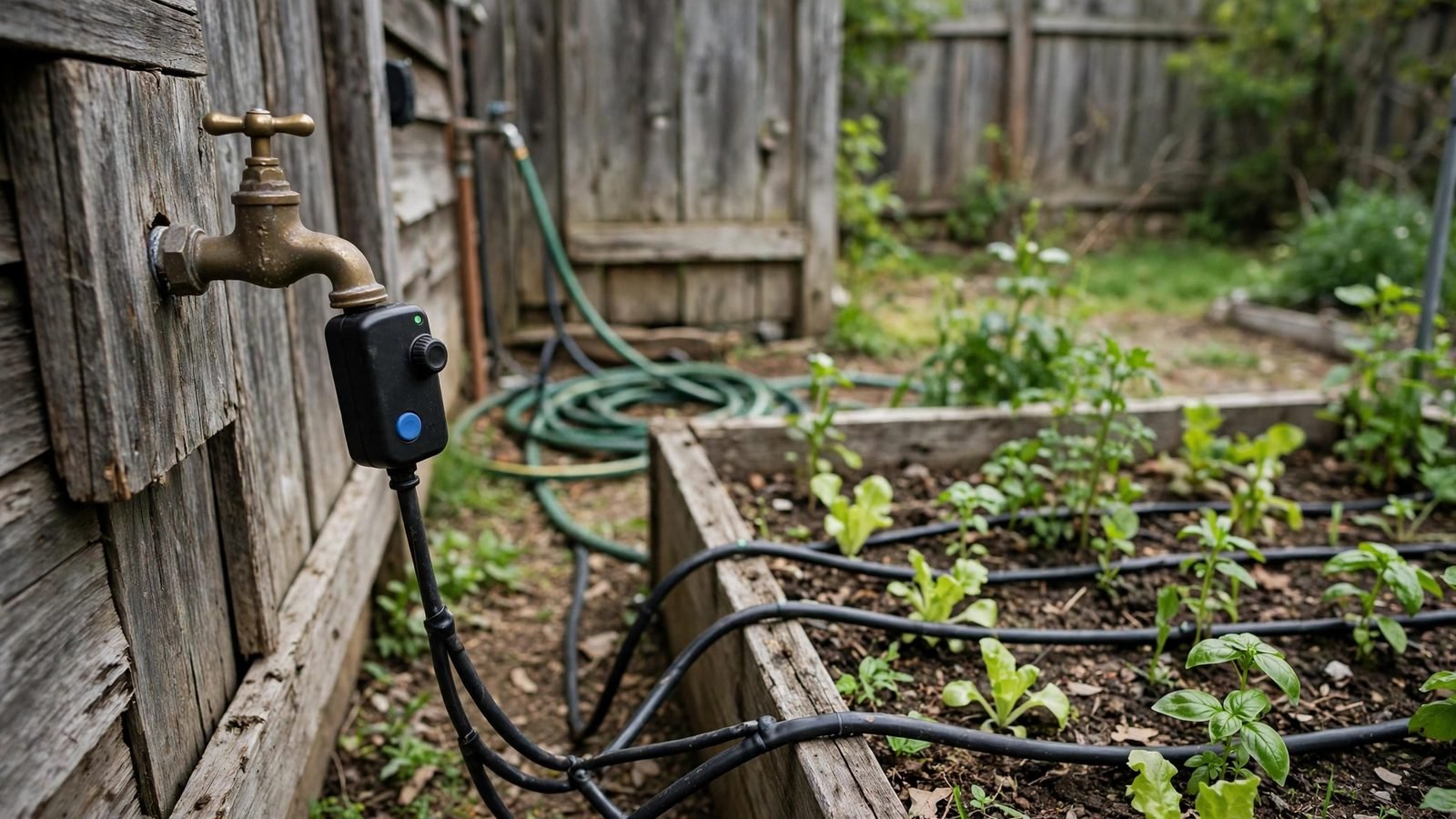
A rain delay is a pause button for your drip system. When rain has already soaked the beds, the timer skips the next scheduled watering cycle instead of adding more water on top of what fell from the sky. Most timers let you pick how long the pause lasts, often 24, 48, or 72 hours, and watering picks up on its normal schedule when the delay ends.

This guide stays on timers made for drip systems, and only on timers with a rain delay, a narrower job than a general hose timer roundup, which we already cover separately. Drip timers run at low pressure, sit in front of a filter and a pressure regulator, and feed emitters rather than sprinklers, so the features that matter here are different: how the delay is set, how many drip zones the timer can run, and whether it keeps working through a wet week. If you are still laying out the lines, our guide to setting up drip irrigation for a raised bed walks through the parts in order.
One honest note before the shortlist: we did not test these timers hands-on in our own garden. This is a research-based roundup built from manufacturer documentation, extension guides, and the EPA WaterSense program, comparing the five timer types you will actually find for sale so you can match the timer to the size of your drip system.
Five drip timer types at a glance
Every drip timer with a rain delay falls into one of five types, and the differences come down to zones, how the delay is set, and power.
| Type | Zones | Rain delay mode | Power | Best for |
|---|---|---|---|---|
| Single-zone dial timer | 1 | Manual button, 24, 48, or 72 hours | 1 or 2 AA batteries | One bed or one drip line |
| Two-zone digital timer | 2 | Button or menu, 24, 48, or 72 hours | AA batteries | Two beds on different schedules |
| Multi-zone controller | 4 to 12 or more | Programmable delay per zone, often with a rain sensor input | Mains power with battery backup | Larger gardens with several beds |
| Solar-powered timer | 1 to 2 | Manual delay, sometimes automatic with a sensor | Solar panel and rechargeable battery | Sunny spots far from an outlet |
| Bluetooth or app timer | 1 to 4 | App-based delay, some use local weather data | AA batteries | Gardeners who want phone control |
Single-zone dial timer
A dial timer is the simplest way to add a rain delay to a drip system. You turn a dial to set how often and how long to water, and you press a rain delay button when the sky has already done the job. There is no screen to learn and no app to install.
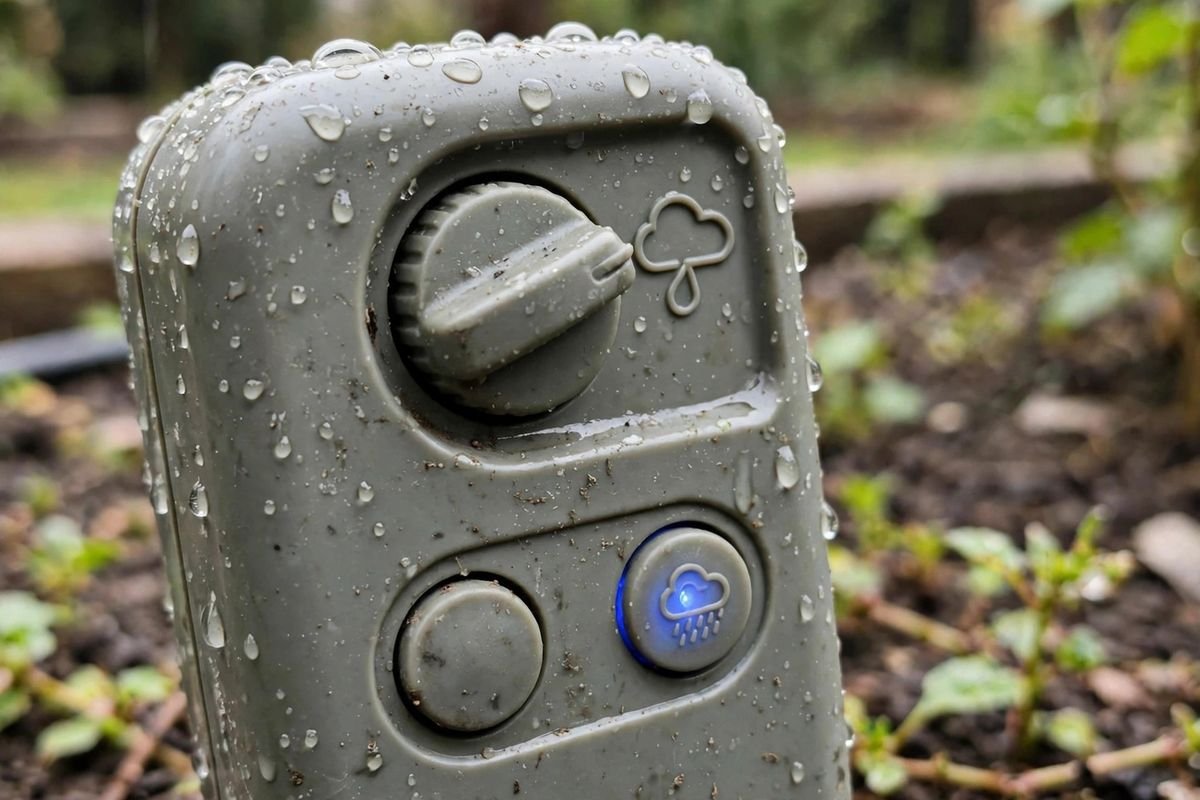
The upside is plain: low cost, a setup that takes about two minutes, and batteries that usually last a full season. It also fits any standard outdoor faucet, so it suits a first drip system with no other changes. The downside is just as plain. It runs one zone, so a second bed needs a second timer. The delay is manual, so you have to remember to press the button, and it cannot help when rain falls while you are away. Run times are also coarse on most dials, often in fixed steps, so fine tuning a short cycle for seedlings takes patience.
If you are shopping for this type, a search for drip irrigation timers with rain delay on Amazon turns up dial models first.
Two-zone digital timer
A two-zone digital timer adds a second outlet and a small screen. Each outlet runs its own schedule, so a tomato bed can water in the morning while a herb bed gets a shorter cycle later in the day, and the screen shows how much of a rain delay is left.
The tradeoff is a small step up in cost and a few minutes of learning the buttons. On most models the rain delay is still manual, so you press it after rain the same way you would on a dial timer. Two zones also share one faucet, so the total flow is limited to what that faucet can supply, and two thirsty beds running at once can leave both short. For two beds on different schedules, though, this is the sweet spot between a dial timer and a full controller.
Multi-zone controller
A multi-zone controller is a wired box, usually mounted on a garage or house wall, that runs four or more zones from one place. Each bed gets its own schedule and rain delay, and most controllers accept a wired rain sensor that pauses watering on its own when rain starts. This is the type the EPA WaterSense program certifies: the EPA estimates that replacing a standard clock-based controller with a WaterSense labeled model can save an average home up to 15,000 gallons of water a year.
The tradeoff is setup. A controller needs mains power, a place to mount it, and low-voltage wire run out to a valve for each zone, which is more work than screwing a timer onto a faucet, and it costs more than any faucet timer. For a garden with four or more beds, or for a gardener who wants a sensor to handle the delay without a button press, that work pays off. For one or two beds, it is more controller than the garden needs.
Solar-powered timer
A solar-powered timer suits a faucet that sits far from the house. A small panel trickle-charges a rechargeable battery during the day, so there are no batteries to swap and no cord to run. Most models still set the rain delay with a button.
The tradeoff is the sun itself. The panel needs direct light to keep the battery charged, so a faucet in full shade will leave the timer flat by late summer. Zone counts are low, usually one or two, and the rechargeable battery fades after a few seasons. If your faucet catches full sun for most of the day, a solar timer removes battery chores. If it sits under a porch roof, a battery timer is the safer pick.
Bluetooth or app timer
A Bluetooth or app timer moves the controls onto your phone. You set schedules and rain delays from an app, and some models pull local weather data and skip a cycle on their own when rain is forecast, which suits a gardener who travels.
The tradeoff is the phone itself. Bluetooth models only connect within a short range, so changing a schedule from the couch only works if the faucet is near the house. Setup takes longer than a dial timer, with pairing and an account to create, and the timer still runs on AA batteries that need a seasonal swap. Weather-based skipping also depends on forecast accuracy for your exact spot, which is good most days and wrong on the days a storm misses your street. If you want phone control, a search for drip irrigation timers with rain delay on Amazon will show app models alongside the dial and digital types, so compare the zone count first.
Which timer fits your setup
Choose a dial timer if you water one bed and want the cheapest path to a rain delay. Choose a two-zone digital timer if you run two beds on different schedules from one faucet. Choose a multi-zone controller if you have four or more beds, or if you want a wired rain sensor to handle the delay for you. Choose a solar timer if the faucet sits far from the house and catches full sun. Choose a Bluetooth or app timer if you like adjusting the schedule from your phone and you travel often.
What a rain delay can save: a worked example
Here is a small example worked out from the emitter ratings printed on the parts themselves: a single raised bed with 8 drip emitters, each rated at 1 gallon per hour, running for 30 minutes per cycle.
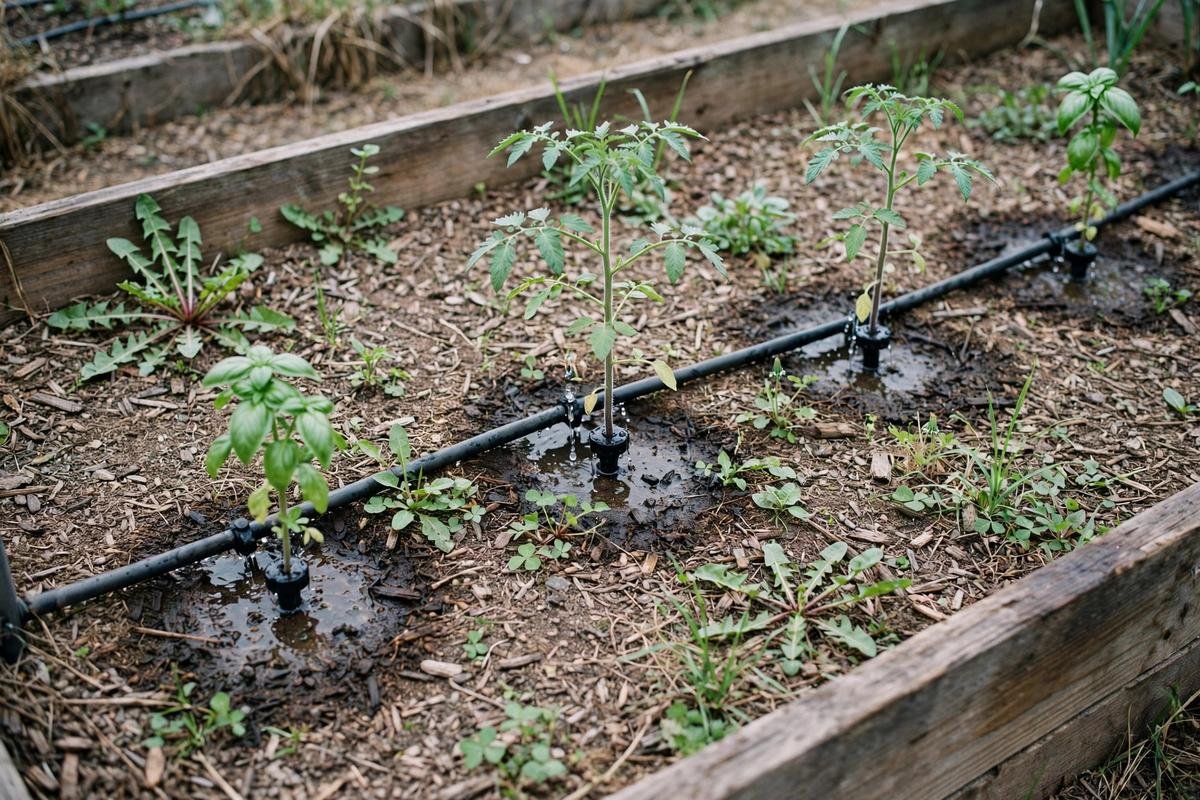
Each cycle puts out 8 emitters times 1 gallon per hour times 0.5 hours, which comes to 4 gallons per cycle. Now suppose a rainy month lets you skip 2 cycles a week with the rain delay. Over four weeks that is 8 skipped cycles, and 8 cycles times 4 gallons comes to about 32 gallons saved for the month, from one bed alone.
Three assumptions sit behind that number. First, the emitters actually deliver their rated 1 gallon per hour, while real flow changes with pressure and with clogs. Second, the bed starts on two cycles a week, so a bed watered more often saves more per skipped cycle. Third, the delay is pressed or set after each rain, since a delay nobody sets saves nothing. Your own numbers will differ, but the method stays the same: count the emitters, multiply by flow rate and run time, then count the cycles you skip.
Winter: take the timer off before hard freezes
A timer left on the faucet through a hard freeze is the most common way a drip system loses a timer. Water trapped inside the housing freezes, expands, and cracks the case or the valve, and the damage only shows up in spring.
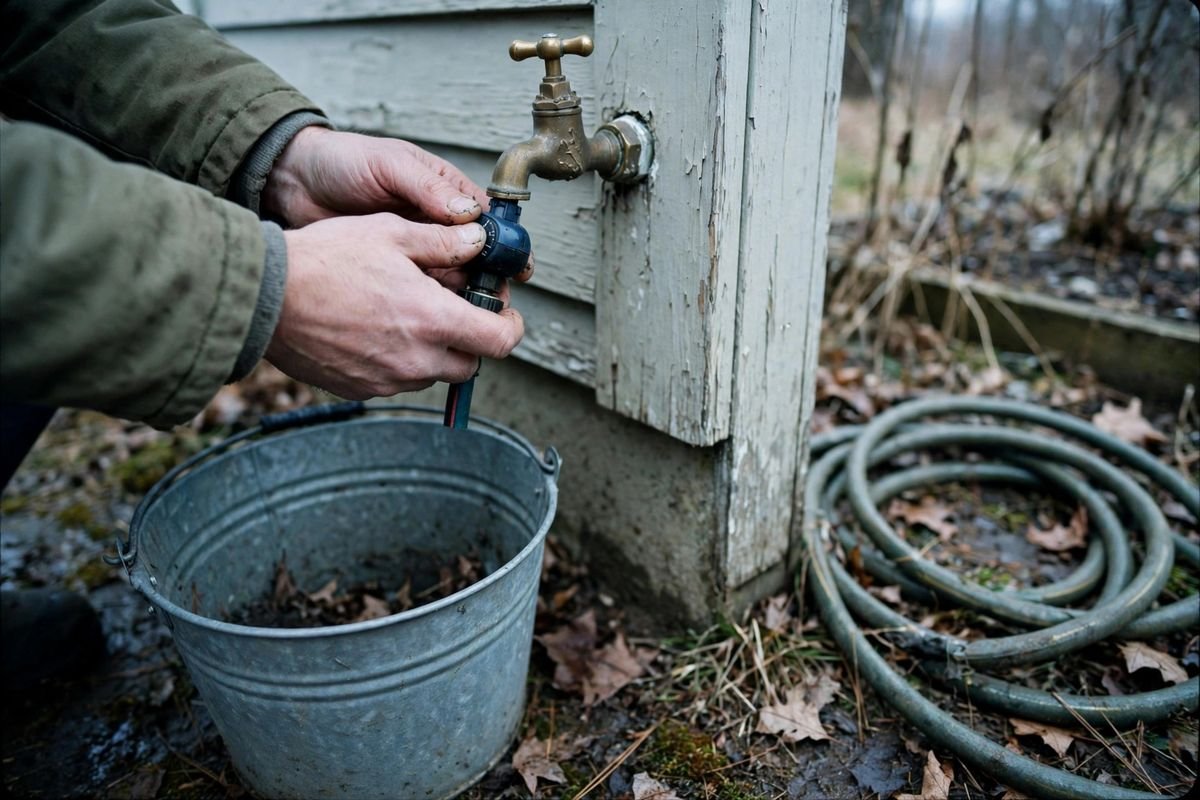
Before the cold sets in, unscrew the timer from the faucet, open the ends of the drip lines, and let the water drain out. Store the timer indoors for the winter, and check your local frost dates before deciding when to shut the system down, since the right week depends on your own climate. Our full shutdown routine is in how to winterize a drip irrigation system, and if you are buying parts for next season, our roundup of drip irrigation kits for raised beds covers complete sets that include a timer.
Frequently asked questions
Do I still need a rain sensor if my timer has a rain delay?
A rain delay button is manual, so it only works when you press it. A rain sensor watches for rain on its own and pauses watering without you, which covers storms that arrive while you are at work or away. If you check the garden daily, a delay button is enough. If you travel, a sensor is worth the extra cost.
How long should I set the delay after rain?
After a light rain, 24 hours is usually enough. After a heavy rain, 48 to 72 hours is a better starting point. Check the soil a few inches down, and if it still feels damp, extend the delay another day.
Will a rain delay timer work on a gravity-fed drip system?
Most faucet timers need a minimum water pressure to open and close their valve, and a gravity-fed tank often runs below that pressure. Check the timer’s pressure range in its manual before you buy, and if your tank sits low, look for a timer rated for low pressure.
Can I leave the timer outside all winter?
No. Remove the timer from the faucet before the first hard freeze and store it indoors, and drain the lines at the same time, since trapped water can crack tubing and fittings as well as the timer. A few minutes of shutdown work in fall saves a full replacement in spring.
Sources and further reading
- EPA WaterSense: WaterSense Labeled Controllers. Certification rules for weather-based and soil moisture-based controllers.
- Clemson Cooperative Extension: Installing Drip Irrigation in Home Gardens (HGIC 1268). Drip system types, emitter flow rates, and timer placement at the spigot.
Related reading: How to Winterize a Drip Irrigation System, How to Set Up Drip Irrigation for a Raised Bed, Best Drip Irrigation Kits for Raised Beds.
By the Pot and Plot Team