
This post may contain affiliate links. If you buy through links on this page, we may earn a commission at no extra cost to you.
As an Amazon Associate I earn from qualifying purchases.
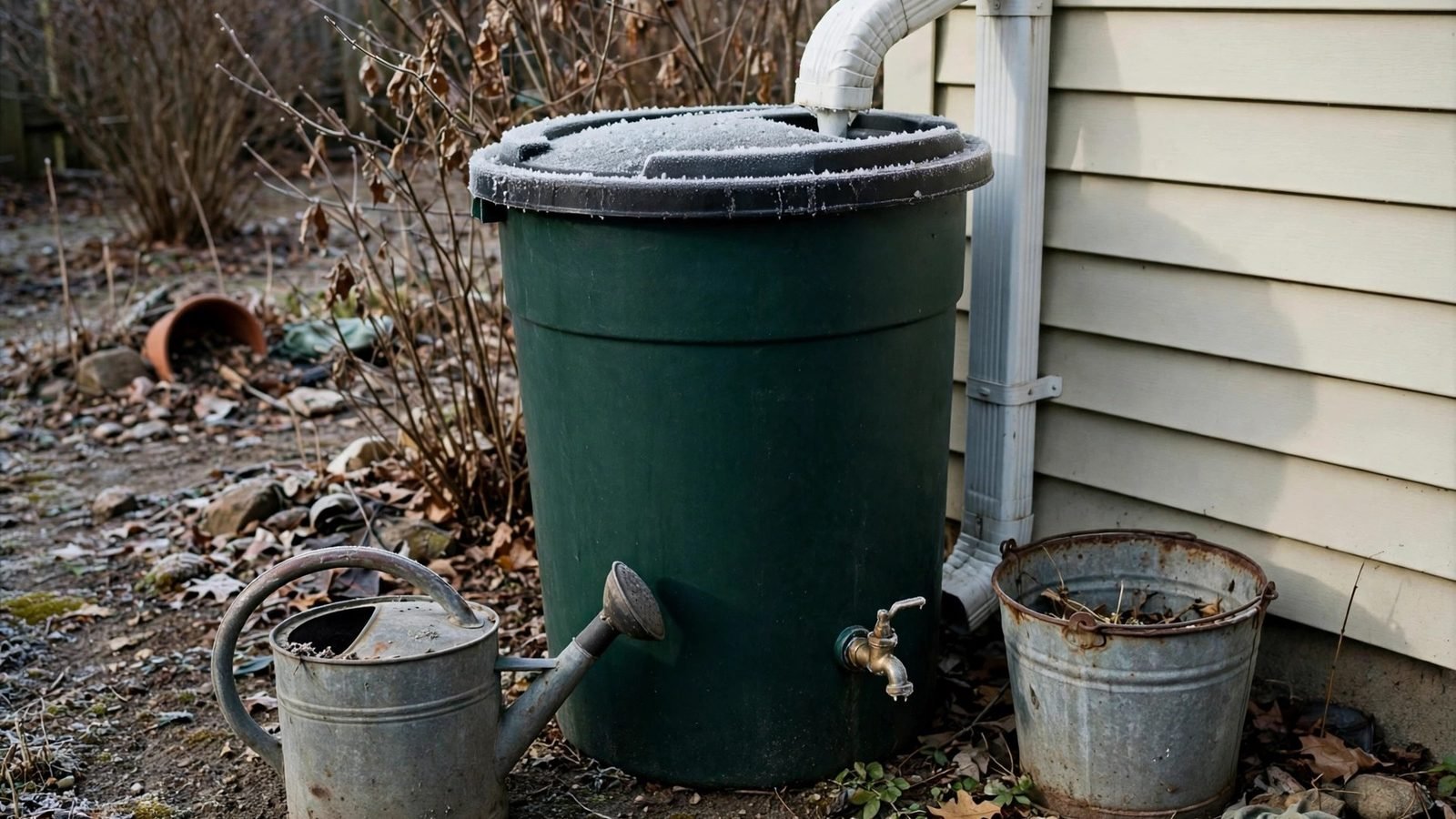
A rain barrel saves water all summer and then turns into a liability on the first hard freeze. Water grows about 9 percent in volume when it freezes, and a full barrel has nowhere for that extra water to go. The ice pushes outward, splits the seams, cracks the plastic, and breaks the spigot. A barrel that cost 80 dollars and gave you a season of free water can be ruined in a single cold night, and the damage is usually a crack you cannot patch well enough to trust again.
The fix is mostly timing: drain the barrel before the first hard freeze, disconnect it from the downspout, and either store it upside down or insulate it if you plan to keep using it. This guide covers the drain-and-store routine, the insulation option for mild winters, the downspout diverter, and a worked example that shows how long draining takes and how much ice a full barrel makes. For help choosing a barrel in the first place, see our guide on best rain barrels for small gardens.
Why a full rain barrel cracks in winter
Water is one of the few liquids that grows when it freezes, and it grows by about 9 percent. A 55-gallon barrel full of water holds about 55 gallons of liquid; frozen solid, that water wants about 60 gallons of space. The barrel gives it none, so the ice pushes on the walls until something fails. Thin plastic barrels split along a seam or around the spigot fitting. Wooden barrels push their staves apart. Even a heavy-duty barrel with thick walls can crack at the base, where the ice settles and presses hardest.
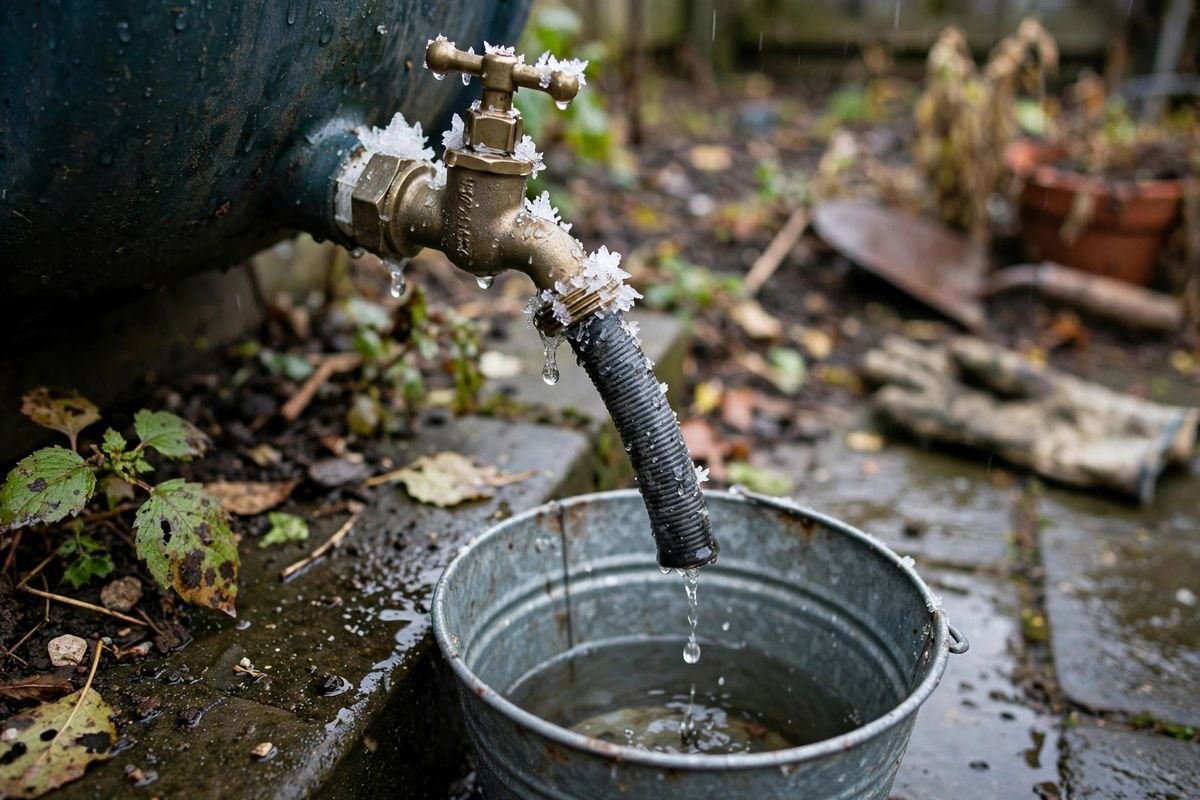
The spigot fails first in most cases. It sticks out from the wall, holds a small pocket of water, and freezes before the main body of water does. A brass spigot can crack its fitting; a plastic one can split outright. A cracked spigot leaks all spring, and a leaking barrel drains itself onto the patio instead of into your watering can.
A half-full barrel is not safe either. Ice forms on the top surface first and grows downward, and the ice sheet can bridge across the barrel and press on the walls just as a full freeze does. The only barrel that is safe from freeze damage is an empty one, or one with so little water that the ice has room to grow upward. Empty is simpler and surer than almost-empty.
When to drain the barrel
Drain the barrel when the overnight low is forecast to fall below 28 degrees for the first time, and do it before that night, not after. A barrel that freezes solid overnight is already damaged by morning, and draining it after the fact only shows you the crack. In most of the United States, that first hard freeze arrives between late October and early December, and the exact date varies by a month or more from year to year.
Use your local frost dates and regional planting guidance — not your USDA hardiness zone alone — to choose planting dates. The same frost dates that tell you when to plant also tell you when the first hard freeze is likely, and a local forecast beats a zone number for a one-night decision like this.
Do not wait for the barrel to empty itself through normal watering. A barrel that is still half full in late fall will still be half full when the freeze arrives, because watering slows down as the garden goes dormant. Set a date on the calendar for the drain, and treat it like any other fall garden job.
How to drain and store a rain barrel
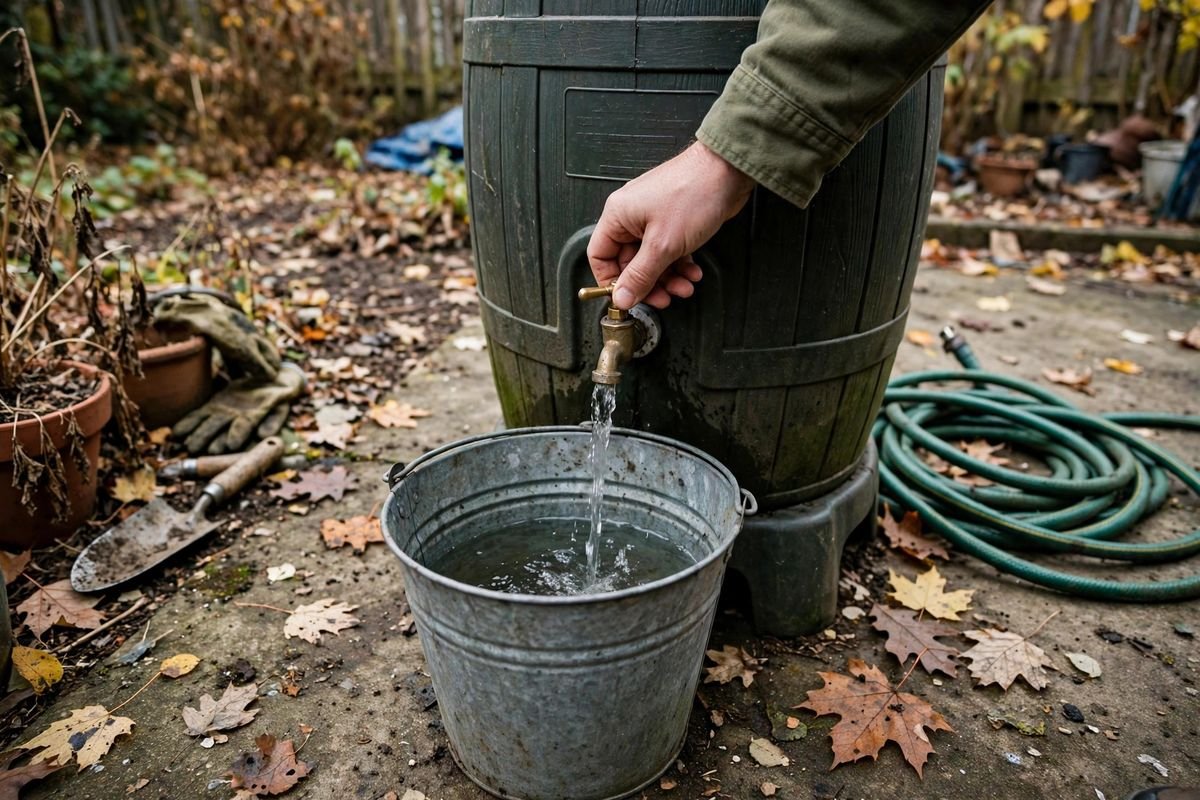
Draining is a slow job if you let the spigot do it alone, so plan for it. Open the spigot and let the water run onto a garden bed or a lawn area that can take it. A standard barrel spigot flows at about 2 gallons a minute, so a full 55-gallon barrel takes close to half an hour to empty. If your barrel has an overflow hose, use that too: it drains from the top and empties the barrel faster than the spigot alone.
Once the water stops running, tip the barrel on its side and roll it so the last few gallons run out of the spigot. Then rinse the inside with a hose to wash out leaves, algae, and the slimy film that builds up over a season. A barrel that goes into storage dirty comes out in spring smelling bad and growing algae from the first warm day. Let it dry for a day in the sun if the weather allows, or wipe the inside with a towel.
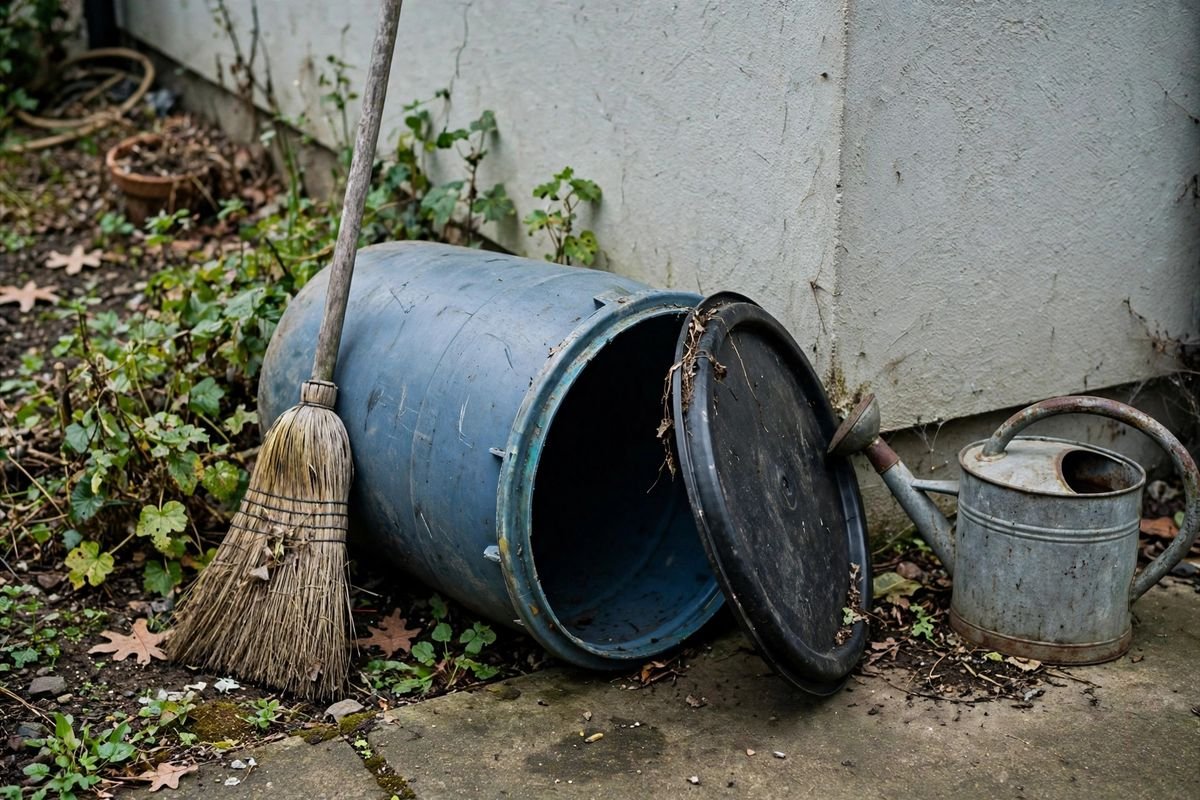
Store the barrel upside down, with the lid on or a board over the opening. Upside down keeps rain and snow out and keeps the barrel from filling again during a winter thaw. A barrel stored right side up with the lid off can fill with snow, freeze, and crack just as it would in use. If you have no shed space, store it against the house wall under the eaves, upside down, with a brick on top to stop the wind moving it.
Disconnecting the downspout
A drained barrel is useless if the downspout keeps filling it. Disconnect the downspout from the barrel and fit the diverter back to its normal position, or fit a downspout extension that carries the water away from the house. A barrel that refills during a winter storm and then freezes is worse than one left full in fall, because the freeze catches it by surprise.
Check the diverter itself. Many diverters hold a small pocket of water in the mechanism, and that pocket freezes and cracks the diverter housing. Drain it the same day you drain the barrel, and leave the diverter valve open so any water that gets in can run out. If the diverter is a separate piece that unclips, take it off for the winter and store it in the garage.
While the downspout is disconnected, check the gutter for leaves. A clogged gutter in winter overflows onto the house wall and the foundation, and the overflow freezes into icicles that pull the gutter loose. Clean gutters are part of the same fall job as the barrel drain.
Our worked example: what a frozen barrel does, in numbers
Here is the math for a standard 55-gallon barrel, the most common size sold for home gardens. These are our own computed numbers, with the assumptions stated so you can run the same figures for a larger or smaller barrel.
| Item | Assumption | Number |
|---|---|---|
| Water in a full barrel | 55-gallon barrel, filled to the overflow | 55 gallons |
| Expansion when frozen | Water grows about 9 percent by volume | About 5 gallons of extra volume |
| Weight of the water | One gallon of water weighs 8.34 pounds | About 459 pounds |
| Weight of the ice | Same water, frozen, same weight | About 459 pounds of ice |
| Drain time through the spigot | Spigot flows about 2 gallons a minute | About 28 minutes |
| Drain time, spigot plus overflow hose | Overflow adds about 3 gallons a minute | About 11 minutes |
The two numbers that matter are the 5 gallons of expansion and the 28 minutes of draining. Five gallons of ice with nowhere to go is enough to split a plastic barrel along a seam, and 28 minutes is short enough that there is no reason to leave the job until the freeze warning. A 35-gallon barrel holds about 3 gallons of expansion and takes about 18 minutes to drain; a 75-gallon barrel holds about 7 gallons and takes about 38 minutes. The pattern is the same at any size: the expansion is always about a tenth of the volume, and the drain always takes longer than you expect, so start it early in the day.
Keeping a barrel in use through a mild winter
In zone 8 and warmer, where hard freezes are rare and brief, you can keep a barrel in use all winter with insulation and a little attention. Wrap the barrel in two layers of bubble wrap or an insulating blanket, and cover the spigot with a foam cap or an old sock tied on with twine. The wrap holds a few degrees of warmth, which is often enough to carry the barrel through a night at 30 degrees.
Keep the barrel full in a mild winter, not half full. A full barrel has more thermal mass and freezes more slowly than a half-full one, and the water at the bottom stays above freezing longer. Use the water regularly: every time you draw water out, you break up the ice forming on the surface and mix warmer water up from below. A barrel that sits untouched for a month in a mild winter is the one that freezes.
Watch the forecast and drain the barrel whenever a hard freeze below 25 degrees is coming, even in a mild zone. Insulation buys a few degrees, not twenty. A barrel that survives ten nights at 30 degrees will still crack on the one night the temperature drops to 20.
What to do if the barrel already froze
If you find the barrel frozen solid, do not try to thaw it with hot water or a heat gun. A sudden temperature change cracks plastic faster than the ice does. Let it thaw on its own over a few mild days, then inspect it. Fill it with a few gallons of water and watch the seams, the base, and the spigot fitting for leaks over an hour.
A small crack at the spigot fitting can sometimes be fixed with a new washer or a bead of silicone sealant, but a split seam is rarely worth repairing. A patched seam holds for a while and then fails again, usually when the barrel is full and the leak floods a bed. A cracked barrel makes a good compost bin or a planter with the bottom cut out, which is a better end than a slow leak beside the house.
Frequently asked questions
Can I leave the rain barrel full if I put a heater in it?
A stock tank heater or a birdbath heater can keep a barrel from freezing, but it runs all winter and adds to the electric bill. For most home gardeners, draining the barrel and storing it is cheaper and simpler. A heater makes sense only if you need the water all winter for livestock or a greenhouse.
Should I bring the barrel indoors?
No. A 55-gallon barrel full of water weighs about 460 pounds, and even empty it is bulky and awkward. Store it upside down outside, against the house wall or in a shed. It does not need indoor storage; it needs to be empty and upside down.
What happens to the diverter in winter?
Drain it with the barrel and leave the valve open. A diverter that holds water will crack its housing on the first hard freeze, and a cracked diverter leaks down the house wall all spring. If it unclips, store it in the garage for the winter.
Can I use the drained water on the garden in fall?
Yes. Drain the barrel onto garden beds, a lawn, or a compost pile. Fall is a good time to water: the soil is still warm, the roots are still active, and the water soaks in before the ground freezes. Avoid draining it against the house foundation.
Sources and further reading
- University of Minnesota Extension, Rain Barrels
- Penn State Extension, Rain Barrels
Related reading: Best Rain Barrels for Small Gardens, Fall Garden Cleanup: 12 Things to Do Before Winter, Best Expandable Garden Hoses, Best Garden Hose Timers, Best Drip Irrigation Kits for Raised Beds
By the Pot and Plot Team