
This post may contain affiliate links. If you buy through links on this page, we may earn a commission at no extra cost to you.
As an Amazon Associate I earn from qualifying purchases.
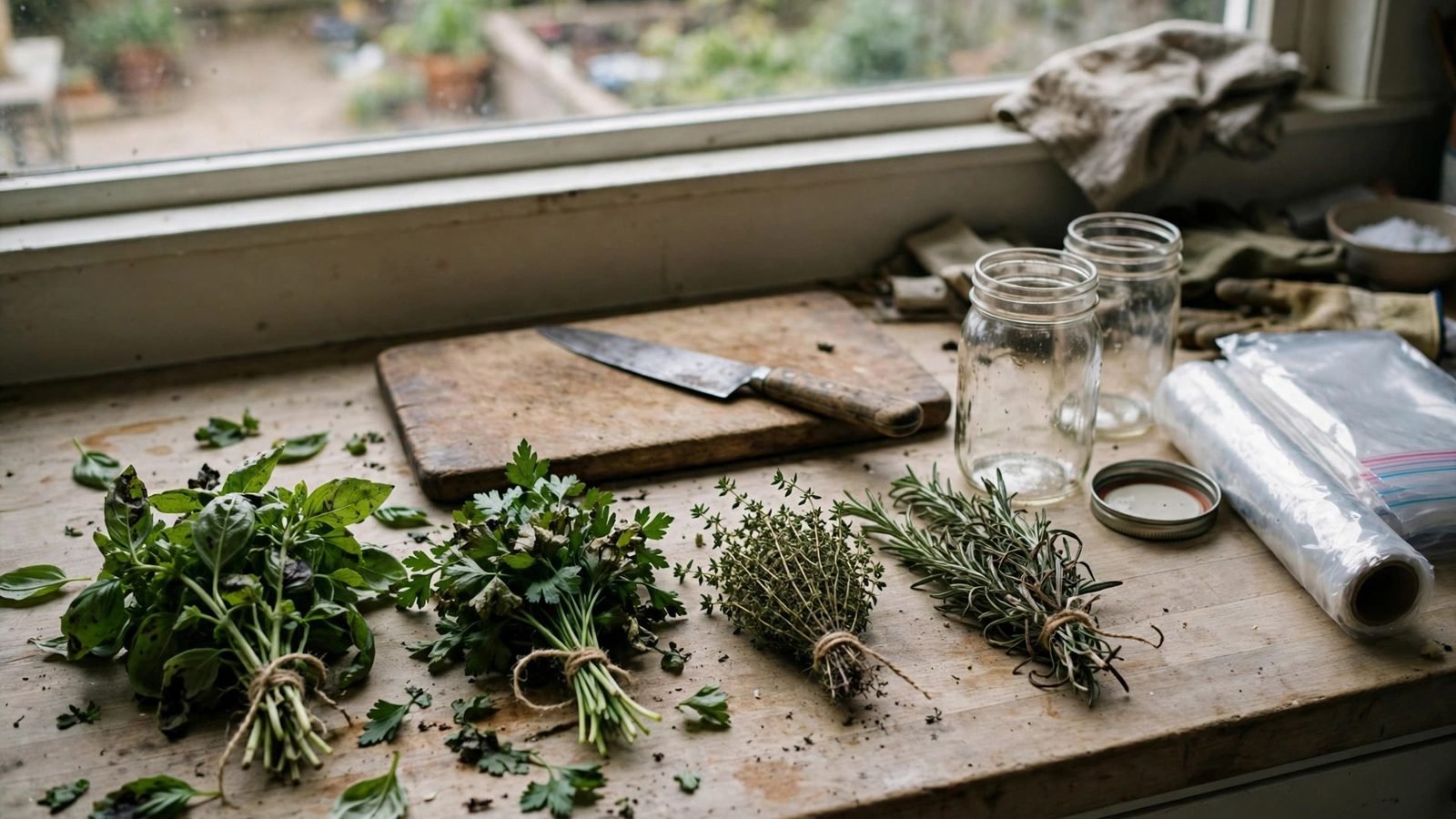
Herbs are at their best in late summer and fall, and then the first frost ends the season in a single night. Basil turns black, parsley wilts, and the rosemary you meant to use sits frozen on the stem. The fix takes an afternoon: freeze what you use fresh, dry what dries well, and turn the rest into butter or oil you can pull from the freezer all winter. Done right, a September harvest seasons meals until the new plants go out in spring.
The trick is matching the herb to the method. Freezing keeps the flavor of soft herbs like basil and parsley almost intact. Drying suits woody herbs like rosemary and thyme, which hold their oils in dry leaves. Oil and butter carry the flavor of any herb into cooking, but they need care: herbs stored in oil at room temperature can grow bacteria, so they belong in the freezer, not on the shelf. This guide covers all three methods, which herbs suit each one, and a worked plan for a single afternoon harvest, including the freezer space it takes. For herbs you keep growing through winter instead, see our guide on how to grow herbs indoors in winter.
Which herbs freeze well and which dry well
Soft, leafy herbs freeze best: basil, parsley, cilantro, dill, chives, mint, and tarragon. Their flavor lives in volatile oils that drying drives off, so a dried basil leaf tastes like very little, while a frozen one still tastes like basil in a sauce. Woody herbs dry best: rosemary, thyme, oregano, sage, and marjoram. Their leaves are thick and low in water, so they dry without molding and keep their flavor for months in a jar.
A few herbs sit in between. Parsley dries acceptably if you need a dried herb, but freezing keeps far more flavor. Mint freezes well and dries well, so pick the method that fits how you cook: frozen mint for sauces and drinks, dried mint for tea. Bay leaves dry perfectly and need no special treatment: hang a few branches and strip the leaves when they are crisp.
Freezing herbs: the ice cube tray method
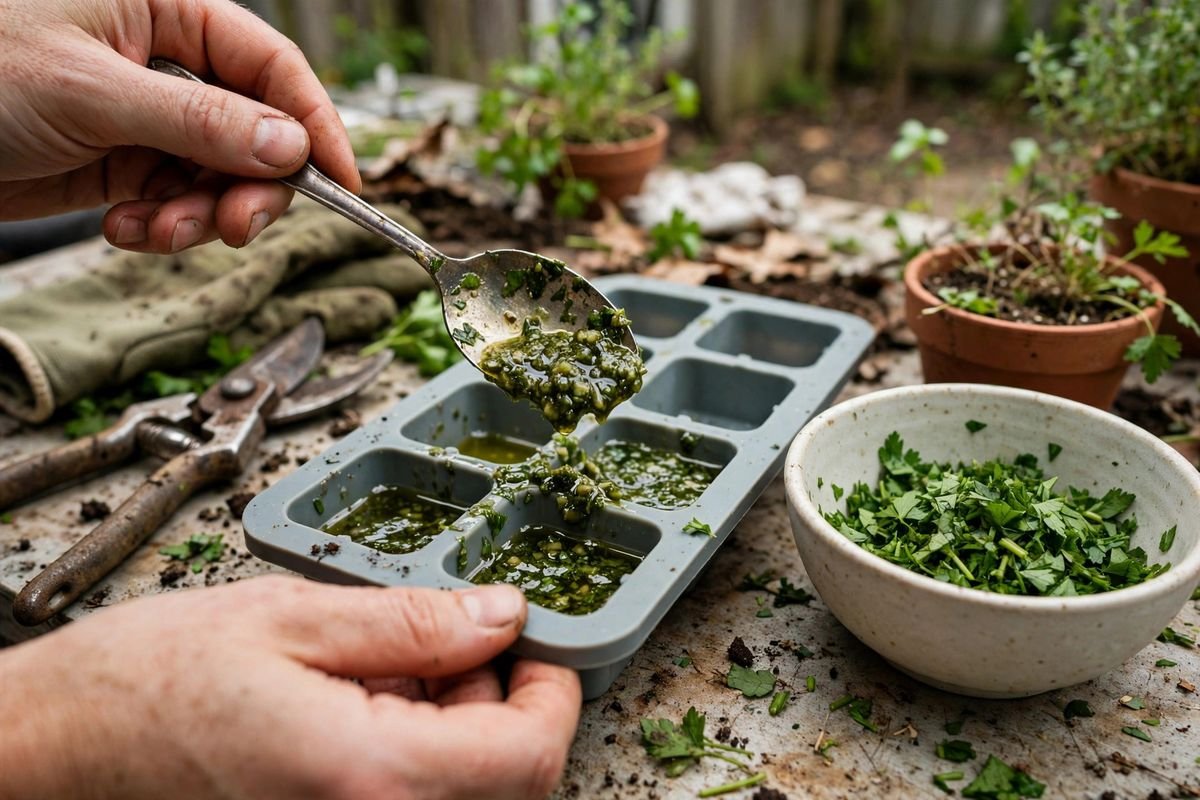
The ice cube tray method is the most useful way to freeze herbs, because it portions them into cooking-sized amounts. Pick the herbs in the morning, after the dew dries and before the sun gets hot: that is when the oils are strongest. Rinse the leaves gently, pat them dry with a towel, and chop them the way you would for cooking. Pack the chopped herbs loosely into the tray compartments, filling each about three quarters full.
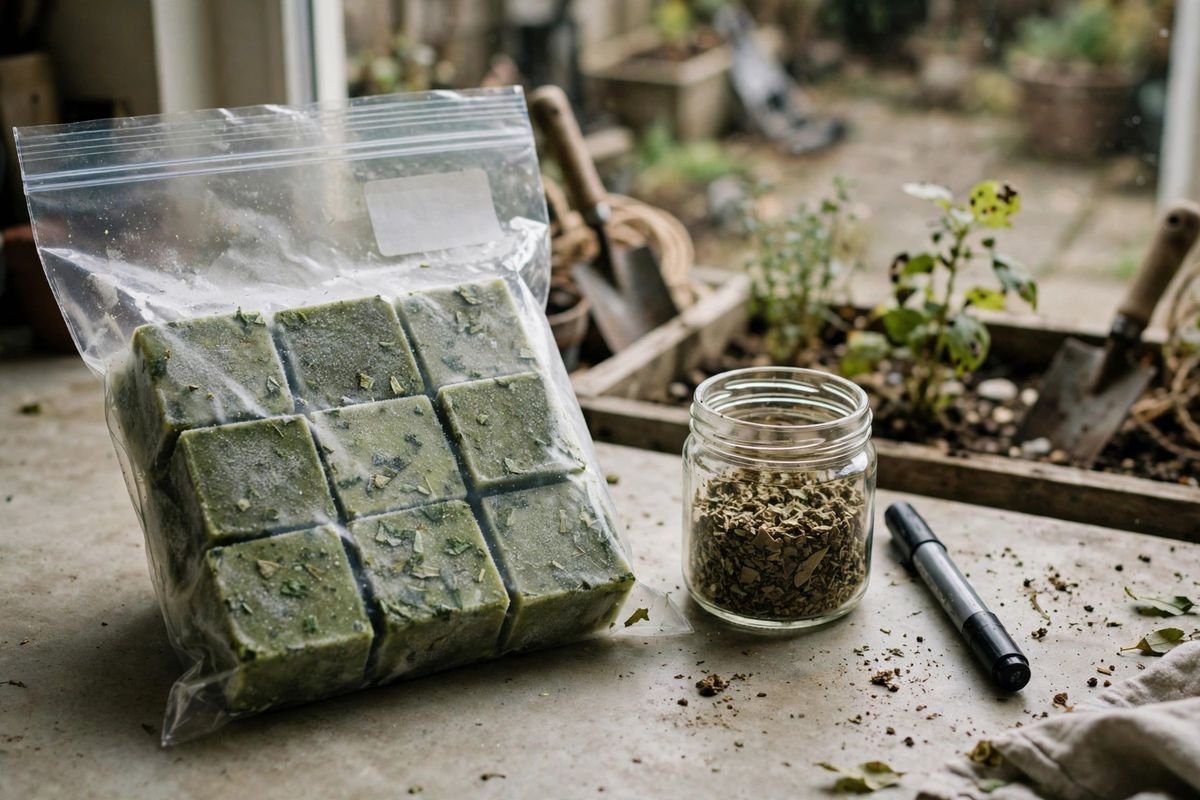
Cover the herbs with liquid before freezing. Water works and suits soups and stews, but olive oil works better for most cooking: the oil protects the leaves from freezer burn and melts straight into a pan. Pour oil over the herbs until the compartments are full, then set the tray in the freezer on a level shelf. Once the cubes are solid, pop them out into labeled freezer bags and return them to the freezer. A standard tray holds 14 cubes, and each cube seasons about one serving of sauce, soup, or vegetables for four people.
Label every bag with the herb and the date. Frozen cubes all look alike after a month, and a bag of unlabeled green cubes is a guessing game in January. Use the cubes within six months: they stay safe longer, but the flavor fades after that. Drop a cube straight from the freezer into a hot pan or a simmering pot; there is no need to thaw it first.
Drying herbs: hanging, racks, and the microwave
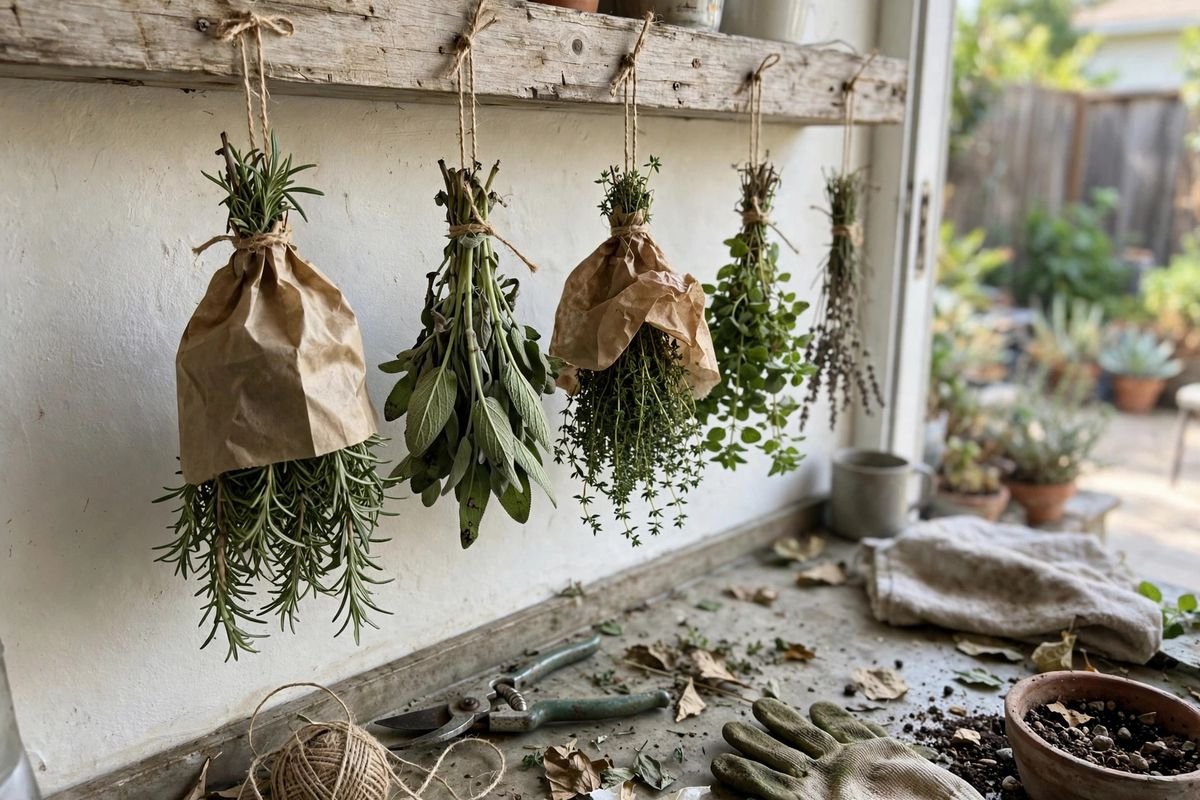
Drying works when air moves around the leaves and the temperature stays low. The hanging method is the simplest: tie small bunches of five to ten stems with twine, hang them upside down in a warm, dark, airy spot, and slip a paper bag with a few holes over each bunch to catch leaves that fall. Small bunches dry faster and mold less than big ones. Most herbs dry in one to two weeks: the leaves are ready when they crumble between your fingers.
A rack or a screen works better for small leaves that fall off the stem, like thyme and oregano. Spread the stems in a single layer on a clean window screen or a mesh rack, turn them every couple of days, and keep the rack out of direct sun, which fades the color and the flavor. A food dehydrator set to its lowest herb setting, usually 95 to 115 degrees, dries a batch in two to four hours and gives the most even result.
The microwave is the fastest method and it works well for small batches. Lay the leaves in a single layer between two paper towels, microwave for 30 seconds, check, and repeat in 15-second bursts until the leaves crumble. It takes one to three minutes per batch. Watch closely: herbs go from dry to scorched in seconds, and scorched leaves taste bitter. Store dried herbs whole in glass jars away from light, and crumble them only when you cook with them: whole leaves keep their oils far longer than ground ones.
Herb butter and herb oil for the freezer
Herb butter is the easiest way to keep the flavor of soft herbs in a form you can use in seconds. Soften a stick of butter, mix in two to three tablespoons of finely chopped herbs per stick, add a pinch of salt if you like, then roll the butter into a log in parchment paper and freeze it. Slice off rounds as you need them for vegetables, fish, or bread. Parsley, chives, and tarragon make the best butters; basil butter is good too, though it darkens a little in the freezer.
Herb oil follows the same idea: blend one cup of packed herb leaves with half a cup of olive oil until smooth, pour it into an ice cube tray, and freeze. The cubes go straight into a pan or a dressing. Never store herb oil at room temperature: garlic and herbs in oil can grow botulism bacteria without air, and the fridge only slows it. Frozen herb oil is safe because the cold stops the bacteria, and a cube used from frozen carries no risk.
Both methods stretch a small harvest. One cup of packed basil leaves makes about eight oil cubes, and each cube flavors a pan of vegetables or a pot of pasta sauce. That is the math that makes an afternoon of preserving worth it: a single basil plant that would have died in the first frost becomes two months of flavor.
Our worked example: one afternoon, four herbs, one freezer shelf
Here is a complete preserving plan for a typical late-season harvest: one large basil plant, one parsley plant, one rosemary plant, and one thyme plant, picked on a dry September afternoon. These are our own computed numbers, with the assumptions stated so you can scale them to your own harvest.
| Herb | Method | Yield | Freezer space |
|---|---|---|---|
| Basil, one large plant | Oil cubes | About 4 cups packed leaves, 28 cubes | Two ice cube trays, then two quart bags |
| Parsley, one plant | Oil cubes | About 2 cups chopped, 14 cubes | One tray, then one quart bag |
| Rosemary, one plant | Hang to dry | About 1 cup dried leaves | One pint jar on the shelf |
| Thyme, one plant | Dry on a rack | About half a cup dried leaves | One half-pint jar on the shelf |
The whole job takes about two hours, including the picking and the cleanup, and it uses one shelf of freezer space plus two small jars. At a cooking rate of three herb cubes a week, the 42 frozen cubes last about 14 weeks, which carries a household from October into January. The dried rosemary and thyme keep for six months or more in jars, which stretches the supply into spring.
Scale the plan to your harvest by counting plants, not by guessing. A small basil plant gives about 1 cup of packed leaves, or 7 cubes; a large one gives 4 cups, or 28. If you have more herbs than freezer space, dry the extra: dried herbs take no freezer room at all, and a jar of dried oregano is worth more in February than a bag of freezer-burned leaves.
Storing dried herbs so they keep their flavor
Dried herbs lose flavor to four things: light, heat, air, and time. Store them in glass jars with tight lids, in a cupboard away from the stove, and keep the leaves whole until you use them. A jar of whole dried rosemary leaves kept in a dark cupboard still smells strong after six months; the same herb ground to powder and left on a sunny shelf fades in six weeks.
Date every jar and use the oldest first. Most dried herbs hold good flavor for six to twelve months, and woody herbs like rosemary and thyme last longer than soft ones like basil and parsley. If a jar smells like dust instead of the herb, it is done: compost it and use the fresh or frozen supply instead. Never top up an old jar with a new batch: the old leaves at the bottom keep aging, and the mix tastes stale.
What not to preserve
Some herbs are not worth the effort. Cilantro loses most of its flavor when dried and only a little less when frozen, so freeze a small batch for cooking and accept that fresh cilantro is a spring purchase. Dill freezes well but dries poorly. Chives freeze well in oil cubes but turn limp when dried, so skip the drying rack for them.
Do not preserve herbs that were sprayed recently, and do not preserve leaves with mold, heavy insect damage, or yellowing. Freezing and drying preserve whatever is on the leaf, including spray residue and mold spores. Pick clean, healthy leaves, rinse them, and dry them before you start.
Frequently asked questions
Can I freeze herbs without oil or water?
Yes, for some herbs. Spread clean, dry leaves in a single layer on a baking sheet, freeze them solid, then pack them into bags. This dry-freeze method suits dill, chives, and mint, which hold up without liquid. Basil turns dark and limp without oil, so use the oil cube method for it.
How long do frozen herb cubes last?
About six months at full flavor in a freezer that stays at 0 degrees. They stay safe to eat longer than that, but the flavor fades and freezer burn sets in. Use them up by spring and make a fresh batch from the new season’s plants.
Is it safe to store herbs in olive oil?
Only in the freezer. Herbs in oil at room temperature or in the fridge can grow botulism bacteria, which thrive without air. Frozen herb oil is safe because the cold stops bacterial growth. Use the cubes straight from frozen into hot food, and never thaw and re-store them.
Can I dry herbs in the oven?
You can, but the oven is the hardest method to control. Use the lowest setting, usually 170 to 180 degrees, prop the door open a crack, and check every five minutes. Most ovens run hotter than the dial says, and herbs scorch fast. The microwave or a dehydrator gives a better result with less watching.
Sources and further reading
- National Center for Home Food Preservation, Freezing Fresh Herbs
- South Dakota State University Extension, Preserving Herbs
- Colorado State University Extension, Herbs: Preserving and Using
Related reading: How to Grow Herbs Indoors in Winter, How to Overwinter Herbs Outdoors, Best Indoor Herb Garden Kits, How to Water Indoor Plants in Winter, Fall Garden Cleanup: 12 Things to Do Before Winter
By the Pot and Plot Team