
This post may contain affiliate links. If you buy through links on this page, we may earn a commission at no extra cost to you.
As an Amazon Associate I earn from qualifying purchases.
Every gardener has a box or a jar of old seed packets, some a year old and some five. Throwing them all away wastes money and good seed, while sowing them all blind wastes bed space and weeks of the season on rows that never come up. The paper towel test sits between those two mistakes: about ten days, almost no cost, and a clear answer on which packets are still worth sowing and how much extra seed the faded ones need.
This guide walks through the test step by step, explains how to read the results, and shows the sowing-rate math with a worked example using ten-year-old beans. The numbers are our own computed figures, with the assumptions stated, so you can rerun the same math for your own packets. For keeping the packets that pass, see our guide on how to store seeds over winter.
Why old seeds lose germination
A seed is alive, and it slowly uses up its stored food while it waits. Heat, damp, and light speed that decline, while cool, dry, dark storage slows it. A packet kept in a sealed jar in the refrigerator can stay usable years longer than the same packet left on a warm shelf in a damp shed, so two packets of the same bean variety, bought the same spring, can test at 90 percent and 40 percent.
Different crops age at different speeds. Onion, parsley, and parsnip seed fade fast, often within a year or two even in good storage. Beans, peas, and corn sit in the middle, usually good for three to five years when kept cool and dry. Tomato, lettuce, squash, and cucumber seed tend to last longer, often four to six years. These are broad guides from extension storage tables, not promises: a packet of lettuce seed stored badly can fail in year two, while a packet of onion seed stored well can surprise you in year three. The test, not the calendar, settles it.
| Crop group | Typical storage life in cool, dry storage | What that means for testing |
|---|---|---|
| Onion, parsley, parsnip | 1 to 2 years | Test packets over 1 year old |
| Pepper, sweet corn | 2 to 4 years | Test packets over 2 years old |
| Bean, pea, carrot, beet | 3 to 5 years | Test packets over 3 years old |
| Tomato, lettuce, squash, cucumber | 4 to 6 years | Test packets over 4 years old |
What you need for the paper towel test
The test needs nothing special: plain white paper towel, clear plastic bags that seal, a permanent marker, a small bowl of room-temperature water, and the seed packets you want to check. Plain white towel matters, because printed patterns and dyes can hide the thin white roots.
Label everything before the seeds touch the towel: write the variety, the packet year, and the date on the bag, not on the towel, because ink on a damp towel smears and fades. If you are testing several packets at once, give each bag its own label and note how many seeds went into each bag. A test with no label is one you cannot trust a week later, when three bags of sprouting beans all look alike.
Pick a warm spot for the bags, around 65 to 75 degrees, away from direct sun: the top of the refrigerator, a shelf above a radiator that never gets hot, or a kitchen counter away from the window. Cold slows germination and can make good seed look dead, so a chilly windowsill in February is a poor place for the test. If you need a seed storage box to keep the packets that pass in good order, you can browse seed storage boxes on Amazon. We have not tested the products linked here, and we give no current store prices. Check each listing for current details before you buy.
How to run the paper towel test, step by step
Count out the seeds first. Ten seeds is the usual sample and gives a result in steps of ten percent, which is enough for most packets. Twenty seeds gives a finer result in steps of five percent, and it is worth the extra seeds when the packet is old or the variety cannot be bought again. Take the seeds from the middle of the packet: the sample has to stand for the whole packet, flaws and all.
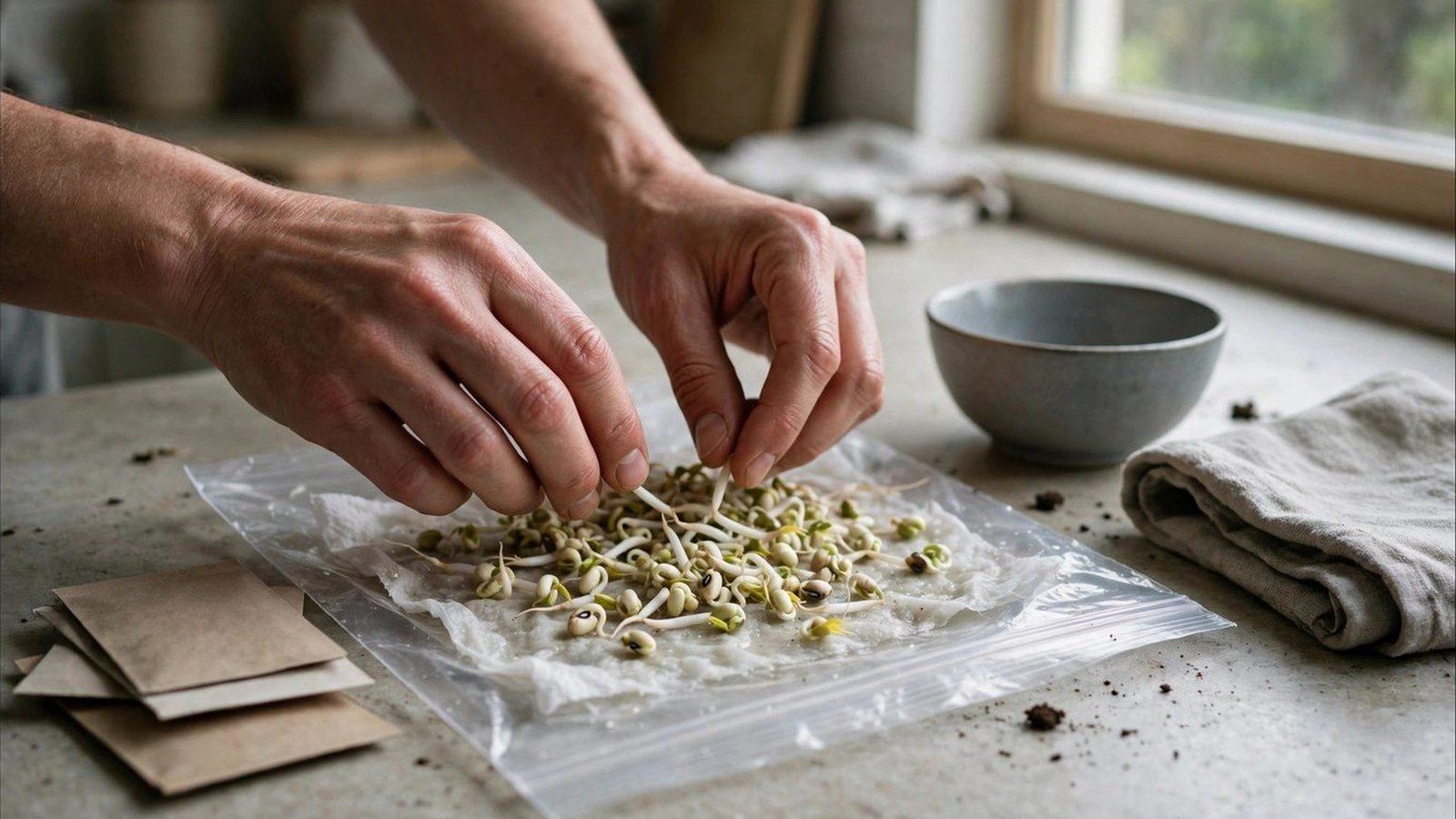
Dampen a sheet of paper towel and wring it out until it no longer drips. Lay it flat, place the seeds in a single row along one half, and fold the other half over them. Roll the towel up loosely and slide it into the labeled bag. Seal the bag most of the way, leaving a small gap for air, or seal it fully and open it once a day. The towel must stay damp, so check it daily and mist it lightly if the edges start to dry.
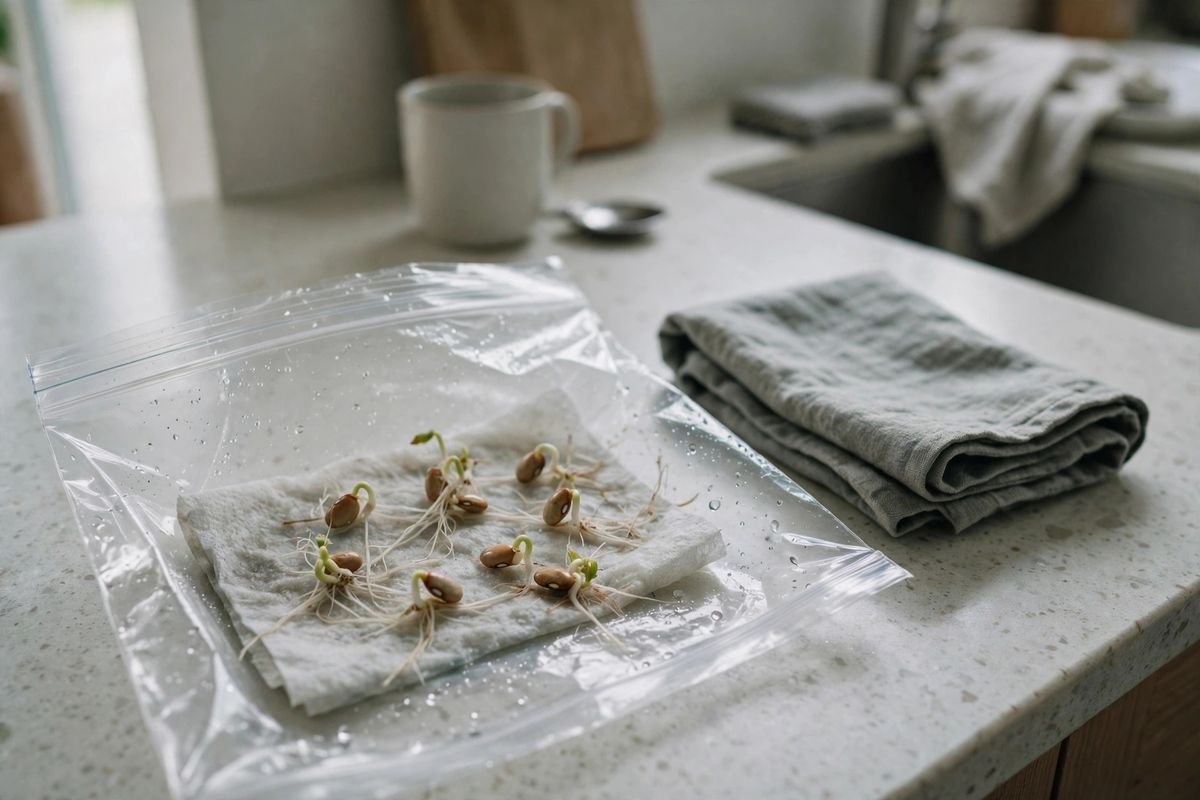
Check the bags every day, starting around day three for fast crops like beans and radishes. A seed counts as germinated when a root tip breaks through the seed coat, even if the shoot has not appeared yet. Count the sprouts and note the day each one appears, because slow germination is itself useful information: a packet where all ten seeds sprout on day three is in better shape than one where the same ten take nine days, even though both score 100 percent. Most vegetable seeds finish in seven to ten days, but peppers, parsley, and parsnips can take up to fourteen, so give slow crops the full two weeks.
When the test is done, the sprouted seeds can go straight into soil or a seed tray if you handle them gently by the seed coat, never by the root. If you need trays, you can browse seed starting trays on Amazon, or see our guide to the best seed starting trays. We have not tested the products linked here, and we give no current store prices. Check each listing for current details before you buy.
Reading the results
The math is simple: divide the number of sprouted seeds by the number tested, then multiply by 100. Eight sprouts from ten seeds is 80 percent germination, and eleven from twenty is 55 percent. Write the result on the packet with the test date, so the next time you reach for it you already know where it stands.
What you do with the number depends on how far it has fallen. A packet at 80 percent or above is in good shape: sow it at the normal rate and expect a full stand. A packet at 70 to 80 percent is still worth sowing, but sow a little thicker. A packet at 50 to 70 percent needs a clear sowing-rate adjustment, which the worked example below shows how to figure. A packet below 50 percent is usually better replaced, unless the variety is hard to find.
| Germination rate | What to do | Sowing multiplier |
|---|---|---|
| 90 to 100 percent | Sow at the normal rate | 1.0 to 1.1 times |
| 80 to 90 percent | Sow slightly thicker | About 1.2 times |
| 70 to 80 percent | Sow thicker, thin later | About 1.4 times |
| 60 to 70 percent | Sow clearly thicker | About 1.6 times |
| 50 to 60 percent | Sow double, or replace | About 1.8 to 2.0 times |
| Below 50 percent | Replace unless the variety is rare | Not worth the seed |
The multiplier comes from a simple rule: divide 1 by the germination rate as a decimal. A rate of 60 percent is 0.60, and 1 divided by 0.60 is 1.67, so you sow about 1.7 times the normal amount. A rate of 80 percent gives 1.25, so you sow about a quarter more seed. The table rounds these figures to keep the math quick at the potting bench.
Our worked example: ten-year-old beans and the sowing-rate math
Here is a full worked example with stated assumptions, so you can follow the same steps with your own packets. The packet is a home-saved lot of dry beans, packed in the fall of 2016 and kept in a sealed glass jar in an unheated basement since then, so it is ten years old in the spring of 2026. Beans normally keep for three to five years in good storage, so this packet is well past the usual range.
The test used twenty seeds from the middle of the jar, on a damp paper towel in a sealed bag kept at about 70 degrees. By day three, six seeds had sprouted. By day five, nine. By day seven, eleven. No more sprouted by day ten, so the test ended at eleven out of twenty, or 55 percent germination. The sprouts were slow as well as fewer, which fits an aged seed lot.
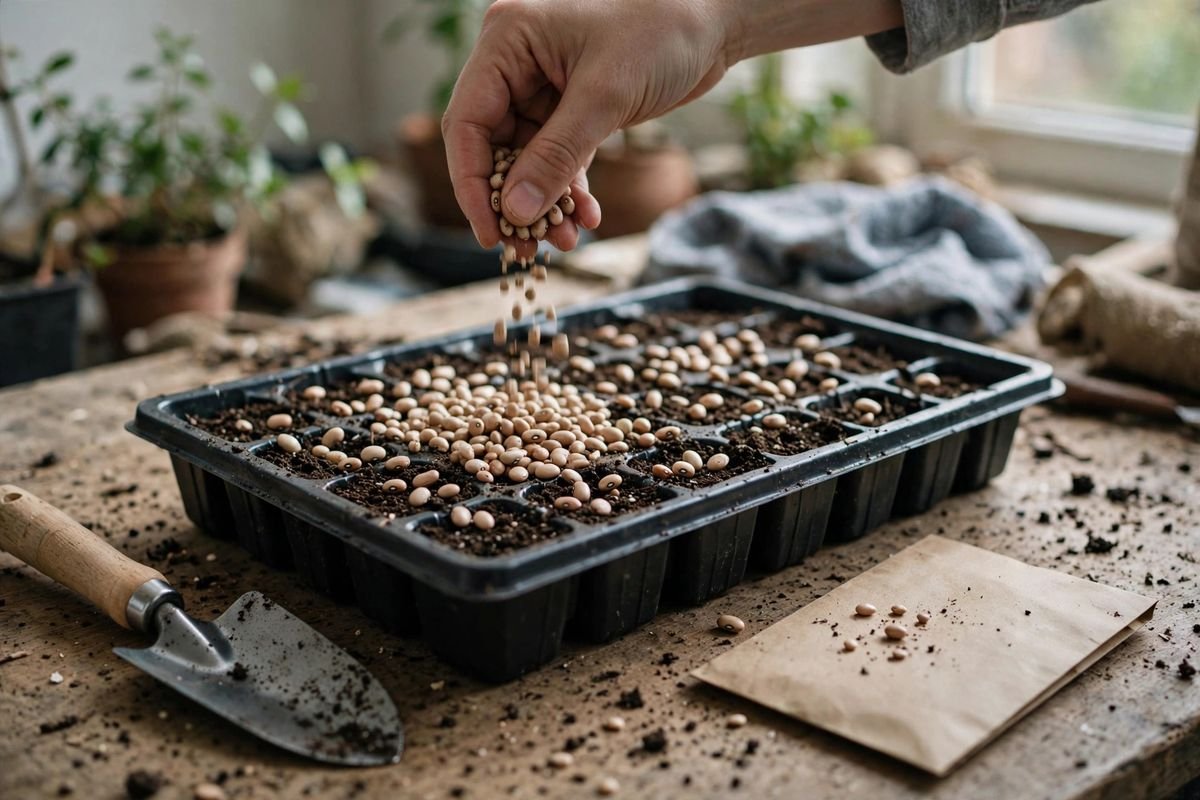
The sowing math starts from the number of plants wanted. Suppose the plan calls for 24 bean plants in a row. At 55 percent germination, the seeds to sow are 24 divided by 0.55, which is 43.6, so sow 44 seeds: a multiplier of 1 divided by 0.55, which is 1.82, or about 1.8 times the normal amount. If the packet holds only 30 seeds, it cannot fill the row, and the choice is a shorter row or a fresh packet. Compare that with a packet that tested at 80 percent: the same 24 plants would need 30 seeds, a multiplier of 1.25. The gap between a 55 percent packet and a 90 percent packet is real, 44 seeds against 27 for the same row, and that gap is the cost of old seed, counted in seed rather than in money.
Two notes of caution belong with this example. First, the 55 percent figure rests on twenty seeds, so it is a rough estimate: a second test from the same jar might give 50 percent or 60 percent. Second, germination in a bag is not the same as germination in cold spring soil. Field germination runs lower, especially in cool or wet soil, so treat the test result as the best case and sow a few extra seeds when the soil is still cold. Use your local frost dates and regional planting guidance — not your USDA hardiness zone alone — to choose planting dates. A zone number tells you how cold the winter gets, not when the soil warms enough for beans, and two gardens in the same zone can sit weeks apart on safe sowing dates.
Storing the seeds that pass
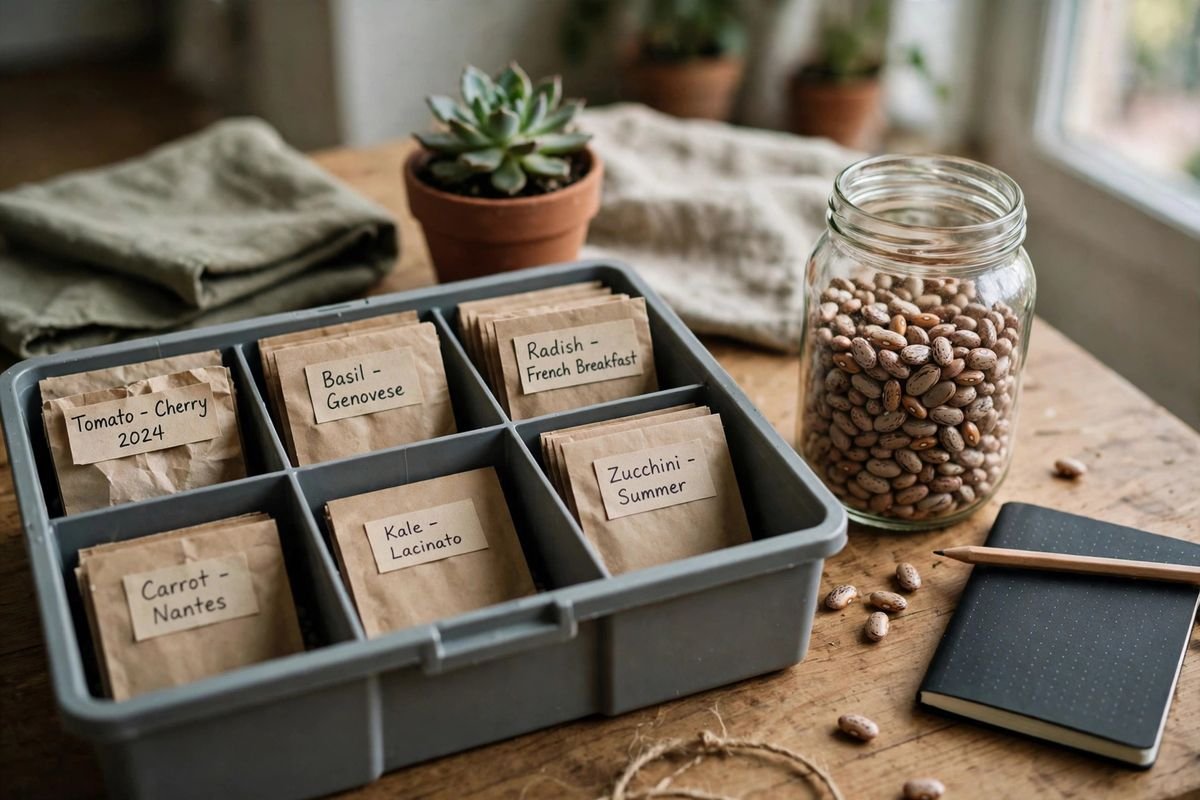
A packet that tests well deserves better storage than it had before, or it will fade again by next spring. Dry the seeds fully before you pack them away, because damp seed molds in a sealed container. Paper packets go inside a sealed glass jar or a zip-top bag with the air pressed out, and the jar goes somewhere cool, dry, and dark. A refrigerator shelf works well, as long as the container stays sealed until it warms back to room temperature before you open it: opening a cold jar in warm, humid air draws condensation straight onto the seeds. Write the test result and the test date on the packet, and keep the jars off the floor of a damp basement and away from the top of a hot water heater. A label that reads “Beans, 55 percent, tested March 2026, sow 1.8 times normal” saves you from running the same test again next year. For the full routine, see our guide on how to store seeds over winter, and for keeping the rest of your sowing gear in order, see our guide on how to organize seed starting supplies.
Troubleshooting
The towel grows mold before the seeds sprout
Mold usually means the towel was too wet, the bag stayed sealed with no fresh air, or the seeds were damp when they went in. Start over with a fresh towel wrung out until it no longer drips, leave a small gap in the bag seal, and open the bag once a day. Seeds with visible mold should be thrown away rather than tested again.
Nothing sprouts after ten days
First check the temperature. A bag kept below 60 degrees can sit for two weeks with no sprouts from seed that would have sprouted in days at 70 degrees, so move the bag to a warmer spot and give it a few more days. Then check the crop: peppers, parsley, and parsnips are slow and may need the full fourteen days. If the bag was warm, the towel was damp, and the crop is a fast one like beans or radishes, the seed is almost certainly dead.
Frequently asked questions
How many seeds should I test from each packet?
Ten seeds is the usual sample and gives a result in steps of ten percent. Twenty seeds gives a finer result and is worth it for old packets or for a variety you cannot replace. Testing more than twenty rarely changes the decision, so save the rest of the packet for sowing.
How long do garden seeds last?
It depends on the crop and the storage. Onion, parsley, and parsnip seed often fade within one to two years. Beans, peas, and corn usually last three to five years in cool, dry storage. Tomato, lettuce, squash, and cucumber seed often last four to six years. These are broad guides, and the paper towel test checks a given packet instead of trusting the year on the label.
Sources and further reading
- North Carolina State University Extension, Buncombe County, Seed Viability Test
- University of Minnesota Extension, Growing Beans in Home Gardens
- University of California Agriculture and Natural Resources, The Backyard Gardener: Germination
Related reading: How to Store Seeds Over Winter, How to Organize Seed Starting Supplies, Seed Starting Checklist: Everything You Need Before Sowing, Best Seed Starting Trays
By the Pot and Plot Team