
This post may contain affiliate links. If you buy through links on this page, we may earn a commission at no extra cost to you.
As an Amazon Associate I earn from qualifying purchases.
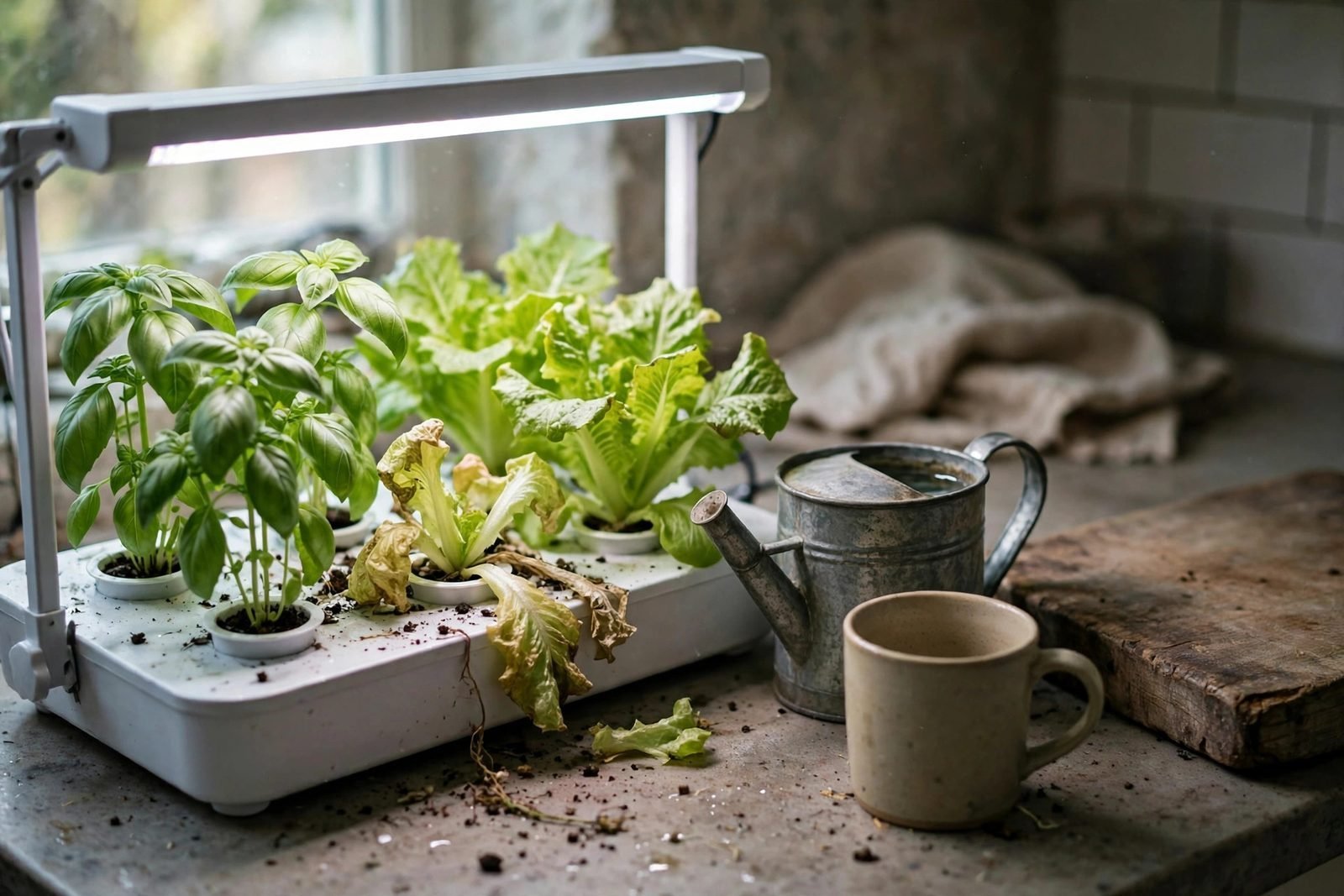
AeroGarden built the countertop garden most people picture when they think of growing herbs indoors: a lit box on the kitchen counter, pods in water, basil within reach of the cutting board. Then the brand had a rough run in the press. As gardening press reported, the parent company announced a wind-down in late 2024, reversed that plan in early 2025, paused new orders in late 2025, and relaunched in 2026 with app and pod support still going. That whiplash is why so many growers are now asking what else is out there, and whether a different system fits their counter better.
This guide compares five smart indoor gardens side by side: the AeroGarden Bounty, the LetPot LPH-Max, the Click and Grow Smart Garden 3, the iDOO 12-pod system, and the Gardyn Home tower. Pod counts below come from the makers or from published roundups, and where a number could not be checked, it is left out. Our guide to how to grow herbs indoors in winter covers what to plant once the system is on your counter, and our guide to how to grow microgreens indoors covers the fastest crop for a small unit.
Five systems at a glance
The table puts the five systems next to each other so the tradeoffs are plain before the detail starts. Pod count is the headline number, but growing style and upkeep matter just as much once the garden is running.
| System | Pods or plants | Growing style | Control | Best fit |
|---|---|---|---|---|
| AeroGarden Bounty | 9 pods | Hydroponic seed pods in water | Wi-Fi app and voice control | Tall herbs and salad greens in one unit |
| LetPot LPH-Max | 21 pods | Hydroponic, automatic nutrient dosing | Full Wi-Fi app | A big herb harvest from one counter |
| Click and Grow Smart Garden 3 | 3 pods | Soil capsules, self-watering, no pump | Timer light, no app | A first garden, or one or two herbs |
| iDOO 12-pod | 12 pods | Hydroponic, fan and pump, two light modes | Panel controls, no app | Leafy greens on a modest budget |
| Gardyn Home | 30 plants | Vertical tower, hydroponic | Full app | A floor tower for a household that cooks with greens daily |
Two numbers in the table deserve a note. The LetPot count of 21 pods is the published figure for the LPH-Max, and the Gardyn Home count of 30 plants is the published figure for that tower. Both are far above the countertop norm of 6 to 12 pods, which is the point: these two systems are built for growers who want volume, while the 3-pod Click and Grow is built for growers who want almost no upkeep at all.

AeroGarden Bounty
The Bounty is the flagship AeroGarden countertop unit, with 9 pods and a light that rises to about 24 inches, so it handles tall basil and dill that shorter units cannot. Its pod range is the widest of the five systems here, which matters when you want a named variety rather than a generic herb. The app gives reminders for water and nutrients, and the unit works with voice control.
Pros: the largest pod ecosystem of any system here, a tall light for full-size herbs, and steady app reminders that keep a new grower on track. Cons: it holds fewer pods than the LetPot for a similar stretch of counter, and the brand’s stop-start history gives some buyers pause, even with the 2026 relaunch and continued pod support.
LetPot LPH-Max
The LetPot LPH-Max is the system that comparison roundups now call the leading AeroGarden alternative. It packs 21 pods into a footprint close to a 9-pod unit, doses nutrients on its own from a built-in reservoir, and gives full Wi-Fi app control over light schedules, water cycles, and notifications. For a household that cooks with fresh herbs every day, that pod count is the whole argument: one unit can hold basil, parsley, dill, mint, cilantro, chives, and lettuce at the same time, with pods left over for a second sowing.
Pros: more than twice the pods of the Bounty in a similar footprint, automatic nutrient dosing, and full app control. Cons: 21 pods need 21 lots of attention at harvest and replanting time, and the brand is newer, so its pod range and long-term support history are shorter than AeroGarden’s. Browse LetPot hydroponic gardens on Amazon to compare the LPH-Max with the smaller 12-pod LPH-SE.
Click and Grow Smart Garden 3
The Smart Garden 3 is the quiet one. It grows 3 plants in soil capsules, waters itself from a tank that lasts two to three weeks, and has no pump, so it makes no pump noise at all. There is no app and no nutrient mixing: you drop in a capsule, fill the tank, and wait. The pod range covers more than 50 refill varieties, which is generous for a 3-pod unit.
Pros: silent, simple, and tidy enough for a desk or a small kitchen, with no water changes to remember most weeks. Cons: three pods grow three plants, which is a garnish supply and not a salad supply, and the capsules cost more per plant than loose seed in a hydroponic unit. It suits a first garden or a gift far better than a household trying to grow its own greens.
iDOO 12-pod
The iDOO 12-pod system is the budget pick of the five: 12 pods, a built-in fan, two light modes, and a 4.5 liter water tank, with panel controls instead of an app. It grows the same leafy herbs and greens as the pricier units, and its pod count matches the LetPot LPH-SE at a lower cost. The fan helps air move around the leaves, which matters in a still kitchen.
Pros: 12 pods for a modest outlay, a fan included, and simple panel controls with no account or app to set up. Cons: no app reminders, so water and nutrient timing falls on you, and the build is lighter than the premium units, which shows over time. Browse iDOO 12-pod indoor gardens on Amazon to check current tank and light details on the listing.
Gardyn Home
The Gardyn Home is not a countertop box at all. It is a vertical tower that holds 30 plants in about 2 square feet of floor space, with an app that runs light and water for you. It fits a household that wants a steady supply of greens and herbs, not a few sprigs: 30 slots can hold a salad rotation, with a slot or two spared for a fruiting plant such as a small pepper. It needs floor space, not counter space, which is a different question for a small kitchen.
Pros: 30 plants in a small footprint, full app control, and a real weekly harvest once the tower is full. Cons: it is a piece of furniture with a tower price, it needs floor space and a nearby outlet, and it asks for a regular refill habit that a 3-pod garden never does. For the seed-starting side of indoor growing, see our guide to the best grow lights for seedlings.
A worked example: pods per square foot and a week of upkeep
Pod count alone can mislead, because a system with more pods may also take more counter. The math below uses published footprints from a comparison roundup, so the density numbers are ours but the inputs are not. The AeroGarden Bounty holds 9 pods on a footprint of about 1.3 square feet, which works out to about 7 pods per square foot. The smaller AeroGarden Harvest holds 6 pods on about 0.56 square feet, which works out to about 11 pods per square foot. The Harvest is denser per square foot, but it grows 6 plants where the Bounty grows 9, so the right pick depends on whether your limit is counter space or total harvest.
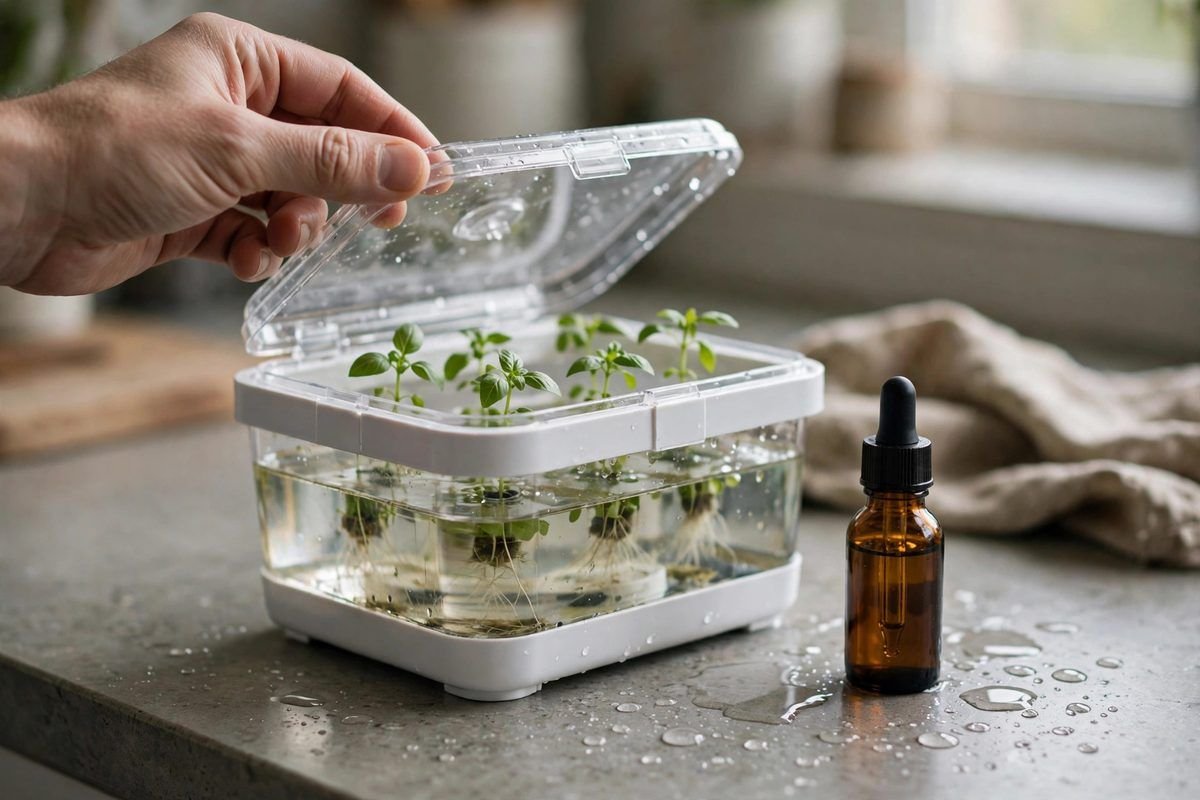
Upkeep is the other half of the example. Assume each pod drinks about 0.15 liters of water a day once plants are growing fast, and assume a 12-pod system with a 5.5 liter tank, which is the published tank size for the LetPot LPH-SE. Twelve pods at 0.15 liters a day use 1.8 liters a day, so the tank lasts about 3 days. That means about 2 refills a week. Add one nutrient dose a week as a planning number, following the label on the bottle you buy, and one quick wipe of the deck and light bar, and the week comes to 4 small jobs. A 3-pod Click and Grow, with a tank that lasts two to three weeks, needs about one refill a month and almost no weekly jobs, which is the tradeoff for growing only 3 plants.
Noise fits in the same weekly picture. The Click and Grow has no pump, so it is silent. The iDOO and the AeroGarden units run a small pump on a cycle, and the iDOO adds a fan. None of them is loud, but a pump cycling at night can be heard in a quiet studio, so put a pumped unit in the kitchen rather than the bedroom if light sleep is a concern.
Which system fits which kitchen
Choose the AeroGarden Bounty if you want the widest pod range, a tall light for full-size herbs, and a brand with a long history in the category. Choose the LetPot LPH-Max if you cook with fresh herbs daily and want the most pods on one counter, with automatic nutrient dosing doing the measuring for you.
Choose the Click and Grow Smart Garden 3 if you want a silent, simple first garden, or a gift for someone who will not enjoy refills and reminders. Choose the iDOO 12-pod system if you want 12 pods on a modest budget and you are happy to watch the water level yourself instead of getting app reminders.
Choose the Gardyn Home if you have floor space, you want a weekly salad harvest rather than a few sprigs, and you are ready to run a tower the way you would run a small appliance. Whichever system you pick, start with herbs you actually cook with, because a pod of basil you use every week earns its place, while a pod of an herb you never cook with is just a plant taking up light.
Sources & Further Reading
University of California Agriculture and Natural Resources
Cornell Cooperative Extension
North Carolina State University Extension