
This post may contain affiliate links. If you buy through links on this page, we may earn a commission at no extra cost to you.
As an Amazon Associate I earn from qualifying purchases.
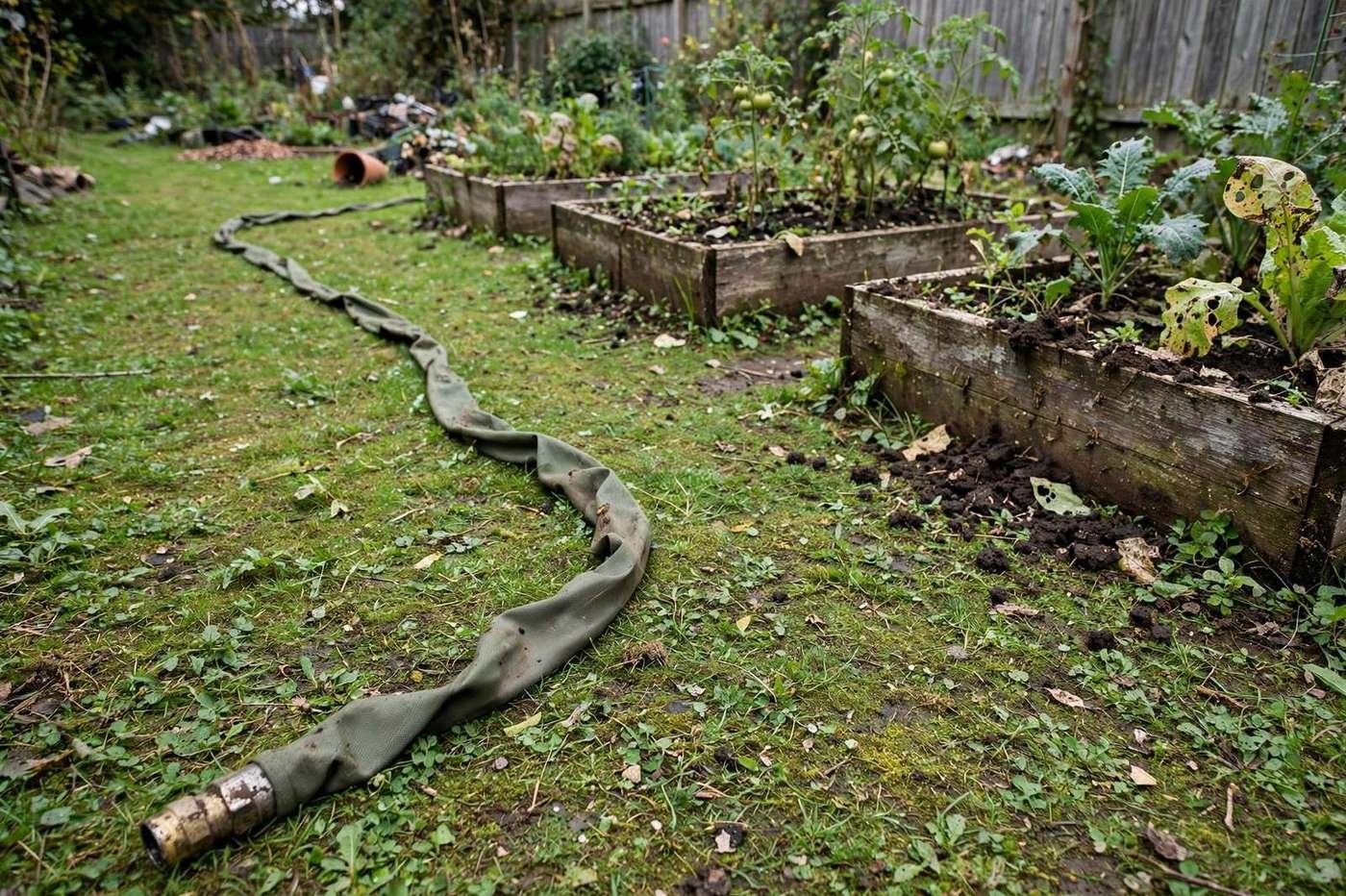
An expandable garden hose is a light hose that stretches to its full length under water pressure and shrinks back down when the water drains out. That shrinking is the whole point. A 50-foot expandable hose coils into a small pile you can carry with one hand, while a standard rubber hose of the same length stays long, heavy, and awkward to drag back to its hook.
We have not tested the products linked here, and we give no current store prices. The links below go to search pages for expandable hoses, so you can compare current options, lengths, and prices at the time you shop.
How an expandable hose works
Most expandable hoses have two layers. Inside is a stretchy core that lengthens as water pressure fills it. Outside is a woven fabric sleeve that limits how far the core can stretch and protects it from scuffs. Turn the tap on and the hose grows toward its stated length. Turn the tap off, open the nozzle, and the core contracts, pushing most of the water out as it shrinks.
The stated length is the stretched length, not the length of the hose sitting in its box. Measure your yard against the stretched length. If the far bed sits 45 feet from the tap, a hose rated at 50 feet stretched will reach it, but a hose rated at 25 feet will not, no matter how much you pull. Pulling a hose past its stretched length strains the core and the fittings, and it is the fastest way to shorten the life of the hose.
A worked example: a 50-foot hose across the yard
Take a 50-foot hose with a half-inch bore, the common size for a garden hose, and work out how much water sits inside it when it is full. A half-inch bore means a radius of one quarter inch. The cross-section area is 3.14 times 0.25 times 0.25, which is about 0.196 square inches. Over 50 feet, or 600 inches, that gives about 118 cubic inches of water inside the hose.
One gallon holds 231 cubic inches, so 118 divided by 231 is about 0.51 gallons. Water weighs about 8.34 pounds per gallon, so the water inside a full 50-foot half-inch hose weighs about 4.2 pounds. That is the extra weight you carry or drag when a standard hose is still full, on top of the weight of the hose itself.
An expandable hose changes that arithmetic in practice, not on paper. When you shut the tap and open the nozzle, the shrinking core pushes most of that half gallon out. You then carry a short, light coil back to its hook instead of dragging 50 feet of full hose. A standard hose keeps its water until you walk the length of it, lifting sections to drain it by hand, or drag it full. For a small yard watered a few times a week, that difference in handling is the main reason to pick an expandable hose. For more on timing your watering, see best garden hose timers and how often you should water a raised bed.

Where an expandable hose fits well
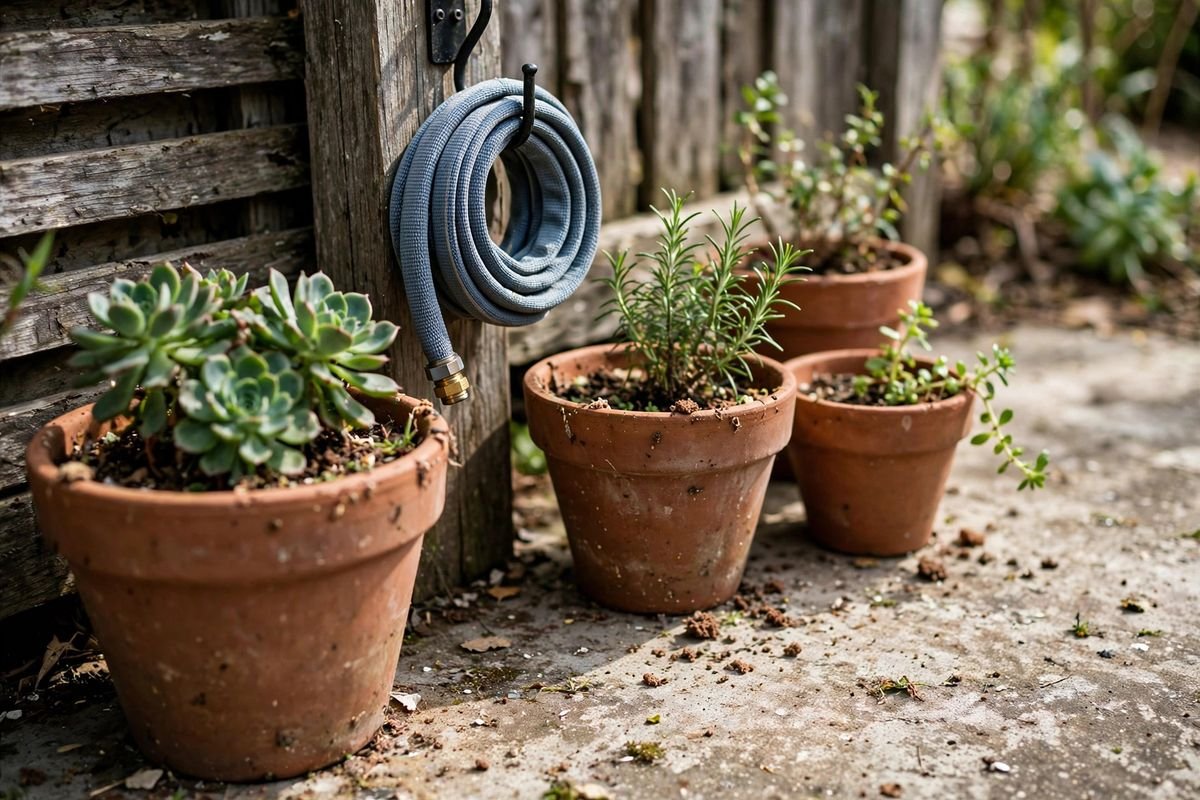
Pick an expandable hose if your yard is small, your storage space is tight, or carrying a heavy hose is hard on your back or shoulders. It suits patios, balconies with a tap nearby, and small yards where the tap sits within 50 feet of every bed. It coils small enough to hang on a single hook by the door, and it dries fast once it has shrunk, since little water stays inside.
Pick a standard rubber or vinyl hose if you water a large area every day, drag the hose over gravel or rough concrete, or leave a hose out in strong sun all season. A standard hose tolerates dragging and sun better, and it keeps its shape when you need a steady flow for a sprinkler. An expandable hose left stretched under pressure for hours, or dragged over sharp stone, wears faster. If you need a reel to keep a long hose tidy, see best hose reels for small yards.
What to look for when you shop
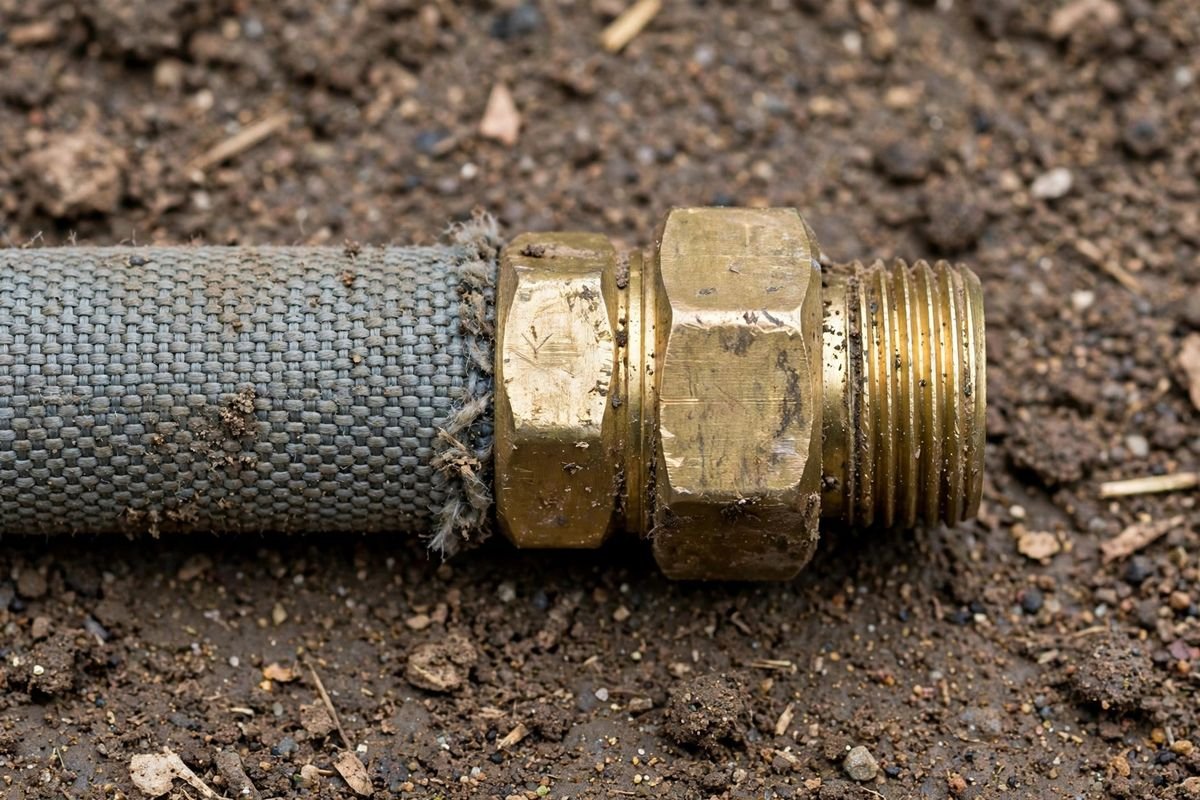
Check the fittings first. Solid brass fittings resist cracking and cross-threading better than thin plastic ones, and they connect cleanly to a tap and a nozzle without leaking at the joint. Check the fabric sleeve too. A tight, even weave with no loose threads at the ends will hold up longer than a thin sleeve that snags on the first rough edge.
Check the length in its stretched state, and buy a little more length than your longest run needs, so the hose reaches without pulling tight. A hose pulled tight at full stretch puts strain on both fittings. Read the care terms listed with the hose, including whether it should be drained and stored indoors when freezing weather arrives. To compare current options, search for expandable garden hoses and expandable garden hoses with brass fittings.

Care that keeps one working longer
Drain the hose after each use. Shut the tap, open the nozzle, and let the hose shrink and empty before you coil it. Do not leave it stretched and full of water between waterings, since pressure held in the core for days wears the stretch out of it.
Store it out of direct sun when you can, and keep it off sharp gravel and stone edges while you drag it. Before freezing weather, drain it fully and bring it indoors, since water left inside can freeze, expand, and split the core. A hose that is drained, coiled loosely, and hung on a hook will last longer than one left in a tangled pile on hot concrete. If containers dry out fast in summer heat, see how to keep container soil from drying out too fast and best drip irrigation kits for raised beds.
Questions
Can an expandable hose run a sprinkler? It can, for a small sprinkler close to the tap, as long as the hose reaches the sprinkler without pulling tight. For a large sprinkler that needs a long, steady run, a standard hose gives a steadier flow and stands up better to being left out.
Why does an expandable hose sometimes stop reaching as far as it did at first? The core loses some stretch over time, most often when the hose is left full and stretched, left in strong sun, or dragged over rough ground. Draining it after each use and storing it coiled and shaded slows that loss.
Can you join two expandable hoses for a longer run? A connector can join them, but each joint is a place where pressure drops and leaks start, and the combined hose is harder to drain and coil. Buying one hose of the right stretched length is simpler than joining two short ones.
Sources & Further Reading
- University of Minnesota Extension, Yard and Garden watering guides
- Clemson Cooperative Extension, Home and Garden Information Center watering guides
- University of California Agriculture and Natural Resources, UC Master Gardener Program watering guidance