
This post may contain affiliate links. If you buy through links on this page, we may earn a commission at no extra cost to you.
As an Amazon Associate I earn from qualifying purchases.
A raised bed does not need to be level to the millimeter, but it should be close enough that water spreads evenly instead of pooling at one end. A bed that tilts 2 inches over 8 feet sends water to the low end, where soil stays soggy, while the high end dries out. Plants at the low end can rot, plants at the high end can wilt, and the same watering schedule fails both. Leveling is a one-time job that pays off every time you water.
We have not tested the products linked here, and we give no current store prices. The links below go to search pages for bed types, so you can compare current options, sizes, and prices at the time you shop.
Measure the slope before you fill
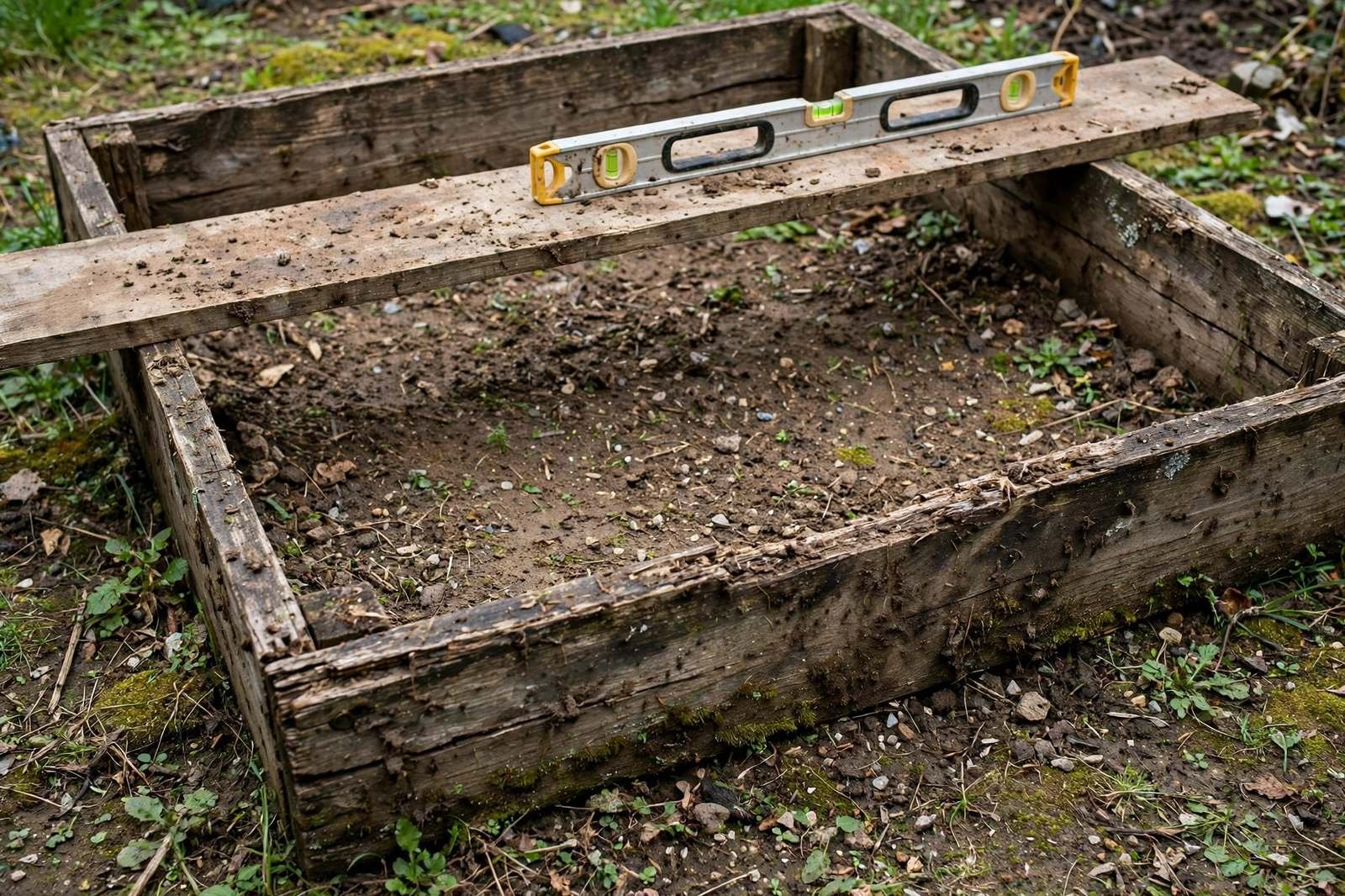
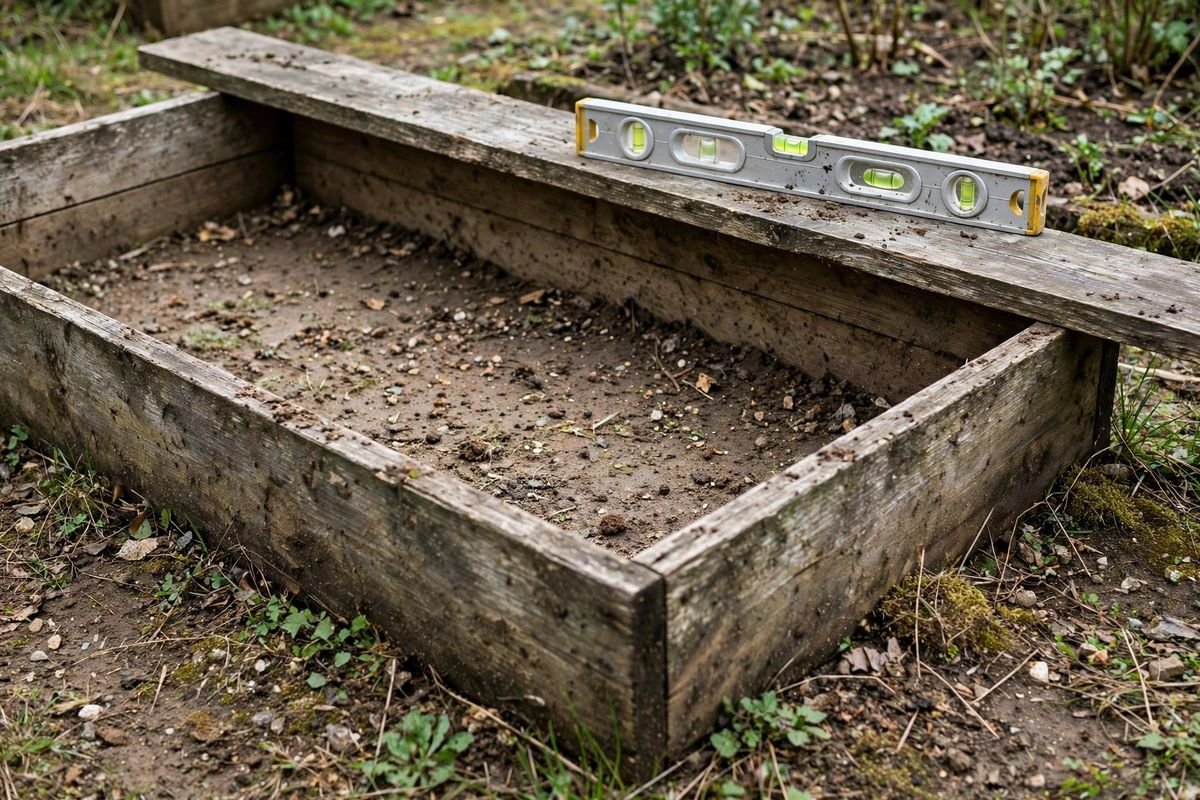
Set the empty frame where the bed will live. Lay a long straight board across the top edge, lengthwise, and set a spirit level on the board. Note which end reads low and by how much. Repeat across the width. Most gardens slope 1 to 2 inches over 8 feet, which is easy to fix. A slope of 4 inches or more over 8 feet needs a different fix, such as cutting the uphill side into the ground or stepping the bed, since shimming that much leaves a gap under the frame that soil and pests use.
Do this before filling, not after. A filled bed weighs hundreds of pounds, and lifting one corner of a full bed to pack soil underneath is hard work that usually spills soil and cracks the frame. An empty frame can be lifted by one person and packed in minutes.
A worked example: fixing a 2 inch slope on a 4 by 8 bed
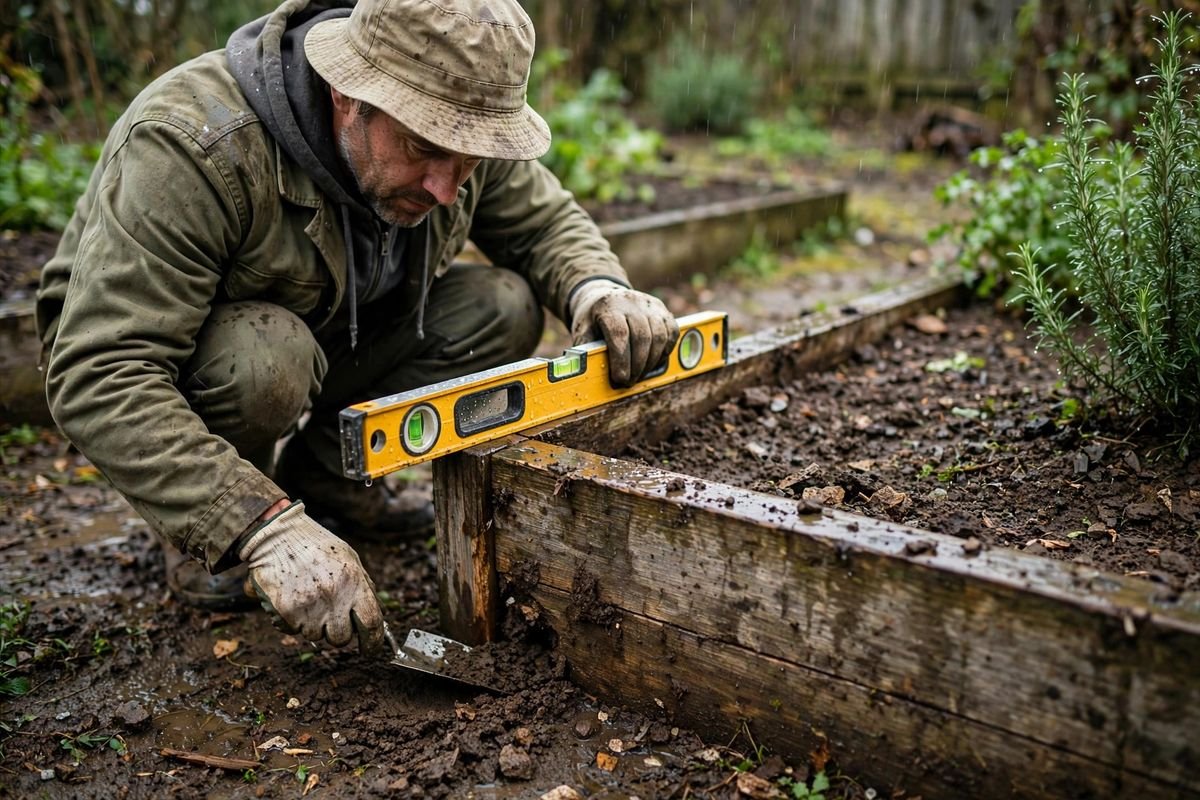
Take a bed 4 feet wide and 8 feet long on ground that drops 2 inches from one short end to the other. The fix is to raise the low end by 2 inches, not to dig the high end down, since digging disturbs the soil under the bed and invites settling later. Slide bricks, flat stones, or short lengths of treated board under the low end until the level reads true, then pack soil firmly around and under the frame edge so no gap remains.
Check the math on the gap you are filling. Raising one end of an 8-foot bed by 2 inches creates a wedge of space under the frame that averages 1 inch deep over the full footprint, or about 32 square feet times 1/12 foot, which is 2.7 cubic feet of packing material. A bag of topsoil covers that wedge with room to spare, and packing it tight keeps slugs and ants from nesting in the gap.
Recheck after the first heavy rain. Fresh packing settles, and a bed that was level in dry weather can tilt again once the ground softens. A second round of packing after rain usually holds for the season. For frame placement basics, see raised bed gardening for beginners and how wide should a raised garden bed be.

Slopes, terraces, and bed height
On a gentle slope, one level bed is the simplest answer. On a steeper slope, a single level bed leaves the downhill side standing tall above the ground, which looks odd and leaves the frame exposed to frost heave. A better answer on steep ground is two shorter beds stepped down the slope, each level on its own, with a path between them. Each step handles part of the slope, and no frame stands far above the ground.
Tall beds hide small slopes better than shallow ones. A bed 24 inches tall with a 2-inch slope reads as level to the eye and to the plants, since the soil depth varies by only a small share of the total. A bed 6 inches tall with the same 2-inch slope loses a third of its depth at the high end, which matters for root crops. The shallower the bed, the more exact the leveling needs to be.
Also level across the width. A bed that is level end to end but tilted side to side sends water to one long edge, where it runs out under the frame and erodes the path. Check both directions before you call the job done.

What to check before you build
Check the site after rain, when low spots show as puddles and soft ground shows as footprints. A spot that looks fine when dry can be a bog after rain, and a bed there will tilt as the ground softens under it. If the only sunny spot is soft, lay a base of compacted gravel under the frame to spread the load.
To compare current options, search for long spirit levels and raised garden beds with adjustable legs. A level longer than the bed gives a truer reading than a short level moved along the edge, and legs that adjust help on ground that will never be perfectly flat.
Questions
Does a bed need to be perfectly level? No. Within half an inch over 8 feet, water spreads well enough that plants do not notice. Beyond 1 inch, the low end stays wet and the high end dries, and the difference shows in plant growth.
Can you level a bed that is already full? Yes, but it takes two people and a slow lift: one person lifts a corner a little at a time while the other packs soil underneath. Lift no more than an inch at once, or the frame joints strain and soil spills.