
This post may contain affiliate links. If you buy through links on this page, we may earn a commission at no extra cost to you.
As an Amazon Associate I earn from qualifying purchases.
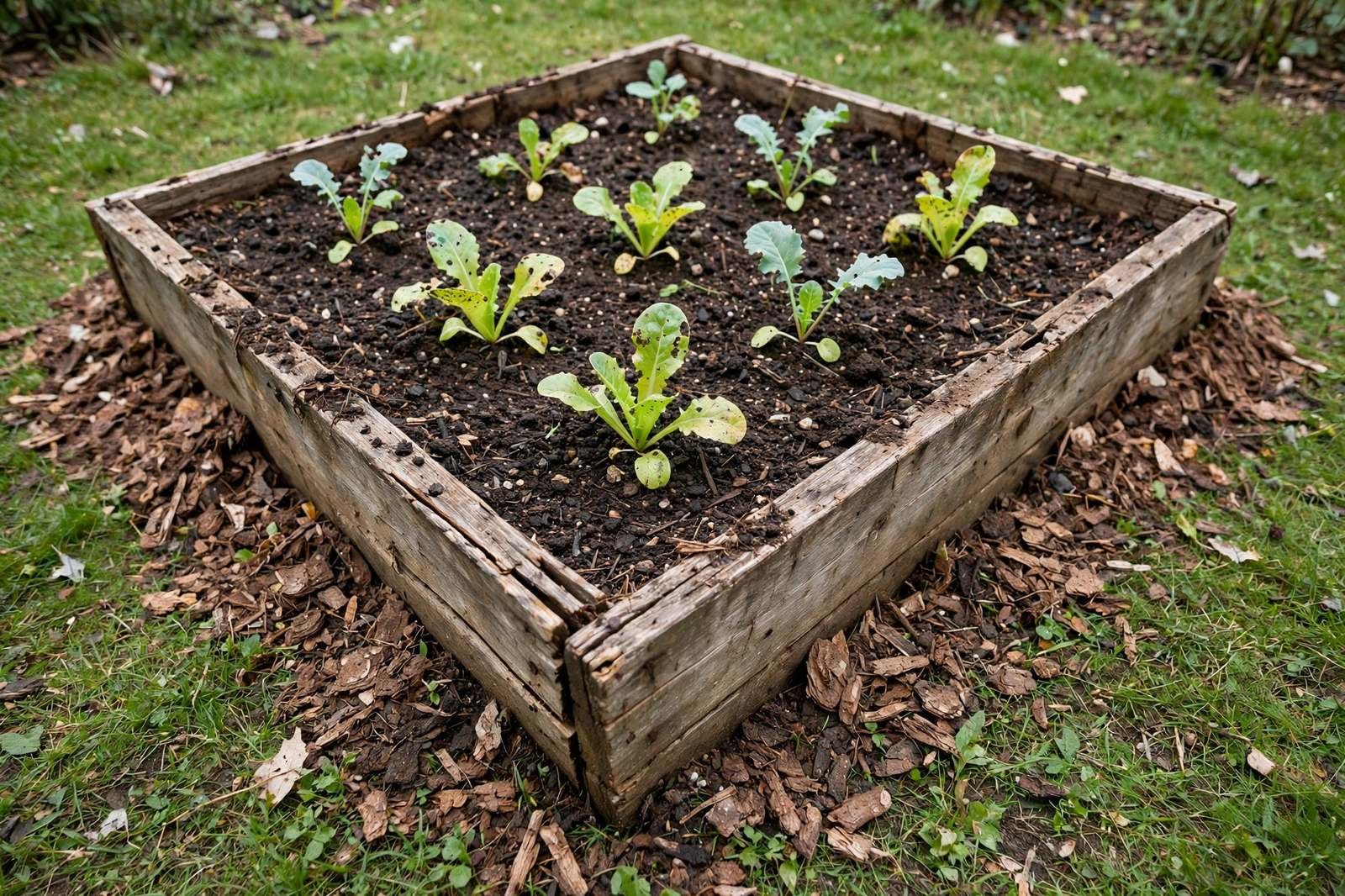
Yes, you can put a raised bed on grass, and it is one of the easiest places to start. You do not need to dig out the turf or strip the lawn. Grass under a new bed dies back once light and air are cut off, and worms and soil life break it down into the bed over a season. The work is in the setup: smother the grass cleanly, fill deep enough that roots do not hit the turf layer while it breaks down, and keep grass from creeping back in at the edges.
We have not tested the products linked here, and we give no current store prices. The links below go to search pages for bed types, so you can compare current options, sizes, and prices at the time you shop.
Start by smothering the grass
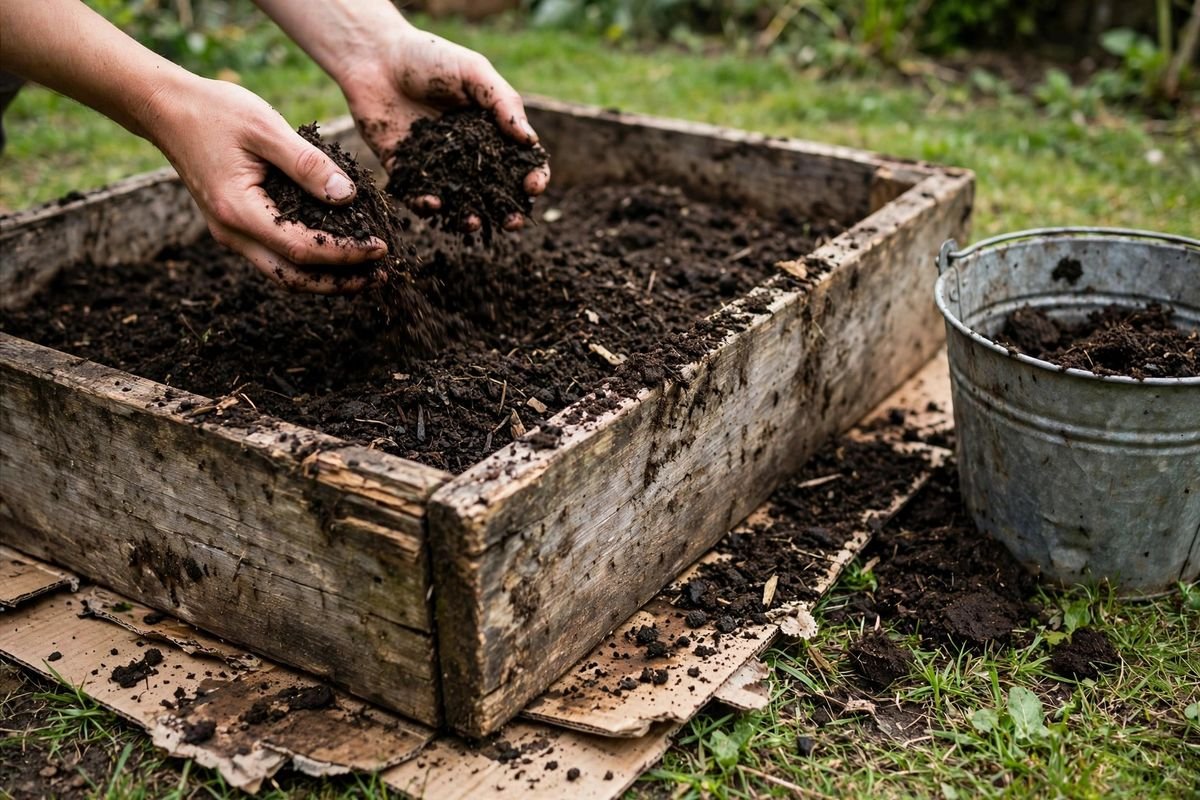
Mow the grass as short as the mower allows, then lay plain cardboard over the footprint of the bed, overlapping each sheet by 6 inches so no light leaks through the seams. Wet the cardboard well, then set the frame on top and fill. Cardboard with tape, glossy coating, or plastic labels removed breaks down in a few months; taped or coated board lasts much longer and can block roots.
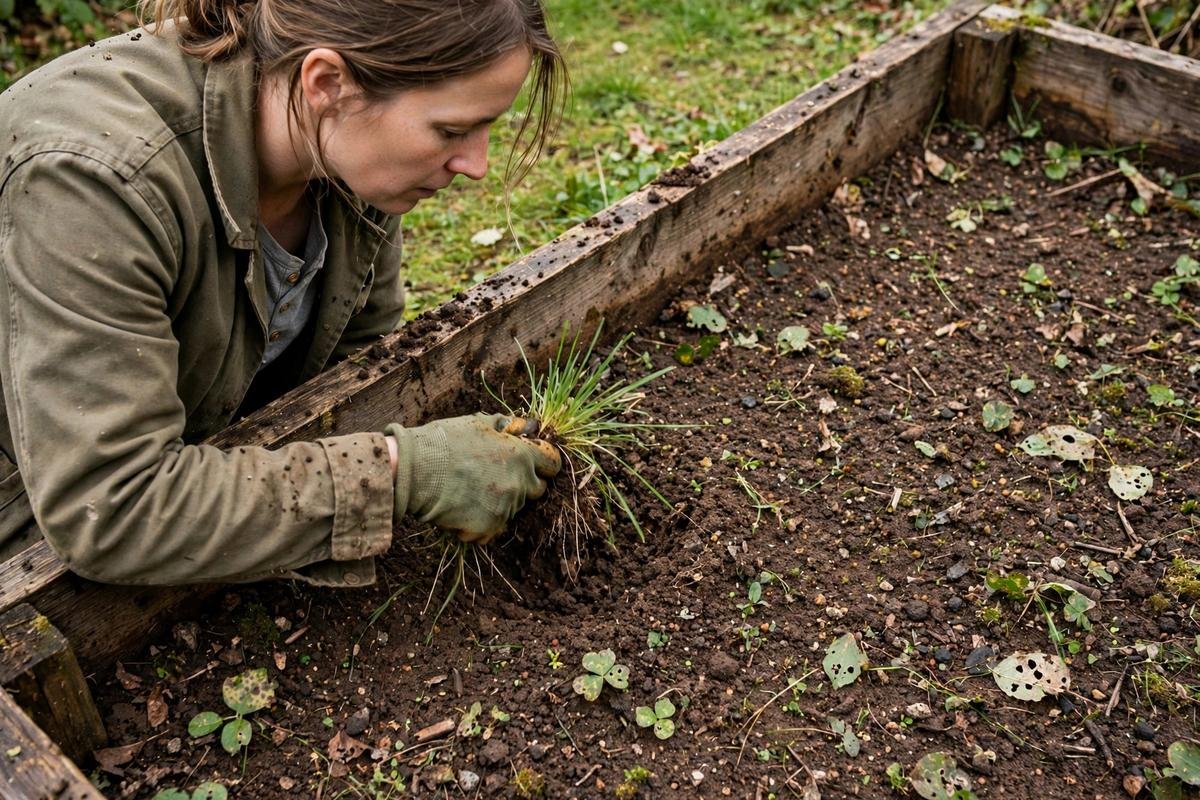
Skip the temptation to dig the turf out first. Digging brings weed seeds to the surface, disturbs soil life, and leaves a hollow that settles unevenly. The grass layer, once dead, adds organic matter right where roots will grow. One exception: if the lawn is thick with couch grass or Bermuda grass, which spread by underground runners, a single cardboard layer may not stop it. In that case, add a second cardboard layer and plan to pull any shoots that appear at the edges in the first season.

A worked example: one 4 by 8 foot bed on a lawn
Take a bed 4 feet wide and 8 feet long, with boards 12 inches high, set on a lawn. The footprint is 32 square feet. At 12 inches deep, the soil volume is 32 cubic feet before settling. Expect the fill to settle 2 to 3 inches in the first month as the cardboard softens and the mix compacts, which drops the surface by about 5 to 8 cubic feet of volume. Fill to the top of the boards, water well, and top up once after two weeks so the bed does not start the season short of soil.
Cardboard math is simple. Each sheet needs 6 inches of overlap on every side, so a sheet that measures 2 feet by 3 feet covers about 1.5 feet by 2.5 feet once overlapped, or 3.75 square feet. For 32 square feet, that is about 9 sheets, and buying a few extra covers gaps and double-layer spots. For frame and soil basics, see raised bed gardening for beginners and what to put in the bottom of a raised bed.
Edges, mowing, and settling
Grass creeps back at the edges, not through the middle. Runners slip under the frame where it meets the lawn and send up shoots inside the bed. A 12-inch strip of mulch or gravel around the outside of the frame, kept clear, stops most of it, and a weekly pass with a hand fork along the inside edge catches the rest. If you mow right up to the frame, clippings blow into the bed and grass seed lands in fresh soil, so leave a mown path or a mulch border as a buffer.
Settling is uneven where the lawn was thickest. The bed may drop a little more on one side than the other in the first season. Check the frame with a level after a month and again in spring. A frame that has tilted an inch or two can be lifted on the low side and packed with soil underneath, which is easier than rebuilding it later. For soil mixes that settle less, see raised bed soil mix.
Watering a bed on grass is easier than on concrete, since extra water drains into the ground below. That drainage also means the bed dries from below in dry spells, so check the soil at 2 inches deep in summer rather than trusting the surface, which can look damp from dew while the root zone is dry.
What to check before you build
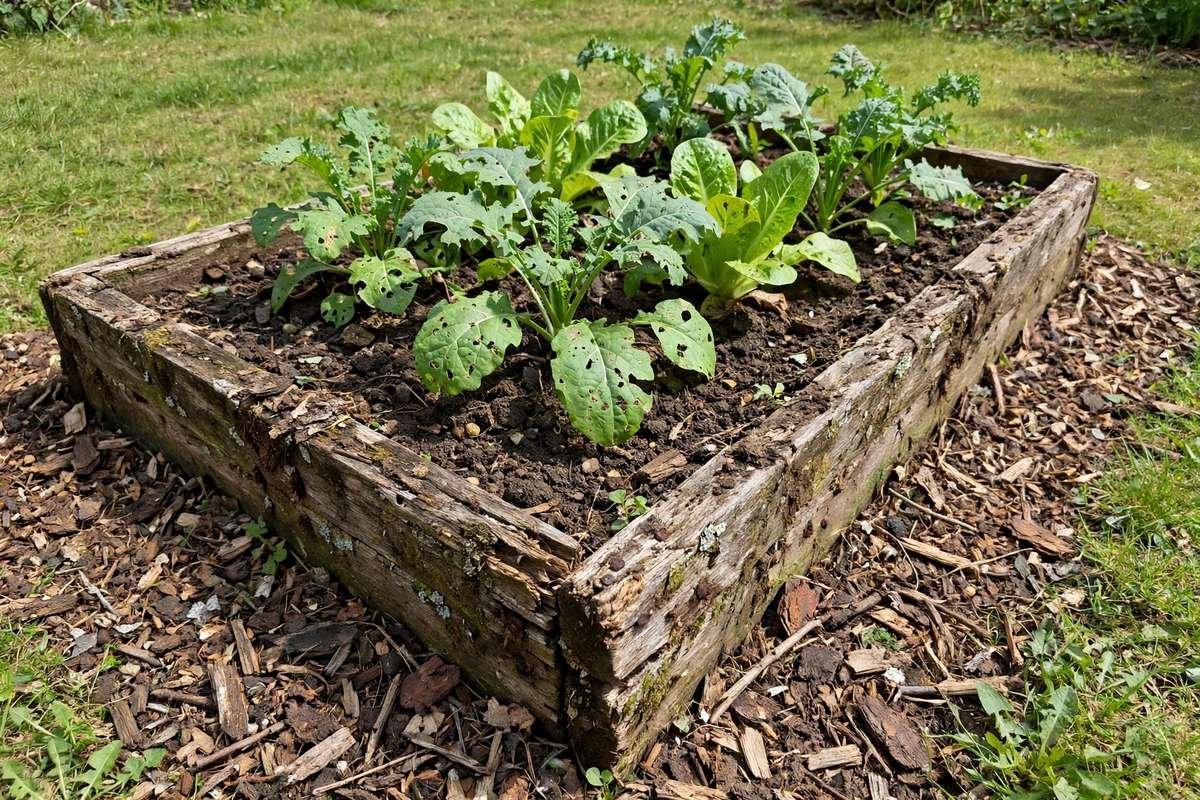
Check what grows in the lawn first. A lawn full of bindweed or Bermuda grass needs the double cardboard layer and edge patrol described above. Check the slope too: a bed on a slope settles downhill over time, so cut the uphill side of the frame into the slope slightly, or terrace the bed, rather than letting it lean.
To compare current options, search for cedar raised garden bed kits 4 by 8 and raised bed soil mix bags. Compare board height first, since 12 inches of depth covers the cardboard layer and gives roots room, then check whether the kit includes corner bracing for a bed that will settle in its first season.
Questions
Do you need landscape fabric under a bed on grass? No, and fabric can hurt here: it blocks worms and roots from moving between the bed soil and the ground below. Cardboard smothers grass and then breaks down, which is what you want on a lawn.
How long before you can plant? Right away. Fill the bed, water it, and plant into the mix on top. Roots reach the cardboard layer only after it softens, by which time it no longer blocks them. Use your local frost dates and regional planting guidance, not your USDA hardiness zone alone, to choose planting dates.