
This post may contain affiliate links. If you buy through links on this page, we may earn a commission at no extra cost to you.
As an Amazon Associate I earn from qualifying purchases.
New gardeners often hear that vegetables take patience. Radishes never got that memo. Sow the seeds, water them, and you’re pulling crisp red roots out of the ground in under a month — faster than any other vegetable you can grow.
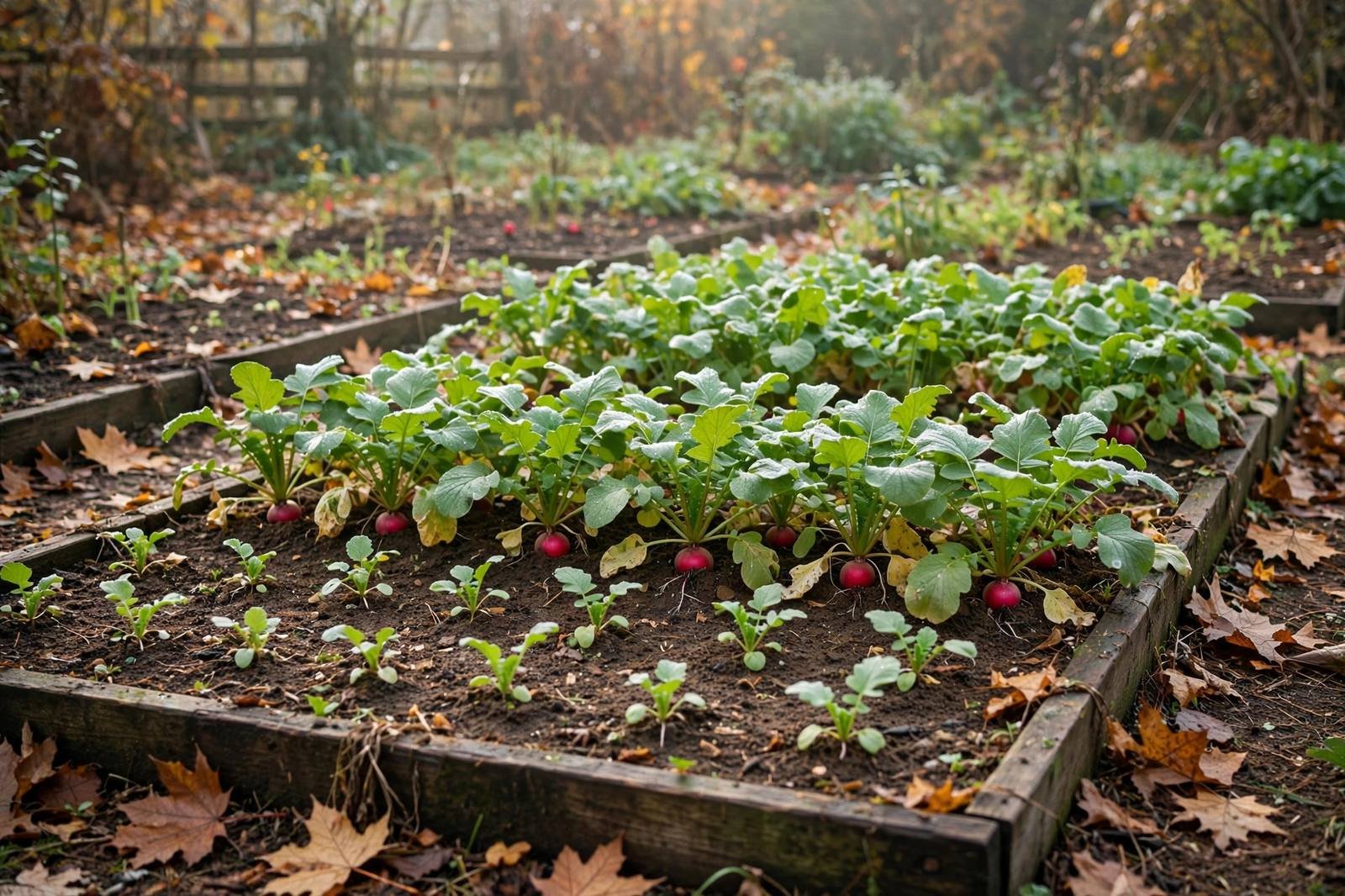
Fall is radish prime time. They germinate in days, size up in cool weather, and taste milder and crisper than spring-sown roots, which tend to bolt and turn hot when the weather warms. If you’ve never grown a single vegetable from seed, a short fall row of radishes is the lowest-risk, highest-reward place to start.
The method below is standard, extension-backed guidance — no special gear, no experience required. You’ll get the frost-date timing, a four-step sowing routine, the succession trick that keeps the harvest coming, and the handful of care rules that separate crisp roots from woody ones.
In this guide you’ll learn why radishes are the ideal fall beginner crop, when to sow by zone, how to sow in four steps, how succession sowing works, fall care, the best salad and daikon varieties, and how to harvest at peak crispness.
Quick Care Reference Table
| Need | What radishes want |
|---|---|
| Sow depth | 1/2 inch |
| Spacing | Sow 1 inch apart, thin to 2 inches; rows 12 inches apart |
| Germination temperature | 50–85°F; best flavor develops below 75°F |
| Days to germinate | 5–10 days |
| Days to maturity | 25–35 days for salad types; 50–60 for daikon/winter types |
| Light | Full sun to light afternoon shade |
| Soil | Loose, stone-free, pH 5.8–6.8 |
| Fall frost tolerance | Seedlings handle light frost; roots take a light freeze under cover |
Why Radishes Are the Perfect Fall Crop for Beginners
Radishes forgive almost everything except neglect, and they teach you the whole arc of vegetable growing — sowing, thinning, watering, harvesting — in a single month. That’s a full education for the price of one seed packet.
Cool fall weather fixes radishes’ one real weakness. In spring, a warm spell sends them bolting — flowering and turning pithy and fiery-hot. Fall temperatures stay in their comfort zone, so roots size up mild and crisp instead of racing to seed. Shorter days help too: less heat stress, more even soil moisture.
Radishes also do double duty as a marker crop. Carrot seed takes three weeks to emerge, and by then the row is a weed patch with no visible line to hoe around. Sow a pinch of radish seed in the same row — the radishes mark the line within days and get pulled long before the carrots need the space. It’s one of the oldest companion tricks in vegetable gardening, and fall is when both crops want sowing.
Building a bigger fall garden around them? Our October planting list covers fifteen vegetables that share radishes’ season, including the carrot rows they’ll happily mark.
When to Sow: Timing That Actually Works
Radish timing is simple because the crop is fast. Salad types need 25–35 days from seed to harvest, so count back five to six weeks from your average first frost for the last sowing — and start sowing six to eight weeks before that for the first round.
As a sowing guide: count back from your average first fall frost — start sowing salad types 6–8 weeks before that date and stop about 5 weeks before it. In areas where hard freezes rarely arrive before December, sowing can continue into November.
One thing worth checking is soil temperature at sowing depth. Radish seed germinates happily from 50 to 85°F, but roots develop the best flavor when they’re sizing up below about 75°F. A quick check with a soil thermometer tells you whether to sow now or give the bed another week to cool. Unlike garlic, which waits for cold soil, radishes want to be mostly harvested before the real cold arrives.
Sowing Radishes in 4 Steps
Radish seed is large enough to handle comfortably, which makes this one of the most pleasant sowing jobs in the garden. Direct sow only — like carrots, radishes resent transplanting.
Step 1: Loosen the top few inches. Radishes don’t need the deep digging carrots do, but they do want loose, stone-free soil so the roots swell round instead of forking. Rake the bed smooth and pick out debris.
Step 2: Make shallow furrows. Draw furrows 1/2 inch deep and 12 inches apart. A fingertip dragged along a straight board works fine — precision tools not required.
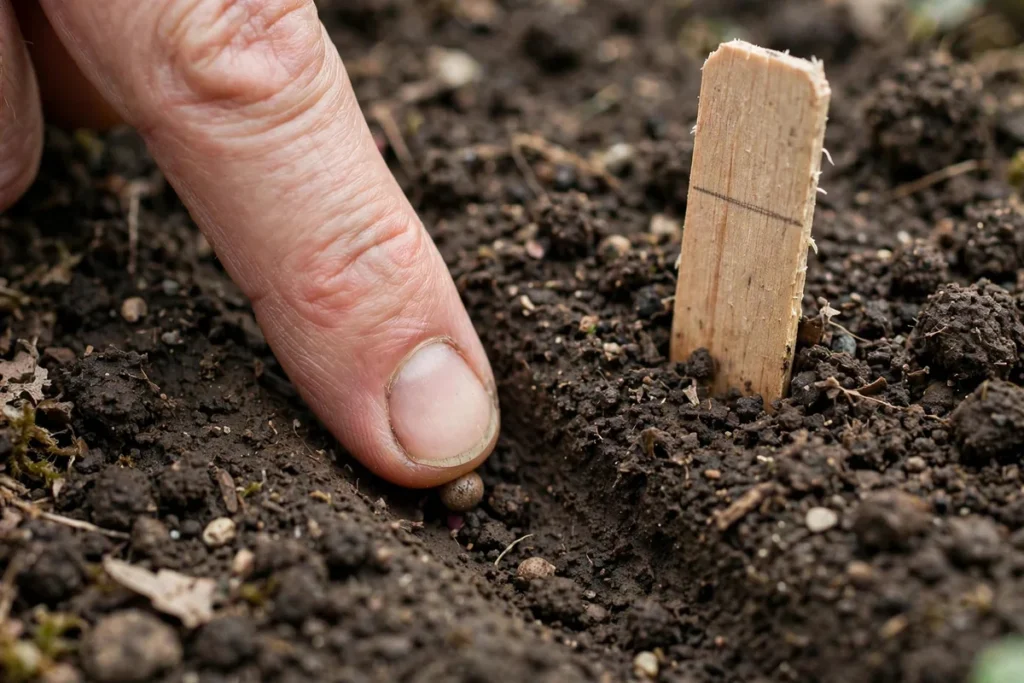
Step 3: Drop seeds about an inch apart. Place them individually rather than scattering; you’ll thank yourself at thinning time. Cover with 1/2 inch of fine soil and press gently so seed meets soil.
Step 4: Water gently and mark the row. Use a soft spray so seeds stay put, and stick in a marker with the variety and date. Then sow the next round in two weeks (see below).
Grab a packet of fresh radish seeds — one packet sows many succession rounds, and fresh seed germinates in days rather than weeks.
The Succession Trick: Sow a New Row Every 2 Weeks
The classic radish mistake is sowing the whole packet at once and harvesting forty radishes on the same Tuesday. The fix is succession sowing: a short row every two weeks from late summer until about a month before your first frost.
Each sowing is small — a two- or three-foot row is plenty for most households. By the time one row is finishing, the next is sizing up. Stop sowing about four to five weeks before your expected first hard freeze so the last round has time to mature.
Succession sowing is also insurance. If a heat wave makes one round bolt or a dry spell turns one batch pithy, the next sowing is already coming along behind it. Few garden habits pay off as reliably as this one.
Care: Water, Thin, and Watch the Weather
Radish care is three small jobs. Get them right and the roots are crisp and mild; skip them and you learn why radishes have a reputation for being hot and woody.
Water evenly
Consistent moisture is the difference between crisp and pithy. About an inch a week, delivered steadily — a dry spell followed by a soaking is what cracks roots and turns the flesh woody and hot. Mulch between rows helps even things out.
Thin to 2 inches
When seedlings are about an inch tall, thin to 2 inches apart. Crowded radishes put their energy into leaves and never swell. The thinnings are edible — snip them into salads as microgreens and consider it a bonus harvest.
Watch for heat and frost
An unseasonable warm spell can push fall radishes to bolt — flower stalks mean the root is done, so pull and eat or compost those plants. At the other end, seedlings handle light frost easily; when a hard freeze threatens, a floating row cover over the bed protects the last succession round. Daikon types are the hardiest of the bunch and often keep growing after salad types give up.
Varieties: Salad Types and Daikon
Radish varieties split into two families: quick salad types for fall crunching, and larger daikon/winter types for storage and cooking. Grow both if you have the space.
Salad types — ready in under 35 days
‘Cherry Belle’: The classic round red radish — crisp, mild when grown in cool weather, and ready in about 25 days. The benchmark every other variety is measured against.
‘French Breakfast’: Oblong roots, red with white tips, mild and crunchy. A favorite for slicing onto buttered bread, and widely recommended for fall sowing.
‘Easter Egg II’: A color blend — red, pink, purple, and white roots in one packet. Same easy growing as ‘Cherry Belle’, with a harvest basket that looks like candy.
‘Sparkler’: Round white-tipped roots with a notably mild flavor. Good for gardeners who find standard red radishes too peppery.
Daikon and winter types — 50–60 days, worth the wait
‘Miyashige White’: The classic long white daikon — crisp, mild, and excellent for pickling and stir-fries. Needs the full 50–60 days, so sow it first in the fall sequence.
‘Red Meat’ (Watermelon radish): Greenish-white skin hiding a brilliant pink-red interior. Stunning sliced raw, sweet and mild in cool weather. Sow early fall for a late-fall harvest.
‘Black Spanish Round’: A true winter storage radish with black skin and white, pungent flesh. Sow mid-fall, harvest late, and store for weeks — the old-world keeper of the family.
Harvest: Pull Them Young
The number-one rule of radish harvesting: don’t wait. Radishes go from perfect to pithy in a matter of days, and an oversized radish is almost always a disappointing one.
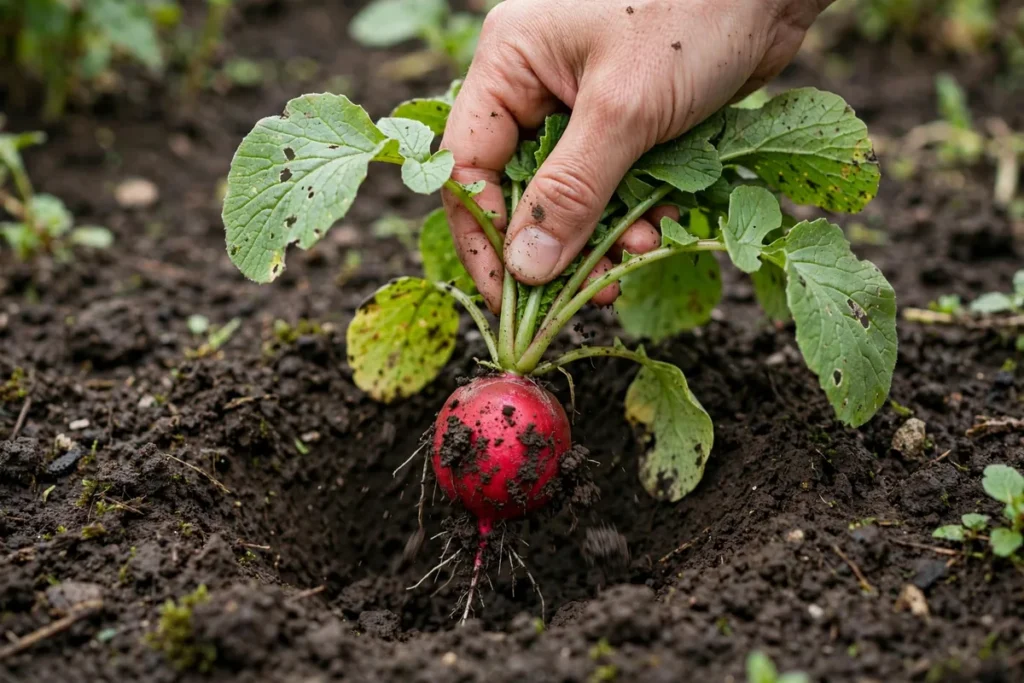
Salad types are ready when the roots reach about an inch in diameter — you’ll see the shoulders pushing out of the soil. Brush the soil back and check; if the root feels firm and looks glossy, pull it. Taste one from each sowing to calibrate: cool-weather roots should be crisp and mildly peppery, not fiery.
Daikon types are ready when the root is 6–8 inches long and the shoulder is 2 inches across. Loosen the soil with a fork first — long daikons snap if yanked from firm ground.
Harvest in the morning when roots are crispest, twist off the tops (they pull moisture from the roots in storage), and refrigerate unwashed in a bag. Salad radishes keep about two weeks; daikon and winter types keep for a month or more.
Troubleshooting: Common Fall Radish Problems
All tops, no roots
Usually crowding — unthinned seedlings make leaves instead of roots. Sometimes it’s sowing too late, so the plants run out of season before sizing up. Thin on time and respect the frost-date math.
Hot, woody, or pithy roots
Left in the ground too long, or stressed by heat or uneven water. Harvest on schedule, water evenly, and remember that fall’s cool weather is your ally here — this problem mostly belongs to spring.
Split roots
A dry spell followed by heavy watering. Even moisture and mulch prevent it.
Bolting (flower stalks)
A warm spell tricks the plant into thinking it’s spring. Pull bolted plants — the root won’t recover — and lean on your succession sowings. Choosing bolt-resistant varieties helps in zones with erratic fall weather.
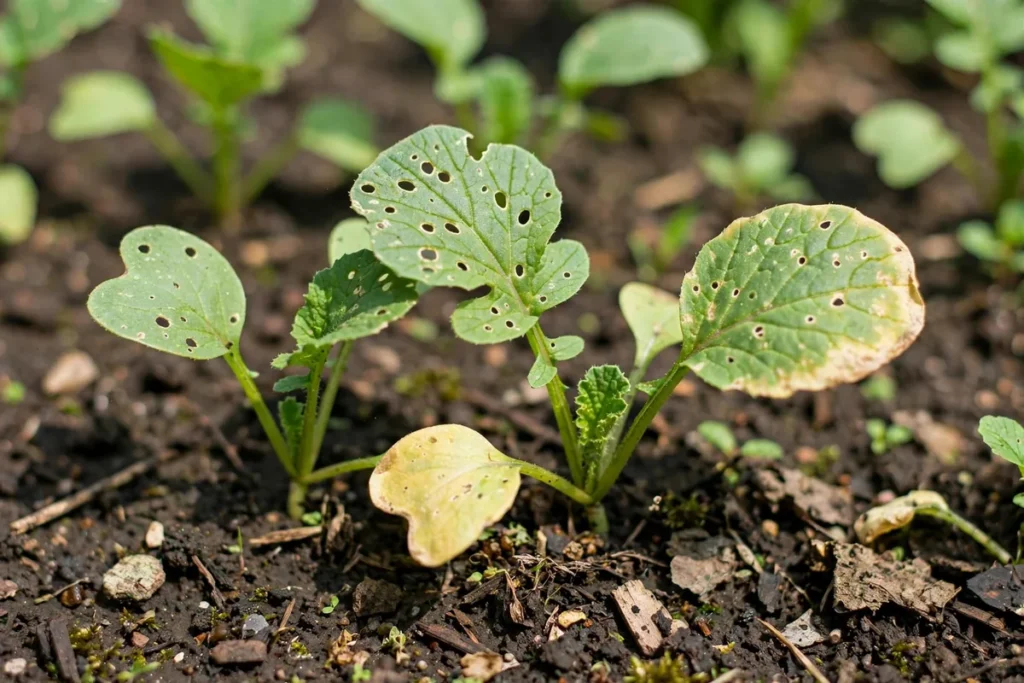
Holey leaves
Flea beetles chew tiny shot-holes in the leaves, mostly a cosmetic issue on fast fall crops. Row cover at sowing time keeps them off entirely.
Frequently Asked Questions
Can radishes really grow in fall?
Absolutely — fall is arguably their best season. Cool temperatures keep them from bolting, and roots develop milder and crisper than in spring heat. Sow succession rounds from late summer until about a month before your first frost.
How fast do fall radishes grow?
Salad types germinate in 5–10 days and are ready to pull in 25–35 days. Daikon and winter types take 50–60 days. Few vegetables give you a faster return on a seed packet.
Why are my radishes so spicy?
Heat, age, and drought all turn up the pepper. Roots harvested young, grown in cool weather, and watered evenly taste mild and crisp. If yours are fiery, they were likely left too long or stressed.
Can I grow radishes in containers?
Yes — salad types need only 6 inches of soil depth, which makes them one of the best container vegetables for beginners. Sow, thin, and water just like in-ground rows.
When is it too late to sow?
When there aren’t enough growing days left before hard freezes — roughly four to five weeks before your first hard freeze for salad types. In mild-winter areas where hard freezes rarely arrive before December, that window often extends into November or later.
More Fall Vegetable Growing Posts to Explore
- What to Plant in October: 15 Vegetables for a Fall Garden
- How to Grow Carrots in Fall: Timing, Thinning, Harvest
- How to Plant Garlic in the Fall: A Step-by-Step Guide
- Fall Garden Cleanup: 12 Things to Do Before Winter
From Seed to Salad in Under a Month
Radishes are the rare vegetable that rewards impatience. Sow a short row, thin it once, water it evenly, and you’re eating homegrown food within a month — while slower crops are still getting established. Keep the succession going and that first small win stretches into a season-long habit.
What was the first vegetable you ever grew from seed — did radishes make your list? Share your variety and zone in the comments to help other beginners pick their first packet.
Sources & Further Reading
- Growing radishes in home gardens — University of Minnesota Extension. Sow 1/4–1/2 in deep, thin to 2 in apart, harvest 3–5 weeks after planting, soil pH 6–7, drought stress causes poor flavor/tough texture, uneven moisture causes splitting, Aug 1–Sept 1 fall sowing window.
- Carrot, Beet, Radish & Parsnip (HGIC 1305) — Clemson University Cooperative Extension. 21–30 days to maturity, germination soil temp 45–85°F, sow 1/2 in deep and thin to 2–3 in, harvest 3–4 weeks before roots reach 1 in diameter, cooler temps = milder flavor, moisture stress causes hot/woody/pithy roots, succession every 7–10 days.
- F. Radishes, Rutabagas and Turnips — University of Maryland Extension. Best quality grown at 50–65°F, 23–28 days of rapid growth, daikon/specialty types 24–80 days, checked growth makes roots hot/tough/pithy, flea beetles and cabbage maggot as pests.