
This post may contain affiliate links. If you buy through links on this page, we may earn a commission at no extra cost to you.
As an Amazon Associate I earn from qualifying purchases.
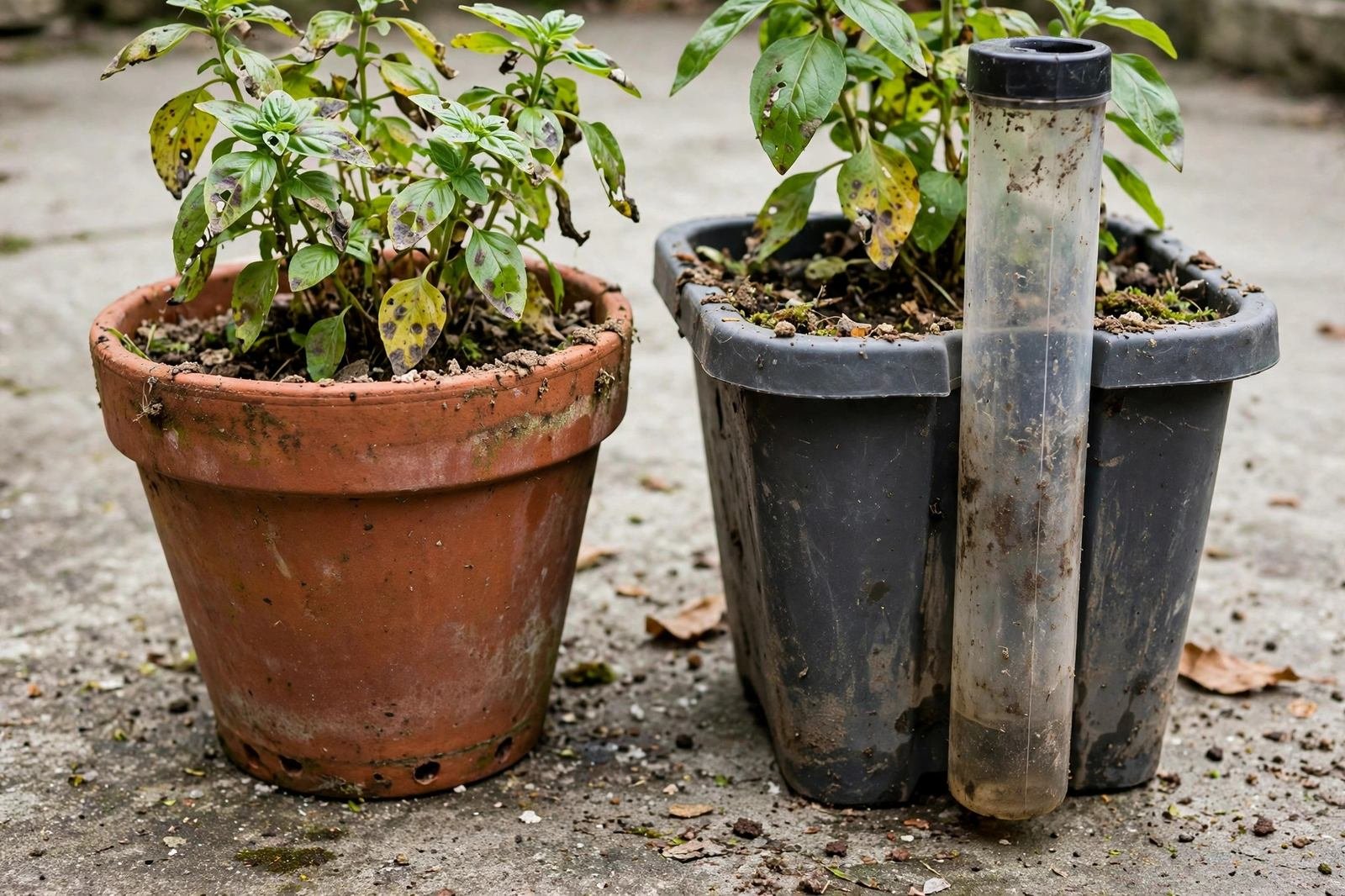
A pot holds water in one of two ways. A drainage-hole pot lets extra water leave through the bottom, so the soil dries between waterings. A self-watering reservoir pot holds a store of water under the soil, and the soil pulls that water up through wicks or a soil column as it dries. Both styles can grow healthy plants, but they suit different plants, different watering habits, and different spots on a patio or balcony.
We have not tested the products linked here, and we give no current store prices. The links below go to search pages for pot types, so you can compare current options, sizes, and prices at the time you shop.
Drainage holes and reservoirs at a glance
| Feature | Drainage-hole pot | Self-watering reservoir pot |
|---|---|---|
| Where extra water goes | Out through holes in the bottom | Into a tank under the soil, or out an overflow hole |
| Watering rhythm | Water often, let soil dry between waterings | Fill the tank, then wait days before refilling |
| Best for | Herbs, succulents, and plants that hate wet roots | Thirsty plants, busy growers, and hot balconies |
| Main risk | Soil dries out fast in sun and wind | Soil stays too wet for plants that need dry spells |
| Upkeep | Empty saucers, clear blocked holes | Clean the tank, check wicks, watch for algae |
How a drainage-hole pot works
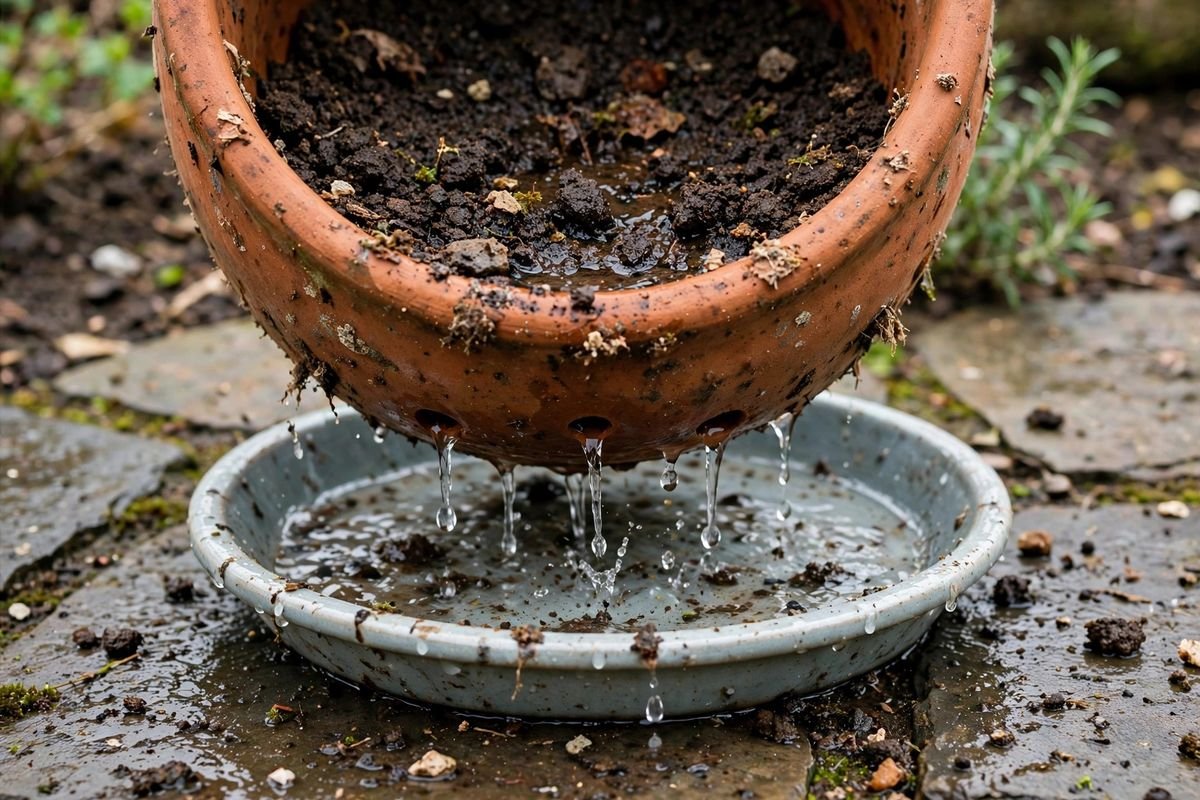
Water poured on top moves down through the mix and out the holes. That flow carries some dissolved salts out with it, which helps keep salt buildup low in the soil. Roots get air again once the free water drains away, and the top of the mix dries first, which gives a clear sign for the next watering. Push a finger one inch into the mix. Water when that top inch feels dry for most herbs and flowers, and wait a little longer for succulents.
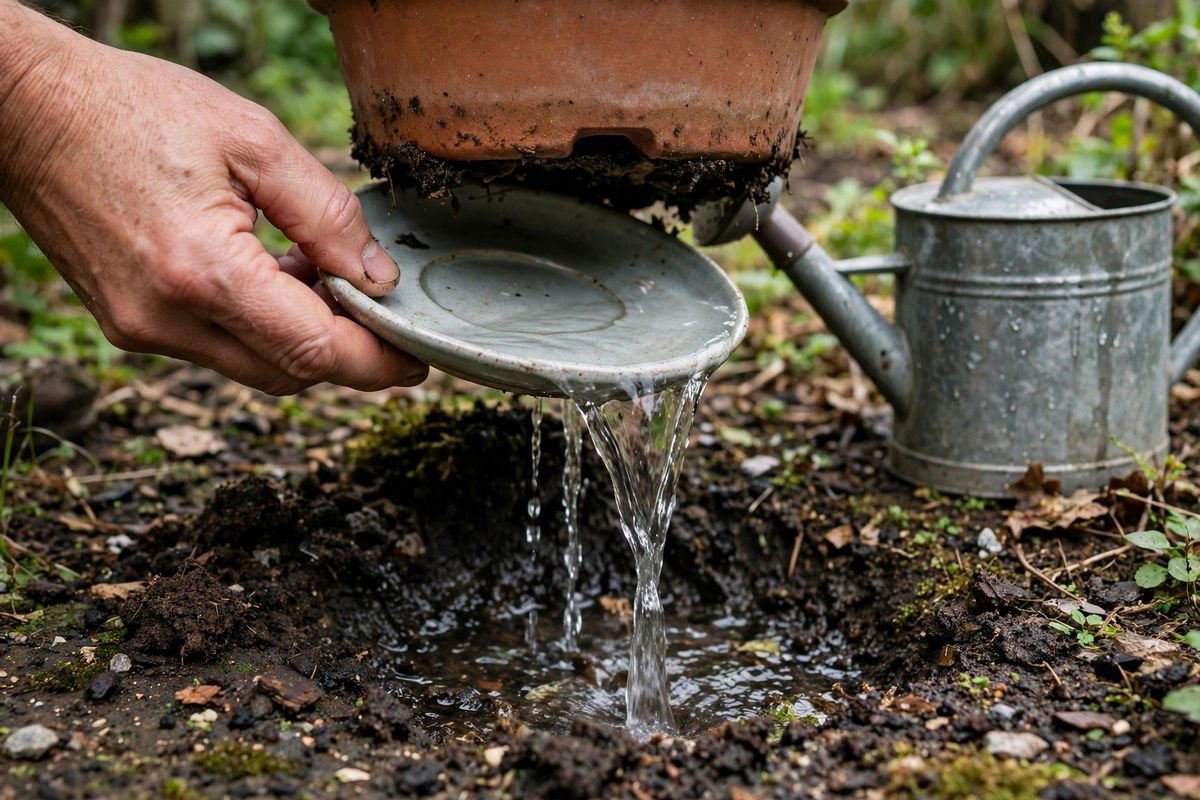
Holes need a clear exit. A pot sitting flat on a patio slab can seal its own holes shut, so set it on feet or a slatted stand. A saucer catches runoff, but a saucer left full puts the pot back in standing water. Empty the saucer after watering and after rain. See container gardening for beginners for pot basics.
How a self-watering reservoir pot works
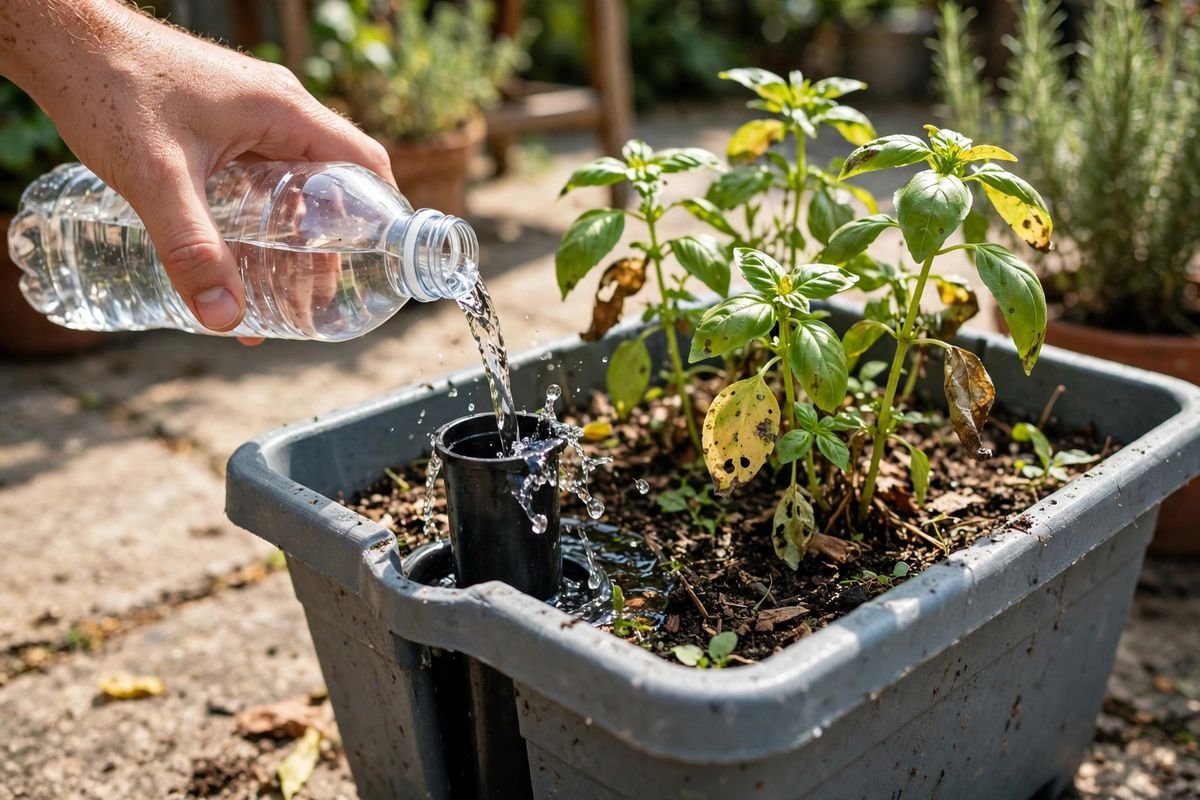
A reservoir pot has two parts: a soil chamber on top and a water tank below, joined by wicks or by a column of soil that reaches down into the tank. Soil pulls water upward by capillary action as the top mix dries. A fill tube on the side lets you add water without wetting the leaves, and many pots have a gauge or an overflow hole that shows when the tank is full.
The steady moisture suits tomatoes, peppers, cucumbers, and leafy greens in summer, since those plants drink heavily and wilt fast when a plain pot dries out. The same steady moisture harms rosemary, lavender, and succulents, which need dry spells between waterings. Match the pot to the plant, not the other way around. Our comparison of self-watering pots vs regular pots covers plant pairings in more depth, and how to keep container soil from drying out too fast gives watering methods for plain pots in hot weather.
Drainage holes: pros and cons
- Pros: roots get air between waterings, salt buildup stays lower, and overwatering is harder since extra water leaves the pot.
- Pros: simple to check and fix, since a blocked hole or a full saucer is easy to spot.
- Cons: soil dries fast in sun, wind, and small pots, so summer watering can become a daily job.
- Cons: runoff can stain a deck or drip onto a balcony below unless a saucer catches it.
Self-watering reservoir: pros and cons
- Pros: soil stays evenly moist for days, which suits thirsty plants and growers who travel for a weekend.
- Pros: less water runs off the surface, since water enters the tank and rises into the soil from below.
- Cons: soil can stay wet too long for herbs and succulents, and wet soil invites fungus gnats.
- Cons: tanks need cleaning, wicks can clog with roots or mineral deposits, and a forgotten tank can grow algae.
A worked example: water and weight for a 12-inch pot
Take a 12-inch pot, 10 inches deep, filled to 9 inches with mix. Treat the pot as a cylinder for this estimate. The radius is 6 inches, so the soil volume is 3.14 times 36 times 9, which is about 1,017 cubic inches. Divide by 1,728 cubic inches per cubic foot and the result is about 0.59 cubic feet of mix. Wet potting mix weighs roughly 40 pounds per cubic foot, so the soil alone weighs about 24 pounds when wet. Add the pot and plant, and the full pot weighs close to 28 pounds.
Now add water numbers, with assumptions stated plainly. Suppose the reservoir version of this pot holds 0.75 gallon of water in its tank, and the plant uses 0.25 gallon per day in warm weather. Divide 0.75 by 0.25 and the tank lasts about 3 days before a refill. Suppose the drainage version gets 0.5 gallon at each watering, with about 20 percent running out the holes. That leaves about 0.4 gallon in the soil, so the same plant needs watering roughly every day and a half at that same daily use rate. These are planning numbers, not measured results, and your plant, sun, and wind will shift them. The point stands: the reservoir buys days, while the drainage pot buys air and control.
Upkeep through the season
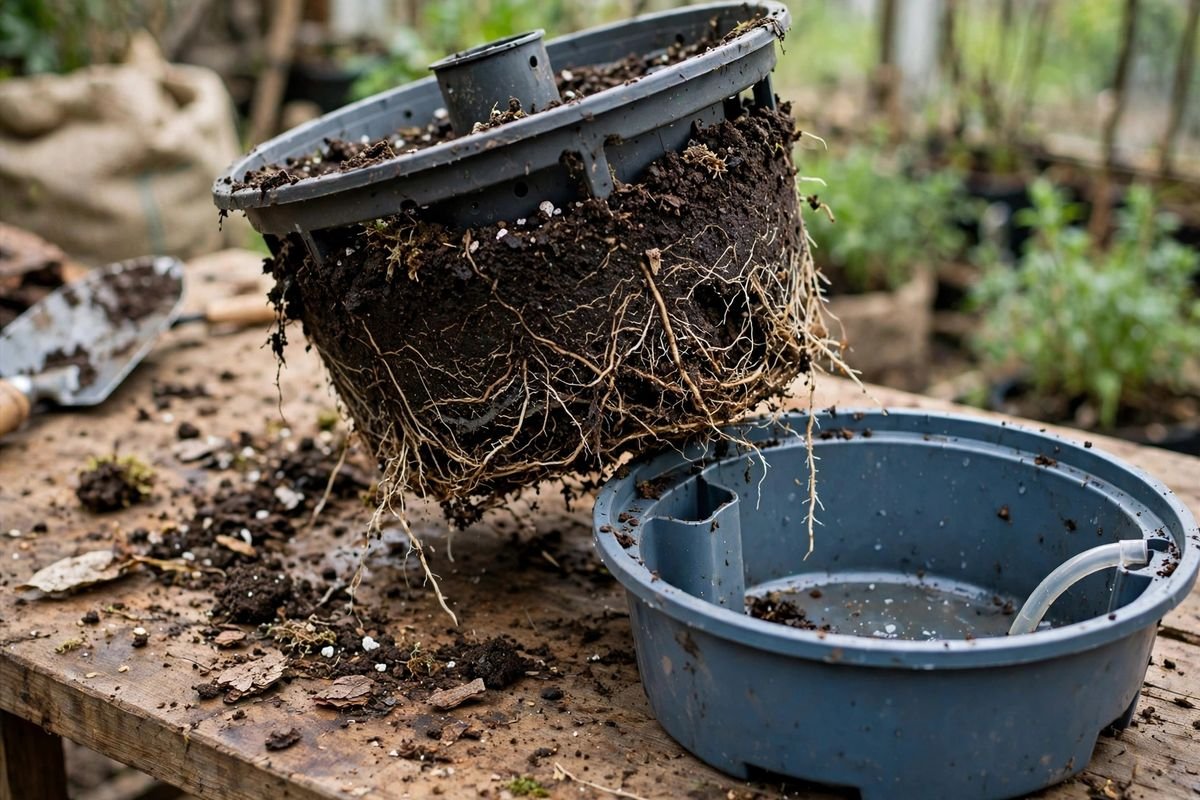
Drainage pots need hole checks in spring, when roots and soil crumbs can block the exits, and saucer checks after every heavy rain. Self-watering pots need a tank rinse at least once a season, and a wick check when the top soil stays dry even though the tank reads full. Empty both styles before a freeze, since frozen water can crack either pot.
Old mix can hold salt and pests from last season, so read can you reuse potting soil before you refill a pot.
Verdict
Choose a drainage-hole pot if you grow herbs, succulents, or any plant that needs dry spells, if you water by hand most days, or if you want the simplest pot to check and fix.
Choose a self-watering reservoir pot if you grow thirsty vegetables, if you leave home for a few days in summer, or if a sunny balcony dries plain pots out before the next watering.
Many growers use both. Herbs and succulents sit in drainage pots on a sunny rail, while tomatoes and peppers sit in reservoir pots on the patio floor. To compare current options, search for drainage-hole planters and self-watering planters. Compare pot diameter and depth first, then check the reservoir size and the overflow design before you buy.
Questions
Reservoir pots still need a drainage path. Most designs have an overflow hole near the top of the tank, so a heavy rain cannot flood the soil chamber. Check that hole before the rainy season, since a blocked overflow turns a reservoir pot into a bucket.
A plant that looks wilted in a reservoir pot may have dry top soil while the tank still holds water. Wicks take time to pull water up, and a dry soil column can break the pull. Water from the top once to reconnect the column, then let the tank take over again.