
This post may contain affiliate links. If you buy through links on this page, we may earn a commission at no extra cost to you.
Looking for more crops? Browse all of our Vegetable Growing Guides.
As an Amazon Associate I earn from qualifying purchases.
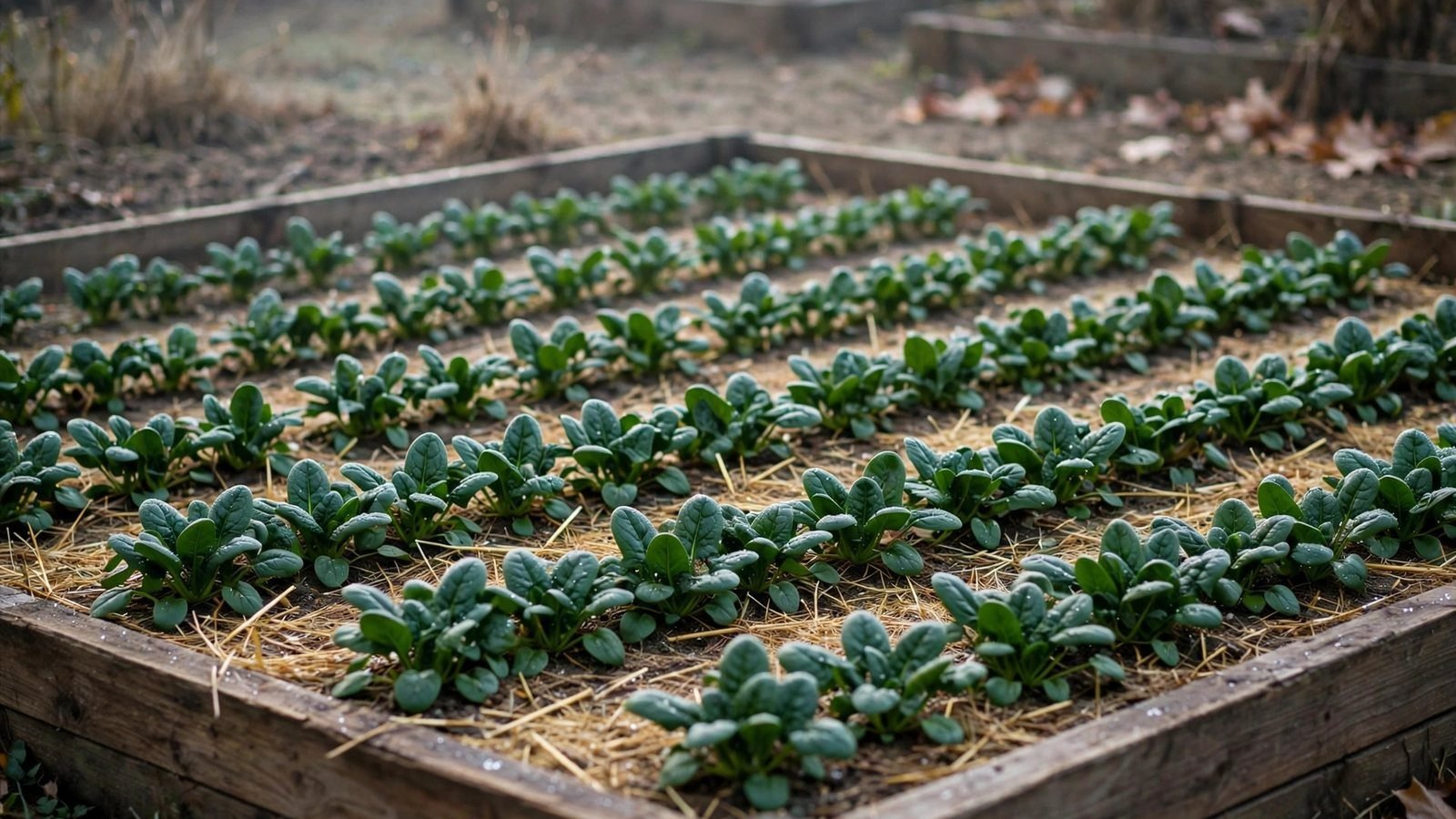
Here’s the frustrating truth about spring spinach: you sow it in March, it pops up fast, and just as the leaves start looking like something, a warm week in May sends the whole row shooting up into bitter flower stalks. Most gardeners blame themselves. They shouldn’t. Spinach was never really a spring crop. It’s a cool-weather crop, and fall is when it finally gets the conditions it wants.
Fall spinach grows slower and steadier than spring spinach. The leaves stay tender longer. And here’s the part that surprises first-timers: a light frost actually improves the flavor. As nights get cold, spinach converts starches to sugars — a natural antifreeze response — and the leaves come out sweeter than anything you can buy in a bag.
The timing math is simple once you know it, and the whole crop can go from seed to salad in five to seven weeks. In this guide you’ll learn when to sow for your zone, exactly how deep and how far apart, the watering and mulching routine that carries plants through cold snaps, the varieties bred for fall, and how to harvest so one sowing keeps producing for months.
Quick Care Reference
| Care point | What to do |
|---|---|
| Sow window | 4 to 6 weeks before your first expected fall frost |
| Days to germination | 7 to 14 (slower in cool soil) |
| Days to maturity | 35 to 50 from seed |
| Sow depth | 1/2 inch |
| Spacing | Thin to 3 to 6 inches apart; rows 12 inches apart |
| Germination soil temperature | 50 to 70°F (poor above 75°F) |
| Light | Full sun to light afternoon shade |
| Soil | Rich, well-drained, pH 6.0 to 7.0 |
| Water | About 1 inch per week; keep seedbed evenly moist |
| Cold tolerance | Into the low 20s°F; survives winter under row cover in mild zones |
Why Fall Is Spinach’s Best Season
Spinach bolts — shoots up a flower stalk and turns bitter — in response to heat and long days. Spring gives it both, and quickly. Fall gives it the opposite: shortening days and cooling air. That one difference changes everything about how the crop behaves.
Leaves harvested in cool weather are noticeably thicker and sweeter than spring leaves. Gardeners consistently report that spinach picked after a frost or two tastes almost like a different vegetable — tender, with none of the metallic edge that heat-stressed spring spinach can develop.
Fall also brings fewer pests. The flea beetles and leaf miners that shred spring spinach have mostly clocked out by the time fall sowings are up. Weeds slow down too, which means less competition for young plants.
And there’s the space argument. By late summer, beds that held tomatoes, beans, or cucumbers are opening up. Spinach slips into those empty spots and turns a winding-down garden into a second harvest. If you want a green that survives even deeper into winter, our guide to growing kale in fall and winter covers its tougher cousin.
When to Plant Spinach in Fall
Counting Back From Your First Frost
The standard rule from extension services: sow spinach 4 to 6 weeks before your area’s first expected fall frost. But days-to-maturity numbers on seed packets are calculated for warm spring soil, and fall days are shorter and cooler. So add about two weeks of padding — the “fall factor” gardeners use for all autumn crops. If your first frost typically lands October 15 and your variety matures in 45 days, count back roughly 60 days and sow around mid-August.
A soil thermometer takes the guesswork out of the other half of the equation. Spinach germinates best when soil is between 50 and 70°F, and germination drops off sharply above 75°F. In August, that often means waiting for a cool spell or shading the seedbed for a few days after sowing.
Succession sowings every 10 to 14 days stretch the harvest and hedge your bets — if one sowing catches a heat wave, the next one probably won’t. For more crops that fit this same window, see what to plant in October.
Sow 4–6 weeks before your average first fall frost — roughly early to mid-August in zones 3–4, mid-August to early September in zones 5–6, September into early October in zones 7–8, and October through November in zones 9–10.
How to Plant Spinach in Fall: 5 Steps
Step 1: Prep a Rich, Smooth Bed
Spinach is a leafy crop, and leafy crops are hungry. Work 2 to 3 inches of compost into the top 6 inches of soil before sowing. Rake the surface smooth — tiny seeds need good seed-to-soil contact, and clods create air pockets where seeds dry out and die.
Step 2: Sow 1/2 Inch Deep
Draw a shallow furrow about 1/2 inch deep, drop seeds roughly 1 to 2 inches apart, and cover with soil. If you’re after baby leaves rather than full-size plants, you can broadcast seed over a wide bed instead of using rows — just aim for even coverage and plan to thin.
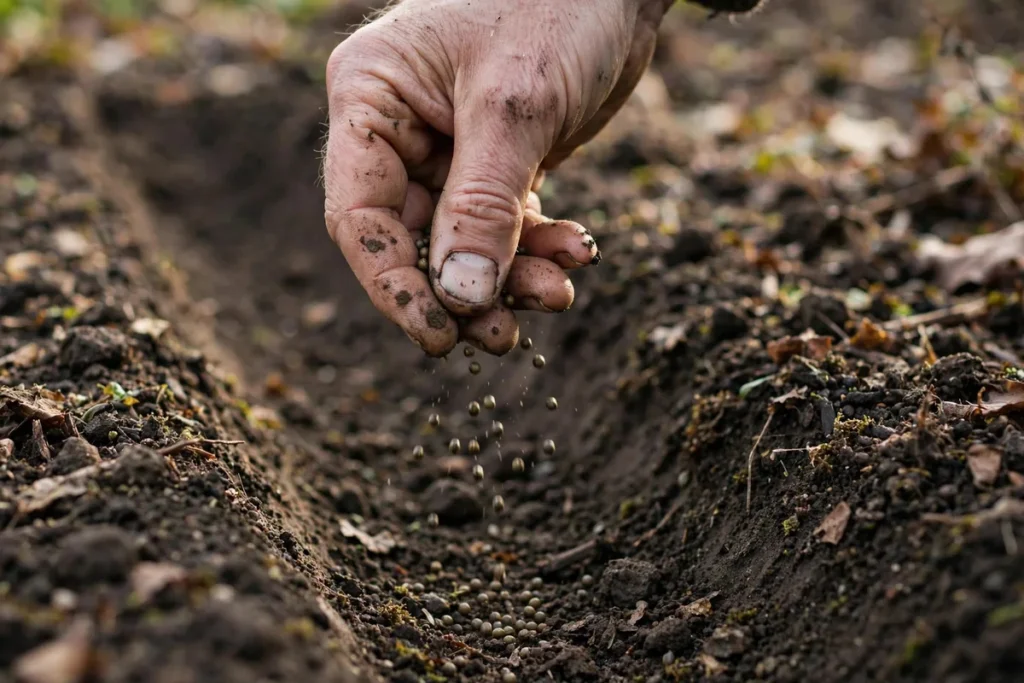
For your first fall sowing, choose spinach seed from the slow-bolting varieties listed below, especially if you’re planting while it’s still warm.
Step 3: Water Gently and Keep the Bed Moist
Water with a fine spray so you don’t wash seeds out of the furrow. Until germination, the top inch of soil should stay consistently damp — check daily in warm weather. A light mulch of straw over the rows, or a board laid over the bed for a few days, holds moisture and keeps the soil cooler.
Step 4: Thin Without Mercy
When seedlings have two or three true leaves, thin to 3 inches apart for baby-leaf harvests or 5 to 6 inches for full-size plants. Yes, it feels wasteful. No, the thinnings aren’t wasted — they’re your first salad. Crowded spinach stays small, gets poor air circulation, and invites disease.
Step 5: Mulch and Cover for Cold Nights
Once plants are a few inches tall, tuck 2 to 3 inches of straw or shredded leaves around (not over) them. When nights start dipping into the 20s, a floating row cover draped over the bed buys several degrees of protection and can keep you harvesting weeks past your first hard freeze.
Spacing and Thinning: The Details
Rows 12 inches apart give you room to weed and let air move between plants — good airflow matters more in fall’s damp weather than in spring. Within the row, final spacing depends on your harvest style: 3 inches apart if you’ll cut baby leaves young, 5 to 6 inches if you want big, full-size leaves for cooking.
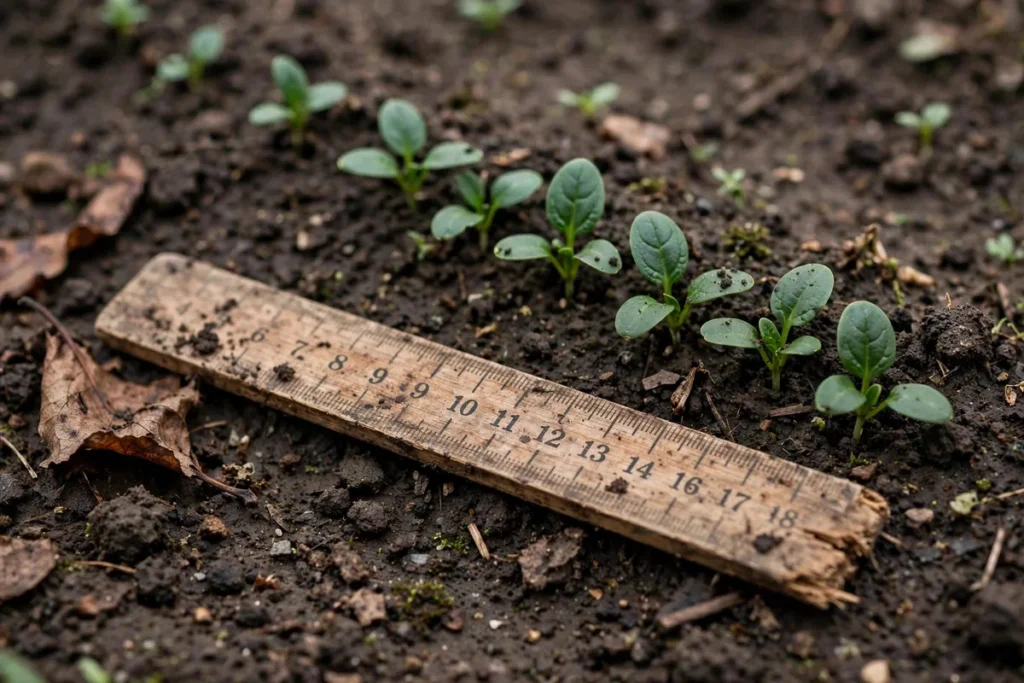
For containers, one plant per 6-inch pot is the rule of thumb. Spinach roots are shallow, so a wide, shallow container works better than a deep narrow one.
Caring for Fall Spinach
Water
Spinach likes steady moisture — about an inch of water a week, rain included. Inconsistent watering makes leaves tough and can trigger premature bolting if a warm spell hits. Water in the morning so leaves dry before evening; wet foliage sitting overnight in cool fall air is an invitation to leaf-spot diseases.
Mulch and Frost Protection
Mulch does triple duty in a fall spinach bed: it holds soil moisture, suppresses the late-season weeds that compete with young plants, and insulates roots when temperatures swing. Straw or shredded leaves, 2 to 3 inches deep, kept a finger’s width away from the stems.
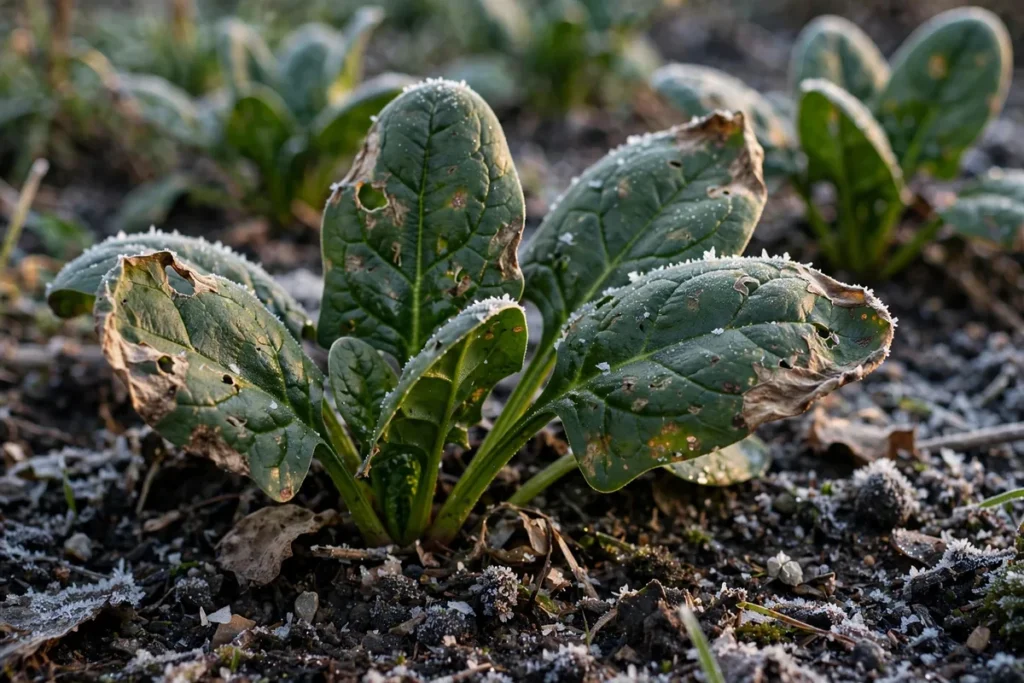
Spinach handles light frosts on its own, but a floating row cover turns a marginal crop into a reliable one. Supported on low hoops or simply laid over the plants, it adds roughly 4 to 6 degrees of protection and shields leaves from drying winter wind. In zones 7 and up, covered spinach often survives the whole winter and gives you an extra-early spring harvest.
Feeding
If you amended with compost at planting, fall spinach usually needs nothing more. Pale, slow-growing leaves are the signal for a nitrogen boost — a side-dressing of compost or a balanced organic fertilizer scratched lightly into the soil beside the rows. Skip heavy feeding late in the season; you want sturdy plants going into cold weather, not soft new growth that freezes easily.
Best Spinach Varieties for Fall
Not all spinach is equal in fall. Look for varieties described as slow-bolting (for warm early-fall sowings) and cold-hardy (for late harvests). These are widely grown, standard picks — availability varies, so grab what your seed source carries from this list.
Slow to Bolt for Early-Fall Sowings
‘Tyee’ — a semi-savoy hybrid bred for bolt resistance and downy mildew tolerance; one of the most reliable choices when you’re sowing into lingering August warmth. ‘Space’ — smooth-leafed hybrid, fast and uniform, with good disease resistance; a favorite for baby-leaf production. ‘Corvair’ — bred specifically for fall planting, with strong cold tolerance and smooth, dark leaves that hold well in the field.
Proven Cold-Hardy for Late Harvests
‘Winter Bloomsdale’ — a savoyed type selected for overwintering; crinkled dark-green leaves that sweeten noticeably after frost. ‘Bloomsdale Long Standing’ — the classic heirloom savoy; slower to bolt than older types and a dependable cold-weather performer. ‘Regiment’ — another savoy hybrid with solid bolt resistance and thick, textured leaves built for cool seasons.
Smooth-Leaf Picks for Baby-Leaf Harvests
‘Giant Nobel’ — huge, flat, tender leaves on a vigorous plant; excellent picked young for salads. ‘Renegade’ — a newer smooth-leaf hybrid with strong mildew resistance and fast regrowth after cutting, well suited to cut-and-come-again harvesting.
How to Harvest Fall Spinach
Start picking when outer leaves reach 3 to 5 inches long — roughly the size of your palm. Harvest in the morning, when leaves are crisp and cool. Pinch or cut outer leaves about an inch above the crown, working around the plant and always leaving the center growing point intact. That crown is the engine: as long as it stays healthy, new leaves keep coming.
This cut-and-come-again method is the whole secret to a long fall harvest. A plant picked this way every few days will produce for weeks; a plant stripped bare or pulled whole gives you one meal. As hard freezes approach, harvest a little heavier — take the biggest leaves before a deep cold snap, then let the plant rest under its cover.
Troubleshooting Common Problems
Seeds Won’t Germinate
Nine times out of ten, the soil was too warm. Above 75°F, spinach germination stalls or fails. Sow during a cool spell, pre-chill seeds in the refrigerator for a few days, or shade the bed with a board or shade cloth until seedlings emerge. Old seed is the other culprit — spinach seed loses vigor fast, so buy fresh each year.
Plants Bolt Despite the Season
An unseasonable warm spell in early fall can fool even slow-bolting varieties. There’s no reversing a bolted plant — the leaves turn bitter once the stalk rises. Pull it, compost it, and sow the next succession a little later. This is exactly why staggered sowings beat one big planting.
Yellow Leaves
Evenly yellow older leaves usually mean nitrogen hunger — side-dress with compost or fertilizer. Yellow with soggy soil underneath points to overwatering or poor drainage instead. Fix the water first; feeding a drowning plant doesn’t help.
Holes in the Leaves
Slugs and snails love damp fall beds. Check under mulch in the evening, set out simple beer traps, or ring beds with diatomaceous earth. Flea beetles make tiny shotgun-hole patterns — row cover from day one is the best prevention, since it physically blocks them.
Leaf Spots or White Fuzz
Downy mildew shows as yellow patches with fuzzy gray-white growth underneath. Improve air circulation (thin properly, water at the base in the morning) and choose resistant varieties like ‘Space’ or ‘Renegade’ for future sowings. Remove badly affected leaves rather than composting them.
Frequently Asked Questions
How cold can spinach tolerate?
Established plants handle temperatures into the low 20s°F without protection, and mature leaves often look better after a frost than before it. Under a row cover or cold frame, spinach survives the teens in many zones and can overwinter entirely in zones 7 and warmer.
Can I sow spinach in October? Where winters stay mild, October sowings keep growing through the winter. Where hard freezes arrive early, October is too late — September is the realistic cutoff. Count back 5–6 weeks from your average first frost to find your sowing date.
Does spinach need full sun in fall?
It appreciates full sun, but fall’s lower light angle makes light afternoon shade perfectly fine — even helpful during warm early-fall weeks. Avoid deep shade, which produces leggy, pale leaves.
Can I grow fall spinach in containers?
Absolutely. Use containers at least 6 inches deep and wide enough for proper spacing, fill with quality potting mix plus compost, and keep them watered — pots dry out faster than beds. Move containers against a south-facing wall for extra warmth as nights cool.
Why did my spring spinach bolt but fall advice says it won’t?
Spring spinach faces lengthening days and rising heat — both bolting triggers. Fall spinach faces shortening days and falling temperatures, which keep it vegetative. Same plant, opposite signals.
More fall vegetable growing posts to explore:
- How to Grow Kale in Fall and Winter — spinach’s tougher cousin, harvestable through snow
- What to Plant in October — 15 vegetables for a fall garden
- How to Plant Garlic in Fall — the flagship fall crop, planted while spinach grows
- Fall Garden Cleanup — 12 things to do before winter
Fall spinach might be the highest-return crop in the autumn garden: a packet of seed, six weeks of patience, and months of sweet, tender leaves that no grocery store can match. Sow on time, keep the bed moist, thin without guilt, and cover when the cold gets serious. Do that, and you’ll be picking greens long after the tomatoes are a memory.
What’s your average first-frost date — and have you counted backward to your sowing day yet?
Sources & Further Reading
- University of Maryland Extension — Fall Vegetable Gardening: fall planting windows timed to the first frost.
- Texas A&M AgriLife Extension — Fall Vegetable Gardening Guide for Texas: fall varieties and planting timing.
- Clemson Cooperative Extension (HGIC) — Fall and Winter Vegetables: guidance on cold-hardy fall crops.