
This post may contain affiliate links. If you buy through links on this page, we may earn a commission at no extra cost to you.
As an Amazon Associate I earn from qualifying purchases.
Pepper plants adapt to pots well, but pot size still decides how much fruit you get. A pot that is too small dries out daily and limits root growth, so the plant stays small and drops flowers. A pot that is too large stays wet in spring and slows early growth. This guide gives pot sizes by pepper type, soil volumes, and watering notes, so you can match the pot to the plant you actually grow.
We have not tested the products linked here, and we give no current store prices. The links below go to search pages for pot types, so you can compare current options, sizes, and prices at the time you shop.
Pot size by pepper type
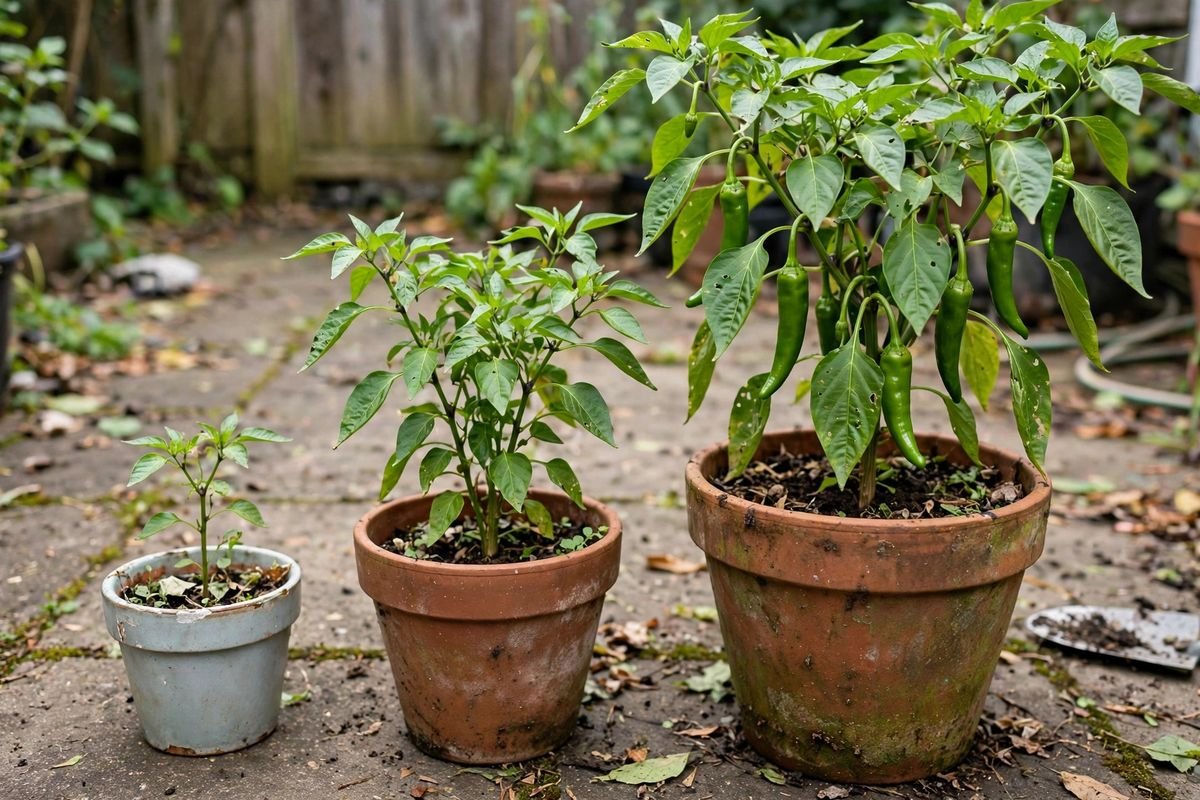
Small hot peppers, such as cayenne and Thai types, do well in 3- to 5-gallon pots. A 5-gallon pot holds about 0.67 cubic feet of mix and gives a small pepper enough root room for a full season. Bell peppers and other sweet peppers need 5 to 7 gallons, since the plants grow larger and carry heavier fruit. Large hot peppers, such as poblano and Anaheim types, also need 5 to 7 gallons.
For one plant per pot, use these minimums. A 3-gallon pot suits only small hot peppers and compact ornamental types. A 5-gallon pot suits most peppers, including bells. A 7-gallon pot suits large bell plants and plants you plan to overwinter indoors, since the extra soil buffers watering gaps. A 10-gallon pot suits two small pepper plants, but one plant in 10 gallons still outperforms two crowded plants in most cases.
Pot shape matters too. A pot that is at least 12 inches wide and 12 inches deep suits a 5-gallon pepper. A tall, narrow pot of the same volume gives roots less lateral room, and pepper roots spread sideways more than they dive deep. Pick a pot with a wide top and a stable base, since a fruit-loaded pepper plant gets top-heavy by late summer.
Soil volume math for peppers
Soil volume follows pot size directly. A 3-gallon pot holds about 0.4 cubic feet of mix. A 5-gallon pot holds about 0.67 cubic feet. A 7-gallon pot holds about 0.94 cubic feet. A 10-gallon pot holds about 1.34 cubic feet. Fill the pot to within one inch of the rim, so watering has room without spillover.
For a worked example, take one bell pepper in a 5-gallon pot. Fill it with 0.67 cubic feet of potting mix. In summer heat, that plant drinks about 0.25 gallons of water per day. Water slowly until water appears at the drain holes, then stop. Check the soil each morning by pushing a finger 2 inches into the mix. If that depth feels dry, water again. That routine keeps a 5-gallon pepper moist without waterlogging it.
Wet weight also matters for balconies. Wet mix weighs roughly 40 pounds per cubic foot. A 5-gallon pot with 0.67 cubic feet of wet mix weighs about 27 pounds for soil alone, plus the pot and plant. A 7-gallon pot weighs about 38 pounds for soil alone. Use those numbers against any balcony load limit before you add several large pepper pots.

Watering a pepper in a pot
Peppers like soil that stays lightly moist, not wet and not dry. In a pot, that balance is harder than in the ground, since pot soil dries from the sides and the top. Water deeply, so the whole root zone gets wet, and then wait until the top 2 inches dry before watering again. A shallow daily sprinkle keeps only the surface wet and pulls roots upward, where they dry out faster.
Mulch the pot surface with 2 inches of straw or shredded leaves. Mulch slows surface drying and keeps soil temperature steadier through hot afternoons. Keep mulch 2 inches away from the stem so the stem stays dry.
In a heat spell, a pepper in a 5-gallon pot may need water daily, and a pepper in a 3-gallon pot may need water twice a day. If you cannot water that often, move the pot to a larger size or to a spot with afternoon shade. A larger pot is the better fix, since shade also cuts fruit production.

Signs the pot is too small
Three signs point to a pot that is too small. First, the plant wilts by midday even when you watered in the morning. That pattern means the root system drinks the available water before noon. Second, roots circle the drain holes or push out the bottom. Third, growth stalls while a neighbor plant in a larger pot keeps growing, even with the same feeding and sun.
If you see those signs midseason, repot into a pot one size larger. Water the plant first, slide it out gently, and set it into the new pot at the same soil depth. Fill around it with fresh mix and water deeply. Repotting in the evening reduces transplant stress, since the plant faces a cool night instead of a hot afternoon.
For overwintering, a 7-gallon pot works better than a 5-gallon pot, since the larger soil volume buffers indoor watering gaps. Prune the plant back before bringing it inside, and place it in the brightest window you have. Water only when the top 2 inches feel dry, since indoor growth slows and water needs drop.

Pepper pot types compared
| Pot type | Strengths | Limits | Best fit |
|---|---|---|---|
| Plastic | Light, holds moisture, cheap | Heats in sun, can blow over | Most peppers, patios |
| Terracotta | Breathes, steady in wind | Dries fast, heavy when large | Small hot peppers, sunny spots |
| Fabric grow bag | Drains well, light, stores flat | Dries fast, needs frequent water | Seasonal peppers, back patios |
| Glazed ceramic | Holds moisture, neat, steady | Heavy, breaks if dropped | Front patio, one show plant |
To compare current options, search for 5-gallon pots for peppers, 7-gallon grow bags for peppers, and terracotta pots for pepper plants. Compare volume in gallons and pot width before you compare color or shape.
Questions
A pepper plant needs a pot that matches its mature size, with soil volume and watering to match. For tomato sizing as a comparison, see what size pot a tomato plant needs. For pepper growing methods, how to grow peppers covers planting, feeding, and harvest. For pot materials, terracotta vs plastic pots covers drying speed, and how to keep container soil from drying out too fast covers watering fixes.