
This post may contain affiliate links. If you buy through links on this page, we may earn a commission at no extra cost to you.
As an Amazon Associate I earn from qualifying purchases.
A planter with a trellis solves two problems at once. It gives a climbing plant roots in a pot and support in the same unit, so you can grow beans, peas, or clematis on a patio with no fence. The catch is balance. A trellis adds height, wind load, and top weight, and a pot that tips takes the plant down with it. This guide covers trellis height, pot size, anchoring, and tying, with numbers for a setup that stays upright.
We have not tested the products linked here, and we give no current store prices. The links below go to search pages for planter types, so you can compare current options, sizes, and prices at the time you shop.
Trellis height and pot size
Match trellis height to pot volume. A trellis 3 feet tall suits a 10-gallon planter, which holds about 1.34 cubic feet of mix. A trellis 4 to 5 feet tall needs a 15- to 20-gallon planter, which holds 2 to 2.67 cubic feet of mix. A trellis 6 feet tall needs a 20-gallon planter at minimum, plus anchoring, since wind load grows with height.
Plant height also limits the pick. Pole beans reach 6 to 8 feet, so a 3-foot trellis will not hold them. Peas reach 4 to 6 feet for tall types and 2 to 3 feet for dwarf types. Clematis varies by type, from 4 feet to 12 feet, so check the plant label before you buy a trellis planter. A trellis that is too short leaves vines hanging loose, and a trellis that is too tall tips the pot.
Pot width matters as much as volume. A trellis planter should be at least 16 inches wide for a 4-foot trellis and at least 20 inches wide for a 5- to 6-foot trellis. A narrow pot with a tall trellis tips in the first gust, even when the soil is wet and heavy.

Climbers that suit a pot trellis
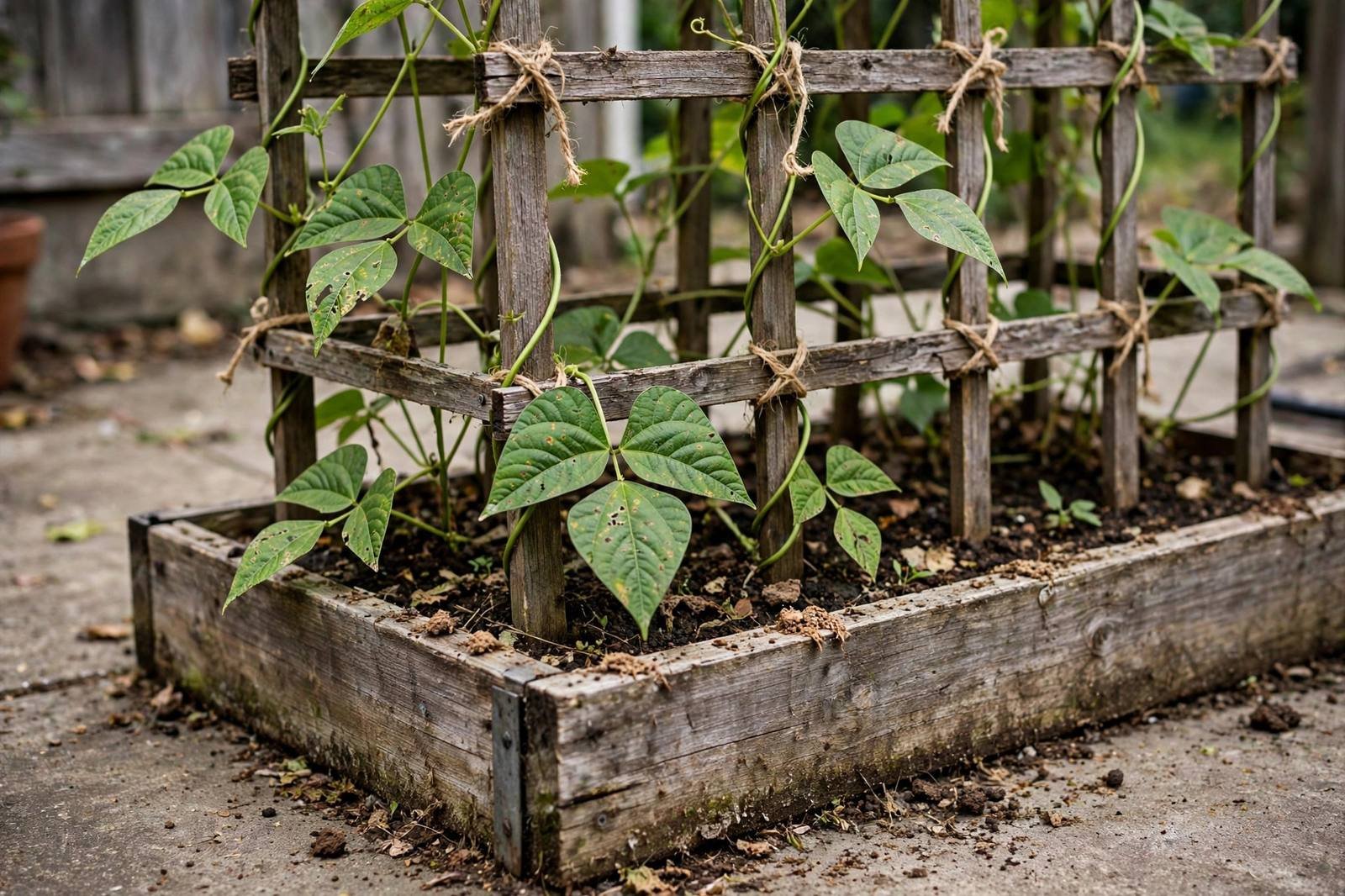
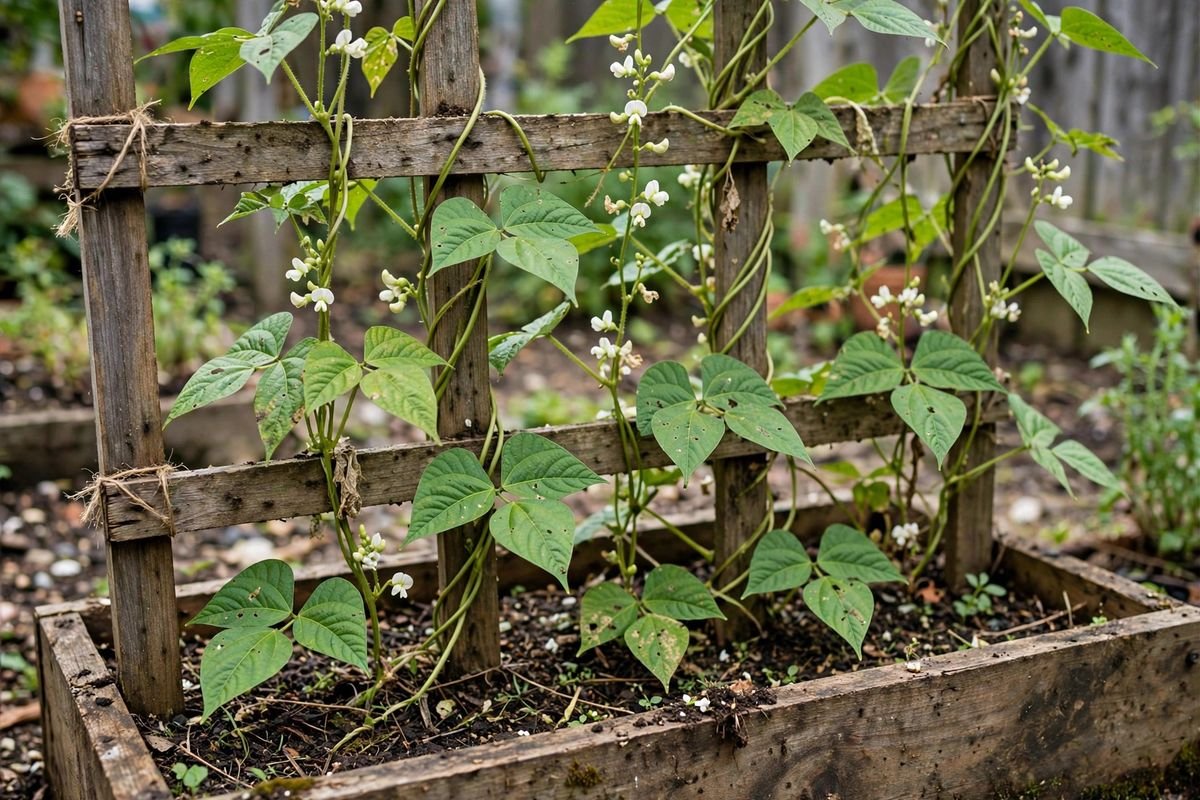
Pole beans are the easiest climbers for a trellis planter. They twine on their own, grow fast, and produce food within weeks. Plant four to six bean seeds around the base of a 15-gallon trellis planter, spaced 4 inches apart. Thin to the strongest four plants once they reach 6 inches tall.
Peas suit cool weather and a shorter trellis. Plant peas in early spring, using the frost-date rule for your area. Use your local frost dates and regional planting guidance, not your USDA hardiness zone alone, to choose planting dates. Peas climb by tendrils, so they need a trellis with thin bars or netting they can grip. A smooth, wide trellis bar gives tendrils nothing to hold.
Clematis and morning glory suit a trellis planter for flowers. Clematis needs its roots shaded, so mulch the pot surface and keep the pot out of harsh afternoon sun on the root zone. Morning glory grows fast and covers a trellis in one season, but it self-seeds freely, so deadhead spent flowers if you do not want seedlings next year.
Anchoring so it does not tip
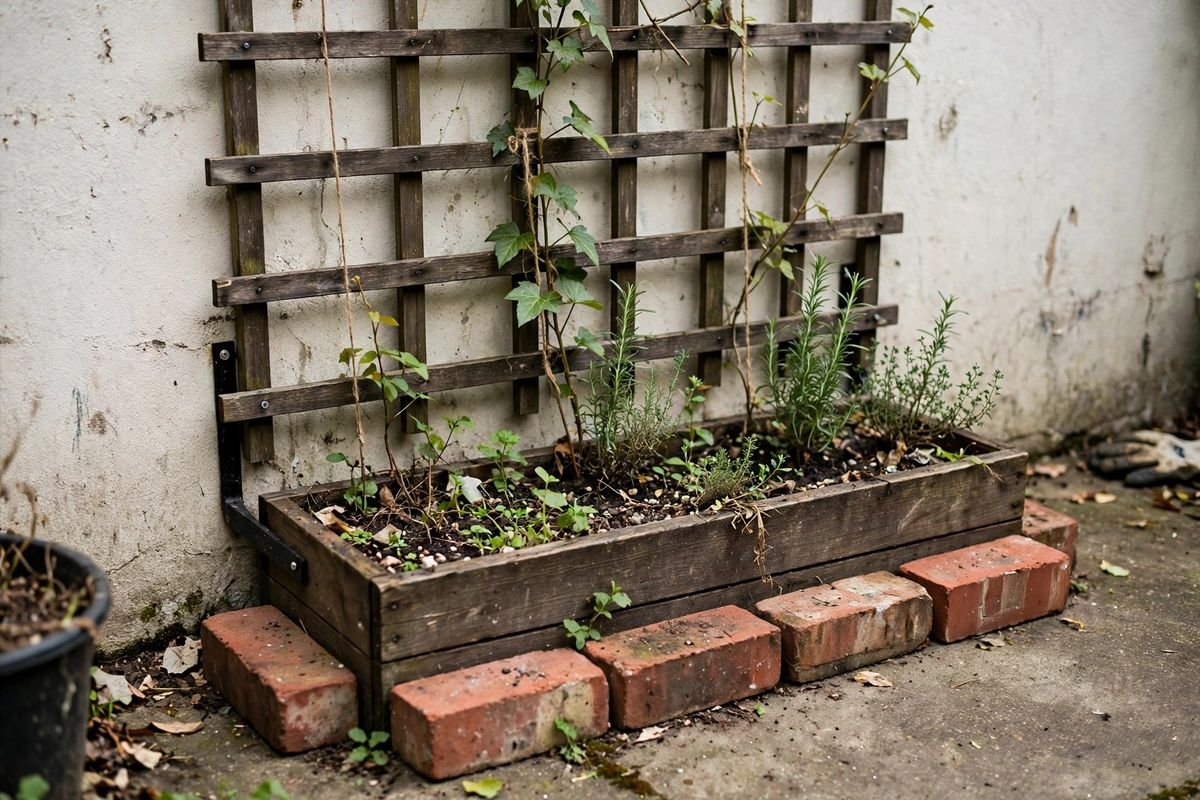
Anchoring starts with weight low in the pot. Wet soil in a 15-gallon planter weighs about 80 pounds, which helps, but a 5-foot trellis with a full vine canopy still catches wind. Add 10 to 15 pounds of gravel or bricks at the bottom of the pot, below the soil, to lower the center of gravity. Keep drainage open around the added weight.
Next, fix the planter to something solid when you can. A bracket from the trellis top to a wall or rail stops tipping in a gust. On a freestanding patio, set two trellis planters back to back so they brace each other, or set the planter against a wall with the trellis facing out. A freestanding trellis planter in an open corner is the setup most likely to tip.
Check the setup after the first storm. Push the trellis top gently from each side. If the pot rocks or lifts at the edge, add weight, shorten the trellis, or move the planter to a sheltered spot. A setup that passes this push test in calm weather still needs a recheck once vines fill in, since a full canopy catches far more wind than bare bars.
Pruning and tying
Tie vines loosely, not tightly. Use soft twine or cloth strips, and leave slack so the stem can thicken without cutting into the tie. Check ties every two weeks during fast growth, since a vine can outgrow a tie in days. A tight tie cuts the stem, and the vine above the cut wilts even when the roots are fine.
Prune side shoots that grow away from the trellis. For beans, let the main vines climb and trim shoots that trail on the ground. For clematis, prune by type, since some types flower on old wood and some on new wood. Check the plant label for the pruning group before you cut, since the wrong cut removes a season of flowers.
At season end, cut annual vines at the base and pull the stems off the trellis before they dry and harden. Dried bean stems stick to trellis bars and take far longer to remove. Store the trellis planter under cover for winter if the material is wood or thin metal, since freeze and thaw cycles shorten its life.

Trellis planter types compared
| Planter type | Strengths | Limits | Best fit |
|---|---|---|---|
| Wood trellis planter | Strong, insulates roots, neat | Heavy, weathers, needs sealing | Beans and peas on a patio |
| Metal trellis planter | Strong, slim, long-lasting | Heats in sun, can rust | Clematis, sunny walls |
| Resin trellis planter | Light, low upkeep, many sizes | Tips in wind, flexes when tall | Sheltered patios, short trellises |
To compare current options, search for planters with trellises for climbing plants, wooden trellis planter boxes, and raised planters with trellises. Compare pot volume and trellis height together, since a tall trellis on a small pot is the most common mismatch.
Questions
A trellis planter works when pot volume, trellis height, and anchoring all match the plant. Get those three right and a patio can grow climbing food and flowers with no fence. For raised-bed options, see best metal raised garden beds and raised bed gardening for beginners. For container basics, container gardening for beginners covers soil and drainage, and how to grow peppers covers feeding for fruiting plants in pots.