
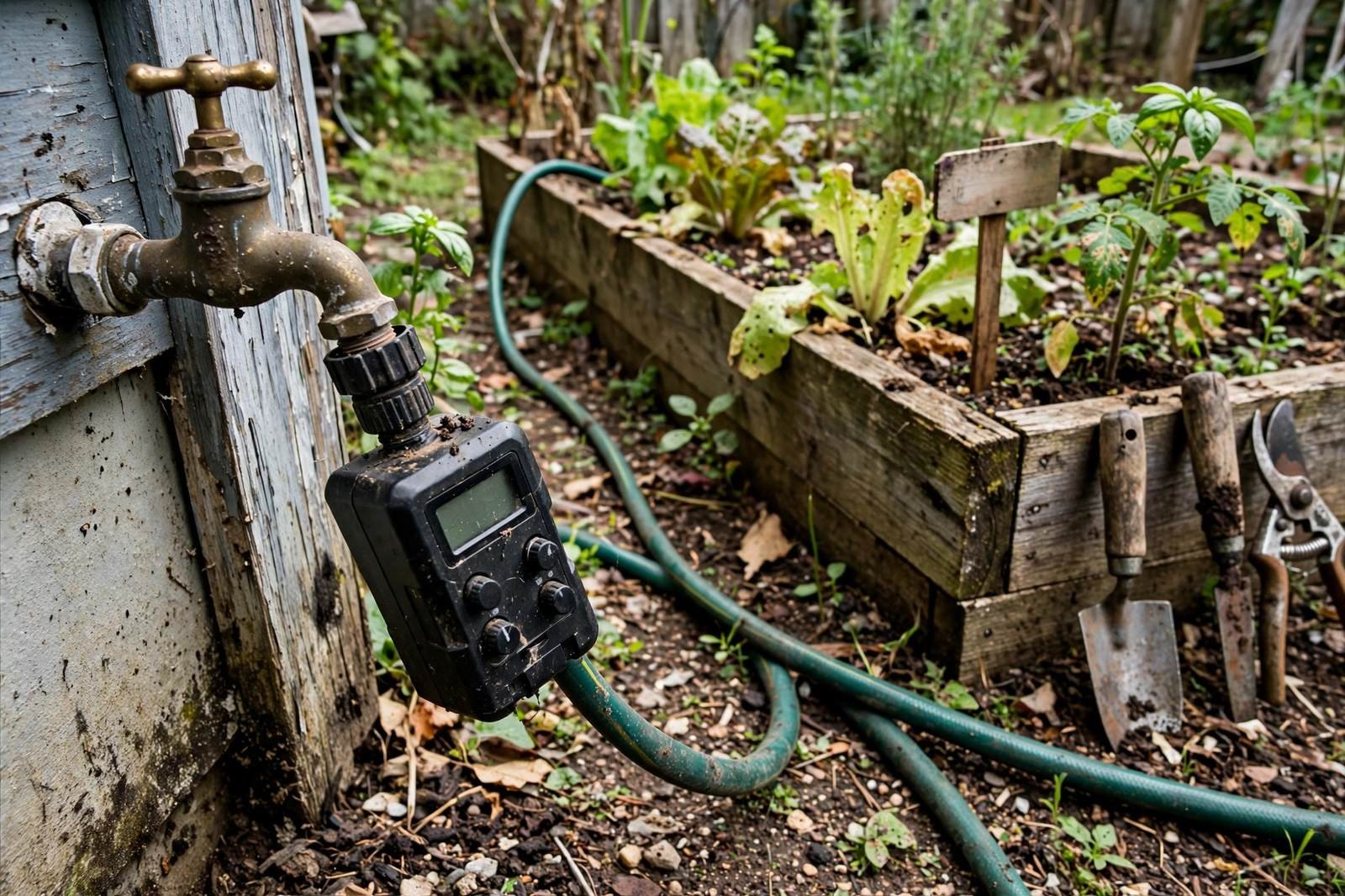
This post may contain affiliate links. If you buy through links on this page, we may earn a commission at no extra cost to you.
As an Amazon Associate I earn from qualifying purchases.
A hose timer does one useful job: water starts and stops on schedule even when work runs late or the garden sits empty. For raised beds and containers, steady timing matters more than fancy features. Beds dry from the top down, pots faster still, and a missed watering on a hot afternoon shows up as wilt by dinner.
A quick honesty note. This roundup uses manufacturer specifications, listing details, and extension guidance, not hands-on testing of the timers linked here. Check the live listing for zone count, battery type, inlet size, and pressure range. Our contribution is the weekly watering-budget math below, so a schedule can be sized from bed area and flow rate.
Our guide to raised bed gardening for beginners covers soil depth and placement, and those choices decide how fast a bed dries and how long each run should last.
Quick comparison: hose timer types at a glance
| Timer Type | Zones | Power | Best For | Watch Out For |
|---|---|---|---|---|
| Single-zone battery dial | 1 | AA or AAA batteries; dial or simple digital | One bed, one soaker hose, or a small drip run | Pots share the bed rhythm; dial steps can be coarse |
| Multi-zone digital | 2 to 4 | AA batteries with screen and buttons | Beds plus containers on different rhythms | Zones share faucet pressure; screens vary in sunlight |
| Smart / Wi-Fi timer | 1 to 4, model dependent | Batteries plus app control | Adjusting schedules away from home | Needs steady Wi-Fi at the faucet; hub rules differ |
Battery life depends on valve design, cycles per week, and temperature. Fresh batteries each spring and a spare set in the drawer remain the plain, reliable plan.
The specs that change daily use
Zones. A zone is one timed outlet with its own schedule. One zone suits a single drip line for a whole bed. Two zones help when beds want a deep soak twice a week and containers want a shorter drink every other day. Most timers stagger zones to protect pressure, so check whether zones run in sequence or can overlap.
Rain delay and manual override. Rain delay pauses the schedule for 24 to 72 hours without erasing the program, saving water after a storm. Manual override opens the valve for a chosen stretch, handy for filling a can or giving a transplant an extra drink. A clear manual button matters more than a deep menu.
Pressure and fittings. Most timers sit between a faucet and a hose or drip mainline. A metal inlet with washer and screen filter tends to seat more securely than all-plastic. Drip systems usually need a pressure reducer downstream. Our notes on best drip irrigation kits for raised beds cover mainline sizing and emitter spacing.
Weekly watering-budget math (worked example)
Timers run on minutes, plants drink in inches and gallons, and a schedule improves once those units meet.
Assumptions: one raised bed at 4 feet by 8 feet (32 square feet); about 1 inch of water per week for established vegetables in warm weather, rain counting toward that total; mulched soil; flow measured with a bucket test. Containers use a separate budget.
Step 1 — inches to gallons. One inch over 32 square feet is 32 × (1 ÷ 12) = 2.67 cubic feet. One cubic foot holds about 7.48 gallons, so 2.67 × 7.48 ≈ 20 gallons per week for that bed. That figure is the weekly budget, not a single soaking. Half an inch of rain cuts the timer share to about 10 gallons. A 4-by-4 bed needs about 10 gallons for an inch; two 4-by-8 beds need about 40. Our guide on how often you should water a raised bed pairs depth checks with mulch and texture.
Step 2 — gallons to minutes. Time how long the line takes to fill a 1-gallon jug. Open hose or sprinkler at about 5 gallons per minute: 20 ÷ 5 = 4 minutes. That delivers the volume on paper yet soaks poorly, since water arrives faster than soil can absorb the flow. Soaker or drip at about 1 gallon per minute: 20 ÷ 1 = 20 minutes for the weekly budget. Split into two sessions of 10 minutes or three of about 7 minutes, and soil takes in water between runs. A soaker near 0.5 gallons per minute stretches the budget to about 40 minutes per week, best split into two 20-minute sessions. When heat spikes, add a session rather than doubling one run.
Step 3 — containers separately. A large pot, roughly 5 gallons of mix, often needs about 0.5 to 1 gallon per thorough watering. Six large pots at 0.75 gallons each, watered three times in a dry week, call for 6 × 0.75 × 3 ≈ 13.5 gallons per week. Pots on their own zone keep bed schedules from overwatering roots that prefer a deeper, rarer drink. Our overview of container gardening for beginners covers pot size and mixes that soften that swing.
Timer families in detail
Single-zone battery dial timers: the one-bed answer
A single-zone timer accepts one hose and runs one schedule. Dial models set frequency and duration with clicks; digital models add a screen, finer minute steps, and clearer rain delay. Strengths: simple setup, few failure points. Limits: beds and pots share one rhythm.
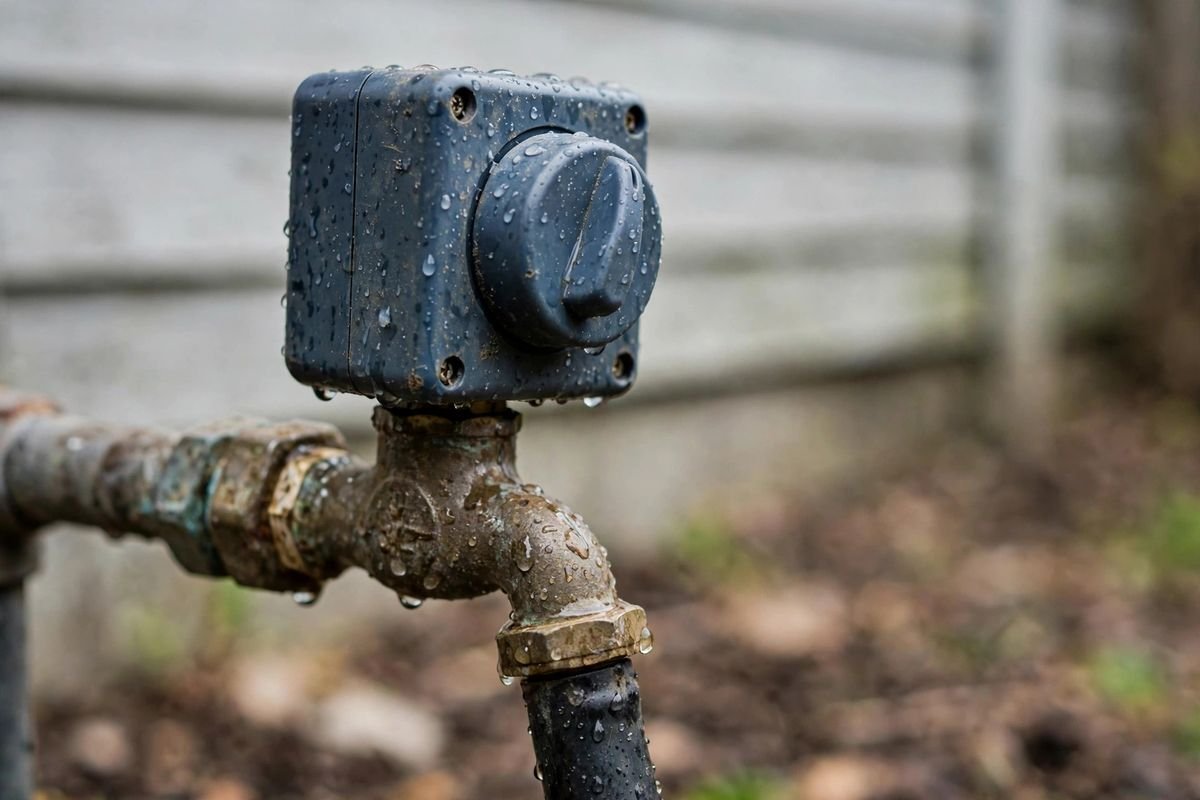
Choose a single-zone timer when one drip line or soaker serves the whole planting. Browse garden hose timers on Amazon and confirm battery type, rain delay steps, and how manual override behaves.
Multi-zone digital timers: beds and pots on separate clocks
A two-zone or four-zone timer splits one faucet into separate schedules. Zone A can soak beds Monday and Thursday while Zone B gives containers a shorter drink Monday, Wednesday, and Friday. Trade-offs: more seals to check, longer first setup, and cycle time that can stretch past dawn when zones queue in sequence. Label each hose with tape, because two black hoses at 6 a.m. look identical.
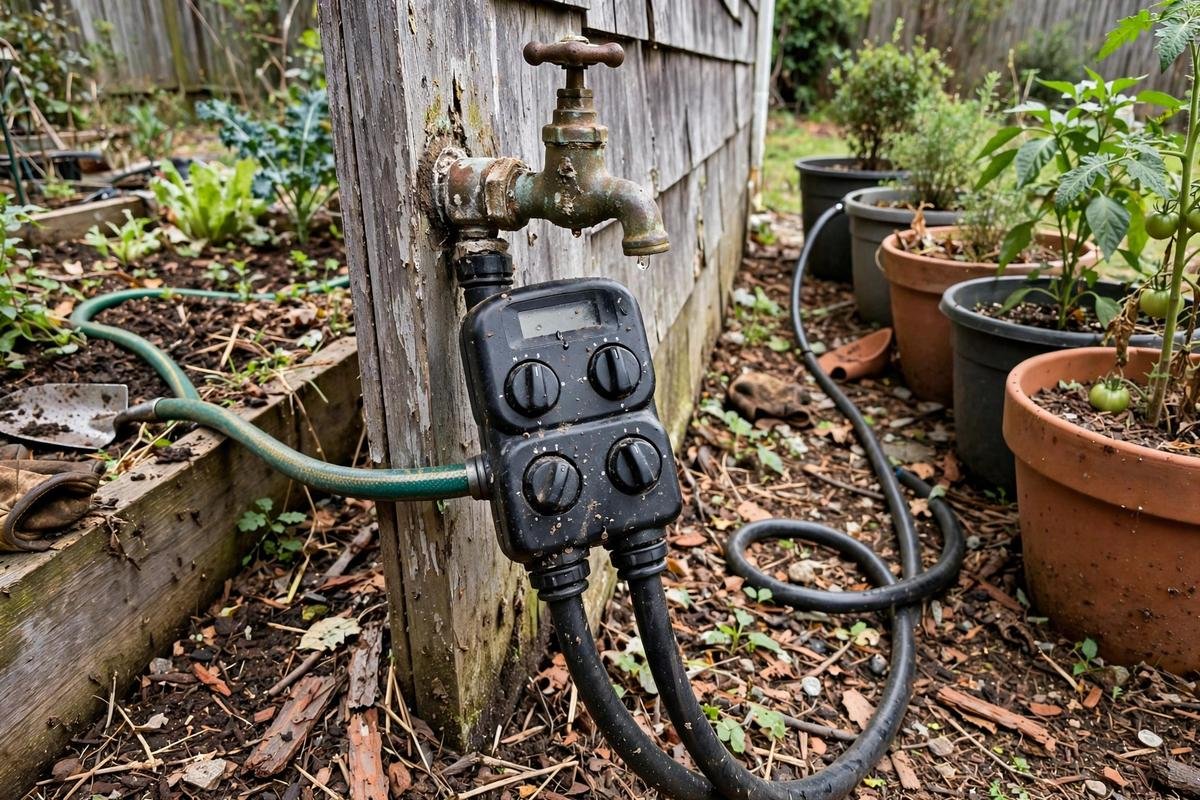
Choose a multi-zone unit when beds and containers want different frequency. Compare multi-zone garden hose timers on Amazon, checking whether each zone sets its own start time and staggers to protect pressure.
Smart and Wi-Fi timers: control from the kitchen or the road
Smart timers add an app, weather-based pauses on some models, and alerts on select lines. The appeal is real for travel weeks. Dependencies deserve equal weight: Wi-Fi must reach the faucet, the app must stay current, and battery changes still happen at the spigot. A weak signal can turn a premium timer into a manual one. See Wi-Fi garden hose timers on Amazon and confirm hub requirements and whether manual buttons still work when the network drops.
Schedules that fit real beds and pots
For an established 4-by-8 bed on drip or soaker, two sessions per week in mild weather and three in heat cover most weeks. At about 1 gallon per minute, two sessions of 10 minutes or three of about 7 minutes meet the 20-gallon target, adjusted down after rain. Morning runs reduce evaporation. New transplants want smaller drinks more often for a week or two, and manual override covers those extras.
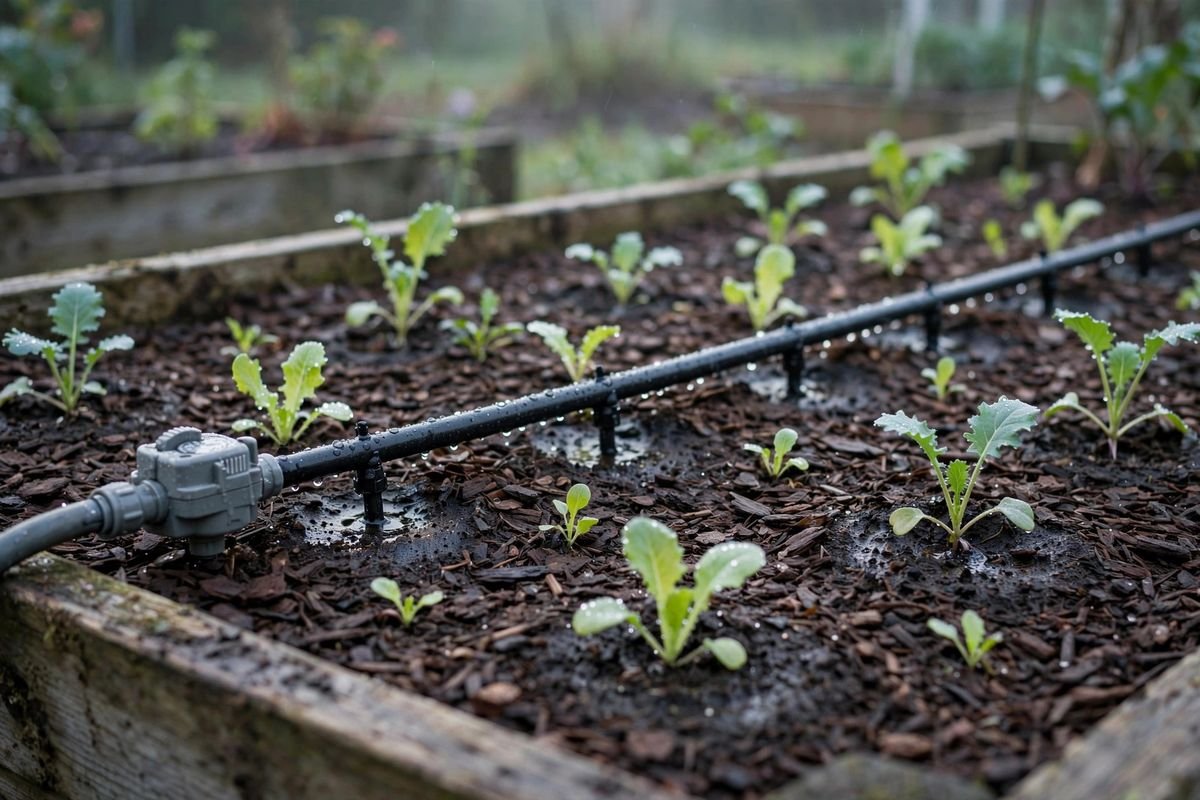
Containers on a separate zone run shorter and more often, often three modest runs per dry week for large pots in sun. A finger pushed an inch into the mix settles the rest: damp at depth means wait, dry means the next run earns a few extra minutes. At season end, timers come indoors before hard freeze and hoses drain. Our walkthrough on how to winterize a raised garden bed covers that handoff. Use your local frost dates and regional planting guidance — not your USDA hardiness zone alone — to choose planting dates.
Setup habits that prevent most trouble
Most leaks start at the faucet. A fresh washer, hand-tight seating, and a test cycle catch drips early. Keep the inlet screen clean, since grit holds valves open. Install fresh batteries each spring and store the timer indoors over winter with batteries removed. Extension guidance agrees: water deeply and less often, water soil rather than leaves, and let mulch slow evaporation.
Which timer should we choose?
Choose a single-zone battery dial timer if one bed or one drip run covers the garden. Choose a multi-zone digital timer if beds want deep, rare soaks while containers want shorter, frequent drinks from the same faucet. Choose a smart or Wi-Fi timer if schedules change from away from home and Wi-Fi reaches the faucet. When the choice feels close, choose the simplest timer that fits the zones planted. Browse single-zone hose timers on Amazon and check dial steps against the math above.
Common problems and plain fixes
Water runs when the timer says off. Clean the inlet screen and run a manual cycle to flush grit. Pressure drops on the second zone. Stagger start times and shorten the longer run. Beds stay dry at the far end. Shorten the run, feed from the middle, or split beds across two zones. Pots flood while beds stay dry. Move pots to a separate zone with shorter runs.
FAQ
How long do batteries last in a hose timer?
Battery life depends on valve design, cycles per week, and temperature, so listings give estimates rather than promises. Install fresh batteries in spring and keep spares ready.
Can a timer run a drip system and a soaker hose together?
One zone can feed either a drip mainline or a soaker when flow and pressure suit that line. Mixed lines on one zone often water unevenly. Separate zones, or separate runs at different times, keep delivery even.
What happens when rain arrives on a watering day?
Use rain delay to pause the schedule for a day or two without erasing the program, then let the normal rhythm resume. A finger check at 2 inches deep settles whether an extra pause helps.