
This post may contain affiliate links. If you buy through links on this page, we may earn a commission at no extra cost to you.
As an Amazon Associate I earn from qualifying purchases.
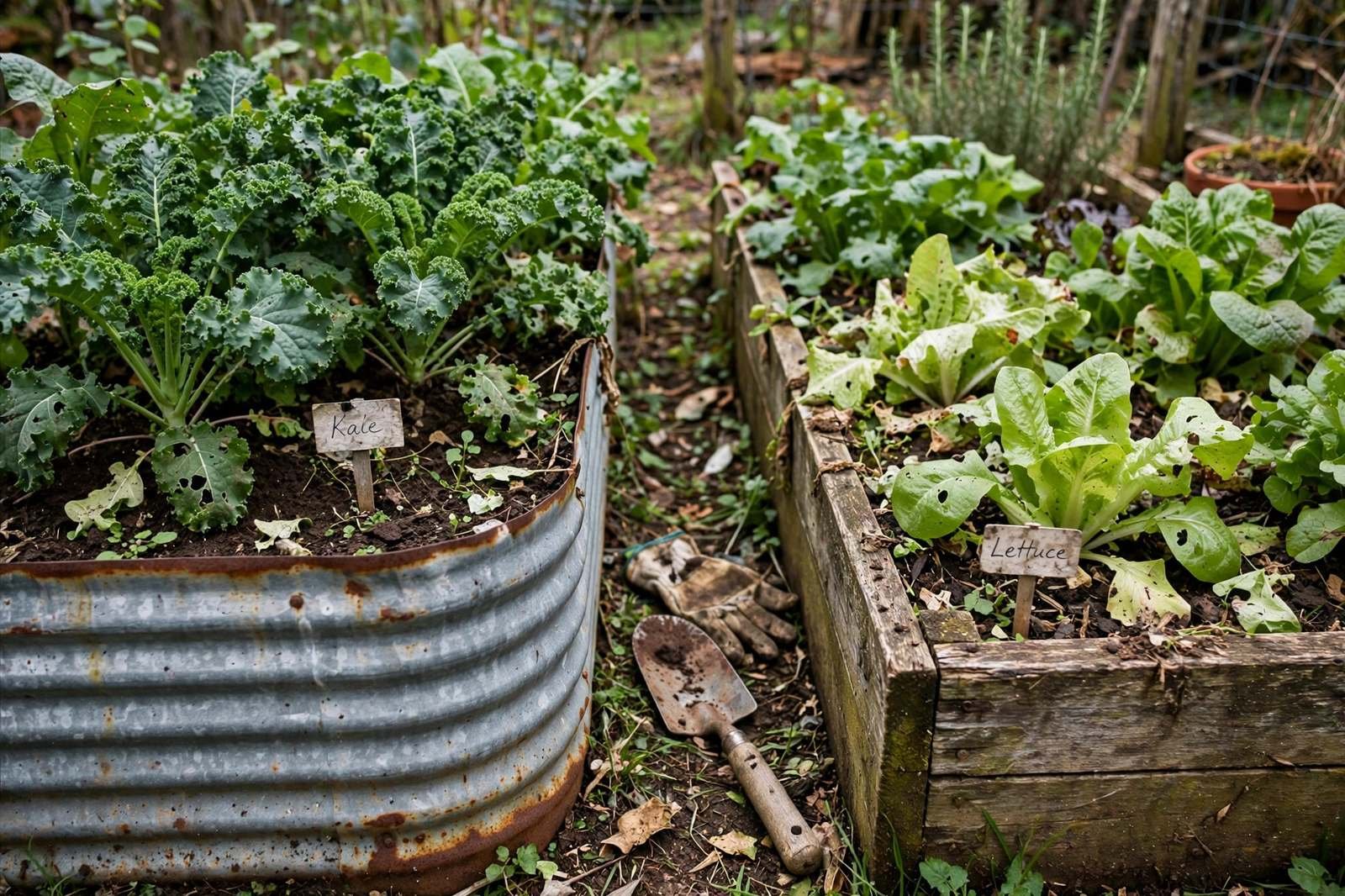
Metal and wood raised beds grow the same tomatoes. The real difference shows up in year three, year five, and on the hottest afternoon of August — in how the frame holds up, how the soil behaves at the edges, and what upkeep asks of your weekends. Both materials earn a place in a home garden, and neither wins on every measure. This comparison lays out the trade-offs plainly, with a cost framework you can run with your own local numbers, so the choice fits your yard, your climate, and your budget instead of a headline claim.
If you are still settling the basics of layout and soil, our guide to raised bed gardening for beginners covers sizing and placement, and how to start a vegetable garden walks through the wider plan. Use your local frost dates and regional planting guidance — not your USDA hardiness zone alone — to choose planting dates.
Quick comparison
The table below sums up the core differences. Details and hedges follow, because lifespan and heat behavior depend heavily on climate, soil contact, and the specific product — always check the listing for material, coating, and gauge before you buy.
| Factor | Metal raised beds | Wood raised beds |
|---|---|---|
| Upfront cost pattern | Often higher for coated steel kits of the same size; varies widely by gauge and finish | Often lower with basic lumber; premium rot-resistant lumber narrows the gap |
| Service life | Depends on coating and climate; coated steel resists rot but can corrode if the coating fails | Depends on species and climate; untreated softwood weathers fastest in wet, ground-contact conditions |
| Heat at the edges | Metal conducts heat, so edge soil can warm and dry faster in hot sun | Wood insulates, so edge soil tends to stay more even in temperature |
| Maintenance | Mostly checking joints and coating; no sealing | Periodic checks for rot, splitting, and fasteners; some gardeners seal or line the boards |
| Build and repair | Kits assemble with panels and hardware; a damaged panel usually means a replacement part | Boards cut and screw together with basic tools; a single board is easy to swap |
| Look over time | Color and profile stay fairly consistent; scratches can show | Grays and weathers naturally; grain and cracks become part of the look |
| Weight and moving | Panels are light before filling; the filled bed stays put | Boards are heavier to handle; the filled bed also stays put |
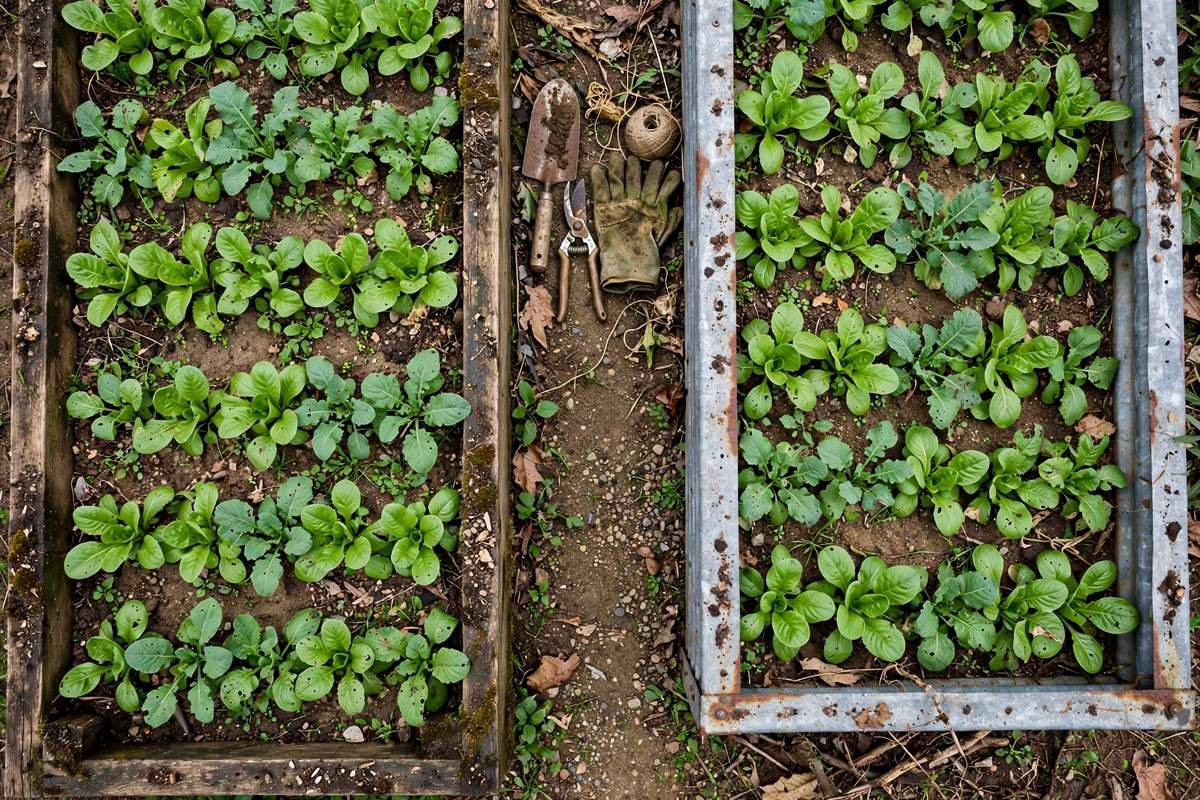
Read the table as a starting point, not a verdict. A thick, well-coated metal kit and a thin, uncoated one behave like different products, and the same goes for cedar versus basic pine.
The cost question, framed honestly
Sticker price alone misleads, because the two materials spread cost across time in different ways. Rather than quote prices that shift by season and seller, we use a cost-per-year framework with clearly hypothetical inputs. Run it with quotes from your local lumber yard and the exact kits on your short list.
Our cost-per-year framework
Assumptions, stated up front: one bed at 4 feet by 8 feet and about 12 inches deep; soil cost counted once at setup; no value assigned to your labor; replacement counted only when a frame is no longer usable. Your numbers will differ, and that is the point of the framework.
The formula: cost per year = (frame cost + one-time extras) ÷ years of service. Extras can include corner hardware, a liner if you choose one, and delivery. Soil is the same for both at setup, so you can leave soil out when comparing frames, or include it in both sides equally.
Worked example with hypothetical cost units (not prices): say a wood frame totals 100 cost units and serves 5 seasons before the boards need full replacement. That is 100 ÷ 5 = 20 units per year. Say a metal kit totals 180 cost units and serves 12 seasons. That is 180 ÷ 12 = 15 units per year. The metal kit costs more on day one and less per year in this example — but flip the service life and the answer flips. If that same wood frame serves 8 seasons, it drops to 12.5 units per year and pulls ahead. The lesson is not which material wins. The lesson is that service life in your climate drives the math more than the checkout total.
One more volume check helps with setup budgeting. A 4-by-8-foot bed at 12 inches deep holds 4 × 8 × 1 = 32 cubic feet of soil mix, about 1.19 cubic yards. At 18 inches deep the same footprint holds 48 cubic feet, about 1.78 cubic yards. That soil cost is shared by both materials, and it often rivals the frame cost, so measure depth honestly before ordering. Gardeners can compare container volumes in our notes on container gardening for beginners.
Durability and lifespan, without the hype
Exact lifespan claims deserve skepticism. A board that lasts a long stretch in a dry, high-desert yard can soften far sooner in a wet climate with constant soil contact, and a coated steel panel that holds up inland can struggle near salt air if the coating gets nicked. Treat any single number of years on a listing as marketing context, check the listing for species, treatment, coating type, and metal gauge, and weight your own rainfall and sun exposure more heavily.
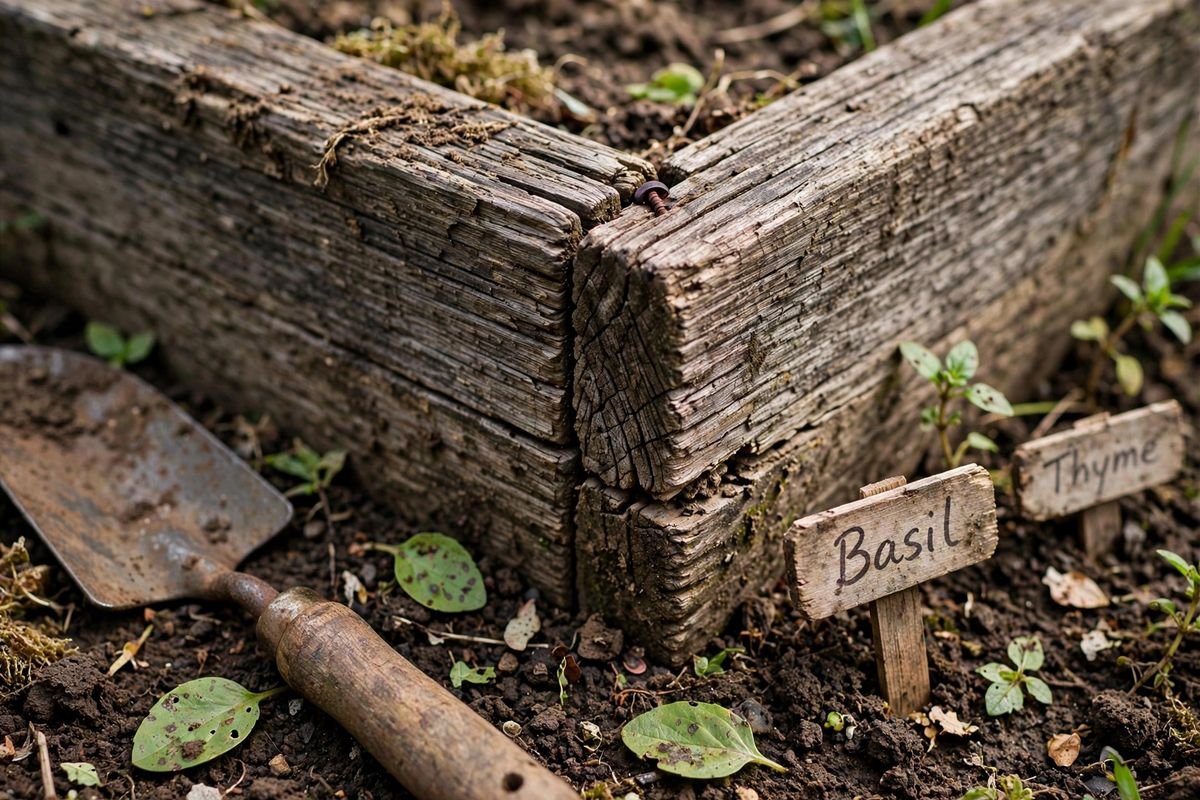
Wood fails gradually and visibly. Boards gray, grain opens, corners can crack, and the inside face that touches damp soil ages fastest. That slow, readable decline is a plus for planning: you can spot a tired board in spring and replace it before it slumps mid-season. Rot-resistant species and thicker boards generally weather longer than thin, untreated softwood, and keeping soil from piling against the outside of the frame helps any board.
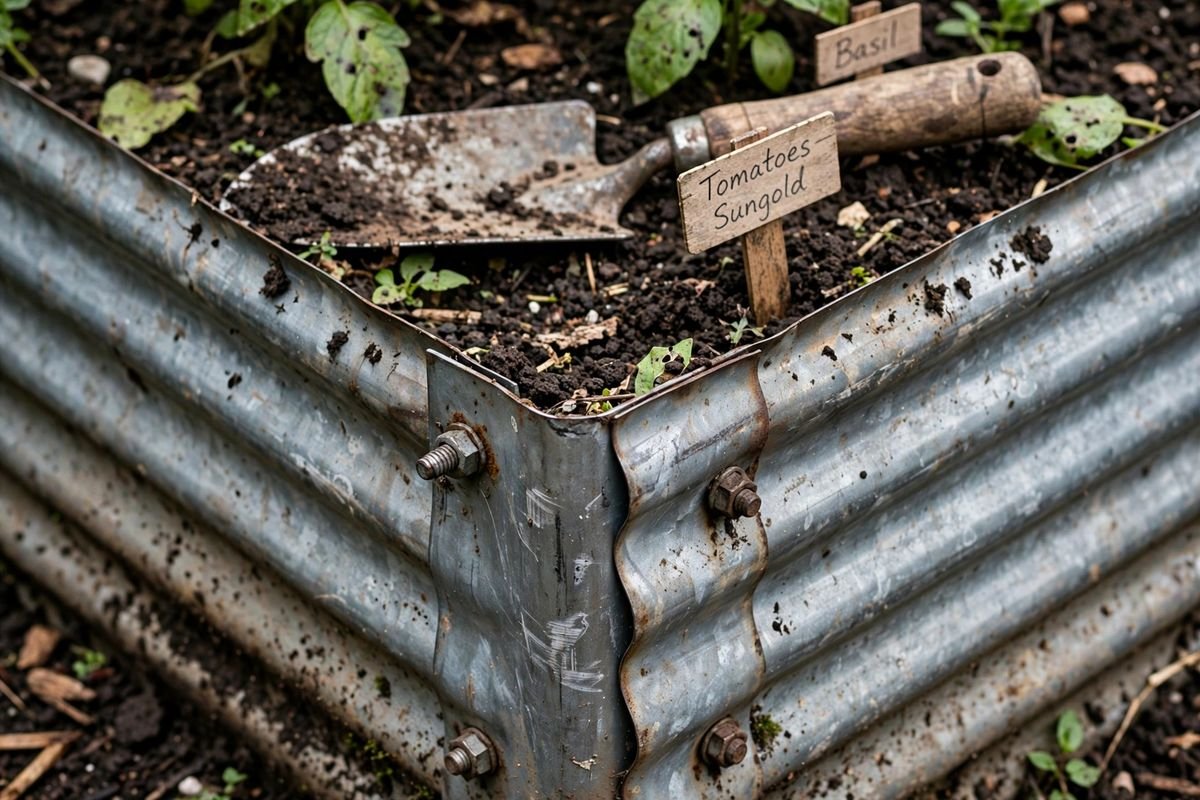
Metal fails at weak points. The panel face is rarely the issue; joints, cut edges, and scratches in the coating are where corrosion can start, especially where soil and moisture sit against the metal. Kits with rolled or covered top edges are also kinder to forearms during harvest. Check the listing for how corners join, whether edges are finished, and what the coating actually is, because those details separate a long-service kit from a short one more than the word metal alone.
Heat, moisture, and what roots notice
Roots care about the few inches of soil near the frame more than the center of the bed. Metal conducts heat, so on a hot, still afternoon the edge soil in a metal bed can warm and dry faster than the middle. In a cool spring that same warmth can feel like a head start. In a hot summer it can mean the outer row drinks first and wilts first. Wood insulates, so edge conditions stay closer to the center of the bed in both spring and summer.
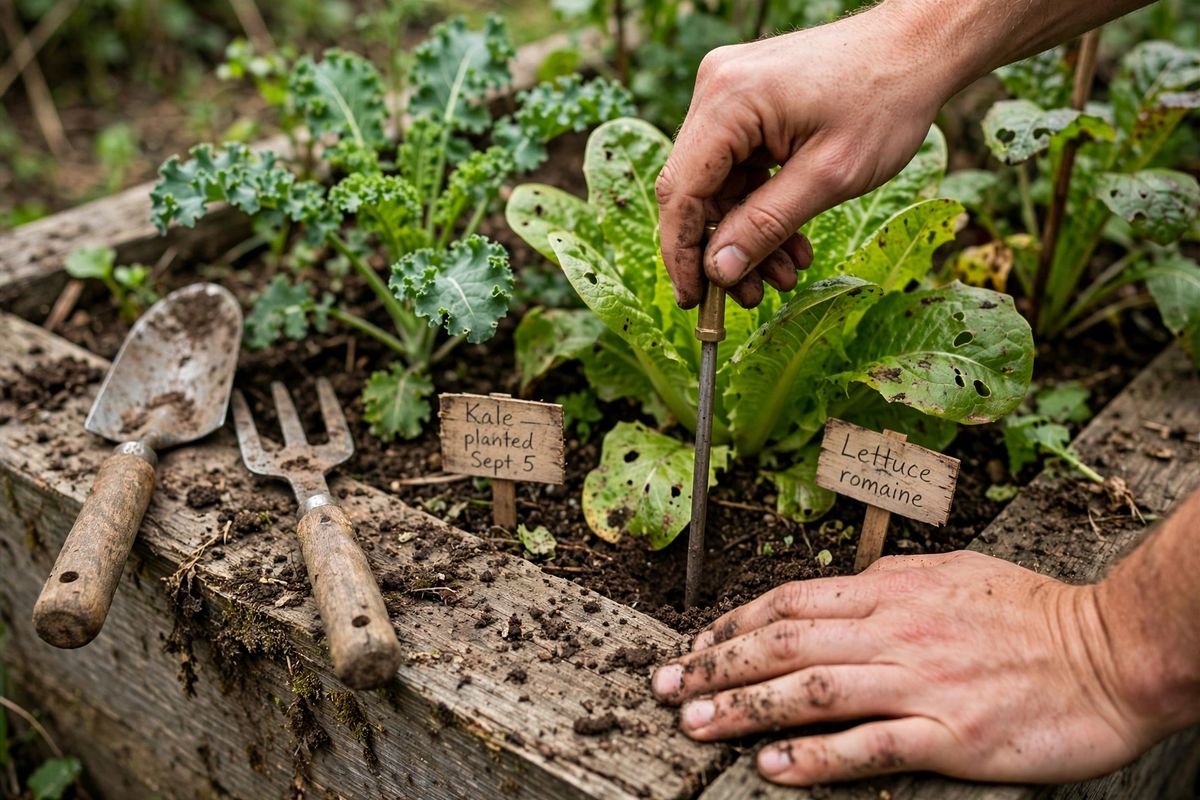
You can soften either behavior. Mulch the surface, keep a steady watering rhythm, and give thirsty crops the center rows in a metal bed during peak heat. In wood beds, watch the inside corners, where moisture lingers. A simple probe check at the edge versus the center tells you more than any general claim, and it takes ten seconds.
Width matters here too. In a 4-foot-wide bed you reach the center from either side, so edge rows are a modest share of the planting. In wider beds the edge share shrinks further, and in narrow beds it grows. If you garden where summers run hot, that edge share is worth weighing alongside frame cost.
Building, moving, and repairing
Most metal beds arrive as panel kits, such as the raised garden bed kit options sold in standard footprints. Assembly usually means bolting panels at the corners and setting the frame level before filling. Wood beds can also come as kits, or as boards you cut yourself, which makes odd sizes and L-shapes simpler. A raised garden bed kit in either material saves measuring time; lumber gives you sizing freedom.
Repairs split the two materials cleanly. A cracked wood board unscrews and swaps with basic tools. A bent or corroded metal panel usually means ordering a matching part, and older kits can be hard to match. Wood asks for small attention along the way; a sound metal kit mostly asks you to check joints now and then.
Neither bed moves once filled, so confirm sun and hose reach and level the ground first.
Pros and cons
Metal raised beds
- Pros: no rot, consistent profile and color, light panels before filling, minimal sealing or treating, clean modern look.
- Pros: thin walls give a touch more interior planting room at the same outside footprint.
- Cons: edge soil can heat and dry faster in hot sun, coating damage can open the door to corrosion, replacement panels can be hard to match later.
- Cons: sharp or unfinished edges on cheaper kits, so check the listing for rolled edges.
Wood raised beds
- Pros: insulating walls keep edge soil even, easy to cut to custom sizes, single boards are simple and cheap to replace, natural look that weathers gracefully.
- Pros: forgiving to build with basic tools, and easy to attach trellis, hoops, or cold-frame lids to the frame.
- Cons: boards eventually rot from the soil side, especially in wet climates, and untreated softwood ages fastest.
- Cons: thicker walls take a small bite of planting room, and periodic fastener and corner checks are part of ownership.
Which should you choose?
Choose metal if low routine upkeep tops your list and summers at your place stay moderate, or if you mulch and water steadily enough that warmer edges are a spring bonus rather than a summer burden. Choose metal if you want a consistent, tidy profile that barely changes from year to year. Choose metal if replacement-part availability for your kit looks solid and the listing shows finished edges and a clear coating description.
Choose wood if you garden in strong summer heat and want insulating walls for the edge rows. Choose wood if you enjoy building and tinkering, need a custom footprint, or like the option to swap one board at a time with lumber from a local yard. Choose wood if a weathered, natural look suits the rest of your yard and you are comfortable with occasional corner and fastener checks.
Choose either with confidence if your deciding factor is simply what you can source well locally. A well-built bed of the second-choice material, filled with good soil mix and watered steadily, outgrows a neglected bed of the first-choice material every season. Gardeners weighing other formats can also look at best grow bags for vegetables for a low-commitment way to add growing room while you decide on permanent frames.
Whichever frame you pick, start level, fill with a good raised-bed mix, and note how edge rows perform in your first summer. That one season settles the heat question for your yard and makes the second bed an easy decision.