
This post may contain affiliate links. If you buy through links on this page, we may earn a commission at no extra cost to you.
As an Amazon Associate I earn from qualifying purchases.
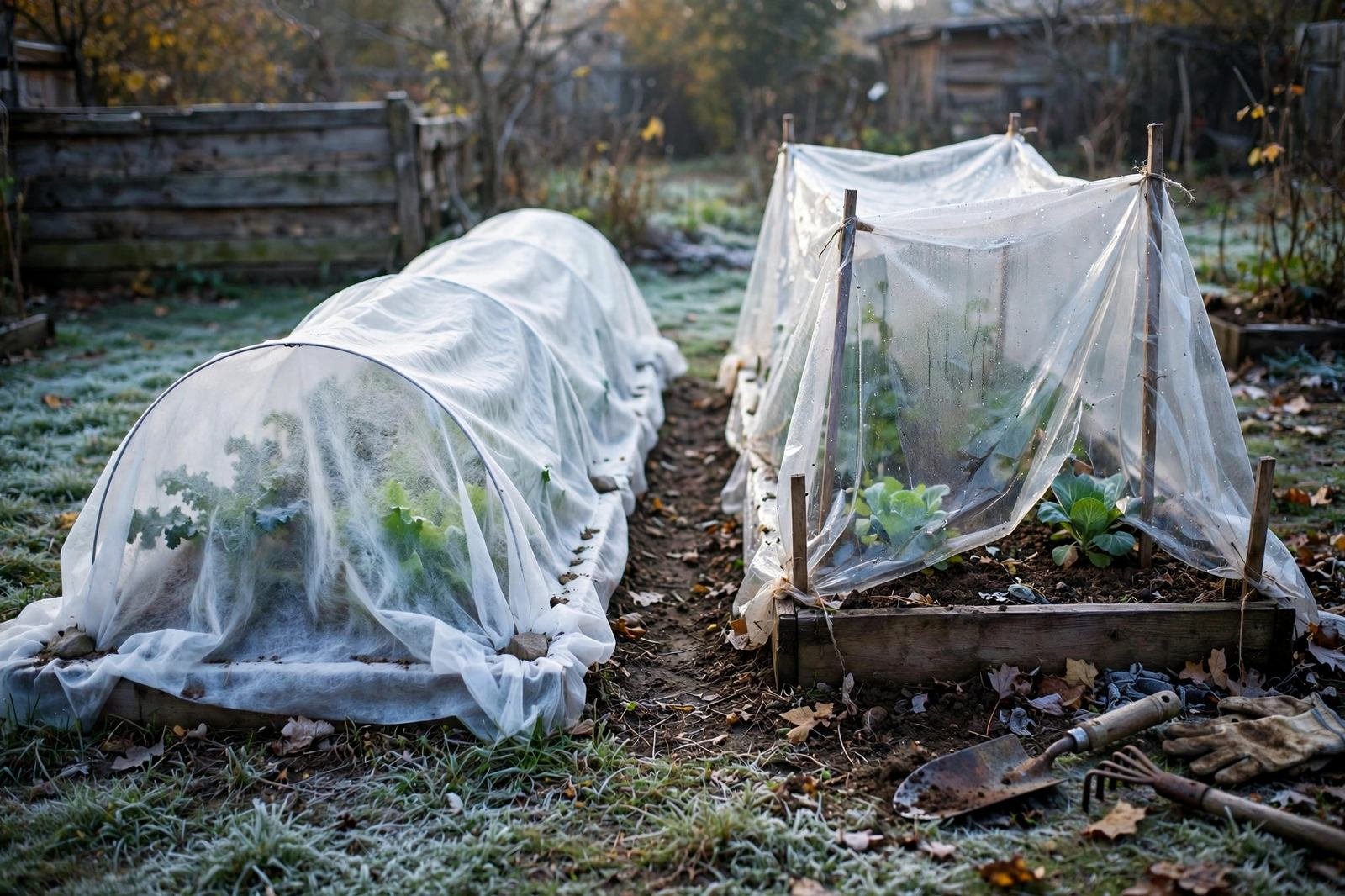
On the first cold night of fall, many of us face the same choice in the shed: breathable frost cloth or a sheet of clear plastic. Both can save a bed of greens, but they fail in different ways, and the wrong one can leave plants wet or overheated the next afternoon.
This comparison is research-based, drawn from extension guidance on season extension. We have not run instrumented freeze trials in our own beds, and we do not present the numbers here as measured test results. Instead, we compare how each cover handles heat, light, moisture, and wind, then walk through a worked overnight example with stated assumptions. For most raised beds and containers, frost cloth is the safer default.
| Factor | Frost Cloth (Spun-Bond Fabric) | Clear Plastic Sheeting |
|---|---|---|
| How it protects | Traps a pocket of warmer air; blocks frost settling on leaves | Traps warmer air and blocks wind; can warm soil on sunny days |
| Breathability | Breathable; air and rain pass through | Not breathable; moisture collects inside |
| Light | Good light transmission, lower in heavy weights | High light transmission when clean and clear |
| Rain | Rain passes through to soil | Rain sheds off; soil underneath can dry out |
| Condensation risk | Low; excess moisture escapes | High; droplets form and can drip on leaves |
| Daytime overheating | Moderate; still needs venting on sunny days | High; can overheat quickly in sun |
| Contact with leaves | Acceptable for mild nights; hoops help in hard frost | Should not touch leaves; cold and heat transfer through contact |
| Best fit | Nightly frost cover for beds and grouped containers | Short cold snaps with active venting; soil warming before planting |
How Each Cover Handles a Cold Night
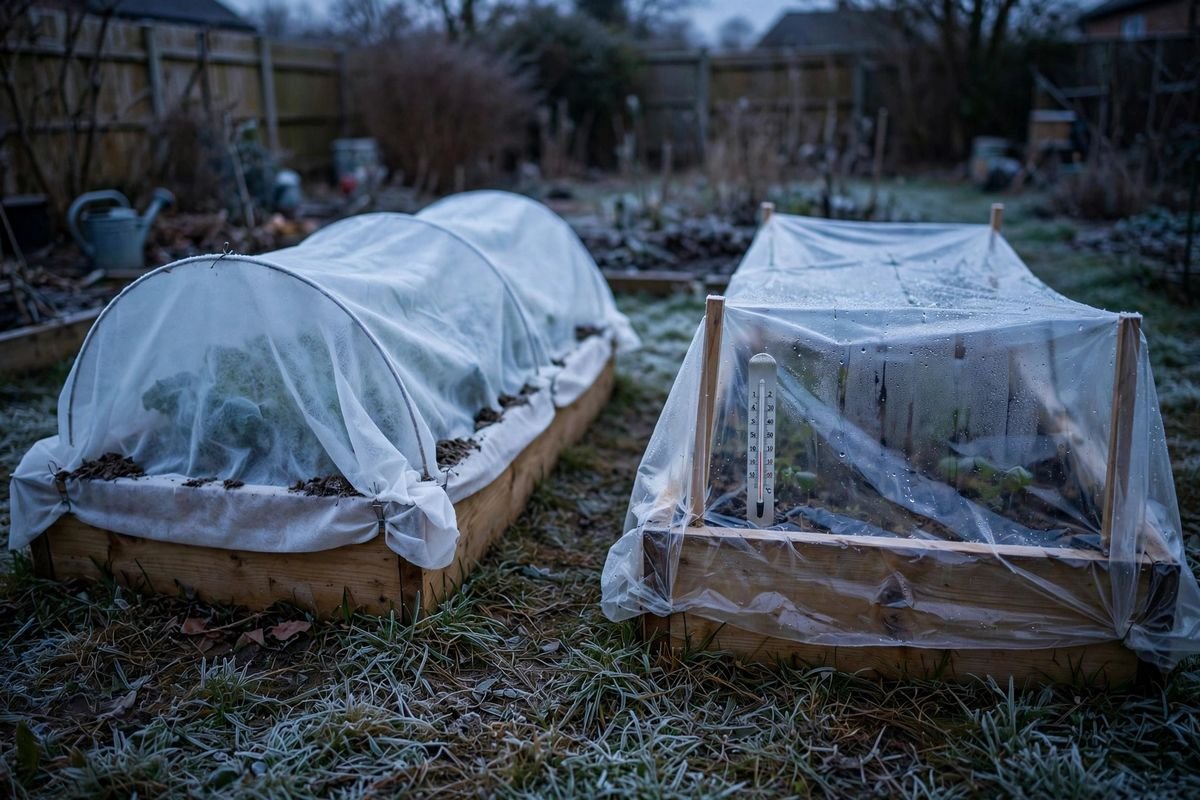
Frost cloth works like a light blanket. The fabric slows heat loss, holds a shallow layer of warmer air over the canopy, and keeps frost crystals off foliage. Because it breathes, humidity escapes instead of collecting on the underside, which prevents many soggy, disease-friendly mornings.
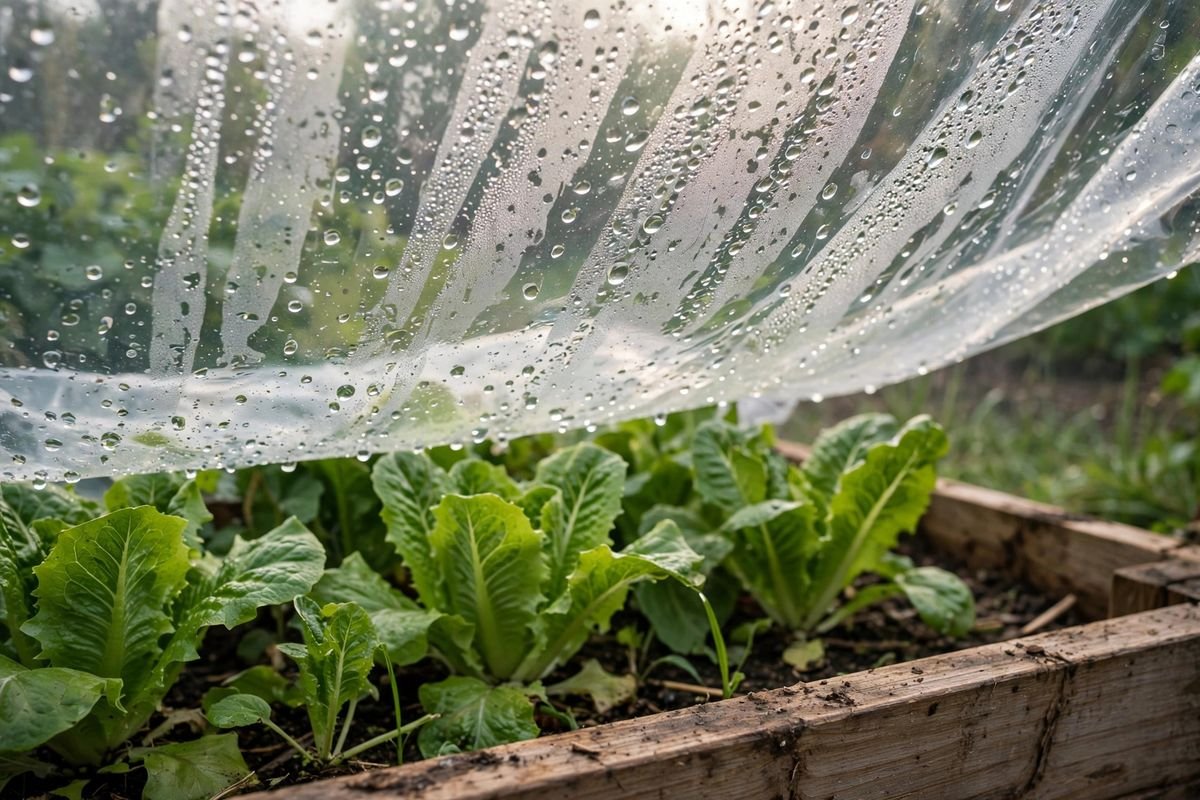
Clear plastic works like a sealed tent. It blocks wind well and can trap more heat on a still night. The trade-off is moisture: water vapor hits the cool plastic, condenses, and drips back onto leaves, and wet foliage through a cold night faces more damage and disease. Plastic also sheds rain, so beds underneath can dry out during a wet week.
Pros and Cons of Frost Cloth
Pros
- Breathable, so condensation stays low and leaves dry faster in the morning.
- Rain passes through, which keeps soil moisture steadier under cover.
- Can stay on for several cloudy days with brief venting, suiting busy schedules.
- Doubles as an insect barrier in spring when edges are sealed to the ground.
- Forgiving if we forget to remove it for a few hours on a mild morning.
Cons
- Protects less per layer than a well-sealed plastic tent on the coldest still nights.
- Thin weights tear on sharp bed corners and hoop ends without padding.
- Blocks some light, more in heavy weights, so plants stretch if covers stay sealed too long.
- Wears out over seasons as sun weakens the fibers, even with careful storage.
Pros and Cons of Plastic Cover
Pros
- Strong wind block, which helps on exposed sites where cloth flaps and tears.
- Can warm soil ahead of early planting when used as a short-term cover on bare beds.
- Widely available in large sheets and easy to cut to odd shapes.
- Clear material lets us see plants without lifting the cover.
Cons
- Condensation is the main drawback: wet leaves, drips, and higher disease pressure.
- Overheats fast in sun, even on a bright 50°F morning.
- Must not touch foliage, so hoops or frames are required, not optional.
- Sheds rain, so covered beds and pots need deliberate watering checks.
- Needs active venting every sunny day, which adds daily work.
Our Worked Example: One Clear Night Down to 27°F
Here is a planning example, a simplified model with stated assumptions, not a measured trial.
Assumptions. One 4 by 8 foot raised bed of mixed greens, soil watered that morning. Hoops hold covers 12 inches above the canopy, edges sealed to the ground. The outside low is 27°F after a clear, calm night. The next day is 52°F with full sun. We compare medium frost cloth (about 1.0 ounce per square yard) against 4-mil clear plastic, both installed at sunset.
Overnight. Extension guidance commonly places a medium frost cloth at roughly 4 to 6°F of protection under good conditions, which puts the canopy near 31 to 33°F here. Many hardy greens handle that range with little damage. A sealed plastic tent can hold a similar pocket on a calm night, but its underside collects condensation, and wet foliage at near-freezing temperatures faces higher damage risk than dry foliage at the same air temperature. That offsets part of plastic’s heat advantage. Neither cover rescues tender peppers or basil at 27°F; this example applies to hardy greens.
Next morning. The covers diverge most here. Cloth can stay on until mid-morning, while plastic needs venting soon after sun hits it. As a rough planning figure, sealed clear cover in full sun can push air 15 to 25°F above outside air by late morning. On a 52°F day, that can mean 67 to 77°F or higher under plastic by noon. The practical cost of plastic is the daily venting visit, every sunny day.
Moisture over a week. Suppose rain falls twice that week. The cloth bed receives the rain through the fabric. The plastic bed sheds both rains, and its soil dries while the cover hides the change. Without a deliberate check, the plastic bed ends the week drier despite wet weather.
Light, Venting, and Daytime Management
Both covers reduce light. Frost cloth filters more as weight rises, while clear plastic drops as dust and condensation film build up. Across a week, plants under either cover want full light whenever temperatures allow. Our habit is simple: cover at dusk, open once air under the cover feels mild, and close again before evening cooling. Our guide to how to use a cold frame for winter vegetables shows the same rhythm on a rigid cover.
Venting the ends is usually enough for cloth on a mild morning. Plastic wants a larger opening, and on bright days it wants to come off entirely. If our schedule cannot include a morning visit, that alone settles the choice toward cloth.
Which Cover for Which Job
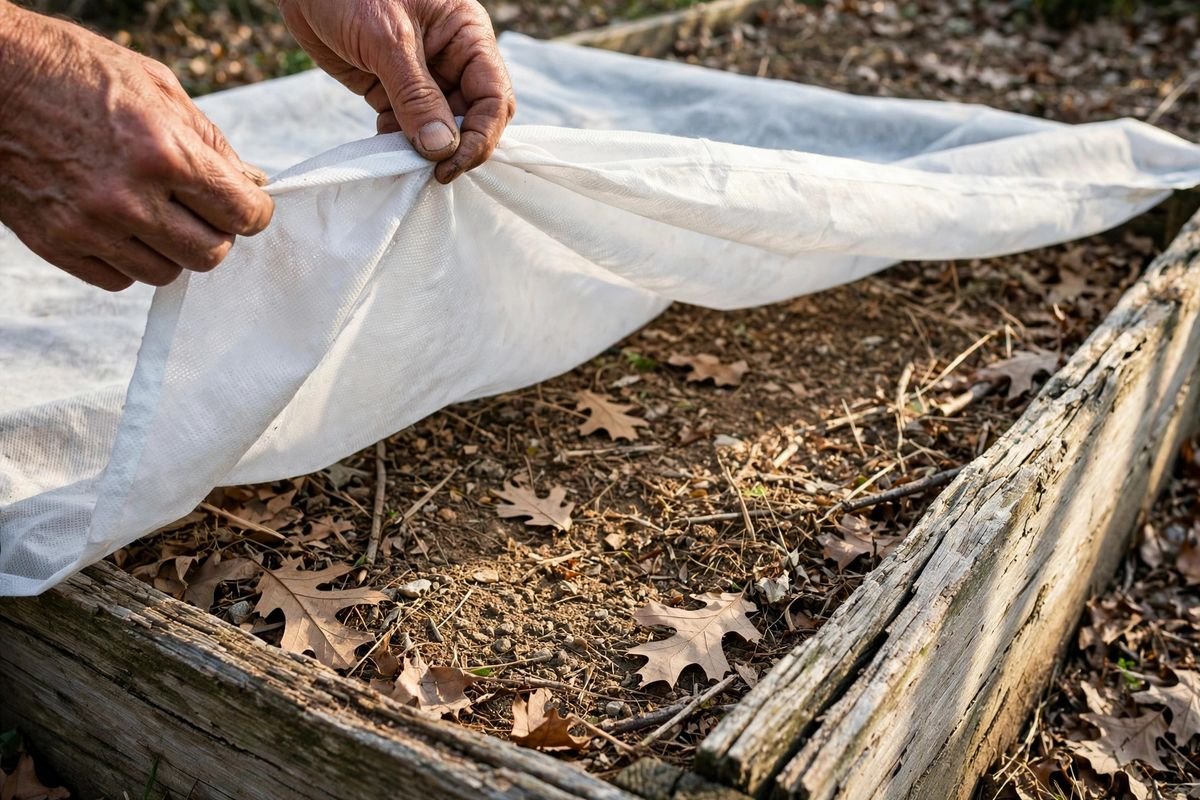
For nightly frost protection on raised beds, frost cloth is our default. It handles the dawn cold, lets rain through, and tolerates a late morning uncovering. Our best frost covers for raised beds and containers guide works through the sizing math.
Plastic earns its keep in narrower roles: warming bare soil before planting, or shielding a bed during a short windy cold snap when we can vent it daily. Outside those jobs, its daily demands outweigh its heat edge for most of us.
Containers follow the same logic. Pots cool faster than beds, so we group them and cover the group with cloth. Plastic over grouped pots traps moisture against foliage and is harder to keep off leaves, so cloth wins there too. After a cold stretch, our fall garden cleanup checklist keeps beds tidy under either cover.
Timing Covers With the Season
We start covering tender crops when forecast lows dip into the mid-30s and hardy greens when lows approach the upper 20s, adjusting for wind and cloud cover. Use your local frost dates and regional planting guidance — not your USDA hardiness zone alone — to choose planting dates. Those same local dates tell us when nightly covering becomes routine in fall and when spring covers can come off for good. For the coldest nights, cloth under plastic, with hoops keeping both off the leaves, combines a dry canopy with a strong wind block.
Shopping Notes
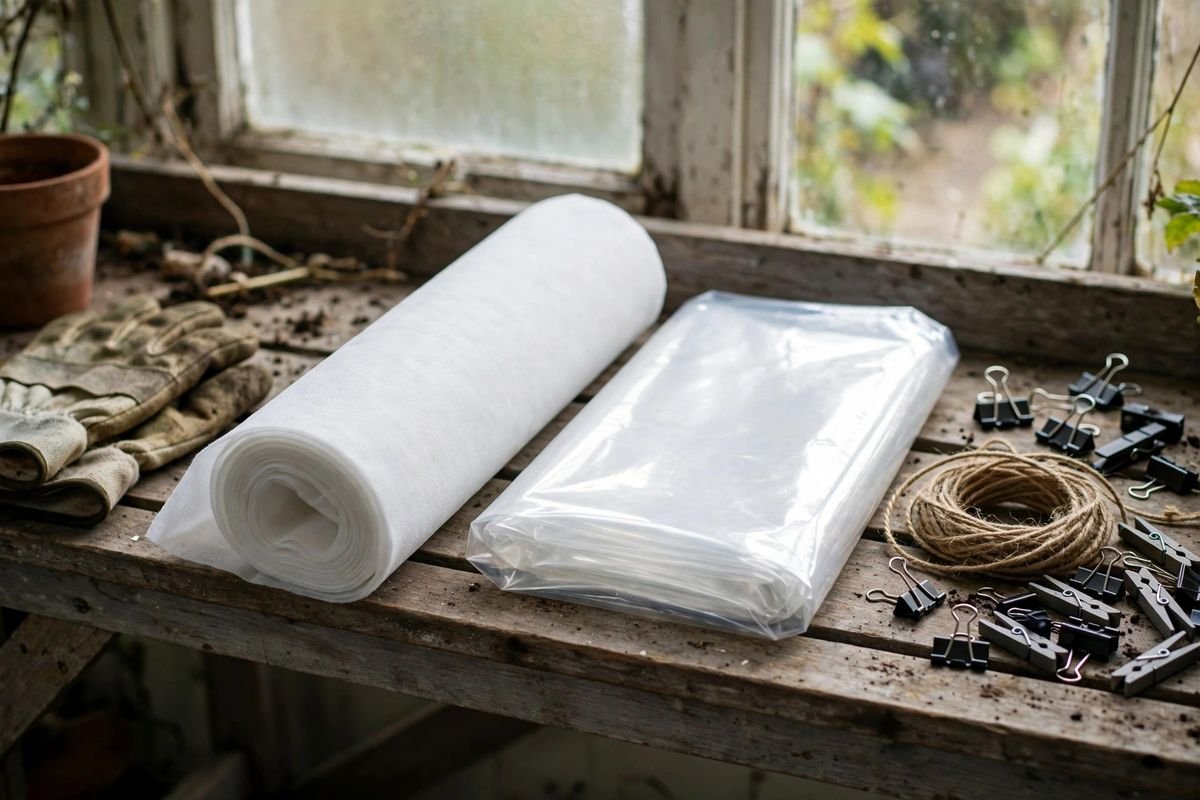
When we buy cloth, we check stated fabric weight first, since one seller’s heavyweight is another’s medium. Browse frost cloth and row cover for plants on Amazon by weight and roll width. For plastic, we look for UV-stabilized greenhouse film and compare options at clear greenhouse plastic sheeting on Amazon. Hoops are worth adding for either cover; see garden hoops for row covers on Amazon.
Verdict
Choose frost cloth if… we cover beds or grouped containers on most cold nights, want rain to reach the soil, or cannot vent at dawn every sunny day. For most raised-bed gardeners, this is the cover to own first, sized with drape to spare.
Choose plastic cover if… we need a strong wind block for a short cold snap, want to warm bare soil before planting, or must keep rain off a bed for a specific stretch — and we can keep it off the leaves and vent or remove it every sunny morning without fail.
Choose both, layered, if… a hard cold snap threatens a valuable bed and we can manage morning venting for those few days. Otherwise, one good cloth, well pinned, covers more real nights with less risk.
FAQ
Can plastic touch leaves if the night is not very cold?
We avoid contact at any temperature. On cold nights, contact transfers cold to the leaf. On sunny mornings, plastic against a leaf can scorch that spot. Hoops that hold plastic above the canopy are part of using it safely.
Does frost cloth keep plants warmer than plastic?
On a calm night, a sealed plastic tent can hold slightly warmer air. In practice, cloth often protects as well because leaves stay dry and it can stay on longer without overheating.
Can we leave frost cloth on during rain?
Yes. Rain passes through cloth and waters the bed, one of its main advantages. We check that edges stay pinned during heavy rain.
How long does each material last?
Stored dry and out of sun, a medium-weight cloth often serves several seasons. Greenhouse plastic rated for ultraviolet exposure lasts longer in sun than general-purpose sheeting.
Sources & Further Reading
- University of Minnesota Extension — season extension with row covers and plastic.
- Utah State University Extension — floating row covers versus plastic tunnels for home gardens.
- University of Vermont Extension — fall crop protection, condensation, and cover management.
- Clemson Cooperative Extension — protecting plants from cold and managing covers in sun.
- Kansas State University Research and Extension — low tunnel and cover notes for raised beds.
Keep Growing With These Guides
Which does our shed call for this week — the cloth we can drape and forget until morning, or the plastic we are ready to babysit for one windy cold snap?